The Three Hundred and Thirty-Five Years War: The Longest Bloodless Conflict in History

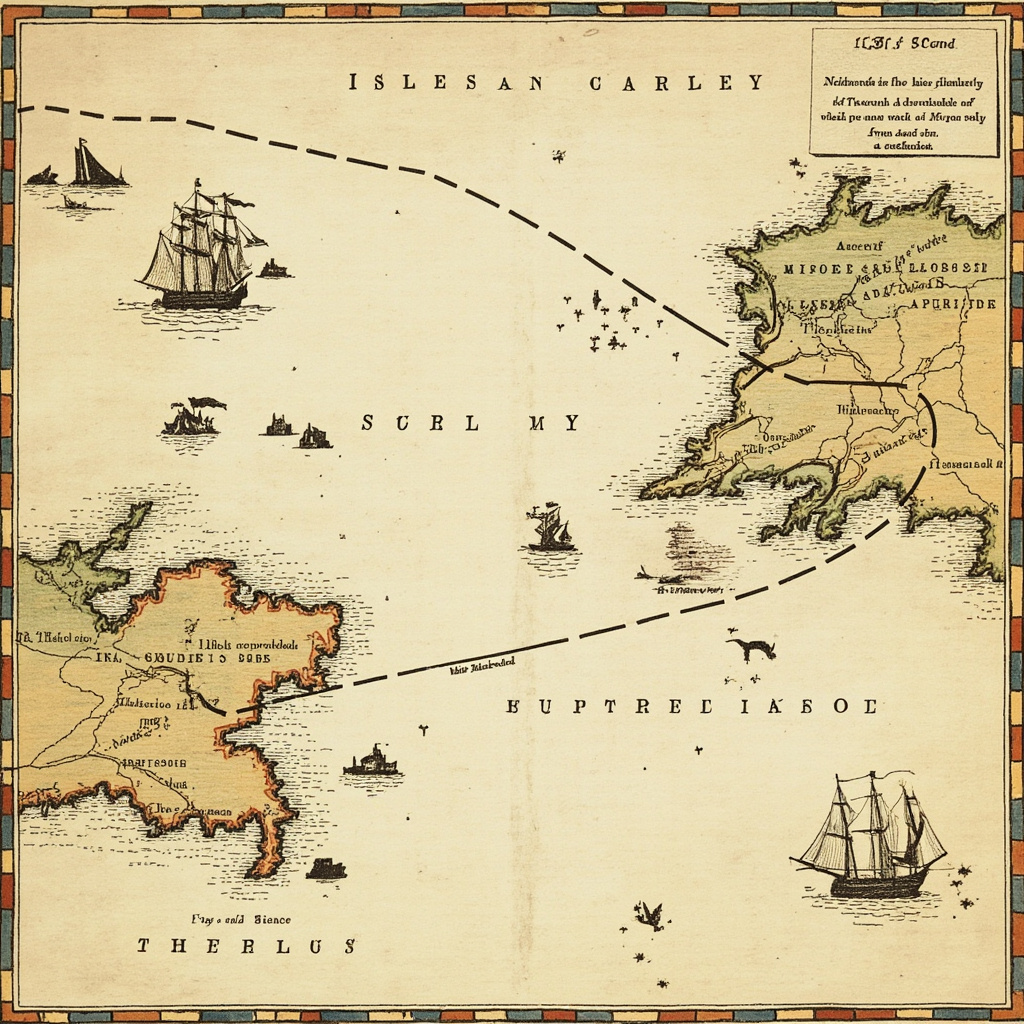
In the annals of warfare, most conflicts are remembered for their devastating battles, heroic charges, and tragic casualties. But there exists one war that stands apart from all others—not for its violence, but for its complete absence of it. The Three Hundred and Thirty-Five Years War between the Netherlands and the Isles of Scilly lasted from 1651 to 1986, making it one of the longest wars in recorded history, yet not a single shot was fired, and no blood was shed.

The Forgotten Declaration

The origins of this peculiar conflict trace back to the turbulent period of the English Civil War. By 1651, Oliver Cromwell had successfully pushed the Royalist forces to the very edges of England, with Cornwall becoming their final mainland stronghold. When even Cornwall fell to the Parliamentarians, the Royalist navy retreated to the Isles of Scilly, a small archipelago off the Cornish coast under the command of Royalist John Granville.

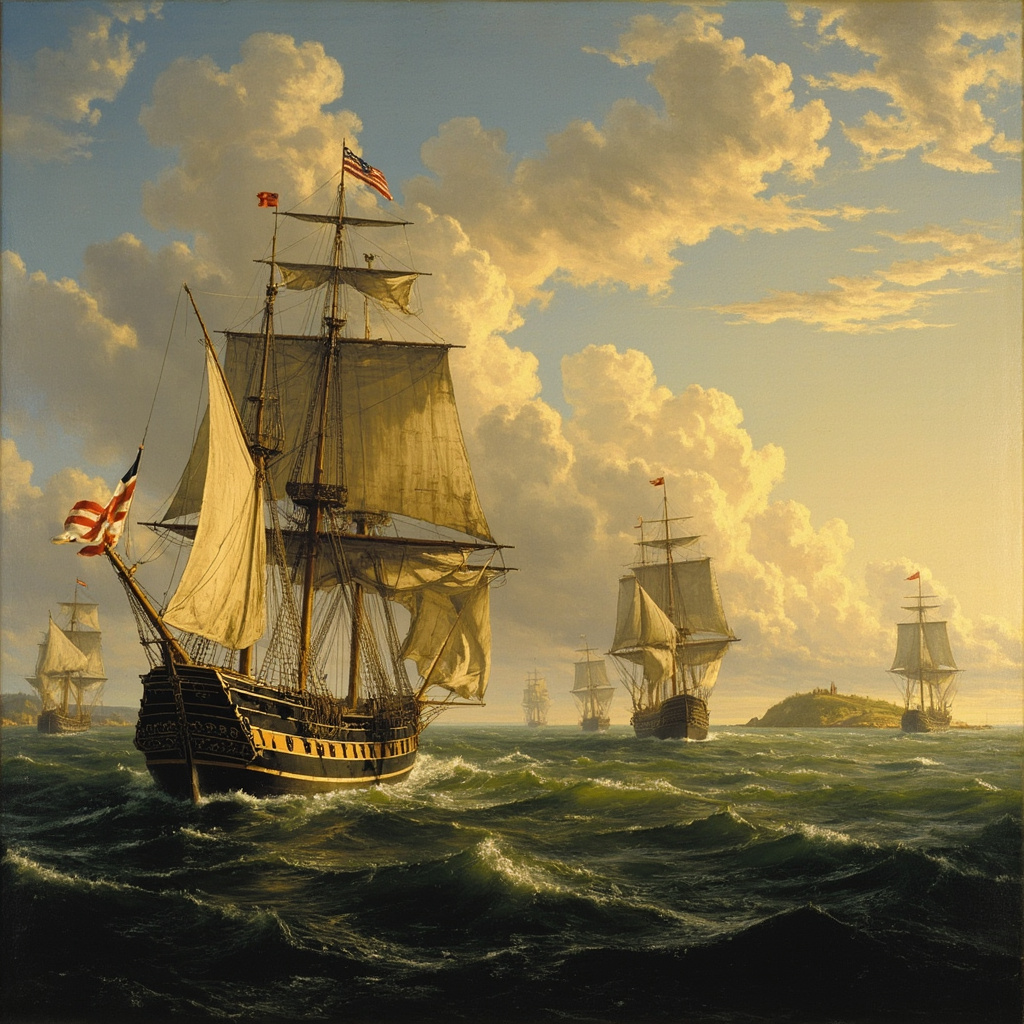
Dutch naval fleet under Admiral Maarten Tromp sailing toward the Isles of Scilly

The Dutch, who had allied themselves with the Parliamentarians during the English Civil War, found their merchant ships under constant attack from the Royalist fleet based in Scilly. These raids were causing significant losses to Dutch commerce, and patience was wearing thin in Amsterdam. On March 30, 1651, Lieutenant-Admiral Maarten Harpertszoon Tromp arrived at the islands with a simple demand: reparation for the Dutch ships and goods seized by the Royalist pirates.

When the Royalists refused to provide satisfactory compensation, Tromp made a fateful decision. According to historical records, specifically Bulstrode Whitelocke’s Memorials, Tromp declared war specifically upon the Isles of Scilly. This wasn’t a declaration against England as a whole—most of which was now under Parliamentarian control—but against this tiny collection of islands that had become a thorn in the side of Dutch maritime commerce.

The War That Wasn’t

As wars go, this one ended almost before it began. Just two months after Tromp’s declaration, in June 1651, the Parliamentarian Admiral Robert Blake arrived with a formidable fleet and forced the Royalist navy to surrender. With the threat eliminated, the Dutch fleet sailed away without firing a single shot. The immediate crisis was resolved, but here’s where the story becomes truly extraordinary: nobody remembered to officially declare peace.

When the Dutch Republic and the Commonwealth of England signed the Treaty of Westminster in 1654, ending the First Dutch War, this peculiar local conflict was simply overlooked. The treaty dealt with the major issues between the two nations but made no mention of the specific state of war that supposedly existed between the Netherlands and the tiny Isles of Scilly.

335 Years of Forgotten War

For over three centuries, this technicality remained buried in the annals of history. The Isles of Scilly continued their peaceful existence, their residents completely unaware that they were theoretically still at war with an entire European nation. The Netherlands, meanwhile, went through dramatic political transformations—from the Dutch Republic to the Batavian Republic, then the Kingdom of Holland, and finally the modern Kingdom of the Netherlands—all while technically maintaining a state of war with a cluster of small islands they had probably forgotten existed.

The war might have remained forgotten forever if not for Roy Duncan, a local historian and chairman of the Isles of Scilly Council. In 1985, while researching local history, Duncan stumbled upon the old legend that the islands were still technically at war with the Netherlands. Intrigued by this historical curiosity, he decided to investigate.

1986 peace ceremony between Dutch and British officials

Peace at Last

Duncan wrote to the Embassy of the Netherlands in London, explaining the situation and asking whether there was any truth to the local legend. To everyone’s surprise, embassy staff confirmed that no peace treaty had ever been signed between the Netherlands and the Isles of Scilly. The war that everyone had forgotten was, technically speaking, still ongoing.

Seeing the humor in the situation, Duncan invited the Dutch Ambassador to Britain, Jonkheer Huydecoper, to visit the islands and officially end this marathon conflict. On April 17, 1986—exactly 335 years and 19 days after Tromp’s original declaration—peace was finally declared in a ceremonial signing on the Isles of Scilly.

Ambassador Huydecoper, clearly enjoying the absurdity of the situation, joked during the ceremony that it must have been “horrifying to the Scillonians to know we could have attacked at any moment.” The comment was made with a wink, of course—the Dutch had long since forgotten about the conflict, and the peaceful islands had certainly never lived in fear of an invasion that was never going to come.

The Debate Over Reality

While the story of the 335-year war makes for delightful historical trivia, scholars debate whether this “war” ever truly existed in any legal sense. Some historians argue that Tromp, as an admiral rather than a sovereign nation, lacked the authority to declare war on behalf of the Netherlands. Others point out that the Isles of Scilly, as part of England, couldn’t be considered an independent entity capable of being at war with another nation.

Author Graeme Donald has dismissed the entire affair as “a great PR coup for the island’s tourist board,” suggesting that the story was more legend than historical fact. However, the Dutch Embassy’s confirmation that no peace treaty existed lent enough credibility to the tale that both sides were willing to play along with the ceremonial ending.

A War Like No Other

Whether legally valid or not, the Three Hundred and Thirty-Five Years War stands as a unique chapter in military history. If we accept it as genuine, it represents the longest war in recorded history, the most peaceful conflict ever fought, and certainly the most forgotten. It’s a war with no battles, no casualties, no heroes, and no villains—just a bureaucratic oversight that lasted for over three centuries.

In an age when we’re constantly reminded of the devastating costs of warfare, there’s something wonderfully refreshing about a conflict that harmed absolutely no one. The “war” between the Netherlands and the Isles of Scilly serves as a charming reminder that sometimes the most interesting historical events are the ones where absolutely nothing happened at all.

Today, the Netherlands and the Isles of Scilly maintain the most peaceful of relationships, their “conflict” having been resolved with handshakes, smiles, and probably a fair amount of Dutch cheese shared among new friends. It’s perhaps the only war in history that ended with everyone having a good laugh.

Related Reading

When Blue Didnt Exist: How Ancient Minds Saw Color and Why It Changed Everything

In 1858, British Prime Minister William Ewart Gladstone made a startling discovery that would challenge everything we thought we knew about human perception. While studying Homer’s epic poems as a classical scholar, Gladstone noticed something profoundly unsettling: the ancient Greeks seemed to live in a world without blue. Homer described the sea as “wine-dark” (oînops póntos), oxen as “wine-looking,” and sheep as violet. Most remarkably, in thousands of lines describing the heavens, seas, and natural world, the color blue appeared nowhere.

Gladstone’s observation wasn’t merely academic curiosity—it suggested that the very way humans perceive color might not be fixed and universal as we assume. His 1858 work “Studies on Homer and the Homeric Age” proposed that ancient Greeks categorized colors primarily by brightness and darkness rather than hue, lacking the sophisticated color vocabulary we take for granted today.

What Gladstone couldn’t have known was that he had stumbled upon one of the most profound questions in cognitive science: does language shape the way we literally see the world?

The Missing Blue Epidemic

A German philologist named Lazarus Geiger decided to test whether this “blue blindness” was unique to the Greeks. What he discovered was even more extraordinary. After analyzing ancient texts from across the world—Vedic hymns from India, Icelandic sagas, the Quran, ancient Chinese stories, and the original Hebrew Bible—Geiger found the same pattern everywhere.

Of the Hindu Vedic hymns, which contained more than ten thousand lines describing the heavens in elaborate detail, Geiger wrote that they were “brimming with descriptions of the heavens” yet contained not a single reference to blue. Ancient Chinese texts described everything from jade-green mountains to golden palaces, but the azure sky remained linguistically invisible. The pattern held across civilizations: humans seemed to develop words for black and white first, then red, then yellow and green, and finally—almost reluctantly—blue.

This wasn’t simply an oversight or poetic preference. These ancient cultures were describing the same physical world we see today, with the same blue skies and seas, yet somehow failing to linguistically capture what seems to us the most obvious color in nature.

The Universal Color Hierarchy

The mystery deepened in 1969 when anthropologists Brent Berlin and Paul Kay published their groundbreaking study “Basic Color Terms: Their Universality and Evolution.” After analyzing color vocabularies across 98 languages from around the world, they discovered something remarkable: colors don’t appear randomly in languages. Instead, they follow a strict, universal hierarchy.

Berlin-Kay universal color term hierarchy showing the order colors appear in languages

Every language starts with words for black/dark and white/bright. If a language has three color terms, the third is always red. Languages with four terms add either yellow or green. Those with five include both yellow and green. Six-term languages add blue. Seven-term languages include brown. Finally, languages with eight or more terms incorporate purple, pink, orange, and gray.

This wasn’t just correlation—it was a linguistic law as rigid as any in physics. No language Berlin and Kay studied had a word for blue without also having words for red, yellow, and green. The implications were staggering: human color perception seemed to unfold according to a universal script, with blue consistently arriving last to the linguistic party.

When Words Create Reality

The idea that language might shape thought wasn’t new. Linguists Edward Sapir and Benjamin Lee Whorf had proposed in the early 20th century that the structure and vocabulary of our language influences how we conceptualize and understand the world. The strong version of this hypothesis suggested that language determines thought entirely, while the weaker version proposed that language merely influences thinking.

For decades, this “linguistic relativity” remained largely theoretical. Then came the experiments that would prove language doesn’t just describe reality—it helps create it.

The Russian Blues Breakthrough

In 2007, researchers led by Lera Boroditsky conducted a landmark experiment with Russian speakers that would provide the first concrete evidence of language shaping color perception. Russian, unlike English, has two distinct words for what English speakers call “blue”: “goluboy” for light blue and “siniy” for dark blue. These aren’t merely shades—they’re as linguistically distinct as red and green are in English.

The experiment was elegantly simple. Researchers showed Russian and English speakers blue squares on a computer screen and asked them to identify which square was different from the others. When the odd square fell across the goluboy/siniy boundary, Russian speakers were 10% faster at spotting it than when all squares fell within the same Russian color category. English speakers showed no such advantage.

This wasn’t just about vocabulary—it was about perception itself. The Russian language had literally trained its speakers brains to see distinctions that were invisible to English speakers. Language wasn’t just describing color; it was creating perceptual boundaries.

The Himba Color Revolution

Cross-cultural color perception showing how different cultures see the same landscape

Even more dramatic evidence came from studying the Himba people of Namibia. Psychologist Jules Davidoff and his colleagues discovered that the Himba language divides the color spectrum very differently from English. Where English speakers see distinct blues and greens, Himba speakers use a single term. But where English speakers see uniform green, the Himba language distinguishes several categories.

In carefully controlled experiments, Himba speakers could easily identify subtle green distinctions that English speakers struggled with, but they had difficulty distinguishing between blues and greens that seemed obviously different to Western observers. Even more remarkably, Himba children who hadn’t yet learned color terms behaved exactly like English children who didn’t know their colors—they showed no cross-category advantage for any color distinctions.

The implications were profound: color categories aren’t hardwired into human perception. They’re learned, cultural constructs that literally reshape how we see the world.

Beyond Color: The Spatial Mind

The influence of language on perception extends far beyond color. The Guugu Yimithirr people of Australia speak a language with no words for “left” or “right”—instead, they use absolute cardinal directions. A Guugu Yimithirr speaker doesn’t say “move your right hand” but “move your north hand” or “the cup is southeast of the plate.”

Remarkably, Guugu Yimithirr speakers maintain perfect spatial orientation at all times. They can point accurately north even in unfamiliar environments, having developed a kind of internal compass that most humans lack. Their language has quite literally given them a superpower—perfect directional sense—that the rest of us can barely imagine.

Japanese Blue-Green and Traffic Light Diplomacy

The power of linguistic color categories plays out in unexpected ways in modern life. Japanese traditionally used the word “ao” (青) to describe both blue and green. When Japan adopted international traffic signals, they faced a linguistic crisis: how do you tell people to “go on green” when green is called “blue”?

Rather than change their language, Japan changed their traffic lights. A 1973 cabinet order mandated that traffic lights be “the bluest shade of green possible”—green enough to satisfy international standards, yet blue enough to still be called “ao.” To this day, Japanese traffic lights remain noticeably bluer than those in other countries, a permanent testament to the power of linguistic categories over technological standards.

The Rarity of Blue

Why does blue consistently appear last in human color vocabulary? The answer lies in the natural world around us. Blue is remarkably rare in nature—aside from the sky and deep water, there are few naturally occurring blue objects that early humans would have needed to distinguish and name.

Throughout most of human history, creating blue pigments was extraordinarily difficult and expensive. The ancient Egyptians developed the first synthetic blue pigment around 3300 BCE, but it required complex chemical processes and high-temperature kilns. For millennia afterward, the only sources of blue pigment were rare minerals like lapis lazuli, which had to be imported from remote mines in Afghanistan at costs that often exceeded gold.

This scarcity explains why medieval European paintings often depicted golden skies rather than blue ones—artists simply couldn’t afford blue paint. When Vermeer used costly ultramarine blue in his paintings, he was often painting with pigments worth more than the subjects entire wardrobe. The phrase “true blue” comes from this era, referring to expensive blue dyes that wouldn’t fade, unlike cheaper alternatives.

The Neuroscience of Color Categories

Modern neuroscience has revealed exactly how language creates perceptual boundaries in the brain. When we categorize colors linguistically, we literally strengthen neural connections that enhance our ability to distinguish between different categories while reducing our sensitivity to differences within categories.

Brain imaging studies show that color discrimination activates language regions in the left hemisphere, but only when colors cross linguistic boundaries. When Russian speakers distinguish between goluboy and siniy blues, their language centers light up. When they distinguish between two different shades of goluboy, those same regions remain quiet.

This “categorical perception” isn’t limited to color—it’s how the brain handles all kinds of sensory input. By creating discrete categories out of continuous spectra, language helps us navigate a world of infinite variation by focusing our attention on differences that matter.

The Gladstone Legacy

Guy Deutscher, in his 2010 book “Through the Language Glass,” synthesized decades of research to argue that Gladstone’s original observation was more prescient than anyone realized. Language doesn’t determine what we can see, but it profoundly influences what we choose to notice and remember.

The ancient Greeks weren’t colorblind—they could see blue as clearly as we can. But without a word for blue, they had no reason to treat it as a distinct category worthy of attention. Their “wine-dark sea” wasn’t a failure of perception but a different way of organizing visual experience, one that prioritized darkness and luminosity over hue.

Colors in the Digital Age

Today’s debates over whether a viral dress is “blue and black” or “white and gold” reveal that Gladstone’s questions remain surprisingly relevant. Our digital age has created new color experiences—RGB displays, CMYK printing, Pantone color matching—that require ever more precise color vocabularies.

Meanwhile, languages continue to evolve their color systems. English has gained new terms like “cyan” and “magenta” from printing technology, while fashion and design industries constantly coin new color names. Each new term potentially creates new perceptual boundaries, subtly reshaping how we see the world.

The story of blues emergence in human language isn’t just historical curiosity—it’s a window into how our minds construct reality from raw sensation. Every time we name a color, were participating in the same process that led ancient humans to distinguish red before yellow, yellow before blue, and blue before all the subtle variations we now take for granted.

In the end, Gladstone’s “wine-dark sea” reminds us that the world we see isn’t just shaped by our eyes—its sculpted by our words, one color term at a time. The next time you look at a blue sky or green forest, remember: somewhere in your brain, language is quietly deciding what you notice, what you remember, and what youll describe to others. The colors you see are not just physics—they’re the accumulated vocabulary of thousands of years of human experience, crystallized into categories that shape perception itself.

The 1561 Nuremberg Sky Battle: When Hundreds of Flying Objects Waged War Above Medieval Germany

On the morning of April 14, 1561, the residents of Nuremberg, Germany, witnessed one of history’s most extraordinary and well-documented celestial phenomena. As dawn broke between 4 and 5 AM, the sky above this medieval city erupted into what appeared to be an aerial battle involving hundreds of mysterious flying objects.

This remarkable event was so significant that it was immortalized in a detailed broadsheet—a printed news bulletin of the day—complete with woodcut illustrations depicting the strange objects that filled the sky. The incident has puzzled historians, astronomers, and researchers for over four centuries.

The Dawn of Terror

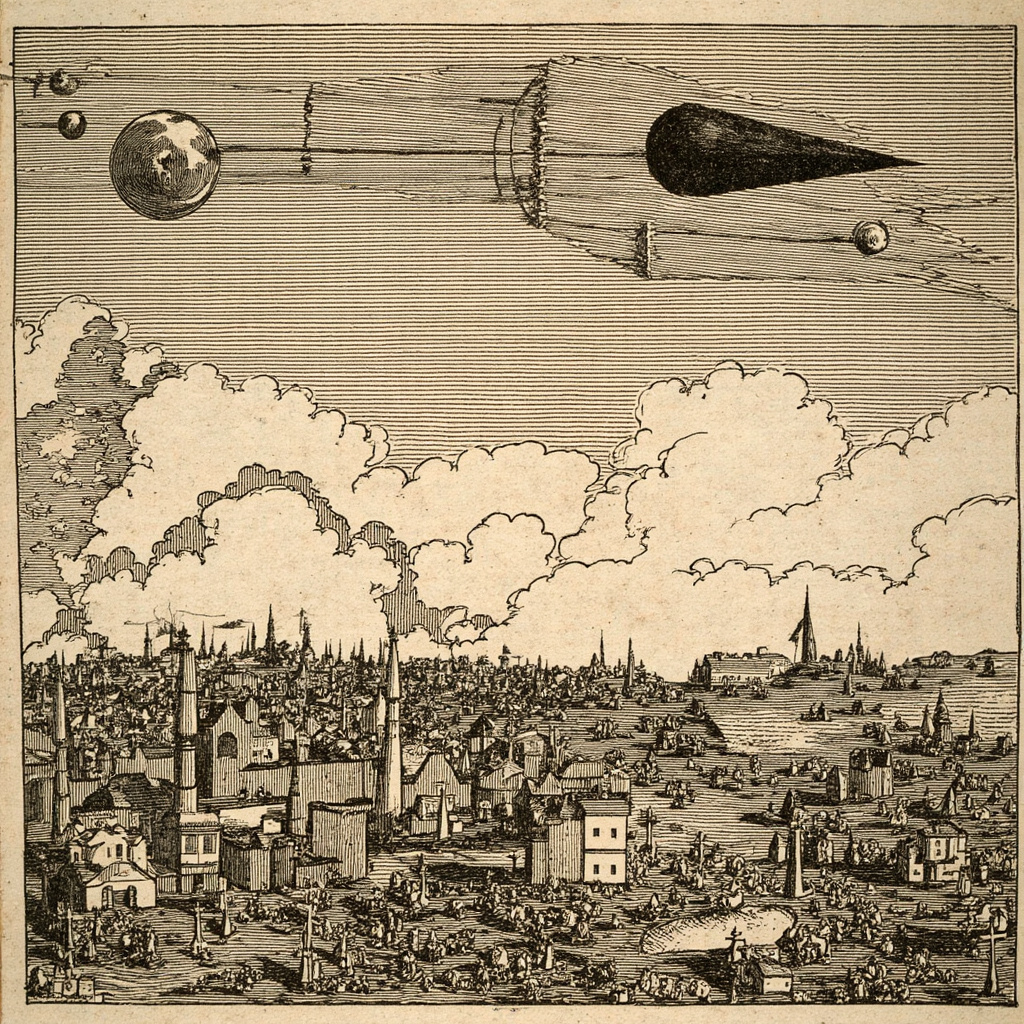
According to eyewitness accounts recorded in the famous broadsheet, the citizens of Nuremberg were confronted with “a dreadful apparition” as the sun rose. The sky filled with objects of various shapes and sizes: spheres, crosses, cylinders, crescents, and rod-like formations. Most remarkably, these objects appeared to be engaged in combat, darting around each other in seemingly organized patterns.

Historical woodcut depicting the 1561 Nuremberg sky phenomenon

The broadsheet, printed and distributed throughout the region, described how “many men and women” witnessed cylinders from which “several small spheres emerged and darted around the sky.” Most ominously, witnesses reported seeing a large, black, spear-like or arrow-shaped object among the aerial combatants.

Contemporary Documentation

What makes the Nuremberg incident particularly compelling is its thorough documentation. The broadsheet was created by Hans Glaser, a prominent printer in Nuremberg, who was known for producing reliable news reports. The detailed text provides specific information about the timing, appearance, and behavior of the mysterious objects.

The account describes how the objects “fought among each other for over an hour.” After this aerial battle concluded, many of the objects allegedly fell to earth “as if they all burned,” though no physical remains were reportedly found. Most intriguingly, witnesses claimed that the large black arrow-shaped object crashed somewhere outside the city walls.

Theories and Explanations

Modern researchers have proposed various explanations for what the people of Nuremberg witnessed that April morning. Some meteorologists suggest the phenomenon could have been an unusual atmospheric display, possibly involving sun dogs (parhelia) or other optical illusions created by ice crystals in the atmosphere.

Renaissance scholar studying celestial phenomena

Others propose that the residents may have witnessed a meteor shower or multiple meteors breaking up in the atmosphere, which could explain the various shapes and the apparent “battle” as objects moved across the sky in different directions. The morning timing aligns with when certain meteor showers are most visible.

Religious and Cultural Context

The 16th century was a time of significant religious upheaval in Europe, with the Protestant Reformation in full swing. Many people interpreted unusual natural phenomena as divine omens or warnings. The Nuremberg broadsheet itself frames the event in religious terms, suggesting that citizens should “be warned” and “repent” in response to this celestial sign.

This religious interpretation was typical of the era, when astronomical events were often seen as messages from God about earthly affairs. The detailed documentation of such phenomena served both as news reporting and as religious commentary on contemporary events.

Historical Significance

The 1561 Nuremberg incident represents one of the earliest mass UFO sightings in recorded history, predating the modern UFO phenomenon by centuries. While the true nature of what occurred remains a mystery, the event demonstrates the human impulse to document and attempt to understand unusual phenomena.

The broadsheet itself has become an invaluable historical document, providing insight into both 16th-century printing practices and the way extraordinary events were communicated to the public. It serves as a fascinating example of early mass media responding to a breaking news story.

Legacy and Modern Interest

Today, the Nuremberg sky battle continues to captivate researchers and enthusiasts interested in unexplained historical phenomena. The incident has been referenced in numerous books about anomalous events and has found its way into discussions about historical UFO encounters.

Whether the citizens of Nuremberg witnessed an unusual atmospheric phenomenon, an astronomical event, or something else entirely, their detailed documentation has preserved one of history’s most intriguing mysteries. The 1561 sky battle remains a testament to the enduring human fascination with the unknown and our drive to record and share extraordinary experiences.

The Nuremberg broadsheet stands as a remarkable piece of historical evidence—a window into a world where the line between the natural and supernatural was far thinner than it is today, and where a single morning’s strange events could captivate an entire city and echo through the centuries.

Operation Blue Peacock: When Britain Planned Nuclear Landmines Powered by Live Chickens

In the depths of the Cold War, when paranoia ran high and military strategists dreamed up increasingly bizarre defensive schemes, the British government approved one of the strangest weapons projects in history: Operation Blue Peacock. This classified program aimed to create nuclear landmines that would be kept operational by live chickens sealed inside the warheads.

The year was 1957, and Britain faced the terrifying prospect of a Soviet invasion of West Germany. With conventional forces potentially overwhelmed, military planners turned to nuclear deterrence—but not in the way you might expect.

The Cold War Context

As tensions between NATO and the Warsaw Pact reached fever pitch in the 1950s, British defense officials worried that Soviet forces could rapidly overrun Western Europe. The Fulda Gap in Germany represented a particularly vulnerable invasion route, and conventional weapons seemed inadequate to stem a massive Soviet assault.

Enter the concept of atomic demolition munitions (ADMs)—essentially nuclear landmines designed to create radioactive barriers and destroy key infrastructure before it could fall into enemy hands. The Americans had their own ADM program, but Britain wanted something uniquely theirs.

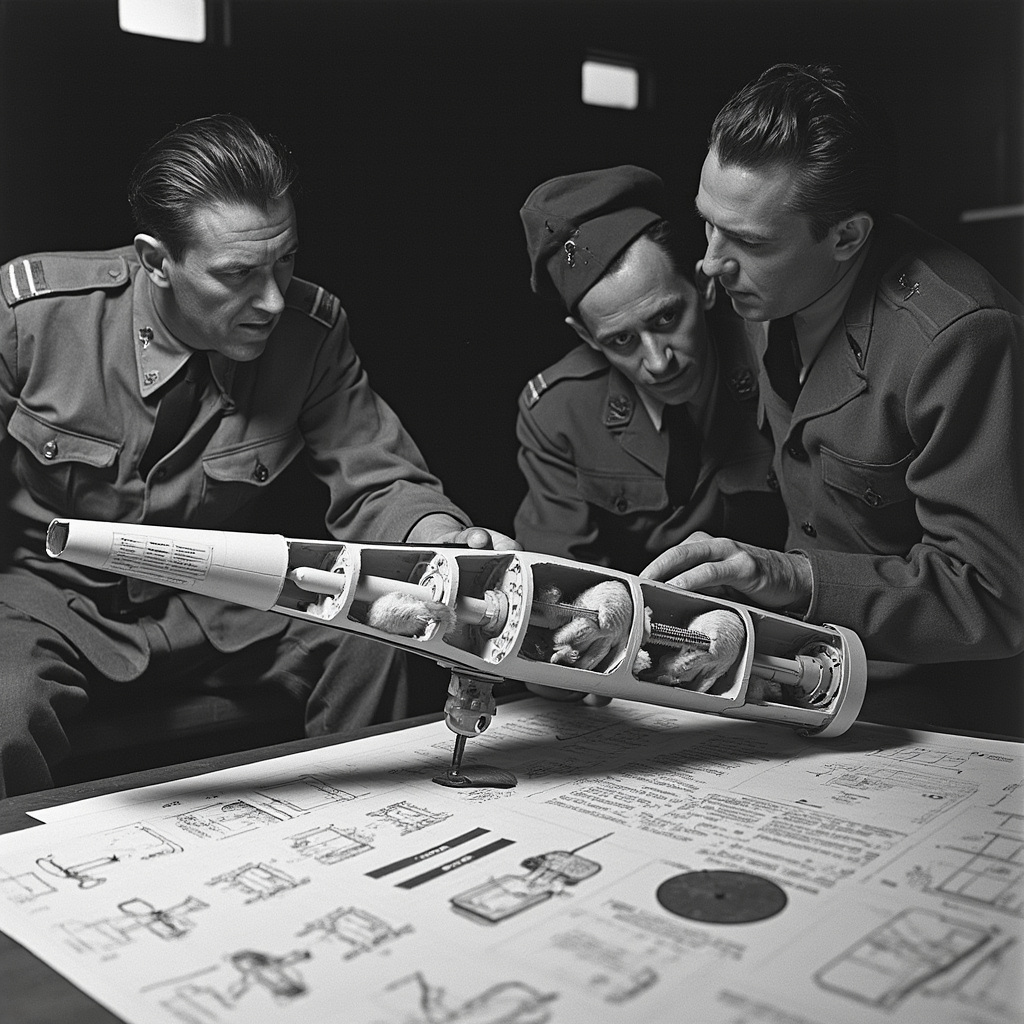
British nuclear weapons development during the Cold War

The Technical Challenge

The Blue Peacock devices were substantial weapons—each weighing approximately 7 tons and containing a 10-kiloton nuclear warhead, roughly two-thirds the power of the bomb dropped on Hiroshima. These massive devices were designed to be buried along potential invasion routes, where they could be detonated to create impassable radioactive craters.

But there was a problem: the sensitive nuclear components required a stable operating temperature to function properly. In the harsh German winter, temperatures could plummet well below freezing, potentially rendering the weapons inoperable just when they might be needed most.

Traditional heating systems were considered too complex, unreliable, or detectable. The solution proposed by British engineers was as ingenious as it was absurd: use living chickens as biological heaters.

The Chicken Solution

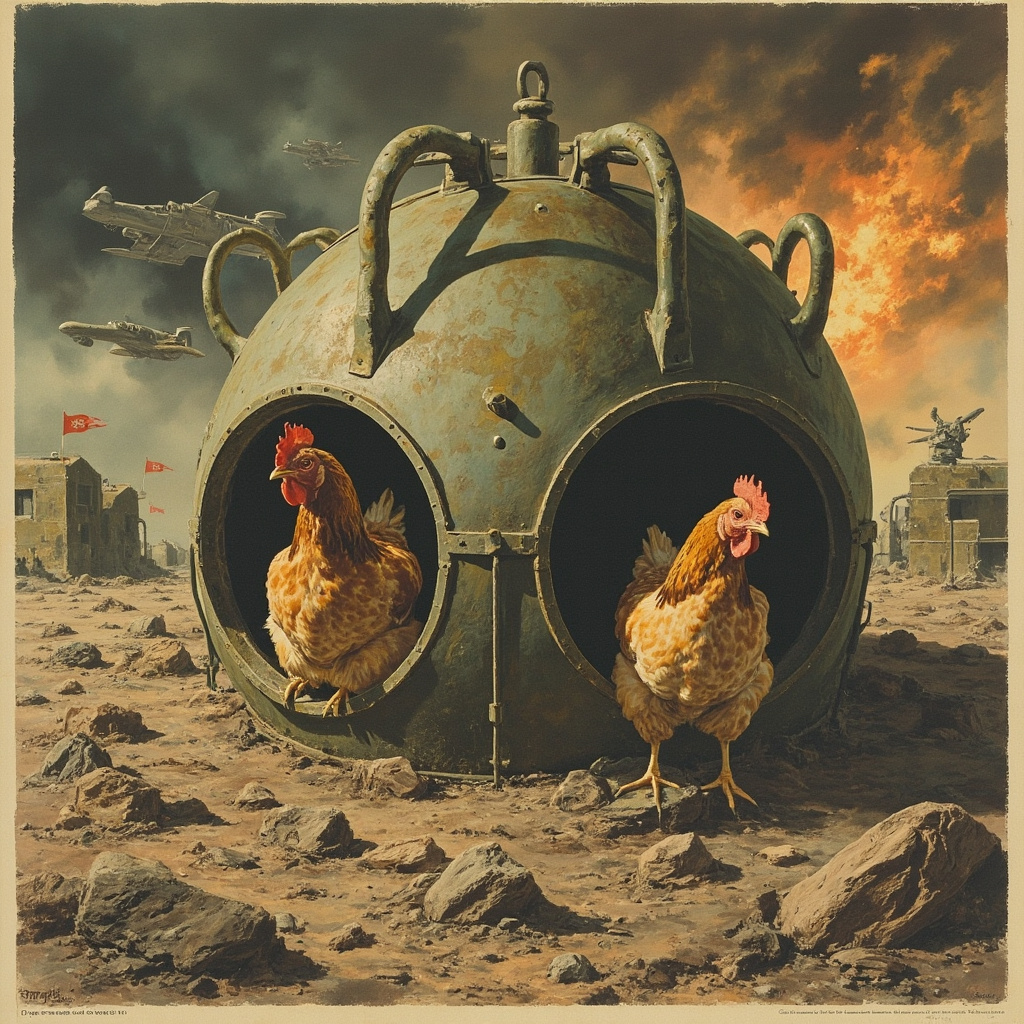
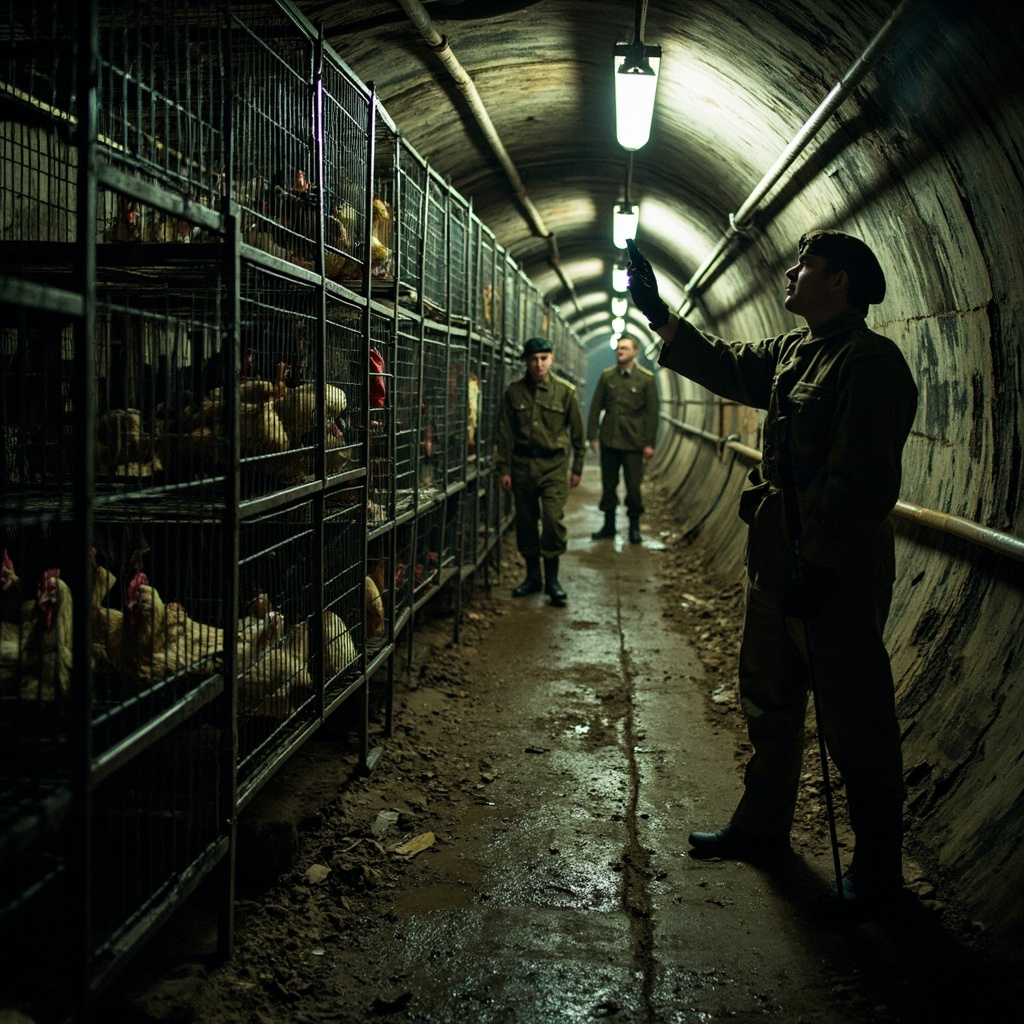
The plan was surprisingly straightforward. Live chickens would be sealed inside each Blue Peacock device along with a week’s worth of feed. The birds’ natural body heat—approximately 106°F (41°C)—would keep the nuclear components at optimal operating temperature even in freezing conditions.

The chickens served a dual purpose. Not only would they provide heat, but their lifespan would also act as a timing mechanism. The birds would survive for roughly eight days on their provided food supply. Once they died, the weapon would begin to cool, eventually becoming inoperable—a built-in safeguard against long-term radioactive contamination.

Cold War military bunker with nuclear weapons storage

Project Development and Cancellation

Despite its bizarre nature, Operation Blue Peacock was taken seriously at the highest levels of British government. In July 1957, the British Army Council officially ordered ten Blue Peacock devices for deployment in West Germany. The project was disguised as research into “atomic power units for troops in the field” to maintain secrecy.

However, the practical and political challenges soon became overwhelming. Beyond the obvious absurdity of relying on poultry to maintain nuclear weapons, several serious concerns emerged:

  • The massive size and weight of the devices made deployment and concealment extremely difficult
  • The radioactive fallout from detonation would contaminate large areas for decades
  • Allied forces operating in the region would be at severe risk
  • The international diplomatic implications were staggering

By February 1958, just eight months after its approval, Operation Blue Peacock was quietly cancelled. The Ministry of Defence concluded that the risks far outweighed any potential benefits, and the advent of more sophisticated tactical nuclear weapons rendered the unwieldy landmines obsolete.

Legacy of an Absurd Idea

Operation Blue Peacock remained classified for decades, finally coming to light through declassified government documents. When the story emerged, many initially dismissed it as an April Fool’s joke—partly because some documents were indeed released on April 1st, and partly because the concept seemed too ridiculous to be real.

Yet the project represents a genuine artifact of Cold War thinking, when military planners seriously considered virtually any option to gain an edge over potential adversaries. The willingness to develop chicken-powered nuclear weapons demonstrates both the desperation and the dark creativity of the era.

Today, Operation Blue Peacock stands as one of history’s most bizarre military projects—a reminder that in the paranoid world of Cold War strategy, even the most outlandish ideas could receive serious consideration at the highest levels of government. While the chickens never made it into actual nuclear weapons, their brief consideration as atomic heating systems ensures their place in the annals of military history’s strangest chapters.

The project also highlights how technological limitations of the era led to increasingly creative solutions. In an age before reliable solid-state electronics and advanced heating systems, biological solutions to engineering problems weren’t entirely unthinkable—just deeply impractical and ultimately unsuccessful.

The Cadaver Synod of 897 AD: When a Dead Pope Was Put on Trial

In one of the most bizarre episodes in papal history, Pope Stephen VI ordered the exhumation and trial of his predecessor, Pope Formosus, in 897 AD. This macabre event, known as the Cadaver Synod, stands as perhaps the most shocking example of political revenge in medieval church history.

The Background: Political Turmoil in 9th Century Rome

The late 9th century was a period of intense political instability in Rome. The papacy was deeply entangled in the power struggles between competing noble families and foreign rulers. Pope Formosus, who reigned from 891 to 896 AD, had made powerful enemies during his tenure by crowning Arnulf of Carinthia as Holy Roman Emperor, thereby opposing the interests of the powerful Spoleto family.

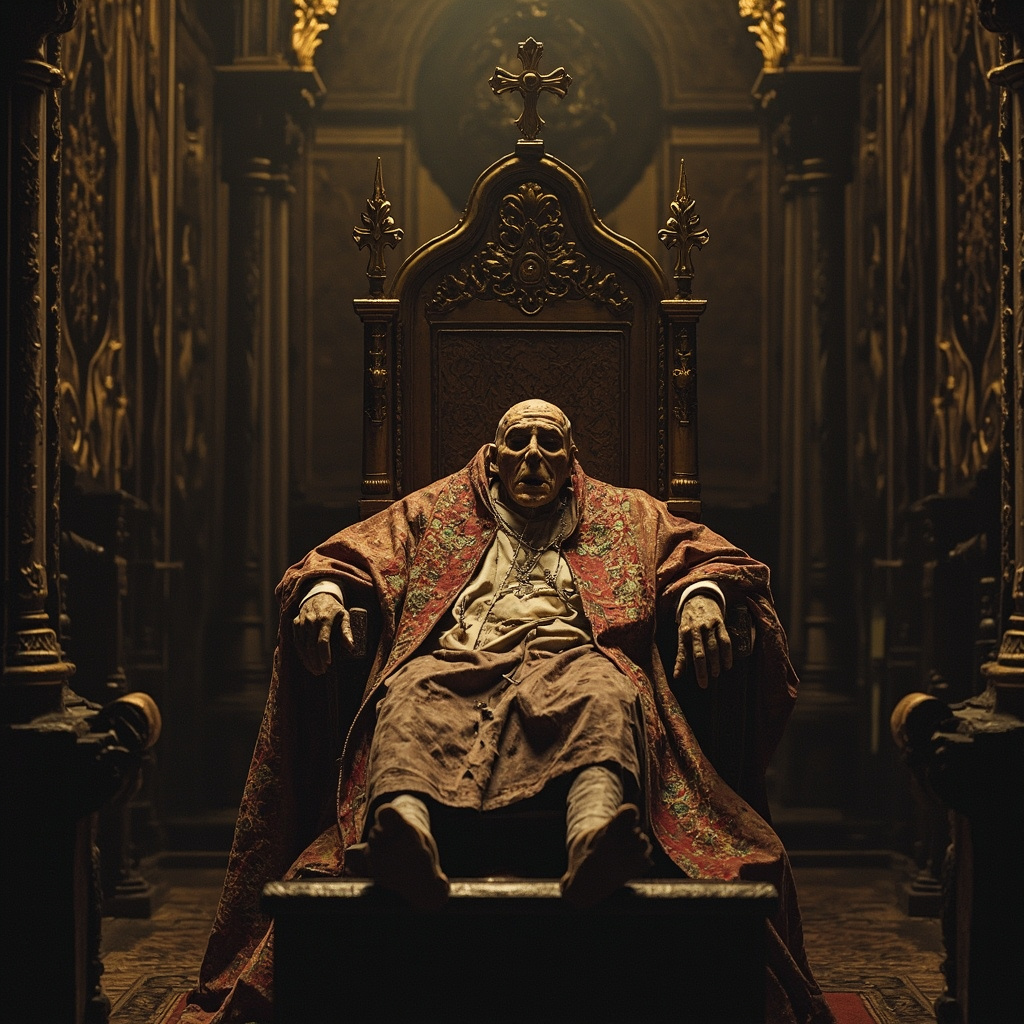
Pope Formosus dressed in ornate papal robes before his death

When Formosus died in 896, his successor Boniface VI reigned for only 15 days before dying himself. The next pope, Stephen VI, was a creature of the Spoleto faction and harbored deep resentment against his predecessor’s policies.

The Trial of the Dead

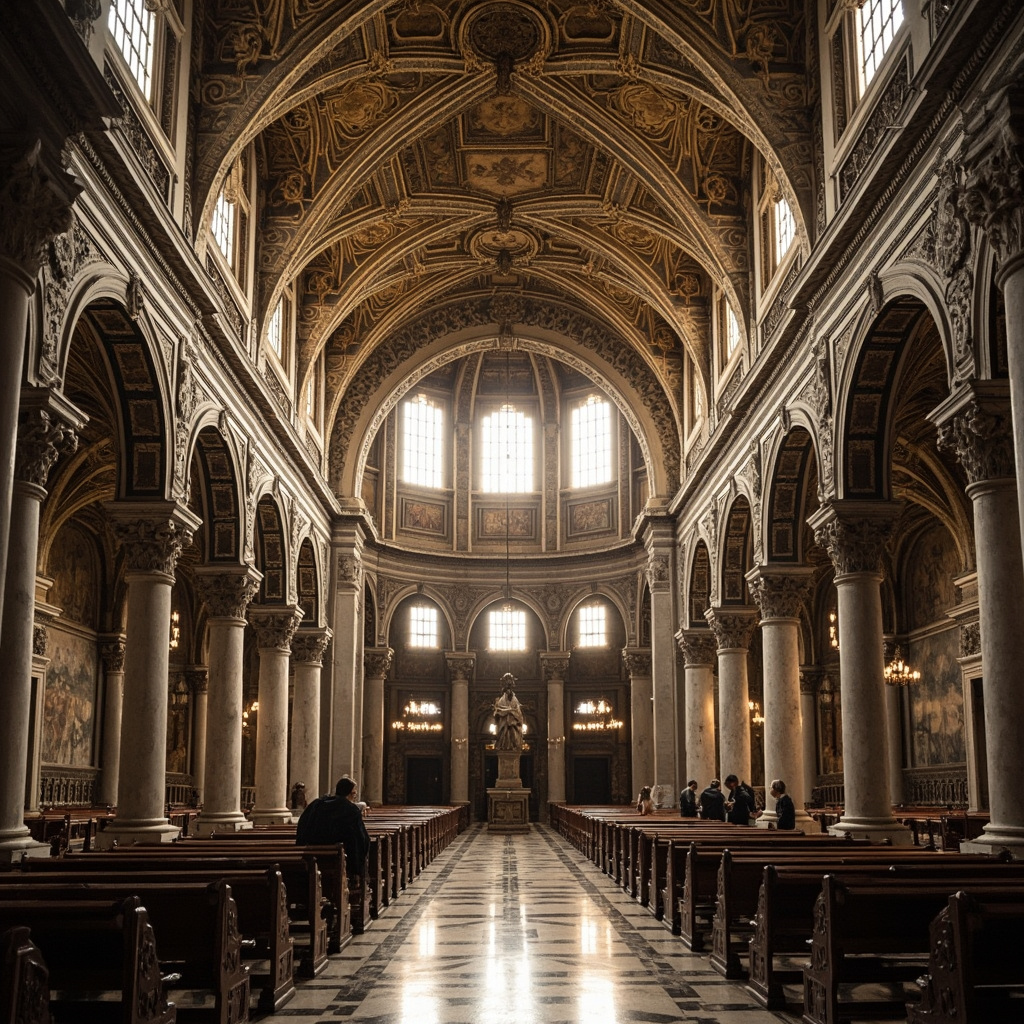
In early 897, Stephen VI made the unprecedented decision to put Pope Formosus on trial posthumously. The dead pope’s body was exhumed from its tomb in St. Peter’s Basilica after seven months of decomposition. The corpse was then dressed in papal vestments and propped up on a throne in the Basilica of St. John Lateran for what would become known as the Cadaver Synod.

The Basilica of St John Lateran in medieval Rome where the Cadaver Synod took place

The trial was a grotesque spectacle. Stephen VI hurled accusations at the silent corpse, charging Formosus with perjury, violating canon law, and coveting the papacy. A deacon was assigned to speak for the dead pope, but the outcome was predetermined. The decomposing body, unable to defend itself, was found guilty on all charges.

The Aftermath and Divine Retribution

The consequences of the trial were swift and dramatic. All of Formosus’s acts as pope were declared null and void, his ordinations were invalidated, and the three fingers of his right hand used for blessings were cut off. The corpse was then stripped of its papal vestments, dressed in simple clothes, and thrown into the Tiber River.

However, the Roman people were horrified by this sacrilege. Popular outrage against Stephen VI grew, especially when an earthquake struck Rome shortly after the trial, which many interpreted as divine displeasure. By August 897, a popular uprising had deposed Stephen VI, who was subsequently imprisoned and strangled to death.

Historical Significance

The Cadaver Synod represents the absolute nadir of papal dignity during what historians call the “Dark Age” of the papacy. The event illustrates how completely the spiritual office of the pope had become subordinated to temporal political considerations. It also demonstrates the extreme lengths to which medieval rulers would go to legitimize their actions and delegitimize their opponents, even beyond the grave.

The trial’s aftermath led to a period of papal chaos, with multiple popes being elected and deposed in rapid succession. Pope Theodore II, Stephen VI’s immediate successor, had Formosus’s body retrieved from the Tiber and reburied with full honors. Later, Pope John IX formally nullified the Cadaver Synod and restored Formosus’s reputation.

Legacy and Lessons

The Cadaver Synod serves as a stark reminder of how political passion can corrupt even the most sacred institutions. It highlights the dangers of allowing temporal power struggles to override spiritual authority and human dignity. The event became a cautionary tale about the excesses possible when religious authority is subordinated to political revenge.

Today, the Cadaver Synod is remembered as one of history’s most extraordinary examples of posthumous justice gone wrong. It stands as a testament to the turbulent times of medieval Europe and the complex relationship between spiritual and temporal power that would continue to shape European history for centuries to come.

Related Reading

The Taiping Rebellion: When Jesus Christ’s ‘Brother’ Led the Deadliest War in Human History

In the mid-19th century, while America was tearing itself apart in the Civil War, an even more catastrophic conflict was raging on the other side of the world. The Taiping Rebellion in China lasted 14 years, claimed over 20 million lives, and was led by a man who believed himself to be the younger brother of Jesus Christ. Yet this massive war—one that killed more people than World War I—remains largely unknown outside of China.

A Failed Scholar’s Divine Vision

Hong Xiuquan was supposed to be a success story. Born into a Hakka farming family in Guangdong Province, he was a brilliant student who ranked first in lower-level civil service examinations. But the imperial examinations—China’s pathway to government positions and social advancement—proved to be his downfall. In 1836, at age 22, Hong failed the exams for the second time.

Hong Xiuquan reading Christian religious texts

The failure devastated him. On his way home, weak and demoralized, Hong hired a palanquin to carry him. An American Protestant missionary named Edwin Stevens approached him in Guangzhou, offering a Christian tract titled ‘Good Words to Admonish the Age.’ Hong accepted it, glanced at it briefly, and tucked it away. This seemingly insignificant encounter would change the course of Chinese history.

When Hong failed the exams again in 1837, he collapsed into bed upon returning home. What happened next would fuel one of history’s most devastating wars. Hong experienced vivid dreams where crowds of people carried him eastward. Attendants cured his ailments and gave him scrolls to read. A golden-bearded man called himself Hong’s father, bestowing upon him a new name—Hong Xiuquan—along with a golden seal, a greatsword, and a divine mission: to rid the world of demons.

The Christian Revelation

For six years, Hong’s family tolerated his eccentric behavior following his recovery. He called himself the ‘Heavenly King,’ wrote poems about fighting demons, and denied familial relations. But in 1843, after failing the imperial exams for the fourth time, Hong’s cousin urged him to actually read the Christian tract he had been carrying around.

The revelation was explosive. Through the missionary text, Hong finally understood his visions. The golden-bearded man was God the Father, and the helpful stranger was Jesus Christ—his elder brother. Hong had been chosen for a divine mission: to establish God’s kingdom on Earth and destroy the ‘demons’ of traditional Chinese religion—Buddhism and Confucianism.

Hong and his cousin baptized each other and commissioned a blacksmith to create three-foot, ten-pound ‘demon slaying swords.’ They promptly destroyed their collections of Confucian and Buddhist texts, shocking their communities. When Hong and his early converts destroyed Confucian monuments in their schools, they were fired from their teaching positions.

From Religious Movement to Rebellion

What began as a small religious sect grew rapidly into something far more dangerous. While Hong traveled to meet with Baptist missionary Issachar Jacox Roberts in 1847 (leaving unbaptized but with a Bible), his follower Feng Yunshan had been busy in the Thistle Mountains. Feng established the ‘God Worshipping Society,’ which attracted converts from all walks of life by deterring bandits and pirates in the region.

Historic siege of Nanjing city walls

The Qing dynasty could no longer ignore this growing movement. When imperial forces moved against the God Worshippers in the mountains, it provoked exactly what the government feared most—armed resistance. In December 1851, Hong gathered 10,000 believers in the city of Jintian, drove out the Qing forces, and proclaimed himself ‘Heavenly King of the Taiping Kingdom.’

The rebels moved north along the Xiang River, building their numbers by ‘baptizing’ new converts and seizing resources. After a series of sieges, they captured their greatest prize in May 1853: Nanjing, the former imperial capital. Hong had his kingdom.

The Heavenly Kingdom’s Radical Experiment

Hong’s rule of Nanjing revealed the extremism beneath his religious movement. He retreated to the Presidential Palace, where he implemented a series of radical policies that would have been shocking even by today’s standards. All Manchu people in the city—members of the ethnic group that ruled the Qing dynasty—were executed. Landmarks were destroyed, traditional practices like footbinding and the queue hairstyle were banned, and trade was severely restricted.

Hong outlawed alcohol and opium, demanded strict segregation of men and women (even married couples), and seized all personal property to create a communist-style society. He rewrote the Bible, removing passages he found objectionable and adding accounts of his own divine visions. Meanwhile, Hong filled his palace with women servants and demanded absolute submission from visitors, driving away potential Western allies with cannon fire when they refused to kowtow.

The Bloody End

The Taiping Kingdom’s expansion continued for several years, but the tide turned when they attempted to capture Shanghai. Western powers, initially neutral, joined the Qing forces after being threatened by Taiping advances. European and Chinese soldiers fought side by side to repel the rebels, beginning the slow collapse of Hong’s kingdom.

By 1864, Qing forces had surrounded Nanjing, cutting off all food supplies. As his people starved, Hong assured them that God would provide wild vegetables for sustenance. To prove his point, he publicly ate a handful of weeds. He died of food poisoning 20 days later.

When Qing forces retook Nanjing, they showed no mercy. Hong’s body was cremated and his ashes fired from a cannon to ensure he had no resting place. His 15-year-old son briefly inherited the throne but was captured and executed within months.

A Legacy of Devastation

The Taiping Rebellion stands as one of history’s most devastating conflicts. Conservative estimates place the death toll at 20 million people, though some scholars suggest it may have reached 30 million. To put this in perspective, more people died in the Taiping Rebellion than in World War I, yet it remains virtually unknown in the Western world.

The rebellion’s impact on China was profound and lasting. The conflict weakened the Qing dynasty beyond recovery, contributing to its eventual fall in 1912. Later Chinese revolutionaries, including Sun Yat-Sen and Mao Zedong, drew inspiration from Hong’s efforts to create an egalitarian society, even as they rejected his religious extremism.

Perhaps most remarkably, this catastrophic war began with a chance encounter between a frustrated student and a missionary handing out pamphlets on a street corner. It serves as a stark reminder of how religious fanaticism, social unrest, and political upheaval can combine to create unimaginable human tragedy.

The man who believed he was Jesus Christ’s brother succeeded in toppling an empire—but at a cost that staggers the imagination even today.

Related Reading

When Medieval Courts Put Animals on Trial: The Bizarre Legal System That Executed Pigs and Prosecuted Rats

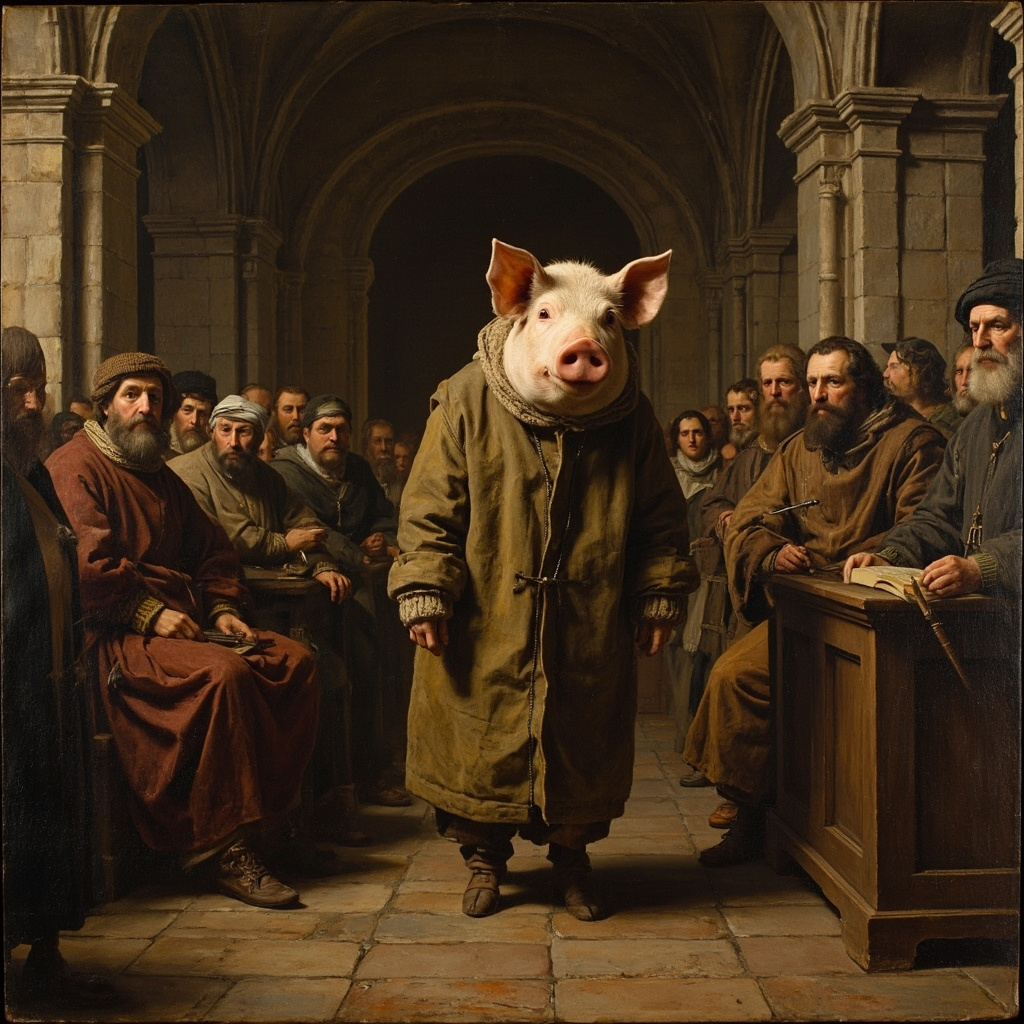
In 1386, in a Normandy market square, a pig dressed in human clothing was hanged for murder. This wasn’t a cruel joke or carnival spectacle—it was the solemn conclusion of a formal legal trial, complete with witnesses, evidence, and a court-appointed defense attorney. For centuries across medieval Europe, animals faced the same justice system as humans, resulting in some of history’s most bizarre courtroom dramas.

The Pig That Committed Murder

The legal records are chillingly detailed. In 1494, near Clermont, France, a young pig was arrested for having “strangled and defaced a child in its cradle.” Multiple witnesses testified that “on the morning of Easter Day, the infant being left alone in its cradle, the said pig entered during the said time the said house and disfigured and ate the face and neck of the said child… which in consequence departed this life.”

The judge, after weighing the evidence and finding no extenuating circumstances, delivered his verdict with the gravity befitting any capital case: “We, in detestation and horror of the said crime, and to the end that an example may be made and justice maintained, have said, judged, sentenced, pronounced and appointed that the said porker… shall be by the master of high works hanged and strangled on a gibbet of wood.”

A Legal System Gone Mad

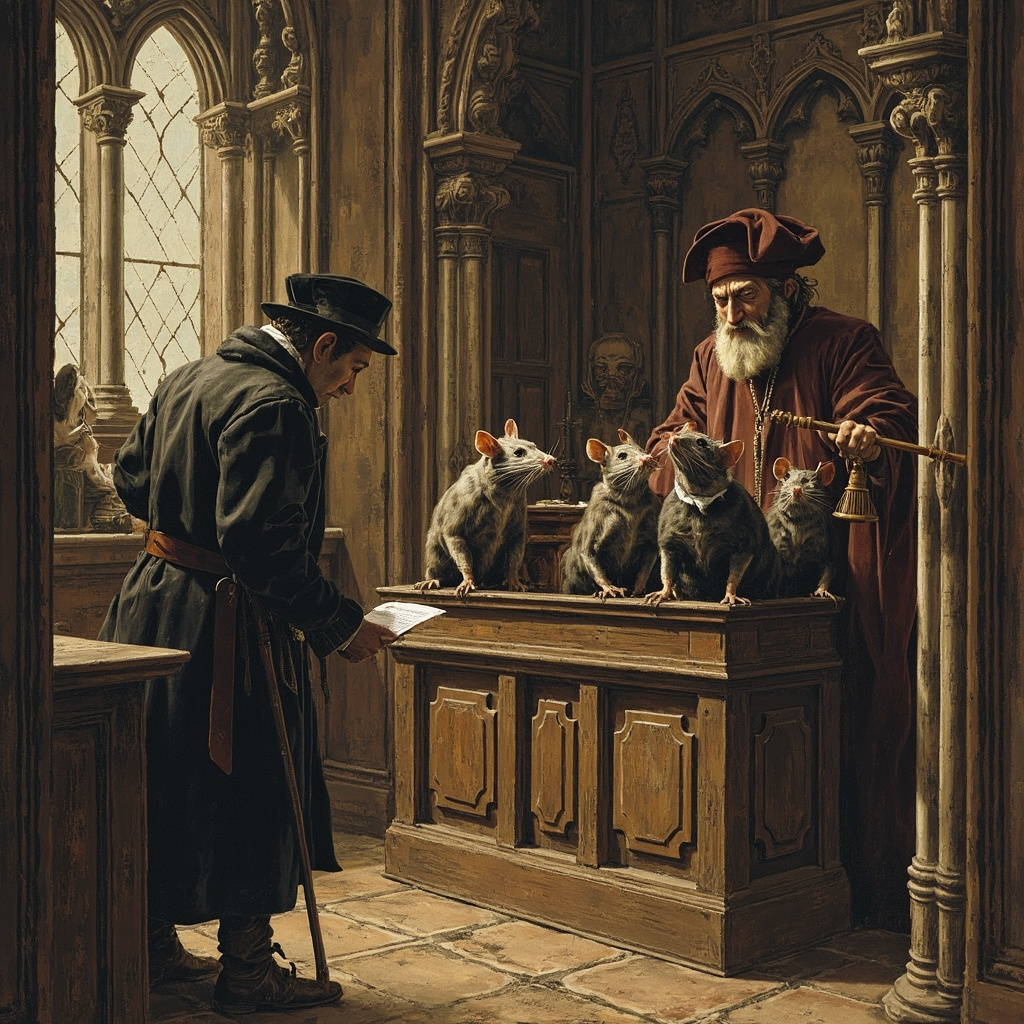
Medieval rats on trial in court

These weren’t isolated incidents of medieval madness. From the 14th through 19th centuries, European courts regularly tried animals for crimes ranging from murder to obscenity. Dogs, pigs, cows, rats, flies, caterpillars, and even sparrows found themselves in the dock, facing charges that could result in execution, banishment, or excommunication.

The trials followed full legal protocol. Courts appointed lawyers at taxpayer expense to defend the accused animals. Witnesses were called, evidence was presented, and lengthy legal arguments were made. Some trials dragged on for months, featuring respected jurists making erudite arguments about animal culpability and divine justice.

When Rats Hired a Lawyer

Perhaps the most famous animal defense attorney was Bartholomé Chassenée, a prominent French jurist who successfully defended a colony of rats in the early 16th century. The rats of Autun were charged with destroying local crops and summoned to appear in court.

Chassenée made a series of brilliant legal maneuvers. First, he argued that the summons was invalid because not all rats had been properly served—some lived too far away to receive notice. When the court agreed to re-issue a broader summons, Chassenée then argued his clients couldn’t safely travel to court due to the “unreasonable and unlawful” presence of cats along the route. The cats, he claimed, were “adversaries of the rat race” and made travel impossible.

Through such legal gymnastics, Chassenée successfully delayed proceedings indefinitely, essentially winning the case on a technicality. The rats were never executed.

The Religious Logic Behind Animal Trials

Medieval authorities genuinely believed these proceedings served divine justice. In their worldview, crimes committed by animals were the devil’s work, and failing to punish them properly would give Satan an opening to corrupt human affairs. Animals were seen as moral agents capable of sin, requiring the same legal accountability as humans.

Two distinct types of animal trials emerged. “Thierstrafen” were criminal proceedings against individual animals—usually domestic creatures that had killed humans. These cases invariably ended in execution. “Thierprocesse” were ecclesiastical proceedings against species or groups of animals—typically insects or vermin causing crop damage. These cases often resulted in religious excommunication or banishment.

Sparrows in the Dock

Even the tiniest creatures weren’t exempt. Church records show sparrows being prosecuted for chattering during religious services, disrupting the sacred atmosphere. Caterpillars faced charges for destroying vineyards. Flies were tried for contaminating food. In each case, the full weight of legal and religious authority bore down on creatures incapable of understanding the charges against them.

Some cases reached absurd extremes. A gang of weevils was once excommunicated by a Swiss court for damaging crops. Another French court formally banished a group of slugs from local gardens. The slugs, predictably, ignored the court order.

The End of an Era

As the Enlightenment took hold, animal trials gradually disappeared. The last recorded case occurred in Switzerland in 1906, when a dog was tried and executed for murder—a bizarre anachronism in the modern world. By then, most legal systems had recognized the fundamental absurdity of holding animals criminally responsible for their actions.

Yet for centuries, these trials represented the sincere attempt of medieval society to impose moral order on a chaotic world. In their own twisted logic, they reflected humanity’s deep need to believe that justice could triumph over nature’s apparent randomness—even if it meant putting a pig in a jacket and hanging it in the town square.

The elaborate legal records of these proceedings survive today as monuments to one of history’s strangest chapters—when the law truly was, as Charles Dickens later wrote, “an ass.”

The Glass King: When Charles VI of France Believed He Would Shatter at the Slightest Touch

In the annals of European history, few monarchs have suffered from such bizarre delusions as King Charles VI of France. For nearly three decades of his 42-year reign (1380-1422), this troubled ruler lived in constant terror of shattering into a thousand pieces—because he genuinely believed his body was made entirely of glass.

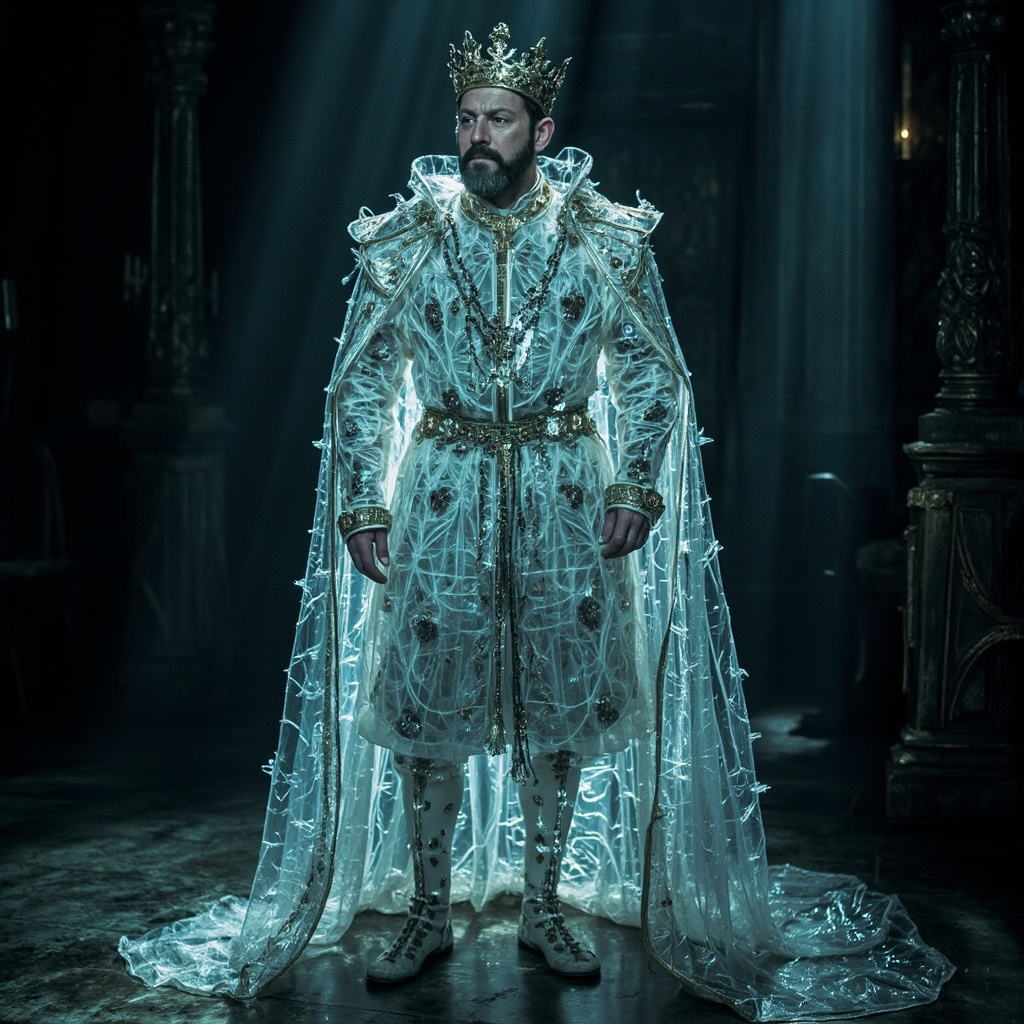
The “Glass King,” as historians would later call him, wrapped himself in specially reinforced clothing and forbade his courtiers from coming anywhere near him. His fear was so profound that he would spend hours standing motionless, convinced that the slightest movement or touch could cause his transparent body to explode in a cascade of deadly shards.

The Descent into Madness

Charles VI’s journey into this crystalline delusion began with a series of traumatic events that would haunt him for the remainder of his life. In 1392, at just 24 years old, the young king suffered what medieval chroniclers described as a fit of violent rage and paranoia during a military expedition. In his madness, he turned on his own men, slaughtering four of his knights before being subdued.

Medieval court scene with nobles in protective clothing around their fragile glass king

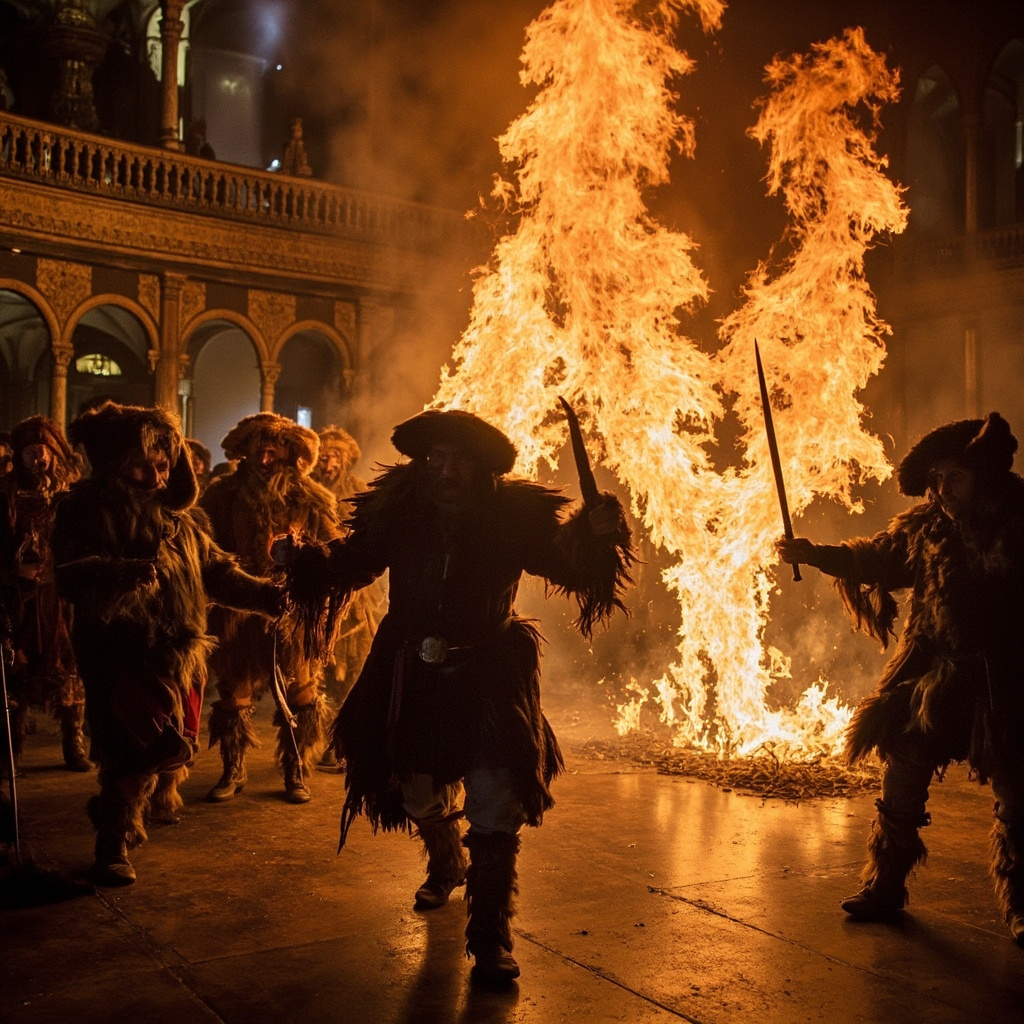
But it was the horror of 1393 that truly shattered the king’s mental state. During a court celebration known as the “Bal des Ardents” or “Dance of Burning Men,” Charles and five companions dressed as wild men in elaborate costumes of rags and animal fur. The event was meant to be a joyous masquerade, but it became a nightmare when an errant spark from a torch set the costumes ablaze.

The scene was pure medieval horror: six men writhing in flames, their screams echoing through the grand ballroom as courtiers watched in terror. Only Charles and one companion survived, but the psychological scars ran deeper than any physical burns. The king emerged from this traumatic fire convinced that he had been transformed—purified and vitrified in the flames like glass in a furnace.

Life as a Crystal Monarch

Charles’s glass delusion manifested in extraordinarily specific ways. He insisted on wearing iron rods sewn into his clothing to prevent his fragile limbs from bending and breaking. The king refused to allow anyone to touch him, believing that human contact would cause him to shatter instantly. His courtiers were forced to conduct all business from a safe distance, creating one of history’s most unusual royal protocols.

The Bal des Ardents fire scene showing courtiers in wild man costumes catching fire

The king’s hygiene suffered dramatically under his delusion. He went months without bathing, convinced that water would cause his glass body to crack. In November 1405, after refusing to wash for five months and becoming covered in infected sores and lice, palace physicians were forced to hold him down and bathe him against his will. Even then, Charles screamed throughout the ordeal, certain that each splash of water would be his last.

During his lucid intervals—for the delusion came and went like a recurring nightmare—Charles would recognize the absurdity of his condition. But when the glass delusion gripped him, no amount of reasoning could convince him that he was made of flesh and blood rather than fragile crystal.

The Glass Epidemic

Perhaps most remarkably, King Charles VI was not alone in his crystalline curse. The “glass delusion” swept through Europe between the 15th and 17th centuries, affecting scholars, nobles, and commoners alike. These unfortunate souls became convinced that various parts of their bodies—heads, arms, buttocks, or entire torsos—were made of glass.

One man believed his buttocks were glass and refused to sit down for fear of shattering. Another was convinced that the entire world’s surface was glass, beneath which lurked serpents, and he dared not leave his bed lest he crash through and fall among the snakes. A particularly tragic case involved a scholar who traveled to the famous glass-making island of Murano in Italy, hoping to throw himself into a kiln and be transformed into a beautiful goblet.

The Medical Understanding

Medieval physicians diagnosed glass delusion as a form of “melancholia”—what we might today recognize as severe depression with psychotic features. According to the medical theory of the time, health depended on balancing four bodily humors: blood, phlegm, yellow bile, and black bile. An excess of black bile, known as “vitrea bilis” (glassy bile), was thought to give the afflicted person’s internal fluids a glass-like appearance and properties.

Ironically, this same black bile was associated with scholarly brilliance and intellectual depth. The glass delusion was often called the “disease of scholars” because it seemed to disproportionately affect learned men—poets, philosophers, and academics who spent their days in deep contemplation.

Symbolism and Meaning

The glass delusion may have represented more than mere madness. In medieval and Renaissance culture, glass symbolized the fragility of human existence and the transparency of the soul. Vanitas paintings of the era often featured glass objects alongside wilting flowers and hourglasses to represent life’s ephemeral nature.

Glass also held mystical properties in the medieval imagination. It was believed to crack when touched by poison, making it a kind of supernatural detector of danger. Perhaps those afflicted with glass delusion saw themselves as living vessels that could reveal hidden threats—or conversely, as beings so pure and fragile that they existed on the edge between the physical and spiritual worlds.

Some historians speculate that the glass delusion reflected the era’s fascination with transformation and purification. Glass-making was seen as a form of alchemy—the magical transformation of humble sand and ash into something crystalline and beautiful. Those who believed themselves made of glass may have felt that they, too, had been transformed by trauma or divine intervention into something both precious and impossibly fragile.

The End of an Era

King Charles VI died in 1422, his reign having been marked by periods of brilliant lucidity alternating with episodes of profound madness. His glass delusion faded from the historical record, but the broader phenomenon continued for another two centuries before mysteriously disappearing from European culture.

Modern psychiatrists studying historical cases of glass delusion suggest it may have been a culturally-specific expression of what we now recognize as depressive or anxiety disorders. The particular form the delusion took reflected the symbolic and material culture of its time—just as modern delusions often involve technology, television, or contemporary fears.

The Glass King of France remains one of history’s most poignant examples of how trauma and mental illness can manifest in ways that reflect the deepest fears and beliefs of their era. Charles VI lived in constant terror of shattering, but perhaps it was his kingdom—torn by war, political intrigue, and social upheaval—that was truly the most fragile thing of all.

In the end, the king who feared breaking proved remarkably durable, ruling for over four decades despite his crystalline curse. His story reminds us that even in our most fragile moments, human resilience can be surprisingly strong—stronger, perhaps, than glass.

The Great Boston Molasses Flood: When 2.5 Million Gallons of Sticky Death Drowned a City

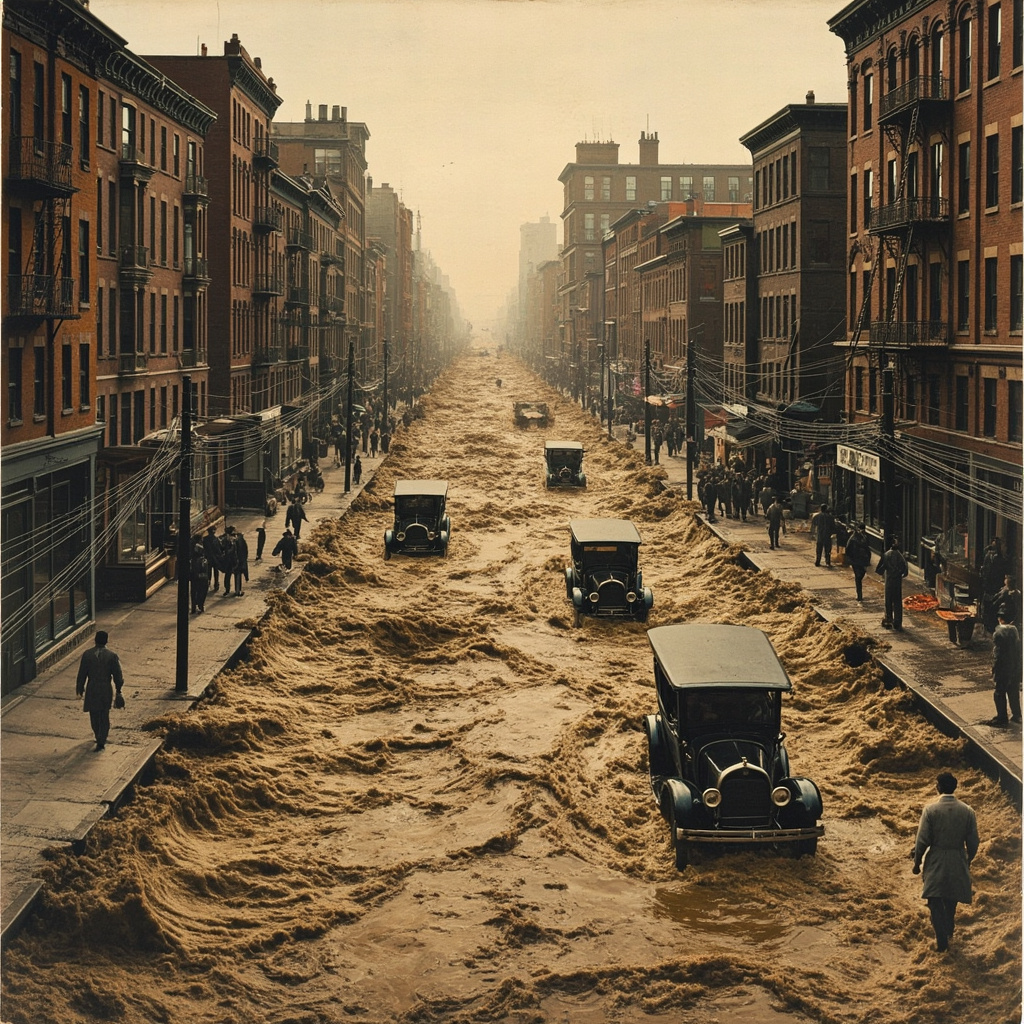
On January 15, 1919, at approximately 12:30 PM, Boston witnessed one of the most bizarre disasters in American history. A massive wave of molasses, standing 15 to 40 feet high and stretching 160 feet wide, raced through the North End at 35 miles per hour, killing 21 people and injuring 150 others. This was not the stuff of nightmares—it was the Great Boston Molasses Flood, a real catastrophe that would forever change how industrial safety was regulated.

The Doomed Tank That Started It All

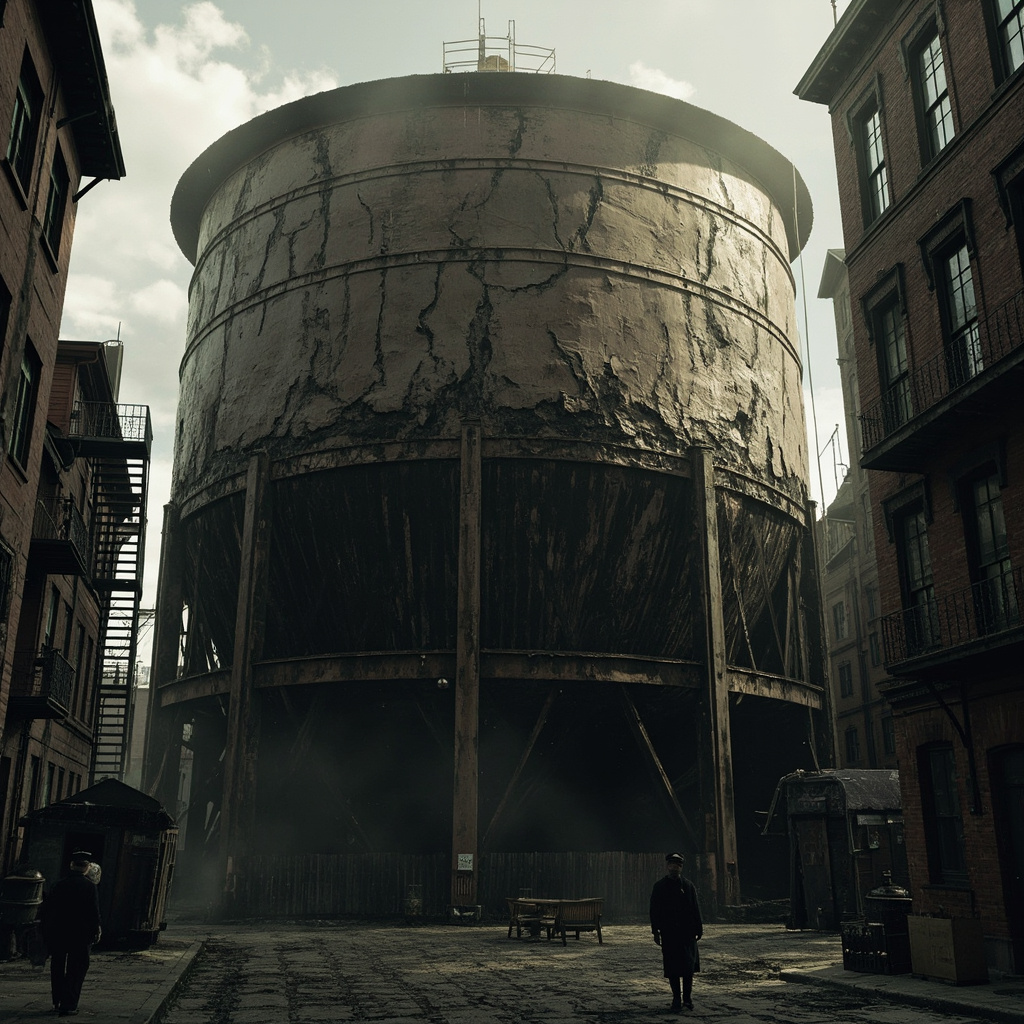
The massive molasses storage tank before the disaster

The disaster began with a storage tank that was a catastrophe waiting to happen. Built in 1915 by the United States Industrial Alcohol Company (USIA), this steel behemoth measured 50 feet tall and 90 feet in diameter—large enough to hold 2.3 million gallons of molasses. The tank was constructed hastily to meet wartime demand for industrial alcohol, which was extracted from molasses and used in munitions production.

From the beginning, the tank showed alarming signs of structural weakness. Local residents reported that it leaked constantly, leaving the surrounding area sticky with molasses residue. Children in the neighborhood would collect the leaking molasses on sticks, turning the dangerous situation into a sweet treat. The tank also made disturbing groaning and rumbling sounds, which workers dismissed as normal settling.

A Perfect Storm of Negligence

The tank’s construction was rushed and cheaply executed. The steel walls were dangerously thin—only half an inch thick in some places, when engineering standards called for much thicker walls to contain the enormous pressure of 2.5 million gallons of liquid. The rivets were poorly installed, and no proper load testing was ever conducted.

Arthur Jell, the USIA manager overseeing the tank, had no engineering background whatsoever. When concerned neighbors complained about the leaks and strange noises, Jell’s solution was to paint the tank brown to camouflage the molasses stains. No structural reinforcements were ever made.

Making matters worse, a fresh shipment of molasses had arrived just days before the disaster, filling the tank to near capacity. The molasses had been heated to help it flow, creating additional pressure against the already weakened walls.

The Day Everything Went Wrong

January 15, 1919, was unusually warm for a Boston winter, with temperatures reaching 43°F after days of bitter cold. This temperature fluctuation likely caused the molasses to expand, creating even more pressure against the tank walls. At exactly 12:30 PM, during the lunch hour when the streets were crowded with workers and pedestrians, the inevitable happened.

Witnesses described hearing a low rumble followed by a tremendous roar, like a freight train or machine gun fire. The tank’s rivets began popping like bullets, sending metal fragments flying through the air. Then, with a catastrophic failure, the entire tank burst open, releasing its contents in a devastating flood of “sweet, sticky death.”

The Wave of Destruction

Rescue efforts in the aftermath of the molasses flood

The molasses didn’t flow gently—it struck with the force of a tsunami. The initial wave was estimated to be 25 to 40 feet high, carrying enough force to demolish buildings, lift freight cars off their tracks, and snap steel support girders. The sticky brown mass moved faster than most people could run, trapping victims in its path.

The flood destroyed everything in its path. Entire buildings were lifted from their foundations and carried away. A firehouse was demolished, trapping firefighters inside. Elevated railway pillars were knocked down, and dozens of horses were killed. The molasses flowed outward in all directions, covering an area of several city blocks before finally coming to rest.

The Human Toll

The casualty list was heartbreaking. Among the 21 dead were longshoremen who had been working at the docks, children playing in the streets, and residents who simply happened to be in the wrong place at the wrong time. About half of the victims literally drowned in the molasses—the thick, sticky substance made it impossible for them to swim or even move effectively.

One of the most tragic victims was 10-year-old Antonio di Stasio, who was walking home from school when the wave struck. He was found days later, having suffocated in the molasses. Another victim, George Layhe, a postal worker, was crushed when the flood demolished the building where he was working.

The Cleanup Nightmare

The cleanup took weeks and proved almost as challenging as the disaster itself. Molasses had coated everything—buildings, streets, people, and even Boston Harbor, where it had flowed and turned the water brown for months afterward. The substance hardened in the January cold, making removal extremely difficult.

Cleanup crews tried everything: they used hot water, sand, and even saltwater from the harbor to dissolve and scrub away the molasses. The smell lingered for months, and residents claimed they could still detect the sweet scent on hot summer days for decades afterward.

Legal Aftermath and Industrial Reform

The disaster led to one of the longest and most complex legal cases in Massachusetts history. More than 100 lawsuits were filed against USIA, with victims and their families seeking millions in damages. The legal proceedings lasted six years and included testimony from nearly 1,500 witnesses.

The company initially tried to blame the disaster on anarchists, claiming that a bomb had destroyed the tank. This theory was quickly debunked by investigators who found clear evidence of structural failure. Ultimately, USIA was found liable and ordered to pay $628,000 in damages—equivalent to over $9 million today.

More importantly, the disaster led to significant changes in building codes and engineering standards. Massachusetts became one of the first states to require that all construction plans be reviewed and approved by licensed engineers and architects. The concept of professional oversight in industrial construction became standard practice across the United States.

Legacy of the Sweet Disaster

Today, a small plaque in Boston’s North End marks the approximate location of the disaster. The area has been transformed into Puopolo Park, where families now play where once molasses flowed. Local legend claims that on hot summer days, you can still smell molasses in the area—though city officials attribute this to the chocolate and candy factories that operated in the neighborhood for decades afterward.

The Great Boston Molasses Flood remains a powerful reminder of the importance of industrial safety and proper engineering oversight. It stands as proof that even the most unlikely disasters can occur when corner-cutting and negligence replace proper safety protocols. In an era when massive industrial accidents seemed almost commonplace, the molasses flood showed that no substance—no matter how seemingly harmless—could be underestimated when stored in massive quantities.

The disaster also holds the distinction of being perhaps the only flood in history where the victims couldn’t swim to safety, forever earning its place as one of the strangest and most tragic industrial accidents in American history.

The Romans Invented Self-Healing Concrete That Outlasted Our Modern Technology by 2,000 Years

When the Roman Empire fell in 476 AD, it left behind a legacy that continues to confound modern engineers: concrete structures that have stood for over two millennia while our contemporary buildings crumble after decades. The secret? Romans accidentally created self-healing concrete that repairs its own cracks—a technology we only rediscovered in 2023.

The Pompeii Discovery That Changed Everything

In 2025, archaeologists working at Pompeii made a remarkable discovery that would revolutionize our understanding of ancient Roman engineering. In a room frozen in time by Vesuvius’ eruption in 79 AD, they found untouched piles of quicklime and volcanic ash—the raw ingredients of Roman concrete still sitting exactly as construction workers had left them 2,000 years ago.

“I walked into an excavation in Pompeii a year-and-a-half ago and it was like travelling back in time to a construction site in the Roman empire,” says Admir Masic, the MIT chemist who led the groundbreaking research. “There were untouched piles of construction material vividly preserved.”

Close-up view of Roman concrete showing lime clasts and volcanic ash mixture

The Secret of Hot Mixing

For centuries, historians believed Romans followed the writings of Vitruvius, the 1st century BC architect who described mixing slaked lime with volcanic ash. But the Pompeii evidence revealed something far more sophisticated: Romans were actually using “hot mixing”—combining dry quicklime and volcanic ash first, then adding water to trigger an explosive chemical reaction reaching temperatures over 200°C.

This process created something remarkable: lime clasts—small white chunks scattered throughout the concrete that act like built-in repair kits. When cracks form and water seeps in, these lime clasts dissolve and recrystallize, automatically healing the damage.

Engineering That Surpasses Modern Technology

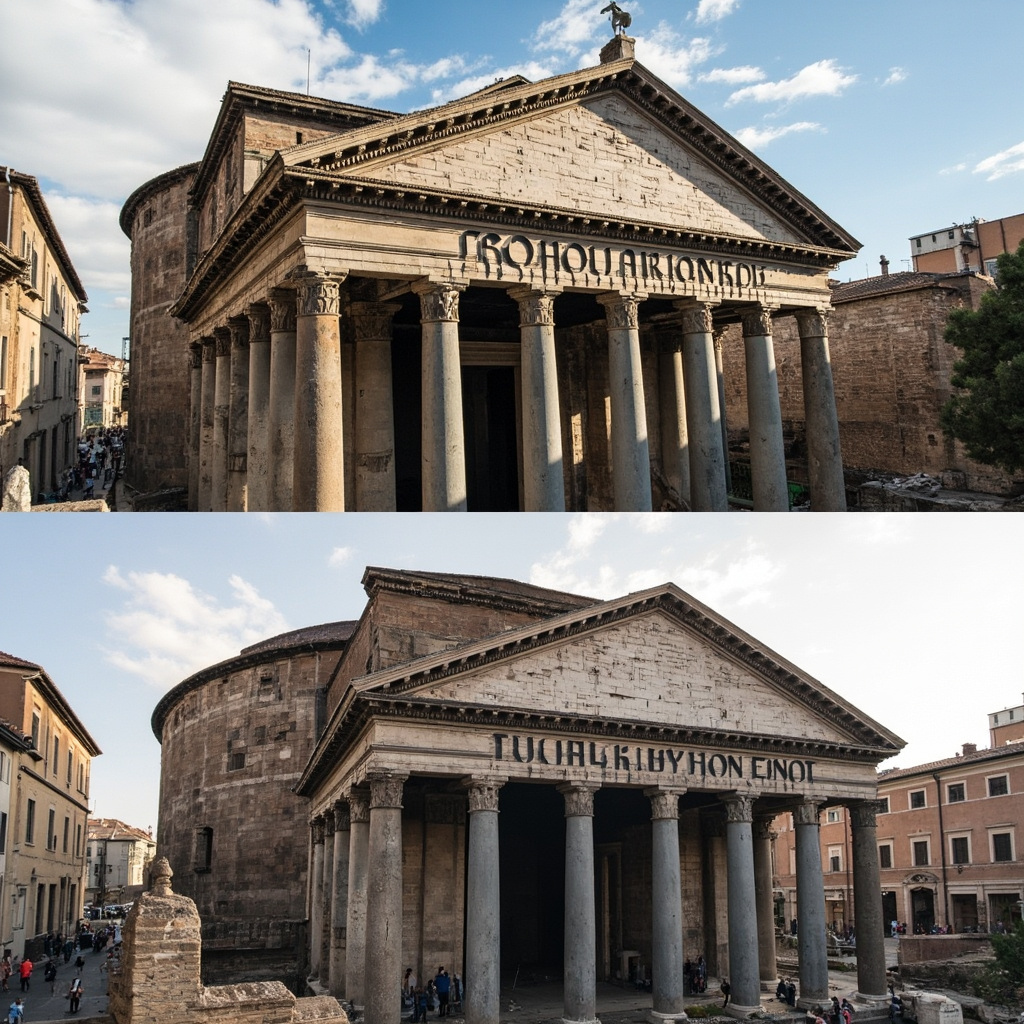
The implications are staggering. Roman concrete doesn’t just last—it actually grows stronger over time. While modern Portland cement structures deteriorate within 50-100 years, Roman buildings like the Pantheon (built in 126 AD) remain structurally sound after nearly 1,900 years.

Even more impressive: Roman concrete could set underwater, enabling harbor construction that modern engineers struggle to replicate. The material continues to strengthen through reactions with seawater, while contemporary concrete dissolves.

Comparison between cracked modern concrete and intact ancient Roman structures

The Chemistry of Immortal Buildings

Modern chemical analysis reveals the genius of Roman engineering. The lime clasts create reservoirs of calcium that can dissolve and reform various calcium carbonates, or react with volcanic ash to create new aluminosilicates. This essentially restarts the cement-making process, filling fissures and healing defects automatically.

“This is not an archaeology paper. It’s a badass chemistry paper,” Masic emphasized, noting that isotope analysis confirmed the dry pre-mixed material was indeed quicklime—proving the hot mixing technique.

Why We Lost This Knowledge

The fall of Rome didn’t just end an empire—it severed technological knowledge that took 1,500 years to rediscover. Medieval builders lacked the organizational capacity and technical expertise to maintain Roman concrete production. By the Renaissance, architects had forgotten the original techniques entirely.

Modern Portland cement, developed in the 1800s, prioritizes quick setting and standardized production over longevity. We traded durability for convenience, creating buildings designed to be replaced rather than repaired.

Implications for the Future

As climate change demands sustainable construction that lasts centuries rather than decades, Roman concrete offers a roadmap. Researchers are now working to recreate these ancient formulations using modern volcanic ash sources, potentially revolutionizing how we build.

The Romans didn’t just build an empire—they built it to last forever. Their concrete continues healing itself today, a 2,000-year testament to engineering excellence that makes our “advanced” technology look primitive by comparison.