The Burning of the Savoy Palace: The Rebels’ Fury Against John of Gaunt


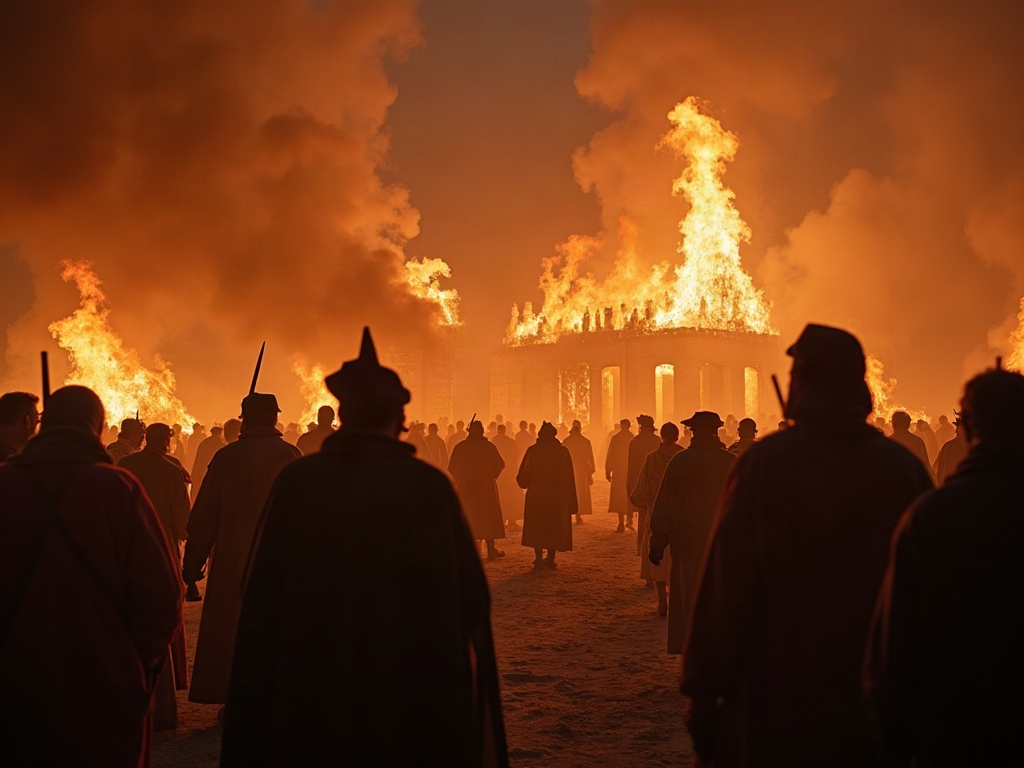
On the evening of 13 June 1381, Londoners standing on the north bank of the Thames watched the sky above the Strand turn the colour of a furnace. The greatest private house in England was on fire. Tapestries that had cost a fortune were feeding the flames; gold and silver plate was being battered flat or hurled into the river; a library of manuscripts was curling into ash. The Savoy Palace, home of John of Gaunt, Duke of Lancaster, was being deliberately, methodically destroyed by an army of farm labourers, tilers, and village priests. And the strangest thing of all, the detail that every chronicler felt compelled to record, was that they were doing it without stealing a single thing.
The burning of the Savoy is the most vivid single moment of the 1381 Peasants’ Revolt, and one of the most misunderstood. It looks, at a glance, like a mob run wild. Look closer and it was something far more disciplined and far more frightening to the men who ruled England: a political act, aimed with terrible precision at the one man the rebels blamed for everything wrong with the realm.
The Grandest House in England
The Savoy stood on the Strand, the road that ran between the walled City of London and the royal palace of Westminster, with its gardens sloping down to the Thames. By 1381 it was not so much a house as a small fortified town of luxury — a sprawl of halls, chapels, cloisters, chambers, and stables that contemporaries reckoned the most beautiful nobleman’s residence in the kingdom. It had passed to John of Gaunt through his first marriage to Blanche of Lancaster, and he had filled it with the accumulated wealth of the greatest private fortune in England: hangings of cloth-of-gold, jewelled vestments, silver plate by the ton, and furnishings fit for the king himself.
To a ploughman from Kent or Essex who had spent his life in a one-room cottage, the Savoy was not merely rich. It was an insult made of stone and gold — the physical proof of a world in which a handful of men lived like emperors while the people who fed them were told by law that they could not so much as ask for a better wage. It was the perfect target, and the rebels knew exactly whose it was.
Why John of Gaunt Was the Most Hated Man in England
John of Gaunt was the third surviving son of Edward III and the uncle of the boy king Richard II, who was only fourteen in the summer of 1381. With the old king dead and the young one still a child, Gaunt was the richest and most powerful magnate in the land, and in the popular mind he was the man really running the government — and running it badly.
Everything the commons hated seemed to lead back to him. The costly, humiliating failures of the war with France were laid at his door. The corruption of the royal council was blamed on his circle. And above all there was the poll tax of 1381, the third such levy in four years, a flat charge that fell as heavily on a labourer as on a lord and which had lit the fuse of the whole rising. Rumours swirled that Gaunt was a traitor, even that he meant to seize the throne for himself. He was, quite simply, the face of a ruling class that the rebels had come to London to break. When they spoke of punishing the “traitors” around the king, John of Gaunt’s name stood at the very top of the list.
13 June 1381: The Rebels Reach the Strand
The men who burned the Savoy had marched a long way to do it. Following the outbreak in Essex and Kent, the rebel host under Wat Tyler had moved on the capital, and on 13 June — Corpus Christi, one of the great feast days of the medieval year — they poured across London Bridge into the city itself, helped by sympathisers within the walls who lowered the drawbridge rather than hold them out. London, it turned out, was full of people who agreed with them.
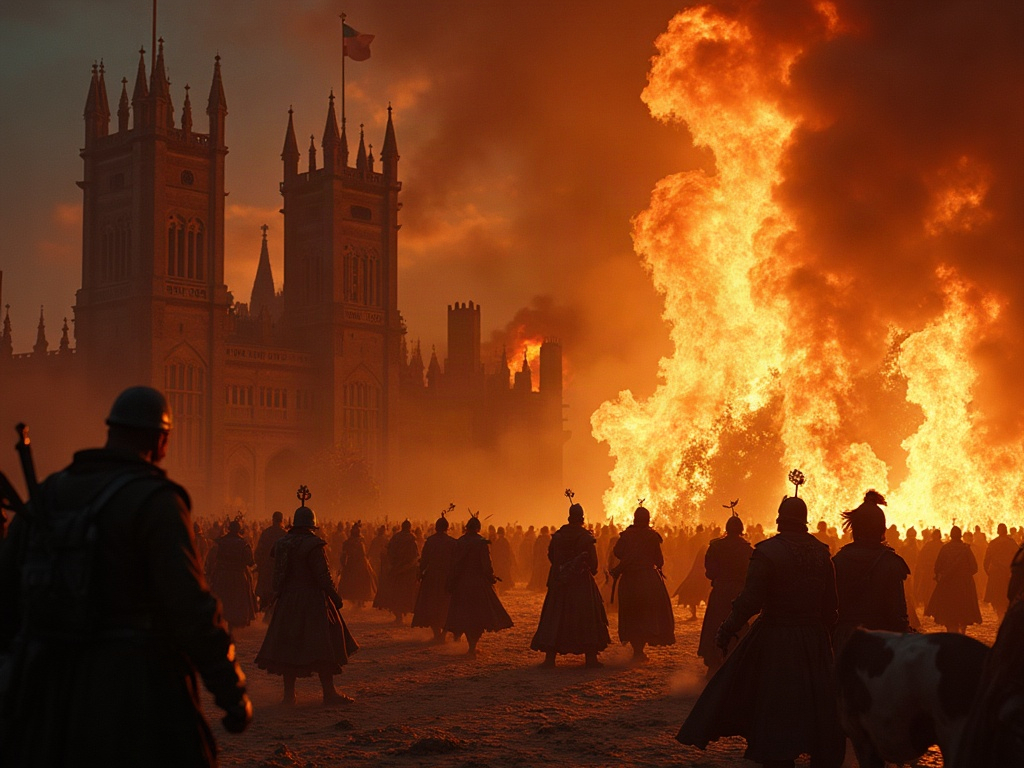
Some of the rebels struck east toward the Tower. But a great body of them turned west, out along Fleet Street and the Strand, opening the prisons and settling scores as they went, until they reached the gates of the Savoy. There was no army to stop them. The palace’s defenders were few, and its master was not even there. John of Gaunt, by a stroke of fortune that almost certainly saved his life, was hundreds of miles to the north, on the Scottish border near Berwick, negotiating a truce. He would spend the days of the revolt in the north, hearing only rumours of what was being done to his home and his name.
Destruction, Not Plunder: The Rebels’ Strange Discipline
What happened next is the detail that has echoed down the centuries. The rebels did not sack the Savoy in the ordinary sense. They destroyed it, but they refused to rob it — and they enforced that refusal on pain of death.
The chroniclers, hostile though most of them were to the rising, agree on the essentials. The rebels declared themselves “zealots for truth and justice, not thieves or robbers,” and set about proving it. Cloth-of-gold and fine hangings were torn down and thrown into the fire or the river. Silver and gold plate was smashed with axes so that no one could profit from it. Precious stones were reportedly ground to powder in mortars. Barrels of the duke’s goods were carried out and pitched into the Thames rather than carried off.
And when one man was caught quietly slipping a piece of silver into his clothing, his own comrades seized him and, according to the chronicles, flung him into the flames — or into the river to drown — as a thief who had betrayed the cause. It is one of the most extraordinary moments in the whole revolt. These were poor men standing knee-deep in a fortune they could have carried away and lived on for the rest of their lives, and they chose instead to annihilate it, and to kill one of their own for the sin of greed. This was not looting. It was a statement: we have not come to enrich ourselves, we have come to destroy the thing itself.
The Wine, the Powder, and the Men Who Never Came Out
Not every rebel kept his discipline. Beneath the Savoy lay the duke’s cellars, and a party of men broke into them and fell on the wine. Drunk and careless as the fires above them spread, they were still down there when the burning palace began to collapse. The chroniclers tell that the cellar was sealed by falling stone and timber, trapping the men inside, and that their cries could be heard for days afterwards as they died slowly in the dark beneath the ruins — a grim footnote to a day of triumph.
There is a further, more dramatic story: that the rebels threw what they took to be barrels of gold or silver onto the fire, and that these were in fact filled with gunpowder, which blew out the heart of the palace in a great explosion. Whether or not that detail is literally true — medieval chroniclers loved a vivid ending — the outcome was not in doubt. By the time the fires burned down, the Savoy, the wonder of the Strand, was a blackened shell. It would never be rebuilt as a palace. For generations its ruins stood on the riverbank as a monument to a single afternoon of rage.
What the Burning of the Savoy Meant
It would be easy to file the destruction of the Savoy under mindless violence, and the men who ruled England did exactly that. But the manner of it says otherwise. The rebels did not burn at random; they burned the house of the one man they most blamed for their suffering, and they did it in a way calculated to show that they were not common criminals but a movement with a grievance and a code. This was of a piece with the wider revolt — with the demands they would soon lay before the king, with the preaching of John Ball that all men were made equal, and with the deeper anger that had been building ever since the Black Death set the stage and the Statute of Labourers tried to freeze the poor in their place.
John of Gaunt kept his life because he happened to be on the Scottish border, but he never forgot what had been done to his home; the shock of 1381 shaped him for the rest of his career. And the smouldering ruin on the Strand became the enduring image of the revolt — the moment the anger of the English commons stopped being words in a field and became fire on the skyline of the capital. For anyone drawn to the story by Paul Greengrass’s forthcoming film ‘The Uprising’, it is worth remembering that the most cinematic scene of the whole rising really happened, more or less as the chroniclers set it down: a palace of gold going up in flames, and the men who lit it refusing, on pain of death, to take a single coin.
Sources & further reading:
- The Anonimalle Chronicle (Peasants’ Revolt account)
- Peasants’ Revolt (Encyclopaedia Britannica)
- John of Gaunt, Duke of Lancaster (Encyclopaedia Britannica)
- Savoy Palace (British History Online / Survey of London)
Related Reading
- The 1381 Peasants’ Revolt: The Complete Story of England’s Great Rising
- The March on London: How the Rebels Seized the Capital in June 1381
- ‘The Uprising’ (2026): The True History Behind Paul Greengrass’s Peasants’ Revolt Film