The Boy Who Came From Nowhere: The Riddle of Kaspar Hauser

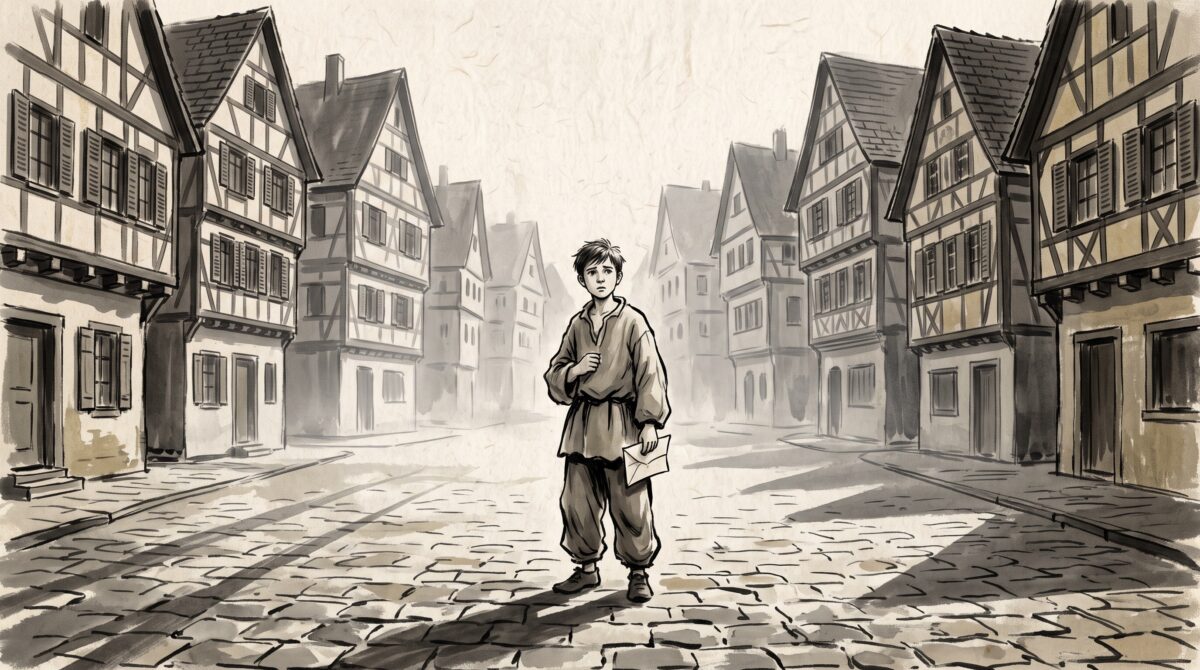
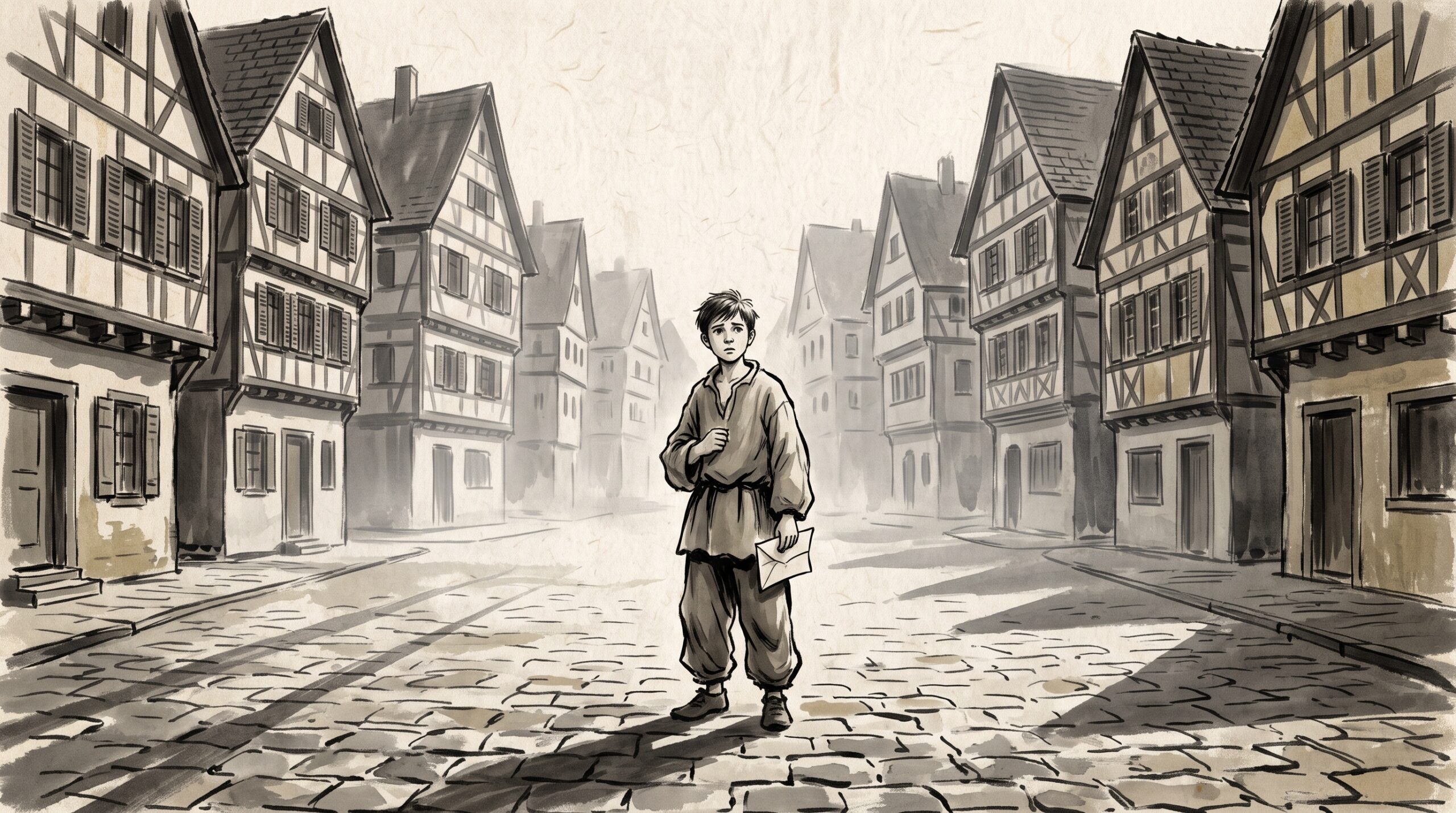
On the afternoon of Whit Monday, 26 May 1828, a boy appeared in a quiet square in Nuremberg as though the cobblestones had produced him. He was perhaps sixteen, dressed in ill-fitting clothes, and he walked with the stiff, tottering gait of someone who had rarely used his legs. When townspeople spoke to him he could only repeat a few memorised phrases — that he wanted to be a soldier ‘as my father was’ — and weep. He flinched from bright light. He recoiled from ordinary food, accepting only bread and water. In his hand he clutched a letter addressed to a captain of a local cavalry regiment. He could write one thing: his name. Kaspar Hauser. Where he had come from, he could not, or would not, say.
A letter and an impossible childhood
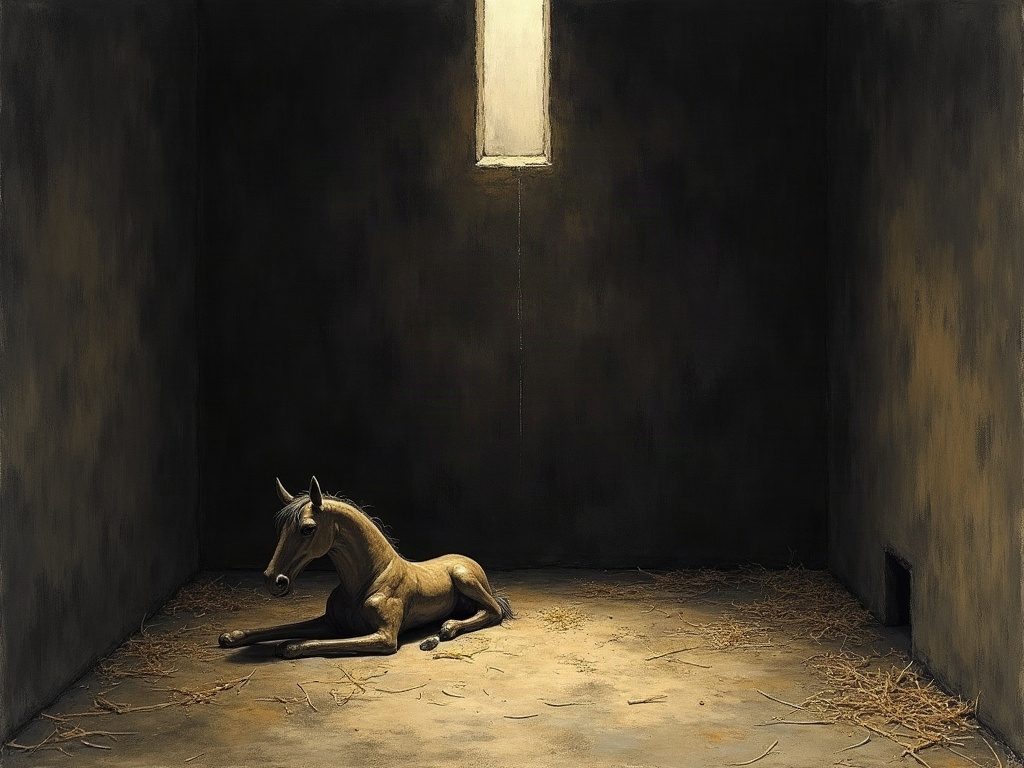
The letter told a strange tale. Its writer claimed to be a poor labourer who had taken the infant in back in 1812 and kept him hidden ever since, never letting him step outside or meet another soul, and now, unable to keep him any longer, was sending him to join the cavalry. A second note, purporting to come from the boy’s mother, was folded with it. When the authorities finally coaxed a story out of Kaspar himself, it was more astonishing still. For as long as he could remember, he said, he had lived alone in a cell so dark he had never seen the sky or another human face. He slept on straw. Food and water were left beside him while he slept. His only companion was a small carved wooden horse. A man he never clearly saw had, near the end, taught him to stand, to walk a few steps, and to write those two words — his name — before leading him, hooded, to the edge of the city and abandoning him.
The sensation of Europe
It was the sort of story that could not stay in one town, and it did not. Word of the boy raised in darkness swept across the German states and then the continent. Newspapers seized on him. Curious crowds came to stare. A local schoolmaster and philosopher, Georg Friedrich Daumer, took Kaspar into his home, taught him to read and reason, and recorded his rapid, uneven awakening to the ordinary world — his terror of the dark, his uncanny sensitivity to light and metal, the way he wept at music. Scholars measured him and debated him. Was he a genuine enfant sauvage, a mind blank from a lifetime of solitary confinement? Was he simply a clever vagrant who had spun a tale too good to check? The most powerful voice to take up his cause was the great jurist Anselm von Feuerbach, who investigated the case and reached a startling conclusion.
The prince who was swapped at birth
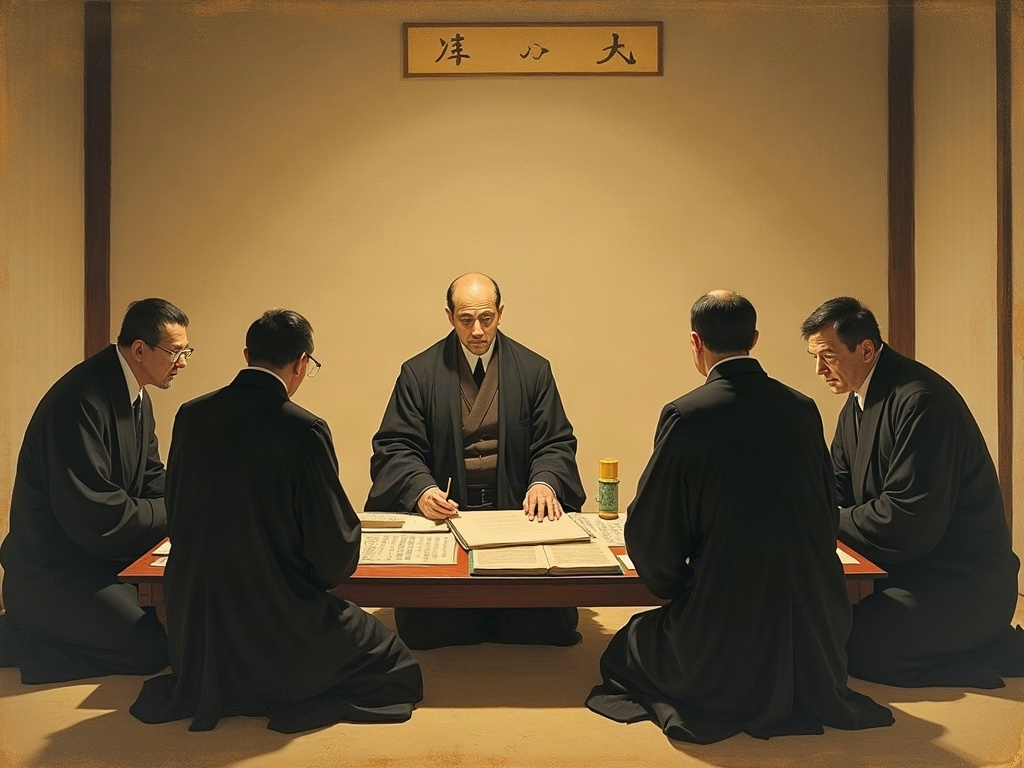
Feuerbach came to believe that Kaspar Hauser was no peasant foundling at all, but the hereditary prince of the House of Baden — the legitimate heir to a German throne, swapped in his cradle for a dying infant so that a rival branch of the family could inherit, then hidden away for years to keep the truth buried. It was a theory worthy of a fairy tale, and it electrified a public that adored a lost-prince story. It also, if true, gave powerful people a very good reason to want the boy silenced. And ominous things did begin to happen. In October 1829, Kaspar was found bleeding from a cut to the forehead in Daumer’s house, claiming a hooded man had attacked him. His protectors grew frightened. He was moved for safety to the town of Ansbach, placed under the eye of a stern schoolmaster and financed, for a time, by an eccentric English aristocrat, Lord Stanhope — who first embraced him as a curiosity and then, coldly, came to suspect the whole thing was a fraud.
Murder in the winter garden
On 14 December 1833, a stranger approached Kaspar in the snow-covered Court Garden at Ansbach. The man, he said afterwards, had promised to reveal at last the secret of his mother and his birth — and then drove a knife into his chest. Kaspar staggered home wounded. When searchers went to the garden they found little but a small folded purse containing a note written in mirror-image script, taunting and cryptic. Three days later, on 17 December, Kaspar Hauser died of the wound. Even his death split opinion down the middle, as it does to this day. To believers, it was the assassination the lost-prince theory had always predicted, the loose thread finally cut. To skeptics, the evidence pointed the other way: no second set of footprints was convincingly found in the snow, the wound may have been deeper than intended, and some concluded the desperate, attention-starved young man had stabbed himself to revive a public that was tiring of him, and misjudged the blow. There is a grim echo here of history’s other vanishing acts — the kind of case, like the three lighthouse keepers who disappeared without trace from a remote island, where the absence of evidence becomes its own maddening evidence.

Why the riddle still holds
Kaspar Hauser was buried in Ansbach beneath a headstone that named him, with fitting honesty, the riddle of his time: his birth unknown, his death mysterious. A memorial stone later raised in the garden where he was struck down reads, in Latin, that here a mysterious man was killed in a mysterious way. Nearly two centuries of investigation have not lifted the fog. Modern science was supposed to end the argument, and twice tried: a DNA analysis in the 1990s of blood from Kaspar’s clothing seemed to rule out the Baden bloodline, only for a later study of hair and tissue samples to muddy the result again, matching a Baden descendant closely enough to reopen every old question. He remains, like the two green-skinned children who once wandered out of a land no one could ever locate, a person history cannot quite file away. Perhaps that is why he endures. We want our mysteries solved, our lost princes restored or our frauds unmasked. Kaspar Hauser refuses both endings. He walked out of the dark into the brightest spotlight of his age, and he took the answer back into the dark with him.
Sources & further reading:
Related Reading
More from the archive
- The Boy Who Signed With an X: America’s Oldest John Doe Finally Gets His Name Back
- The Hinterkaifeck Murders: The Farm Where the Killer Lived in the Attic