The Boy Who Signed With an X: America’s Oldest John Doe Finally Gets His Name Back

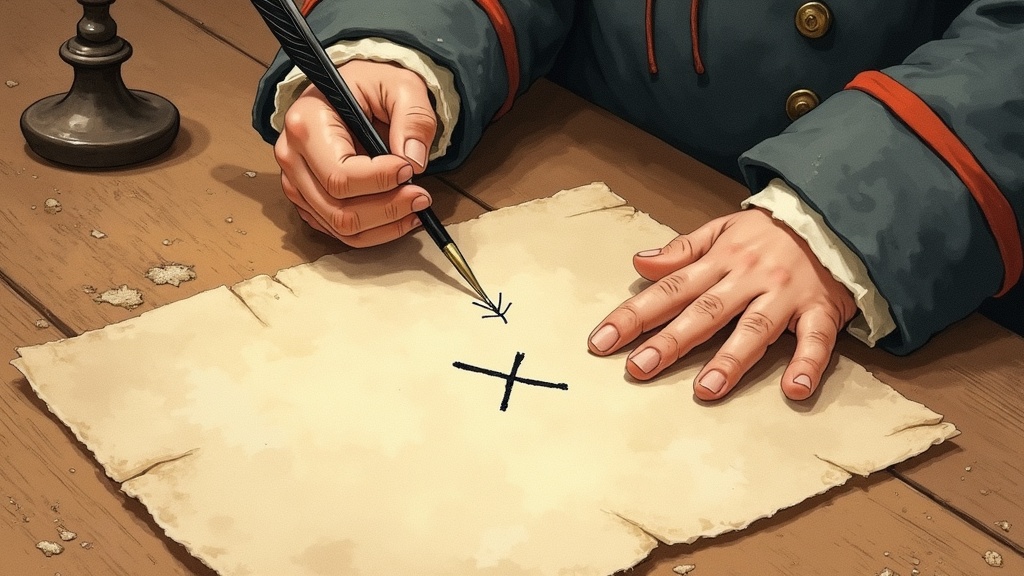
Sometime in 1777, in a Maryland recruiting room, a boy of about fourteen took up a pen he did not really know how to hold and drew one crooked mark on a sheet of paper. An X. It was the only signature he had. A clerk wrote out the name for him — John Pumphrey — and the boy set his mark beside it, and with that he belonged to the Continental Army of a country that did not yet exist. For the next two hundred and forty-six years, that X would be very nearly the only evidence that he had ever lived.
The Ground Shifts Under a Boy
The Pumphreys had not always been poor. A great-grandfather, a carpenter by trade, had brought the family from New Jersey down to the Baltimore area around 1713, and for a while the ground beneath them seemed solid — land, a name, a place in the county. Then it gave way. John lost both parents while he was still a child; by roughly the age of ten he was an orphan. After his father died, a cousin appears to have taken control of the family estate, and whatever inheritance might have steadied the children simply went elsewhere.
This is the quiet part of the story, the part with no documents. A boy of thirteen or fourteen in 1777, with no parents, no property, and no letters, did not have many futures available to him. The army fed you. The army paid you. The army did not ask whether you could write your own name.
A Thousand Miles on Foot
He enlisted in the Seventh Maryland Regiment and stayed. That alone is worth pausing over. The Continental Army bled men constantly to expired enlistments, disease, and desertion, and yet across three and a half years of service this boy marched more than a thousand miles with it. In 1779 he took a re-enlistment bounty of one hundred dollars and signed on again — a decision that reads, from a distance, less like patriotism or greed than like a young man choosing the only life he had.
Whatever he saw in those years, no one wrote it down. He left no diary, no letters home, no pension file, because pensions are for men who survive.
Camden
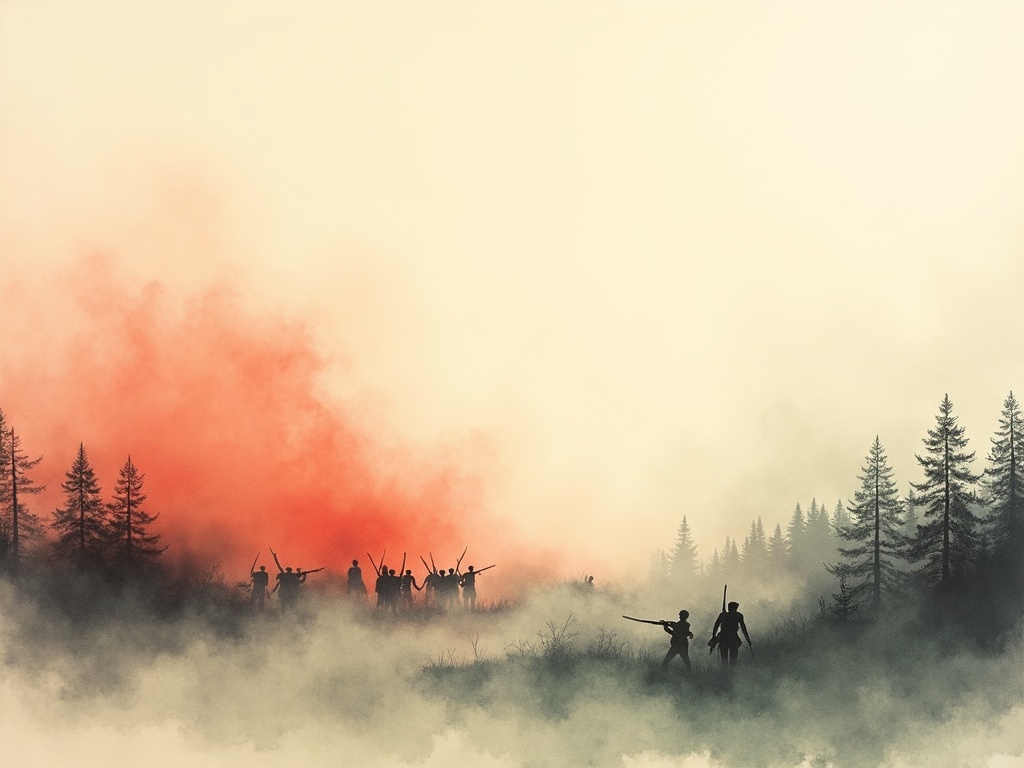
In August 1780 the war in the South came apart at a crossroads north of Camden, South Carolina. Roughly two thousand British troops met an American force of about four thousand — and routed them. Numbers had not saved the Americans. Many of them were desperately ill with dysentery, worn down by heat and bad food and worse water, and when the British line came on with bayonets, much of the militia broke and ran. It was one of the most humiliating patriot defeats of the entire Revolution.
Private John Pumphrey, seventeen or thereabouts, did not run far. He was buried where he fell, in a shallow unmarked grave on the field, and the army recorded him with the word it used for boys whose bodies no one could account for: missing. That was the whole of it. A mark on a paper, a thousand miles, and then a blank.
What the Detectors Found
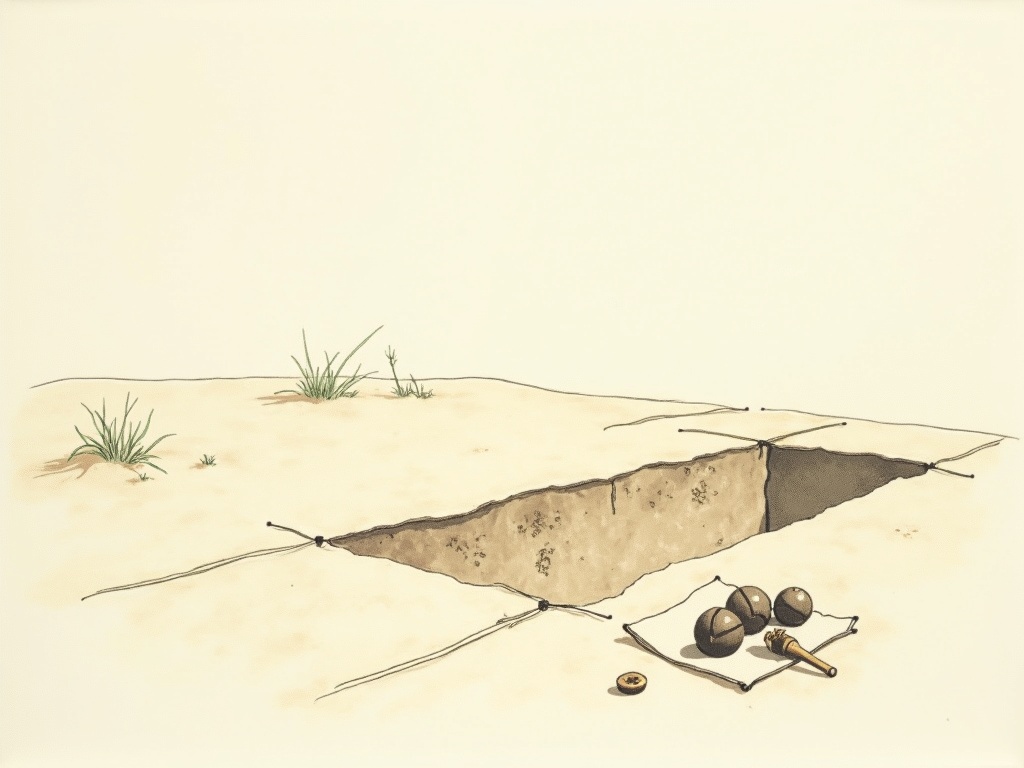
In 2020, archaeologists working the Camden battlefield with metal detectors were doing ordinary, patient work — mapping the fight by its debris. Musket balls. Buttons. The small hard litter that a battle leaves in the soil. Then they came across something that stopped the survey: two sets of human remains, breaking the surface of the ground.
Further investigation turned up not two men but fourteen, laid in shallow graves across the field where the line had collapsed. In 2022 they were carefully excavated and taken to the Richland County Coroner’s Office for anthropological examination. One of them was catalogued, without ceremony, as Camden 9B.
His bones spoke before his DNA did. The growth plates around his knees had not finished closing — the skeleton of someone still growing, still becoming an adult. There were no visible injuries to the bone at all, which meant he had almost certainly died of a soft-tissue wound. Given how the British closed that day, a bayonet is the likeliest answer.
The Oldest Profile They Had Ever Read
Naming him should not have been possible. FHD Forensics, a Texas firm that specializes in John Doe cases, took on the genealogy under its president, Allison Peacock. Astrea Forensics, an ancient-DNA laboratory in California, managed to extract and sequence usable DNA from two of the Camden soldiers, Camden 9B among them. They were the oldest genetic genealogy profiles that lab had ever produced.
Then came the part everyone expected to fail. Peacock’s team uploaded the profiles to FamilyTreeDNA and GEDmatch — databases whose users choose to allow forensic comparison — fully braced for the answer that nearly two and a half centuries had stretched the genetic distance too far, that no living American would light up. Instead the results came back pointing hard at the old families of Anne Arundel County, Maryland.
Three separate lines of evidence converged: autosomal DNA, the X chromosome, and the Y chromosome, all indicating the same young man. Archival research into the muster rolls and pay records of the Seventh Maryland closed the circle. Camden 9B was John Pumphrey. Peacock has noted that this appears to be the first time anyone who died in the 1700s has been identified through a genetic genealogy profile.
Twenty Thousand Cousins
The fourteen soldiers were reburied with full military honors in 2023, before anyone knew who they were. The identification was announced publicly in June 2026, and the announcement created something odd and moving: a family reunion for a boy who never had children.
Pumphrey was almost certainly too young to have fathered anyone. But his siblings and cousins did, and their descendants number in the tens of thousands — researchers counted roughly twenty thousand DNA matches among the living. When the news broke, some of them gathered in Baltimore, the city his great-grandfather had come to three centuries earlier. Rick Wise, executive director of the South Carolina Battleground Preservation Trust, told them that the boy had waited almost 246 years for his name to be spoken aloud again, and that the blood which ran in his veins runs in theirs.
The Names We Keep
James Legg, the archaeologist who helped lead the excavation, has said that the Revolution can feel almost like a mythology — a story everyone agrees took place but that few people quite believe was real, populated by figures in wigs and oil paint. Fourteen young men in shallow ground do not permit that kind of distance. Arriving as it does during America’s 250th anniversary, the discovery makes the eighteenth century abruptly, uncomfortably concrete.
Among the relatives who came to hear the announcement was Julie Strickland, who lives in Lugoff, South Carolina, a few minutes from the battlefield where he died. She was born a Pumphrey, given up for adoption at six weeks old, and spent much of her life finding her way back to both sides of her family. She put it about as well as it can be put: she began without a name, he ended without a name, and now they both know what it is.
History remembers generals. It has never had much room for a fourteen-year-old orphan who marked an enlistment paper with an X because no one had taught him the alphabet, walked a thousand miles for a cause he probably could not have described in writing, and was tipped into a hole in South Carolina clay. What has changed is not his importance — he was always exactly this important. What has changed is that we can finally say who he was.
Sources & further reading:
- Smithsonian Magazine — DNA Reveals the Identity of a Teenager Who Died in the Revolutionary War, Cracking a Nearly 250-Year-Old Cold Case
- FHD Forensics — Press release: Private John Pumphrey
More from the archive
- Benedict Arnold’s Forgotten London Grave: How America’s Most Infamous Traitor Died in Exile
- The Boy Who Came From Nowhere: The Riddle of Kaspar Hauser
- Wat Tyler: The Rebel Leader Who Nearly Toppled a King