Wat Tyler: The Rebel Leader Who Nearly Toppled a King


Almost everything we know about the man who led the greatest popular rising in medieval English history can be written in a single paragraph — and most of it is a guess. He steps onto the stage of history in the second week of June 1381, fully formed as the commander of an army of tens of thousands, and he is dead by the fifteenth. For those few days, Wat Tyler held the fate of England in his hands. Then he was cut down on a field outside London, and the moment passed. This is the story of the rebel leader who came closer than anyone before the Civil War to toppling an English king — and of how little, and how much, we truly know about him.
A man from nowhere
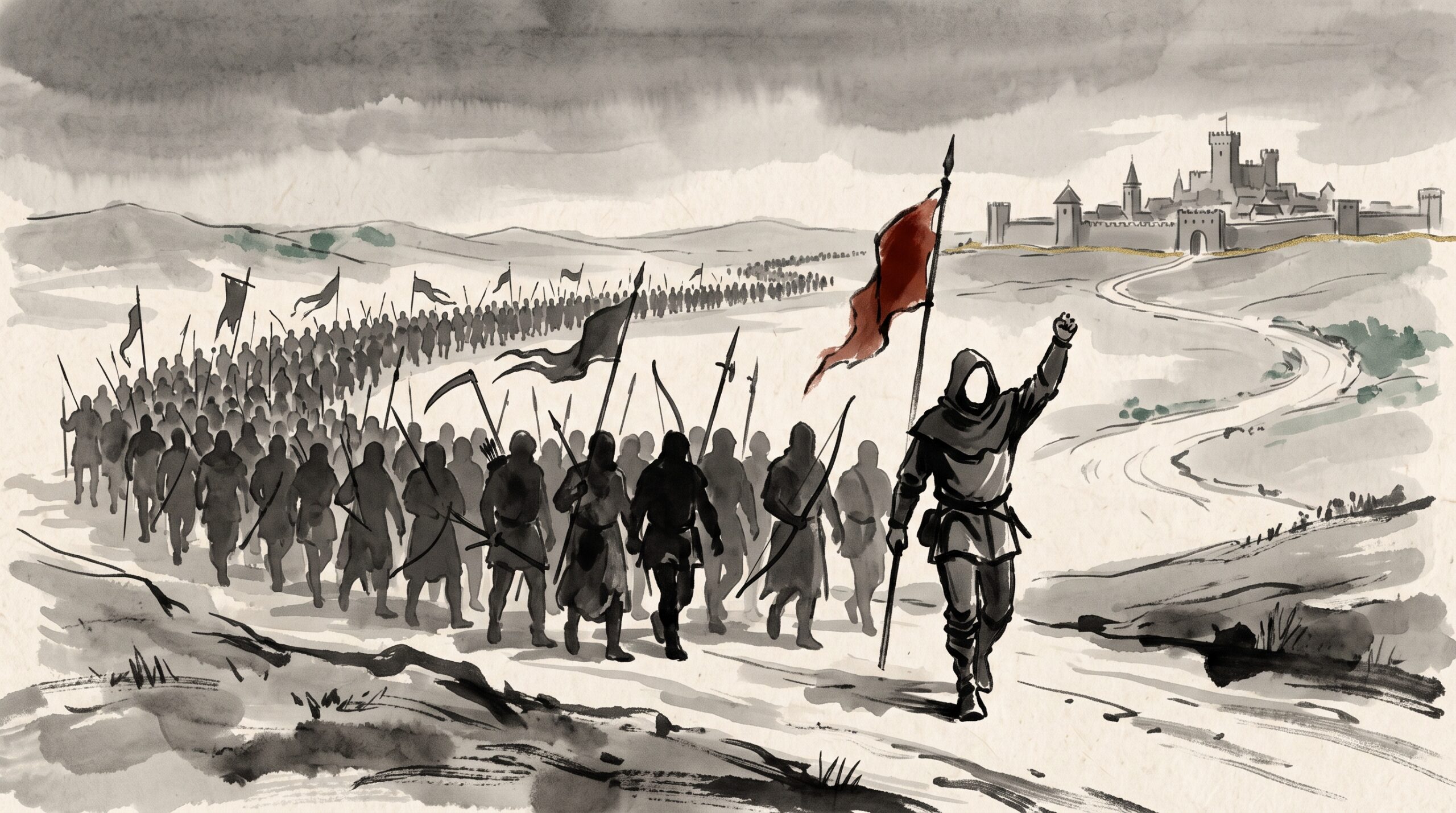
Where did Wat Tyler come from? The honest answer is that no one is certain. “Wat” is short for Walter, and “Tyler” was almost certainly a trade name — a man who laid roof tiles — rather than a family surname, which tells us he was a commoner of the artisan class rather than a peasant tied to the soil. The chroniclers place his origins in Kent or Essex; some later traditions name Maidstone or Colchester. One popular story, unverifiable and probably invented after the fact, has him killing a tax collector who assaulted his daughter. Beyond that, his birth, his age, and his life before June 1381 are simply blank.
That blankness is itself revealing. The men who recorded the revolt — the monk Thomas Walsingham of St Albans, the French chronicler Jean Froissart, and the anonymous author of the eyewitness Anonimalle Chronicle — were educated clergymen and courtiers who despised everything Tyler stood for. They had no interest in preserving the biography of a commoner. What they could not deny was his effect: within days of the rising crossing from Essex into Kent, this obscure man was its unquestioned leader.
The rising that found its leader
The revolt did not begin with Tyler. It began with a tax. The hated poll tax of 1381 — a flat levy that fell as heavily on a labourer as on a lord — sent commissioners into the countryside hunting for unpaid shillings, and at the end of May the villagers of Essex drove one of them off by force. The revolt leapt the Thames into Kent, and it was there, around 7 June, that the Kentish rebels chose Wat Tyler to lead them.
He proved to be a natural commander. Under his direction the rebels took Rochester Castle, sacked the archbishop’s palace at Canterbury, and freed the radical preacher John Ball from the archbishop’s prison at Maidstone. Then they turned for London, gathering numbers with every mile. What might have been a scattering of local riots became, in Tyler’s hands, a single coordinated march with a clear objective: to reach the young king, remove his corrupt advisers, and force a settlement. Much of this movement — the wider drama of plague, poll tax and a boy king — is the true history behind Paul Greengrass’s 2026 film, which you can read about in our companion piece, the true story behind The Uprising.
Discipline, not a mob
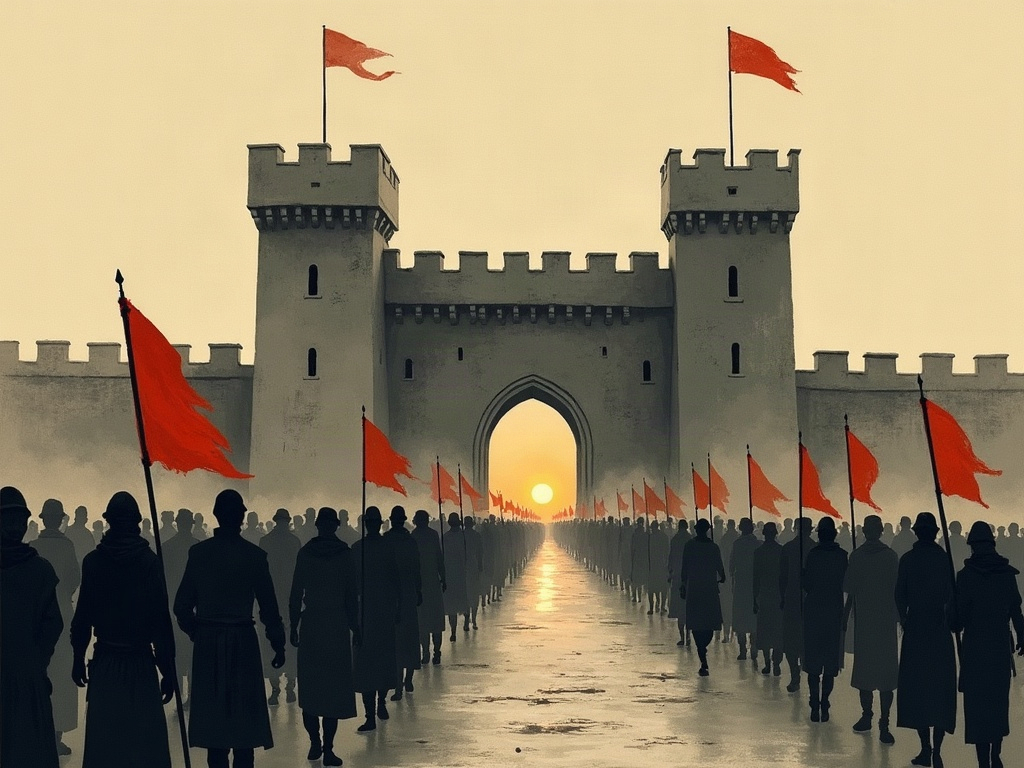
The most surprising thing about Wat Tyler’s army is how controlled it was. Medieval chroniclers expected the common people to behave like animals once loosed, and they were startled to find otherwise. When the rebels reached London on 13 June and the city’s poor threw open the gates, they made straight for the Savoy — the fabulously rich riverside palace of John of Gaunt, the king’s uncle and the most hated magnate in England — and burned it to the ground.
Yet according to the Anonimalle Chronicle, this was destruction with a code. The rebels smashed and burned Gaunt’s treasures but forbade looting: one of their own who was caught pocketing a piece of silver was executed by his fellows, who declared they were “zealots for truth and justice, not thieves.” They opened prisons, burned the legal records that bound serfs to their lords, and hunted down specific enemies — royal officials, lawyers, Flemish merchants — but they insisted they acted in the king’s name against his traitors. That restraint bore Tyler’s stamp. An uncontrolled mob does not execute its own looters; a disciplined movement with a cause does.
Mile End: the demands take shape
On 14 June the fourteen-year-old Richard II rode out to meet the rebels at Mile End, and there the king made astonishing promises: the abolition of serfdom, cheap land at fourpence an acre, an end to forced labour, and a general pardon. Clerks were set to work drawing up charters of freedom on the spot. It looked, for a moment, like total victory.
But Tyler and the hardest core of the rebels were not satisfied with paper. While the king parleyed, other rebels stormed the Tower of London and dragged out Archbishop Simon Sudbury, the Lord Chancellor and the official face of the poll tax, and Robert Hales, the Treasurer, and beheaded them on Tower Hill. Two of the highest officers of the realm were dead. Whatever happened next, there could be no quiet return to the old order — and Tyler, it seems, meant to press his advantage to the very end.
Smithfield: the demands that went too far
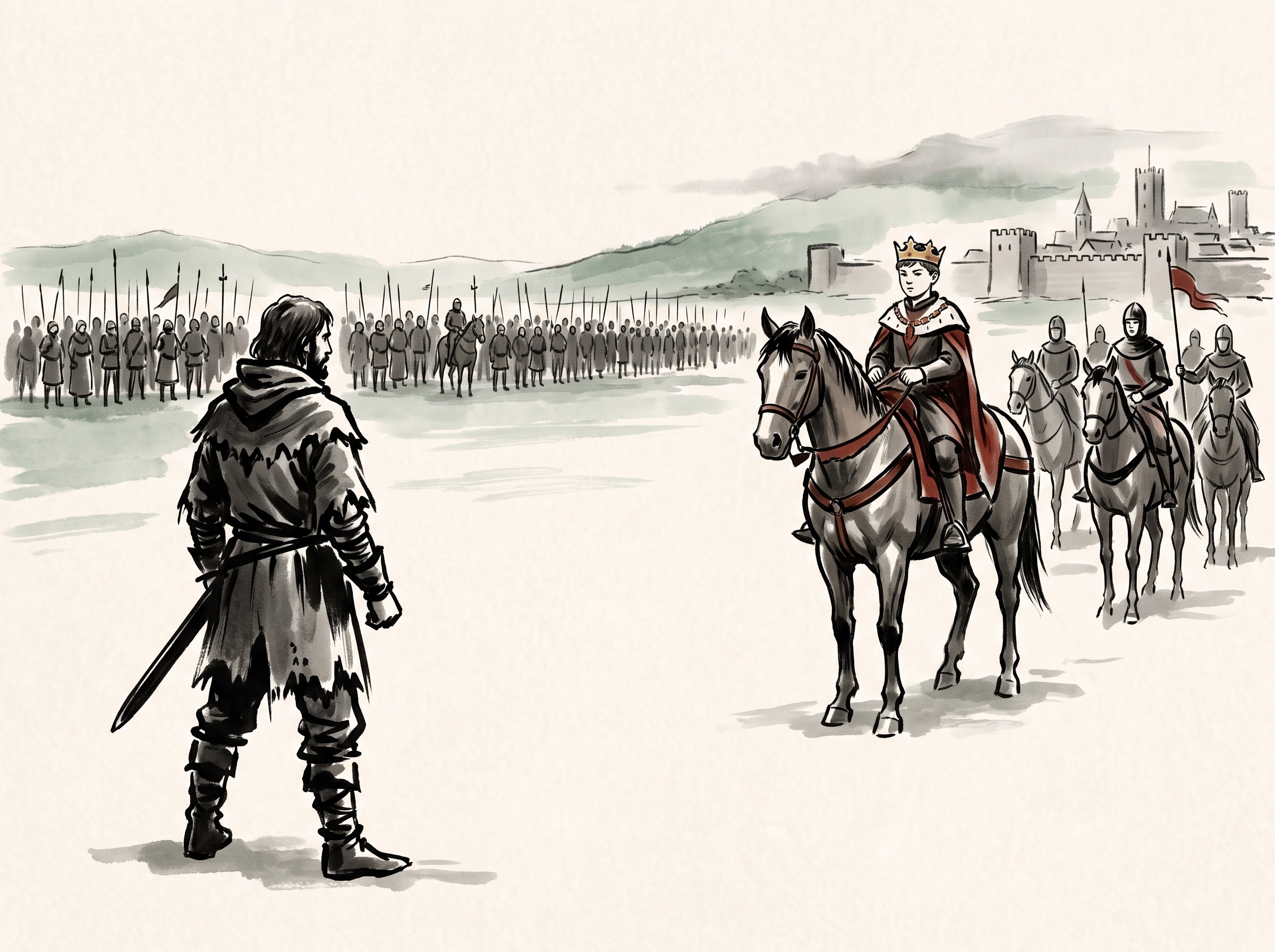
The climax came the next day, 15 June, at Smithfield, an open space just outside the city walls. Richard met the rebels again, and this time Wat Tyler rode out alone to speak for them. What he demanded, according to the Anonimalle Chronicle, went far beyond Mile End: the abolition of all lordship save the king’s, the end of the Church’s temporal wealth and the division of its lands among the people, an end to serfdom everywhere, and equality before the law for all men. It was, in effect, a demand to dismantle the entire social hierarchy of medieval England in an afternoon.
The accounts describe Tyler as supremely confident, even insolent, in the royal presence — calling for a jug of water and rinsing his mouth “in a rude and villainous manner” before the king, according to the horrified chronicler. He behaved not as a supplicant but as a man who believed he already held the winning hand. Perhaps he did. And perhaps that is exactly what frightened the king’s men into what they did next.
The killing of Wat Tyler
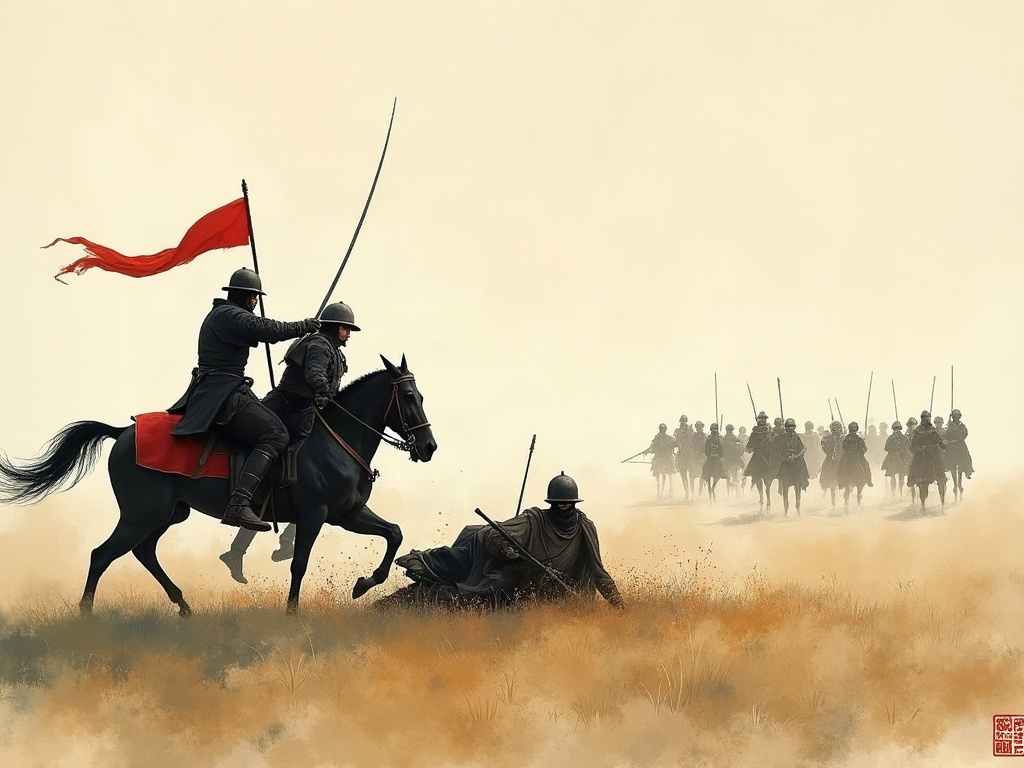
What happened at Smithfield next is confused in every source, because everyone present had reason to shade the story. A scuffle broke out — some say Tyler drew a dagger, some say a royal squire insulted him, some say the whole thing was engineered. In the chaos the Lord Mayor of London, William Walworth, struck Tyler with his sword, and others ran him through. The leader of the greatest revolt in English history was cut down in front of his own army, wounded and dragged into St Bartholomew’s hospital nearby, from which Walworth’s men later hauled him out and finished him, mounting his head where Sudbury’s had been.
For one heartbeat, England hung in the balance. A field full of armed men had just watched their commander killed, and they began to draw their bows. Then the teenage king did the boldest thing of his life: he spurred his horse forward, alone, toward the furious crowd and called out that he would be their captain now, and that they should follow him. Leaderless, stunned, and still clutching the worthless charters, they did. The rising’s beating heart had stopped with Tyler, and without him it could not go on.
The legend that outlived the man
The reprisals were swift. The charters were revoked, John Ball was hanged, drawn and quartered, and by some accounts around 1,500 rebels died in the crackdown. Wat Tyler had led England’s poor for barely a week, and in the cold ledger of results he failed: serfdom was not abolished by decree, the king kept his lords, and the hierarchy stood.
And yet no one who lived through June 1381 ever quite forgot it. The government never dared levy that poll tax again for centuries, and serfdom withered quietly over the following decades as lords found it easier to rent land than to hold men in bondage. More than any concession, it was the memory that endured — the astonishing fact that a roof-tiler from Kent, a man history cannot even name with certainty, had marched on London, executed the king’s chancellor, and made a monarch listen. Later generations of English radicals took his name as a banner; the eighteenth-century reformers who founded the Society for Constitutional Information looked back to him, and the poet Robert Southey wrote a play in his honour. Wat Tyler stepped out of nowhere, held a kingdom’s fate for a fortnight, and stepped back into the dark — but the shadow he cast has never quite left English history.
Sources & further reading:
- Wat Tyler (Encyclopaedia Britannica)
- The Anonimalle Chronicle account of the Peasants’ Revolt (British Library)
- The Peasants’ Revolt (The National Archives, UK)
- Peasants’ Revolt (Wikipedia)
Related Reading
- Smithfield: The Confrontation Where Wat Tyler Was Killed
- The March on London: How the Rebels Seized the Capital in June 1381
- Richard II at 14: The Boy King Who Faced Down the Peasants’ Revolt