Mansa Musa and the Hajj That Broke the Gold Markets of a Continent


In the summer of 1324, the people of Cairo watched a river of gold pour through their gates. It came from the west, out of the Sahara, in a caravan so enormous that the dust of it was said to darken the horizon: tens of thousands of travellers, ranks of servants in Persian silk, and camel after camel bent low beneath bundles of raw gold. At its head rode a man most of the wider world had never heard of – Mansa Musa, ruler of the Empire of Mali – and by the time he left Egypt, he would have given away and spent so much of that gold that its value would not recover for a decade.
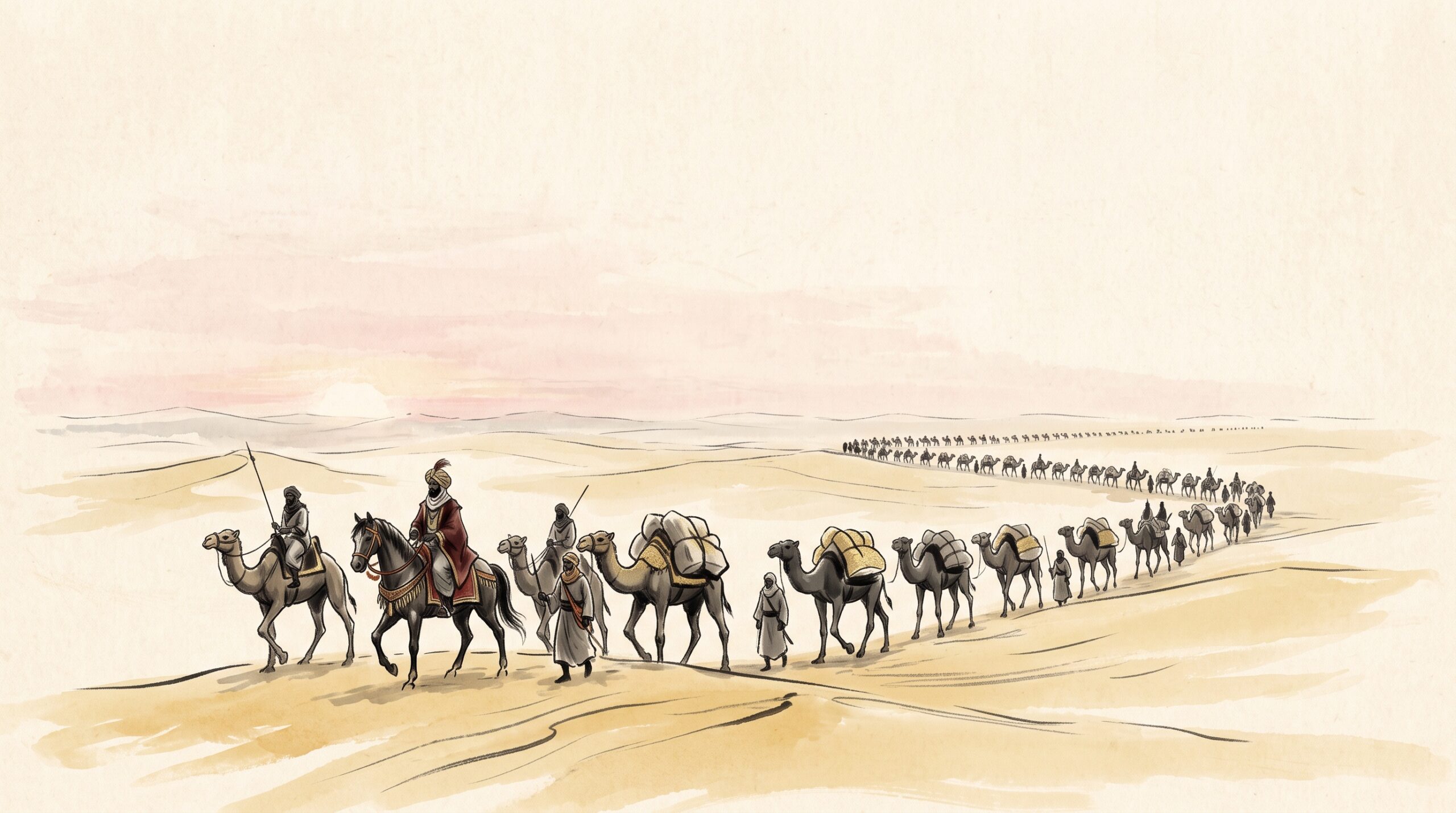
It is, by almost any measure, the most extravagant journey ever recorded – a pilgrimage of such staggering wealth that it single-handedly disrupted the economy of a great city and etched the name of a distant African kingdom onto the maps of Europe for the first time.
An empire built on gold and salt
To understand the caravan, you have to understand where it came from. By the early fourteenth century the Mali Empire sprawled across West Africa, from the Atlantic coast deep into the interior, straddling the upper reaches of the Niger River. It was vast, populous, and – crucially – it sat astride two of the most valuable commodities of the medieval world.
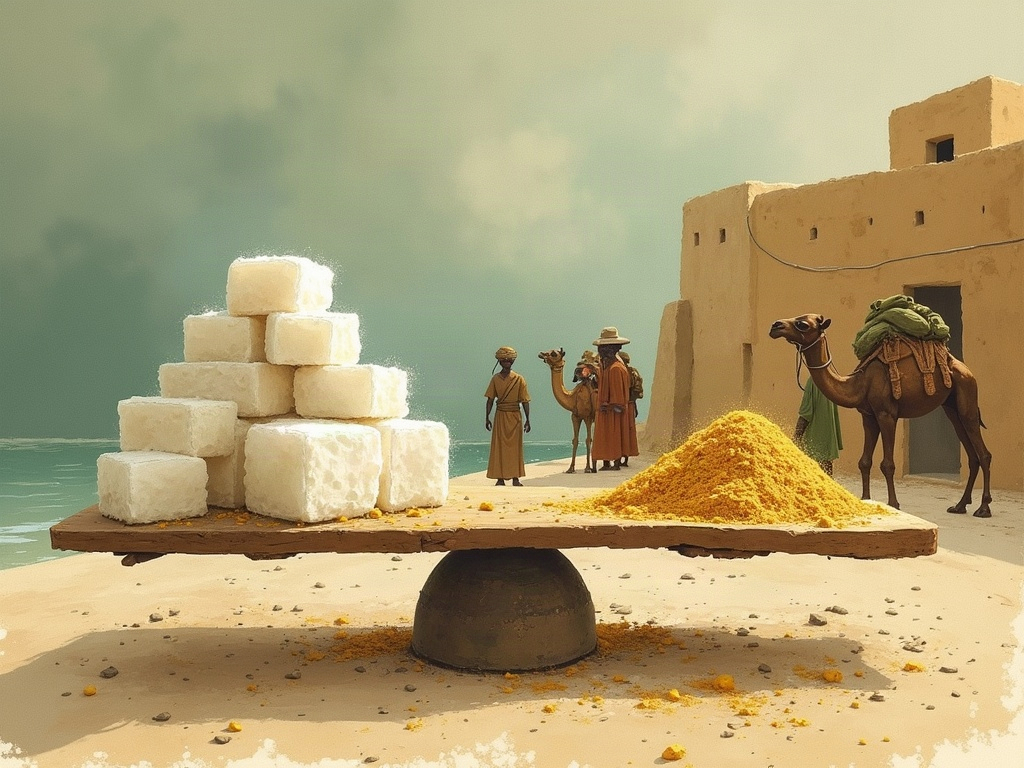
From the goldfields of the south came a share of the gold so large that it helped supply not just Africa but much of the Mediterranean and the Islamic world. From the deep desert came slabs of rock salt, quarried like stone and, in the heat of the Sahel, worth nearly its weight in the metal it was traded for. Mali taxed the caravans that carried both across its territory, and the wealth that flowed to its rulers was almost beyond reckoning. Mansa Musa, who came to the throne around 1312, was the master of all of it – by several modern estimates the richest human being who has ever lived, though a fortune so vast and so long ago can only ever be guessed at.
The pilgrimage that emptied a treasury onto the road
Musa was a devout Muslim, and in 1324 he set out to perform the hajj, the pilgrimage to Mecca that is the duty of every believer who can manage it. He did not manage it quietly. The chroniclers describe a procession that reads more like a moving nation than a religious journey: by the old accounts some sixty thousand people, thousands of them servants and attendants clothed in fine brocade and silk, each said to carry a heavy staff of gold, and a train of dozens of camels, each burdened with hundreds of pounds of gold dust.
The numbers in these accounts are surely swollen by wonder and retelling, as such numbers always are. But even discounted heavily, they describe something without real precedent – a king who chose to cross the largest desert on earth trailing a fortune behind him, dispensing it freely at every stop as alms and gifts and displays of a piety that was also, unmistakably, a display of power.
Cairo: the gold that broke a market
The caravan’s great pause came in Cairo, then one of the wealthiest cities in the world and the seat of the Mamluk sultanate. Musa lingered there for months, and he spent and gave with an open hand that astonished even the Egyptians. He showered gold on officials and courtiers, on the poor of the city, on anyone who came near. Merchants, sensing an easy mark, raised their prices for him wildly, and he paid without complaint.
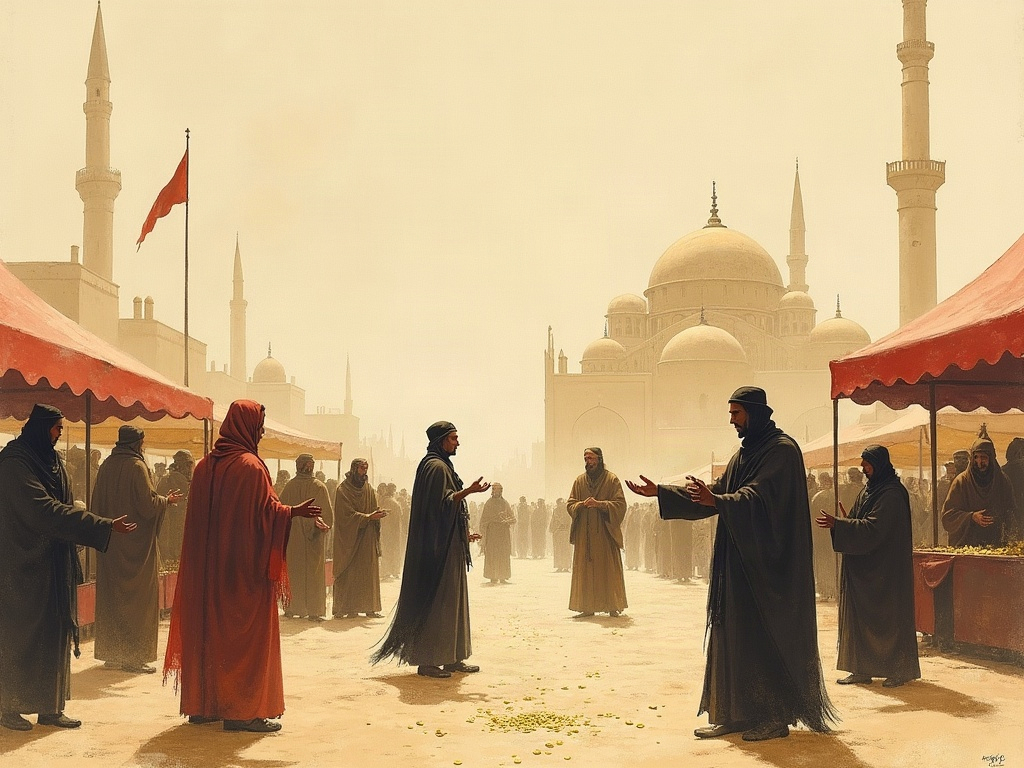
The result was an economic shock that the city felt for years. So much gold had suddenly entered Cairo that the metal itself lost value – prices for goods soared as the gold that bought them became commonplace. The Arab historian al-Umari, visiting Egypt roughly twelve years later, found that people still spoke of Musa’s visit with wonder, and that the price of gold had, by some accounts, still not fully recovered. It is one of history’s earliest and most vivid illustrations of a simple, brutal law of economics: make a precious thing common, and it stops being precious. The story goes that Musa, told of the ruin his generosity had caused, tried to repair it on his journey home by borrowing gold back from Cairo’s lenders at steep interest – briefly cornering the market he had flooded.
What he carried home
Musa returned from the east with more than a lighter treasury. He came back inspired, and he set about turning Mali’s wealth into something more lasting than a legend of spending. He brought scholars, and he brought builders – most famously the Andalusian poet and architect Abu Ishaq al-Sahili, who is traditionally credited with raising new mosques in the empire’s cities.
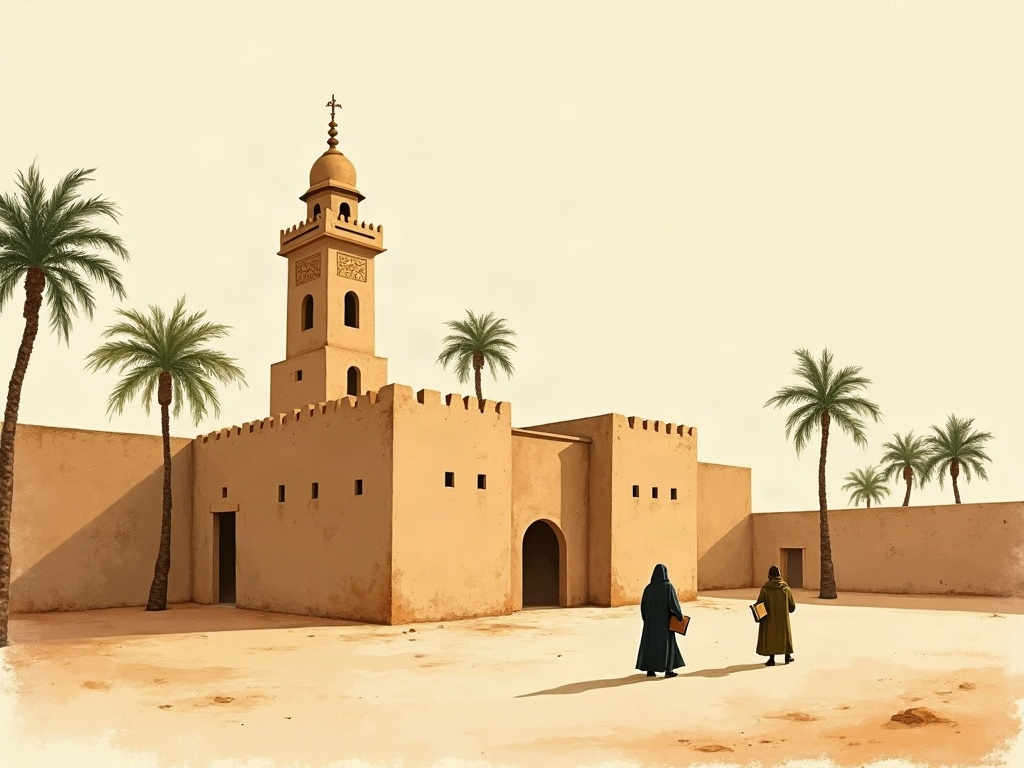
Chief among his projects was the city of Timbuktu, which under Musa and his successors blossomed into one of the great centres of learning in the medieval world. Its Djinguereber Mosque, begun in 1327, still stands – a masterpiece of smooth mud-brick studded with wooden beams. Around institutions like the Sankore mosque grew libraries and schools that drew students from across the Islamic world, and Timbuktu became so associated with distant, fabulous knowledge that its name survives in English to this day as a byword for the ends of the earth. In building it, Musa proved himself far more than a spendthrift showman; like the benevolent rulers whose legacies outlast them – such as the Indian prince who opened his lands to hundreds of orphaned refugees – he understood that wealth is remembered best for what it builds.
How the world learned his name
Word of the golden king travelled far beyond Cairo. It reached the merchants and mapmakers of Europe, who had traded for African gold for centuries without ever knowing where, exactly, it came from. In 1375, the Catalan Atlas – one of the most important maps of the age – depicted the ruler of Mali seated on a throne deep in Africa, crowned in gold, holding aloft a great golden nugget for the approaching traders to see.
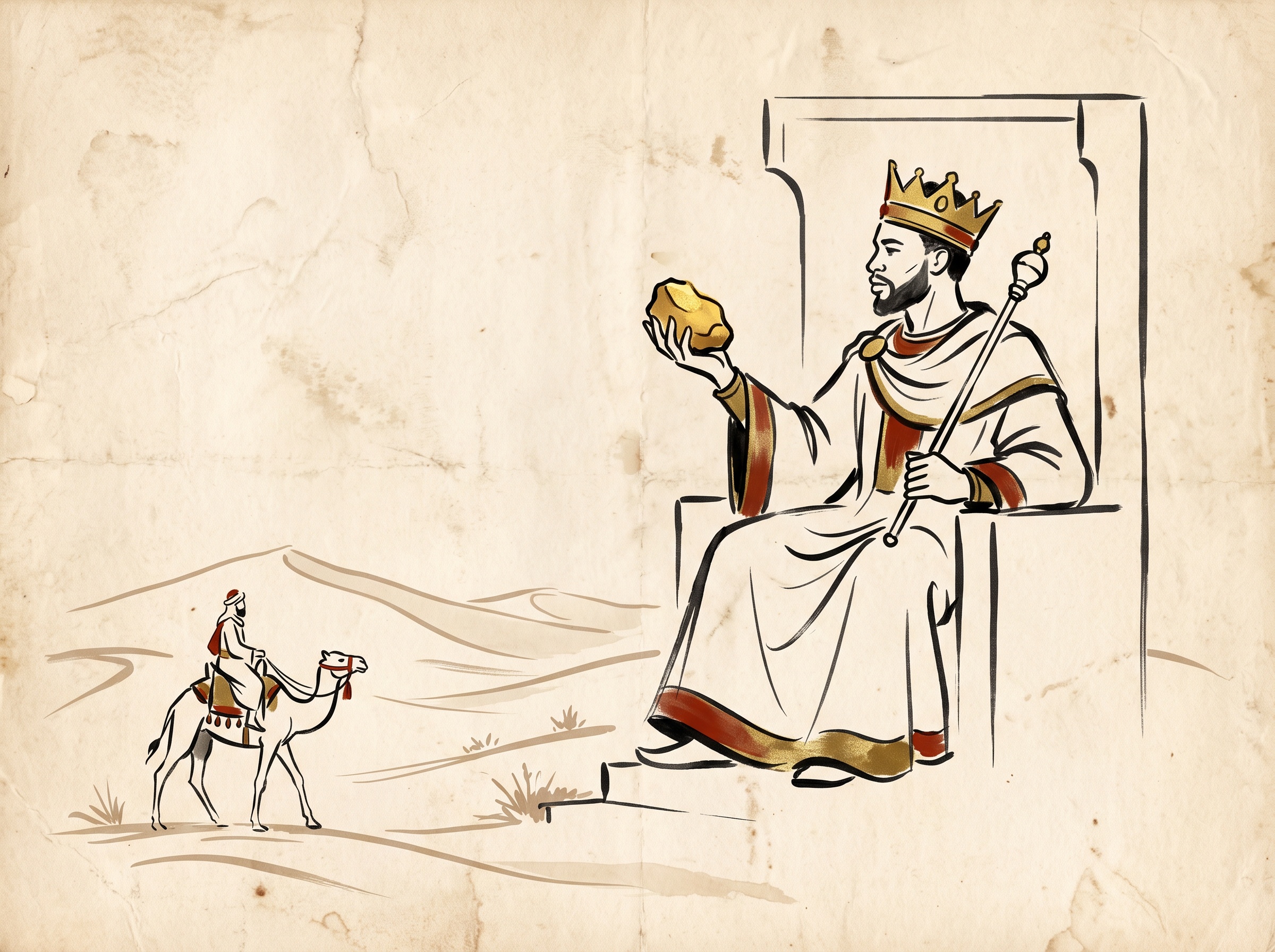
It was, in effect, West Africa’s introduction to the European imagination, and it was an introduction written in gold. The historian and traveller Ibn Battuta, who crossed the Sahara to visit Mali a generation later, would describe a wealthy, orderly, and deeply Islamic empire – confirming that the golden king had been no mirage. Musa had not set out to advertise his kingdom to the world. But by the sheer force of his extravagance, he had made Mali impossible to ignore – a self-made legend in the same defiant spirit as the eccentrics and outsized characters who turned wealth into spectacle in ages long after his.
Why the story still matters
It is tempting to remember Mansa Musa as a curiosity – the man so rich he crashed an economy by accident, a trivia answer, a medieval flex. But that flattens something worth holding on to. For centuries, the popular telling of world history has had a habit of leaving Africa’s great empires in the margins, as if the story of wealth and learning and power happened somewhere else. Musa’s caravan is a standing rebuke to that habit: proof that in the fourteenth century, one of the richest and most cultured courts on earth sat on the banks of the Niger, and that its ruler could ride into Cairo and reshape its markets with the contents of his saddlebags.
He wanted, above all, to be seen – as a king, as a believer, as the master of a realm the equal of any. Seven hundred years on, the mosques he raised still stand, his name still tops the lists of the wealthiest who ever lived, and a distant city he adorned still means the far edge of the known world. Few rulers have ever spent a fortune so recklessly. Fewer still have bought so lasting a place in memory. On that account, at least, the golden king of Mali got exactly what he came for.
Sources & further reading:
- Mansa Musa – Wikipedia
- Mansa Musa (Musa I of Mali) – World History Encyclopedia
- Mali Empire – Encyclopaedia Britannica
Related Reading
More from the archive
- Lord Timothy Dexter: The Fool Who Got Rich Selling Coal to Newcastle
- The Good Maharaja Who Saved Hundreds of Polish Orphans