John Ball and ‘When Adam Delved and Eve Span’: The Priest Who Preached Equality


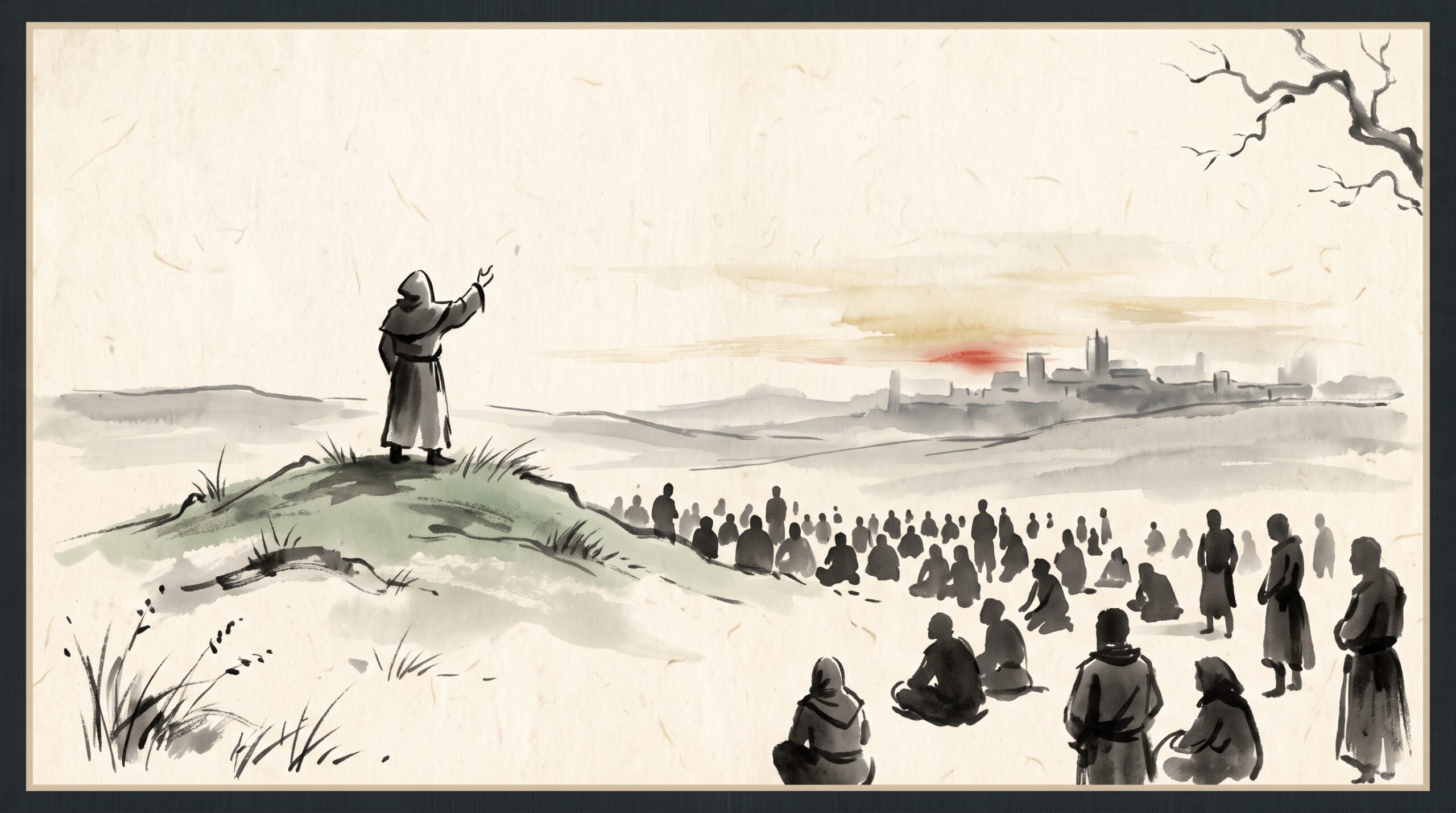
On a June morning in 1381, on the wide heath at Blackheath south of London, a grey-haired priest climbed onto a rise of ground and preached to an army. Tens of thousands of rebels had come up from Kent and Essex, and before them the man opened with a couplet that had been ringing in English ears for years: “When Adam delved and Eve span, who was then the gentleman?” It is one of the most famous sentences in English history, and it contains, in fourteen words, a question that could get a man killed. If we all descend from one man and one woman who dug and spun with their own hands, the priest was asking, then where did lords come from? Who gave one man the right to own another? The priest was John Ball, and he had spent twenty years asking that question. Within a month he would be dead for it.
The mad priest of Kent
John Ball steps in and out of the records for two decades before the revolt, always as a problem. He was an ordained priest — some sources place his early career at St Mary’s, York, and later at Colchester in Essex — but he had no settled parish and no bishop who could control him. Instead he wandered, preaching in churchyards, in market squares and on village greens to anyone who would gather, and what he preached was incendiary. The chronicler Jean Froissart, no friend of rebels, called him “the mad priest of Kent,” and recorded that Ball had a habit of standing outside the church after Mass, in the cloister or the graveyard, and telling the common people that things in England would never go well until goods were held in common and there were “neither villeins nor gentlemen,” but all were of one condition.
This was not vague grumbling. It was a coherent, dangerous argument, and the Church knew it. Ball was excommunicated for his sermons; he was ordered not to preach and preached anyway; he was imprisoned more than once. The most powerful churchman in the land, Archbishop of Canterbury Simon Sudbury — who was also the king’s chancellor, and therefore a face of the very taxes the poor hated — had Ball locked up in the archbishop’s prison at Maidstone in the spring of 1381. As far as the authorities were concerned, the troublesome priest was safely out of the way. They had, as it turned out, put him exactly where the storm was about to break.
When Adam delved and Eve span
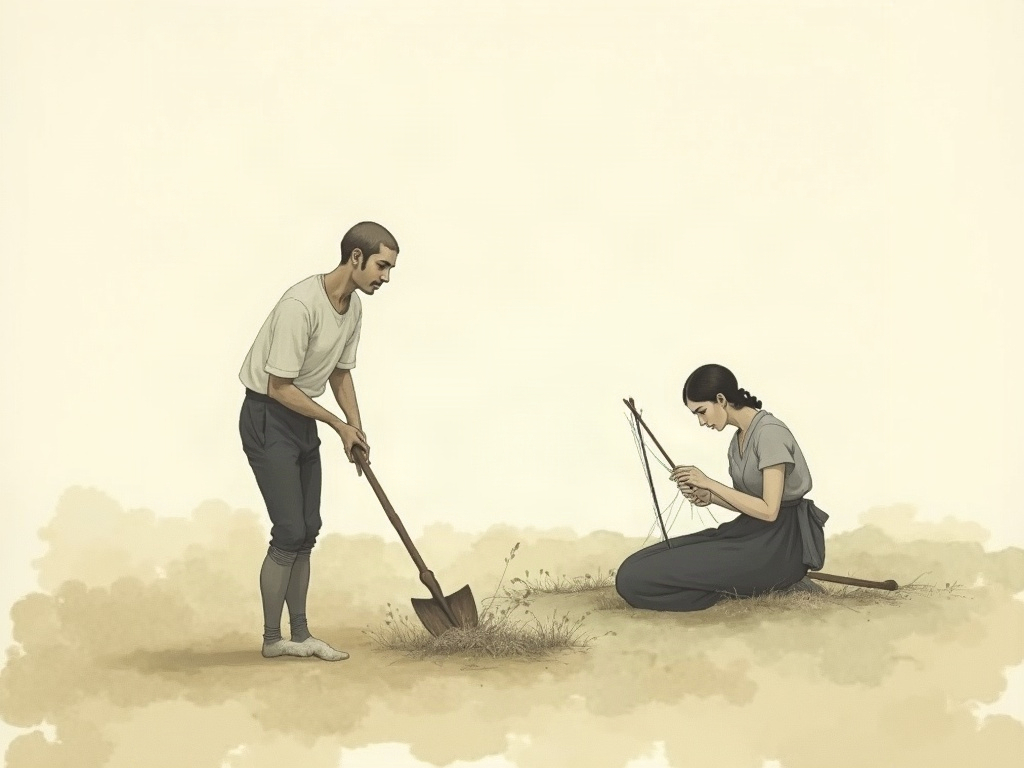
The genius of Ball’s message was that it needed no learning to understand. The medieval Church taught that society had three orders ordained by God — those who prayed, those who fought and those who worked — and that the peasant’s place at the bottom was part of a divine plan as fixed as the stars. Ball took the Church’s own book and turned it against that teaching. In the beginning, he pointed out, there were no lords. Adam dug the ground and Eve spun the thread; there was no gentleman standing over them taking a cut. Lordship, serfdom, the whole towering hierarchy of medieval England — none of it came from God. It came from men, from “the unjust oppression of naughty men,” as Walsingham reported him saying, and what men had made, men could unmake.
From that root grew a set of demands that were genuinely revolutionary for the fourteenth century: an end to serfdom, the equal sharing of the wealth of great lords, and a levelling of ranks so that all Christians should be free and equal. The hostile monk-chronicler Thomas Walsingham, writing at St Albans, was horrified enough to preserve Ball’s words in detail — which is much of the reason we still have them. He wanted to prove how mad and wicked the priest was. Instead he became the man who carried Ball’s sermon down the centuries.
The rebels open the prison
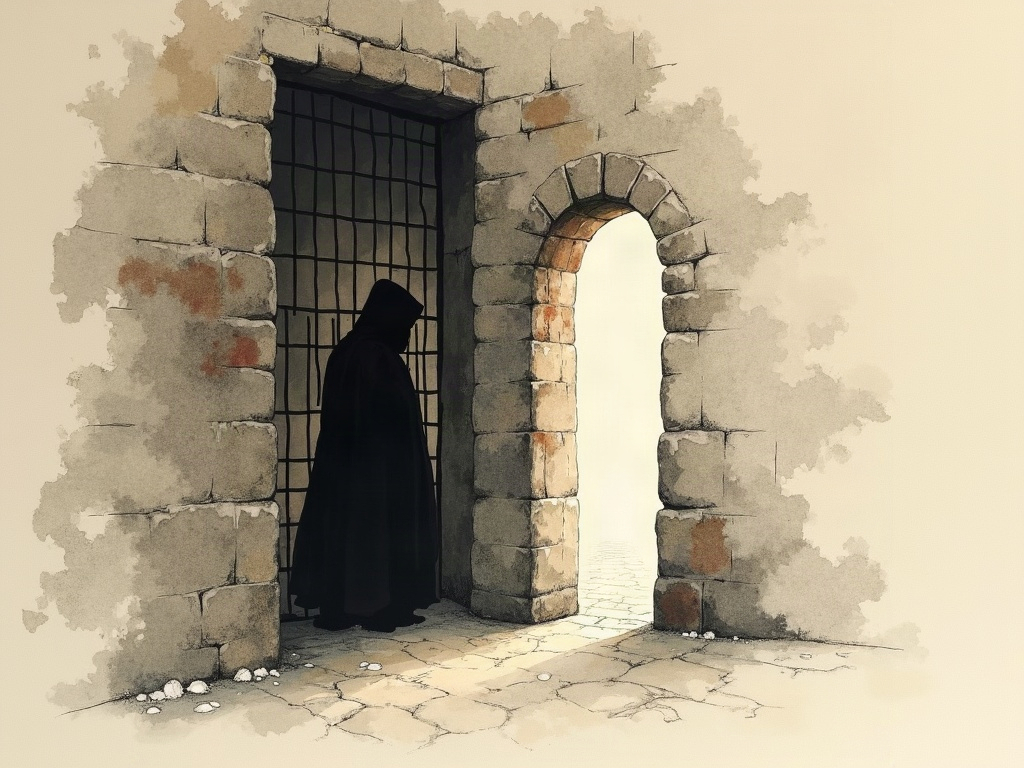
When the rising erupted in Kent and Essex in the first days of June 1381 — touched off by the hated poll tax and years of grinding resentment — one of the first things the rebels did on their sweep through Kent was to break open the archbishop’s gaol at Maidstone and set John Ball free. It was a deliberate act. They did not need another fighting man; they had tens of thousands. They needed a voice, and they knew exactly whose voice they wanted. Ball emerged from prison and rode with the host toward London, and it was in these days, most likely at Blackheath, that he gave the sermon on the Adam-and-Eve couplet that fixed him forever in memory.
It is worth being clear about who Ball was and was not. He was not the general of the revolt — that role belonged to Wat Tyler, the rebel commander who marched the army to the gates of London and faced down the king. Ball was something rarer and, to the authorities, more frightening: the man who told the peasants why they were right. Tyler supplied the discipline and the muscle; Ball supplied the idea. An army can be scattered; an idea, once spoken to tens of thousands, is very hard to kill. The pairing of the soldier and the preacher gave the 1381 rising something most medieval revolts never had — a cause that reached beyond any single grievance to the shape of society itself.
The riddling letters
Ball’s other legacy is stranger and more haunting: a handful of short, cryptic letters that circulated among the rebels and were copied down by chroniclers such as Walsingham and Henry Knighton. Written in riddling English and signed with folk-names like Jack Miller, Jack Carter and Jack Trueman, they read almost like coded verse. “John Ball greeteth you all,” one begins, “and doth to understand he hath rung your bell.” They urge the commons to “stand together in God’s name,” to “know your friend from your foe,” and to “do well and better, and flee sin.” One of them name-checks “Piers Plowman,” the honest labourer at the heart of William Langland’s great contemporary poem — a sign of how deeply the language of the fields and of popular preaching had soaked into the movement.
Historians still argue over exactly what the letters meant and how far Ball really wrote them. But their tone is unmistakable: urgent, moralising, addressed to working people as moral equals capable of judging right from wrong for themselves. In an age when the poor were told to obey and be silent, that alone was radical. The letters are among the earliest surviving political writings aimed directly at England’s common people — propaganda, if you like, but propaganda that treated its audience as adults.
St Albans and the scaffold
The revolt burned brightly and briefly. After Wat Tyler was cut down at Smithfield on 15 June and the young king Richard II wheeled the leaderless crowd away with promises, the rising collapsed and the reprisals began. John Ball fled, but there was nowhere for a famous face to hide. He was captured — the chroniclers place it near Coventry — and brought before the king’s justices at St Albans, where the abbey had its own bitter scores to settle with the rebels who had risen against it.
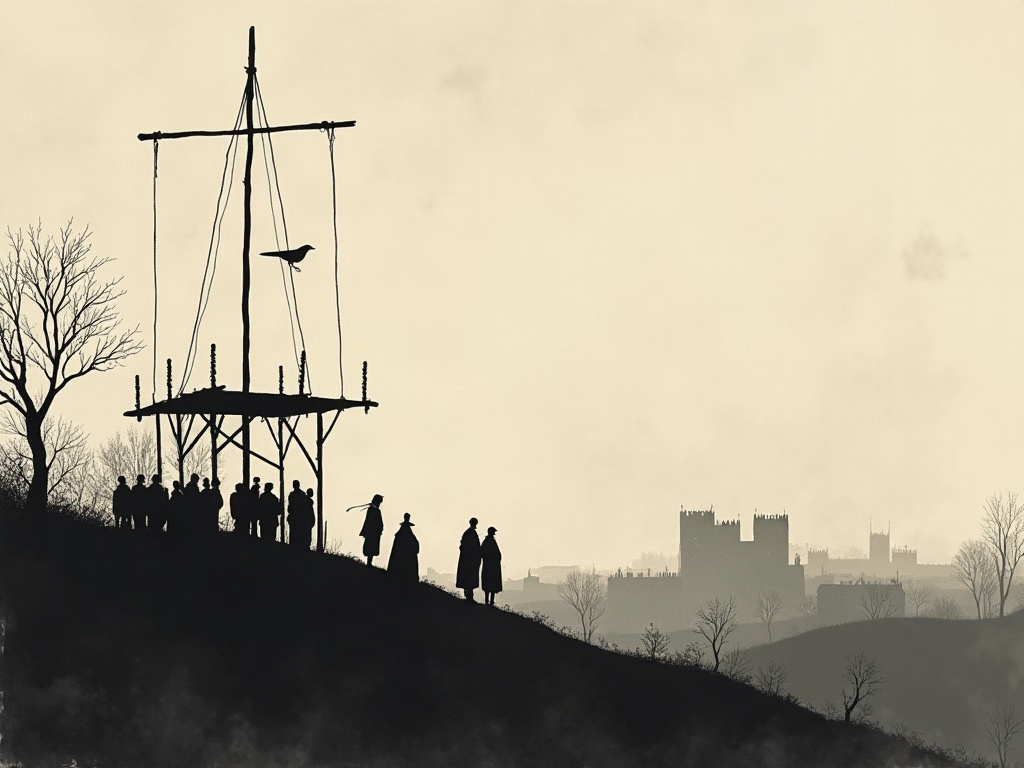
Ball did not recant. William Courtenay, Bishop of London, is said to have won him a few days’ respite to make his peace with God, but the sentence was never in doubt. On 15 July 1381 — one month to the day after Tyler’s death — John Ball was hanged, drawn and quartered at St Albans, in the presence of the fourteen-year-old king he had defied. His head was set on London Bridge and the quarters of his body sent to four towns as a warning. The authorities meant the spectacle to erase him. They were the same authorities who had preserved his sermon and copied out his letters, and in trying so hard to destroy the man they guaranteed the survival of his words.
The question that would not die
By the cold arithmetic of the summer of 1381, John Ball failed. Serfdom was not abolished by his preaching; the lords kept their lands; the poll tax rebels were hunted down and hanged in their hundreds. And yet the question he had thrown onto Blackheath heath refused to go away. Who was then the gentleman? It was too simple to forget and too sharp to answer. English radicals returned to it again and again over the following centuries; in 1888 the writer and socialist William Morris made Ball the hero of a dream-vision, A Dream of John Ball, and the priest’s couplet has been quoted by reformers, levellers and labour organisers ever since.
Six hundred years before anyone spoke of universal rights, a wandering priest with no parish and no protection looked at the fixed and God-ordained order of medieval England and asked, in fourteen plain words, why it should be so. He was hanged for it within the month. But the idea he handed to the marching poor of Kent — that lords are made by men and not by God, and that what men have made they may yet unmake — proved a great deal harder to quarter than John Ball’s body. It is the same idea that drives the great rising dramatised in the 2026 film ‘The Uprising’, and it is why, of all the voices of 1381, it is the mad priest’s couplet that we still remember.
Sources & further reading:
- John Ball (priest) — Encyclopaedia Britannica
- The Peasants’ Revolt (The National Archives, UK)
- Peasants’ Revolt (Wikipedia)
- John Ball (priest) (Wikipedia)
Related Reading
- The Aftermath: Richard II’s Broken Promises and the Bloody Reprisals
- How the Black Death Set the Stage for the Peasants’ Revolt
- ‘The Uprising’ (2026): The True History Behind Paul Greengrass’s Peasants’ Revolt Film