The Aftermath: Richard II’s Broken Promises and the Bloody Reprisals

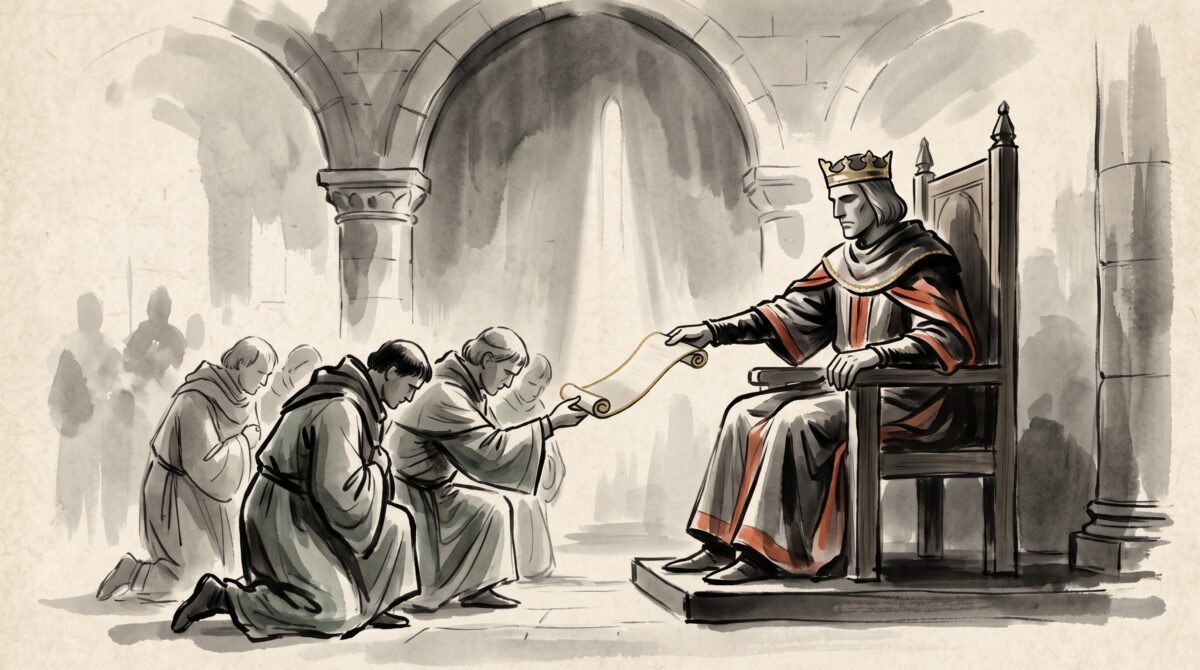
At Smithfield the boy-king promised the rebels everything — freedom, pardons, an end to serfdom, all set down in royal charters. Within weeks he tore the charters up, rode into Essex with an army, and told the survivors to their faces: ‘Villeins ye are, and villeins ye shall remain.’ This is what happened after the Peasants’ Revolt collapsed.

Mile End and the Rebels’ Demands: The End of Serfdom Promised

On 14 June 1381 the boy king Richard II rode out from the Tower to meet the rebels at Mile End, and there — in a field east of the city walls — he granted the unthinkable: the abolition of serfdom across England. Thirty clerks sat writing charters of freedom while the crowd cheered. It was the high-water mark of the Peasants’ Revolt, and it lasted barely a fortnight.

The Statute of Labourers: Wage Caps That Fuelled a Revolt

After the Black Death made workers scarce and wages soar, England’s rulers tried to freeze the economy by law. The Statute of Labourers capped pay at pre-plague levels, criminalised the poor for asking for more, and spent thirty years grinding down a peasantry that never forgot it — until 1381.