The Statute of Labourers: Wage Caps That Fuelled a Revolt

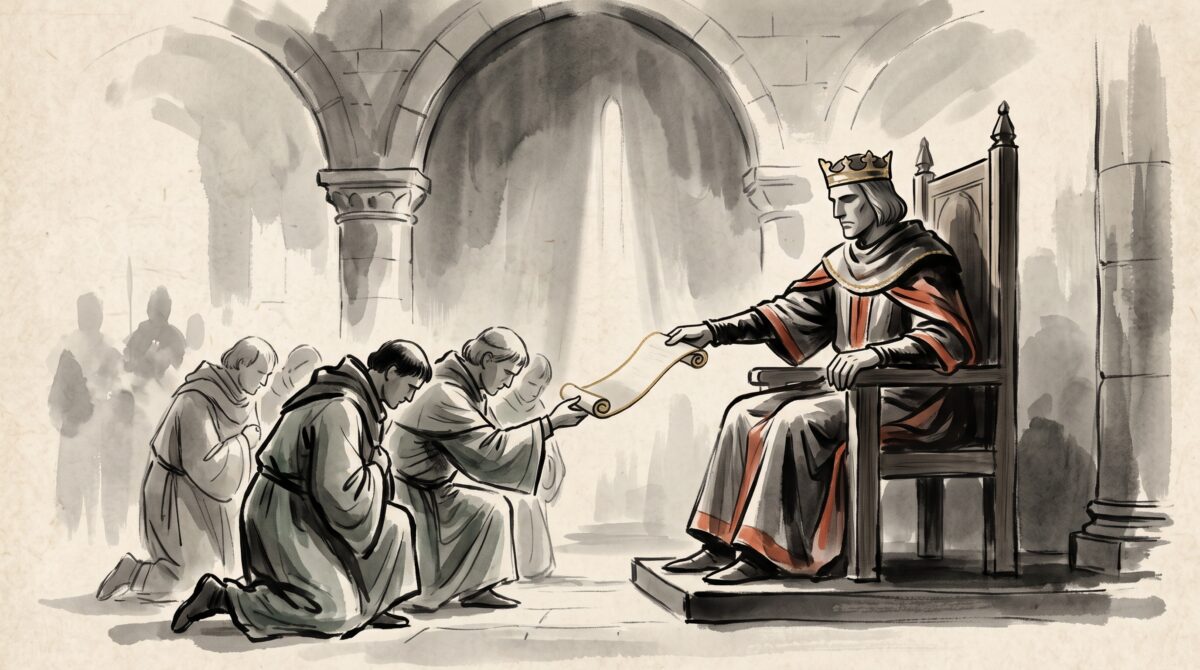
In the years after the Black Death, England’s rulers faced a problem they could not comprehend. The plague had killed close to half the country, and the survivors — ploughmen, reapers, shepherds, servants — had discovered that their labour was suddenly worth a great deal more than it used to be. Wages were climbing. Peasants were bargaining, moving, refusing bad terms. To the lords and the Crown this looked less like economics than insolence, and their answer was as bold as it was doomed: they would freeze the world in place by law. The instrument they reached for was the Statute of Labourers, and for the next thirty years it would sit like a stone on the neck of working England — until the neck it sat on finally rose in revolt.
A law against the laws of supply and demand
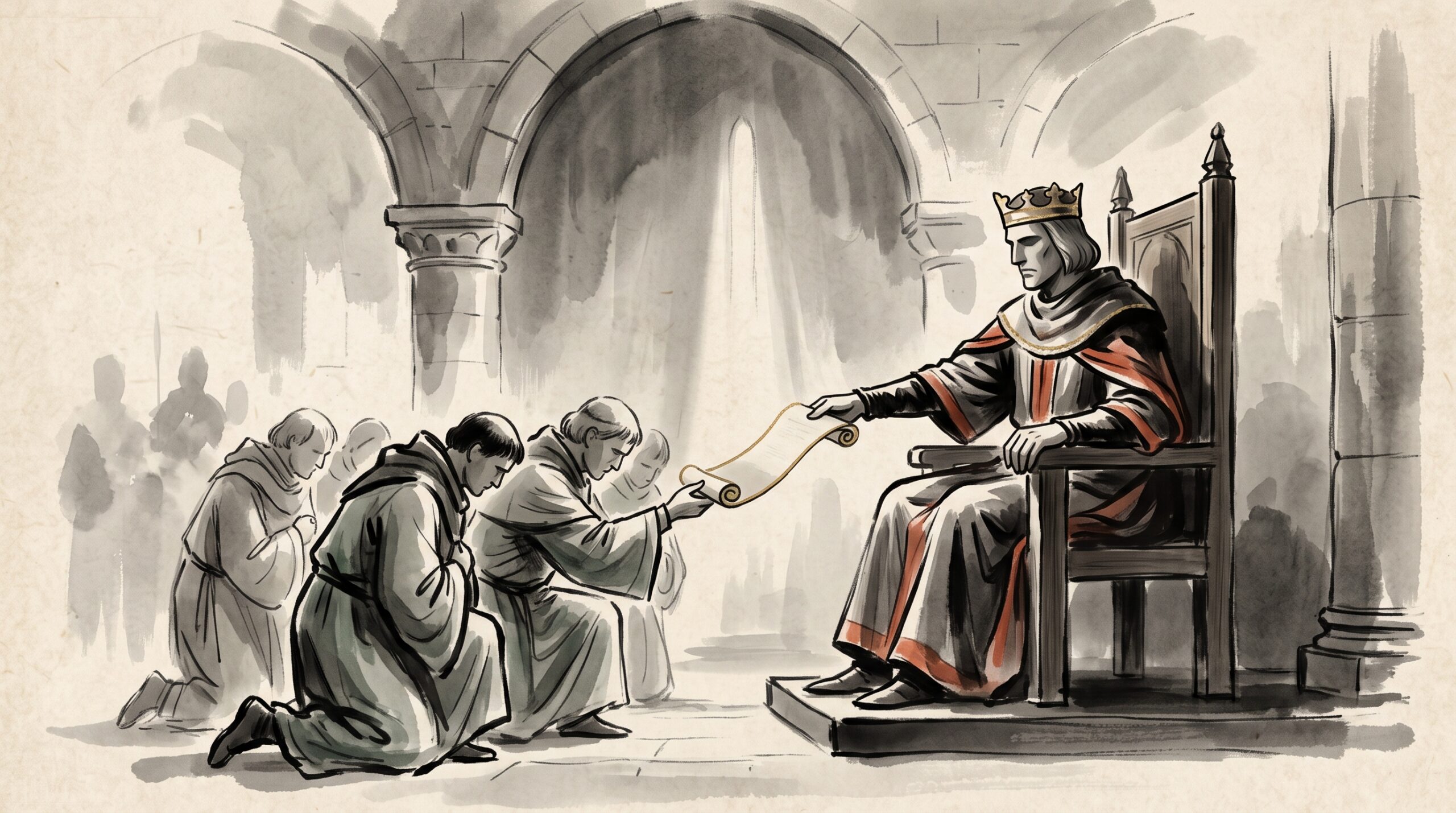
The scarcity was real and it was ruinous for employers. As we explore in our companion piece on how the Black Death set the stage for the revolt, the plague had turned the cheapest thing in England — human muscle — into the scarcest and most valuable. Fields stood unharvested. Empty holdings begged for tenants. A labourer who had once pleaded for work could now name his price, and if one manor would not meet it, a neighbour desperate to save his crop would.
England’s ruling class did not see a market correcting itself. The very idea of supply and demand lay centuries in the future. What they saw was greed and disorder, a violation of the God-given station into which every man was born. And because they controlled the machinery of the state, they resolved to abolish the problem by decree — to command, in effect, that the plague had never happened.
The Ordinance of 1349 and the Statute of 1351
The first blow came quickly. In 1349, with the plague barely spent, King Edward III’s council issued the Ordinance of Labourers. When that proved impossible to enforce on its own, Parliament followed in 1351 with the fuller Statute of Labourers, the law that would give the whole system its name. Together they set out to do three things at once.
First, they capped wages: no worker was to be paid more than the rate that had prevailed in 1346, the year before the plague struck. Second, they compelled labour: every able-bodied person under sixty who had no land or trade of their own was required to work for anyone who demanded their service, and could not refuse. Third, they froze mobility: a labourer could not leave his village in search of higher pay, and no employer was to lure another’s workers away with a better offer. It was an audacious attempt to legislate an entire economy back to a moment that no longer existed.
What the statute actually demanded
The law reached into the smallest details of daily working life. It named the trades it meant to control — reapers, mowers, carpenters, masons, carters, servants — and in later refinements it even set out specific wages for specific tasks, so that a justice could point to the page and say precisely what a man was owed and no more. Guilds and craftsmen who charged too much for their goods were caught in the same net as the reaper who asked for an extra penny.
Crucially, the statute punished both sides of an illegal bargain. A worker who took more than the fixed rate was breaking the law — but so was the employer who paid it. In practice this even-handedness was a fiction. The wealthy who sat as justices had every reason to enforce the law against the labourer demanding more and little appetite to prosecute themselves, and the burden fell, as it always did, on the poor.
Enforcement: fines, prison and the branding iron
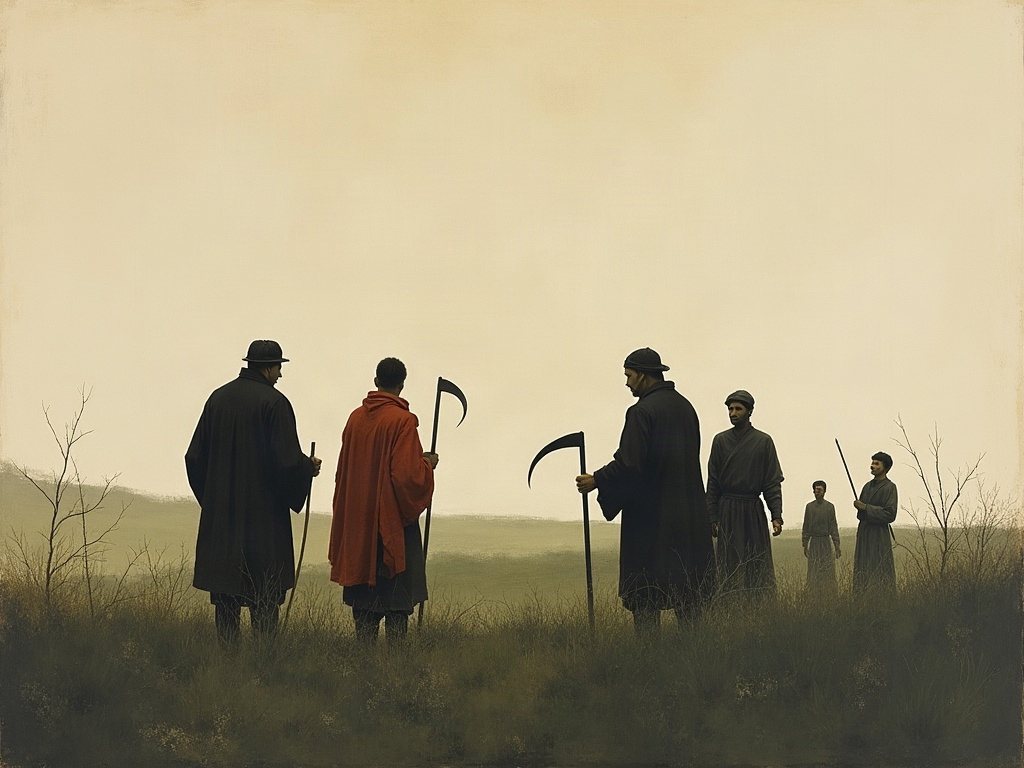
A law is only as fierce as its enforcement, and here the Crown was in deadly earnest. To make the statute bite, the government created a new body of officials — the Justices of Labourers — charged with hunting down offenders, holding sessions of court, and imposing punishment. In time these powers were folded into the commissions of the Justices of the Peace, giving local landowners a permanent, standing authority to police the wages of the people who worked their land.
The penalties escalated with the government’s frustration. A worker who took excess wages could be fined the surplus; one who refused service or fled his employer could be thrown in the stocks or imprisoned. Later amendments turned savage: a runaway labourer could be branded on the forehead with a hot iron marked “F” — for falsity — so that his crime followed him wherever he went. The message was unmistakable. To ask, in a depopulated country, for what your labour was plainly worth had been made not a negotiation but a crime against the realm.
A wage cap that doubled as a tax
There was a further sting hidden in the machinery, and it was one the commons understood keenly. The fines levied under the labour laws did not vanish into abstraction; they were collected, and in some years the sums raised from prosecuting labourers were set against the taxes owed by the very landowners who benefited from cheap labour in the first place. The poor were being punished for the crime of wanting fair pay, and their fines were then used to lighten the fiscal load of the rich.
It was, from the peasant’s point of view, a perfect circle of injustice: the law held his wages down, punished him when he resisted, and then handed the proceeds to his masters. This fusion of wage control and fiscal exploitation is precisely the kind of grievance that would later make a tax feel like the last straw — a thread we follow in our account of the poll tax that finally sparked the rebellion.
Thirty years of grinding resentment
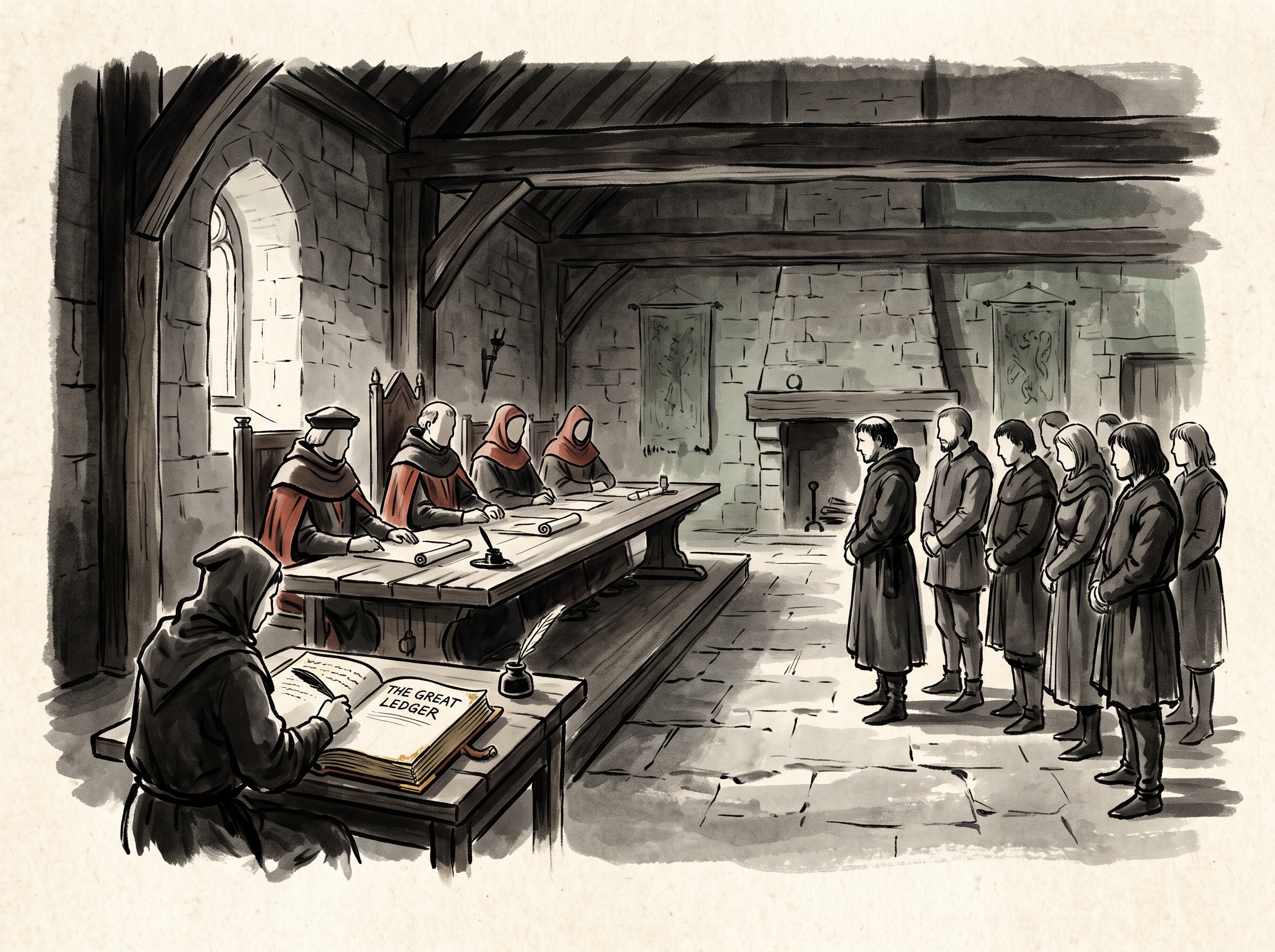
The statute did not spark an immediate rising, and that is the key to understanding its power. For three decades the market and the law ground against each other. The underlying scarcity never went away, so labourers kept demanding more; the justices kept fining and gaoling them for it. Wages did creep upward in reality — the law could slow the tide but never stop it — yet every enforced penalty, every session of the Justices of the Peace, every branded forehead was a fresh reminder that the state stood squarely against the interests of the working poor.
This was a peasantry with a long memory and a growing sense of grievance. It was also, by the 1370s, better off, more mobile and more confident than any generation before it — exactly the people with the leverage and the anger to act. The moral case against their oppression was given a thunderous voice by radical preachers, above all the wandering priest John Ball, who asked when Adam delved and Eve span, who was then the gentleman? The statute had made the labourer’s grievance concrete; Ball made it righteous.
From wage cap to open revolt
When the explosion came in the summer of 1381, the labour laws were woven through the rebels’ demands. They did not merely want a tax repealed; they wanted the whole apparatus of coercion gone — an end to serfdom, free contracts freely made, and the abolition of the very legal machinery that had criminalised their labour for a generation. The Statute of Labourers had tried to bind them to the old world by force, and now they meant to burn its bonds.
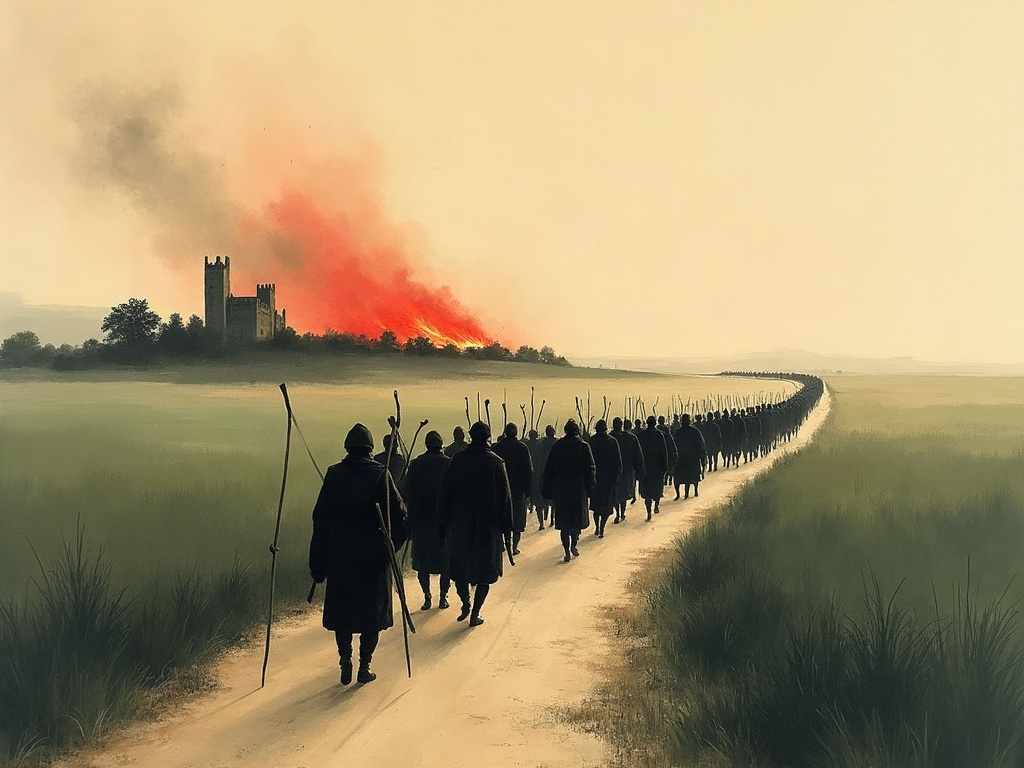
The rising was crushed within weeks, its leaders killed and its promises revoked by the boy king who had faced the rebels down — a confrontation we tell in full in our account of Richard II, the fourteen-year-old who faced the revolt. The same long shadow of the labour laws hangs over the true history dramatised in Paul Greengrass’s 2026 film, explored in our companion piece on the real story behind The Uprising. For the wider sweep of causes, characters and consequences, our complete guide to the 1381 Peasants’ Revolt draws every thread together.
Why it still matters
The Statute of Labourers is one of history’s great cautionary tales about the limits of law. A ruling class, confronted with an economic change it could not control, tried to legislate reality out of existence — to command scarcity to behave like abundance, and free people to behave like the bound. For a time the coercion worked well enough to keep wages below what they should have been. But it could not repeal the arithmetic of a half-empty country, and every year it failed it deepened the anger of the people it oppressed.
In the end the statute achieved the opposite of its purpose. Meant to preserve the old order, it helped to detonate the greatest popular uprising in medieval English history, and though the revolt itself was defeated, serfdom withered within a century all the same — undone not by any law but by the same economic force the statute had been written to deny. It began as ink on parchment in a great hall, a king’s attempt to fix the price of a man. It ended with those men on the road to London, and it is a lesson worth remembering wherever power tries to freeze a changing world in place.
Sources & further reading:
- Statute of Labourers, 1351 (Encyclopaedia Britannica)
- The Peasants’ Revolt (The National Archives, UK)
- Peasants’ Revolt (Encyclopaedia Britannica)
- Black Death (Encyclopaedia Britannica)
Related Reading
- The 1381 Peasants’ Revolt: The Complete Story of England’s Great Rising
- How the Black Death Set the Stage for the Peasants’ Revolt
- The Poll Tax of 1381: The Tax That Sparked a Rebellion