Richard II at 14: The Boy King Who Faced Down the Peasants’ Revolt

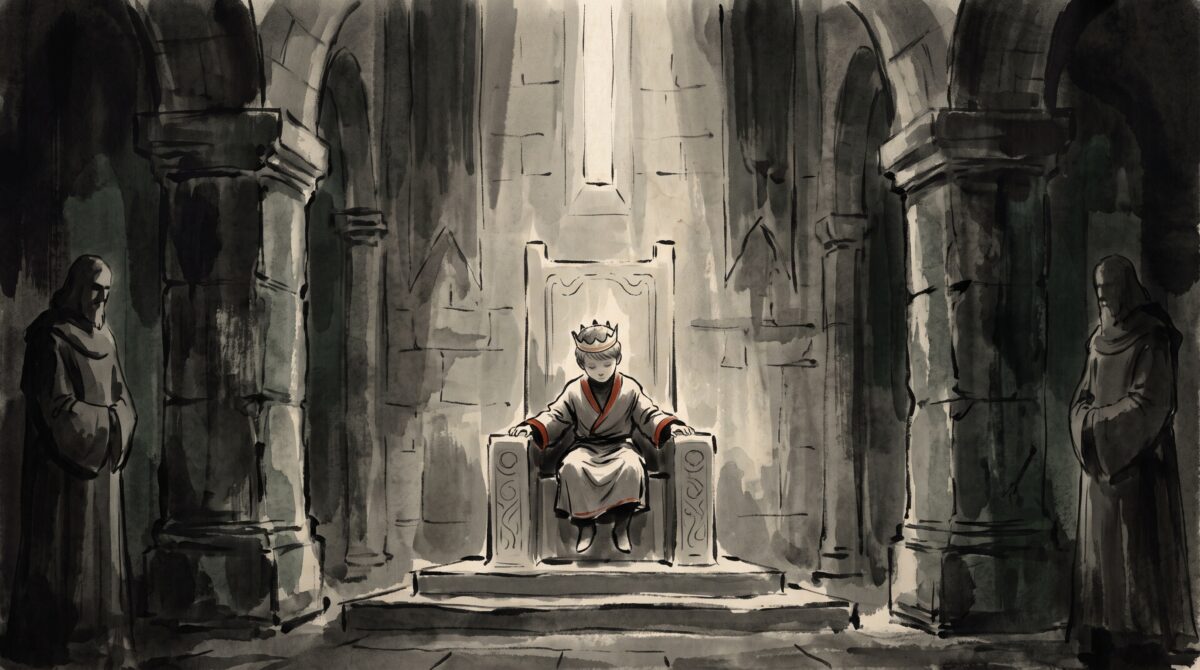
On the morning of 15 June 1381, a fourteen-year-old boy sat on horseback in an open field at Smithfield, on the edge of London, and watched his Lord Mayor strike down the leader of an army that outnumbered his own household a hundred to one. In the stunned silence that followed, the crowd of armed commoners began to bend their bows. What the boy did next — alone, unarmed, and utterly exposed — was either the bravest act of his life or the coldest piece of theatre in medieval English history. Perhaps it was both. This is the story of how Richard II, still a child, faced down the greatest popular rising England had ever seen, and of what those two June days revealed about the king he would become.
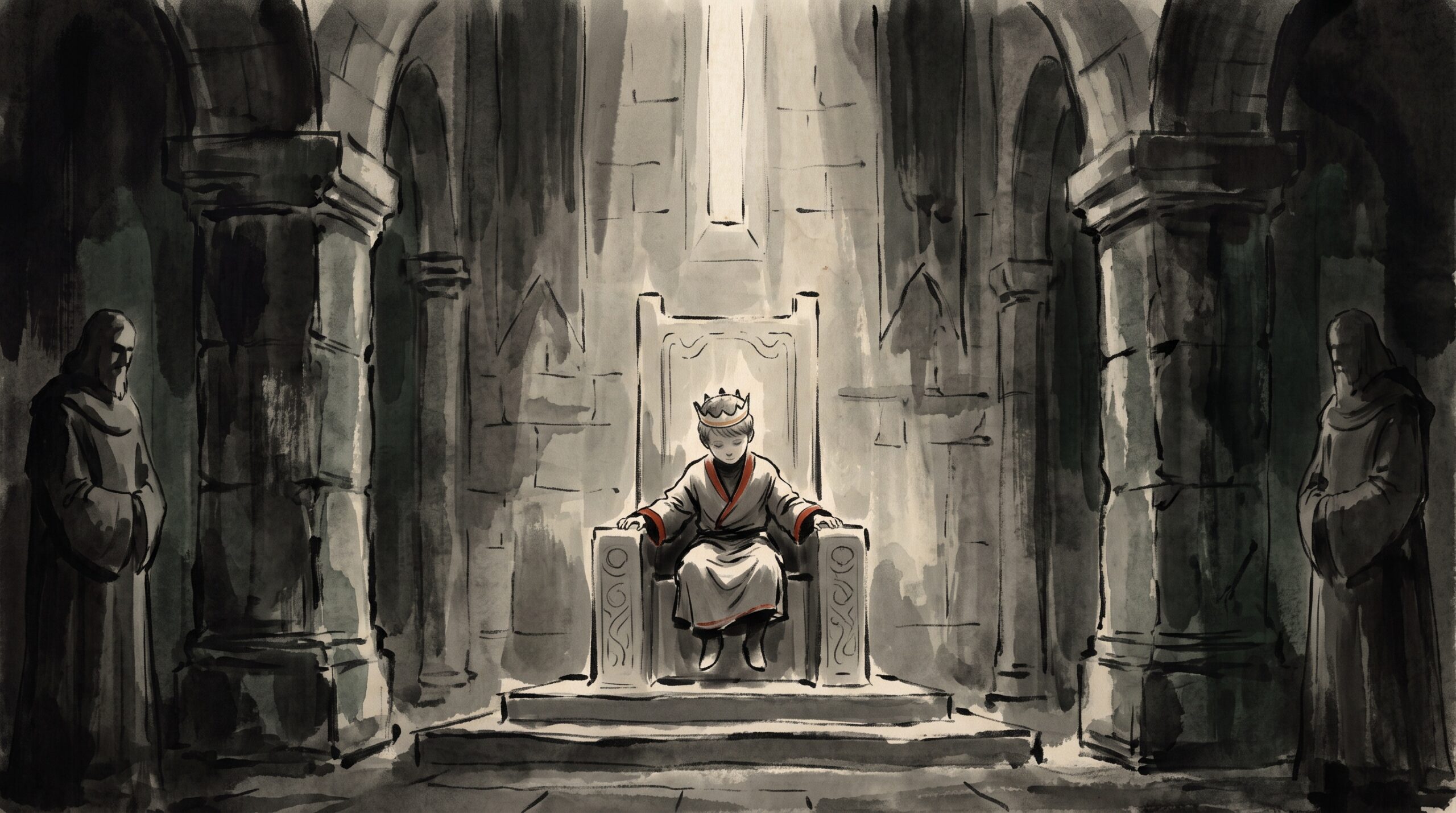
A crown on a child’s head
Richard of Bordeaux was never meant to carry the weight so young. He was the second son of Edward the Black Prince, the most admired warrior of the age; but when the Black Prince died in 1376 and the old king Edward III followed in June 1377, the crown fell to a boy of ten. England was suddenly ruled in the name of a child.
Real power lay with a council of nobles, above all Richard’s uncle John of Gaunt, Duke of Lancaster — immensely rich, deeply unpopular, and widely blamed for the failures of a grinding war with France and the corruption of the court. To the labourers and artisans of the south-east, the men around the boy king were the problem, not the king himself. That distinction would matter enormously. When the storm broke in the summer of 1381, the rebels did not march to depose Richard. They marched, they said, to save him from his advisers.
The storm reaches the Tower
The rising had been kindled by the hated poll tax of 1381 and the long resentments of a countryside still reeling from plague and wage laws, and by the second week of June it had found its leaders — the Kentish commander Wat Tyler and the radical preacher John Ball. Tens of thousands converged on London, and on 13 June the gates were opened to them from within. The rebels burned John of Gaunt’s magnificent Savoy Palace to the ground, threw open the prisons, and hunted down royal officials in the streets.
Richard and a small circle of terrified advisers took refuge in the Tower of London, looking out over a capital they no longer controlled. From the ramparts the boy could see fires across the city. An attempt to parley by barge at Rotherhithe was abandoned when his councillors judged the crowd too dangerous to approach. The king of England was, in every practical sense, a prisoner in his own fortress. Something had to give — and it was the fourteen-year-old, not his seasoned advisers, who chose to gamble.
Mile End: the boy rides out
On 14 June, Richard agreed to meet the rebels in person at Mile End, a field to the east of the city. It was an astonishing decision. He rode out with a small retinue into the heart of the very host that had just sacked his capital, and there he listened to their demands: the abolition of serfdom, an end to feudal labour service, cheap land at fourpence an acre, free trade in the market towns, and a general pardon for everyone involved.
To all of it, the boy king said yes. Thirty clerks were set to work on the spot drawing up charters of freedom, sealed in the king’s name, and many rebels — believing they had won everything they came for — began to drift home. It was a masterstroke of crisis management, and whether it was Richard’s own instinct or his advisers’ desperation, it carried his voice and his seal. But the concessions at Mile End could not stop what was already happening behind him. Much of this drama — the plague, the poll tax and a boy king cornered in his own city — is the true history behind Paul Greengrass’s 2026 film, which you can explore in our companion piece on the true story behind The Uprising.

The night the Tower fell
While Richard was at Mile End, a party of rebels forced their way into the Tower of London itself — a fortress that had never before been taken. They dragged out Simon Sudbury, Archbishop of Canterbury and the king’s Chancellor, and Sir Robert Hales, the Treasurer, both hated as architects of the poll tax. On Tower Hill the two men were beheaded before a roaring crowd, and their heads were paraded through the streets on pikes, the archbishop’s mitre nailed to his skull.
It was a shattering moment. The rebels had killed the highest churchman in England and the king’s chief minister within his own stronghold. For the boy returning from Mile End, the lesson was brutal and immediate: charters and promises had not been enough. The rising was not over, and the men still gathered under Wat Tyler wanted more than freedom on parchment. The reckoning would come the next day, at Smithfield. You can read the full arc of the rebellion — from its causes to its collapse — in our complete guide to the 1381 Peasants’ Revolt.
Smithfield: “I will be your captain”
On 15 June, Richard met the rebels again, this time at Smithfield outside the city walls. Wat Tyler rode out alone to parley with the king, and by every account behaved with startling familiarity — calling for still more radical demands, the abolition of all lordship below the king and the seizure of Church wealth, and, some chroniclers say, treating the boy with open contempt. A scuffle broke out. William Walworth, the Lord Mayor of London, drew his blade and struck Tyler down, and one of the king’s squires ran him through. The rebel leader was dead within yards of the throne he had come to petition.
The full account of that confrontation and Tyler’s violent end is told in our profile of Wat Tyler, the rebel leader who nearly toppled a king. But the crisis was Richard’s now. His army’s commander lay dying in the mud, and the vast crowd of Tyler’s followers, seeing it happen, began to draw their bows. A single volley would have ended the king and the Plantagenet line with him.

Instead, the fourteen-year-old spurred his horse forward — alone, toward the archers — and called out that Tyler was a traitor, that he, Richard, was their king, and that they should follow him. “You shall have no captain but me,” he is said to have told them. Whether from awe, confusion or genuine loyalty to the crown, the leaderless crowd obeyed. Richard led them away north to the fields at Clerkenwell, where royal forces gathered, and the moment of maximum danger passed. A boy had walked into the mouths of a thousand bows and talked an army out of firing.
“Villeins ye are still”
What came next revealed the other side of that same boy. With the rebels dispersing and royal troops massing, the charters of freedom sealed at Mile End were swiftly and completely revoked. When a delegation from Essex came to remind Richard of his promises, the chronicler Thomas Walsingham records his icy reply: “Villeins ye are, and villeins ye shall remain” — in bondage you were, and in bondage you will stay.

The reprisals were harsh. Judges rode into the rebellious counties, and hundreds were hanged; John Ball was drawn and quartered at St Albans in July. The same king who had shown such nerve at Smithfield showed no mercy in the aftermath. The courage and the ruthlessness were not contradictions — they were two expressions of a single conviction that would harden over the years to come: that the king’s authority was absolute, and answerable to no subject, high or low. To understand the mind behind that famous refusal, it helps to read the preacher who had inspired the rebels in the first place — John Ball and his sermon on Adam and Eve.
The making — and unmaking — of a king
Richard II was never braver than in June 1381, and never again so celebrated. For a few days a fourteen-year-old had held England together by sheer force of presence, riding twice into a hostile army and coming out master of the field. But the lesson he seems to have taken from it was not humility. It was that a king could face down anyone and prevail.
In the decades that followed, that conviction curdled into something dangerous. Richard grew into an autocratic, vindictive monarch, elevating favourites, crushing his critics, and insisting on an almost sacred vision of royal power. In 1399 the nobility he had alienated rose against him — led by Henry Bolingbroke, the son of that same John of Gaunt whose palace the rebels had burned — and deposed him. Richard died in captivity the following year, almost certainly murdered, the boy who had saved the crown at Smithfield undone by the very belief in kingship that Smithfield had taught him. He faced down the Peasants’ Revolt and won. In the end, it was a lesson he never should have learned.
Sources & further reading:
- Richard II of England (Encyclopaedia Britannica)
- The Anonimalle Chronicle account of the Peasants’ Revolt (British Library)
- The Peasants’ Revolt (The National Archives, UK)
- Peasants’ Revolt (Wikipedia)
Related Reading
- The Aftermath: Richard II’s Broken Promises and the Bloody Reprisals
- Smithfield: The Confrontation Where Wat Tyler Was Killed
- The March on London: How the Rebels Seized the Capital in June 1381