Exercise Tiger: The Secret D-Day Rehearsal That Killed More Men Than the Beach It Practiced For

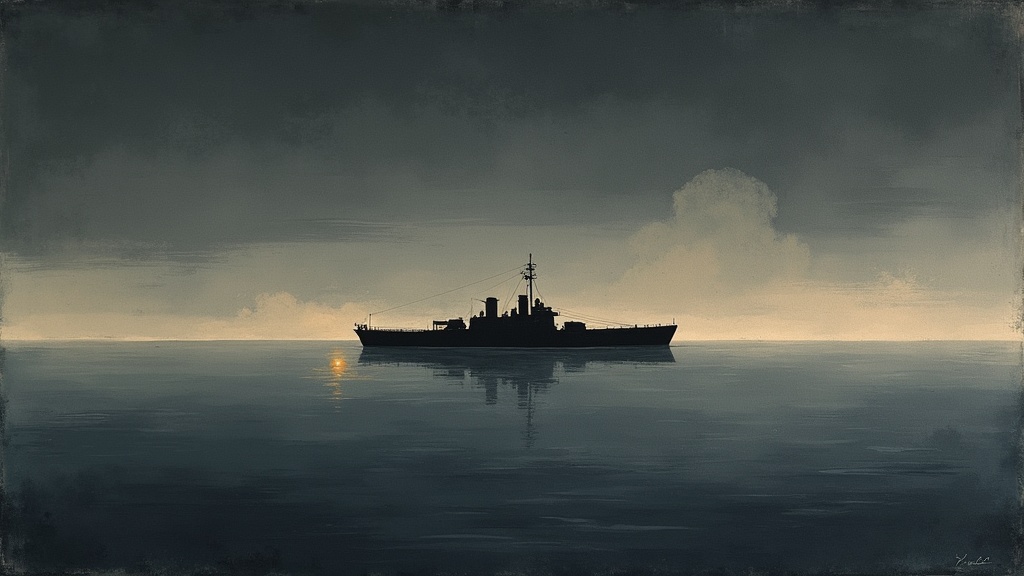
On the night of 27 April 1944, a convoy of American landing ships moved slowly through the dark water of Lyme Bay, off the south coast of Devon. The men aboard were rehearsing. In six weeks they would be part of the largest seaborne invasion in history, and this was the dress rehearsal for one slice of it — the run onto Utah Beach. Before the night was over, at least 749 of them would be dead, killed not by the enemy they were training to fight on the far shore but by that same enemy arriving early, in the dark, where no one expected him. And then, almost as strange as the killing itself, a silence closed over the whole thing that would last the better part of forty years.
A Beach That Looked Like Normandy
The place was Slapton Sands, a long, gently shelving shingle beach backed by a shallow lagoon and a low green ridge. Allied planners had chosen it precisely because it resembled the stretch of Norman coast the Americans had been assigned for D-Day. To make the rehearsal realistic, the British government had already done something extraordinary: in late 1943 it evacuated some 3,000 residents from the surrounding villages and farms, emptying an entire corner of the English countryside so that soldiers could practise a war on it.
The exercise was codenamed Tiger, and it was meant to be as close to the real thing as men could make it. That meant live naval gunfire laid down ahead of the troops, so that soldiers would learn the sound and shock of a genuine bombardment before they met one for real. It was a sensible, brutal logic. It was also the first thing to go wrong.
The First Deaths Were Friendly
Timings on an operation like Tiger are everything, and on the morning of the landing they slipped. A delay pushed the H-hour back, but not every unit got the word. The live naval bombardment was supposed to fall on an empty beach and lift before the men went in. Instead, according to the accounts that survived, some troops came ashore while live rounds were still landing — their own side’s shells falling among their own side’s men. Exactly how many died in that confusion has never been settled, but friendly fire on Slapton Sands killed an unknown number of American soldiers before the Germans ever appeared.
That alone would have made Exercise Tiger a grim day. It was only the beginning.
Nine E-Boats in the Dark
Out in the Channel, the Germans kept a squadron of fast attack craft the Allies called E-boats — from the Kriegsmarine’s Schnellboote, or “fast boats.” They were low, quick, torpedo-armed, and very hard to see at night. On the night of 27–28 April, a group of them slipped out of Cherbourg on a routine patrol and stumbled into something they could scarcely have hoped for: a line of slow, heavily laden American landing ships — LSTs — strung out across Lyme Bay with startlingly thin escort.
Much has been made, ever since, of how thin that escort was. A destroyer that should have been screening the convoy was not in position; a second British warship had been damaged and sent to port and, in the tangle of orders and radio frequencies, was never replaced. The Americans and their escorts were also, disastrously, working on different radio channels, so warnings did not travel. Into that gap came the E-boats.
Fatal in the Water
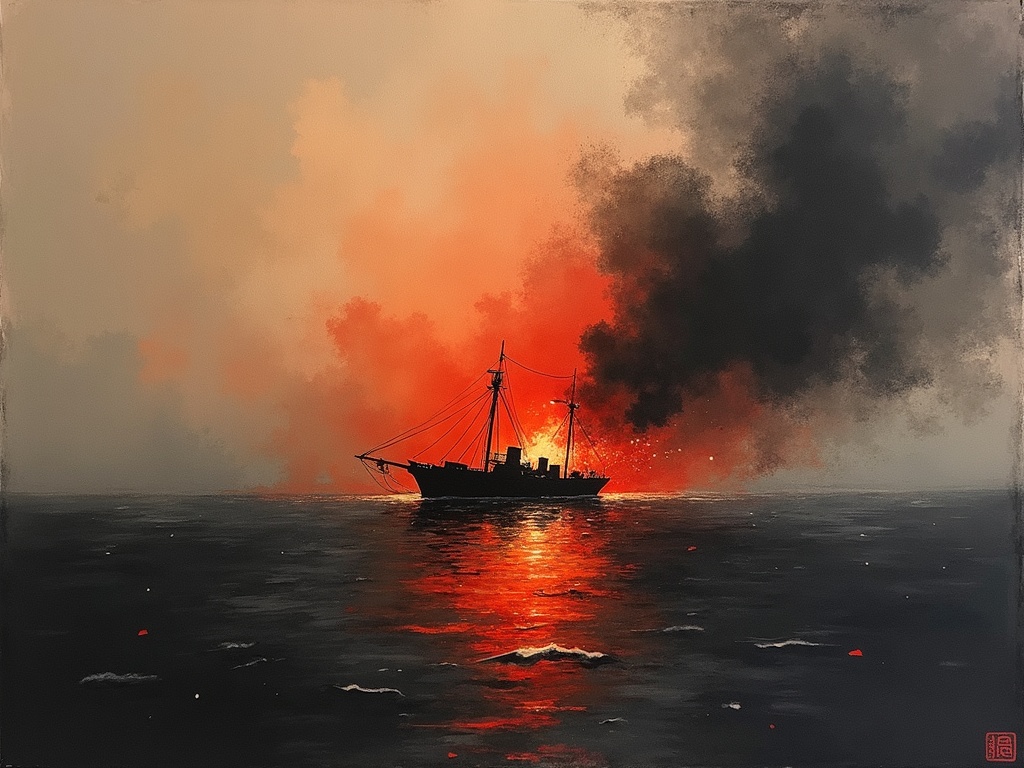
What followed was less a battle than a shooting into a crowd. The Germans fired torpedoes into the column and the sea began to burn. LST-507 was hit and set ablaze, fuel and vehicles feeding the fire until the order came to abandon ship. LST-531 was struck and went down in minutes, taking most of the men aboard with her. A third ship, LST-289, was hit in the stern but managed, remarkably, to limp back to harbour under her own power.
Then the water itself became the enemy. The Channel in late April is bitterly cold, and hypothermia killed men within minutes. Worse, many soldiers had been given life belts but never properly trained to wear them. Weighed down by full packs, they clipped the belts around their waists instead of under their arms; when they went into the sea the buoyancy flipped them face-down, and men who could have floated drowned upside down in their own life jackets. Survivors described swimming through burning oil, through wreckage, through the cries of other men, in the dark. By the time the shooting stopped, the toll from the E-boat attack alone ran to hundreds.
The Ten Men Who Knew Too Much
When the counting began, the commanders were seized by a fear that had nothing to do with grief. Among the officers aboard the convoy were ten men classified as “BIGOT” — cleared to know the actual, closely guarded secret of where and roughly when the D-Day invasion would come. If even one of them had been captured alive by an E-boat crew, the entire invasion might have been compromised, and Overlord itself thrown into doubt.
Recovery teams were sent out with an urgent, macabre task: to account for all ten BIGOT officers, dead or alive, and confirm that none had fallen into German hands. Only when every one of the ten was located among the recovered bodies could the senior commanders breathe. The invasion’s secret had held — but the anxiety tells you how close the disaster came to being far larger than 749 lives.
The Silence
Everything about Exercise Tiger was buried, and not only the dead. With D-Day just weeks away, secrecy was absolute: survivors were ordered to say nothing, casualty reports were suppressed, and the losses were quietly folded into the official D-Day figures afterward so they would never stand out as their own catastrophe. The men who lived through it went on to the real invasion carrying an experience they were forbidden to describe, even to families of the men who had died beside them.
The bitter arithmetic is hard to look away from. More Americans were killed rehearsing for Utah Beach on Slapton Sands than were killed taking the actual Utah Beach on 6 June. The practice was deadlier than the performance — and for decades the practice, officially, had barely happened at all.

A Tank Raised From the Sea
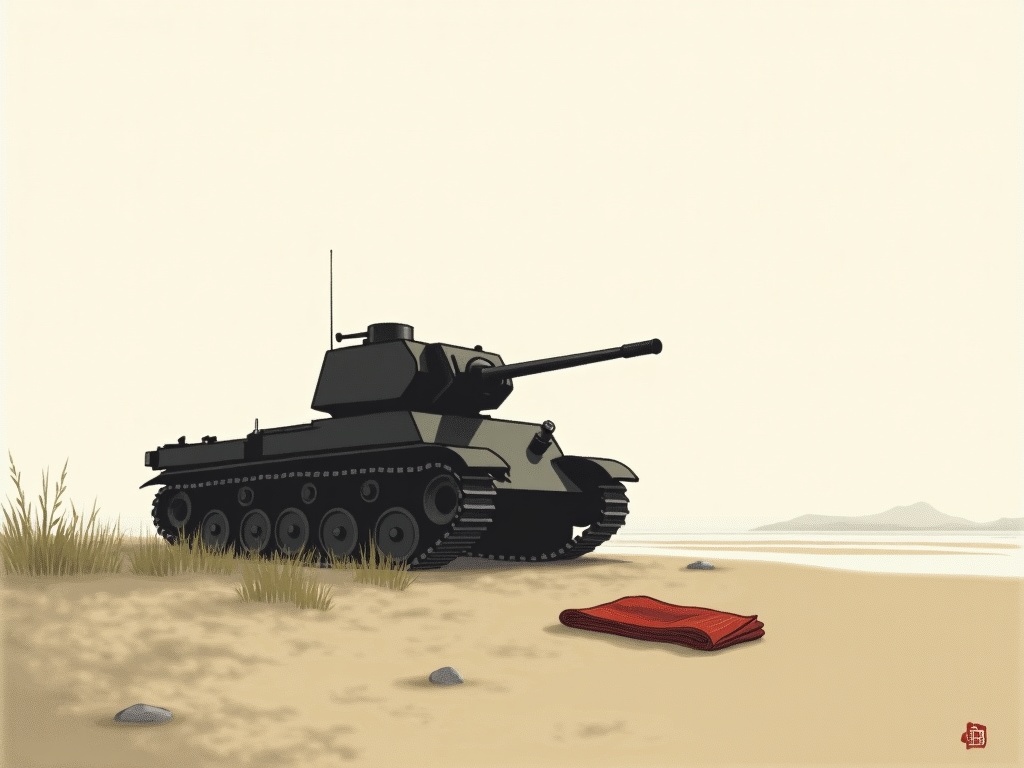
The story might have stayed sunk if not for the stubbornness of ordinary people. In the years after the war, a Devon hotelier named Ken Small began noticing debris washing up on the local beach and hearing fragments of a story no monument acknowledged. In the 1980s he located a Sherman DD tank — an amphibious tank lost during the exercise — sitting on the seabed offshore, and he set about buying it from the U.S. government and raising it. In 1984, forty years on, that recovered tank was set up above Slapton Sands as a memorial: rusted, salt-eaten, and finally impossible to ignore.
Only around that anniversary did the full account of Exercise Tiger reach the public, pieced together from declassified records, local memory, and the testimony of the survivors who were at last free to speak. The men who had been told to forget were, belatedly, allowed to be remembered.
Why It Still Matters
It is tempting to file Exercise Tiger under waste — a needless slaughter caused by mismatched radios, missing escorts, and untaught life belts. But the men who ran D-Day did not treat it that way. The failures of that night — the radio frequencies, the escort gaps, the life-belt training — were studied, and the corrections were carried straight into the planning for 6 June. In a grim sense, the dead of Slapton Sands helped keep the living alive six weeks later on the real beaches.
That is cold comfort, and it should be. What lingers is not the tactical lesson but the shape of the thing: hundreds of young men drowned in the cold within sight of home, in a rehearsal, and then wrapped in a silence so complete that many of their own countrymen never learned it had happened. History remembers the beaches of Normandy in bronze and stone. It very nearly forgot the beach where so many of the men who were meant to storm them died first — and it took a rusting tank, dragged out of the sea by a man who refused to let it lie, to make us look.
Sources & further reading:
- Wikipedia — Exercise Tiger
- Exercise Tiger Memorial — The Story of Exercise Tiger
- HISTORY — D-Day’s Deadly Dress Rehearsal
Related Reading
- The Dance of Death: The Sinking of the SS Mendi and the Men History Forgot
- Operation Mincemeat: The Dead Man Who Fooled Hitler and Saved Sicily