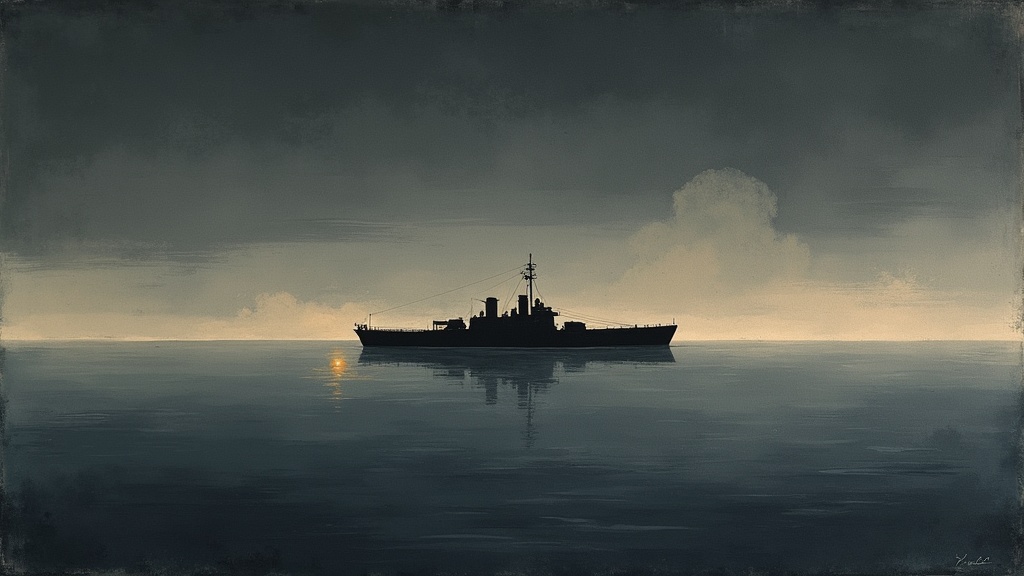
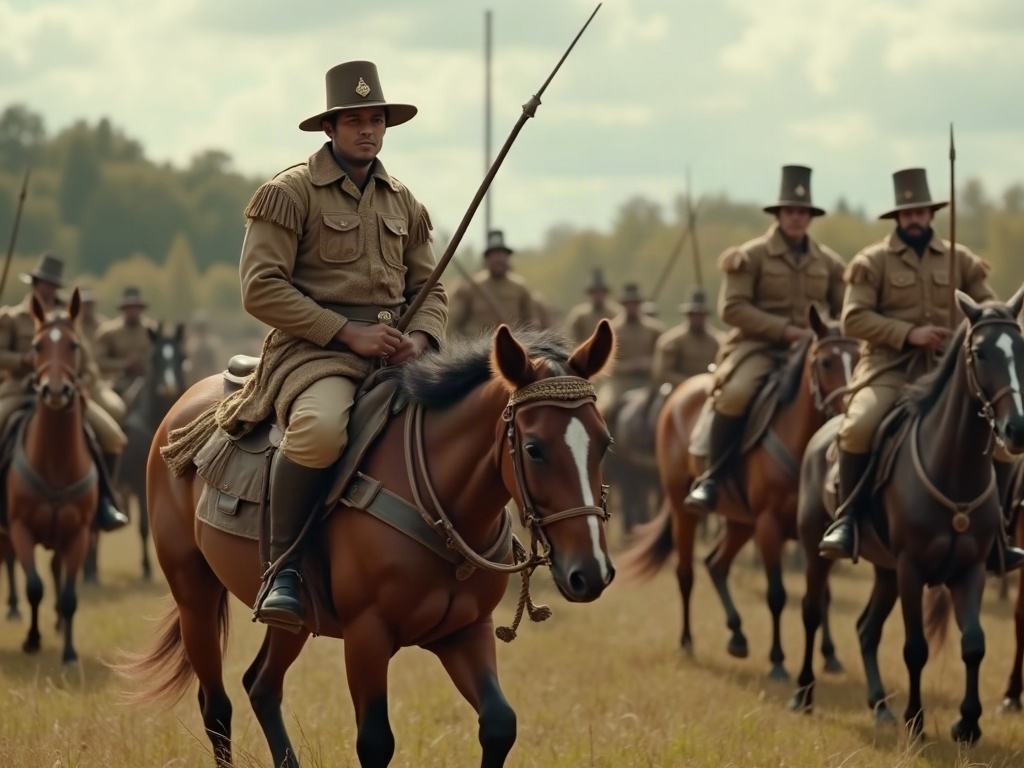
In 1859 an American farmer shot a British pig rooting in his potato patch. Within weeks, hundreds of soldiers, a fleet of warships, and 2,000 sailors faced off on a foggy little island – and the only casualty was the pig.
In the final week of World War II, a handful of American GIs, a band of anti-Nazi German soldiers, and a castle full of France’s imprisoned elite made a stand together against the Waffen-SS. It is remembered as the strangest battle of the war — and the only time Americans and Germans are known to have fought as allies.
In April 1944, weeks before D-Day, a rehearsal on a quiet Devon beach turned into a slaughter. At least 749 American servicemen died in a single night — and for decades, almost no one was allowed to know.
On the night of February 25, 1942, Los Angeles became the stage for one of World War II’s most bizarre military incidents. For over an hour, American forces unleashed a thunderous barrage of anti-aircraft fire into the dark California sky, convinced they were repelling a Japanese air raid. The reality was far stranger—they were shooting at absolutely nothing.
The Prelude to Panic
The attack on Pearl Harbor had left Americans on edge, particularly those living on the West Coast. Just two months after December 7th, paranoia gripped the nation. Reports of enemy submarines lurking offshore and phantom aircraft filled newspapers daily. Inexperienced radar operators mistook fishing boats, logs, and even whales for Japanese warships.
Secretary of War Henry Stimson had warned that American cities should prepare to accept “occasional blows” from enemy forces. That warning proved prophetic just days before the Los Angeles incident, when a Japanese submarine surfaced off Santa Barbara on February 23, 1942, and shelled an oil refinery—the first enemy bombardment of the mainland United States during World War II.
The Night the Guns Roared
The stage was set for disaster. On the evening of February 24, naval intelligence warned coastal units to prepare for a potential Japanese attack. All remained quiet until 2:00 AM on February 25, when radar picked up what appeared to be an enemy contact 120 miles west of Los Angeles.
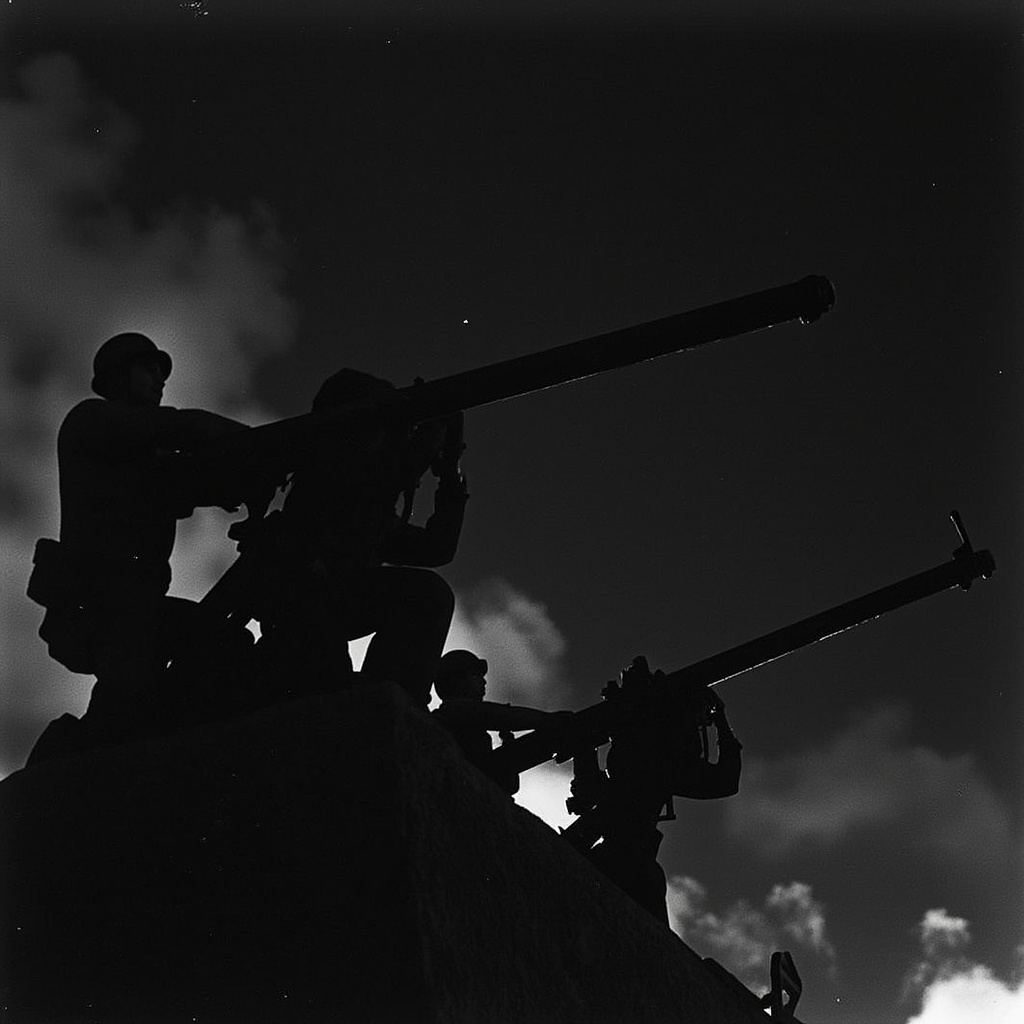
Soldiers manning anti-aircraft guns during the Battle of Los Angeles
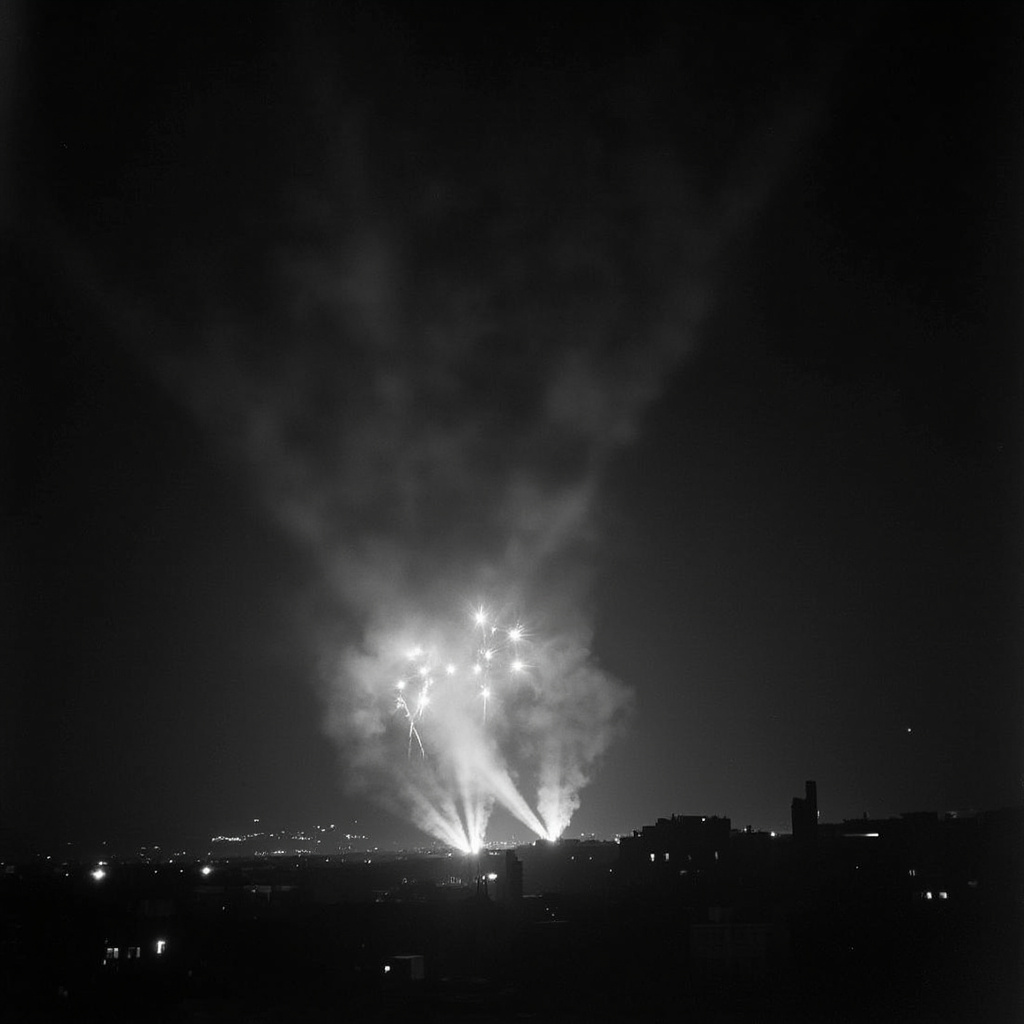
Air raid sirens wailed across the city. A complete blackout was ordered. Within minutes, troops had manned their positions and searchlights began sweeping the sky. At 3:16 AM, following reports of an unidentified object over Santa Monica, the shooting began.
“Powerful searchlights from countless stations stabbed the sky with brilliant probing fingers,” the Los Angeles Times reported, “while anti-aircraft batteries dotted the heavens with beautiful, if sinister, orange bursts of shrapnel.”
For the next hour and eight minutes, Los Angeles artillery batteries pumped over 1,400 rounds of anti-aircraft ammunition into the empty sky. Reports flooded in from across the city: Japanese aircraft flying in formation, bombs falling, enemy paratroopers descending. One witness claimed a Japanese plane had crash-landed in Hollywood.
“I could barely see the planes, but they were up there all right,” coastal artilleryman Charles Patrick later wrote. “I could see six planes, and shells were bursting all around them. Naturally, all of us fellows were anxious to get our two-cents’ worth in.”
The Morning After: A Puzzling Discovery
When the “all-clear” finally sounded that morning, military officials made a disturbing discovery: there had been no enemy attack. No bombs had been dropped. No planes had been shot down. The only damage came from American shells raining down on their own city.
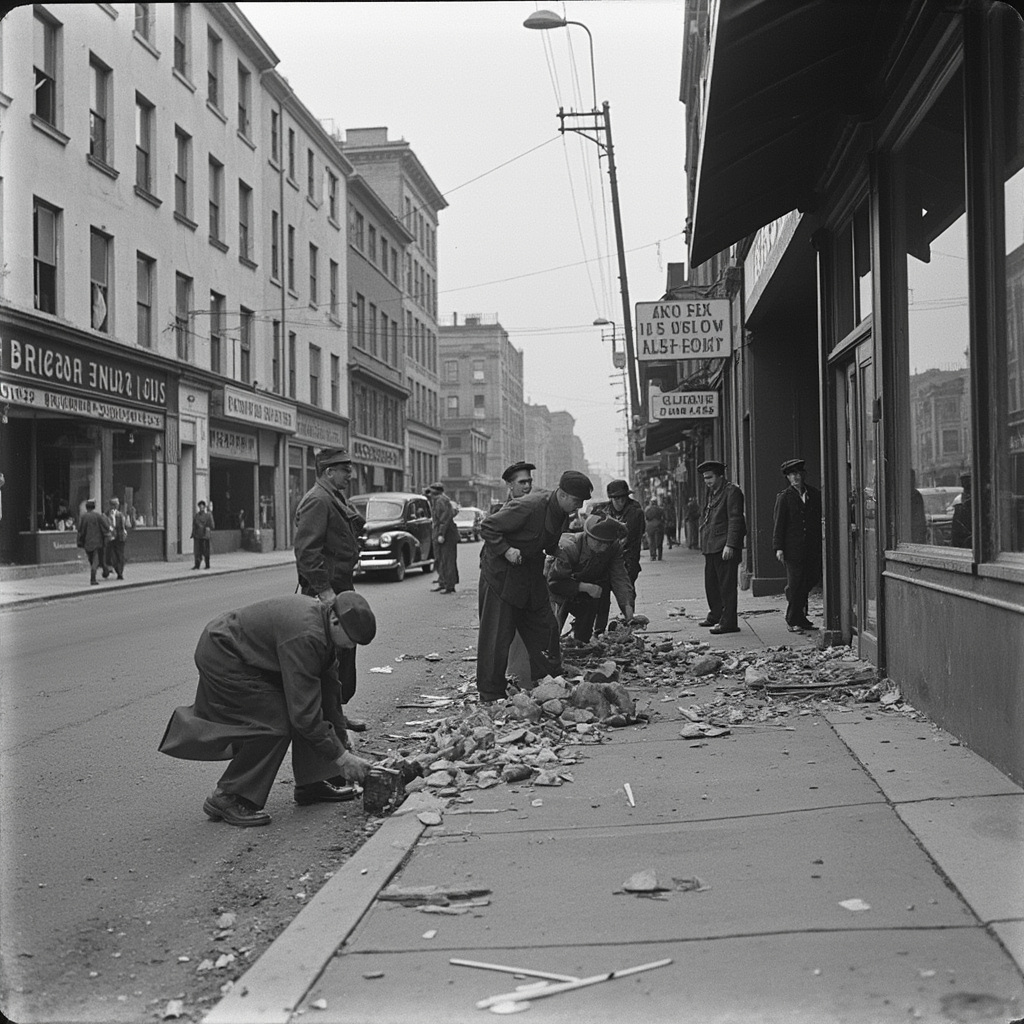
Residents cleaning up shrapnel damage after the Battle of Los Angeles
Anti-aircraft shrapnel had shattered windows and torn through buildings across Los Angeles. One unexploded shell careened into a Long Beach golf course. Several homes were partially destroyed by 3-inch artillery shells. Though no serious injuries occurred from the barrage itself, five people died from heart attacks and car accidents during the extended blackout.
In a chilling preview of the hysteria that would soon accompany Japanese internment, authorities arrested twenty Japanese-Americans for allegedly trying to signal the nonexistent aircraft.
Contradictory Explanations
Government officials offered wildly conflicting explanations for the incident. Secretary of the Navy Frank Knox dismissed it as a false alarm caused by “jittery nerves.” But Secretary of War Henry Stimson insisted that at least fifteen planes had buzzed the city, suggesting they might have been “commercial aircraft operated by enemy agents” trying to spread fear.
The New York Times noted the absurdity: “Some eyewitnesses had spied a big floating object resembling a balloon, while others had spotted anywhere from one plane to several dozen. The more the whole incident is examined, the more incredible it becomes.”
The Truth Behind the “Battle”
What really happened over Los Angeles that February night? The Japanese military later confirmed they had never flown aircraft over the city during the entire war. The most logical explanation involves a perfect storm of wartime paranoia, inexperienced personnel, and equipment failures.
In 1983, the Office of Air Force History revealed that meteorological balloons had been released before the barrage to determine wind conditions. Their lights and reflective surfaces likely triggered the initial alerts. Once the shooting began, the disorienting combination of searchlights, smoke, and exploding shells created phantom targets that convinced gunners they were firing on enemy planes.
Hollywood’s Perfect Illusion
The incident occurred in the heart of America’s entertainment capital, and journalists didn’t miss the irony. The New York Times wrote that as “the world’s preeminent fabricator of make-believe,” Hollywood had played host to a battle that was “just another illusion.”
The Battle of Los Angeles stands as a stark reminder of how fear and inexperience can transform shadows into enemies. While no Japanese aircraft ever threatened the city that night, the phantom attack succeeded in achieving what real bombers might have struggled to accomplish—complete panic, military chaos, and a city shooting at itself.
In the end, America’s first “UFO incident” was neither aliens nor enemies, but something far more human: the fog of war meeting the power of suggestion in a city already on edge.
In the mid-19th century, while America was tearing itself apart in the Civil War, an even more catastrophic conflict was raging on the other side of the world. The Taiping Rebellion in China lasted 14 years, claimed over 20 million lives, and was led by a man who believed himself to be the younger brother of Jesus Christ. Yet this massive war—one that killed more people than World War I—remains largely unknown outside of China.
A Failed Scholar’s Divine Vision
Hong Xiuquan was supposed to be a success story. Born into a Hakka farming family in Guangdong Province, he was a brilliant student who ranked first in lower-level civil service examinations. But the imperial examinations—China’s pathway to government positions and social advancement—proved to be his downfall. In 1836, at age 22, Hong failed the exams for the second time.
The failure devastated him. On his way home, weak and demoralized, Hong hired a palanquin to carry him. An American Protestant missionary named Edwin Stevens approached him in Guangzhou, offering a Christian tract titled ‘Good Words to Admonish the Age.’ Hong accepted it, glanced at it briefly, and tucked it away. This seemingly insignificant encounter would change the course of Chinese history.
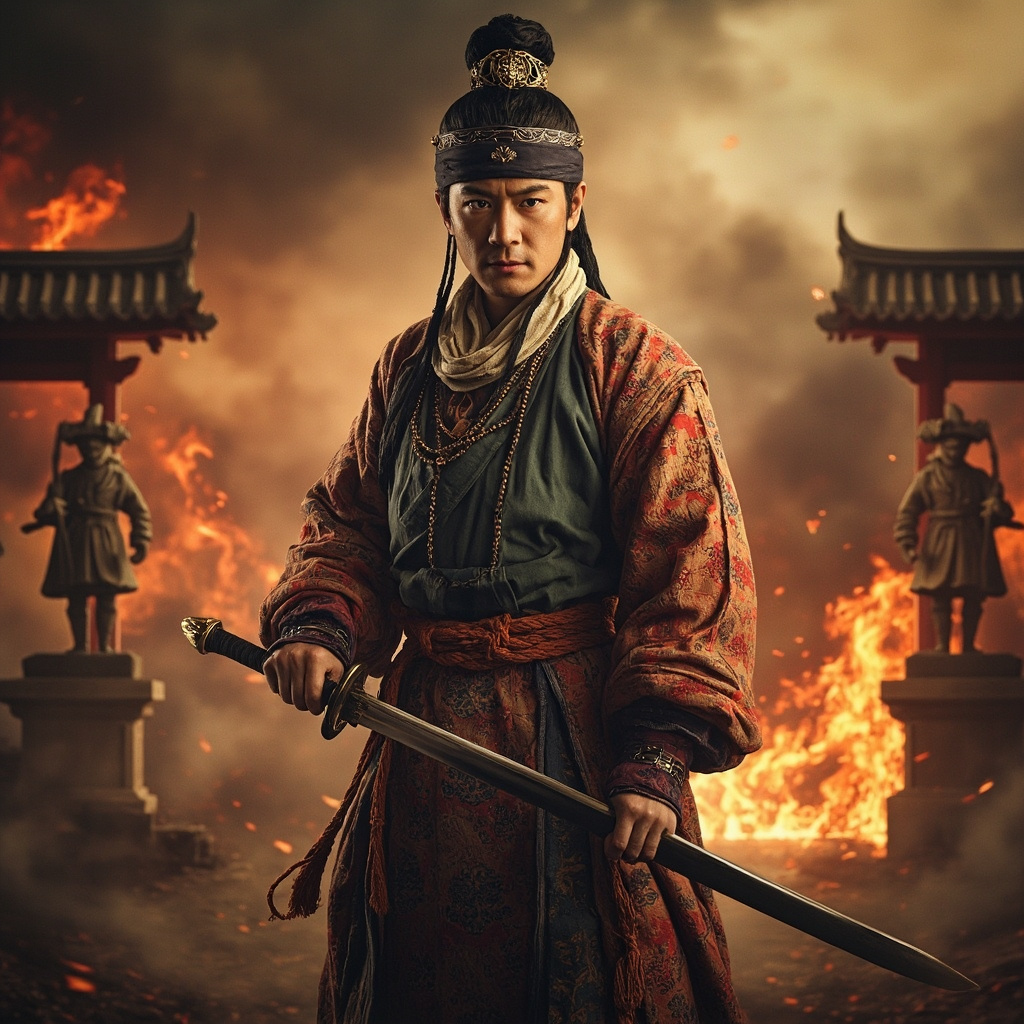
When Hong failed the exams again in 1837, he collapsed into bed upon returning home. What happened next would fuel one of history’s most devastating wars. Hong experienced vivid dreams where crowds of people carried him eastward. Attendants cured his ailments and gave him scrolls to read. A golden-bearded man called himself Hong’s father, bestowing upon him a new name—Hong Xiuquan—along with a golden seal, a greatsword, and a divine mission: to rid the world of demons.
The Christian Revelation
For six years, Hong’s family tolerated his eccentric behavior following his recovery. He called himself the ‘Heavenly King,’ wrote poems about fighting demons, and denied familial relations. But in 1843, after failing the imperial exams for the fourth time, Hong’s cousin urged him to actually read the Christian tract he had been carrying around.
The revelation was explosive. Through the missionary text, Hong finally understood his visions. The golden-bearded man was God the Father, and the helpful stranger was Jesus Christ—his elder brother. Hong had been chosen for a divine mission: to establish God’s kingdom on Earth and destroy the ‘demons’ of traditional Chinese religion—Buddhism and Confucianism.
Hong and his cousin baptized each other and commissioned a blacksmith to create three-foot, ten-pound ‘demon slaying swords.’ They promptly destroyed their collections of Confucian and Buddhist texts, shocking their communities. When Hong and his early converts destroyed Confucian monuments in their schools, they were fired from their teaching positions.
From Religious Movement to Rebellion
What began as a small religious sect grew rapidly into something far more dangerous. While Hong traveled to meet with Baptist missionary Issachar Jacox Roberts in 1847 (leaving unbaptized but with a Bible), his follower Feng Yunshan had been busy in the Thistle Mountains. Feng established the ‘God Worshipping Society,’ which attracted converts from all walks of life by deterring bandits and pirates in the region.
The Qing dynasty could no longer ignore this growing movement. When imperial forces moved against the God Worshippers in the mountains, it provoked exactly what the government feared most—armed resistance. In December 1851, Hong gathered 10,000 believers in the city of Jintian, drove out the Qing forces, and proclaimed himself ‘Heavenly King of the Taiping Kingdom.’
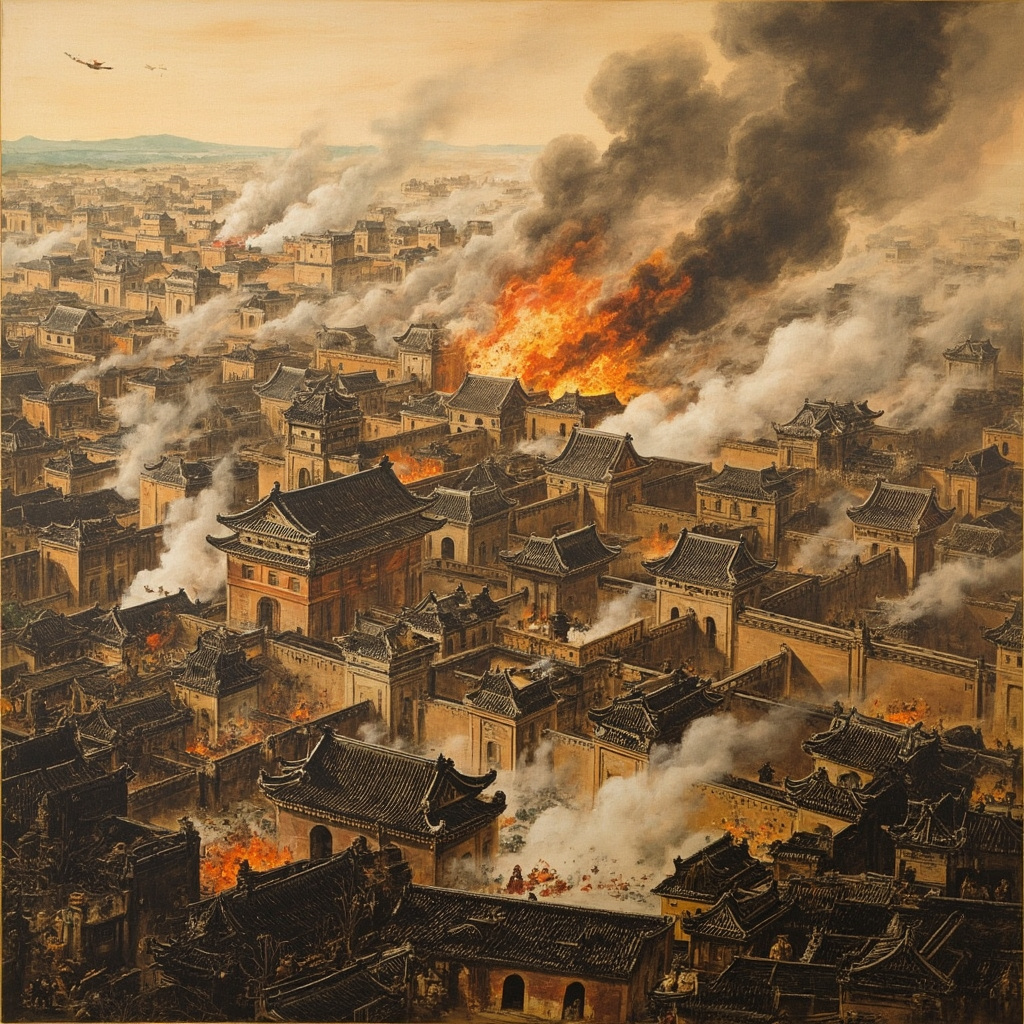
The rebels moved north along the Xiang River, building their numbers by ‘baptizing’ new converts and seizing resources. After a series of sieges, they captured their greatest prize in May 1853: Nanjing, the former imperial capital. Hong had his kingdom.
The Heavenly Kingdom’s Radical Experiment
Hong’s rule of Nanjing revealed the extremism beneath his religious movement. He retreated to the Presidential Palace, where he implemented a series of radical policies that would have been shocking even by today’s standards. All Manchu people in the city—members of the ethnic group that ruled the Qing dynasty—were executed. Landmarks were destroyed, traditional practices like footbinding and the queue hairstyle were banned, and trade was severely restricted.
Hong outlawed alcohol and opium, demanded strict segregation of men and women (even married couples), and seized all personal property to create a communist-style society. He rewrote the Bible, removing passages he found objectionable and adding accounts of his own divine visions. Meanwhile, Hong filled his palace with women servants and demanded absolute submission from visitors, driving away potential Western allies with cannon fire when they refused to kowtow.
The Bloody End
The Taiping Kingdom’s expansion continued for several years, but the tide turned when they attempted to capture Shanghai. Western powers, initially neutral, joined the Qing forces after being threatened by Taiping advances. European and Chinese soldiers fought side by side to repel the rebels, beginning the slow collapse of Hong’s kingdom.
By 1864, Qing forces had surrounded Nanjing, cutting off all food supplies. As his people starved, Hong assured them that God would provide wild vegetables for sustenance. To prove his point, he publicly ate a handful of weeds. He died of food poisoning 20 days later.
When Qing forces retook Nanjing, they showed no mercy. Hong’s body was cremated and his ashes fired from a cannon to ensure he had no resting place. His 15-year-old son briefly inherited the throne but was captured and executed within months.
A Legacy of Devastation
The Taiping Rebellion stands as one of history’s most devastating conflicts. Conservative estimates place the death toll at 20 million people, though some scholars suggest it may have reached 30 million. To put this in perspective, more people died in the Taiping Rebellion than in World War I, yet it remains virtually unknown in the Western world.
The rebellion’s impact on China was profound and lasting. The conflict weakened the Qing dynasty beyond recovery, contributing to its eventual fall in 1912. Later Chinese revolutionaries, including Sun Yat-Sen and Mao Zedong, drew inspiration from Hong’s efforts to create an egalitarian society, even as they rejected his religious extremism.
Perhaps most remarkably, this catastrophic war began with a chance encounter between a frustrated student and a missionary handing out pamphlets on a street corner. It serves as a stark reminder of how religious fanaticism, social unrest, and political upheaval can combine to create unimaginable human tragedy.
The man who believed he was Jesus Christ’s brother succeeded in toppling an empire—but at a cost that staggers the imagination even today.
Napoleon Bonaparte conquered much of Europe, faced down empires, and redrew the map of the continent. But in July 1807, the great emperor met his match in the most unexpected adversary imaginable: a swarm of fluffy rabbits that sent him fleeing in retreat.
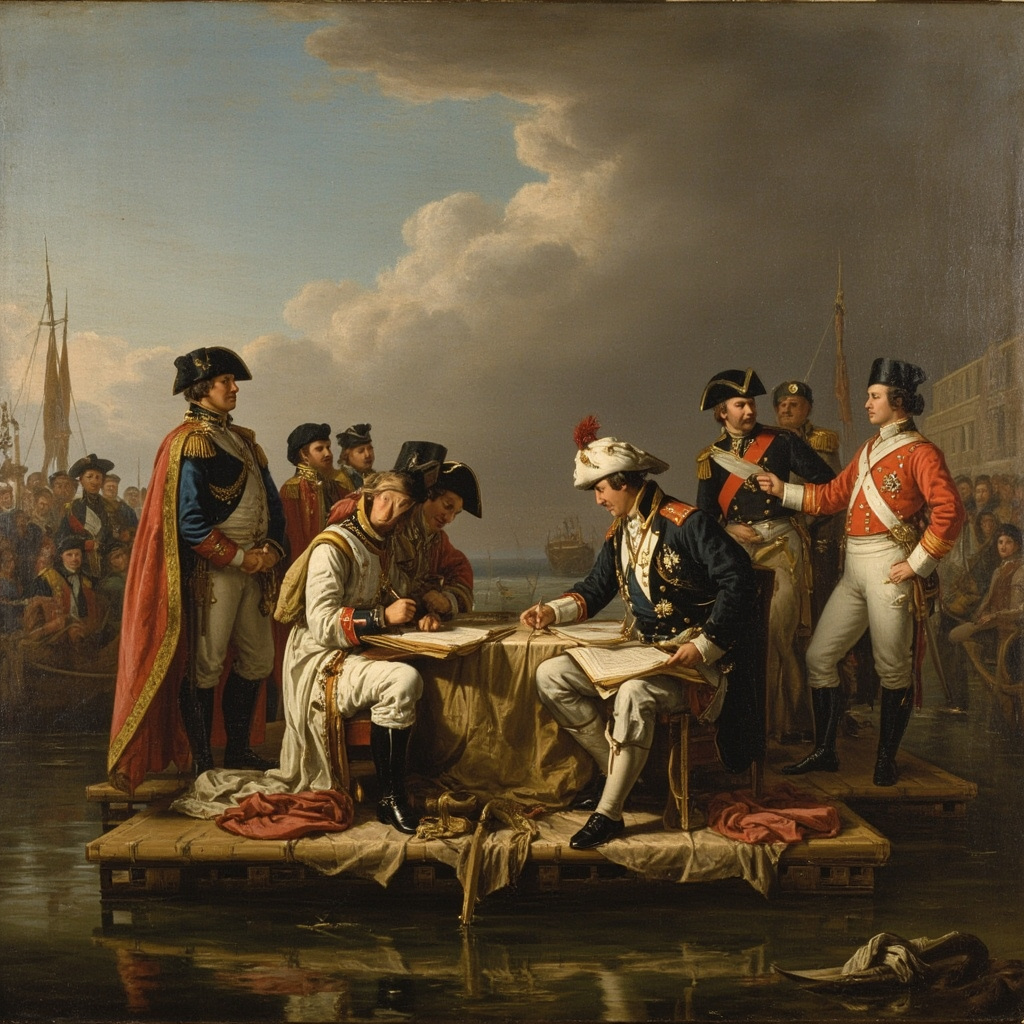
This bizarre historical incident, known as Napoleon’s Rabbit Defeat, occurred during what should have been a triumphant celebration following the signing of the Treaties of Tilsit, which ended the war between France and Russia. Instead, it became one of history’s most embarrassing military retreats.
The Setup: A Celebration Gone Wrong
In July 1807, Napoleon had just achieved a significant diplomatic victory. The Treaties of Tilsit brought peace between the French Empire and Imperial Russia, establishing Napoleon as the dominant force in continental Europe. To celebrate this momentous occasion, Napoleon’s Chief of Staff, Alexandre Berthier, organized what he believed would be a perfect day of leisure: a traditional rabbit hunt.
Berthier was thrilled when Napoleon accepted his invitation to hunt at a park he owned within Paris. The Chief of Staff spared no expense, organizing a splendid breakfast and inviting some of the military’s most distinguished officers. Everything was meticulously planned to please the emperor.
However, there was one problem: Berthier’s property didn’t have enough rabbits for a proper hunt. So he did what any resourceful officer would do—he ordered his men to collect rabbits from local markets and farms. Some accounts suggest he gathered hundreds of rabbits, while others claim the number reached as many as 3,000.
The Fatal Flaw: Tame vs. Wild
Here’s where Berthier made his crucial mistake: instead of collecting wild rabbits that would naturally flee from humans, his men gathered domesticated rabbits from local farms and markets. These weren’t the skittish creatures that would bolt at the first sight of hunters. These were tame rabbits accustomed to being fed by humans.
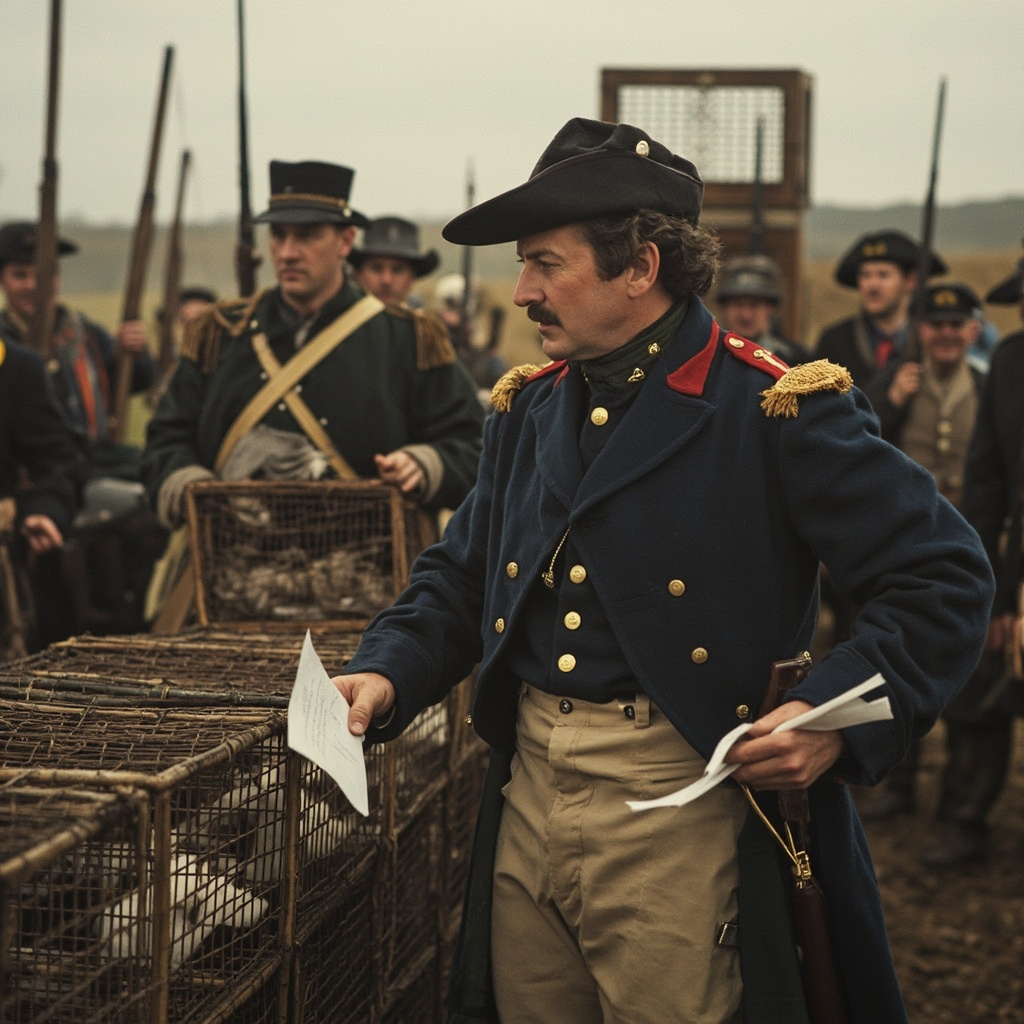
As the hunting party assembled in their finest clothes, with Napoleon resplendent in his military uniform, the rabbits were released from their cages. Berthier and his guests expected the animals to scatter into the woods, providing an entertaining chase.
The Attack: When Rabbits Became the Hunters
Instead of running away, the hundreds of hungry rabbits did exactly what they had been trained to do their entire lives: they ran toward the humans, expecting to be fed. But what started as a curious approach quickly escalated into something far more aggressive.
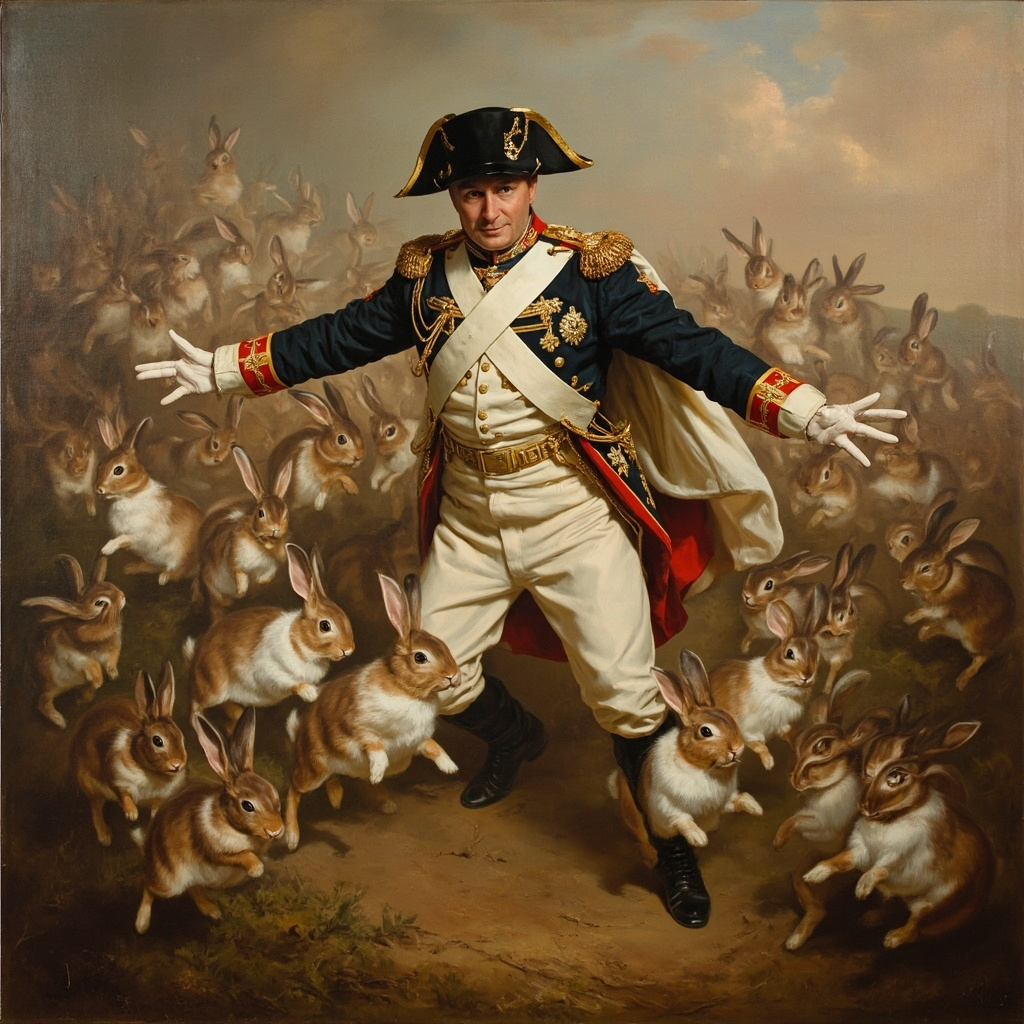
The rabbits swarmed toward Napoleon and his entourage in overwhelming numbers. They didn’t flee when the men tried to shoo them away—instead, they pressed their attack, climbing up the men’s legs, jumping onto their jackets, and refusing to be deterred.
According to eyewitness accounts, the rabbits were particularly drawn to Napoleon himself. They jumped on his clothing, nested in the folds of his uniform, and seemed determined to overwhelm the emperor. Some even allegedly climbed up his legs and into his jacket.
The Retreat: Napoleon’s Most Humiliating Defeat
Faced with this unprecedented assault, Napoleon—the man who had stared down Austrian armies and Prussian cavalry—was forced to beat a hasty retreat. The emperor and his officers began swatting at the rabbits with sticks and their hands, but the sheer number of the creatures made resistance futile.
The situation became so overwhelming that Napoleon was forced to flee to his carriage. Even there, he found no sanctuary—rabbits had apparently followed him and continued their relentless assault. His men had to physically remove rabbits from the emperor’s uniform and the interior of his carriage.
The great military commander who had conquered kingdoms was defeated by fluffy farm animals in what must rank as one of history’s most embarrassing retreats. The hunting party was abandoned, and Napoleon left the field to his unlikely conquerors.
The Aftermath: A Story Too Strange to Suppress
Despite the obvious embarrassment this incident caused, the story survived and has been passed down through historical accounts. It serves as a perfect example of how even the most carefully laid plans can go spectacularly wrong when small details are overlooked.
For Berthier, who had intended to honor his emperor with a pleasant day of sport, the rabbit hunt became a nightmare of epic proportions. The very animals meant to provide entertainment instead provided one of the most humorous military anecdotes in European history.
The incident also highlights an important historical lesson: the difference between wild and domestic animals. Had Berthier’s men collected truly wild rabbits, the hunt would likely have proceeded as planned. Instead, the domesticated rabbits’ learned behavior to approach humans for food turned a celebration into chaos.
Historical Impact and Legacy
While Napoleon’s rabbit defeat had no lasting impact on European politics or military strategy, it has become one of history’s most beloved anecdotes about the great emperor. The story humanizes a figure often portrayed as an invincible military genius, showing that even Napoleon Bonaparte could be humbled by the most unexpected circumstances.
The incident has been retold countless times, often with embellishments that make the story even more dramatic. Some versions claim the rabbits numbered in the thousands; others suggest they actually pursued Napoleon for miles. While the exact details may vary, the core story remains consistent: the conqueror of Europe was defeated by an army of fluffy farm animals.
Today, Napoleon’s rabbit defeat stands as a reminder that history is full of unexpected moments that can humble even the mightiest leaders. It proves that sometimes the most memorable events aren’t the grand battles or political treaties, but the absurd moments that reveal the very human side of historical figures.
In the end, while Napoleon may have conquered Europe, been crowned Emperor, and reshaped the modern world, he will forever be remembered as the man who was defeated by rabbits—a legacy that even his greatest military victories can’t entirely erase.