The Great Emu War: When Australia Lost a Battle to Birds

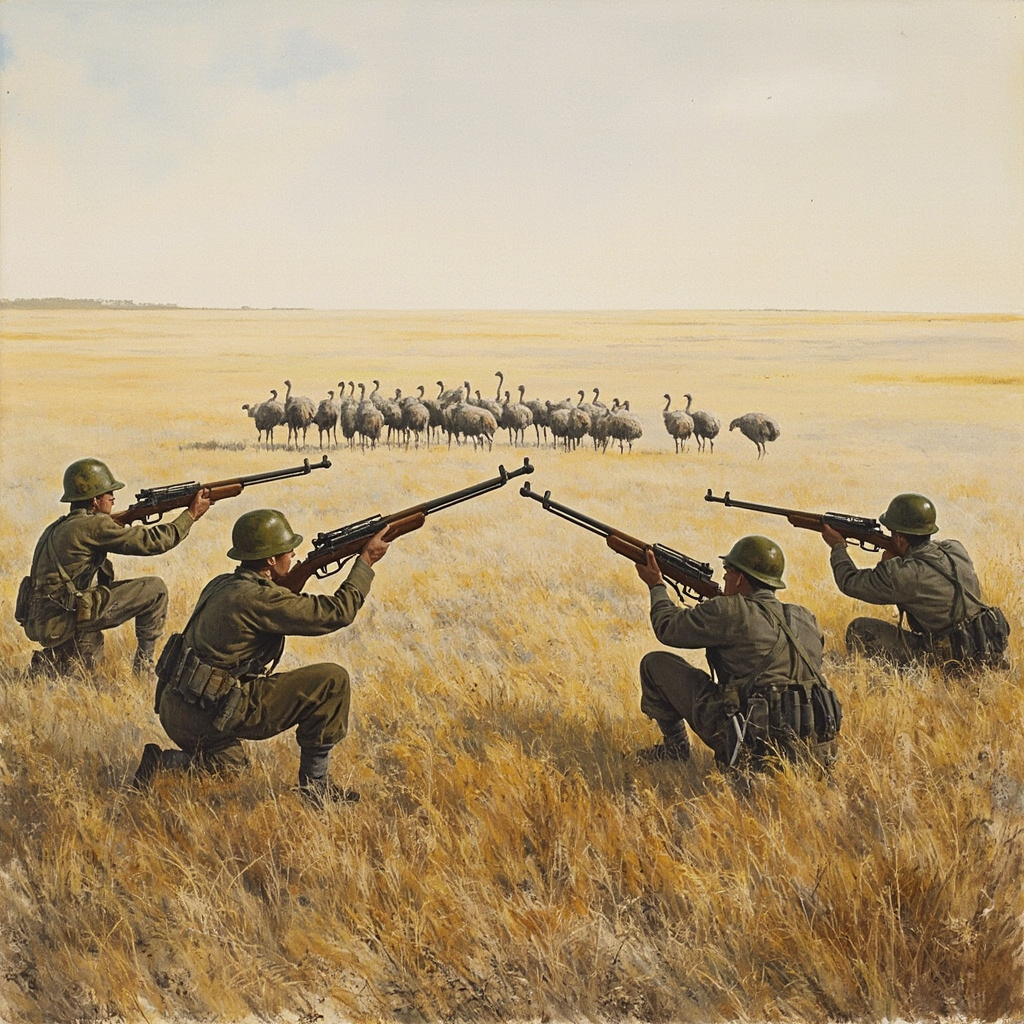
In one of history’s most unusual military conflicts, the Australian military faced off against an unlikely enemy in 1932: emus. What became known as the Great Emu War was a wildlife management operation that turned into a national embarrassment when massive flocks of the large, flightless birds proved more resilient than the soldiers sent to stop them.
The Problem: Post-War Farmers vs. Native Wildlife
Following World War I, the Australian government settled thousands of discharged veterans on farming land in Western Australia’s wheat belt, particularly around the Campion district. These new farmers faced an unexpected challenge: huge flocks of emus that migrated through their crops, devastating entire wheat fields.

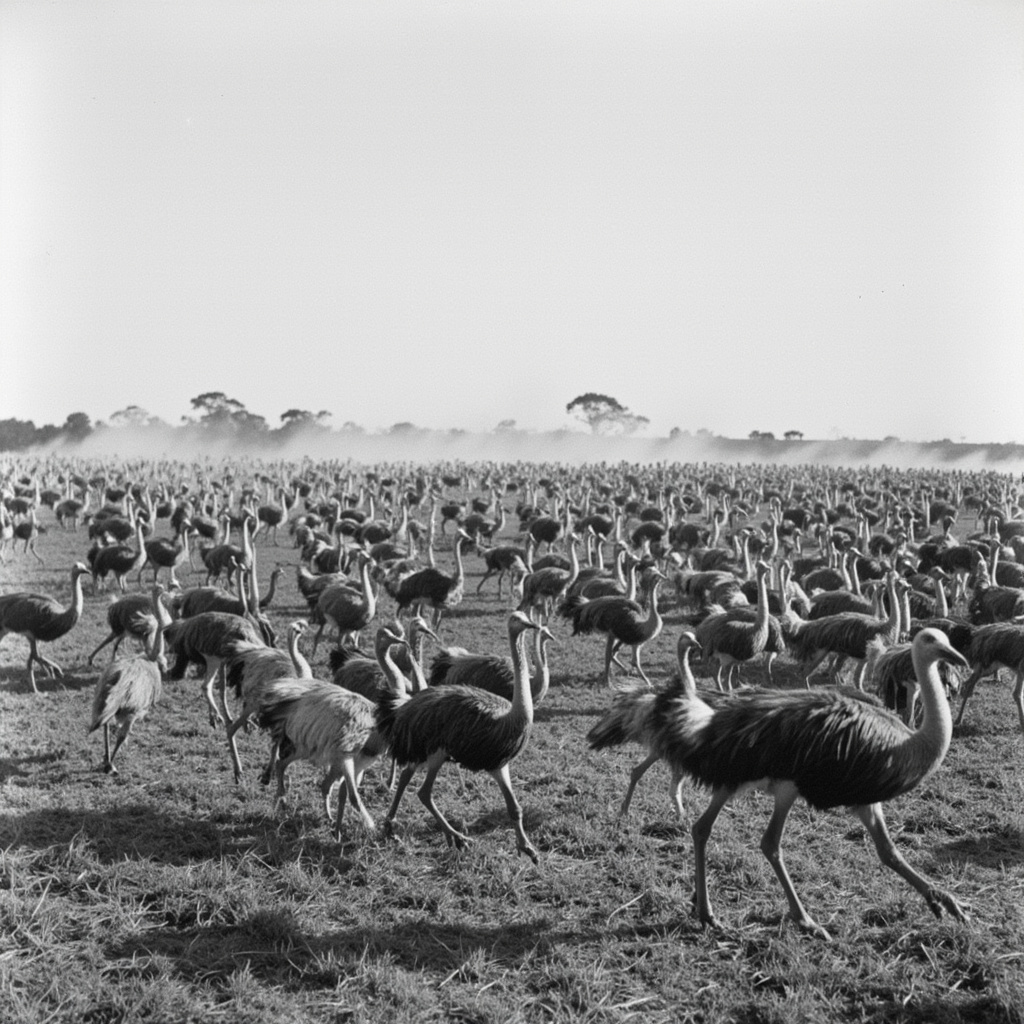
The emus, standing up to six feet tall and weighing over 100 pounds, could destroy crops with alarming efficiency. Groups of up to 20,000 birds would sweep through farming areas, trampling and consuming vast amounts of wheat. The farmers, already struggling economically in the post-war period, faced financial ruin.
Military Intervention: The War Begins
By October 1932, the situation had become so dire that farmers petitioned the government for military assistance. Minister for Defence Sir George Pearce approved a military operation, deploying soldiers from the Royal Australian Artillery armed with Lewis machine guns.
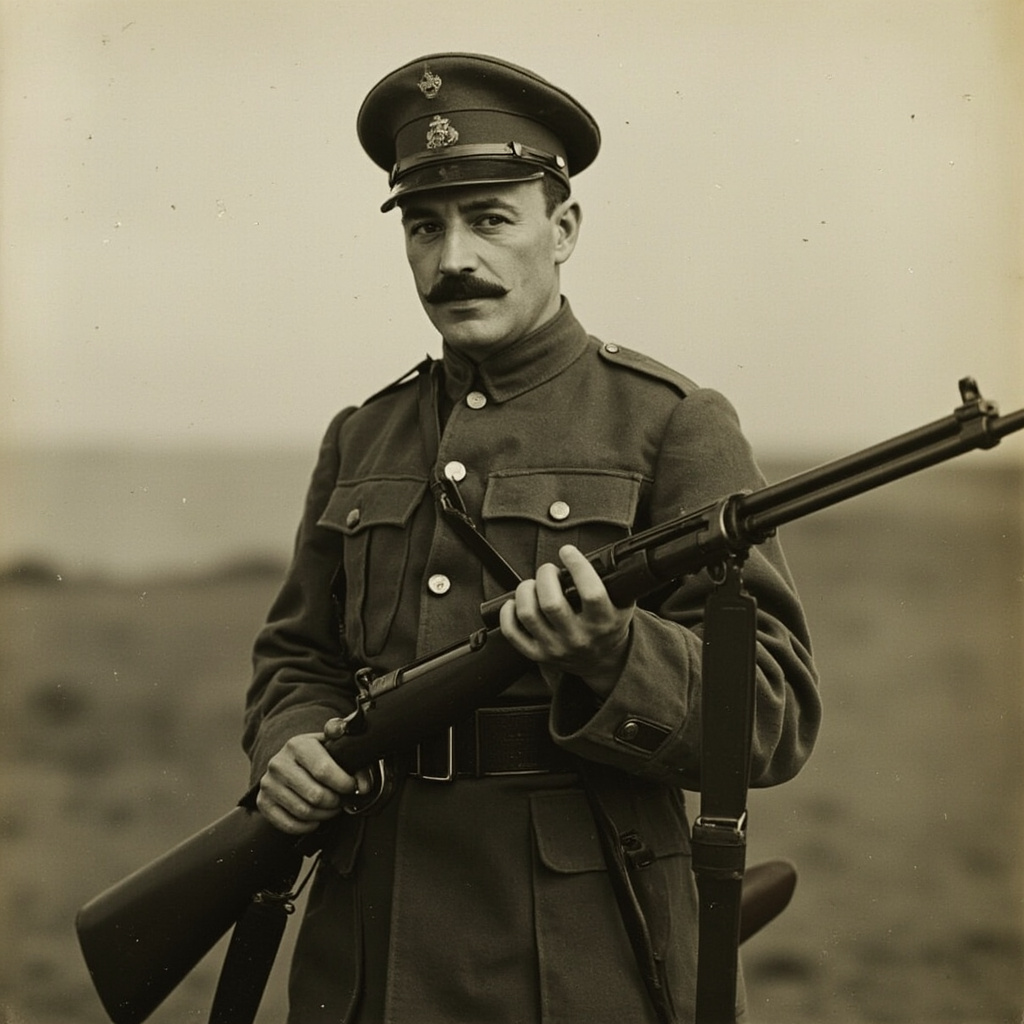
Major Gwynydd Purves Wynne-Aubrey Meredith was put in command of the operation, which officially commenced on November 2, 1932. The plan seemed straightforward: use military precision and firepower to reduce the emu population to manageable levels.
The Birds Fight Back
What the military planners hadn’t anticipated was the emus’ remarkable tactical abilities. The birds proved to be elusive targets, scattering quickly when they heard the soldiers approaching. Their natural speed—up to 30 miles per hour—and their ability to zigzag made them extremely difficult to hit with machine gun fire.
Even more frustrating for the soldiers, the emus seemed to develop countermeasures. They would post sentries while feeding, and at the first sign of military vehicles, the entire flock would disperse in different directions. Some reports described the birds as having an almost military-like organization in their retreat patterns.
Embarrassing Results
Despite weeks of operations and the expenditure of thousands of rounds of ammunition, the military campaign proved largely ineffective. Estimates suggest that only about 986 emus were confirmed killed during the entire operation, while the overall population remained largely unaffected.
The media quickly picked up on the military’s struggles, dubbing the conflict the “Emu War.” Newspapers across Australia and internationally reported on the army’s inability to defeat a flock of birds, turning the operation into a source of national embarrassment.
Strategic Withdrawal
By December 10, 1932, the military officially withdrew from the combat area. Major Meredith reportedly stated that the emus “were worthy opponents” and had “won on points.” The operation was deemed unsuccessful, and the government refused subsequent requests for military intervention against wildlife.
Alternative Solutions
Following the military failure, the government turned to other methods of emu control:
- Bounty systems that paid farmers for each emu killed
- Construction of emu-proof fencing
- Conventional pest control methods
These civilian-led efforts proved more effective than the military operation, though the emu problem persisted for years.
Legacy of the Great Emu War
The Great Emu War has become one of Australia’s most famous historical oddities. It serves as a reminder that sometimes the most unusual challenges can defeat even well-equipped military forces. The conflict is frequently cited in discussions about wildlife management, military strategy, and the unpredictable nature of animal behavior.
Today, the Great Emu War is remembered more for its comedy than its tragedy. It has inspired books, documentaries, and countless internet memes, ensuring that this bizarre chapter of Australian history continues to entertain new generations. The war stands as proof that in the contest between human ingenuity and nature’s resilience, the outcome is never guaranteed—even when one side has machine guns.
Related Reading
- The War of the Bucket: When Italy Fought a Bloody Battle Over a Wooden Pail
- The Day Napoleon Was Defeated by Rabbits: The Most Humiliating Military Retreat in History