The Erfurt Latrine Disaster: When 60 Nobles Met Their End in Medieval Germany’s Most Bizarre Tragedy

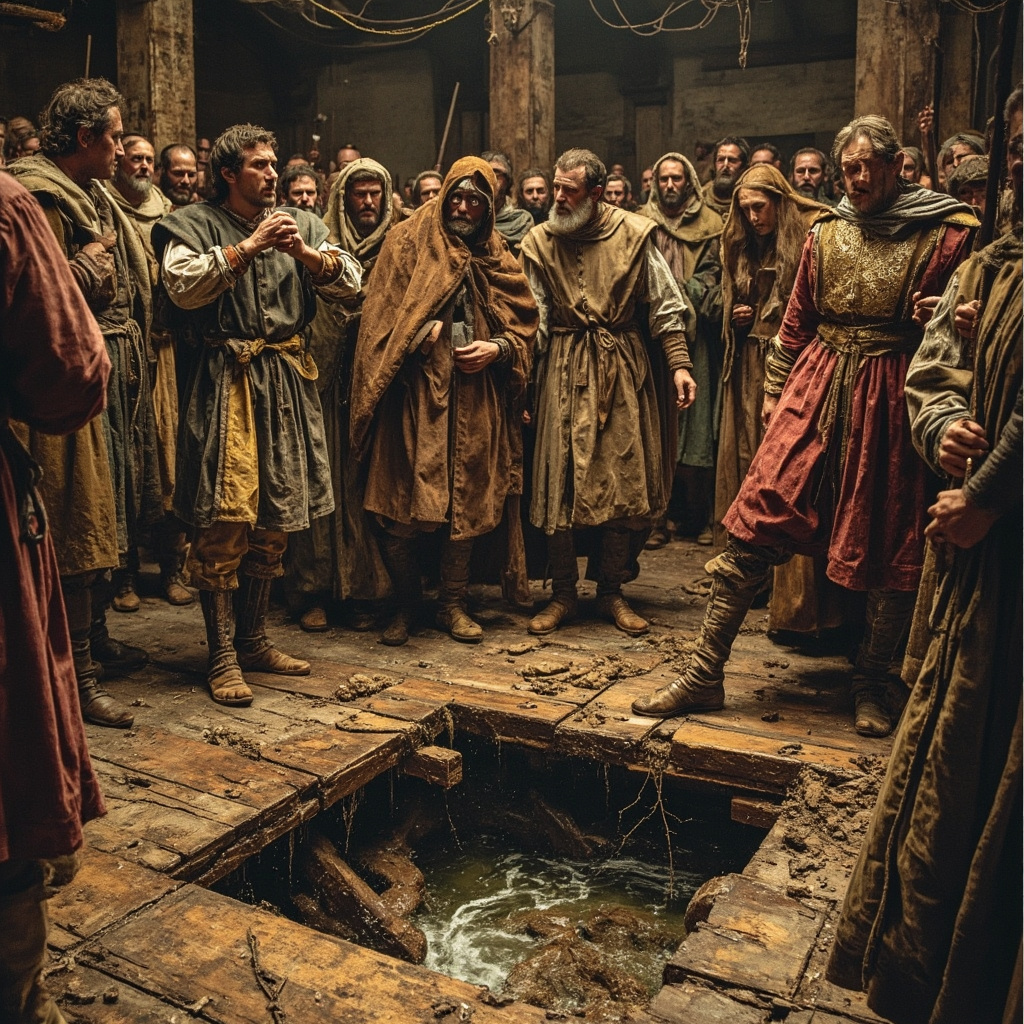
In the annals of history, few disasters are as simultaneously tragic and absurd as the Erfurt Latrine Disaster of 1184. What should have been a routine royal assembly in medieval Germany instead became one of the most unusual mass casualties in European history, when approximately sixty nobles plummeted to their deaths through a collapsing floor—directly into a latrine cesspit below.

The Fatal Assembly
On July 26, 1184, King Henry VI of Germany convened a Hoftag (court day) in the German city of Erfurt, located in what was then part of the Holy Roman Empire. The assembly was held within the Petersberg citadel, a fortified complex that served as both a religious center and administrative hub. Noble lords, church officials, and prominent citizens gathered to discuss matters of state and regional governance.
The meeting took place in a grand hall on the second floor of the building. As was typical for medieval architecture, the structure featured wooden floors supported by timber beams. Directly below this assembly hall lay the building’s latrine facilities—essentially a large cesspit used for waste disposal.
The Catastrophic Collapse
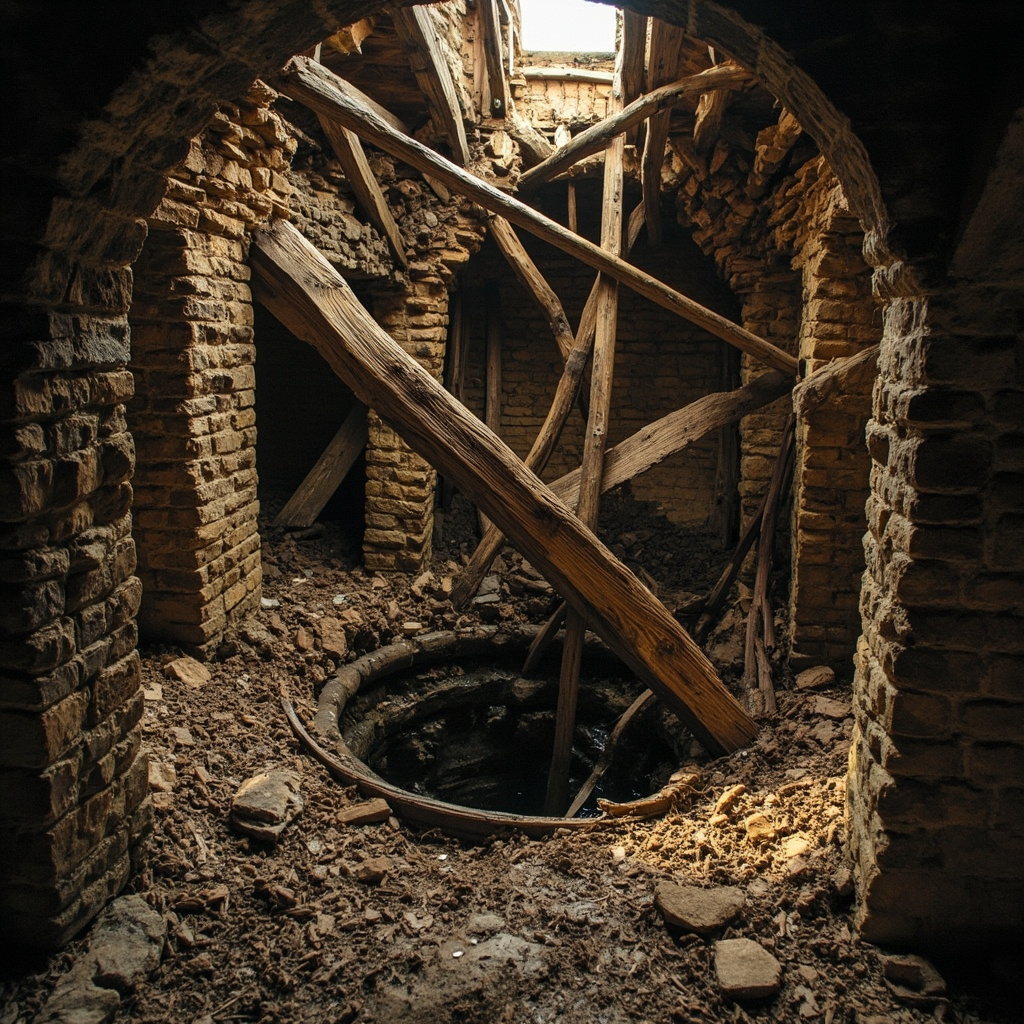
As the assembly proceeded, the combined weight of dozens of nobles, their retinues, and furnishings proved too much for the aging wooden floor. Without warning, the entire structure gave way, sending the gathered dignitaries crashing through the floor and plummeting into the sewage pit below.
Contemporary chronicles describe the scene as horrific. Those who survived the initial fall found themselves trapped in a deep cesspit filled with human waste, struggling to stay afloat in the putrid conditions. The lucky few who managed to avoid the collapse or climb out faced the grim task of attempting rescues in the most unsanitary circumstances imaginable.
The Royal Exception
Remarkably, King Henry VI himself survived the disaster. Historical accounts suggest he was positioned in a part of the hall that remained structurally sound, possibly near a stone wall or on a section supported by stronger beams. This stroke of fortune likely changed the course of European history, as Henry would later become Holy Roman Emperor and play a crucial role in the politics of his era.
Medieval Sanitation and Architecture
The Erfurt disaster highlights the precarious nature of medieval urban planning and sanitation systems. In the 12th century, waste disposal was a constant challenge in growing cities. Buildings often featured communal latrines positioned over pits, streams, or even moats. The proximity of these facilities to living and meeting spaces, while practical for daily use, created obvious structural and health hazards.
Wooden construction, while common and cost-effective, was particularly vulnerable to rot, insect damage, and structural failure over time. The combination of heavy loads, poor ventilation, and the corrosive effects of waste gases likely weakened the floor supports at Erfurt over many years before the final collapse.
Historical Impact and Legacy
Beyond its immediate tragedy, the Erfurt Latrine Disaster had significant political ramifications. The deaths of so many local nobles created a power vacuum in the region, leading to succession disputes and political instability. King Henry VI had to navigate these challenges while consolidating his authority in the affected territories.
The event also became a cautionary tale about medieval construction practices and urban planning. While building codes as we know them didn’t exist, the disaster likely influenced subsequent architectural decisions in German cities, leading to more careful consideration of structural load-bearing capacity and waste management systems.
A Lesson in Historical Perspective
The Erfurt Latrine Disaster serves as a stark reminder that history is full of unexpected turns that can seem almost comical from our modern perspective, yet were undeniably tragic for those involved. It illustrates how technological limitations, combined with practical necessities, could create dangerous situations that seem obvious in hindsight but were simply part of daily medieval life.
This bizarre chapter in German history demonstrates that even the most mundane aspects of daily life—in this case, waste disposal—could become the stage for significant historical events. The sixty nobles who perished in that Erfurt cesspit became unwitting participants in one of history’s most unusual disasters, a reminder that fate can strike in the most unexpected and undignified ways.
Today, the site of the Petersberg citadel still stands in Erfurt, though the specific building where the disaster occurred no longer exists. The event remains a fascinating footnote in medieval German history—a tale that perfectly encapsulates the unpredictable, often absurd nature of human experience throughout the ages.
Related Reading
- The Defenestration of Prague: When Throwing Officials Out a Window Started the Thirty Years’ War
- The Bizarre Medieval Practice of Stuffing Corpses: Austria’s 280-Year-Old Mystery