The Tunguska Event: When a Mystery Explosion Flattened 830 Square Miles of Siberian Forest


On June 30, 1908, at precisely 7:15 AM local time, something extraordinary happened in one of the most remote corners of Siberia. A massive explosion occurred in the skies above the Tunguska River, flattening over 830 square miles of pristine forest and creating one of history’s most enduring mysteries.
The few Evenki reindeer herders who witnessed the event described seeing a brilliant fireball trailing smoke across the morning sky, followed by a flash brighter than the Sun itself. The thunderous roar that followed was heard hundreds of miles away, and those closest to the blast reported being knocked unconscious and thrown through the air by the shockwave.

The Devastating Power of the Unknown
What makes the Tunguska Event so remarkable isn’t just its scale, but the complete absence of a crater. The explosion, estimated to have occurred about 6 miles above the Earth’s surface, released energy equivalent to 1,000 times the atomic bomb dropped on Hiroshima. Yet when scientists finally reached the site decades later, they found no meteorite fragments, no crater—just an apocalyptic scene of destruction.
Seismic instruments across Russia detected tremors from the blast, and the atmospheric disturbance was so significant that it was recorded by monitoring stations as far away as England. In the immediate area, an estimated 80 million trees were knocked down in a distinctive radial pattern extending outward from the blast’s epicenter.
The Long Wait for Science
Perhaps most frustrating for modern researchers is that no scientific expedition reached the Tunguska site for nearly two decades. The remote location, World War I, the Russian Revolution, and subsequent civil war all conspired to delay investigation of what may have been the most significant cosmic impact event in recorded history.
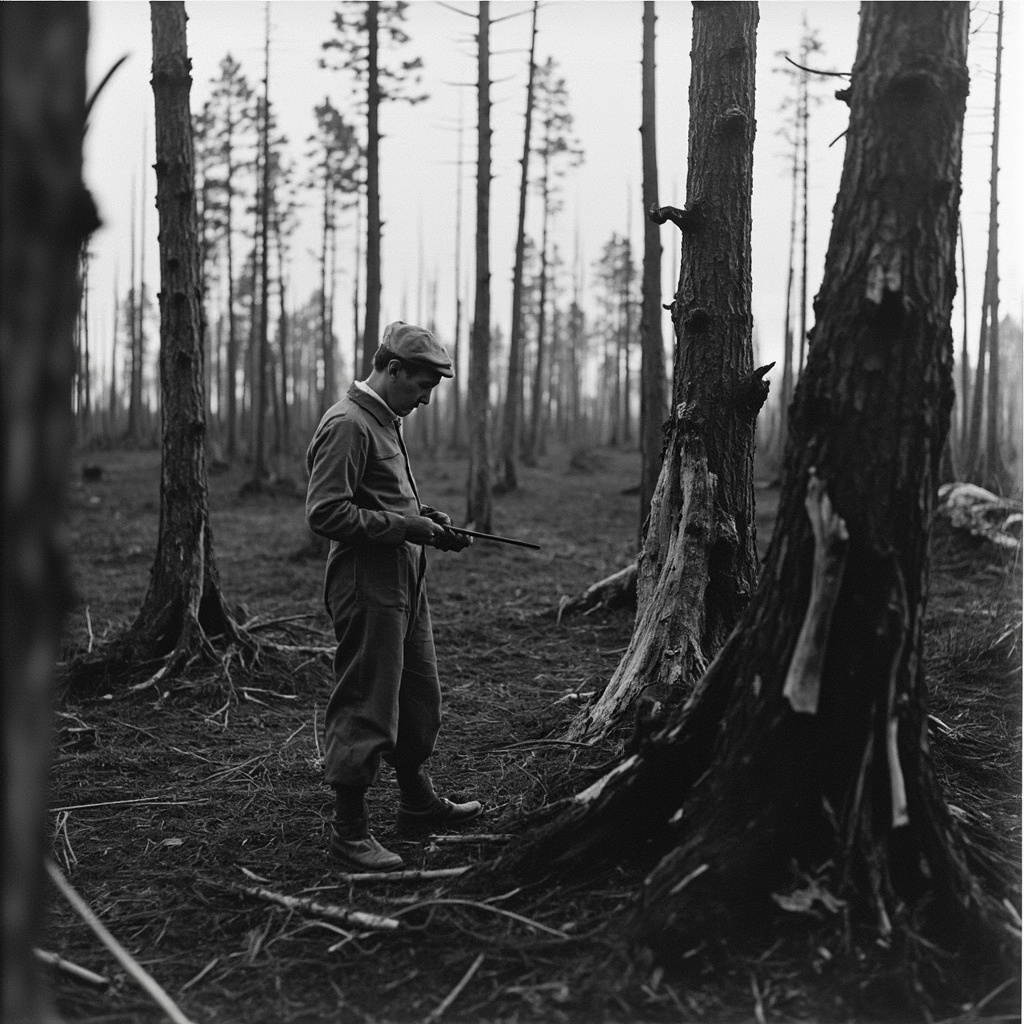
When Soviet geologist Leonid Kulik finally reached the site in 1927—19 years after the event—he was astounded by what he found. Despite nearly two decades having passed, the devastation remained clearly visible. Trees near the epicenter stood like ghostly sentinels, stripped of bark and branches but somehow still upright, while millions of other trees lay flattened in all directions.
A Pattern Written in Destruction
Later aerial surveys revealed the true scope of the destruction: a butterfly-shaped pattern of devastation that told the story of the explosion’s path through the atmosphere. The pattern showed that the object had approached from the southeast at an angle of approximately 30 degrees before exploding above the forest.

Modern scientists believe the Tunguska Event was caused by an asteroid roughly 130 feet in diameter that completely disintegrated in Earth’s atmosphere before reaching the ground. This explains the absence of a crater and meteorite fragments—the object essentially vaporized, releasing all its energy as an airburst explosion.
The Lucky Coincidence
In a stroke of cosmic fortune, the Tunguska explosion occurred over one of the most sparsely populated regions on Earth. Had the same asteroid arrived just four hours and 47 minutes later, Earth’s rotation would have positioned St. Petersburg, then the capital of Imperial Russia, directly in the blast’s path. Instead of flattening empty forest, the explosion would have obliterated a city of 1.7 million people.
Legacy of the Siberian Mystery
The Tunguska Event fundamentally changed how scientists think about cosmic threats to Earth. It demonstrated that even relatively small asteroids could cause catastrophic regional damage and highlighted the importance of monitoring near-Earth objects. Today, NASA’s Planetary Defense Coordination Office and missions like DART (Double Asteroid Redirection Test) trace their origins back to lessons learned from that morning in Siberia over a century ago.
While the mystery of Tunguska has largely been solved through decades of scientific investigation, it remains a powerful reminder of our planet’s vulnerability to cosmic impacts. The flattened forest has long since regrown, but the story of that June morning continues to fascinate researchers and the public alike—a testament to one of nature’s most spectacular and fortunate near-misses in recorded history.
Related Reading
- Lost in the Taiga: The Family That Vanished Into Siberia for 40 Years and Never Knew World War II Happened
- The Dyatlov Pass Incident: Nine Hikers Who Fled a Frozen Mountain Into the Dark