Operation Blue Peacock: When Britain Planned Nuclear Landmines Powered by Live Chickens

In the depths of the Cold War, when paranoia ran high and military strategists dreamed up increasingly bizarre defensive schemes, the British government approved one of the strangest weapons projects in history: Operation Blue Peacock. This classified program aimed to create nuclear landmines that would be kept operational by live chickens sealed inside the warheads.

The year was 1957, and Britain faced the terrifying prospect of a Soviet invasion of West Germany. With conventional forces potentially overwhelmed, military planners turned to nuclear deterrence—but not in the way you might expect.

The Cold War Context

As tensions between NATO and the Warsaw Pact reached fever pitch in the 1950s, British defense officials worried that Soviet forces could rapidly overrun Western Europe. The Fulda Gap in Germany represented a particularly vulnerable invasion route, and conventional weapons seemed inadequate to stem a massive Soviet assault.

Enter the concept of atomic demolition munitions (ADMs)—essentially nuclear landmines designed to create radioactive barriers and destroy key infrastructure before it could fall into enemy hands. The Americans had their own ADM program, but Britain wanted something uniquely theirs.

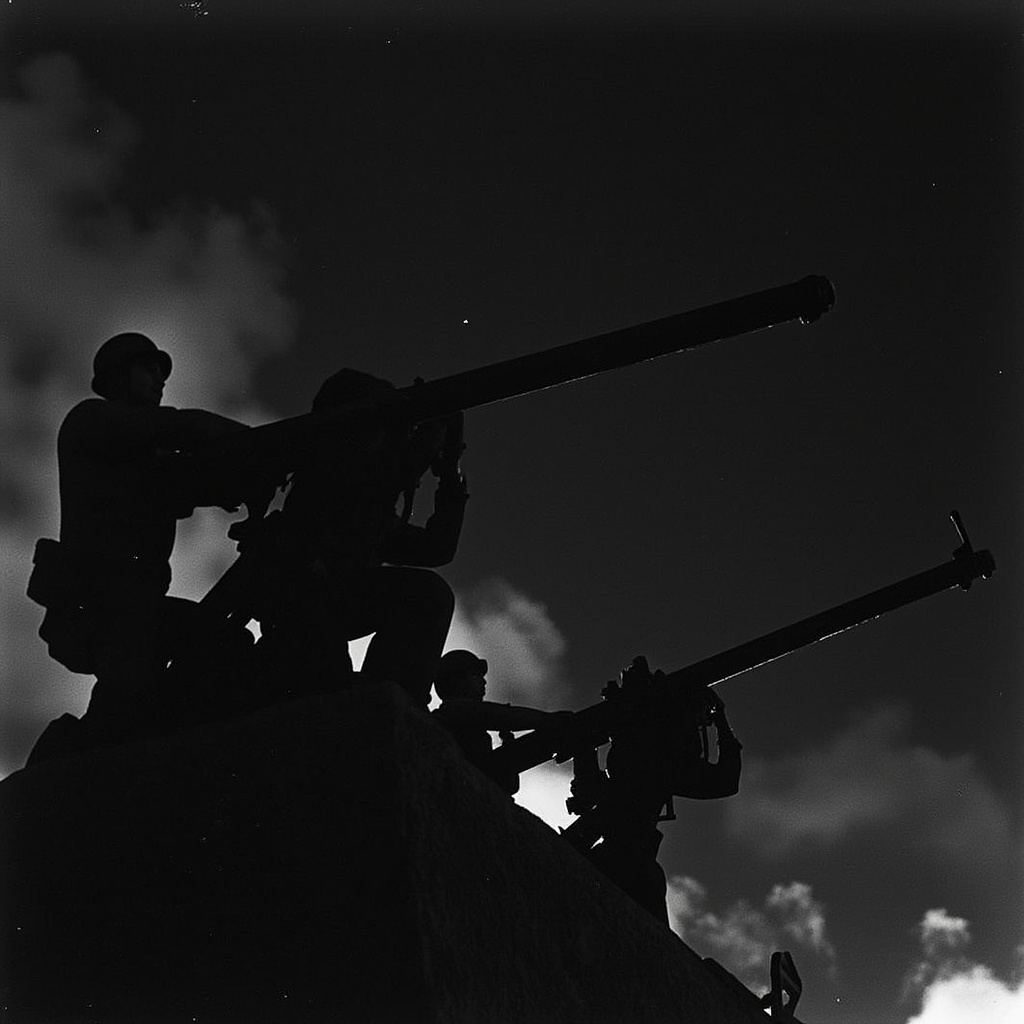
British nuclear weapons development during the Cold War

The Technical Challenge

The Blue Peacock devices were substantial weapons—each weighing approximately 7 tons and containing a 10-kiloton nuclear warhead, roughly two-thirds the power of the bomb dropped on Hiroshima. These massive devices were designed to be buried along potential invasion routes, where they could be detonated to create impassable radioactive craters.

But there was a problem: the sensitive nuclear components required a stable operating temperature to function properly. In the harsh German winter, temperatures could plummet well below freezing, potentially rendering the weapons inoperable just when they might be needed most.

Traditional heating systems were considered too complex, unreliable, or detectable. The solution proposed by British engineers was as ingenious as it was absurd: use living chickens as biological heaters.

The Chicken Solution

The plan was surprisingly straightforward. Live chickens would be sealed inside each Blue Peacock device along with a week’s worth of feed. The birds’ natural body heat—approximately 106°F (41°C)—would keep the nuclear components at optimal operating temperature even in freezing conditions.

The chickens served a dual purpose. Not only would they provide heat, but their lifespan would also act as a timing mechanism. The birds would survive for roughly eight days on their provided food supply. Once they died, the weapon would begin to cool, eventually becoming inoperable—a built-in safeguard against long-term radioactive contamination.

Cold War military bunker with nuclear weapons storage

Project Development and Cancellation

Despite its bizarre nature, Operation Blue Peacock was taken seriously at the highest levels of British government. In July 1957, the British Army Council officially ordered ten Blue Peacock devices for deployment in West Germany. The project was disguised as research into “atomic power units for troops in the field” to maintain secrecy.

However, the practical and political challenges soon became overwhelming. Beyond the obvious absurdity of relying on poultry to maintain nuclear weapons, several serious concerns emerged:

  • The massive size and weight of the devices made deployment and concealment extremely difficult
  • The radioactive fallout from detonation would contaminate large areas for decades
  • Allied forces operating in the region would be at severe risk
  • The international diplomatic implications were staggering

By February 1958, just eight months after its approval, Operation Blue Peacock was quietly cancelled. The Ministry of Defence concluded that the risks far outweighed any potential benefits, and the advent of more sophisticated tactical nuclear weapons rendered the unwieldy landmines obsolete.

Legacy of an Absurd Idea

Operation Blue Peacock remained classified for decades, finally coming to light through declassified government documents. When the story emerged, many initially dismissed it as an April Fool’s joke—partly because some documents were indeed released on April 1st, and partly because the concept seemed too ridiculous to be real.

Yet the project represents a genuine artifact of Cold War thinking, when military planners seriously considered virtually any option to gain an edge over potential adversaries. The willingness to develop chicken-powered nuclear weapons demonstrates both the desperation and the dark creativity of the era.

Today, Operation Blue Peacock stands as one of history’s most bizarre military projects—a reminder that in the paranoid world of Cold War strategy, even the most outlandish ideas could receive serious consideration at the highest levels of government. While the chickens never made it into actual nuclear weapons, their brief consideration as atomic heating systems ensures their place in the annals of military history’s strangest chapters.

The project also highlights how technological limitations of the era led to increasingly creative solutions. In an age before reliable solid-state electronics and advanced heating systems, biological solutions to engineering problems weren’t entirely unthinkable—just deeply impractical and ultimately unsuccessful.

The Taiping Rebellion: When Jesus Christ’s ‘Brother’ Led the Deadliest War in Human History

In the mid-19th century, while America was tearing itself apart in the Civil War, an even more catastrophic conflict was raging on the other side of the world. The Taiping Rebellion in China lasted 14 years, claimed over 20 million lives, and was led by a man who believed himself to be the younger brother of Jesus Christ. Yet this massive war—one that killed more people than World War I—remains largely unknown outside of China.

A Failed Scholar’s Divine Vision

Hong Xiuquan was supposed to be a success story. Born into a Hakka farming family in Guangdong Province, he was a brilliant student who ranked first in lower-level civil service examinations. But the imperial examinations—China’s pathway to government positions and social advancement—proved to be his downfall. In 1836, at age 22, Hong failed the exams for the second time.

Hong Xiuquan reading Christian religious texts

The failure devastated him. On his way home, weak and demoralized, Hong hired a palanquin to carry him. An American Protestant missionary named Edwin Stevens approached him in Guangzhou, offering a Christian tract titled ‘Good Words to Admonish the Age.’ Hong accepted it, glanced at it briefly, and tucked it away. This seemingly insignificant encounter would change the course of Chinese history.

When Hong failed the exams again in 1837, he collapsed into bed upon returning home. What happened next would fuel one of history’s most devastating wars. Hong experienced vivid dreams where crowds of people carried him eastward. Attendants cured his ailments and gave him scrolls to read. A golden-bearded man called himself Hong’s father, bestowing upon him a new name—Hong Xiuquan—along with a golden seal, a greatsword, and a divine mission: to rid the world of demons.

The Christian Revelation

For six years, Hong’s family tolerated his eccentric behavior following his recovery. He called himself the ‘Heavenly King,’ wrote poems about fighting demons, and denied familial relations. But in 1843, after failing the imperial exams for the fourth time, Hong’s cousin urged him to actually read the Christian tract he had been carrying around.

The revelation was explosive. Through the missionary text, Hong finally understood his visions. The golden-bearded man was God the Father, and the helpful stranger was Jesus Christ—his elder brother. Hong had been chosen for a divine mission: to establish God’s kingdom on Earth and destroy the ‘demons’ of traditional Chinese religion—Buddhism and Confucianism.

Hong and his cousin baptized each other and commissioned a blacksmith to create three-foot, ten-pound ‘demon slaying swords.’ They promptly destroyed their collections of Confucian and Buddhist texts, shocking their communities. When Hong and his early converts destroyed Confucian monuments in their schools, they were fired from their teaching positions.

From Religious Movement to Rebellion

What began as a small religious sect grew rapidly into something far more dangerous. While Hong traveled to meet with Baptist missionary Issachar Jacox Roberts in 1847 (leaving unbaptized but with a Bible), his follower Feng Yunshan had been busy in the Thistle Mountains. Feng established the ‘God Worshipping Society,’ which attracted converts from all walks of life by deterring bandits and pirates in the region.

Historic siege of Nanjing city walls

The Qing dynasty could no longer ignore this growing movement. When imperial forces moved against the God Worshippers in the mountains, it provoked exactly what the government feared most—armed resistance. In December 1851, Hong gathered 10,000 believers in the city of Jintian, drove out the Qing forces, and proclaimed himself ‘Heavenly King of the Taiping Kingdom.’

The rebels moved north along the Xiang River, building their numbers by ‘baptizing’ new converts and seizing resources. After a series of sieges, they captured their greatest prize in May 1853: Nanjing, the former imperial capital. Hong had his kingdom.

The Heavenly Kingdom’s Radical Experiment

Hong’s rule of Nanjing revealed the extremism beneath his religious movement. He retreated to the Presidential Palace, where he implemented a series of radical policies that would have been shocking even by today’s standards. All Manchu people in the city—members of the ethnic group that ruled the Qing dynasty—were executed. Landmarks were destroyed, traditional practices like footbinding and the queue hairstyle were banned, and trade was severely restricted.

Hong outlawed alcohol and opium, demanded strict segregation of men and women (even married couples), and seized all personal property to create a communist-style society. He rewrote the Bible, removing passages he found objectionable and adding accounts of his own divine visions. Meanwhile, Hong filled his palace with women servants and demanded absolute submission from visitors, driving away potential Western allies with cannon fire when they refused to kowtow.

The Bloody End

The Taiping Kingdom’s expansion continued for several years, but the tide turned when they attempted to capture Shanghai. Western powers, initially neutral, joined the Qing forces after being threatened by Taiping advances. European and Chinese soldiers fought side by side to repel the rebels, beginning the slow collapse of Hong’s kingdom.

By 1864, Qing forces had surrounded Nanjing, cutting off all food supplies. As his people starved, Hong assured them that God would provide wild vegetables for sustenance. To prove his point, he publicly ate a handful of weeds. He died of food poisoning 20 days later.

When Qing forces retook Nanjing, they showed no mercy. Hong’s body was cremated and his ashes fired from a cannon to ensure he had no resting place. His 15-year-old son briefly inherited the throne but was captured and executed within months.

A Legacy of Devastation

The Taiping Rebellion stands as one of history’s most devastating conflicts. Conservative estimates place the death toll at 20 million people, though some scholars suggest it may have reached 30 million. To put this in perspective, more people died in the Taiping Rebellion than in World War I, yet it remains virtually unknown in the Western world.

The rebellion’s impact on China was profound and lasting. The conflict weakened the Qing dynasty beyond recovery, contributing to its eventual fall in 1912. Later Chinese revolutionaries, including Sun Yat-Sen and Mao Zedong, drew inspiration from Hong’s efforts to create an egalitarian society, even as they rejected his religious extremism.

Perhaps most remarkably, this catastrophic war began with a chance encounter between a frustrated student and a missionary handing out pamphlets on a street corner. It serves as a stark reminder of how religious fanaticism, social unrest, and political upheaval can combine to create unimaginable human tragedy.

The man who believed he was Jesus Christ’s brother succeeded in toppling an empire—but at a cost that staggers the imagination even today.

When Medieval Courts Put Animals on Trial: The Bizarre Legal System That Executed Pigs and Prosecuted Rats

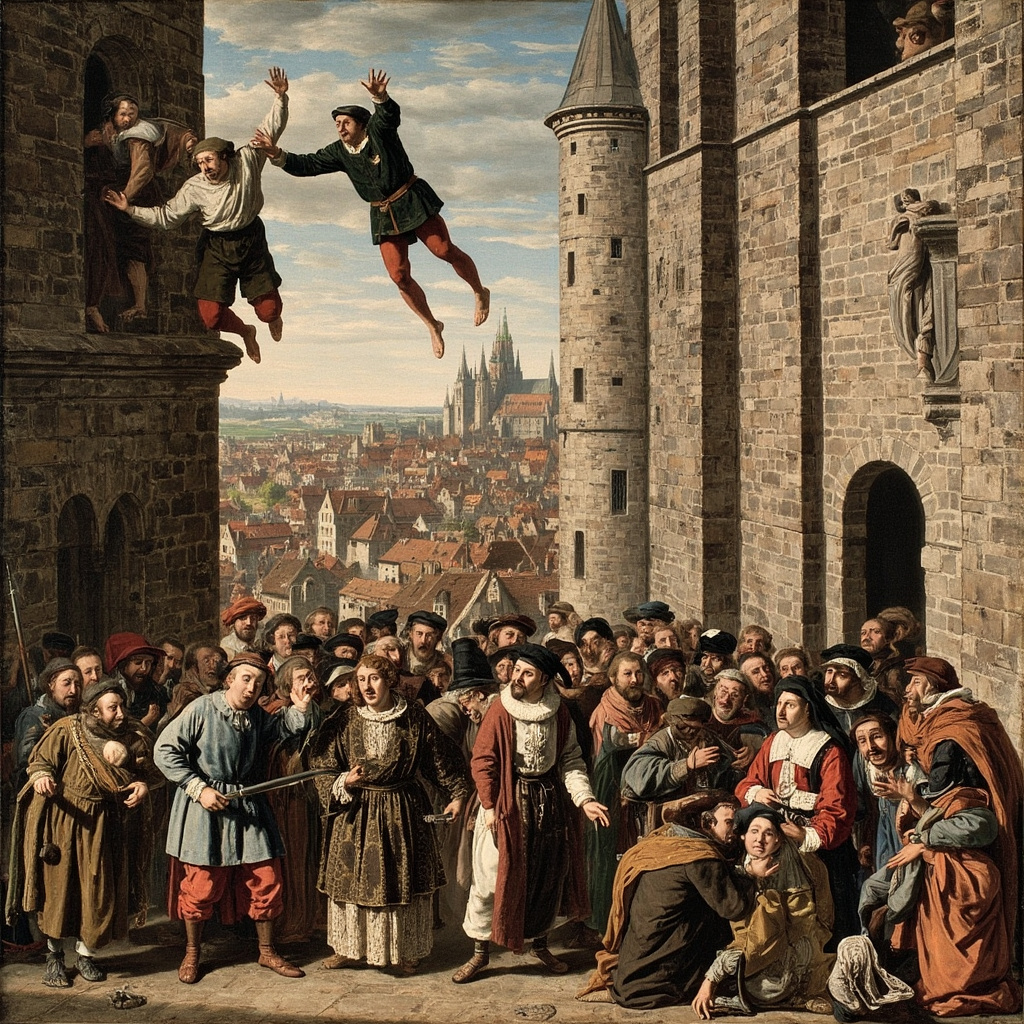
In 1386, in a Normandy market square, a pig dressed in human clothing was hanged for murder. This wasn’t a cruel joke or carnival spectacle—it was the solemn conclusion of a formal legal trial, complete with witnesses, evidence, and a court-appointed defense attorney. For centuries across medieval Europe, animals faced the same justice system as humans, resulting in some of history’s most bizarre courtroom dramas.

The Pig That Committed Murder

The legal records are chillingly detailed. In 1494, near Clermont, France, a young pig was arrested for having “strangled and defaced a child in its cradle.” Multiple witnesses testified that “on the morning of Easter Day, the infant being left alone in its cradle, the said pig entered during the said time the said house and disfigured and ate the face and neck of the said child… which in consequence departed this life.”

The judge, after weighing the evidence and finding no extenuating circumstances, delivered his verdict with the gravity befitting any capital case: “We, in detestation and horror of the said crime, and to the end that an example may be made and justice maintained, have said, judged, sentenced, pronounced and appointed that the said porker… shall be by the master of high works hanged and strangled on a gibbet of wood.”

A Legal System Gone Mad

Medieval rats on trial in court

These weren’t isolated incidents of medieval madness. From the 14th through 19th centuries, European courts regularly tried animals for crimes ranging from murder to obscenity. Dogs, pigs, cows, rats, flies, caterpillars, and even sparrows found themselves in the dock, facing charges that could result in execution, banishment, or excommunication.
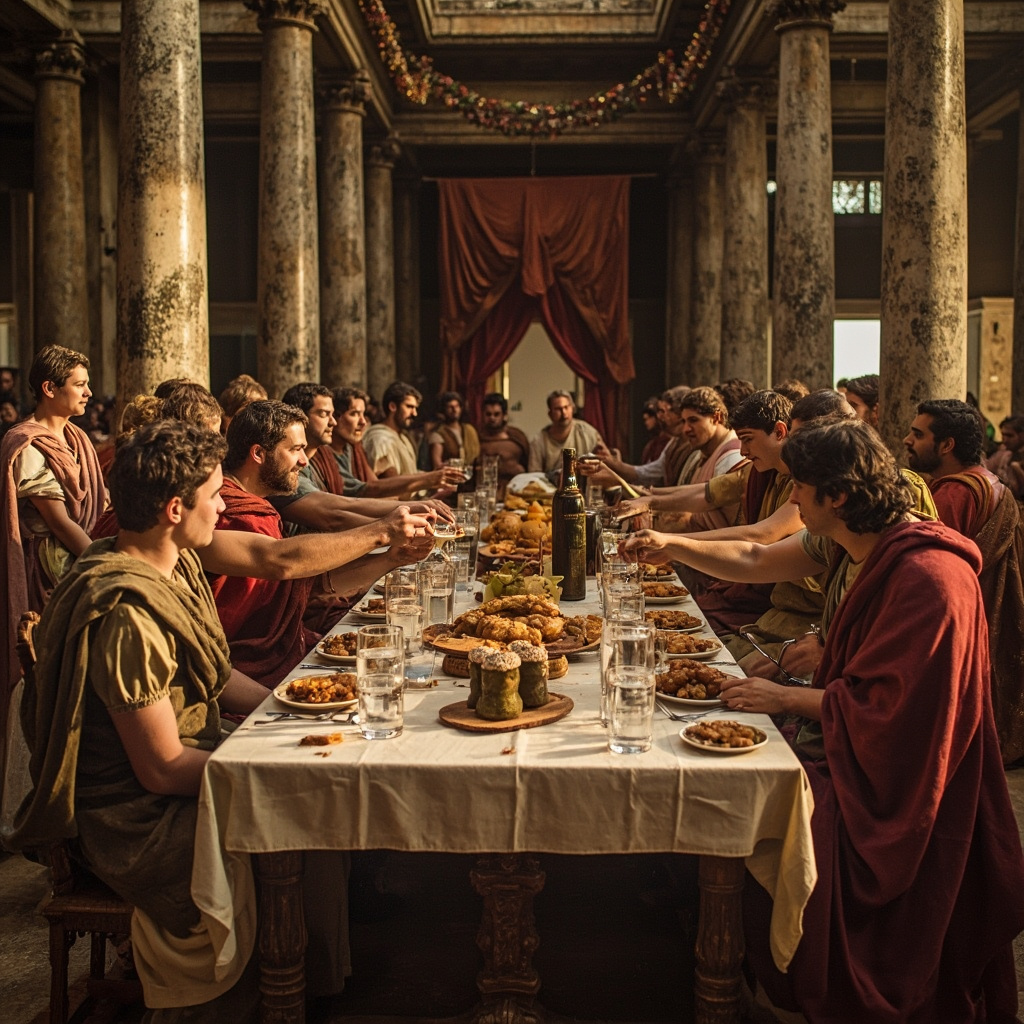
The trials followed full legal protocol. Courts appointed lawyers at taxpayer expense to defend the accused animals. Witnesses were called, evidence was presented, and lengthy legal arguments were made. Some trials dragged on for months, featuring respected jurists making erudite arguments about animal culpability and divine justice.

When Rats Hired a Lawyer

Perhaps the most famous animal defense attorney was Bartholomé Chassenée, a prominent French jurist who successfully defended a colony of rats in the early 16th century. The rats of Autun were charged with destroying local crops and summoned to appear in court.

Chassenée made a series of brilliant legal maneuvers. First, he argued that the summons was invalid because not all rats had been properly served—some lived too far away to receive notice. When the court agreed to re-issue a broader summons, Chassenée then argued his clients couldn’t safely travel to court due to the “unreasonable and unlawful” presence of cats along the route. The cats, he claimed, were “adversaries of the rat race” and made travel impossible.

Through such legal gymnastics, Chassenée successfully delayed proceedings indefinitely, essentially winning the case on a technicality. The rats were never executed.

The Religious Logic Behind Animal Trials

Medieval authorities genuinely believed these proceedings served divine justice. In their worldview, crimes committed by animals were the devil’s work, and failing to punish them properly would give Satan an opening to corrupt human affairs. Animals were seen as moral agents capable of sin, requiring the same legal accountability as humans.

Two distinct types of animal trials emerged. “Thierstrafen” were criminal proceedings against individual animals—usually domestic creatures that had killed humans. These cases invariably ended in execution. “Thierprocesse” were ecclesiastical proceedings against species or groups of animals—typically insects or vermin causing crop damage. These cases often resulted in religious excommunication or banishment.

Sparrows in the Dock

Even the tiniest creatures weren’t exempt. Church records show sparrows being prosecuted for chattering during religious services, disrupting the sacred atmosphere. Caterpillars faced charges for destroying vineyards. Flies were tried for contaminating food. In each case, the full weight of legal and religious authority bore down on creatures incapable of understanding the charges against them.

Some cases reached absurd extremes. A gang of weevils was once excommunicated by a Swiss court for damaging crops. Another French court formally banished a group of slugs from local gardens. The slugs, predictably, ignored the court order.

The End of an Era

As the Enlightenment took hold, animal trials gradually disappeared. The last recorded case occurred in Switzerland in 1906, when a dog was tried and executed for murder—a bizarre anachronism in the modern world. By then, most legal systems had recognized the fundamental absurdity of holding animals criminally responsible for their actions.

Yet for centuries, these trials represented the sincere attempt of medieval society to impose moral order on a chaotic world. In their own twisted logic, they reflected humanity’s deep need to believe that justice could triumph over nature’s apparent randomness—even if it meant putting a pig in a jacket and hanging it in the town square.

The elaborate legal records of these proceedings survive today as monuments to one of history’s strangest chapters—when the law truly was, as Charles Dickens later wrote, “an ass.”

The Glass King: When Charles VI of France Believed He Would Shatter at the Slightest Touch

In the annals of European history, few monarchs have suffered from such bizarre delusions as King Charles VI of France. For nearly three decades of his 42-year reign (1380-1422), this troubled ruler lived in constant terror of shattering into a thousand pieces—because he genuinely believed his body was made entirely of glass.

The “Glass King,” as historians would later call him, wrapped himself in specially reinforced clothing and forbade his courtiers from coming anywhere near him. His fear was so profound that he would spend hours standing motionless, convinced that the slightest movement or touch could cause his transparent body to explode in a cascade of deadly shards.

The Descent into Madness

Charles VI’s journey into this crystalline delusion began with a series of traumatic events that would haunt him for the remainder of his life. In 1392, at just 24 years old, the young king suffered what medieval chroniclers described as a fit of violent rage and paranoia during a military expedition. In his madness, he turned on his own men, slaughtering four of his knights before being subdued.

Medieval court scene with nobles in protective clothing around their fragile glass king

But it was the horror of 1393 that truly shattered the king’s mental state. During a court celebration known as the “Bal des Ardents” or “Dance of Burning Men,” Charles and five companions dressed as wild men in elaborate costumes of rags and animal fur. The event was meant to be a joyous masquerade, but it became a nightmare when an errant spark from a torch set the costumes ablaze.

The scene was pure medieval horror: six men writhing in flames, their screams echoing through the grand ballroom as courtiers watched in terror. Only Charles and one companion survived, but the psychological scars ran deeper than any physical burns. The king emerged from this traumatic fire convinced that he had been transformed—purified and vitrified in the flames like glass in a furnace.

Life as a Crystal Monarch

Charles’s glass delusion manifested in extraordinarily specific ways. He insisted on wearing iron rods sewn into his clothing to prevent his fragile limbs from bending and breaking. The king refused to allow anyone to touch him, believing that human contact would cause him to shatter instantly. His courtiers were forced to conduct all business from a safe distance, creating one of history’s most unusual royal protocols.

The Bal des Ardents fire scene showing courtiers in wild man costumes catching fire

The king’s hygiene suffered dramatically under his delusion. He went months without bathing, convinced that water would cause his glass body to crack. In November 1405, after refusing to wash for five months and becoming covered in infected sores and lice, palace physicians were forced to hold him down and bathe him against his will. Even then, Charles screamed throughout the ordeal, certain that each splash of water would be his last.

During his lucid intervals—for the delusion came and went like a recurring nightmare—Charles would recognize the absurdity of his condition. But when the glass delusion gripped him, no amount of reasoning could convince him that he was made of flesh and blood rather than fragile crystal.

The Glass Epidemic

Perhaps most remarkably, King Charles VI was not alone in his crystalline curse. The “glass delusion” swept through Europe between the 15th and 17th centuries, affecting scholars, nobles, and commoners alike. These unfortunate souls became convinced that various parts of their bodies—heads, arms, buttocks, or entire torsos—were made of glass.

One man believed his buttocks were glass and refused to sit down for fear of shattering. Another was convinced that the entire world’s surface was glass, beneath which lurked serpents, and he dared not leave his bed lest he crash through and fall among the snakes. A particularly tragic case involved a scholar who traveled to the famous glass-making island of Murano in Italy, hoping to throw himself into a kiln and be transformed into a beautiful goblet.

The Medical Understanding

Medieval physicians diagnosed glass delusion as a form of “melancholia”—what we might today recognize as severe depression with psychotic features. According to the medical theory of the time, health depended on balancing four bodily humors: blood, phlegm, yellow bile, and black bile. An excess of black bile, known as “vitrea bilis” (glassy bile), was thought to give the afflicted person’s internal fluids a glass-like appearance and properties.

Ironically, this same black bile was associated with scholarly brilliance and intellectual depth. The glass delusion was often called the “disease of scholars” because it seemed to disproportionately affect learned men—poets, philosophers, and academics who spent their days in deep contemplation.

Symbolism and Meaning

The glass delusion may have represented more than mere madness. In medieval and Renaissance culture, glass symbolized the fragility of human existence and the transparency of the soul. Vanitas paintings of the era often featured glass objects alongside wilting flowers and hourglasses to represent life’s ephemeral nature.

Glass also held mystical properties in the medieval imagination. It was believed to crack when touched by poison, making it a kind of supernatural detector of danger. Perhaps those afflicted with glass delusion saw themselves as living vessels that could reveal hidden threats—or conversely, as beings so pure and fragile that they existed on the edge between the physical and spiritual worlds.

Some historians speculate that the glass delusion reflected the era’s fascination with transformation and purification. Glass-making was seen as a form of alchemy—the magical transformation of humble sand and ash into something crystalline and beautiful. Those who believed themselves made of glass may have felt that they, too, had been transformed by trauma or divine intervention into something both precious and impossibly fragile.

The End of an Era

King Charles VI died in 1422, his reign having been marked by periods of brilliant lucidity alternating with episodes of profound madness. His glass delusion faded from the historical record, but the broader phenomenon continued for another two centuries before mysteriously disappearing from European culture.

Modern psychiatrists studying historical cases of glass delusion suggest it may have been a culturally-specific expression of what we now recognize as depressive or anxiety disorders. The particular form the delusion took reflected the symbolic and material culture of its time—just as modern delusions often involve technology, television, or contemporary fears.

The Glass King of France remains one of history’s most poignant examples of how trauma and mental illness can manifest in ways that reflect the deepest fears and beliefs of their era. Charles VI lived in constant terror of shattering, but perhaps it was his kingdom—torn by war, political intrigue, and social upheaval—that was truly the most fragile thing of all.

In the end, the king who feared breaking proved remarkably durable, ruling for over four decades despite his crystalline curse. His story reminds us that even in our most fragile moments, human resilience can be surprisingly strong—stronger, perhaps, than glass.

The Great Boston Molasses Flood: When 2.5 Million Gallons of Sticky Death Drowned a City

On January 15, 1919, at approximately 12:30 PM, Boston witnessed one of the most bizarre disasters in American history. A massive wave of molasses, standing 15 to 40 feet high and stretching 160 feet wide, raced through the North End at 35 miles per hour, killing 21 people and injuring 150 others. This was not the stuff of nightmares—it was the Great Boston Molasses Flood, a real catastrophe that would forever change how industrial safety was regulated.

The Doomed Tank That Started It All

The massive molasses storage tank before the disaster

The disaster began with a storage tank that was a catastrophe waiting to happen. Built in 1915 by the United States Industrial Alcohol Company (USIA), this steel behemoth measured 50 feet tall and 90 feet in diameter—large enough to hold 2.3 million gallons of molasses. The tank was constructed hastily to meet wartime demand for industrial alcohol, which was extracted from molasses and used in munitions production.

From the beginning, the tank showed alarming signs of structural weakness. Local residents reported that it leaked constantly, leaving the surrounding area sticky with molasses residue. Children in the neighborhood would collect the leaking molasses on sticks, turning the dangerous situation into a sweet treat. The tank also made disturbing groaning and rumbling sounds, which workers dismissed as normal settling.

A Perfect Storm of Negligence

The tank’s construction was rushed and cheaply executed. The steel walls were dangerously thin—only half an inch thick in some places, when engineering standards called for much thicker walls to contain the enormous pressure of 2.5 million gallons of liquid. The rivets were poorly installed, and no proper load testing was ever conducted.

Arthur Jell, the USIA manager overseeing the tank, had no engineering background whatsoever. When concerned neighbors complained about the leaks and strange noises, Jell’s solution was to paint the tank brown to camouflage the molasses stains. No structural reinforcements were ever made.

Making matters worse, a fresh shipment of molasses had arrived just days before the disaster, filling the tank to near capacity. The molasses had been heated to help it flow, creating additional pressure against the already weakened walls.

The Day Everything Went Wrong

January 15, 1919, was unusually warm for a Boston winter, with temperatures reaching 43°F after days of bitter cold. This temperature fluctuation likely caused the molasses to expand, creating even more pressure against the tank walls. At exactly 12:30 PM, during the lunch hour when the streets were crowded with workers and pedestrians, the inevitable happened.

Witnesses described hearing a low rumble followed by a tremendous roar, like a freight train or machine gun fire. The tank’s rivets began popping like bullets, sending metal fragments flying through the air. Then, with a catastrophic failure, the entire tank burst open, releasing its contents in a devastating flood of “sweet, sticky death.”

The Wave of Destruction

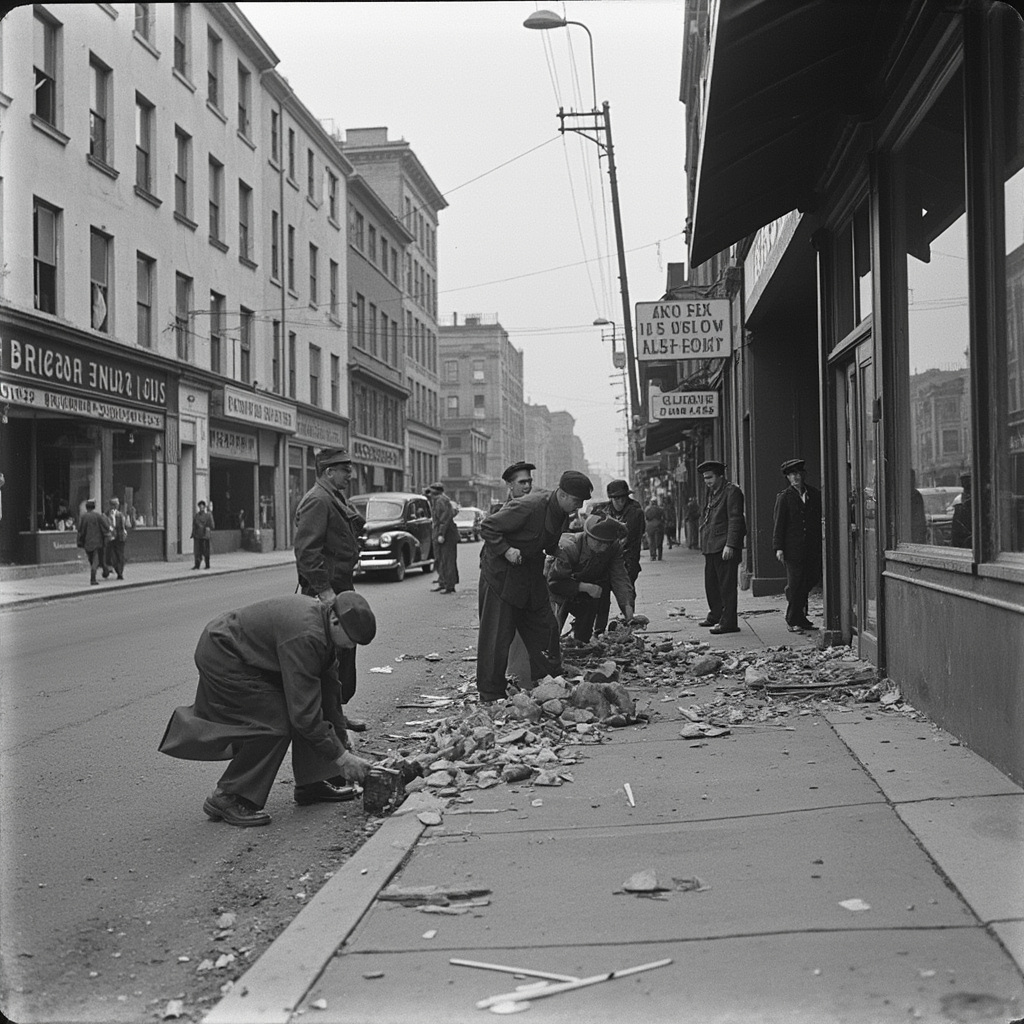
Rescue efforts in the aftermath of the molasses flood

The molasses didn’t flow gently—it struck with the force of a tsunami. The initial wave was estimated to be 25 to 40 feet high, carrying enough force to demolish buildings, lift freight cars off their tracks, and snap steel support girders. The sticky brown mass moved faster than most people could run, trapping victims in its path.

The flood destroyed everything in its path. Entire buildings were lifted from their foundations and carried away. A firehouse was demolished, trapping firefighters inside. Elevated railway pillars were knocked down, and dozens of horses were killed. The molasses flowed outward in all directions, covering an area of several city blocks before finally coming to rest.

The Human Toll

The casualty list was heartbreaking. Among the 21 dead were longshoremen who had been working at the docks, children playing in the streets, and residents who simply happened to be in the wrong place at the wrong time. About half of the victims literally drowned in the molasses—the thick, sticky substance made it impossible for them to swim or even move effectively.

One of the most tragic victims was 10-year-old Antonio di Stasio, who was walking home from school when the wave struck. He was found days later, having suffocated in the molasses. Another victim, George Layhe, a postal worker, was crushed when the flood demolished the building where he was working.

The Cleanup Nightmare

The cleanup took weeks and proved almost as challenging as the disaster itself. Molasses had coated everything—buildings, streets, people, and even Boston Harbor, where it had flowed and turned the water brown for months afterward. The substance hardened in the January cold, making removal extremely difficult.

Cleanup crews tried everything: they used hot water, sand, and even saltwater from the harbor to dissolve and scrub away the molasses. The smell lingered for months, and residents claimed they could still detect the sweet scent on hot summer days for decades afterward.

Legal Aftermath and Industrial Reform

The disaster led to one of the longest and most complex legal cases in Massachusetts history. More than 100 lawsuits were filed against USIA, with victims and their families seeking millions in damages. The legal proceedings lasted six years and included testimony from nearly 1,500 witnesses.

The company initially tried to blame the disaster on anarchists, claiming that a bomb had destroyed the tank. This theory was quickly debunked by investigators who found clear evidence of structural failure. Ultimately, USIA was found liable and ordered to pay $628,000 in damages—equivalent to over $9 million today.

More importantly, the disaster led to significant changes in building codes and engineering standards. Massachusetts became one of the first states to require that all construction plans be reviewed and approved by licensed engineers and architects. The concept of professional oversight in industrial construction became standard practice across the United States.

Legacy of the Sweet Disaster

Today, a small plaque in Boston’s North End marks the approximate location of the disaster. The area has been transformed into Puopolo Park, where families now play where once molasses flowed. Local legend claims that on hot summer days, you can still smell molasses in the area—though city officials attribute this to the chocolate and candy factories that operated in the neighborhood for decades afterward.

The Great Boston Molasses Flood remains a powerful reminder of the importance of industrial safety and proper engineering oversight. It stands as proof that even the most unlikely disasters can occur when corner-cutting and negligence replace proper safety protocols. In an era when massive industrial accidents seemed almost commonplace, the molasses flood showed that no substance—no matter how seemingly harmless—could be underestimated when stored in massive quantities.

The disaster also holds the distinction of being perhaps the only flood in history where the victims couldn’t swim to safety, forever earning its place as one of the strangest and most tragic industrial accidents in American history.

The Romans Invented Self-Healing Concrete That Outlasted Our Modern Technology by 2,000 Years

When the Roman Empire fell in 476 AD, it left behind a legacy that continues to confound modern engineers: concrete structures that have stood for over two millennia while our contemporary buildings crumble after decades. The secret? Romans accidentally created self-healing concrete that repairs its own cracks—a technology we only rediscovered in 2023.

The Pompeii Discovery That Changed Everything

In 2025, archaeologists working at Pompeii made a remarkable discovery that would revolutionize our understanding of ancient Roman engineering. In a room frozen in time by Vesuvius’ eruption in 79 AD, they found untouched piles of quicklime and volcanic ash—the raw ingredients of Roman concrete still sitting exactly as construction workers had left them 2,000 years ago.

“I walked into an excavation in Pompeii a year-and-a-half ago and it was like travelling back in time to a construction site in the Roman empire,” says Admir Masic, the MIT chemist who led the groundbreaking research. “There were untouched piles of construction material vividly preserved.”

Close-up view of Roman concrete showing lime clasts and volcanic ash mixture

The Secret of Hot Mixing

For centuries, historians believed Romans followed the writings of Vitruvius, the 1st century BC architect who described mixing slaked lime with volcanic ash. But the Pompeii evidence revealed something far more sophisticated: Romans were actually using “hot mixing”—combining dry quicklime and volcanic ash first, then adding water to trigger an explosive chemical reaction reaching temperatures over 200°C.

This process created something remarkable: lime clasts—small white chunks scattered throughout the concrete that act like built-in repair kits. When cracks form and water seeps in, these lime clasts dissolve and recrystallize, automatically healing the damage.

Engineering That Surpasses Modern Technology

The implications are staggering. Roman concrete doesn’t just last—it actually grows stronger over time. While modern Portland cement structures deteriorate within 50-100 years, Roman buildings like the Pantheon (built in 126 AD) remain structurally sound after nearly 1,900 years.

Even more impressive: Roman concrete could set underwater, enabling harbor construction that modern engineers struggle to replicate. The material continues to strengthen through reactions with seawater, while contemporary concrete dissolves.

Comparison between cracked modern concrete and intact ancient Roman structures

The Chemistry of Immortal Buildings

Modern chemical analysis reveals the genius of Roman engineering. The lime clasts create reservoirs of calcium that can dissolve and reform various calcium carbonates, or react with volcanic ash to create new aluminosilicates. This essentially restarts the cement-making process, filling fissures and healing defects automatically.

“This is not an archaeology paper. It’s a badass chemistry paper,” Masic emphasized, noting that isotope analysis confirmed the dry pre-mixed material was indeed quicklime—proving the hot mixing technique.

Why We Lost This Knowledge

The fall of Rome didn’t just end an empire—it severed technological knowledge that took 1,500 years to rediscover. Medieval builders lacked the organizational capacity and technical expertise to maintain Roman concrete production. By the Renaissance, architects had forgotten the original techniques entirely.

Modern Portland cement, developed in the 1800s, prioritizes quick setting and standardized production over longevity. We traded durability for convenience, creating buildings designed to be replaced rather than repaired.

Implications for the Future

As climate change demands sustainable construction that lasts centuries rather than decades, Roman concrete offers a roadmap. Researchers are now working to recreate these ancient formulations using modern volcanic ash sources, potentially revolutionizing how we build.

The Romans didn’t just build an empire—they built it to last forever. Their concrete continues healing itself today, a 2,000-year testament to engineering excellence that makes our “advanced” technology look primitive by comparison.

The Day Napoleon Was Defeated by Rabbits: The Most Humiliating Military Retreat in History

Napoleon Bonaparte conquered much of Europe, faced down empires, and redrew the map of the continent. But in July 1807, the great emperor met his match in the most unexpected adversary imaginable: a swarm of fluffy rabbits that sent him fleeing in retreat.

This bizarre historical incident, known as Napoleon’s Rabbit Defeat, occurred during what should have been a triumphant celebration following the signing of the Treaties of Tilsit, which ended the war between France and Russia. Instead, it became one of history’s most embarrassing military retreats.

The Setup: A Celebration Gone Wrong

In July 1807, Napoleon had just achieved a significant diplomatic victory. The Treaties of Tilsit brought peace between the French Empire and Imperial Russia, establishing Napoleon as the dominant force in continental Europe. To celebrate this momentous occasion, Napoleon’s Chief of Staff, Alexandre Berthier, organized what he believed would be a perfect day of leisure: a traditional rabbit hunt.

Treaties of Tilsit signing ceremony

Berthier was thrilled when Napoleon accepted his invitation to hunt at a park he owned within Paris. The Chief of Staff spared no expense, organizing a splendid breakfast and inviting some of the military’s most distinguished officers. Everything was meticulously planned to please the emperor.

However, there was one problem: Berthier’s property didn’t have enough rabbits for a proper hunt. So he did what any resourceful officer would do—he ordered his men to collect rabbits from local markets and farms. Some accounts suggest he gathered hundreds of rabbits, while others claim the number reached as many as 3,000.

Alexandre Berthier organizing the rabbit hunt

The Fatal Flaw: Tame vs. Wild

Here’s where Berthier made his crucial mistake: instead of collecting wild rabbits that would naturally flee from humans, his men gathered domesticated rabbits from local farms and markets. These weren’t the skittish creatures that would bolt at the first sight of hunters. These were tame rabbits accustomed to being fed by humans.

As the hunting party assembled in their finest clothes, with Napoleon resplendent in his military uniform, the rabbits were released from their cages. Berthier and his guests expected the animals to scatter into the woods, providing an entertaining chase.

The Attack: When Rabbits Became the Hunters

Instead of running away, the hundreds of hungry rabbits did exactly what they had been trained to do their entire lives: they ran toward the humans, expecting to be fed. But what started as a curious approach quickly escalated into something far more aggressive.

The rabbits swarmed toward Napoleon and his entourage in overwhelming numbers. They didn’t flee when the men tried to shoo them away—instead, they pressed their attack, climbing up the men’s legs, jumping onto their jackets, and refusing to be deterred.

According to eyewitness accounts, the rabbits were particularly drawn to Napoleon himself. They jumped on his clothing, nested in the folds of his uniform, and seemed determined to overwhelm the emperor. Some even allegedly climbed up his legs and into his jacket.

The Retreat: Napoleon’s Most Humiliating Defeat

Faced with this unprecedented assault, Napoleon—the man who had stared down Austrian armies and Prussian cavalry—was forced to beat a hasty retreat. The emperor and his officers began swatting at the rabbits with sticks and their hands, but the sheer number of the creatures made resistance futile.

The situation became so overwhelming that Napoleon was forced to flee to his carriage. Even there, he found no sanctuary—rabbits had apparently followed him and continued their relentless assault. His men had to physically remove rabbits from the emperor’s uniform and the interior of his carriage.

The great military commander who had conquered kingdoms was defeated by fluffy farm animals in what must rank as one of history’s most embarrassing retreats. The hunting party was abandoned, and Napoleon left the field to his unlikely conquerors.

The Aftermath: A Story Too Strange to Suppress

Despite the obvious embarrassment this incident caused, the story survived and has been passed down through historical accounts. It serves as a perfect example of how even the most carefully laid plans can go spectacularly wrong when small details are overlooked.

For Berthier, who had intended to honor his emperor with a pleasant day of sport, the rabbit hunt became a nightmare of epic proportions. The very animals meant to provide entertainment instead provided one of the most humorous military anecdotes in European history.

The incident also highlights an important historical lesson: the difference between wild and domestic animals. Had Berthier’s men collected truly wild rabbits, the hunt would likely have proceeded as planned. Instead, the domesticated rabbits’ learned behavior to approach humans for food turned a celebration into chaos.

Historical Impact and Legacy

While Napoleon’s rabbit defeat had no lasting impact on European politics or military strategy, it has become one of history’s most beloved anecdotes about the great emperor. The story humanizes a figure often portrayed as an invincible military genius, showing that even Napoleon Bonaparte could be humbled by the most unexpected circumstances.

The incident has been retold countless times, often with embellishments that make the story even more dramatic. Some versions claim the rabbits numbered in the thousands; others suggest they actually pursued Napoleon for miles. While the exact details may vary, the core story remains consistent: the conqueror of Europe was defeated by an army of fluffy farm animals.

Today, Napoleon’s rabbit defeat stands as a reminder that history is full of unexpected moments that can humble even the mightiest leaders. It proves that sometimes the most memorable events aren’t the grand battles or political treaties, but the absurd moments that reveal the very human side of historical figures.

In the end, while Napoleon may have conquered Europe, been crowned Emperor, and reshaped the modern world, he will forever be remembered as the man who was defeated by rabbits—a legacy that even his greatest military victories can’t entirely erase.

The Kentucky Meat Shower of 1876: When Fresh Chunks of Flesh Rained from a Clear Sky

On March 3, 1876, between 11 a.m. and noon, one of history’s most bizarre meteorological phenomena occurred near Olympia Springs in Bath County, Kentucky. For several minutes, chunks of fresh, red meat fell from a perfectly clear sky onto a 100-by-50-yard area of farmland, creating a mystery that scientists and researchers debate to this day.

The Incredible Eyewitness Account

Mrs. Rebecca Crouch was making soap on her porch when the impossible happened. She later reported that she was about 40 steps from her house when meat began hitting the ground around her with a distinctive “snapping-like noise.” The bewildered farm wife described it as “snowing meat” and believed, along with her husband Allen, that the extraordinary event was a divine sign.

Most of the meat pieces measured approximately 2 by 2 inches, though at least one chunk was reported to be 4 by 4 inches. According to local grocer Joe Jordan, “the smell was offensive to the extreme, like that of a dead body.” Despite the putrid odor, two brave local men actually tasted samples of the fallen flesh, determining it might be lamb or deer rather than the beef it initially appeared to be.

Turkey vultures in flight

Scientific Investigation and Multiple Theories

The strange event quickly captured national attention, making the front page of The New York Times on March 10, 1876, under the sensational headline “FLESH DESCENDING IN A SHOWER.” Scientific American and other publications covered the story extensively as samples were collected and sent to laboratories across Kentucky, Ohio, and New York for analysis.

Initially, chemists proposed various explanations. Leopold Brandeis suggested the substance might be Nostoc, a type of cyanobacteria that swells into jelly-like masses when wet and can appear to have “fallen” from the sky after rain. However, this theory was quickly challenged when meteorologist Charles Fort noted there had been no rainfall that day.

The Vulture Regurgitation Theory

The most widely accepted scientific explanation emerged from Dr. L.D. Kastenbine, who proposed in The Louisville Medical News that the meat had been regurgitated by a flock of vultures flying overhead. Both black vultures and turkey vultures are common in Kentucky and are known to vomit partially digested carrion when startled or threatened—a behavior used both for quick escapes and as a defensive mechanism.

According to this theory, one vulture likely disgorged its stomach contents, causing other vultures in the flock to follow suit in a chain reaction. The regurgitated meat would then have fallen to the ground in the concentrated area witnessed by the Crouch family.

Victorian era scientific laboratory

Laboratory Analysis Reveals Animal Tissue

Microscopic analysis conducted by Dr. Allan McLane Hamilton and other researchers confirmed that the samples were indeed animal tissue. Multiple specimens were identified as lung tissue, muscle, and cartilage, definitively ruling out the cyanobacteria theory. Hamilton specifically noted that the lung tissue structure was consistent with either horse or human infant tissue, though the source was never conclusively identified.

The variety of tissue types—lung, muscle, and cartilage—supported the vulture theory, as these birds typically consume entire carcasses and would regurgitate a mixture of different body parts.

A Lasting Mystery with Modern Interest

In 2004, art professor Kurt Gohde rediscovered a preserved sample from the original event during a collections cleanout at Transylvania University. The specimen, stored in alcohol within a small glass vial labeled “Olympia Springs,” is believed to be the last surviving sample from the Kentucky meat shower. Modern DNA testing was attempted but proved inconclusive due to the age and condition of the tissue.

The Kentucky meat shower has experienced a remarkable cultural renaissance in recent years. Bath County now hosts an annual Kentucky Meat Shower Festival, complete with mystery-meat chili cook-offs. The 149th anniversary celebration in 2025 attracted nearly 500 visitors, cementing the event’s place in American folklore.

Scientific Consensus Today

While alternative explanations have been proposed over the years—including a satirical “cosmic meat” theory suggesting the chunks came from an exploded planet—the scientific consensus strongly favors vulture regurgitation. The size, distribution, and variety of the meat pieces align perfectly with what would be expected from a flock of vultures simultaneously disgorging their stomach contents.

The Kentucky meat shower remains one of history’s most thoroughly documented examples of unexplained aerial phenomena, serving as a fascinating intersection of eyewitness testimony, scientific investigation, and the enduring human fascination with the bizarre and inexplicable.

When Europeans Ate Ancient Egyptian Corpses: The Bizarre 700-Year Medical Practice of Mummy Powder

For nearly seven centuries, Europeans engaged in one of history’s most macabre medical practices: consuming powdered Egyptian mummies as medicine. This wasn’t some underground cult activity—it was mainstream healthcare endorsed by physicians, sold in apothecaries, and consumed by royalty and commoners alike.

The Origin of Mummia

The practice began with a linguistic misunderstanding that would cost thousands of ancient lives. Medieval physicians had read about mumiya—a black, tar-like substance from Persia used medicinally. However, when Arabic texts were translated into Latin, scholars confused this bituminous material with the dark resin used in Egyptian mummification.

Egyptian mummy being unwrapped for medical use

By the 12th century, European merchants were raiding Egyptian tombs to harvest mummy remains for the lucrative medical trade. What started as a translation error became a booming industry that would persist until the 18th century.

A Prescription for the Dead

Medieval and Renaissance physicians prescribed powdered mummy for nearly every ailment imaginable. According to medical texts of the era, mummia could cure:

  • Internal bleeding and wounds
  • Epilepsy and convulsions
  • Headaches and migraines
  • Stomach ailments
  • Broken bones
  • Poisoning

The logic, such as it was, followed medieval medical theory that ancient corpses preserved with natron and resins retained some life force that could heal the living. Some physicians believed that bodies that had survived thousands of years must possess extraordinary preservative powers.

The Gruesome Supply Chain

As demand for mummy powder exploded across Europe, Egyptian tomb robbers couldn’t keep pace with orders from European apothecaries. Enterprising merchants developed horrific alternatives.

Renaissance physician prescribing mummy powder to wealthy patient

French apothecaries began creating “artificial mummies” by stealing fresh corpses from gallows, coating them with bitumen, and aging them in ovens. These counterfeit remedies were then ground up and sold as authentic Egyptian mummy powder.

Even King Charles II of England reportedly consumed “The King’s Drops”—a tincture made from powdered human skull. The wealthy could afford genuine Egyptian mummies, while the poor made do with locally sourced human remains.

The Medical Establishment’s Embrace

This wasn’t fringe medicine—it was endorsed by the medical establishment. Renowned physicians like Paracelsus championed mummy consumption, while medical schools taught its supposed benefits. European pharmacopeias—official medical handbooks—listed detailed recipes for preparing human flesh medicines.

The practice was so normalized that physicians debated not whether to use human remains, but which body parts were most effective. Some preferred skull powder for head ailments, while others insisted ground heart was superior for cardiac conditions.

The Irony of Cannibalism Accusations

While Europeans spent centuries consuming Egyptian corpses, they simultaneously used accusations of cannibalism as justification for colonizing and “civilizing” indigenous peoples in the Americas, Africa, and Australasia. The hypocrisy was staggering—Europeans condemned tribal peoples as savage cannibals while literally grinding up human remains in their own pharmacies.

The End of Corpse Medicine

By the Renaissance, some scholars began questioning the practice. When physicians realized they had misunderstood the original Arabic texts, the medical justification for mummy consumption crumbled.

French surgeon Ambroise Paré was among the first medical professionals to condemn the practice, writing scathingly about apothecaries who “in the absence of superior mummy, were sometimes moved to steal by night the bodies of such as were hanged.”

The practice gradually declined through the 17th and 18th centuries as medical understanding improved. However, some European pharmacies continued selling human skull powder and other corpse medicines well into the 1800s.

A Legacy of Destruction

The European appetite for mummy medicine devastated Egypt’s archaeological heritage. Countless ancient tombs were ransacked, and priceless mummies—including potentially unknown pharaohs and nobles—were reduced to powder for European stomachs.

This medical cannibalism represents one of history’s most sustained acts of cultural vandalism, justified by pseudoscience and motivated by profit. For 700 years, Europeans literally consumed Egypt’s ancestors while condemning other cultures as barbaric.

The next time someone mentions the “civilizing” influence of European colonialism, remember that European medicine cabinets were once stocked with ground-up human corpses—and that this was considered perfectly normal for seven centuries.

The London Beer Flood of 1814: When a Tsunami of Porter Killed Eight People

On the afternoon of October 17, 1814, one of history’s most bizarre industrial disasters struck London when a massive brewery tank burst, unleashing a deadly tsunami of beer through the streets. The London Beer Flood would claim eight lives and leave a trail of destruction that seemed almost too strange to believe.

The Horse Shoe Brewery

At the corner of Great Russell Street and Tottenham Court Road stood the Horse Shoe Brewery, owned by Meux and Company. In 1810, the brewery had installed a massive wooden fermentation tank that towered 22 feet high and held the equivalent of over 3,500 barrels of brown porter ale—a beer not unlike modern stout. The enormous vat was held together by massive iron rings, containing approximately 388,000 gallons of fermenting beer.

The Horse Shoe Brewery in 1814

The sheer size of these fermentation vessels was a marvel of industrial brewing technology. The wooden staves were under enormous pressure from the fermenting liquid within, making the iron binding rings absolutely critical to the structure’s integrity.

The Catastrophic Failure

On that fateful Monday afternoon, one of the massive iron rings around the tank suddenly snapped. For about an hour, brewery workers noticed the problem but underestimated the danger. Then, without warning, the entire tank ruptured with explosive force.

The hot, fermenting ale burst forth like a tidal wave, hitting the back wall of the brewery with such violence that it collapsed entirely. The force of the escaping beer was so tremendous that it blasted open several other large vats, adding their contents to the growing flood. In total, more than 320,000 gallons of beer poured into the surrounding streets.

Death in St. Giles

The beer tsunami struck the St. Giles Rookery, a densely populated slum filled with cheap housing, tenements, and London’s poorest residents. The neighborhood was home to destitute families, prostitutes, criminals, and others living on society’s margins.

Aftermath of the London Beer Flood

The 15-foot-high wave of beer and debris crashed through George Street and New Street within minutes. The force inundated the basements of two houses, causing them to collapse entirely. In one house, Mary Banfield and her daughter Hannah were taking afternoon tea when the flood struck—both were killed instantly.

In the basement of another house, tragedy struck during an Irish wake. Four mourners had gathered to pay respects to a two-year-old boy who had died the previous day. All four were killed when the beer flood destroyed their shelter. The wave also demolished a wall of the Tavistock Arms pub, trapping teenage barmaid Eleanor Cooper in the rubble.

The Grisly Aftermath

Eight people died in the disaster, but the story doesn’t end with the immediate casualties. The sudden availability of “free” beer led hundreds of people to rush into the streets with buckets, pots, and any containers they could find to collect the alcohol. Some simply drank directly from the beer-soaked streets.

Reports later emerged of a ninth victim who died several days after the flood from alcohol poisoning, having consumed too much of the free beer. The macabre scenes continued when some families displayed the corpses of victims for money, creating ghoulish exhibitions. In one house, the weight of visitors coming to view the bodies caused the floor to collapse, plunging everyone waist-deep into the beer-flooded cellar below.

Legal and Financial Consequences

The brewery faced massive costs from the disaster—approximately £23,000 (roughly £1.25 million in today’s money). However, when the case went to court, the disaster was ruled to be an “Act of God,” leaving no one legally responsible for the deaths and destruction.

Remarkably, the brewery was able to reclaim the excise duty they had paid on the beer, which saved them from bankruptcy. They also received £7,250 (about £400,000 today) as compensation for the lost beer barrels.

Lasting Impact

The stench of beer lingered in the St. Giles area for months after the flood. More importantly, the disaster led to significant changes in brewery safety practices. Wooden fermentation casks began to be phased out in favor of lined concrete vats, which were much safer and less prone to catastrophic failure.

The Horse Shoe Brewery itself was eventually demolished in 1922. Today, the Dominion Theatre sits partly on the site where one of history’s strangest disasters unfolded—a reminder that even the most ordinary substances can become deadly under the right circumstances.

The London Beer Flood stands as one of the most unusual industrial disasters in history, a perfect storm of poor engineering, unfortunate timing, and tragic circumstances that created a day when London literally drowned in beer.