Operation Blue Peacock: When Britain Planned Nuclear Landmines Powered by Live Chickens

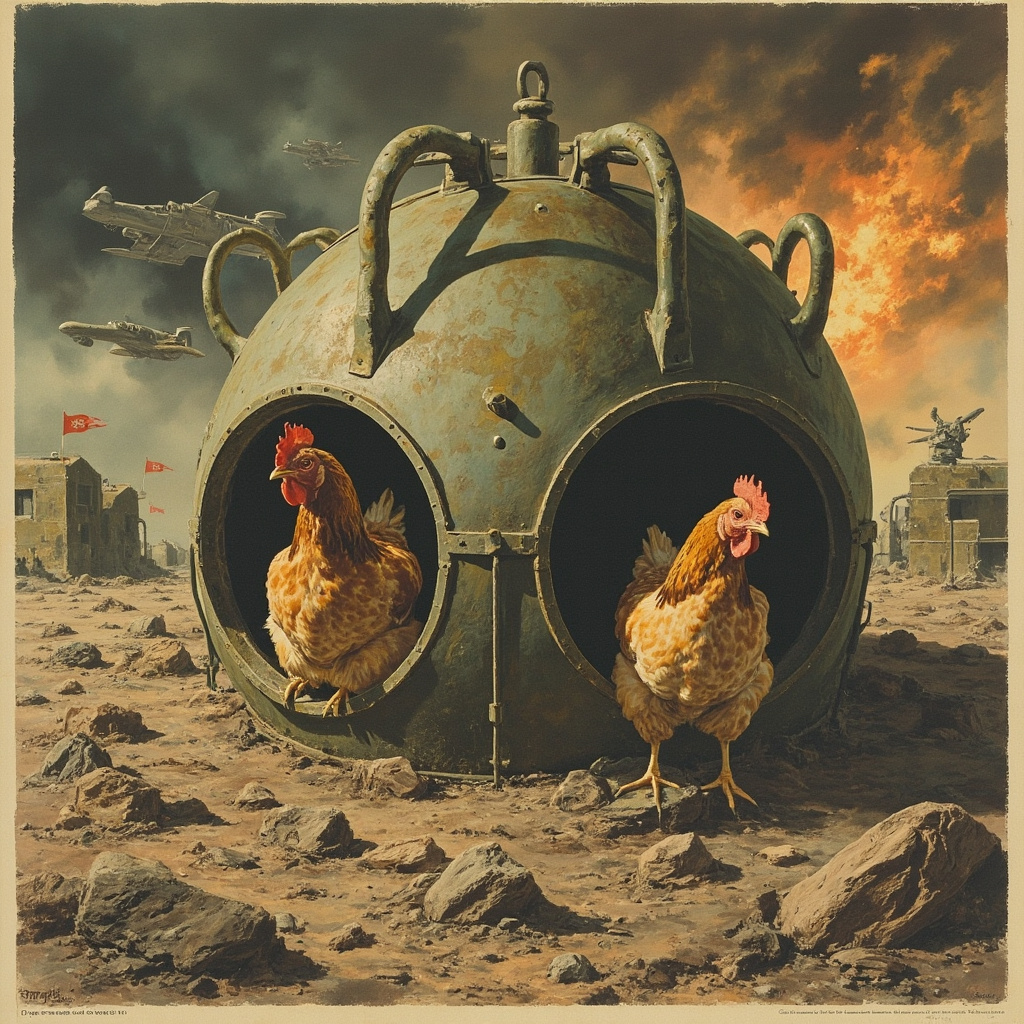
In the depths of the Cold War, when paranoia ran high and military strategists dreamed up increasingly bizarre defensive schemes, the British government approved one of the strangest weapons projects in history: Operation Blue Peacock. This classified program aimed to create nuclear landmines that would be kept operational by live chickens sealed inside the warheads.
The year was 1957, and Britain faced the terrifying prospect of a Soviet invasion of West Germany. With conventional forces potentially overwhelmed, military planners turned to nuclear deterrence—but not in the way you might expect.
The Cold War Context
As tensions between NATO and the Warsaw Pact reached fever pitch in the 1950s, British defense officials worried that Soviet forces could rapidly overrun Western Europe. The Fulda Gap in Germany represented a particularly vulnerable invasion route, and conventional weapons seemed inadequate to stem a massive Soviet assault.
Enter the concept of atomic demolition munitions (ADMs)—essentially nuclear landmines designed to create radioactive barriers and destroy key infrastructure before it could fall into enemy hands. The Americans had their own ADM program, but Britain wanted something uniquely theirs.
The Technical Challenge
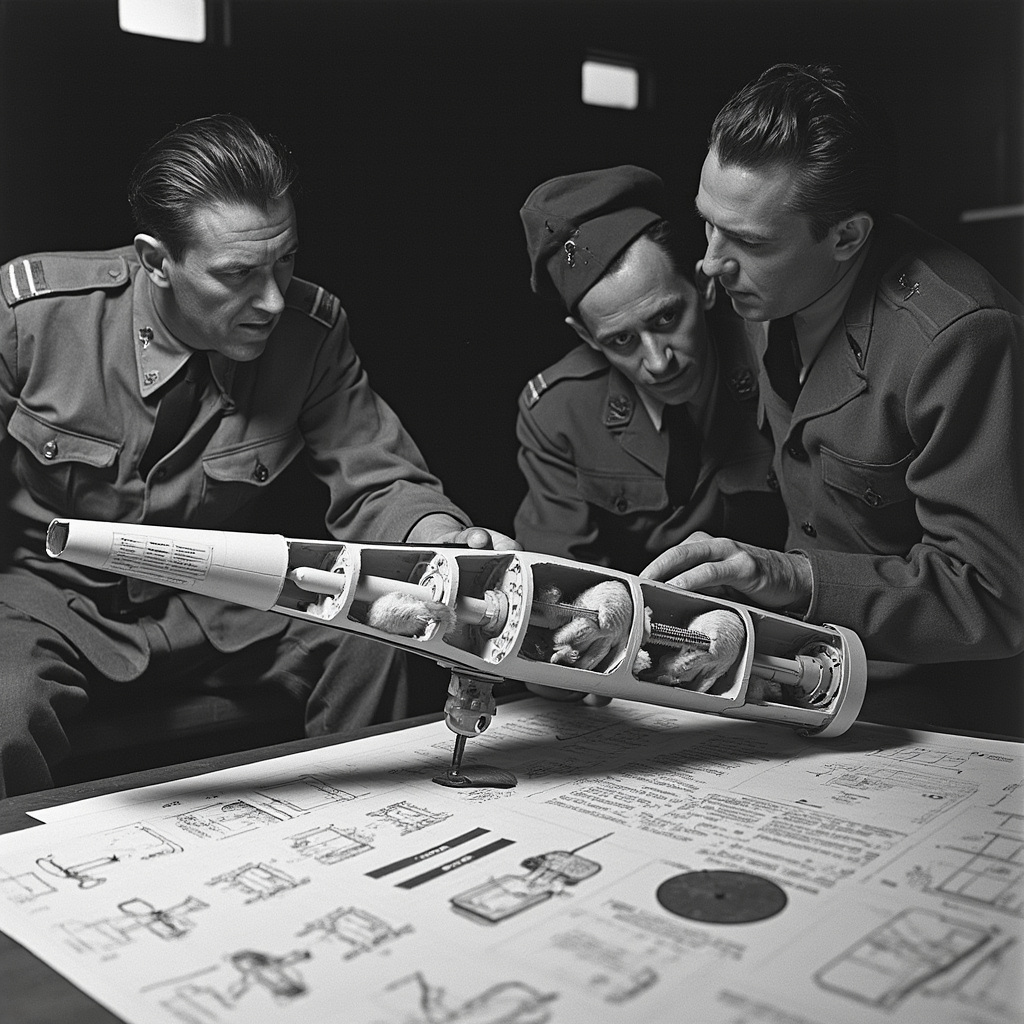
The Blue Peacock devices were substantial weapons—each weighing approximately 7 tons and containing a 10-kiloton nuclear warhead, roughly two-thirds the power of the bomb dropped on Hiroshima. These massive devices were designed to be buried along potential invasion routes, where they could be detonated to create impassable radioactive craters.
But there was a problem: the sensitive nuclear components required a stable operating temperature to function properly. In the harsh German winter, temperatures could plummet well below freezing, potentially rendering the weapons inoperable just when they might be needed most.
Traditional heating systems were considered too complex, unreliable, or detectable. The solution proposed by British engineers was as ingenious as it was absurd: use living chickens as biological heaters.
The Chicken Solution
The plan was surprisingly straightforward. Live chickens would be sealed inside each Blue Peacock device along with a week’s worth of feed. The birds’ natural body heat—approximately 106°F (41°C)—would keep the nuclear components at optimal operating temperature even in freezing conditions.
The chickens served a dual purpose. Not only would they provide heat, but their lifespan would also act as a timing mechanism. The birds would survive for roughly eight days on their provided food supply. Once they died, the weapon would begin to cool, eventually becoming inoperable—a built-in safeguard against long-term radioactive contamination.
Project Development and Cancellation
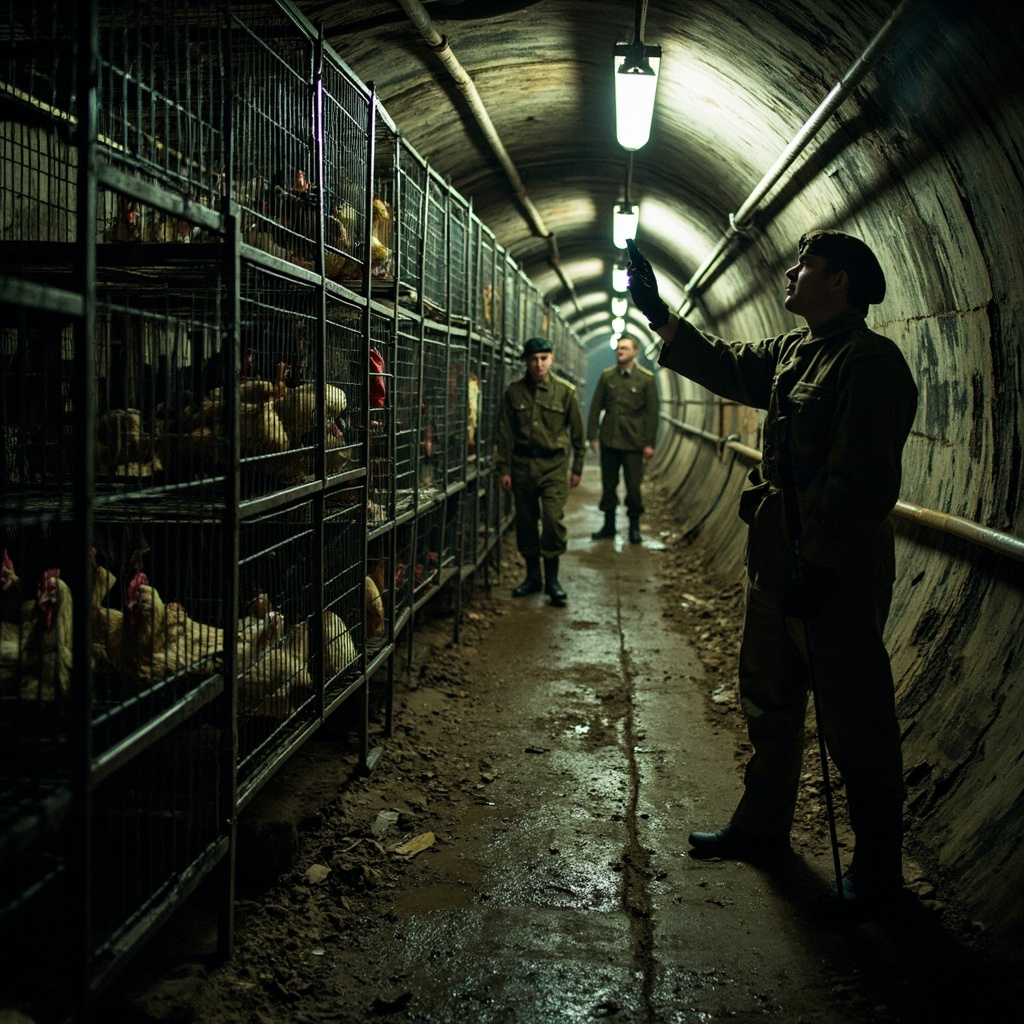
Despite its bizarre nature, Operation Blue Peacock was taken seriously at the highest levels of British government. In July 1957, the British Army Council officially ordered ten Blue Peacock devices for deployment in West Germany. The project was disguised as research into “atomic power units for troops in the field” to maintain secrecy.
However, the practical and political challenges soon became overwhelming. Beyond the obvious absurdity of relying on poultry to maintain nuclear weapons, several serious concerns emerged:
- The massive size and weight of the devices made deployment and concealment extremely difficult
- The radioactive fallout from detonation would contaminate large areas for decades
- Allied forces operating in the region would be at severe risk
- The international diplomatic implications were staggering
By February 1958, just eight months after its approval, Operation Blue Peacock was quietly cancelled. The Ministry of Defence concluded that the risks far outweighed any potential benefits, and the advent of more sophisticated tactical nuclear weapons rendered the unwieldy landmines obsolete.
Legacy of an Absurd Idea
Operation Blue Peacock remained classified for decades, finally coming to light through declassified government documents. When the story emerged, many initially dismissed it as an April Fool’s joke—partly because some documents were indeed released on April 1st, and partly because the concept seemed too ridiculous to be real.
Yet the project represents a genuine artifact of Cold War thinking, when military planners seriously considered virtually any option to gain an edge over potential adversaries. The willingness to develop chicken-powered nuclear weapons demonstrates both the desperation and the dark creativity of the era.
Today, Operation Blue Peacock stands as one of history’s most bizarre military projects—a reminder that in the paranoid world of Cold War strategy, even the most outlandish ideas could receive serious consideration at the highest levels of government. While the chickens never made it into actual nuclear weapons, their brief consideration as atomic heating systems ensures their place in the annals of military history’s strangest chapters.
The project also highlights how technological limitations of the era led to increasingly creative solutions. In an age before reliable solid-state electronics and advanced heating systems, biological solutions to engineering problems weren’t entirely unthinkable—just deeply impractical and ultimately unsuccessful.