The 1561 Nuremberg Sky Battle: When Hundreds of Flying Objects Waged War Above Medieval Germany

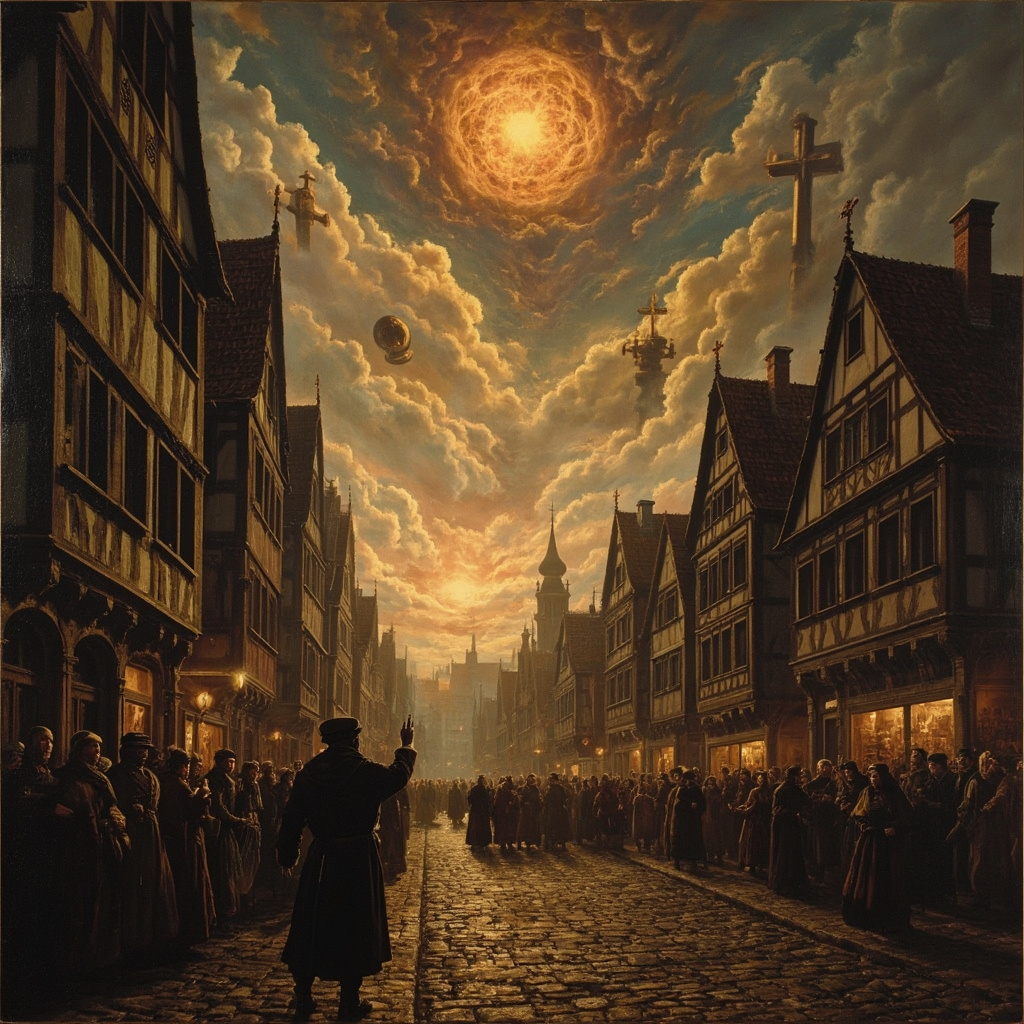
On the morning of April 14, 1561, the residents of Nuremberg, Germany, witnessed one of history’s most extraordinary and well-documented celestial phenomena. As dawn broke between 4 and 5 AM, the sky above this medieval city erupted into what appeared to be an aerial battle involving hundreds of mysterious flying objects.
This remarkable event was so significant that it was immortalized in a detailed broadsheet—a printed news bulletin of the day—complete with woodcut illustrations depicting the strange objects that filled the sky. The incident has puzzled historians, astronomers, and researchers for over four centuries.
The Dawn of Terror
According to eyewitness accounts recorded in the famous broadsheet, the citizens of Nuremberg were confronted with “a dreadful apparition” as the sun rose. The sky filled with objects of various shapes and sizes: spheres, crosses, cylinders, crescents, and rod-like formations. Most remarkably, these objects appeared to be engaged in combat, darting around each other in seemingly organized patterns.
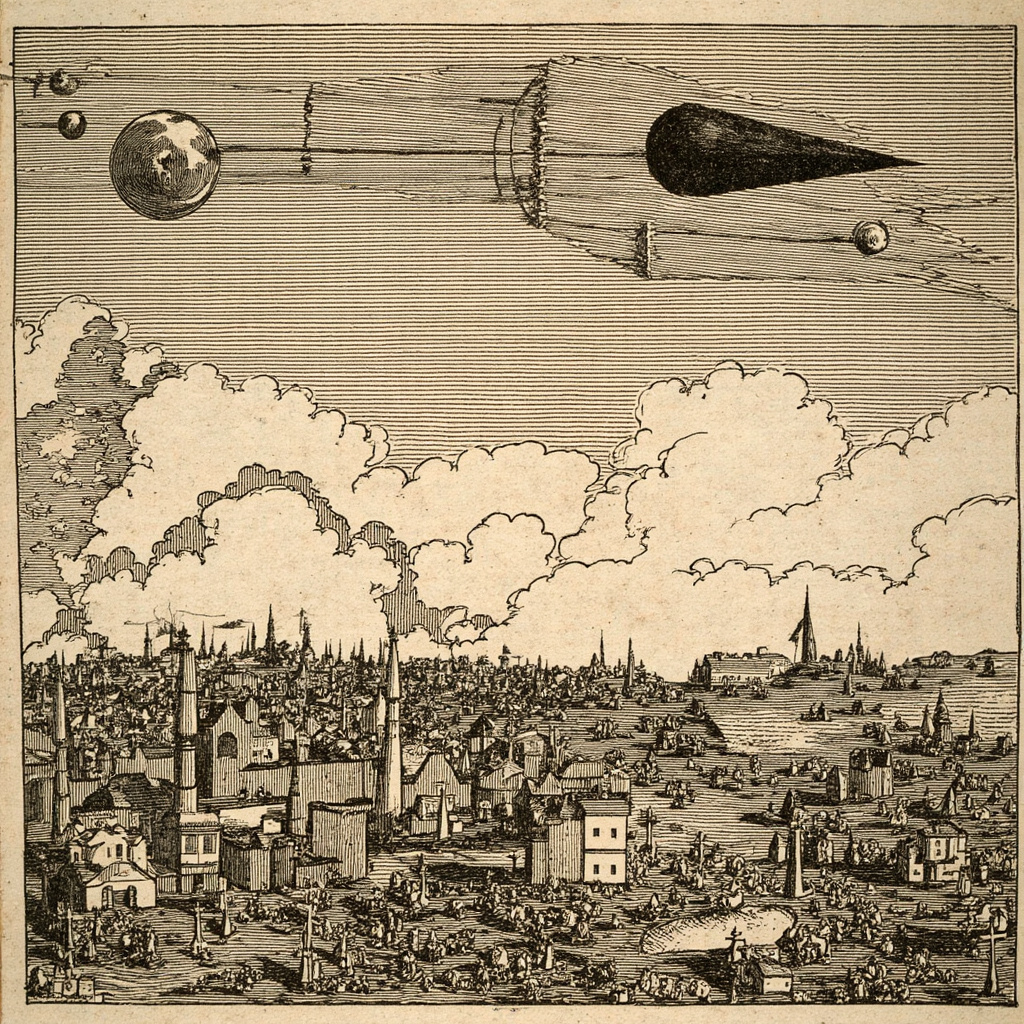
The broadsheet, printed and distributed throughout the region, described how “many men and women” witnessed cylinders from which “several small spheres emerged and darted around the sky.” Most ominously, witnesses reported seeing a large, black, spear-like or arrow-shaped object among the aerial combatants.
Contemporary Documentation
What makes the Nuremberg incident particularly compelling is its thorough documentation. The broadsheet was created by Hans Glaser, a prominent printer in Nuremberg, who was known for producing reliable news reports. The detailed text provides specific information about the timing, appearance, and behavior of the mysterious objects.
The account describes how the objects “fought among each other for over an hour.” After this aerial battle concluded, many of the objects allegedly fell to earth “as if they all burned,” though no physical remains were reportedly found. Most intriguingly, witnesses claimed that the large black arrow-shaped object crashed somewhere outside the city walls.
Theories and Explanations
Modern researchers have proposed various explanations for what the people of Nuremberg witnessed that April morning. Some meteorologists suggest the phenomenon could have been an unusual atmospheric display, possibly involving sun dogs (parhelia) or other optical illusions created by ice crystals in the atmosphere.

Others propose that the residents may have witnessed a meteor shower or multiple meteors breaking up in the atmosphere, which could explain the various shapes and the apparent “battle” as objects moved across the sky in different directions. The morning timing aligns with when certain meteor showers are most visible.
Religious and Cultural Context
The 16th century was a time of significant religious upheaval in Europe, with the Protestant Reformation in full swing. Many people interpreted unusual natural phenomena as divine omens or warnings. The Nuremberg broadsheet itself frames the event in religious terms, suggesting that citizens should “be warned” and “repent” in response to this celestial sign.
This religious interpretation was typical of the era, when astronomical events were often seen as messages from God about earthly affairs. The detailed documentation of such phenomena served both as news reporting and as religious commentary on contemporary events.
Historical Significance
The 1561 Nuremberg incident represents one of the earliest mass UFO sightings in recorded history, predating the modern UFO phenomenon by centuries. While the true nature of what occurred remains a mystery, the event demonstrates the human impulse to document and attempt to understand unusual phenomena.
The broadsheet itself has become an invaluable historical document, providing insight into both 16th-century printing practices and the way extraordinary events were communicated to the public. It serves as a fascinating example of early mass media responding to a breaking news story.
Legacy and Modern Interest
Today, the Nuremberg sky battle continues to captivate researchers and enthusiasts interested in unexplained historical phenomena. The incident has been referenced in numerous books about anomalous events and has found its way into discussions about historical UFO encounters.
Whether the citizens of Nuremberg witnessed an unusual atmospheric phenomenon, an astronomical event, or something else entirely, their detailed documentation has preserved one of history’s most intriguing mysteries. The 1561 sky battle remains a testament to the enduring human fascination with the unknown and our drive to record and share extraordinary experiences.
The Nuremberg broadsheet stands as a remarkable piece of historical evidence—a window into a world where the line between the natural and supernatural was far thinner than it is today, and where a single morning’s strange events could captivate an entire city and echo through the centuries.