The Glass King: When Charles VI of France Believed He Would Shatter at the Slightest Touch


In the annals of European history, few monarchs have suffered from such bizarre delusions as King Charles VI of France. For nearly three decades of his 42-year reign (1380-1422), this troubled ruler lived in constant terror of shattering into a thousand pieces—because he genuinely believed his body was made entirely of glass.
The “Glass King,” as historians would later call him, wrapped himself in specially reinforced clothing and forbade his courtiers from coming anywhere near him. His fear was so profound that he would spend hours standing motionless, convinced that the slightest movement or touch could cause his transparent body to explode in a cascade of deadly shards.

The Descent into Madness
Charles VI’s journey into this crystalline delusion began with a series of traumatic events that would haunt him for the remainder of his life. In 1392, at just 24 years old, the young king suffered what medieval chroniclers described as a fit of violent rage and paranoia during a military expedition. In his madness, he turned on his own men, slaughtering four of his knights before being subdued.
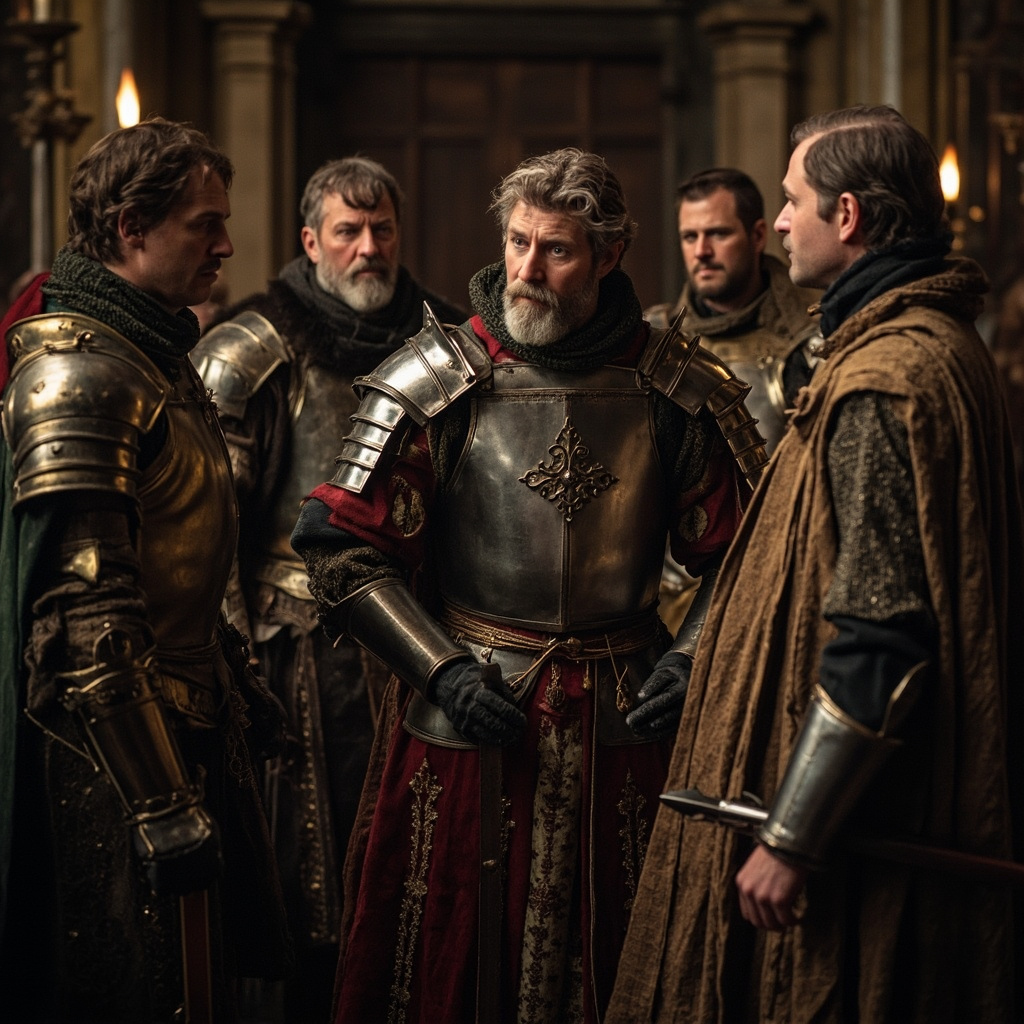
But it was the horror of 1393 that truly shattered the king’s mental state. During a court celebration known as the “Bal des Ardents” or “Dance of Burning Men,” Charles and five companions dressed as wild men in elaborate costumes of rags and animal fur. The event was meant to be a joyous masquerade, but it became a nightmare when an errant spark from a torch set the costumes ablaze.
The scene was pure medieval horror: six men writhing in flames, their screams echoing through the grand ballroom as courtiers watched in terror. Only Charles and one companion survived, but the psychological scars ran deeper than any physical burns. The king emerged from this traumatic fire convinced that he had been transformed—purified and vitrified in the flames like glass in a furnace.
Life as a Crystal Monarch
Charles’s glass delusion manifested in extraordinarily specific ways. He insisted on wearing iron rods sewn into his clothing to prevent his fragile limbs from bending and breaking. The king refused to allow anyone to touch him, believing that human contact would cause him to shatter instantly. His courtiers were forced to conduct all business from a safe distance, creating one of history’s most unusual royal protocols.

The king’s hygiene suffered dramatically under his delusion. He went months without bathing, convinced that water would cause his glass body to crack. In November 1405, after refusing to wash for five months and becoming covered in infected sores and lice, palace physicians were forced to hold him down and bathe him against his will. Even then, Charles screamed throughout the ordeal, certain that each splash of water would be his last.
During his lucid intervals—for the delusion came and went like a recurring nightmare—Charles would recognize the absurdity of his condition. But when the glass delusion gripped him, no amount of reasoning could convince him that he was made of flesh and blood rather than fragile crystal.
The Glass Epidemic
Perhaps most remarkably, King Charles VI was not alone in his crystalline curse. The “glass delusion” swept through Europe between the 15th and 17th centuries, affecting scholars, nobles, and commoners alike. These unfortunate souls became convinced that various parts of their bodies—heads, arms, buttocks, or entire torsos—were made of glass.
One man believed his buttocks were glass and refused to sit down for fear of shattering. Another was convinced that the entire world’s surface was glass, beneath which lurked serpents, and he dared not leave his bed lest he crash through and fall among the snakes. A particularly tragic case involved a scholar who traveled to the famous glass-making island of Murano in Italy, hoping to throw himself into a kiln and be transformed into a beautiful goblet.
The Medical Understanding
Medieval physicians diagnosed glass delusion as a form of “melancholia”—what we might today recognize as severe depression with psychotic features. According to the medical theory of the time, health depended on balancing four bodily humors: blood, phlegm, yellow bile, and black bile. An excess of black bile, known as “vitrea bilis” (glassy bile), was thought to give the afflicted person’s internal fluids a glass-like appearance and properties.
Ironically, this same black bile was associated with scholarly brilliance and intellectual depth. The glass delusion was often called the “disease of scholars” because it seemed to disproportionately affect learned men—poets, philosophers, and academics who spent their days in deep contemplation.
Symbolism and Meaning
The glass delusion may have represented more than mere madness. In medieval and Renaissance culture, glass symbolized the fragility of human existence and the transparency of the soul. Vanitas paintings of the era often featured glass objects alongside wilting flowers and hourglasses to represent life’s ephemeral nature.
Glass also held mystical properties in the medieval imagination. It was believed to crack when touched by poison, making it a kind of supernatural detector of danger. Perhaps those afflicted with glass delusion saw themselves as living vessels that could reveal hidden threats—or conversely, as beings so pure and fragile that they existed on the edge between the physical and spiritual worlds.
Some historians speculate that the glass delusion reflected the era’s fascination with transformation and purification. Glass-making was seen as a form of alchemy—the magical transformation of humble sand and ash into something crystalline and beautiful. Those who believed themselves made of glass may have felt that they, too, had been transformed by trauma or divine intervention into something both precious and impossibly fragile.
The End of an Era
King Charles VI died in 1422, his reign having been marked by periods of brilliant lucidity alternating with episodes of profound madness. His glass delusion faded from the historical record, but the broader phenomenon continued for another two centuries before mysteriously disappearing from European culture.
Modern psychiatrists studying historical cases of glass delusion suggest it may have been a culturally-specific expression of what we now recognize as depressive or anxiety disorders. The particular form the delusion took reflected the symbolic and material culture of its time—just as modern delusions often involve technology, television, or contemporary fears.
The Glass King of France remains one of history’s most poignant examples of how trauma and mental illness can manifest in ways that reflect the deepest fears and beliefs of their era. Charles VI lived in constant terror of shattering, but perhaps it was his kingdom—torn by war, political intrigue, and social upheaval—that was truly the most fragile thing of all.
In the end, the king who feared breaking proved remarkably durable, ruling for over four decades despite his crystalline curse. His story reminds us that even in our most fragile moments, human resilience can be surprisingly strong—stronger, perhaps, than glass.
More from the archive
- The Defenestration of Prague: When Throwing Officials Out a Window Started the Thirty Years’ War
- The Burning of the Savoy Palace: The Rebels’ Fury Against John of Gaunt
- The Doctor Who Discovered Clean Hands and Was Destroyed for It: Ignaz Semmelweis