When Medieval Courts Put Animals on Trial: The Bizarre Legal System That Executed Pigs and Prosecuted Rats

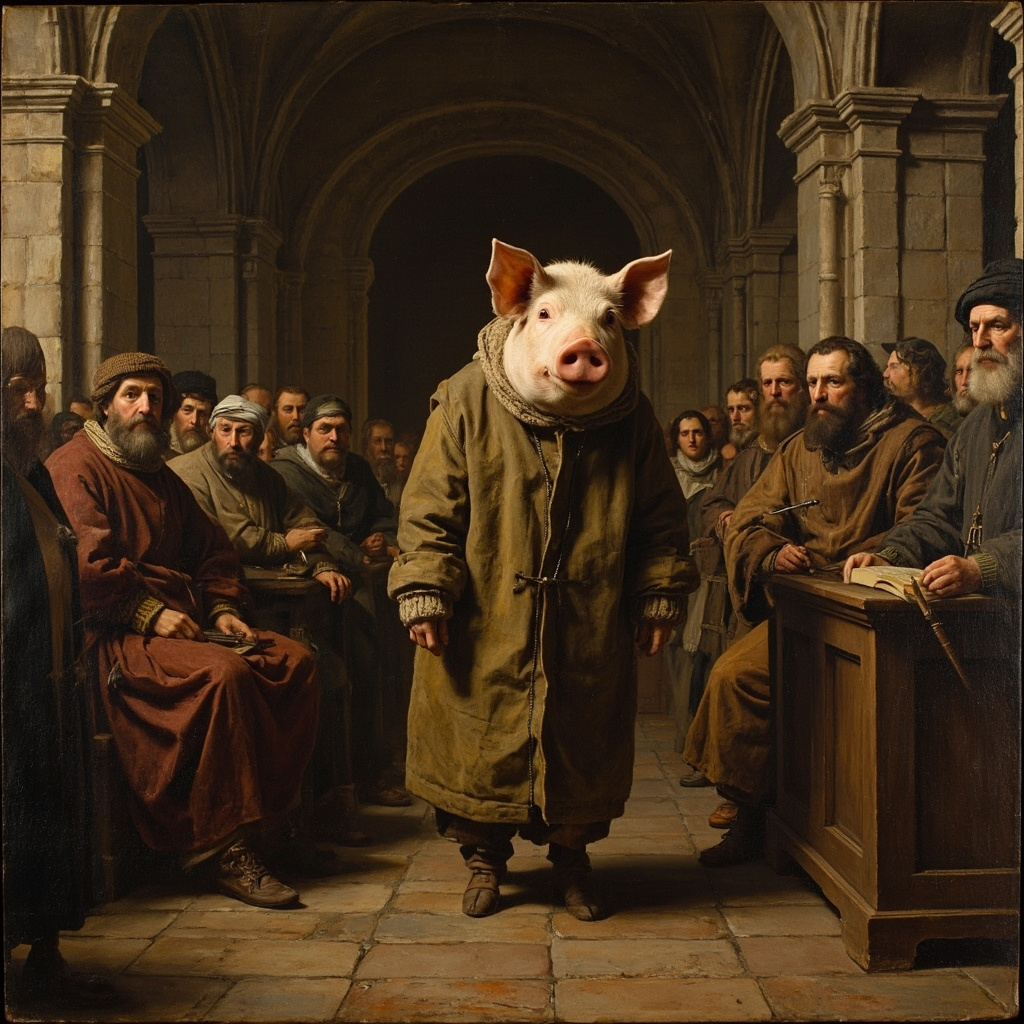
In 1386, in a Normandy market square, a pig dressed in human clothing was hanged for murder. This wasn’t a cruel joke or carnival spectacle—it was the solemn conclusion of a formal legal trial, complete with witnesses, evidence, and a court-appointed defense attorney. For centuries across medieval Europe, animals faced the same justice system as humans, resulting in some of history’s most bizarre courtroom dramas.
The Pig That Committed Murder
The legal records are chillingly detailed. In 1494, near Clermont, France, a young pig was arrested for having “strangled and defaced a child in its cradle.” Multiple witnesses testified that “on the morning of Easter Day, the infant being left alone in its cradle, the said pig entered during the said time the said house and disfigured and ate the face and neck of the said child… which in consequence departed this life.”

The judge, after weighing the evidence and finding no extenuating circumstances, delivered his verdict with the gravity befitting any capital case: “We, in detestation and horror of the said crime, and to the end that an example may be made and justice maintained, have said, judged, sentenced, pronounced and appointed that the said porker… shall be by the master of high works hanged and strangled on a gibbet of wood.”
A Legal System Gone Mad
These weren’t isolated incidents of medieval madness. From the 14th through 19th centuries, European courts regularly tried animals for crimes ranging from murder to obscenity. Dogs, pigs, cows, rats, flies, caterpillars, and even sparrows found themselves in the dock, facing charges that could result in execution, banishment, or excommunication.
The trials followed full legal protocol. Courts appointed lawyers at taxpayer expense to defend the accused animals. Witnesses were called, evidence was presented, and lengthy legal arguments were made. Some trials dragged on for months, featuring respected jurists making erudite arguments about animal culpability and divine justice.
When Rats Hired a Lawyer
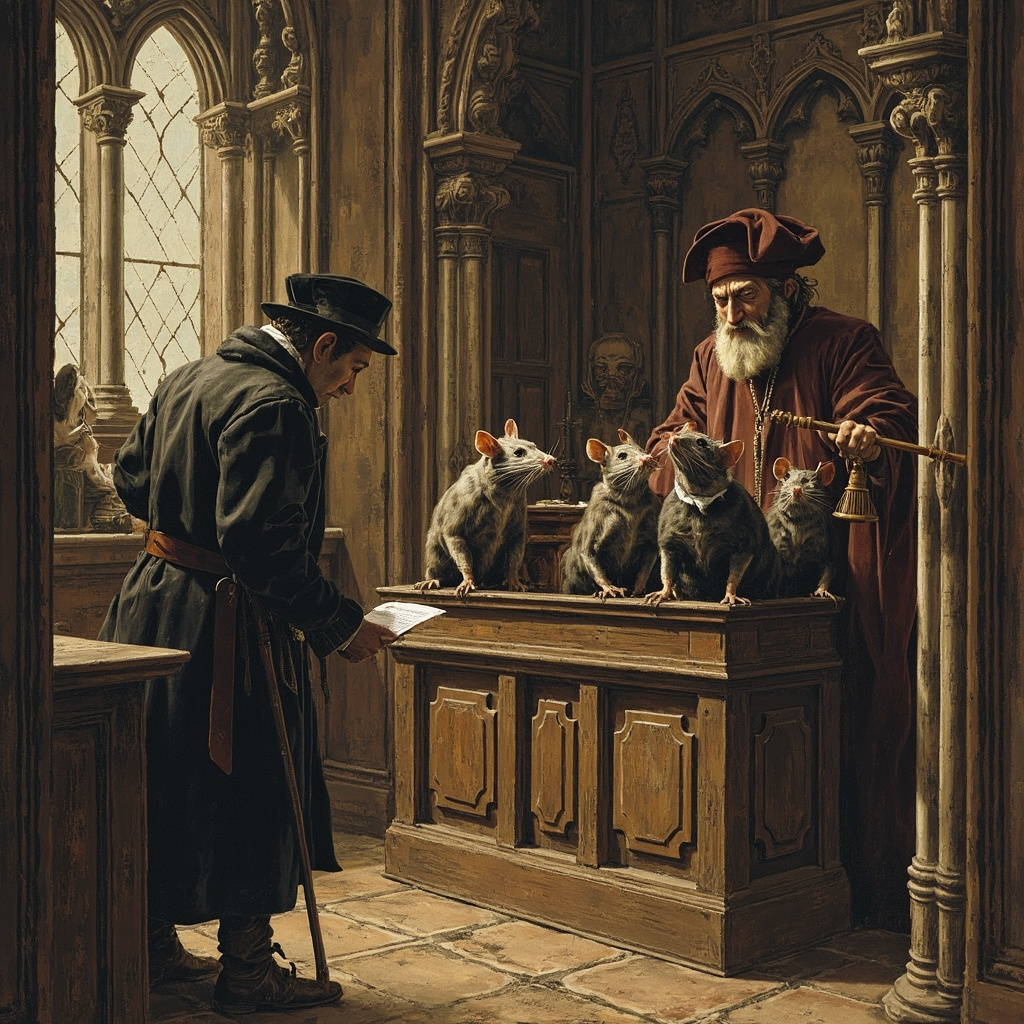
Perhaps the most famous animal defense attorney was Bartholomé Chassenée, a prominent French jurist who successfully defended a colony of rats in the early 16th century. The rats of Autun were charged with destroying local crops and summoned to appear in court.
Chassenée made a series of brilliant legal maneuvers. First, he argued that the summons was invalid because not all rats had been properly served—some lived too far away to receive notice. When the court agreed to re-issue a broader summons, Chassenée then argued his clients couldn’t safely travel to court due to the “unreasonable and unlawful” presence of cats along the route. The cats, he claimed, were “adversaries of the rat race” and made travel impossible.
Through such legal gymnastics, Chassenée successfully delayed proceedings indefinitely, essentially winning the case on a technicality. The rats were never executed.

The Religious Logic Behind Animal Trials
Medieval authorities genuinely believed these proceedings served divine justice. In their worldview, crimes committed by animals were the devil’s work, and failing to punish them properly would give Satan an opening to corrupt human affairs. Animals were seen as moral agents capable of sin, requiring the same legal accountability as humans.
Two distinct types of animal trials emerged. “Thierstrafen” were criminal proceedings against individual animals—usually domestic creatures that had killed humans. These cases invariably ended in execution. “Thierprocesse” were ecclesiastical proceedings against species or groups of animals—typically insects or vermin causing crop damage. These cases often resulted in religious excommunication or banishment.
Sparrows in the Dock
Even the tiniest creatures weren’t exempt. Church records show sparrows being prosecuted for chattering during religious services, disrupting the sacred atmosphere. Caterpillars faced charges for destroying vineyards. Flies were tried for contaminating food. In each case, the full weight of legal and religious authority bore down on creatures incapable of understanding the charges against them.
Some cases reached absurd extremes. A gang of weevils was once excommunicated by a Swiss court for damaging crops. Another French court formally banished a group of slugs from local gardens. The slugs, predictably, ignored the court order.
The End of an Era
As the Enlightenment took hold, animal trials gradually disappeared. The last recorded case occurred in Switzerland in 1906, when a dog was tried and executed for murder—a bizarre anachronism in the modern world. By then, most legal systems had recognized the fundamental absurdity of holding animals criminally responsible for their actions.
Yet for centuries, these trials represented the sincere attempt of medieval society to impose moral order on a chaotic world. In their own twisted logic, they reflected humanity’s deep need to believe that justice could triumph over nature’s apparent randomness—even if it meant putting a pig in a jacket and hanging it in the town square.
The elaborate legal records of these proceedings survive today as monuments to one of history’s strangest chapters—when the law truly was, as Charles Dickens later wrote, “an ass.”
More from the archive
- The Cadaver Synod of 897 AD: When a Dead Pope Was Put on Trial
- The Bizarre Medieval Practice of Stuffing Corpses: Austria’s 280-Year-Old Mystery
- The Beast of Gévaudan: The Man-Eating Terror That Stalked 18th-Century France