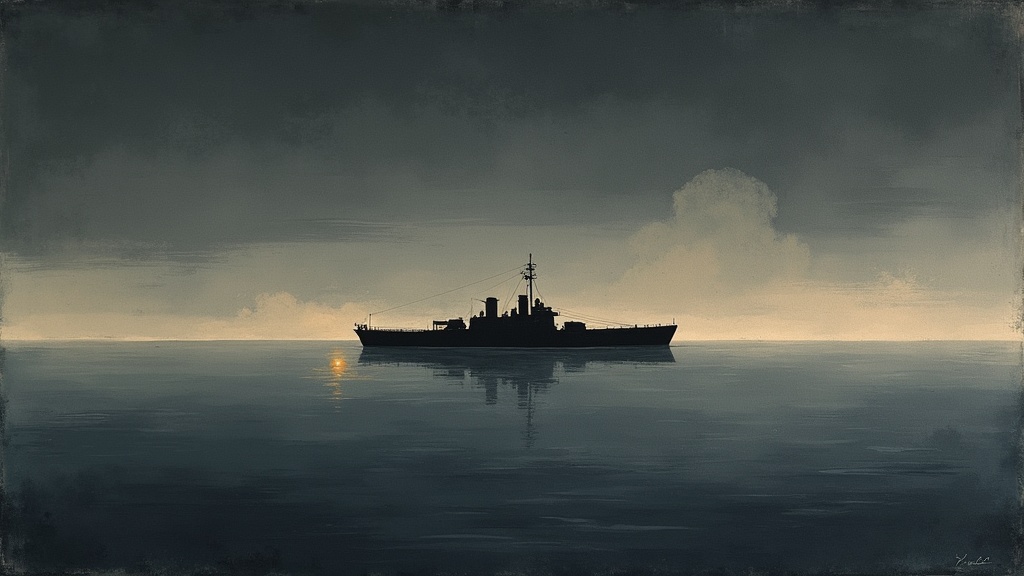
The Ghost Army: The WWII Con Artists Who Fooled Hitler With Inflatable Tanks
A 1,100-man unit of artists, ad men and sound engineers fought World War II with rubber tanks, recorded noise and pure theatre. Their secret held for half a century.
In 1943 British intelligence dressed a dead tramp as a Royal Marine officer, chained a briefcase of fake secrets to his wrist, and floated him toward the Spanish coast. Hitler believed every word — and moved his armies to defend the wrong country.
On a stormy August morning in 1944, an American bomber fell out of the sky onto a Lancashire village school. In seconds, Freckleton lost nearly a whole generation of its youngest children — in Britain’s deadliest air accident of the war.
In the freezing early hours of an Australian winter morning in 1944, more than a thousand Japanese prisoners rushed the fences of a POW camp armed with baseball bats and sharpened cutlery. It became the largest prison break of the Second World War.
In the final week of World War II, a handful of American GIs, a band of anti-Nazi German soldiers, and a castle full of France’s imprisoned elite made a stand together against the Waffen-SS. It is remembered as the strangest battle of the war — and the only time Americans and Germans are known to have fought as allies.
In a war of tanks, radar and industrial slaughter, one British officer went into battle carrying a Scottish broadsword, a longbow, and a set of bagpipes. John “Mad Jack” Churchill believed any officer who fought without his sword was improperly dressed — and he spent six years proving he meant it.
When a torpedo tore his ship apart in the South Atlantic, a young Chinese steward named Poon Lim found himself alone on an eight-foot wooden raft with a few tins of food and no land in sight. What he did over the next 133 days remains the longest documented survival adrift at sea by one person.
When starving Polish children fled the Soviet labour camps and no nation would take them in, an Indian prince opened his gates and told them: you are orphans no longer.
In April 1944, weeks before D-Day, a rehearsal on a quiet Devon beach turned into a slaughter. At least 749 American servicemen died in a single night — and for decades, almost no one was allowed to know.
On August 6, 1945, a young engineer stood three kilometres from the centre of Hiroshima when the sky turned to fire. Burned and half-blind, he made his way home to recover — to a city called Nagasaki. Three days later, standing in his office describing the horror he had just escaped, he watched the same blinding light fill the window a second time. This is the almost unbelievable true story of Tsutomu Yamaguchi.