Mad Jack Churchill: The Officer Who Fought World War II With a Longbow, a Sword, and Bagpipes

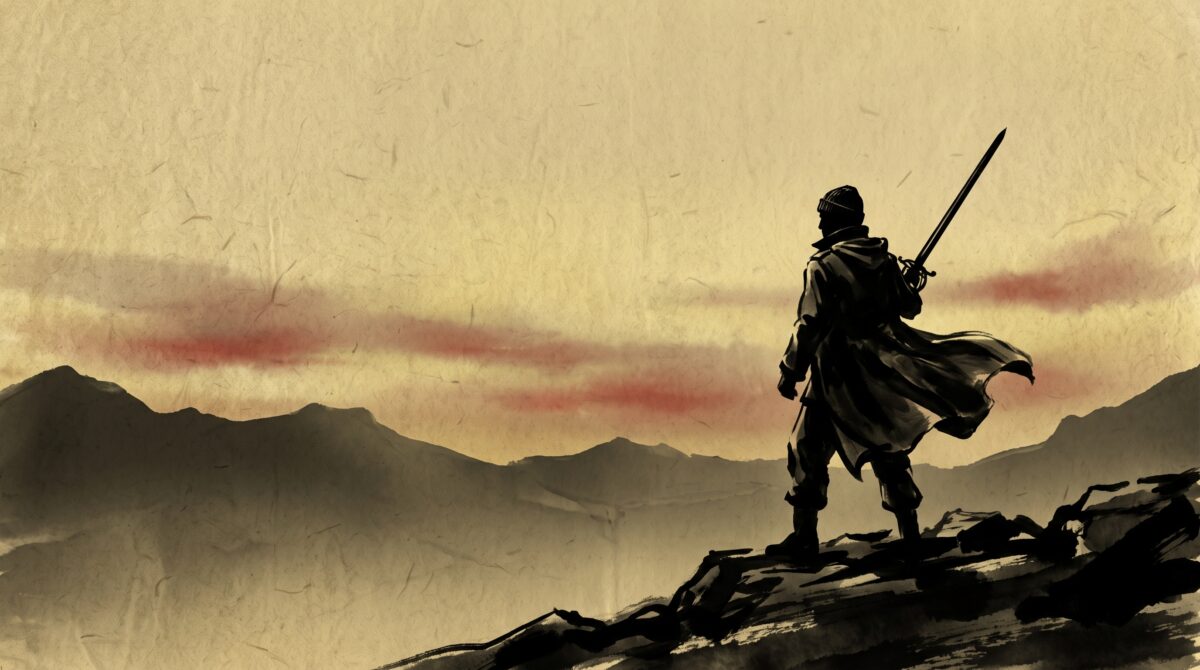
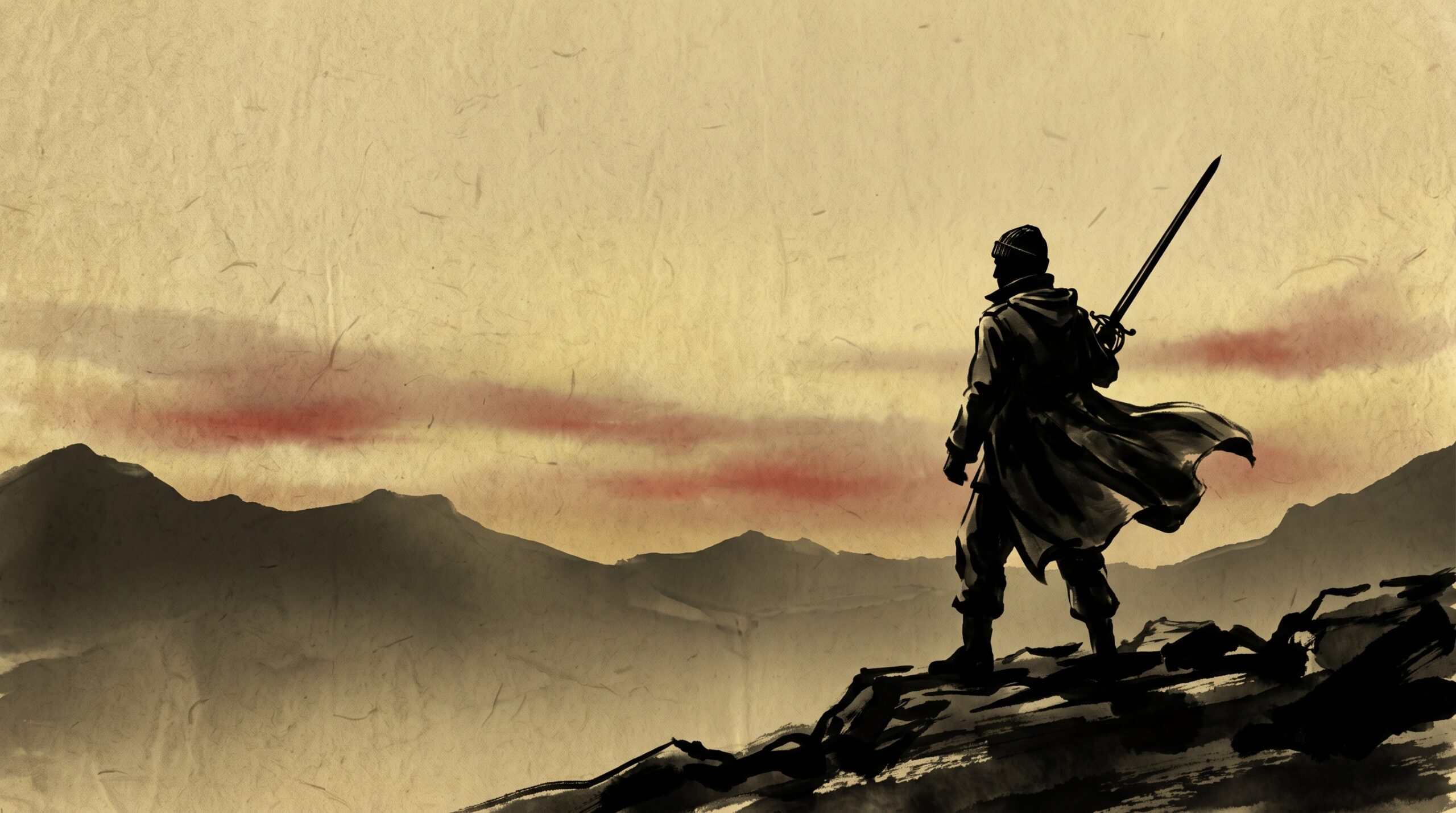
The Second World War was fought with radar and radio, with tank columns and thousand-bomber raids, with a scale of machinery that turned soldiers into small parts of an enormous, grinding engine. And somewhere inside that engine walked a British officer carrying a Scottish broadsword on his hip, an English longbow across his back, and a set of bagpipes under his arm. His name was John Malcolm Thorpe Fleming Churchill. His men called him “Mad Jack,” and he took it as a compliment.
The man who brought a longbow to a world war
Churchill was born in Colombo, in what was then British Ceylon, in 1906. He passed through the Royal Military College at Sandhurst and was commissioned in the 1920s, but peacetime soldiering bored him. In the 1930s he left the army altogether and drifted through a wonderfully improbable list of careers: newspaper editor, male model, and film extra — he appeared in a couple of movies partly because he could do something almost no one else in Britain could. He was a serious archer. He represented Great Britain at the world archery championships in 1939 and had a genuine gift with a longbow, a weapon most of the world had abandoned four centuries earlier.
Then Germany invaded Poland, and Jack Churchill went back to war carrying the tools he loved. His creed became famous among the men who served under him: “Any officer who goes into action without his sword is improperly dressed.” He was not joking, and he did not mean it as decoration.
The last arrow on a European battlefield
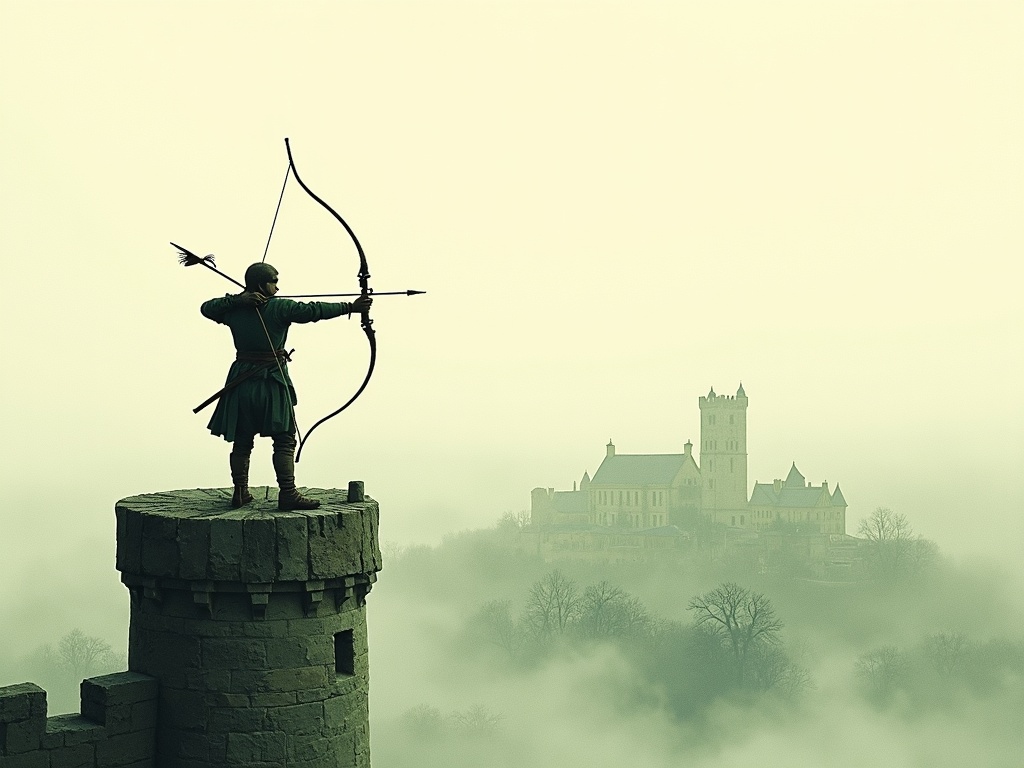
In May 1940, as the British Expeditionary Force was being driven back across France, Churchill was fighting a rearguard near the village of L’Épinette. According to the account that made him a legend, he gave the signal to attack a German patrol not with a shout or a whistle, but by loosing a barbed arrow from his longbow and striking an enemy soldier in the chest. If the story is true — Churchill himself was characteristically modest about the details — it is very likely the last recorded instance of an English longbow being used to kill an enemy in war, a bridge across five hundred years of military history drawn taut in a single moment.
What is beyond dispute is the spirit of it. While an entire army was retreating, Churchill kept looking for chances to go forward, treating the collapse of France less as a catastrophe than as a problem to be solved with nerve, initiative, and whatever weapon happened to be in his hand.
Bagpipes on a burning shore
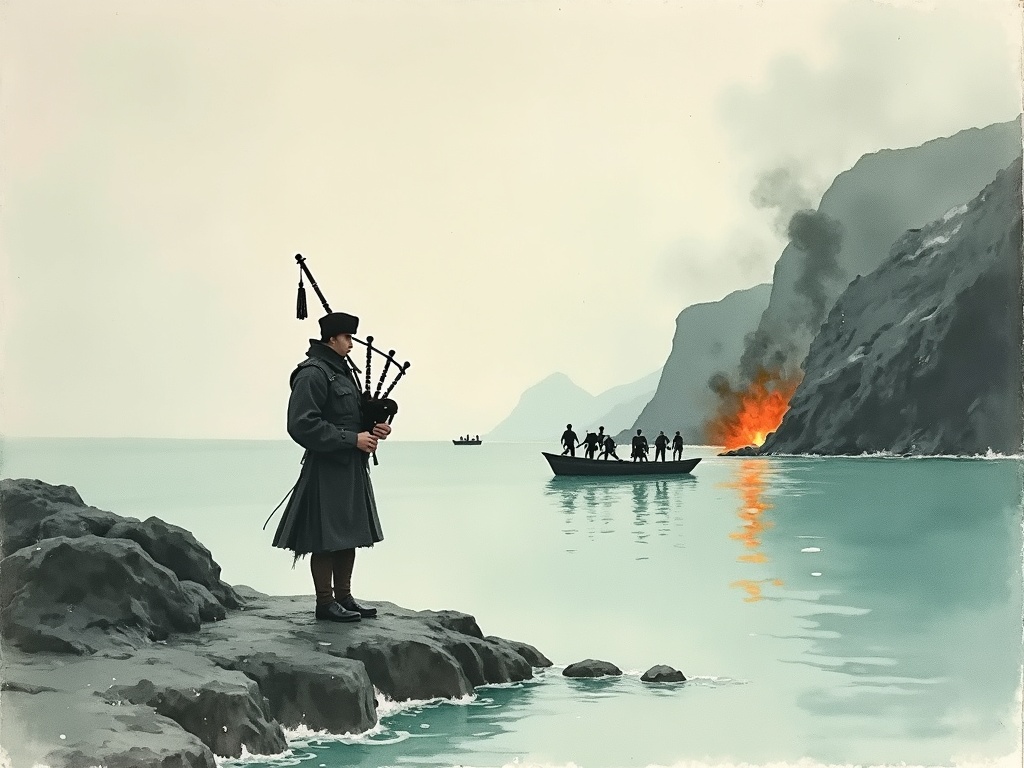
Men like Churchill were exactly what Britain’s new Commandos were looking for, and he volunteered at once. On 27 December 1941, he was second-in-command of the raid on Vågsøy, a German-held island off the coast of Norway. As the landing craft ground toward the shore under fire, Churchill stood at the front and played his bagpipes — the skirl of “March of the Cameron Men” cutting through the noise of machine guns — then set down the pipes, drew his sword, and led his men into the town. The garrison was overrun in minutes. To the commandos it was theatre and terror at once; to Churchill it was simply how a Highlander went to work.
Forty-two prisoners and a basket-hilted sword
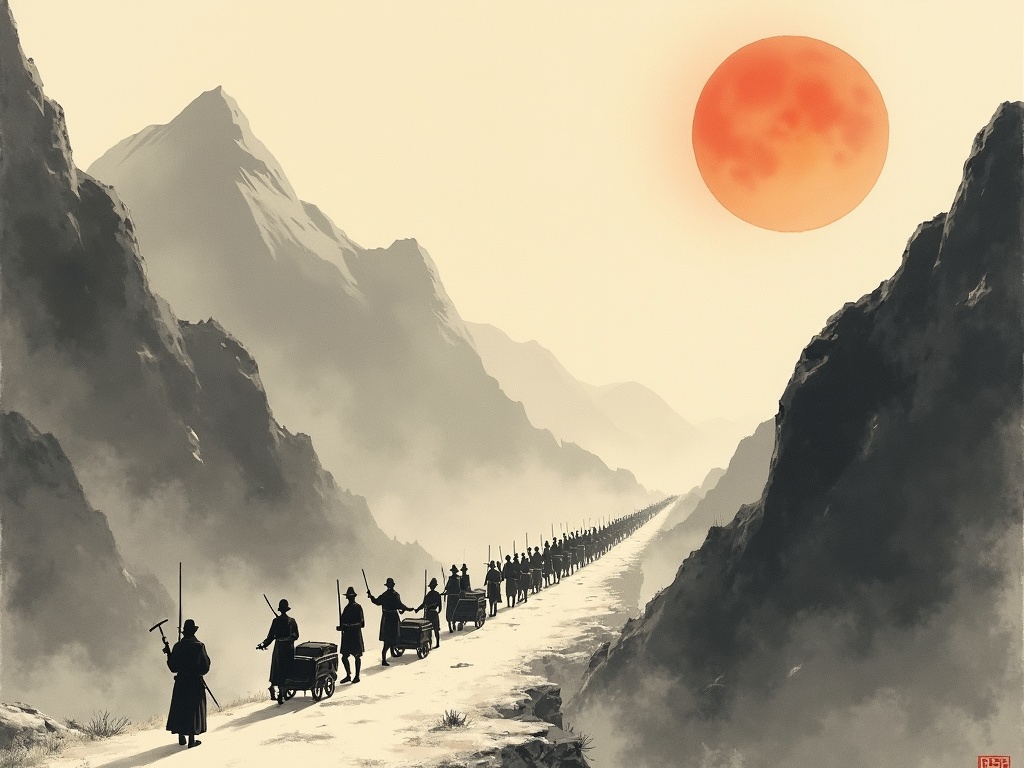
By 1943 he was commanding No. 2 Commando in Italy. During the Salerno landings he slipped into a German-held position in the dark with a single corporal at his side, moving from post to post and taking sentries by surprise. By the time he was finished, the two men had captured forty-two prisoners, including the crew of a mortar. Churchill marched the column back down the mountain, wounded men loaded onto carts pushed by their own captured comrades, the whole absurd and triumphant procession herded along at sword-point. He was awarded the Distinguished Service Order for it. Later, characteristically, he went back under fire to recover the sword he had lost in the fighting — he was not about to leave it behind.
The piper of Brač
In 1944 Churchill was leading a mixed commando force on the Yugoslav island of Brač, in the Adriatic. The assault went wrong. Mortar fire scythed through his men until only a handful were left standing around him, and there, surrounded, wounded, and out of options, Jack Churchill did the only thing that made sense to him: he raised his bagpipes and played “Will Ye No Come Back Again?” until a grenade blast knocked him unconscious. He woke a prisoner of the Germans.
His captors, noting the surname, briefly wondered whether they had caught a relative of Prime Minister Winston Churchill. They had not — but the confusion may have helped keep him alive. He was flown to Berlin for interrogation and then sent to the Sachsenhausen concentration camp.
Prisoner, escapee, and the long walk home
Even barbed wire could not hold his restlessness for long. Churchill and a fellow officer crawled out of Sachsenhausen through a drain and struck out on foot for the Baltic coast, only to be recaptured. Later, moved south with a group of prominent prisoners into the Alps, he slipped away again during the chaos of the war’s final days and walked for miles through the mountains until he met an American armoured patrol. By the time the fighting in Europe was over, he was already impatient for more, and he made his way east to take part in the war against Japan — which ended, to his open disappointment, before he could rejoin the fight. “If it wasn’t for those damned Yanks,” he is supposed to have grumbled about the atomic bombs, “we could have kept the war going another ten years.”
An ordinary man would have retired quietly
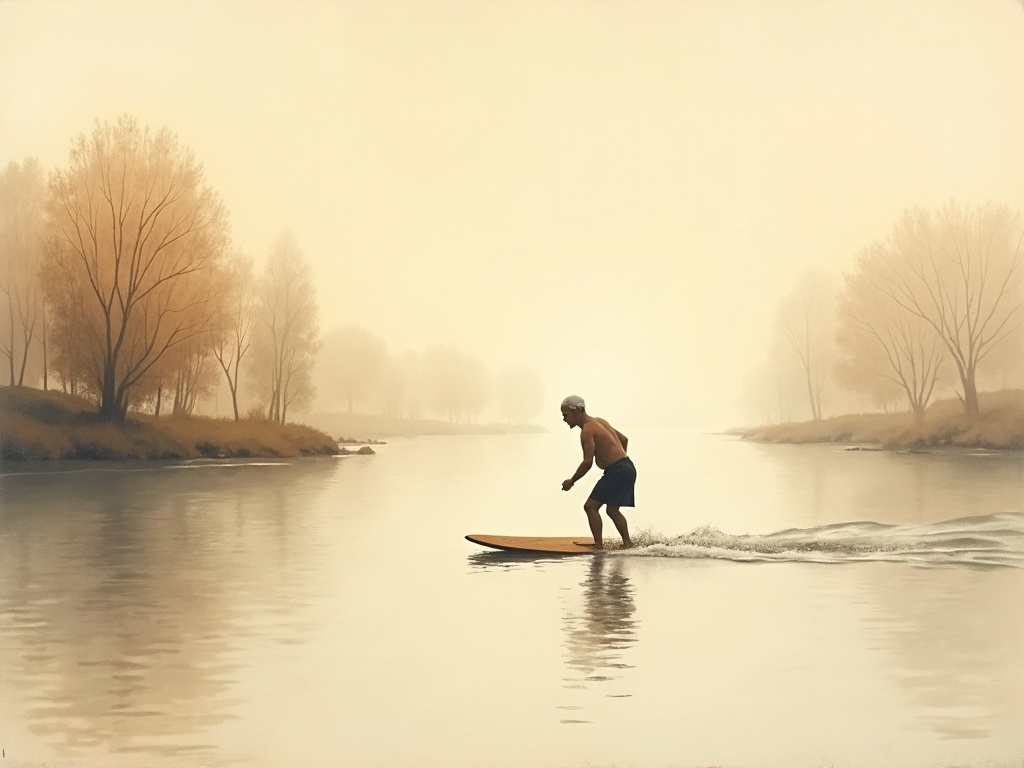
Jack Churchill did not. In the years after the war he trained as a parachutist — in his forties — served in Palestine, and qualified as a military parachute-jumping instructor. In retirement he took up surfing the Severn Bore, the great tidal wave that surges up the River Severn, riding a board he designed himself, and he was said to delight in startling fellow train passengers by hurling his briefcase out of the window — he had simply timed the throw so it landed in his own back garden. He died in 1996, aged eighty-nine, having collected a Distinguished Service Order and Bar and a Military Cross and Bar along the way, and having lived every year of a very long life exactly as he pleased.
It is easy to file Mad Jack Churchill away as a curiosity, a man with a sword in a world of machine guns. But the longbow and the pipes were never really the point. They were the visible edge of something rarer: a refusal to let a vast, mechanised, terrifying war flatten him into an interchangeable part. In an age that asked men to become small and obedient cogs, he insisted on remaining stubbornly, gloriously himself — and somehow led others to safety while doing it. That is why we still tell his story. Courage matters, but so does the quiet insistence that even in the largest of catastrophes, a single human being still gets to decide who he is going to be.
Sources & further reading:
- Jack Churchill — Wikipedia
- Fighting Jack Churchill — Historic UK
- The Story Of ‘Mad Jack’ Churchill — All That’s Interesting
Related Reading
More from the archive
- The War of the Bucket: When Italy Fought a Bloody Battle Over a Wooden Pail
- The Dance of Death: The Sinking of the SS Mendi and the Men History Forgot