Smithfield: The Confrontation Where Wat Tyler Was Killed

On 15 June 1381 the boy king Richard II met the rebel captain Wat Tyler for the last time, in the open ground at Smithfield outside London’s walls. Within minutes Tyler lay dying on the cobbles, cut down by the Lord Mayor before thousands of armed rebels — and a fourteen-year-old king rode alone into the crowd to save the day. It is the most astonishing scene of the whole Peasants’ Revolt.

Mile End and the Rebels’ Demands: The End of Serfdom Promised

On 14 June 1381 the boy king Richard II rode out from the Tower to meet the rebels at Mile End, and there — in a field east of the city walls — he granted the unthinkable: the abolition of serfdom across England. Thirty clerks sat writing charters of freedom while the crowd cheered. It was the high-water mark of the Peasants’ Revolt, and it lasted barely a fortnight.

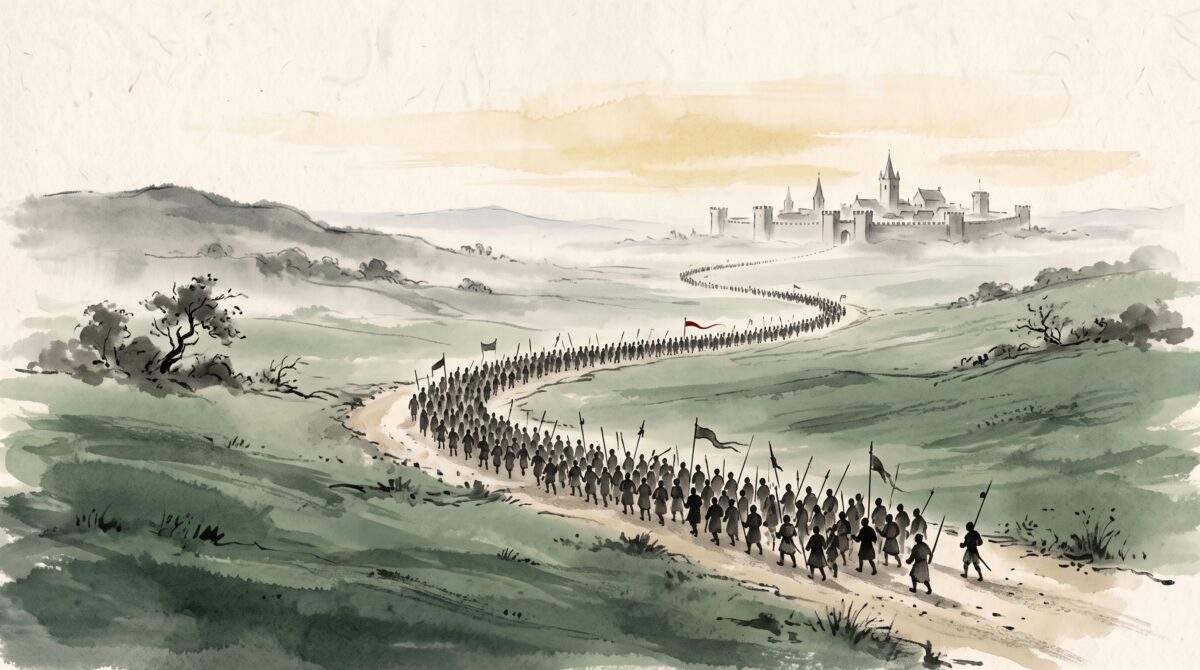
The March on London: How the Rebels Seized the Capital in June 1381

In the second week of June 1381, two rebel armies out of Kent and Essex converged on London — tens of thousands of ploughmen, tilers and village priests. Within two days they had crossed London Bridge, thrown open the gates, and taken the greatest city in England almost without a fight. This is how they did it.

The Burning of the Savoy Palace: The Rebels’ Fury Against John of Gaunt

On 13 June 1381 the rebels of Kent and Essex reached the Strand and set fire to the Savoy, the grandest private house in England and the home of the most hated man in the realm — John of Gaunt. What they did there, and how carefully they refused to steal a single thing, tells you everything about what the Peasants’ Revolt really was.