The War of Jenkins’ Ear: How a Severed Body Part Started a Nine-Year Conflict Between Britain and Spain

In the annals of bizarre military conflicts, few can match the sheer absurdity of the War of Jenkins’ Ear. This nine-year struggle between Britain and Spain (1739-1748) has the distinction of being named after a severed human ear—specifically, the ear of British sea captain Robert Jenkins, which was allegedly cut off by Spanish coast guards in 1731.
The story begins with Jenkins, a British merchant captain whose ship Rebecca was stopped and searched by Spanish customs officers in the Caribbean. According to Jenkins’ later testimony, the Spanish guards accused him of smuggling and, during the confrontation, one of them sliced off his ear while shouting “Take this to your King!” Jenkins claimed he picked up his severed ear and preserved it in a jar of brandy.
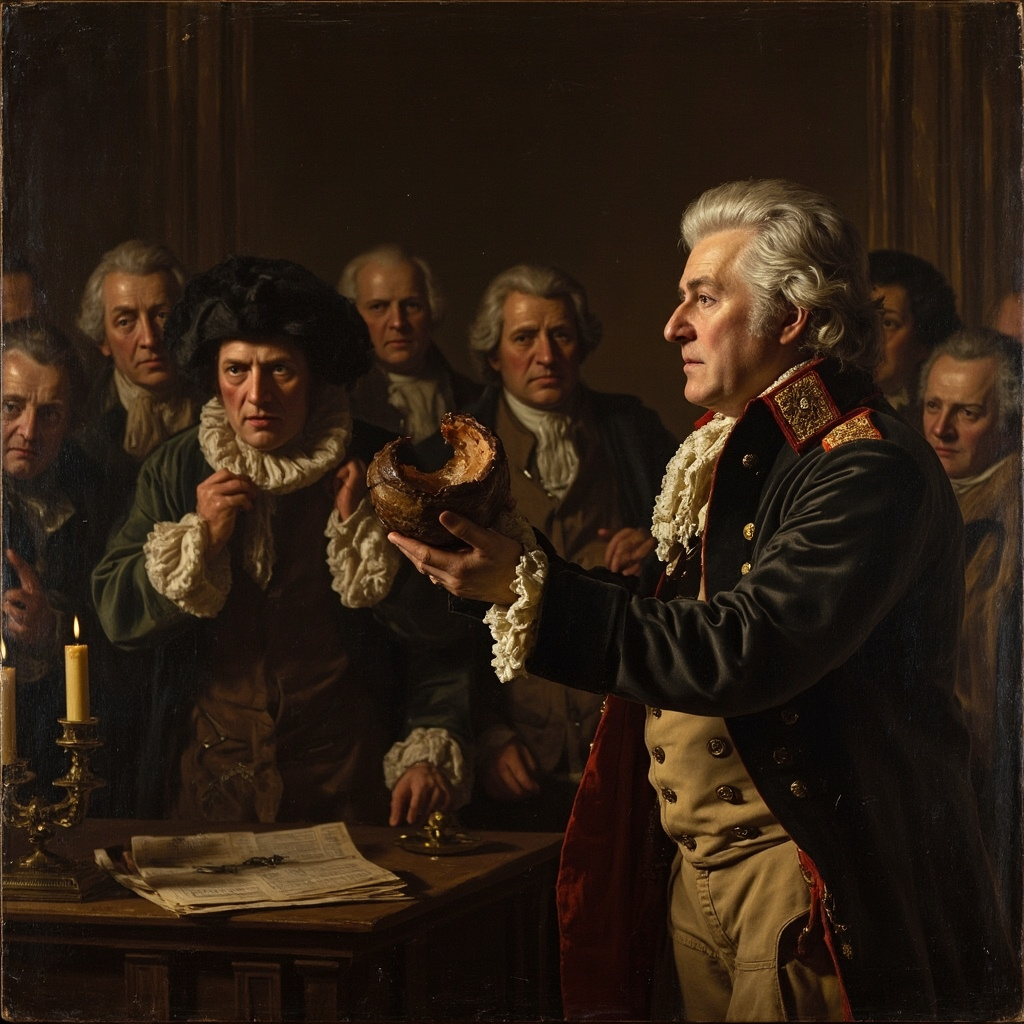
For seven years, this incident remained relatively obscure. However, in 1738, British opposition politicians—eager to undermine Prime Minister Robert Walpole’s peaceful foreign policy—dragged Jenkins before Parliament. In a dramatic performance, Jenkins allegedly produced his preserved ear from the jar and declared that when the Spanish guard cut it off, he had commended his soul to God and his cause to his country.
The Spark That Ignited War
The exhibition of Jenkins’ ear in Parliament was a masterful piece of political theater. The opposition Tories, who wanted war with Spain to expand British trade in the Americas, used the grisly artifact to whip up anti-Spanish sentiment. The incident became a symbol of Spanish arrogance and British humiliation, despite the fact that such searches were legal under the 1729 Treaty of Seville, which allowed Spanish officials to board British ships suspected of smuggling.
The reality was more complex than the propaganda suggested. British merchants had been systematically violating Spanish trade restrictions in the Caribbean, using legal trading licenses as cover for extensive smuggling operations. The Spanish, trying to protect their colonial monopoly, had stepped up enforcement—leading to numerous confrontations at sea.
Vernon’s Early Victories
When war was declared in October 1739, the British public expected quick victories. Admiral Edward Vernon delivered exactly that, capturing the Spanish port of Portobelo (in present-day Panama) in November 1739 with remarkable ease. The victory was so celebrated that the famous song “Rule Britannia” was written to commemorate it, and numerous places in Britain were named after Portobelo.
Vernon’s success led to wild celebrations and the premature minting of commemorative medals showing Spanish defenders surrendering. The ease of the victory convinced British leaders that Spain’s American empire was ripe for conquest.
The Disaster at Cartagena
Emboldened by success, the British assembled one of the largest fleets ever sent to the Americas—186 ships carrying over 27,000 men, including soldiers, sailors, Jamaican slaves, and colonial volunteers from North America. Among these volunteers was Lawrence Washington, older half-brother of future U.S. President George Washington.
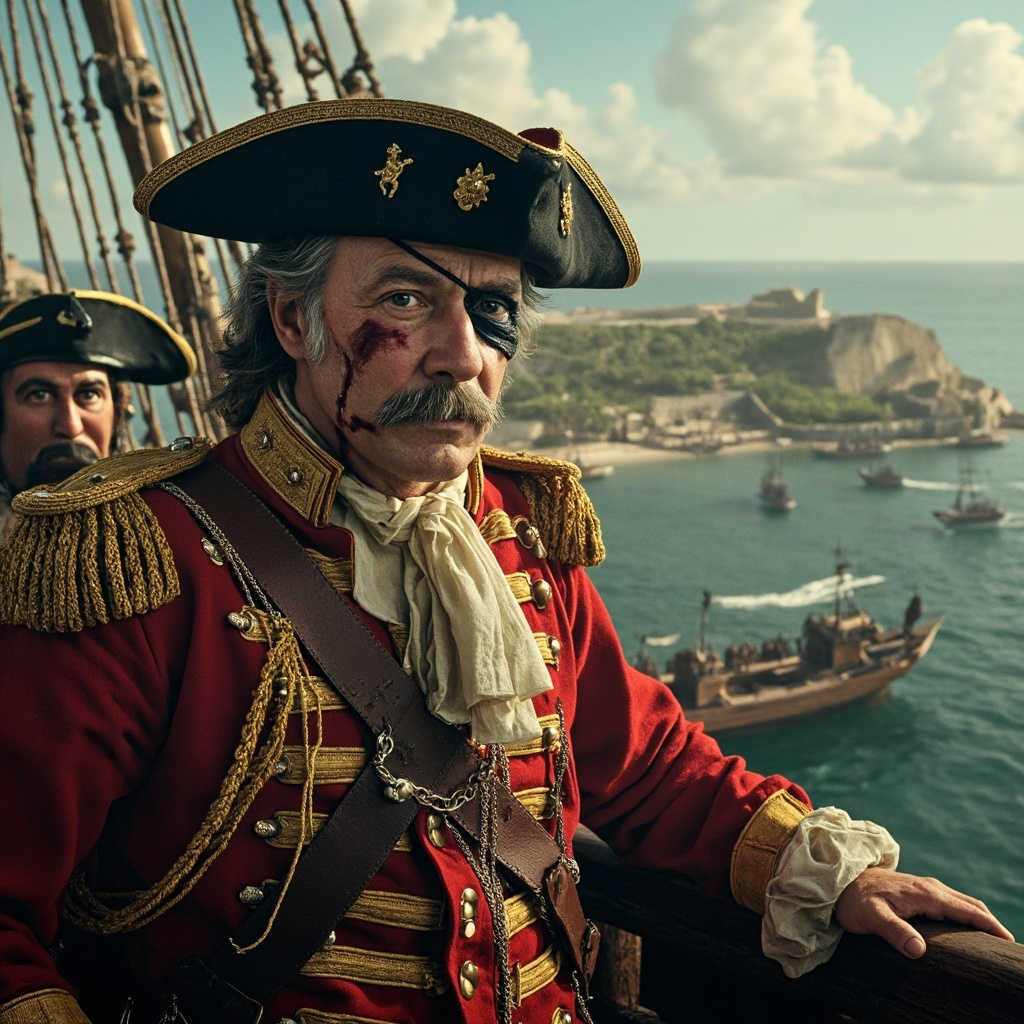
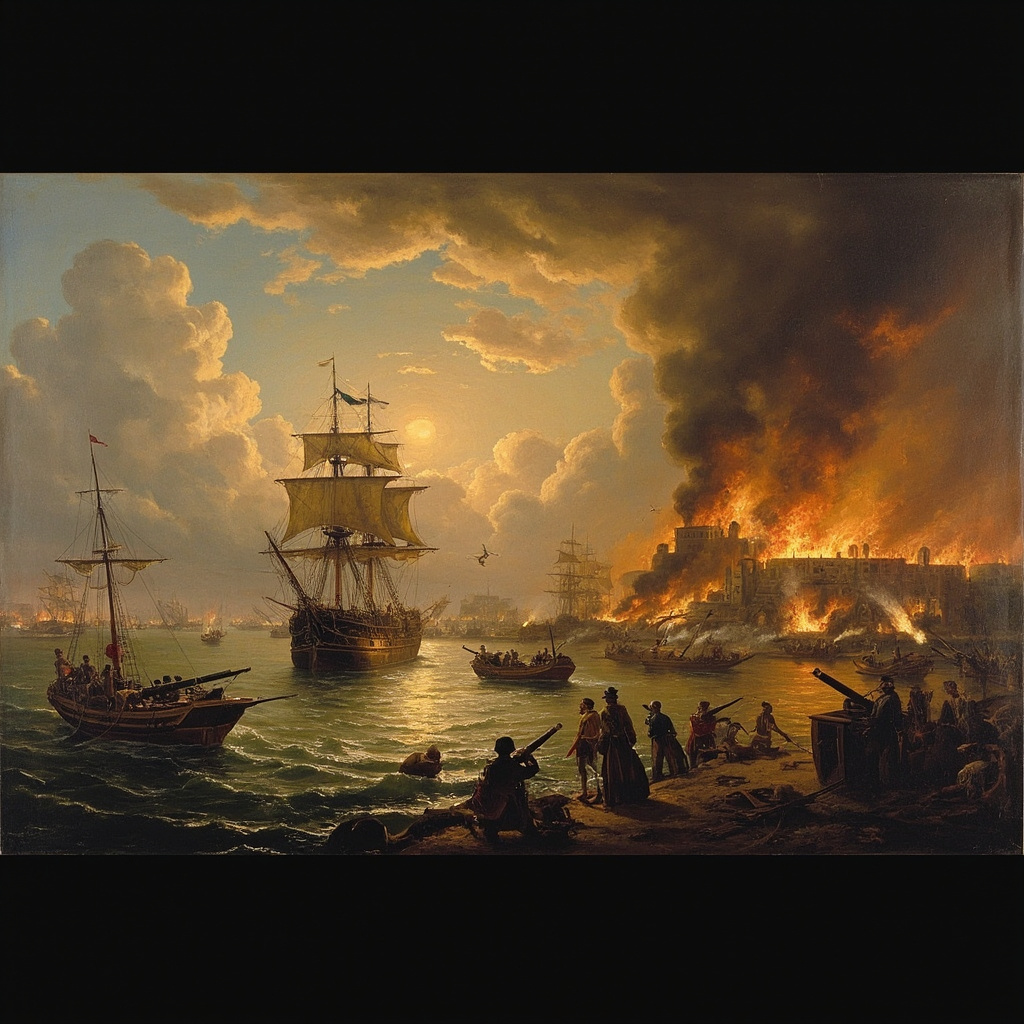
In March 1741, this massive armada attacked Cartagena de Indias (in modern-day Colombia), one of Spain’s most important ports in the Americas. Defending the city was Admiral Blas de Lezo, a remarkable Spanish officer who had lost an eye, a leg, and the use of one arm in previous battles—earning him the nickname “Mediohombre” (Half-man).
Despite being vastly outnumbered, Lezo’s brilliant defense turned the British siege into a catastrophe. The British forces, commanded jointly by Vernon and General Thomas Wentworth (who despised each other), suffered from poor coordination, inadequate supplies, and devastating tropical diseases. Yellow fever and other illnesses killed more British soldiers than Spanish bullets ever would.
After two months of futile attacks, Vernon was forced to withdraw. Of the 27,000 men who had arrived, only about 7,000 were still fit for duty. The Spanish defenders had lost fewer than 1,000 men. News of this disaster helped bring down Prime Minister Walpole’s government and shocked British confidence in their naval supremacy.
The War’s Strange Legacy
The War of Jenkins’ Ear eventually merged with the larger War of the Austrian Succession and formally ended with the Treaty of Aix-la-Chapelle in 1748. Despite nine years of conflict, the treaty restored the status quo—Britain had failed to achieve any of its territorial or trade objectives in Spanish America.
The war left several curious legacies. Lawrence Washington, who survived the yellow fever outbreak at Cartagena, named his Virginia estate Mount Vernon in honor of Admiral Vernon. This estate would later become famous as George Washington’s home. Meanwhile, the South Sea Company, which had held Britain’s trading privileges with Spanish America, quietly ceased operations.
Perhaps most remarkably, the war that began with a severed ear ultimately proved that Spain’s American empire was far more resilient than British politicians had assumed. The treasure fleets continued to sail, the colonies remained Spanish, and Britain’s dreams of Caribbean conquest would have to wait for another day.
The War of Jenkins’ Ear stands as a testament to how the most trivial incidents can escalate into major conflicts when political ambition and national pride are involved. In the end, a preserved ear in a jar of brandy had launched a thousand ships and cost tens of thousands of lives—all for remarkably little strategic gain.
Related Reading
- The Three Hundred and Thirty-Five Years War: The Longest Bloodless Conflict in History
- The War of the Bucket: When Italy Fought a Bloody Battle Over a Wooden Pail