The Man Who Witnessed the Alpha and Omega: How the Civil War Started in Wilmer McLean’s Yard and Ended in His Parlor

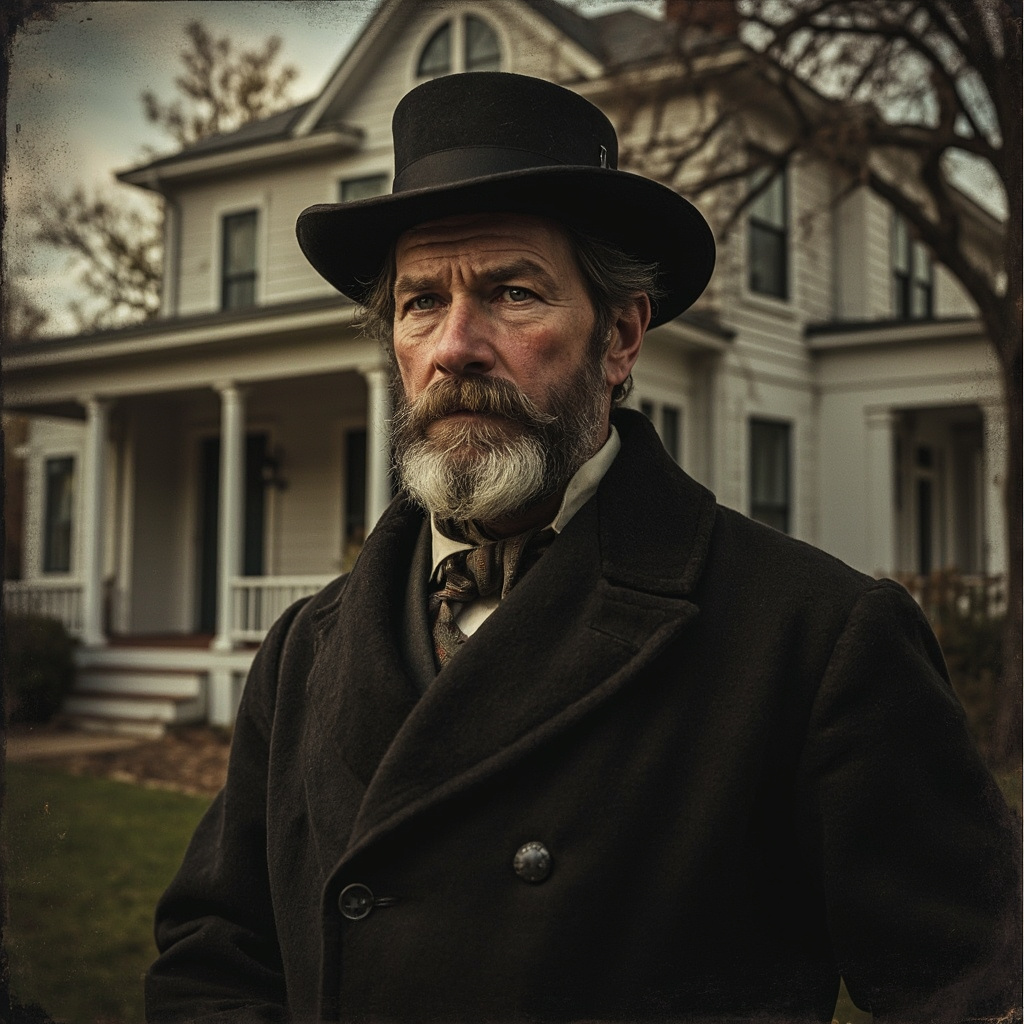
Imagine living through the most defining war in American history, only to discover that fate had chosen your property as both the opening act and final curtain. This was the extraordinary reality for Wilmer McLean, a Virginia grocer who could rightfully claim, “The war began in my front yard and ended in my front parlor.”
McLean’s story represents one of history’s most remarkable coincidences, where a single man became an unwitting bookend to the American Civil War. His experience spans from the first major battle at Bull Run to the surrender at Appomattox Court House, making him perhaps the only civilian to witness both the war’s violent beginning and its peaceful conclusion on his own property.

When War Came to the Kitchen
In July 1861, Wilmer McLean was a prosperous wholesale grocer living at Yorkshire Plantation near Manassas Junction, Virginia. His two-story brick home sat peacefully in the Virginia countryside, complete with a well-maintained yard and outbuildings typical of a successful merchant’s estate.
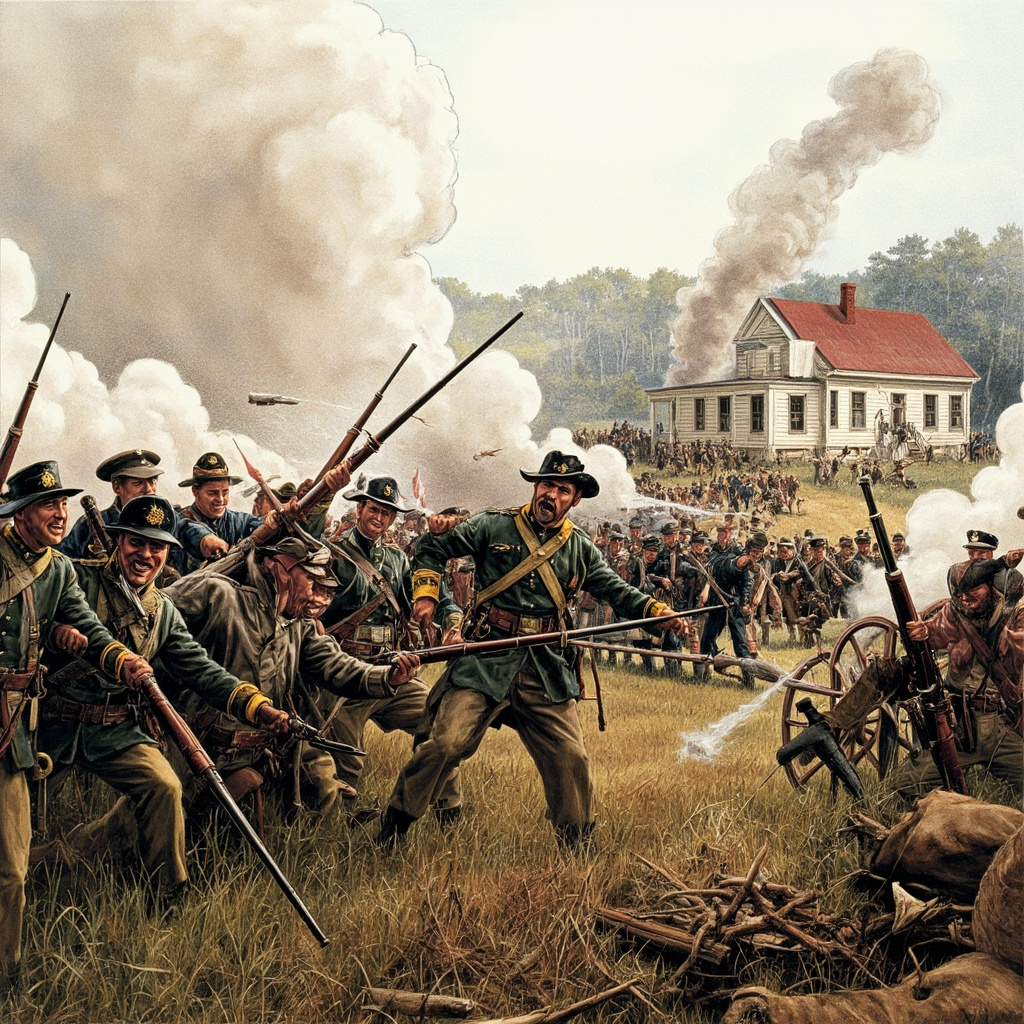
On July 18, 1861, McLean was enjoying breakfast in his kitchen when a cannonball from Union artillery crashed through his fireplace. This wasn’t just an unlucky shot—it marked the opening bombardment of what would become the First Battle of Bull Run, the Civil War’s first major engagement. Great wars often ignite from a single dramatic moment in one place — the Thirty Years’ War began when rebels hurled royal officials out of a Prague window — yet McLean’s land would host both a war’s opening shot and its final surrender.
For the next three days, McLean’s property became ground zero for the conflict that would define America’s future. Confederate General P.G.T. Beauregard established his headquarters in McLean’s house, using the dining room as his command center while coordinating the defense against advancing Union forces.
The battle raged across McLean’s fields and beyond, with soldiers trampling his crops and artillery positions dotting his landscape. When the smoke cleared on July 21, the Confederates had achieved a stunning victory, sending Union troops retreating in panic toward Washington D.C. But for McLean, the victory felt hollow as he surveyed the destruction of his peaceful home.
Seeking Peace in Appomattox
Understandably shaken by having his breakfast interrupted by cannonballs and his home commandeered as a military headquarters, McLean decided he’d had quite enough of war. In 1863, he made a decision that seemed perfectly logical: move his family far away from the fighting.
McLean sold his Manassas property and relocated 120 miles south to the small village of Appomattox Court House, Virginia. The tiny settlement seemed like the perfect refuge—isolated, rural, and far from any strategic military value. What could possibly happen in such an obscure backwater?
For nearly two years, McLean’s gamble paid off. He purchased a comfortable two-story brick home with white columns and established himself in the quiet community. The war seemed mercifully distant as he went about his business, surely convinced he’d made the right choice in seeking safety in this remote corner of Virginia.
April 9, 1865: History Knocks Again
On the morning of April 9, 1865, McLean thought he was facing just another routine day in peaceful Appomattox Court House. By that afternoon, his parlor would host the most consequential meeting in American history.

Confederate Colonel Charles Marshall approached McLean’s home around 1:00 PM, desperately seeking a suitable location where General Robert E. Lee could meet with Union commander Ulysses S. Grant. The Confederate Army of Northern Virginia was surrounded, supplies exhausted, and Lee had decided to surrender rather than see his men slaughtered in a hopeless final battle.
Marshall’s first choice was a dilapidated building, but McLean protested that it wasn’t suitable for such an important meeting. When pressed for an alternative, McLean reluctantly offered his own home. “Perhaps my house will do,” he said, having no idea he was about to host the end of the Civil War.
At approximately 1:30 PM, Lee entered McLean’s parlor, resplendent in his dress uniform with ceremonial sword. Grant arrived shortly after in his muddy field uniform, and the two generals spent about 25 minutes discussing terms. When Lee formally surrendered the Army of Northern Virginia, the Civil War effectively ended in the same modest room where McLean likely read his evening newspaper.
The Price of History
The meeting’s conclusion brought an unexpected consequence for McLean. Union officers, recognizing the historic significance of the moment, began purchasing his furniture as souvenirs. General Philip Sheridan bought McLean’s small wooden table for $20 in gold, intending to present it to General George Custer’s wife. Other officers purchased chairs, candlesticks, and various items, essentially stripping McLean’s parlor bare.
McLean found himself in the surreal position of watching Union officers dismantle his home’s contents while celebrating the war’s end. One can only imagine his thoughts as he witnessed both the beginning and conclusion of America’s bloodiest conflict from his own property.
A Singular Place in History
Wilmer McLean’s experience represents more than mere coincidence—it embodies the random way history touches individual lives. A successful merchant seeking nothing more than a peaceful existence found himself at the epicenter of his nation’s greatest crisis, not once but twice.
When McLean died in 1882, he carried with him memories no other American could claim. As one Union officer noted, McLean was “perhaps the only man who ever had the first major pitched battle of a war fought in his front yard and the surrender signed four years later in his parlor.”
His story serves as a reminder that history often unfolds in the most unexpected places, touching ordinary lives in extraordinary ways. McLean sought to escape war by moving to one of Virginia’s most isolated corners, only to discover that sometimes, you can’t run from destiny—it has a way of following you home.
Today, both of McLean’s homes are preserved as historical sites, bookends to the American Civil War. Visitors can stand in the same rooms where America’s bloodiest conflict began and ended, all thanks to one man’s remarkable—and remarkably unlucky—encounters with history.
Related Reading
More from the archive
- The Three Hundred and Thirty-Five Years War: The Longest Bloodless Conflict in History
- The War of the Bucket: When Italy Fought a Bloody Battle Over a Wooden Pail