The Night Witches — The All-Female Soviet Bomber Regiment That Terrified the Nazis

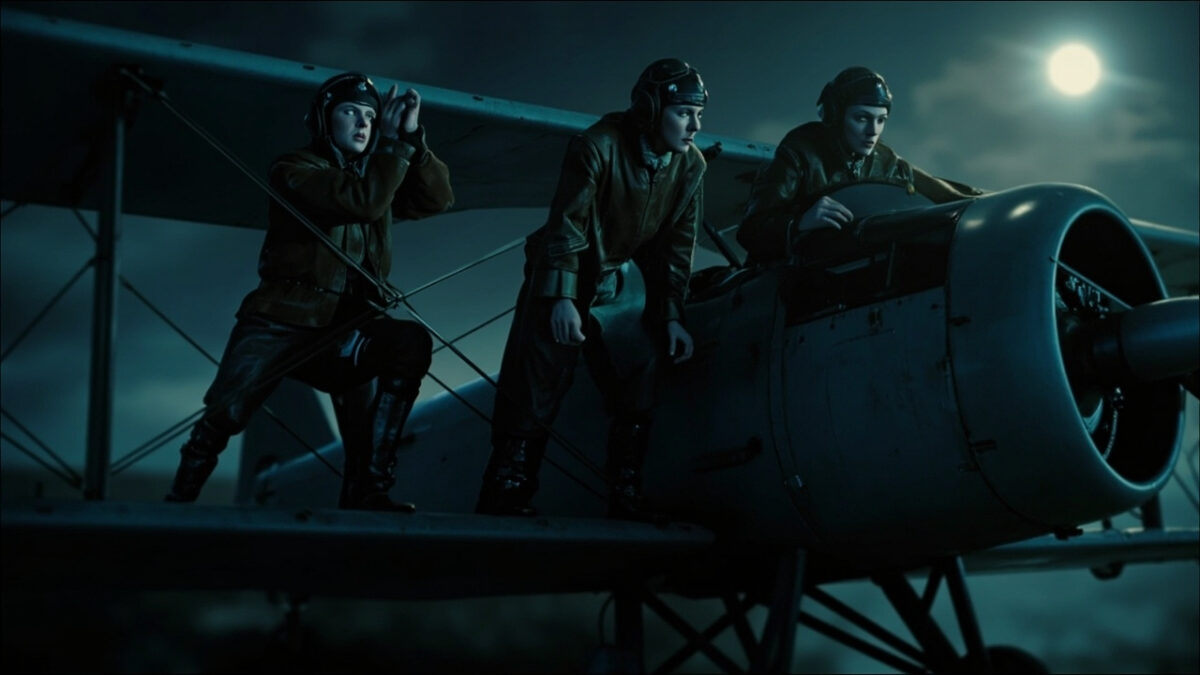
In the summer of 1942, the German soldiers stationed on the Eastern Front began hearing something terrifying in the darkness: the faint buzzing of small aircraft engines, followed by silence, followed by explosions. They called the pilots Nachthexen — the Night Witches.
The pilots of the 588th Night Bomber Regiment were all women. They flew obsolete biplanes made of plywood and canvas. They carried no parachutes, no radar, and no guns. They flew up to 18 missions in a single night. And they became one of the most decorated units in the Soviet Air Force.
This is their story.
Marina Raskova and the Women’s Regiments
The driving force behind the Night Witches was Marina Raskova, often called the “Soviet Amelia Earhart.” Raskova was already a national hero before the war — in 1938, she had set a world record for a nonstop flight from Moscow to the Far East, crash-landing in the Siberian wilderness and surviving ten days in the taiga before being rescued.
When Germany invaded the Soviet Union in June 1941, thousands of Soviet women volunteered for combat. Most were turned away — despite the desperate need for personnel, the military establishment was deeply skeptical of women in combat roles. But Raskova, leveraging her fame and her personal friendship with Joseph Stalin, lobbied relentlessly for the creation of all-female aviation units.
In October 1941, Stalin authorized the formation of three women’s aviation regiments. One of them was the 588th Night Bomber Regiment, which would earn the nickname that made them legends.
The Planes
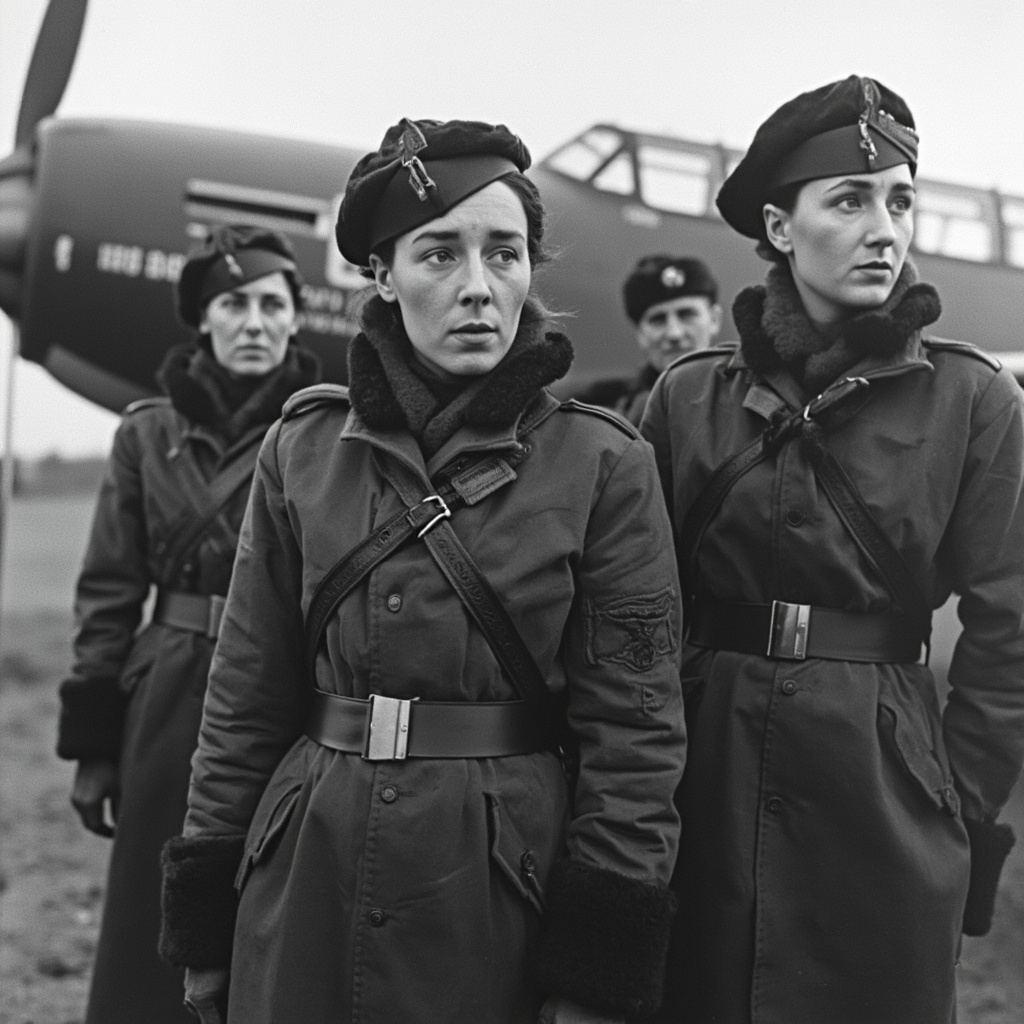
If you’re imagining sleek fighter planes or heavy bombers, think again. The Night Witches flew the Polikarpov Po-2, a biplane originally designed in 1928 as a crop duster and training aircraft. It was made primarily of plywood and canvas. It had an open cockpit. Its maximum speed was about 94 mph — slower than many modern cars.
The Po-2 was so outdated that it couldn’t carry more than two bombs at a time — the same weight as roughly six suitcases. It had no bombsight, so the navigators would use a rudimentary handheld device, or sometimes just eyeball it. There were no radios, no lights, and no guns for defense.
On paper, the Po-2 was a death trap. But it had one crucial advantage: it could fly lower and slower than anything the Germans could throw at it. German fighters, designed for high-speed combat, actually had trouble engaging the Po-2 because they would stall trying to match its slow speed. The Messerschmitt Bf 109, the Luftwaffe’s standard fighter, had a stall speed higher than the Po-2’s maximum speed.
The Po-2 was also incredibly quiet at low throttle. And the Night Witches figured out how to exploit this.
The Tactics
The Night Witches developed a brilliantly terrifying tactic. They would fly toward their target in formation, then cut their engines and glide silently through the darkness toward the target. The only sound the Germans would hear was a soft whistling of wind through the canvas wings — a sound they compared to a broomstick, hence the “witch” nickname.
The navigator in the rear seat would drop the bombs at the last possible moment, and then the pilot would restart the engine and climb away into the darkness. By the time the Germans realized what had happened, the plane was gone.
Typically, three planes would attack together. The first two would approach the target and deliberately attract searchlight beams, drawing anti-aircraft fire while performing evasive maneuvers. The third plane would glide in silently from a different angle and drop its bombs while the defenses were focused elsewhere. Then they would rotate roles and do it again.
Since each plane could only carry two bombs, the pilots had to make multiple runs per night. Individual pilots often flew eight to eighteen missions in a single night, returning to the airfield each time to reload. On busy nights, a pilot might spend eight or more hours in an open cockpit in freezing temperatures, repeatedly flying into enemy anti-aircraft fire.
The Women
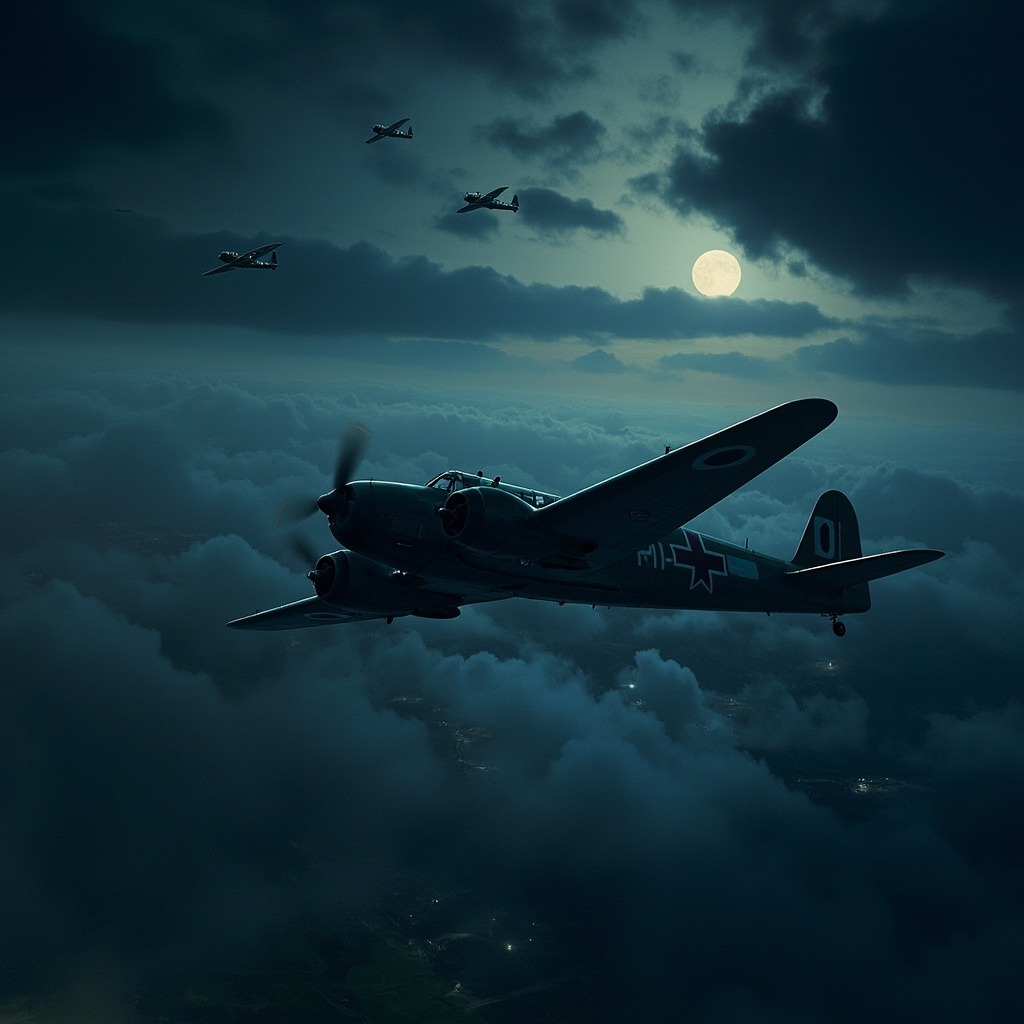
The pilots and navigators of the 588th were remarkably young. Most were in their late teens or early twenties when they joined. Many were university students who had been studying engineering, mathematics, or science when the war interrupted their education.
They were given ill-fitting men’s uniforms and oversized boots that they had to stuff with newspaper. They cut their own hair short and modified their uniforms as best they could. They fashioned navigation tools from whatever was available. They used pencils to draw on makeup.
Despite the primitive conditions, they maintained fierce discipline and extraordinary camaraderie. The regiment was entirely female — pilots, navigators, mechanics, armament loaders, and officers were all women. They maintained their own aircraft, loaded their own bombs, and planned their own missions.
Among the most famous Night Witches were:
- Nadezhda Popova — who flew 852 missions over the course of the war and was shot down multiple times. On one occasion, she counted 42 bullet holes in her plane after a mission. She later said: “I sometimes stare into the blackness and close my eyes. I can still imagine myself as a young girl, up there in my little bomber. And I ask myself, ‘Nadia, how did you do it?'”
- Yevdokia Bershanskaya — the regiment’s commander for its entire existence, the only woman to receive the Order of Suvorov, a prestigious military decoration.
- Yevdokia Nosal — one of the first Night Witches to be killed in action, struck in the head by a flak fragment. Her navigator managed to land the plane safely with Nosal’s body still in the pilot’s seat.
The German Perspective
The Germans hated the Night Witches. The constant nighttime harassment was devastating to morale. Soldiers couldn’t sleep. The bombing, while individually small in scale, was psychologically relentless.
So much did the Luftwaffe fear and respect the Night Witches that any German pilot who shot one down was automatically awarded the Iron Cross — one of Germany’s highest military decorations. This was not standard practice for shooting down a wooden biplane, and it speaks to just how effective the regiment was.
The nickname Nachthexen — Night Witches — was meant to be derogatory, implying something unnatural and frightening about women fighting in combat. The women of the 588th embraced it with pride.
The Numbers
Over the course of the war, the 588th Night Bomber Regiment flew more than 23,000 combat sorties and dropped over 3,000 tons of bombs. They flew every single night from 1942 to the end of the war in 1945, weather permitting.
Thirty of the regiment’s members were killed in action. Twenty-three of its members were awarded the title Hero of the Soviet Union, the highest distinction in the USSR. The regiment itself received the Guards designation, becoming the 46th Guards Night Bomber Aviation Regiment — an elite honor.
They were among the most decorated units in the entire Soviet military, and they achieved this with plywood biplanes, no parachutes, and hand-dropped bombs.
After the War
When the war ended, the women’s regiments were disbanded. Most of the surviving Night Witches returned to civilian life — becoming engineers, teachers, doctors, and professors. Many found that the same society that had celebrated their wartime heroism was less enthusiastic about women in peacetime leadership roles.
For decades, the Night Witches received relatively little recognition compared to their male counterparts. It wasn’t until the post-Soviet era that their story began to receive the widespread attention it deserved.
Nadezhda Popova, perhaps the most famous Night Witch, lived until 2013, dying at the age of 91. In her later years, she became an eloquent spokesperson for the regiment’s legacy, speaking about the war with a mix of pride, sorrow, and dark humor that perfectly captured the Night Witches’ spirit.
“We were young and patriotic,” she once said. “We didn’t think about dying. We just wanted to fight for our country.”
The Night Witches’ story is ultimately one of extraordinary courage in the face of impossible odds. Armed with the worst equipment, fighting in the worst conditions, these young women proved that bravery, ingenuity, and sheer determination could overcome any disadvantage. They took a crop duster into combat and terrorized one of the most powerful militaries in history.
Not bad for a bunch of witches on broomsticks.