The London Beer Flood of 1814: When a Tsunami of Porter Killed Eight People

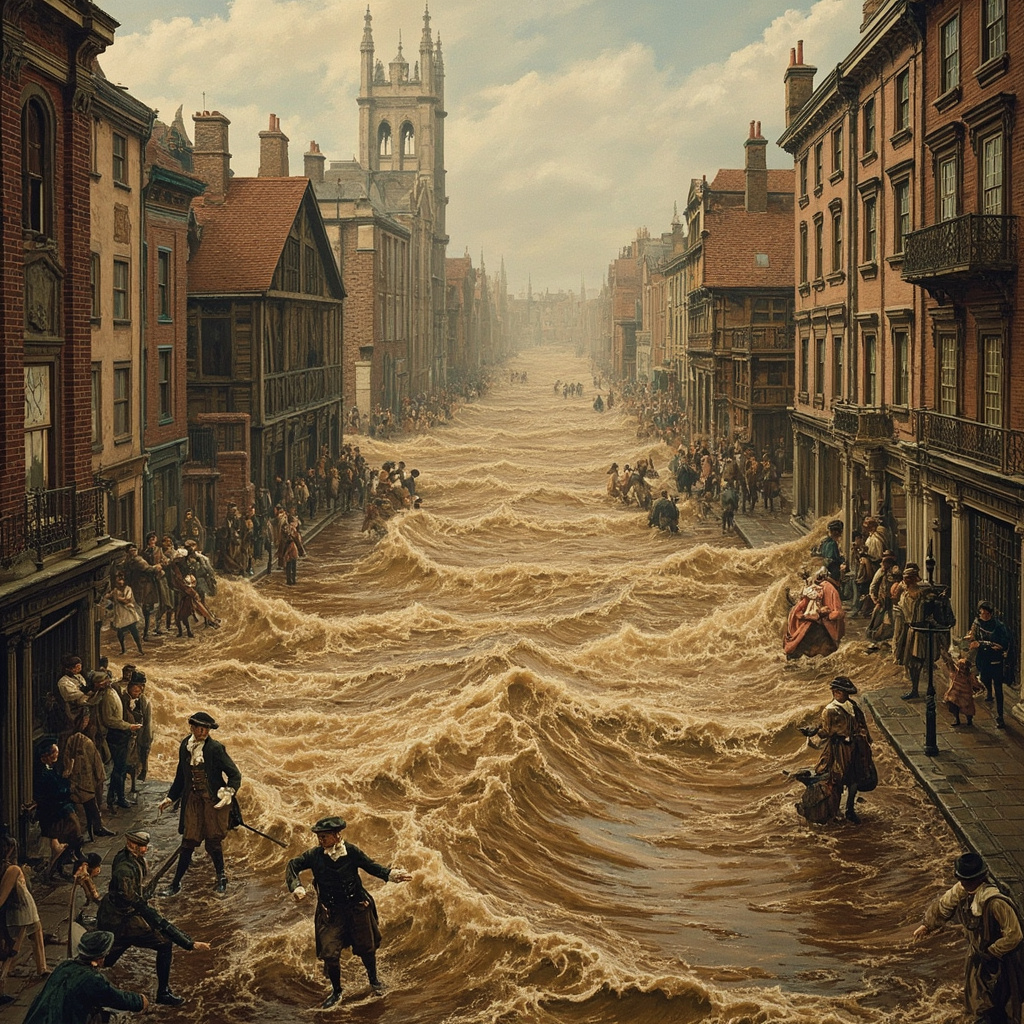
On the afternoon of October 17, 1814, one of history’s most bizarre industrial disasters struck London when a massive brewery tank burst, unleashing a deadly tsunami of beer through the streets. The London Beer Flood would claim eight lives and leave a trail of destruction that seemed almost too strange to believe.

The Horse Shoe Brewery

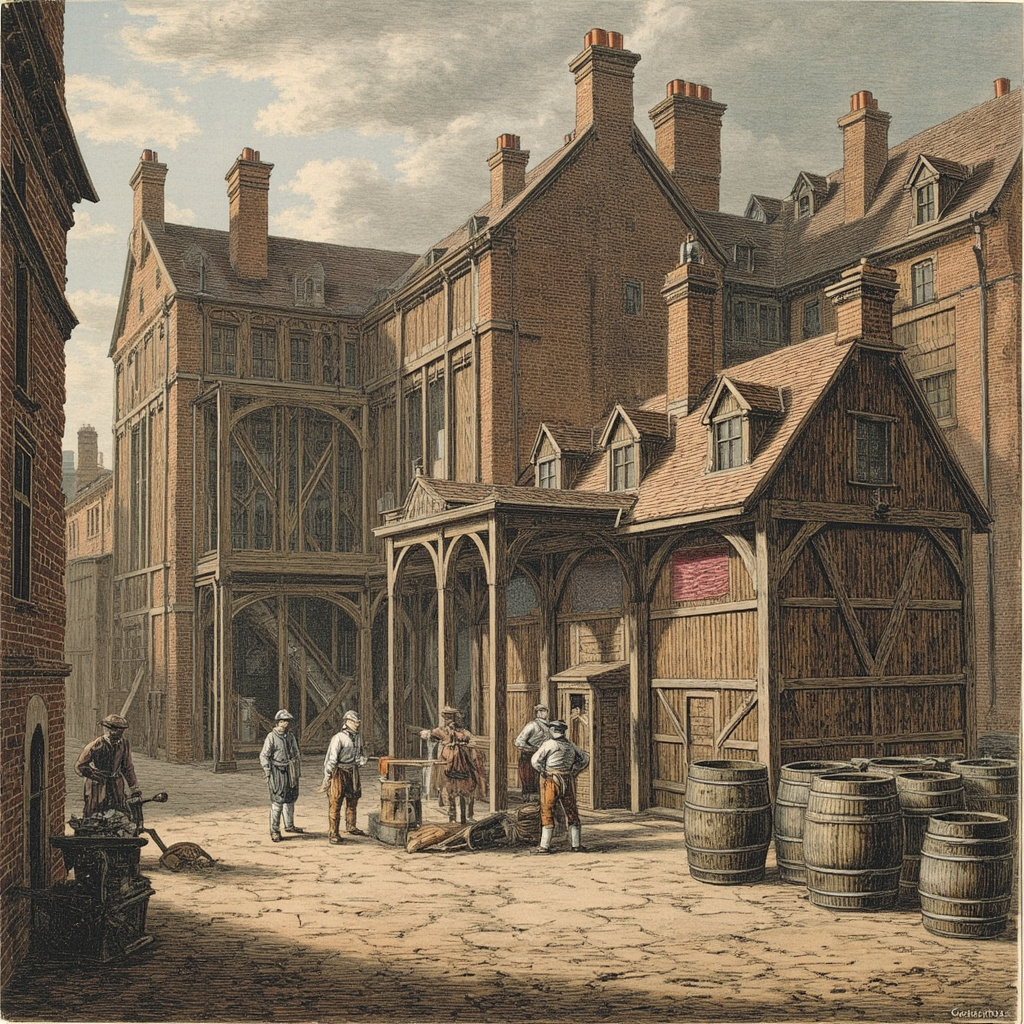
At the corner of Great Russell Street and Tottenham Court Road stood the Horse Shoe Brewery, owned by Meux and Company. In 1810, the brewery had installed a massive wooden fermentation tank that towered 22 feet high and held the equivalent of over 3,500 barrels of brown porter ale—a beer not unlike modern stout. The enormous vat was held together by massive iron rings, containing approximately 388,000 gallons of fermenting beer.

The London Beer Flood of 1814 — context image

The Horse Shoe Brewery in 1814

The sheer size of these fermentation vessels was a marvel of industrial brewing technology. The wooden staves were under enormous pressure from the fermenting liquid within, making the iron binding rings absolutely critical to the structure’s integrity.

The Catastrophic Failure

On that fateful Monday afternoon, one of the massive iron rings around the tank suddenly snapped. For about an hour, brewery workers noticed the problem but underestimated the danger. Then, without warning, the entire tank ruptured with explosive force.

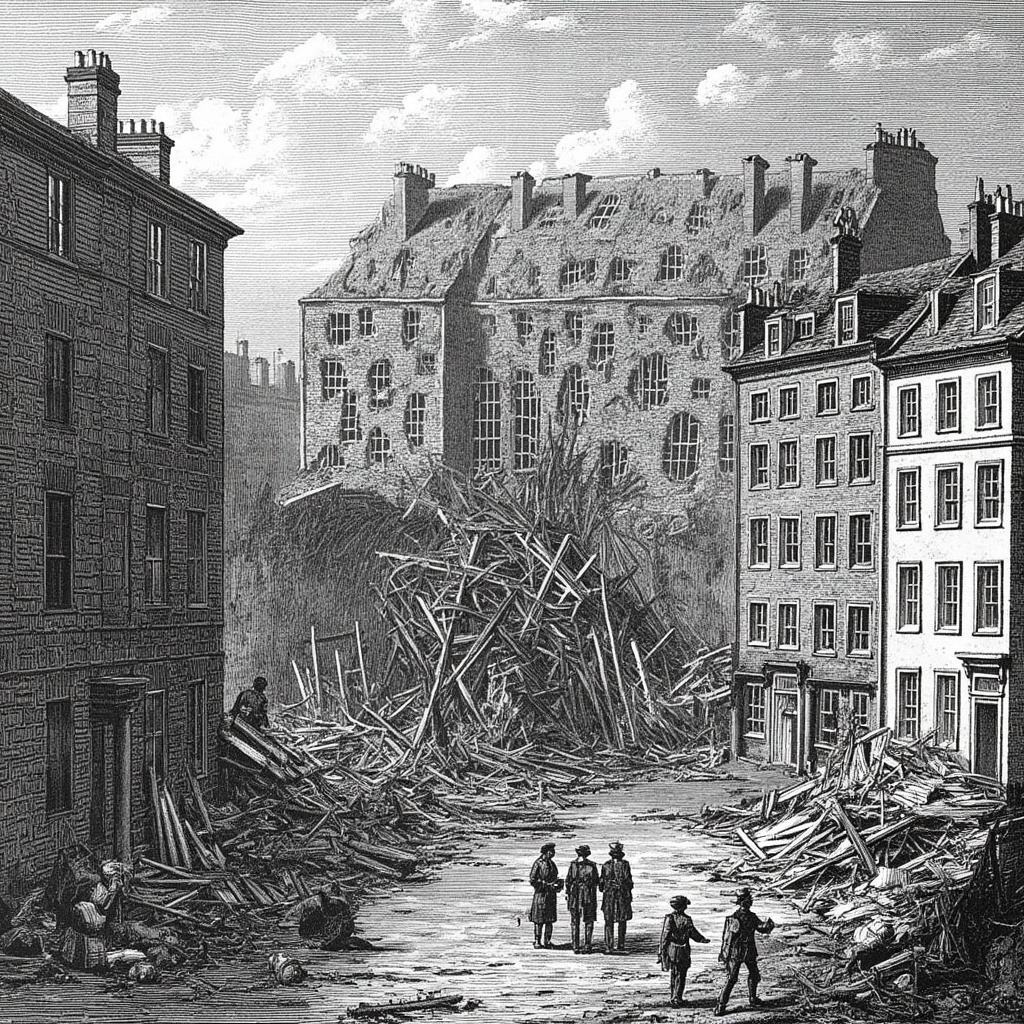
The hot, fermenting ale burst forth like a tidal wave, hitting the back wall of the brewery with such violence that it collapsed entirely. The force of the escaping beer was so tremendous that it blasted open several other large vats, adding their contents to the growing flood. In total, more than 320,000 gallons of beer poured into the surrounding streets.

Death in St. Giles

The beer tsunami struck the St. Giles Rookery, a densely populated slum filled with cheap housing, tenements, and London’s poorest residents. The neighborhood was home to destitute families, prostitutes, criminals, and others living on society’s margins.
Aftermath of the London Beer Flood

The 15-foot-high wave of beer and debris crashed through George Street and New Street within minutes. The force inundated the basements of two houses, causing them to collapse entirely. In one house, Mary Banfield and her daughter Hannah were taking afternoon tea when the flood struck—both were killed instantly.

In the basement of another house, tragedy struck during an Irish wake. Four mourners had gathered to pay respects to a two-year-old boy who had died the previous day. All four were killed when the beer flood destroyed their shelter. The wave also demolished a wall of the Tavistock Arms pub, trapping teenage barmaid Eleanor Cooper in the rubble.

The Grisly Aftermath

Eight people died in the disaster, but the story doesn’t end with the immediate casualties. The sudden availability of “free” beer led hundreds of people to rush into the streets with buckets, pots, and any containers they could find to collect the alcohol. Some simply drank directly from the beer-soaked streets.

Reports later emerged of a ninth victim who died several days after the flood from alcohol poisoning, having consumed too much of the free beer. The macabre scenes continued when some families displayed the corpses of victims for money, creating ghoulish exhibitions. In one house, the weight of visitors coming to view the bodies caused the floor to collapse, plunging everyone waist-deep into the beer-flooded cellar below.

Legal and Financial Consequences

The brewery faced massive costs from the disaster—approximately £23,000 (roughly £1.25 million in today’s money). However, when the case went to court, the disaster was ruled to be an “Act of God,” leaving no one legally responsible for the deaths and destruction.

Remarkably, the brewery was able to reclaim the excise duty they had paid on the beer, which saved them from bankruptcy. They also received £7,250 (about £400,000 today) as compensation for the lost beer barrels.

Lasting Impact

The stench of beer lingered in the St. Giles area for months after the flood. More importantly, the disaster led to significant changes in brewery safety practices. Wooden fermentation casks began to be phased out in favor of lined concrete vats, which were much safer and less prone to catastrophic failure.

The Horse Shoe Brewery itself was eventually demolished in 1922. Today, the Dominion Theatre sits partly on the site where one of history’s strangest disasters unfolded—a reminder that even the most ordinary substances can become deadly under the right circumstances.

The London Beer Flood stands as one of the most unusual industrial disasters in history, a perfect storm of poor engineering, unfortunate timing, and tragic circumstances that created a day when London literally drowned in beer.
Related Reading

The Tunguska Event: When a Mystery Explosion Flattened 830 Square Miles of Siberian Forest

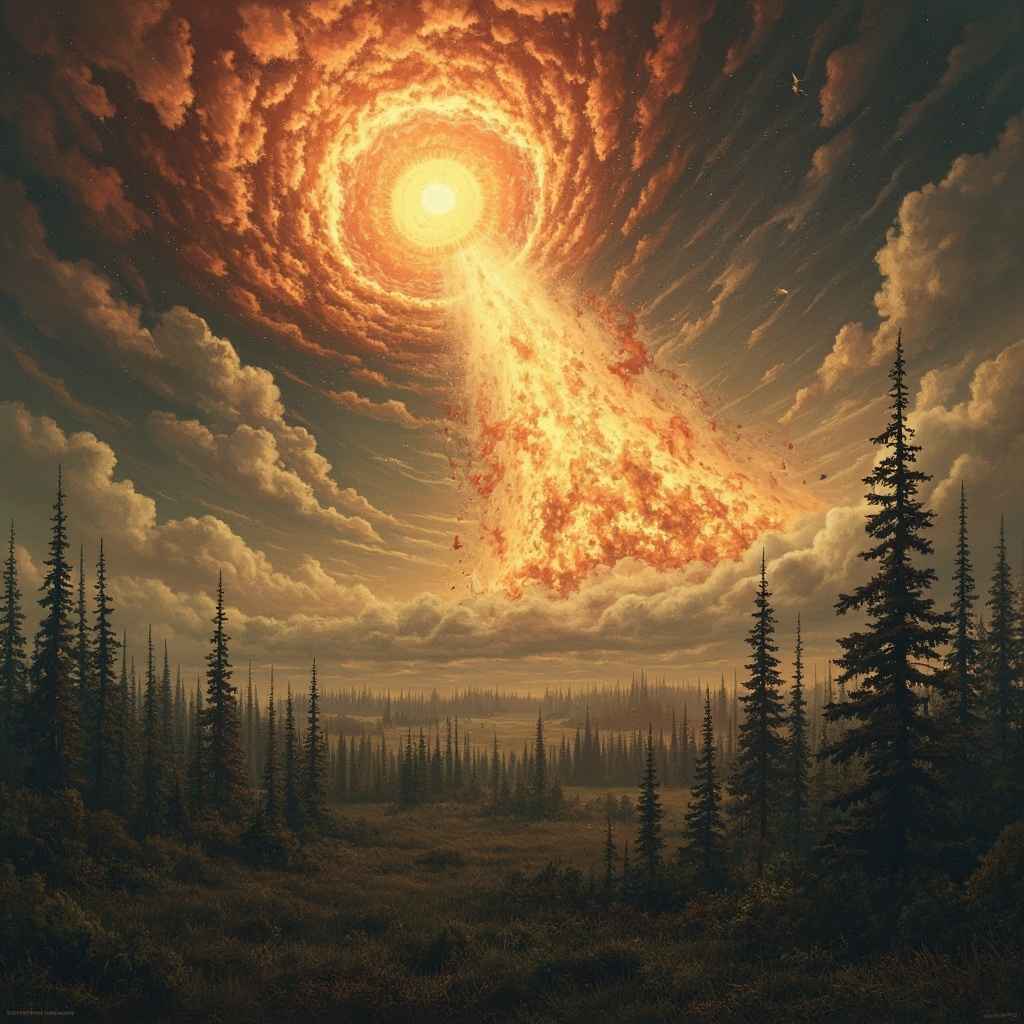
On June 30, 1908, at precisely 7:15 AM local time, something extraordinary happened in one of the most remote corners of Siberia. A massive explosion occurred in the skies above the Tunguska River, flattening over 830 square miles of pristine forest and creating one of history’s most enduring mysteries.

The few Evenki reindeer herders who witnessed the event described seeing a brilliant fireball trailing smoke across the morning sky, followed by a flash brighter than the Sun itself. The thunderous roar that followed was heard hundreds of miles away, and those closest to the blast reported being knocked unconscious and thrown through the air by the shockwave.

The Tunguska Event — context image

The Devastating Power of the Unknown

What makes the Tunguska Event so remarkable isn’t just its scale, but the complete absence of a crater. The explosion, estimated to have occurred about 6 miles above the Earth’s surface, released energy equivalent to 1,000 times the atomic bomb dropped on Hiroshima. Yet when scientists finally reached the site decades later, they found no meteorite fragments, no crater—just an apocalyptic scene of destruction.

Scientists examining the flattened Tunguska forest

Seismic instruments across Russia detected tremors from the blast, and the atmospheric disturbance was so significant that it was recorded by monitoring stations as far away as England. In the immediate area, an estimated 80 million trees were knocked down in a distinctive radial pattern extending outward from the blast’s epicenter.

The Long Wait for Science

Perhaps most frustrating for modern researchers is that no scientific expedition reached the Tunguska site for nearly two decades. The remote location, World War I, the Russian Revolution, and subsequent civil war all conspired to delay investigation of what may have been the most significant cosmic impact event in recorded history.

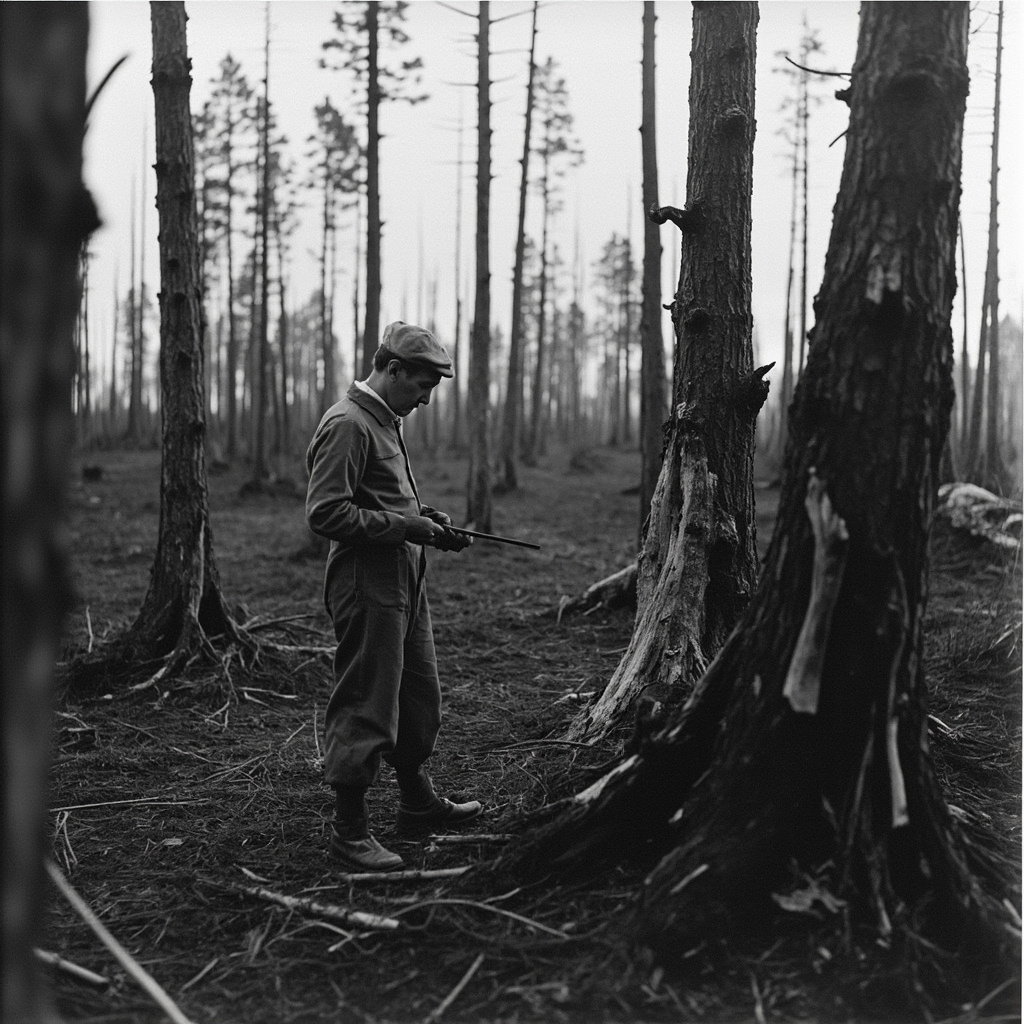
When Soviet geologist Leonid Kulik finally reached the site in 1927—19 years after the event—he was astounded by what he found. Despite nearly two decades having passed, the devastation remained clearly visible. Trees near the epicenter stood like ghostly sentinels, stripped of bark and branches but somehow still upright, while millions of other trees lay flattened in all directions.

A Pattern Written in Destruction

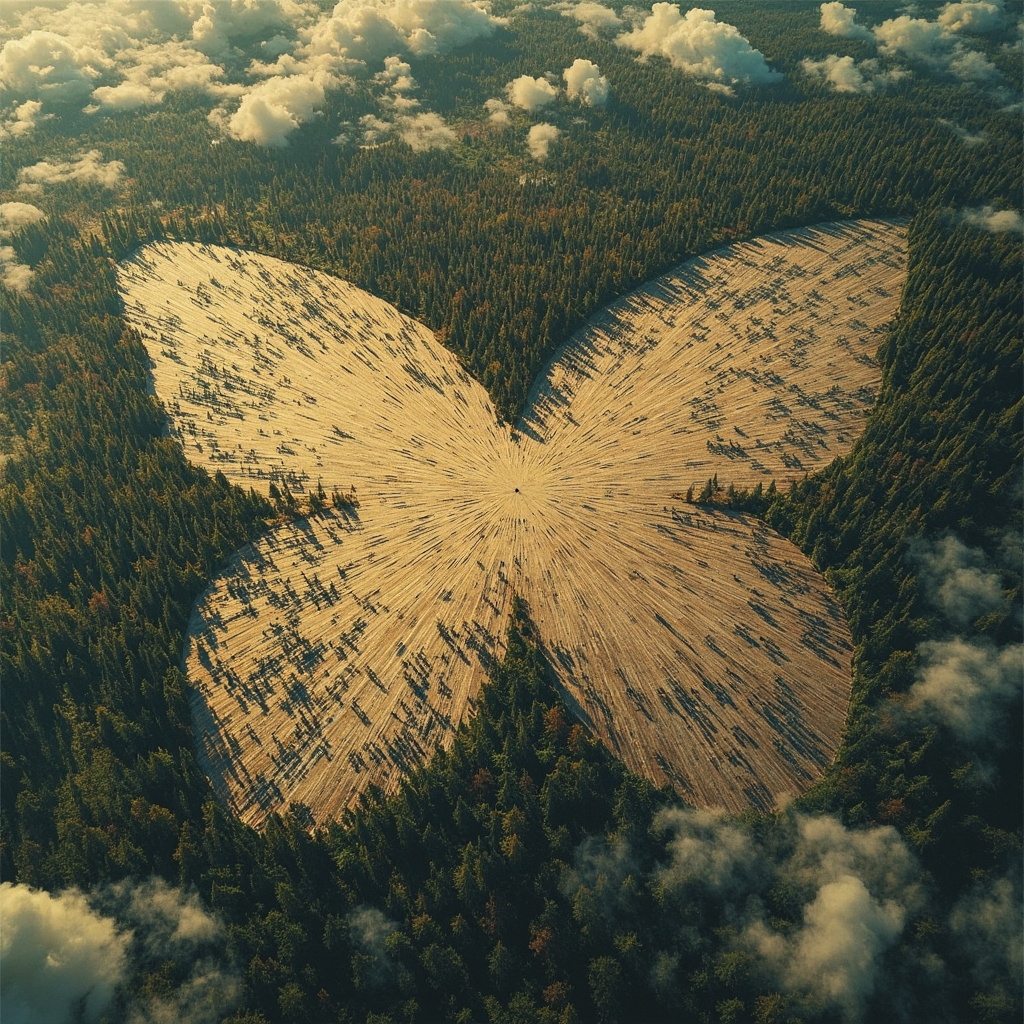
Later aerial surveys revealed the true scope of the destruction: a butterfly-shaped pattern of devastation that told the story of the explosion’s path through the atmosphere. The pattern showed that the object had approached from the southeast at an angle of approximately 30 degrees before exploding above the forest.

Diagram showing the butterfly-shaped destruction pattern of the Tunguska Event

Modern scientists believe the Tunguska Event was caused by an asteroid roughly 130 feet in diameter that completely disintegrated in Earth’s atmosphere before reaching the ground. This explains the absence of a crater and meteorite fragments—the object essentially vaporized, releasing all its energy as an airburst explosion.

The Lucky Coincidence

In a stroke of cosmic fortune, the Tunguska explosion occurred over one of the most sparsely populated regions on Earth. Had the same asteroid arrived just four hours and 47 minutes later, Earth’s rotation would have positioned St. Petersburg, then the capital of Imperial Russia, directly in the blast’s path. Instead of flattening empty forest, the explosion would have obliterated a city of 1.7 million people.

Legacy of the Siberian Mystery

The Tunguska Event fundamentally changed how scientists think about cosmic threats to Earth. It demonstrated that even relatively small asteroids could cause catastrophic regional damage and highlighted the importance of monitoring near-Earth objects. Today, NASA’s Planetary Defense Coordination Office and missions like DART (Double Asteroid Redirection Test) trace their origins back to lessons learned from that morning in Siberia over a century ago.

While the mystery of Tunguska has largely been solved through decades of scientific investigation, it remains a powerful reminder of our planet’s vulnerability to cosmic impacts. The flattened forest has long since regrown, but the story of that June morning continues to fascinate researchers and the public alike—a testament to one of nature’s most spectacular and fortunate near-misses in recorded history.

Related Reading

The Erfurt Latrine Disaster: When 60 Nobles Met Their End in Medieval Germany’s Most Bizarre Tragedy

In the annals of history, few disasters are as simultaneously tragic and absurd as the Erfurt Latrine Disaster of 1184. What should have been a routine royal assembly in medieval Germany instead became one of the most unusual mass casualties in European history, when approximately sixty nobles plummeted to their deaths through a collapsing floor—directly into a latrine cesspit below.

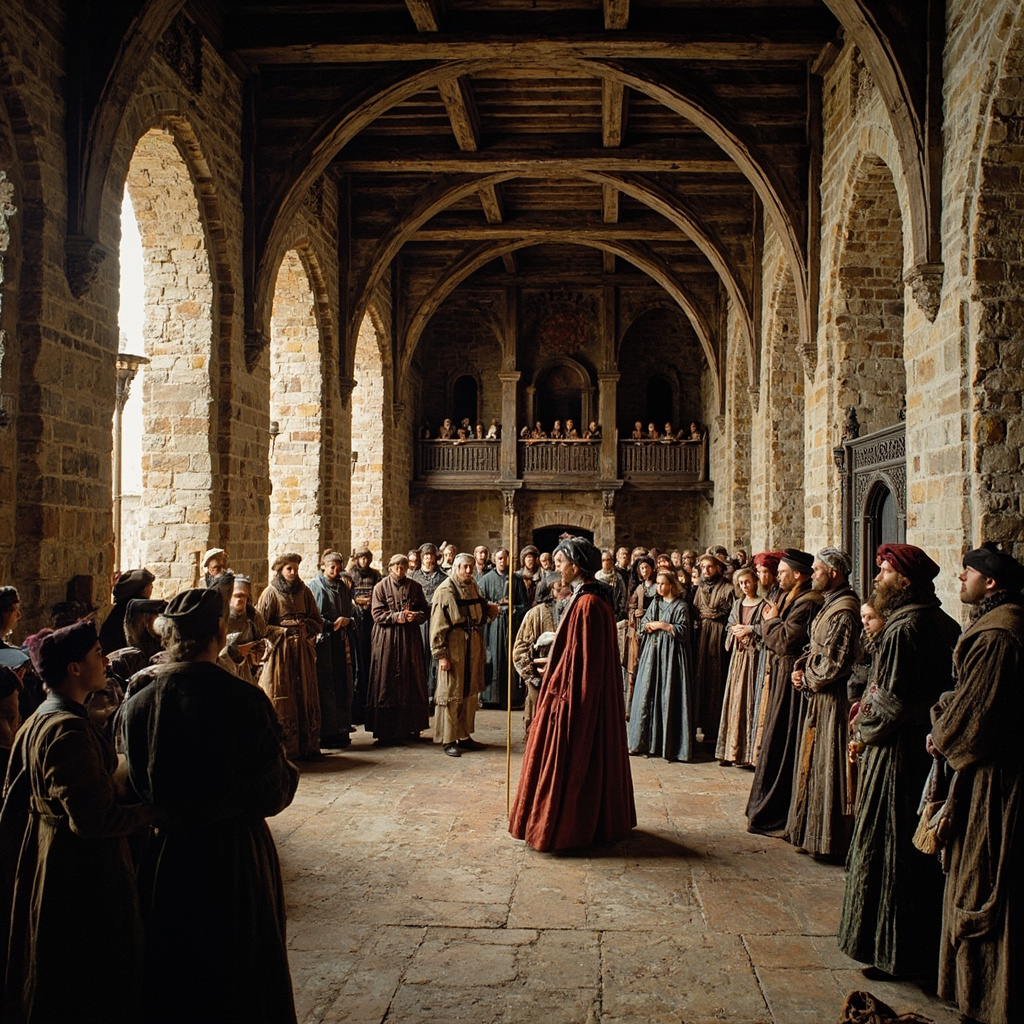
Medieval royal assembly at Erfurt

The Erfurt Latrine Disaster — context image

The Fatal Assembly

On July 26, 1184, King Henry VI of Germany convened a Hoftag (court day) in the German city of Erfurt, located in what was then part of the Holy Roman Empire. The assembly was held within the Petersberg citadel, a fortified complex that served as both a religious center and administrative hub. Noble lords, church officials, and prominent citizens gathered to discuss matters of state and regional governance.

The meeting took place in a grand hall on the second floor of the building. As was typical for medieval architecture, the structure featured wooden floors supported by timber beams. Directly below this assembly hall lay the building’s latrine facilities—essentially a large cesspit used for waste disposal.

The Catastrophic Collapse

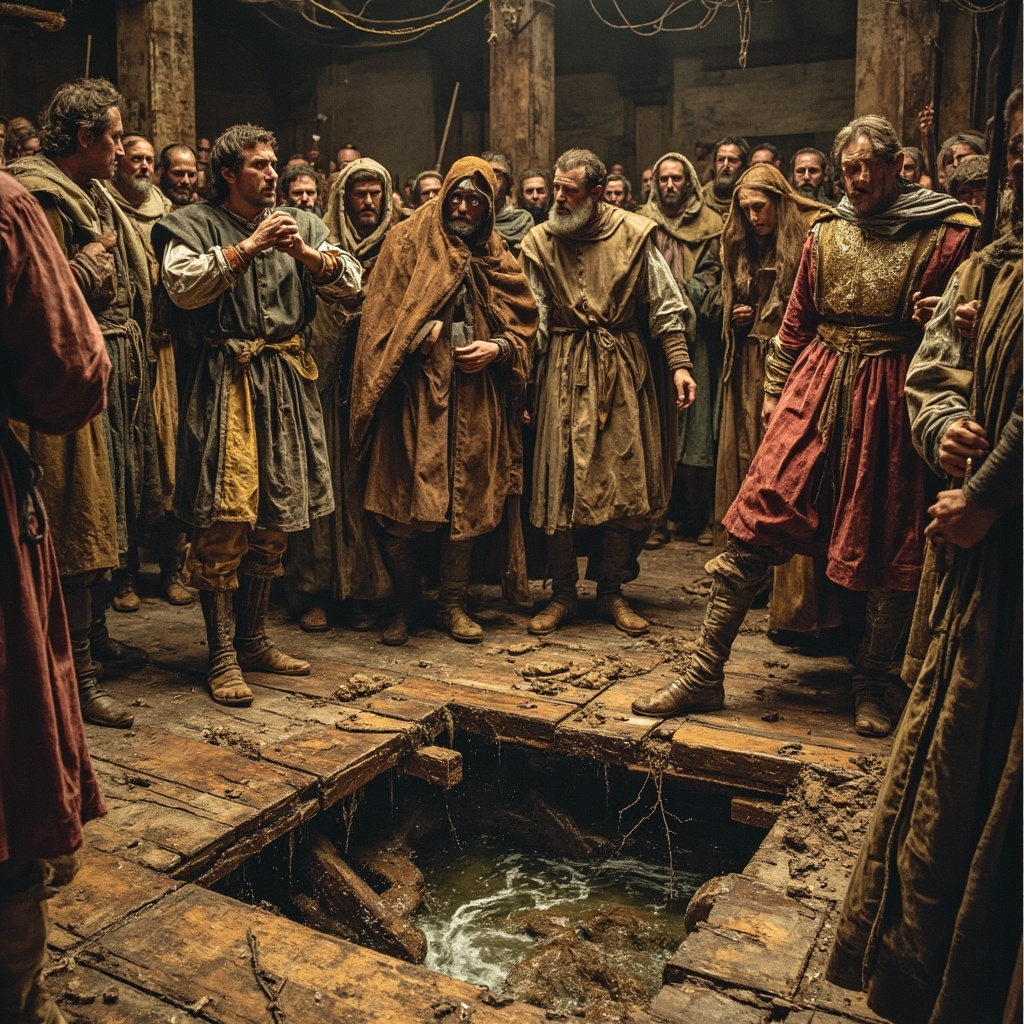
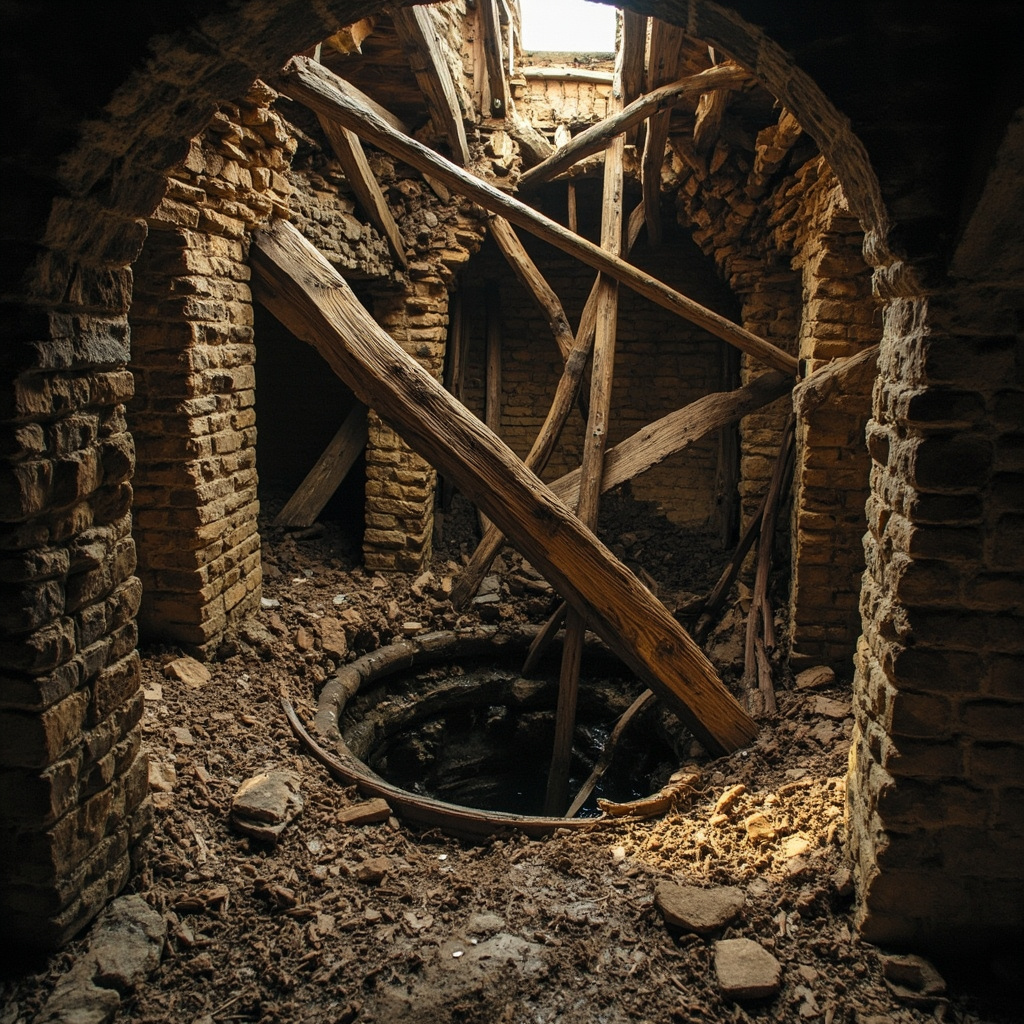
As the assembly proceeded, the combined weight of dozens of nobles, their retinues, and furnishings proved too much for the aging wooden floor. Without warning, the entire structure gave way, sending the gathered dignitaries crashing through the floor and plummeting into the sewage pit below.

Contemporary chronicles describe the scene as horrific. Those who survived the initial fall found themselves trapped in a deep cesspit filled with human waste, struggling to stay afloat in the putrid conditions. The lucky few who managed to avoid the collapse or climb out faced the grim task of attempting rescues in the most unsanitary circumstances imaginable.

Aftermath of the latrine disaster

The Royal Exception

Remarkably, King Henry VI himself survived the disaster. Historical accounts suggest he was positioned in a part of the hall that remained structurally sound, possibly near a stone wall or on a section supported by stronger beams. This stroke of fortune likely changed the course of European history, as Henry would later become Holy Roman Emperor and play a crucial role in the politics of his era.

Medieval Sanitation and Architecture

The Erfurt disaster highlights the precarious nature of medieval urban planning and sanitation systems. In the 12th century, waste disposal was a constant challenge in growing cities. Buildings often featured communal latrines positioned over pits, streams, or even moats. The proximity of these facilities to living and meeting spaces, while practical for daily use, created obvious structural and health hazards.

Wooden construction, while common and cost-effective, was particularly vulnerable to rot, insect damage, and structural failure over time. The combination of heavy loads, poor ventilation, and the corrosive effects of waste gases likely weakened the floor supports at Erfurt over many years before the final collapse.

Historical Impact and Legacy

Beyond its immediate tragedy, the Erfurt Latrine Disaster had significant political ramifications. The deaths of so many local nobles created a power vacuum in the region, leading to succession disputes and political instability. King Henry VI had to navigate these challenges while consolidating his authority in the affected territories.

The event also became a cautionary tale about medieval construction practices and urban planning. While building codes as we know them didn’t exist, the disaster likely influenced subsequent architectural decisions in German cities, leading to more careful consideration of structural load-bearing capacity and waste management systems.

A Lesson in Historical Perspective

The Erfurt Latrine Disaster serves as a stark reminder that history is full of unexpected turns that can seem almost comical from our modern perspective, yet were undeniably tragic for those involved. It illustrates how technological limitations, combined with practical necessities, could create dangerous situations that seem obvious in hindsight but were simply part of daily medieval life.

This bizarre chapter in German history demonstrates that even the most mundane aspects of daily life—in this case, waste disposal—could become the stage for significant historical events. The sixty nobles who perished in that Erfurt cesspit became unwitting participants in one of history’s most unusual disasters, a reminder that fate can strike in the most unexpected and undignified ways.

Today, the site of the Petersberg citadel still stands in Erfurt, though the specific building where the disaster occurred no longer exists. The event remains a fascinating footnote in medieval German history—a tale that perfectly encapsulates the unpredictable, often absurd nature of human experience throughout the ages.

Related Reading

The Year Without Summer: When Snow Fell in July and Changed History Forever

Imagine stepping outside for a summer picnic in July 1816, only to be greeted by falling snow and temperatures so cold that crops froze in the fields. This wasn’t science fiction—it was reality for millions of people across the Northern Hemisphere during what became known as the “Year Without a Summer.”

The bizarre weather phenomenon that turned 1816 into a climatic nightmare wasn’t caused by any earthly event Americans could see or understand. The culprit lay halfway around the world: a massive volcanic eruption in Indonesia that had occurred the previous year, with effects so far-reaching that they fundamentally changed global weather patterns for an entire year.

The Monster Eruption Nobody Saw Coming

On April 10, 1815, Mount Tambora in Indonesia erupted with the force of approximately 80,000 Hiroshima bombs. The explosion was so violent that it could be heard 1,200 miles away, and the ash column reached an estimated height of 28 miles into the atmosphere—well into the stratosphere.

The eruption killed approximately 71,000 people directly, but that was only the beginning. The real devastation came from what scientists now call “volcanic winter”—a global climate anomaly caused by massive amounts of volcanic ash and sulfur dioxide blocking sunlight across the planet.

Mount Tambora ejected an estimated 38 cubic miles of material into the atmosphere. To put this in perspective, that’s enough debris to bury the entire state of Rhode Island under 10 feet of volcanic material. The sulfur dioxide formed sulfuric acid aerosols in the stratosphere, creating a persistent haze that reflected sunlight away from Earth.

Mount Tambora volcanic eruption 1815 with massive ash cloud reaching the stratosphere

America’s Impossible Summer

The effects reached North America in spectacular and terrifying fashion during the summer of 1816. Across New England and Eastern Canada, temperatures plummeted to levels that seemed impossible for the season.

In Massachusetts, snow fell in June—not a light dusting, but actual accumulating snow in mid-summer. Connecticut experienced killing frosts throughout June and July. Vermont recorded snowfall every month of the year, with some areas receiving over six inches of snow in June.

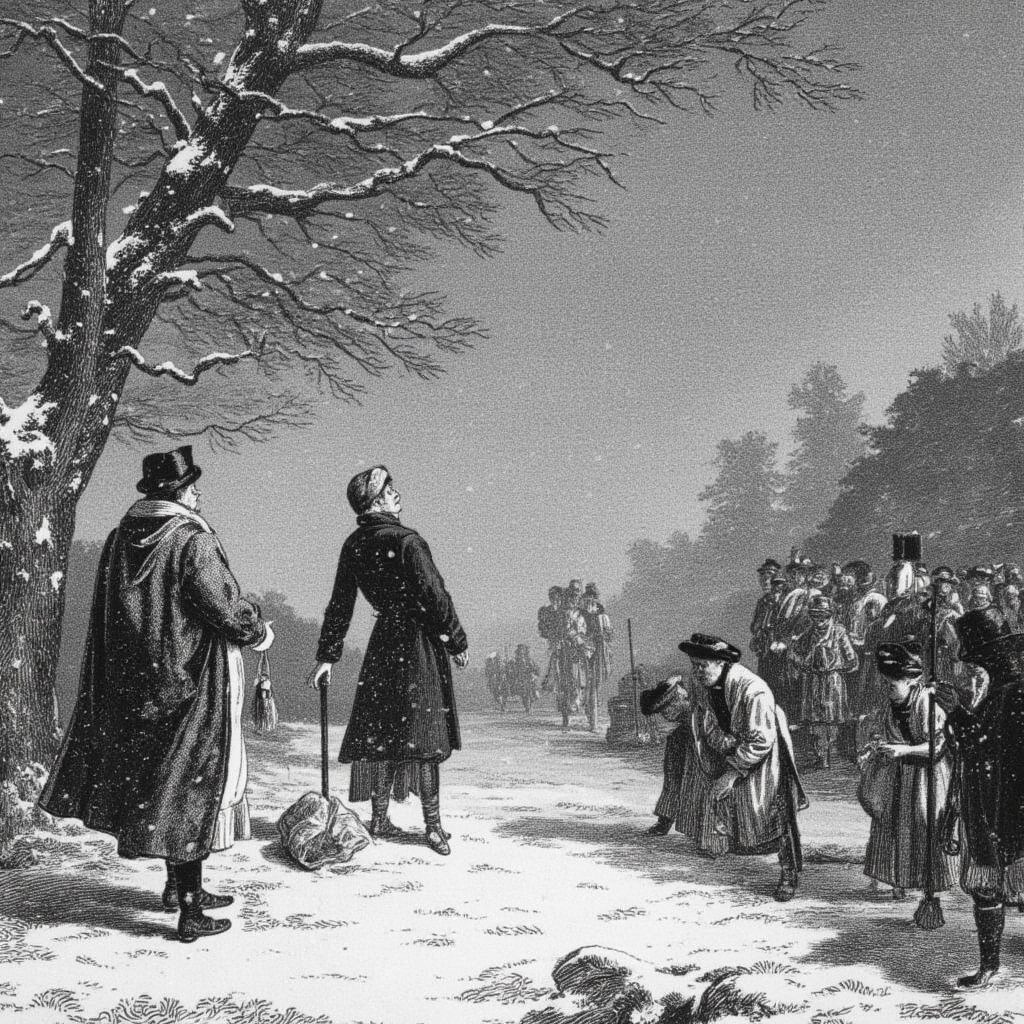
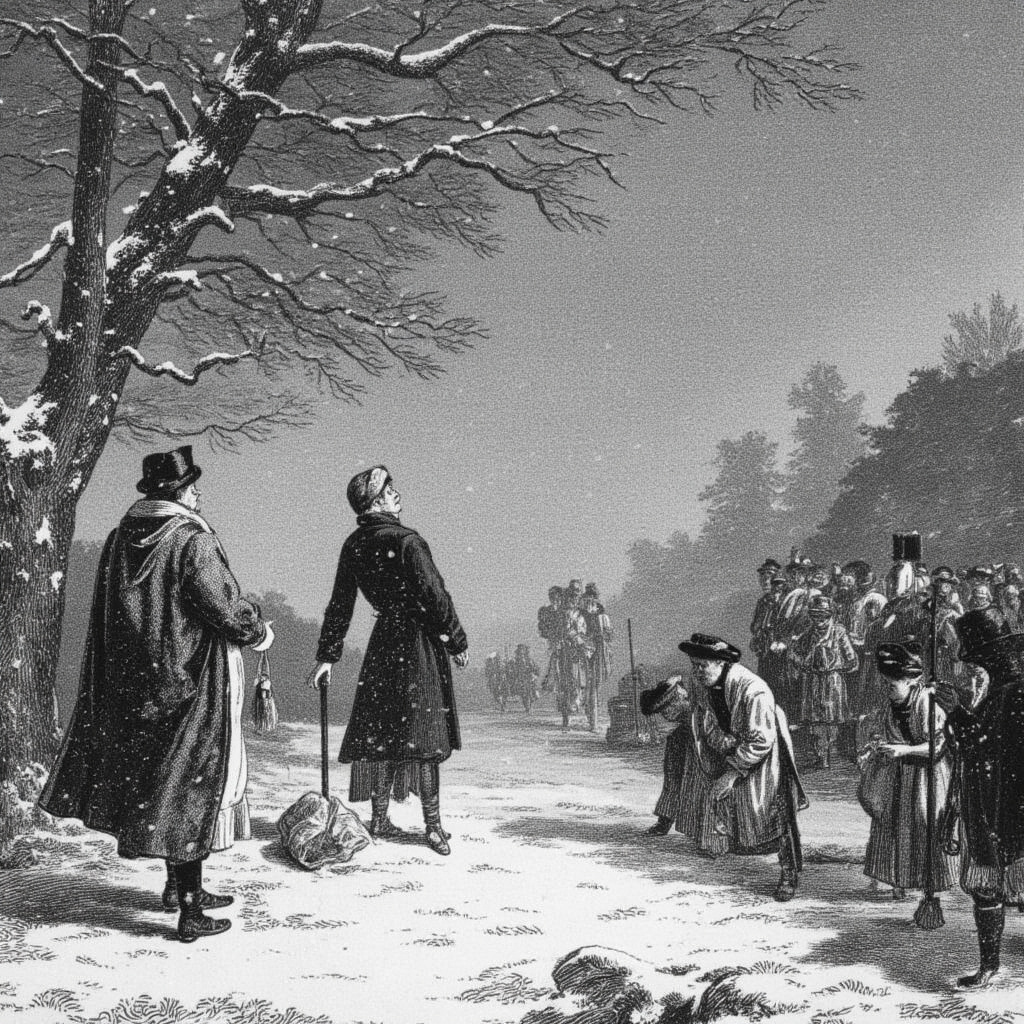
The temperature swings were dramatic and unpredictable. Philadelphia recorded a high of only 46°F (8°C) on July 4th—Independence Day—when temperatures should have been in the 80s. New York City experienced frost in August, devastating crops across the region.

Snow falling in July 1816 America with confused people in summer clothes

The Global Catastrophe

While Americans struggled with their impossible summer, the rest of the world faced equally bizarre conditions. In Europe, the situation was even more dire:

  • Switzerland experienced such severe crop failures that people resorted to eating sawdust bread
  • Ireland faced famine that contributed to a typhus epidemic, killing over 100,000 people
  • Germany recorded average temperatures 3-5°F below normal throughout the growing season
  • India suffered unusual monsoon patterns that disrupted rice harvests

China experienced unusually cold weather and crop failures. Even as far south as Virginia, there were reports of ice forming on ponds in August—an occurrence so unusual that local newspapers treated it as a supernatural event.

The Human Cost

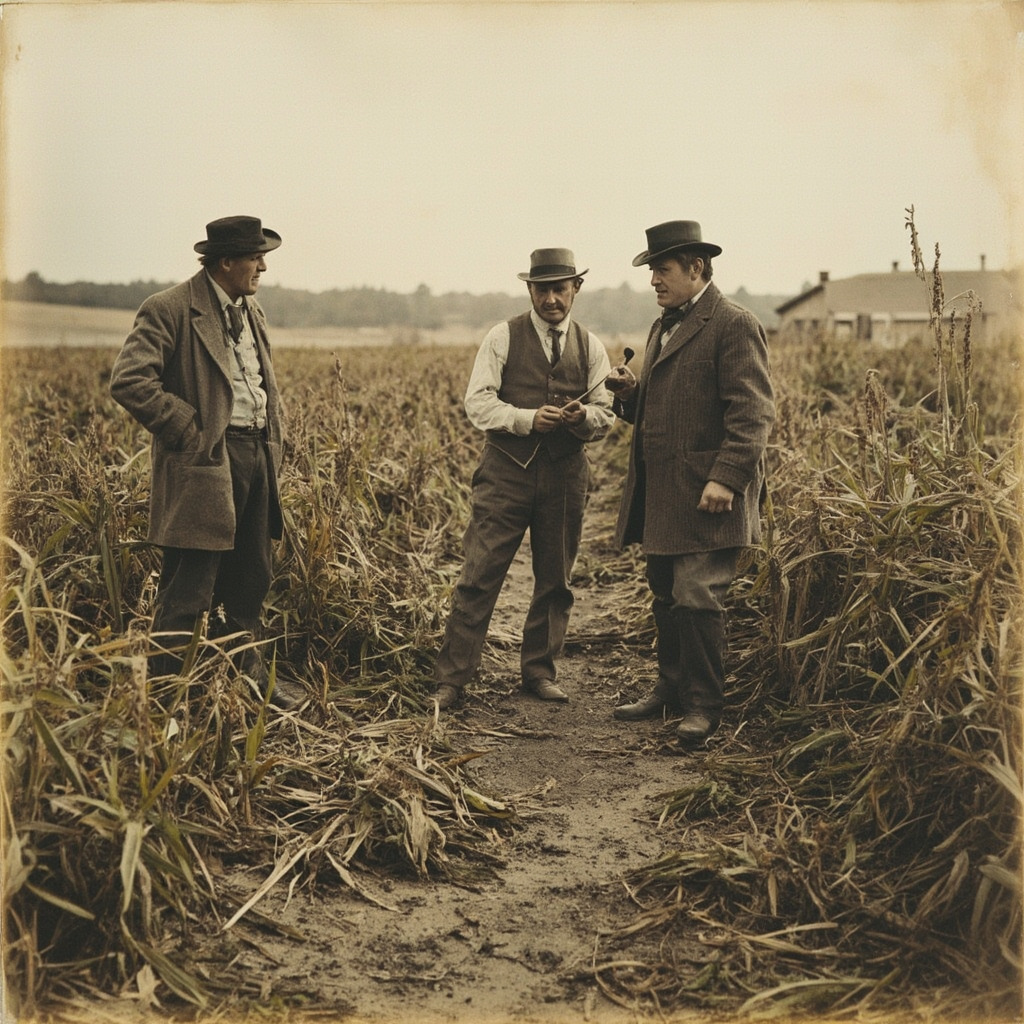
The agricultural devastation was staggering. New England farmers lost entire crop seasons, with corn harvests failing completely in much of Vermont and New Hampshire. The price of oats skyrocketed as horse feed became scarce, forcing many families to abandon their farms.

This agricultural crisis triggered one of the largest westward migrations in early American history. Thousands of New England families, facing starvation and financial ruin, packed up and headed for the Ohio Valley and other western territories where the climate effects were less severe.

19th century American farmers examining frost-damaged crops during the agricultural disaster

The migration was so massive that Vermont’s population actually declined between 1810 and 1820—the only decade in the state’s history to show negative growth. Many of these climate refugees helped settle Indiana, Illinois, and Ohio, fundamentally changing the demographic patterns of American expansion.

Scientific Discovery Born from Disaster

The 1816 climate disaster inadvertently advanced scientific understanding. This was the first time scientists began to seriously consider the connection between volcanic eruptions and global climate patterns.

The event also spurred agricultural innovation. Farmers began experimenting with different crops and growing techniques to protect against future climate anomalies. The crisis led to improved seed varieties and better food preservation methods.

Cultural Impact and Legacy

The “Year Without a Summer” left an indelible mark on culture and literature. Mary Shelley was vacationing in Switzerland during the gloomy summer of 1816 when the persistent bad weather kept her indoors. To pass time, she and her companions told ghost stories—leading to her creation of “Frankenstein,” one of the world’s first science fiction novels.

Lord Byron, also present in Switzerland that summer, wrote his famously dark poem “Darkness,” directly inspired by the unnatural gloom and cold. The opening lines capture the eeriness of that summer: “I had a dream, which was not all a dream. The bright sun was extinguish’d…”

American folk songs and poetry from the period reflect the confusion and fear people felt about the impossible weather. Farmers didn’t understand why their crops were failing, and many interpreted the strange weather as a sign of divine displeasure or approaching apocalypse.

The Connection Nobody Could See

The tragic irony of 1816 is that no one in America or Europe initially connected their suffering to a volcanic eruption on the other side of the world. Communication was so slow that detailed news of the Tambora eruption didn’t reach the Western world until months after it occurred.

Even when the connection was eventually made, the mechanism wasn’t understood. The concept of global atmospheric circulation and volcanic winter effects wouldn’t be scientifically established until the 20th century. To most people living through 1816, their impossible summer remained an inexplicable natural disaster.

Modern Parallels

The 1816 climate crisis offers sobering lessons for our modern world. It demonstrates how quickly global climate can change and how interconnected our planet’s systems really are. A single volcanic event in Indonesia affected weather patterns, agriculture, and human migration across the entire Northern Hemisphere.

Climate scientists today study the 1816 event as a natural analog for potential geoengineering solutions to global warming—specifically, the idea of injecting reflective particles into the stratosphere to cool the planet. The Tambora eruption essentially created a natural version of this process, providing valuable data about the effects and risks.

The Year Without a Summer remains one of history’s most dramatic examples of how natural disasters can reshape entire societies, trigger mass migrations, and fundamentally alter the course of human civilization—all from a single volcanic explosion on the other side of the world.

More from the archive

The Invisible Light: How X-rays Went from Accidental Discovery to World-Changing Technology

On a chilly November evening in 1895, a 50-year-old German physicist named Wilhelm Conrad Röntgen was working alone in his darkened laboratory at the University of Würzburg. He was experimenting with cathode ray tubes — the cutting-edge technology of his day — when something peculiar caught his eye. A fluorescent screen on the other side of the room was glowing. It shouldn’t have been. The tube was completely covered in thick black cardboard. Whatever was causing that glow was passing straight through the covering like it wasn’t even there.

Röntgen was baffled. He spent the next several weeks barely eating or sleeping, locked in his laboratory, obsessively investigating this mysterious new radiation. He didn’t know what it was, so he called it “X-rays” — X for unknown. It was a placeholder name that stuck forever. What he discovered in those feverish weeks would transform medicine, reshape warfare, revolutionize industry, and accidentally kill quite a few people along the way.

The Photograph That Stunned the World

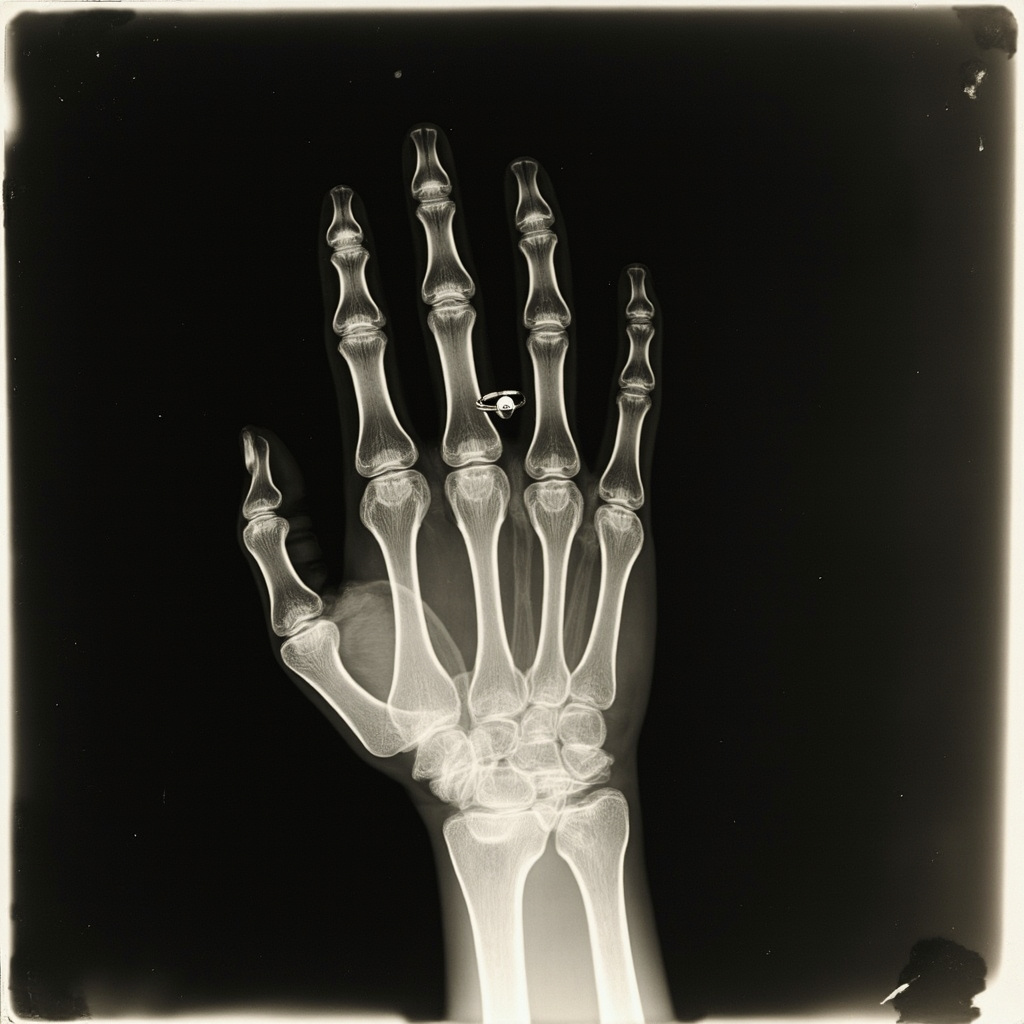
The famous first X-ray photograph of Anna Bertha Röntgen's hand, 1895

On December 22, 1895, Röntgen asked his wife Anna Bertha to place her hand on a photographic plate while he aimed his X-ray tube at it. The exposure took about 15 minutes — during which Anna Bertha had to hold perfectly still. The resulting image was haunting: the dark shadows of her bones clearly visible, her wedding ring floating ghostlike around her finger. When she saw the image, she reportedly gasped, “I have seen my death.”

Röntgen published his findings on December 28, 1895, and the news exploded across the globe with a speed that rivaled the telegraph itself. Within days, newspapers on every continent were breathlessly reporting on the “new photography” that could see through flesh to the bones beneath. The public was equal parts fascinated and terrified.

In 1901, Röntgen was awarded the very first Nobel Prize in Physics. True to his modest character, he donated the prize money to his university and refused to patent his discovery, believing it belonged to humanity. He died in relative obscurity in 1923, during the economic chaos of Weimar Germany, while the technology he unleashed was already changing the world in ways he never imagined.

X-ray Mania: When Seeing Bones Was Entertainment

Victorian-era X-ray parlor with people lining up to see their own skeletons

The years following Röntgen’s discovery saw an extraordinary craze sweep through Europe and America. “X-ray parlors” sprang up in cities, offering curious customers the chance to see their own skeletons for a small fee. It was the Victorian equivalent of a selfie — except instead of your face, you were showing off your metacarpals.

Department stores installed X-ray machines as novelty attractions. Shoe stores offered “fluoroscopes” that let customers wiggle their toes inside their shoes to check the fit — bombarding their feet with radiation in the name of retail satisfaction. These shoe-fitting fluoroscopes remained in widespread use from the 1920s through the 1950s before someone finally asked, “Wait, is this a good idea?”

The entertainment industry embraced X-rays with gusto. Thomas Edison, ever the showman, demonstrated a large fluoroscope at the 1896 Electrical Exhibition in New York City. His assistant, Clarence Dally, operated the device extensively. Dally would become one of the first known casualties of radiation exposure in America — he developed severe radiation burns, had both arms amputated, and died in 1904 at the age of 39. Edison, shaken by Dally’s fate, abandoned all X-ray research.

The early enthusiasm was dangerously naive. Without understanding radiation’s biological effects, people treated X-rays as harmless curiosities. Doctors would demonstrate X-ray machines at dinner parties. Inventors proposed X-ray opera glasses so theatergoers could peer through walls. A London company advertised “X-ray proof undergarments” for modest ladies who feared their privacy was at risk. The fear was absurd, but the entrepreneurial spirit was very real.

From Parlor Trick to Battlefield Savior

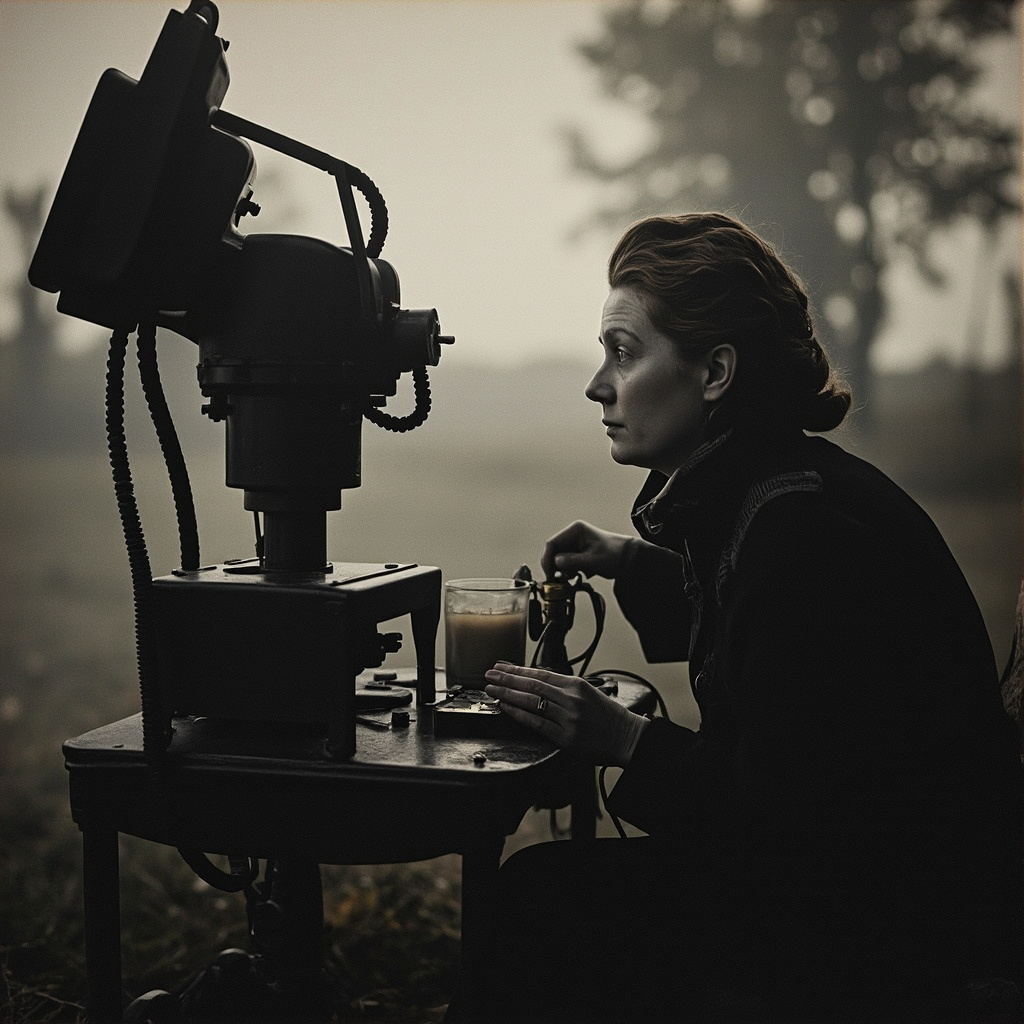
Marie Curie operating mobile X-ray equipment during World War I

While civilians were gawking at their bones in parlors, the medical community quickly recognized X-rays’ life-saving potential. During the Balkan Wars of 1897 and the Boer War (1899–1902), military surgeons used X-rays to locate bullets and shrapnel lodged in wounded soldiers — a task that had previously required agonizing exploratory surgery.

But it was World War I that truly proved X-rays’ value on a massive scale. Marie Curie — already famous for her research on radioactivity — threw herself into the war effort with characteristic determination. She equipped a fleet of vehicles with portable X-ray machines, creating the world’s first mobile radiological units. Soldiers affectionately called them “petites Curies” — little Curies.

Curie personally drove these vehicles to field hospitals near the front lines, training doctors and technicians to use the equipment. Her teenage daughter Irène joined her, operating X-ray machines in battlefield hospitals at the age of 17. Together, the Curies helped perform over a million X-ray examinations during the war, guiding surgeons to extract bullets and shrapnel that would have otherwise meant amputation or death.

The wartime experience transformed X-ray technology from a medical curiosity into an indispensable clinical tool. After the war, hospitals worldwide invested in permanent X-ray departments, and the specialty of radiology was born.

The Dark Side: Radiation’s Hidden Toll

The enthusiasm for X-rays came at a terrible price. In the early decades, no one understood the cumulative damage that radiation inflicted on human tissue. Radiologists routinely tested their equipment by X-raying their own hands. Many developed radiation dermatitis — chronic skin damage that progressed to ulceration and cancer.

By the 1930s, the toll was becoming undeniable. Hundreds of early radiologists and X-ray technicians had developed cancers, lost fingers and limbs, or died from radiation-related illnesses. A memorial erected in Hamburg, Germany, in 1936 listed 169 names of radiologists who died from radiation exposure. By 1960, the list had grown to 360 names.

The radium industry — a cousin of X-ray technology — was claiming victims too. The infamous “Radium Girls” of the 1920s, young women who painted luminous watch dials with radium-laced paint, developed devastating jaw necrosis and cancers after being told to lick their brushes to form a fine point. Their legal battle against the U.S. Radium Corporation became a landmark case in occupational health law.

These tragedies eventually forced the development of radiation safety standards. Lead shielding, exposure limits, dosimetry badges, and the principle of using the minimum radiation dose necessary all emerged from the painful lessons of the early X-ray era.

The Modern Age: From Film to Digital

Modern hospital radiology department with CT scanner

The second half of the 20th century brought revolutionary advances. In 1971, British engineer Godfrey Hounsfield introduced the CT (computed tomography) scanner, which used X-rays and computer processing to create detailed cross-sectional images of the body. It was like going from a shadow puppet show to a full 3D movie. Hounsfield shared the 1979 Nobel Prize in Physiology or Medicine for this invention.

CT scanning transformed diagnostic medicine. Doctors could now see tumors, blood clots, fractures, and internal bleeding with unprecedented clarity — without surgery. Emergency rooms became dependent on CT scanners for evaluating trauma patients. Oncologists used them to stage cancers and monitor treatment response.

The digital revolution of the 1980s and 1990s replaced photographic film with electronic sensors, bringing instant image display, computer enhancement, and electronic storage. Radiation doses plummeted as detector technology improved. Today’s digital X-ray systems deliver a fraction of the radiation that early machines produced.

The 21st century has brought further marvels: cone beam CT for three-dimensional imaging, AI algorithms that can detect diseases on X-rays with superhuman accuracy, and portable X-ray devices small enough to fit in a backpack for use in disaster zones and remote communities.

A Legacy of Light and Shadow

The story of X-rays is, in many ways, a perfect parable of human discovery. A curious scientist stumbles upon something extraordinary. Society embraces it with reckless enthusiasm. People suffer from the unintended consequences. And gradually, painfully, we learn to harness the discovery safely and effectively.

From Röntgen’s darkened laboratory to modern hospital radiology suites, from Victorian bone-gazing parlors to AI-powered diagnostic systems, the invisible light that one physicist discovered by accident has illuminated the hidden interior of the human body for 130 years. It has saved millions of lives, enabled entire medical specialties, and — in its darkest chapters — reminded us that every powerful technology demands respect.

Wilhelm Röntgen never sought fame or fortune from his discovery. He gave it freely to the world, asking nothing in return. The X stands for unknown — and in a sense, it still does. Even today, researchers are finding new applications for X-ray technology, from archaeology to art conservation to airport security. The unknown ray turned out to be one of the most versatile and consequential discoveries in human history.

Not bad for an accident on a November evening.

Related Reading

The Night Saboteurs Blew Up New York Harbor: The Forgotten Black Tom Explosion of 1916

Just after two in the morning, New York Harbor turned to daylight. A munitions depot the size of a small town had detonated, hurling shrapnel into the Statue of Liberty and shattering windows across two cities. It was no accident. It was an act of war, carried out on American soil while the nation still believed itself safely neutral. This is the story of the Black Tom explosion.