The Dyatlov Pass Incident: Nine Hikers Who Fled a Frozen Mountain Into the Dark


On the last frame of a roll of film recovered from the snow, nine young people are still smiling. They are digging a tent into a windswept slope in the Ural Mountains, bundled against the cold, at ease in country that would have killed a less experienced group in an afternoon. Within hours all nine would be dead — and the way they died, cutting their way out of their own shelter and running half-dressed into a lethal winter night, would become one of the most stubborn mysteries of the twentieth century. It is remembered by the name of the pass where it happened and the young man who led them there: Igor Dyatlov.

For sixty years, the Dyatlov Pass incident resisted every explanation thrown at it. The facts were too strange, the injuries too severe, the behavior of nine calm, capable mountaineers too irrational to fit any ordinary accident. And so it filled with theories — some plausible, some wild, a few genuinely unhinged. The truth, when it finally came, was stranger for how quiet it was.
Nine who knew the mountains
They set out at the end of January 1959, most of them students or recent graduates of the Ural Polytechnic Institute in Sverdlovsk. This was no casual outing. The group was attempting a Grade III route, the highest difficulty rating in the Soviet system, aiming for a peak called Otorten in the northern Urals in the depth of winter. Dyatlov, twenty-three, was a gifted and respected trip leader. His companions were seasoned skiers and climbers, several of them veterans of long expeditions. One older member, Semyon Zolotaryov, was a decorated war veteran well into his thirties.

The plan was routine for people of their skill. They would ski and trek to Otorten and back, and Dyatlov had promised to send a telegram when they returned to civilization around the twelfth of February. When that date came and went with no word, no one panicked immediately — delays were normal in that terrain. But as the days stretched on, worry hardened into alarm, and a search party set out to find them.
The night on Dead Mountain
What the searchers found on the slope of a peak the local Mansi people called Kholat Syakhl — which translates, with grim aptness, to something like “Dead Mountain” — made no sense. The group’s tent was still there, half-collapsed and partly buried in snow. It had been slashed open from the inside. Whatever had happened, the hikers had not calmly unzipped the entrance and stepped out; they had cut through the canvas wall in a hurry to escape.

Outside, footprints in the snow told the rest. Nine sets of tracks led away downhill toward a distant treeline, made by people who were barefoot, in socks, or only partly dressed. In temperatures that plunged toward minus twenty-five or thirty degrees Celsius, they had abandoned their boots, their coats, and their shelter and fled into the dark. Trained survivalists know that leaving your tent inadequately clothed on a night like that is close to a death sentence. They knew it too. Something made them do it anyway.
What the searchers found
The bodies emerged from the snow over the following weeks and months, and each discovery deepened the riddle. Near the remains of a small fire beneath a tall cedar tree at the treeline lay the first two, stripped to their underclothes, with broken branches above them suggesting someone had tried to climb for wood or a vantage point. Three more were found along the line back toward the tent, as if they had died trying to return to it. All five appeared to have succumbed to hypothermia — a terrible death, but at least a comprehensible one.
Then, in May, as the snow finally melted, searchers found the last four in a ravine, buried under several meters of hard-packed snow. These bodies changed everything. Some of them had catastrophic internal injuries — a fractured skull, chests crushed with broken ribs, the kind of trauma investigators compared to a high-speed car crash — yet with little or no corresponding damage to the skin. One woman, Lyudmila Dubinina, was missing her tongue, her eyes, and part of her lips. Later tests found traces of radioactivity on some of the clothing. Injuries this severe, with no external wounds, and no attacker in sight, seemed to defy physics itself.
A “compelling natural force”
The Soviet investigators were as baffled as everyone since. Their inquiry closed with a phrase that explained nothing and haunted everyone: the hikers had died as a result of “a compelling natural force” that they had been unable to overcome. The case files were archived, some of them classified, and the pass was closed to trekkers for years. In a closed society already thick with secrecy, an official non-answer was an invitation to imagine anything.

And imagine people did. The theories multiplied for decades: a secret Soviet weapons test that killed them and was covered up; an attack by escaped prisoners or hostile locals; infrasound generated by wind screaming over the ridge, driving the group to panic; even the Mansi mountain spirits, or a yeti. Each theory could explain a piece of the puzzle and stumbled on the rest. The mystery took its place beside history’s other great unsolved cases — the vanished keepers in the Flannan Isles lighthouse mystery, the unreadable pages of the Voynich Manuscript — the kind of puzzle that seems to grow more inexplicable the closer you look.
The avalanche that hid in plain sight
The most persistent early theory was also the most mundane: an avalanche. For years it was dismissed. The slope was not steep enough, critics said; there was no obvious debris; the tracks and the delay didn’t fit. But in 2019 Russian authorities reopened the case, and in 2021 two engineers, Johan Gaume and Alexander Puzrin, published a study that finally made the avalanche theory work.
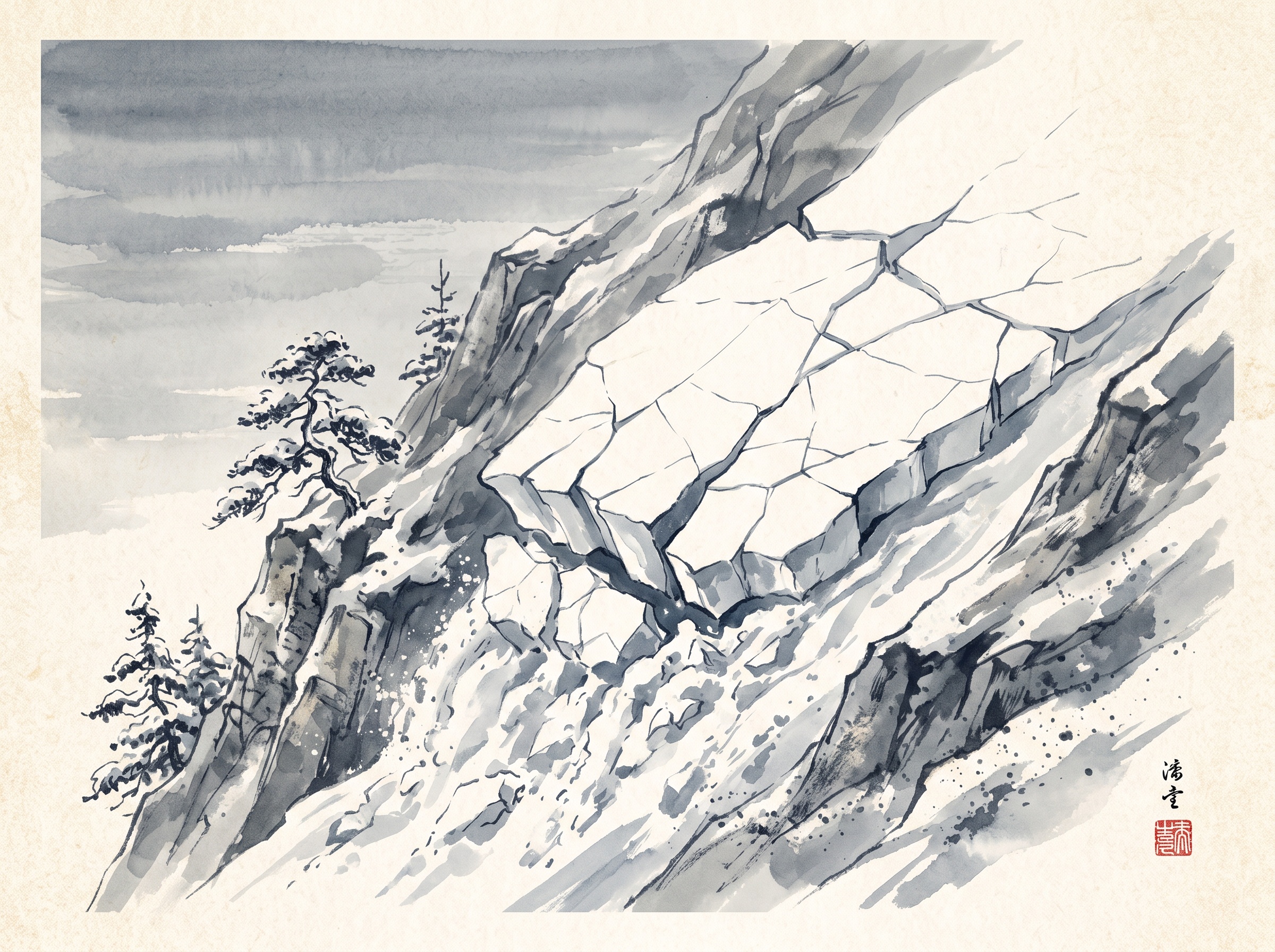
Their answer was a slab avalanche — a small, delayed one. By cutting a flat platform into the slope to pitch their tent, the hikers had undermined a layer of hard, wind-packed snow. Fierce katabatic winds that night kept loading more snow above them until, hours later, the slab fractured and slid — a heavy, compact block rather than a billowing wave. It need not have buried the tent to do harm. A slab of dense snow striking people lying down could crack ribs and skulls while leaving the skin unbroken, exactly the kind of injury that had seemed impossible. To refine their model, the researchers borrowed snow-simulation code originally built for an animated film. The missing soft tissue was consistent with ordinary scavengers and months in a meltwater stream; the radiation traces likely came from thorium in camping-lantern mantles and the work some members had done. Piece by piece, the impossible resolved into the merely tragic.
Why Dyatlov Pass still holds us
Not everyone is convinced, and perhaps no single theory ever silences a mystery this famous. But the slab-avalanche model is the first explanation that fits the physics, the injuries, the timing, and the desperate flight all at once. It suggests a chain of small, unlucky decisions ending in the dark: a slope disturbed, a wind that would not quit, a slab that let go while they slept, and then a group of experienced people making the only choice that made sense in the chaos — get out, get clear, and wait to go back for their gear. They ran to the trees to regroup. The cold caught them first.
What keeps drawing us back to Dead Mountain is the same thing that draws us to any unexplained flash in a Siberian sky, like the Tunguska event: the unbearable gap between a smiling photograph and a frozen ravine, and our need to close it. For sixty years that gap stayed open, and people filled it with monsters. In the end the mountain was monster enough. Nine capable, courageous young people met a natural force they could not have predicted and could not outrun — and the fact that we can finally name it does not make the loss any smaller. It only means that, at last, we can grieve them for what actually happened, instead of for what we feared.
Sources & further reading:
- Dyatlov Pass incident — Wikipedia
- Mechanisms of slab avalanche release and impact in the Dyatlov Pass incident — Communications Earth & Environment (2021)
Related Reading
- Speedbird 911: The Sightseeing Detour to Mount Fuji That Ended in the Sky
- The Tunguska Event: When a Mystery Explosion Flattened 830 Square Miles of Siberian Forest