Speedbird 911: The Sightseeing Detour to Mount Fuji That Ended in the Sky

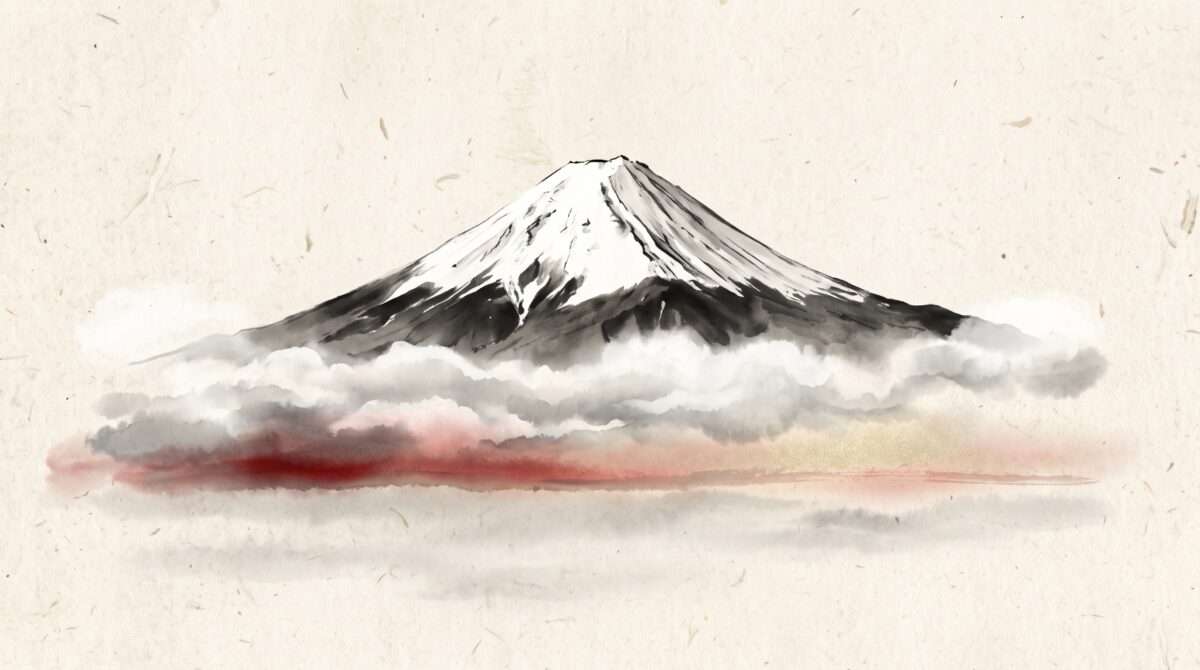
The mountain looked the way it always looks in the paintings: calm, symmetrical, eternal. On the clear afternoon of 5 March 1966, the passengers aboard a British Overseas Airways Corporation Boeing 707 pressed toward the windows for a better look. They had asked for this view. Mount Fuji stood ahead of them, snow bright against a pale sky, and the aircraft was turning to give them the finest look of their lives. None of them could have known that the beauty ahead was wrapped in something invisible and violent — or that the next four minutes would be their last.
A Detour Toward Beauty
Flight 911 was a leg of a round-the-world service, and its captain, Bernard Dobson, was an experienced hand. As the 707 prepared to leave Tokyo’s Haneda Airport, the crew made a small, fateful change. Instead of the standard instrument departure, they requested a visual climb westbound — a route that would carry the airliner in close along the flank of Mount Fuji.
It was a gift to the people in the cabin. Japan’s most famous landmark, seen not from a postcard but from the air, framed by the window at sixteen thousand feet. The weather was crisp and clear. There was, on the face of it, no reason not to.
The Shadow of the Day Before
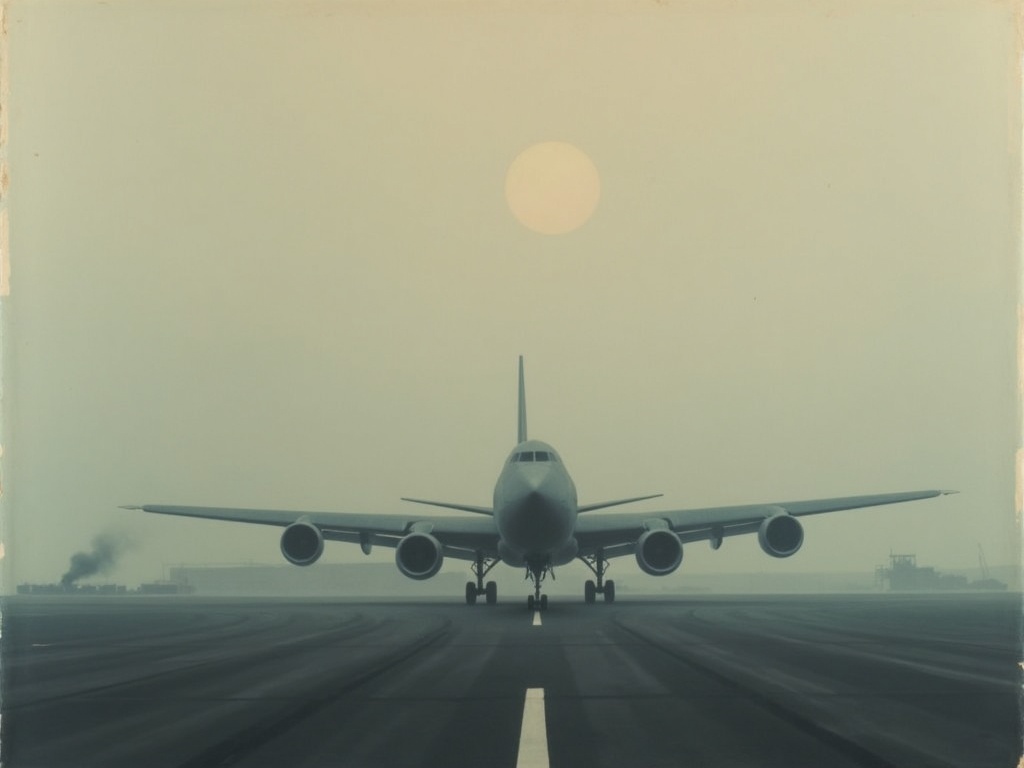
There was already grief in the air at Haneda that afternoon. Only the day before, a Canadian Pacific Air Lines DC-8 had crashed on approach to the very same airport, killing dozens. As Speedbird 911 taxied toward the runway, it rolled past the still-smoldering wreckage of that earlier disaster. A film camera on the ground caught the moment — the graceful British jet gliding by the burnt remains of another aircraft, moving toward its own departure.
It is the kind of coincidence that history seems to arrange on purpose, though of course it arranges nothing. The two events were unconnected. And yet anyone watching that reel today feels the same cold pull: the sense of a machine walking calmly past a warning it could not read.
Speedbird 911 Turns for Fuji
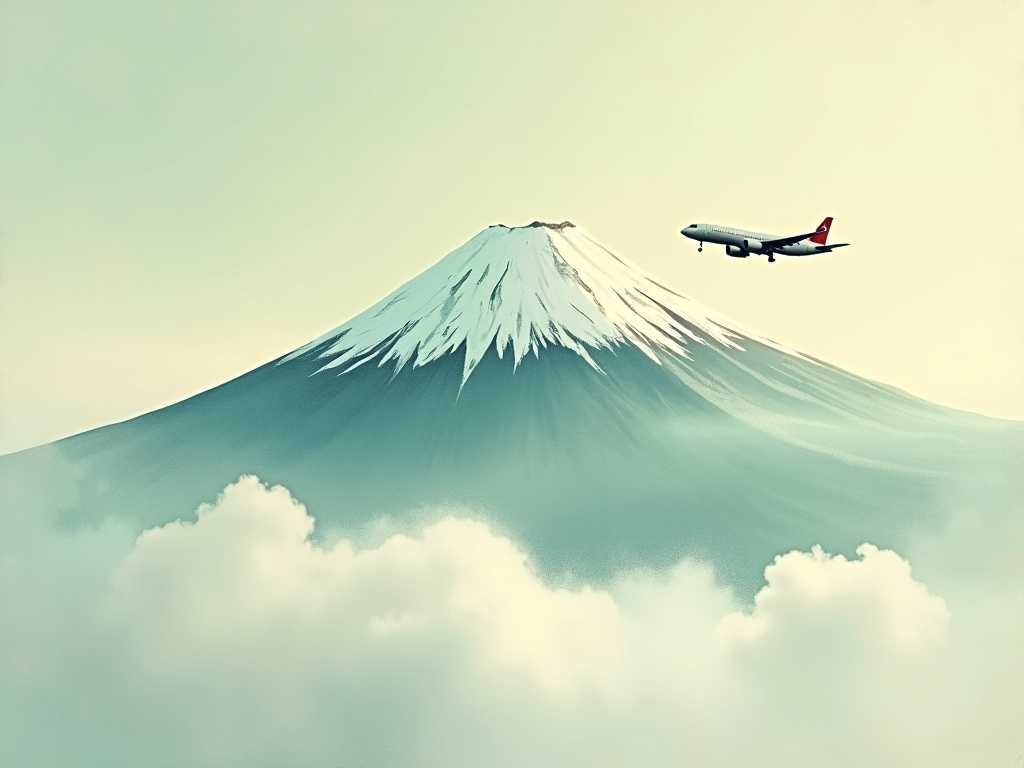
At 13:58 the 707 lifted off from Haneda and began to climb. Radio call sign: Speedbird 911. The aircraft banked onto its westward heading and pointed its nose toward the mountain, still gaining altitude, the great white cone growing in the windscreen.
Below and ahead lay the small city of Gotemba, tucked against Fuji’s eastern base. The winds aloft that day were strong — stronger, near the peak, than anyone in the cockpit could feel from the smooth air of the climb. The mountain was not merely a thing to be admired. It was a machine of its own, shaping the sky around it.
The Invisible Wave
When a fast, steady wind strikes a large mountain, it does not simply flow over and settle. It rebounds. In the sheltered air on the downwind side — the lee — the current can fold into enormous standing ripples known as mountain waves, and where those waves break, they shred into pockets of turbulence with almost no warning at all. The sky can look perfectly serene. The instruments show nothing. This is the treachery of clear-air turbulence: it is felt before it is seen.
At roughly 14:03, as Speedbird 911 crossed over Gotemba, it flew into exactly such a pocket. Investigators later estimated the aircraft was struck by a gust load far beyond anything it was ever designed to survive — forces reaching around 7.5 times the pull of gravity. The vertical fin tore away. As it went, it struck and broke off part of the horizontal tail. In seconds the 707 came apart in the air, scattering across some sixteen kilometres of forest and slope below the mountain the passengers had turned to admire.
The Camera That Kept Filming
Among the wreckage searchers recovered a passenger’s 8mm home-movie camera, and when the film inside was developed it told the last chapter in silence. There were bright, ordinary frames — the Tanzawa mountains, the blue disc of Lake Yamanaka, the sightseeing footage of a happy flight. Then two frames of nothing. Then a blur that seemed to be the inside of the cabin, tilting wildly. And then the film simply stops. The violence had been so sudden that it jammed the camera’s mechanism mid-turn.
Few artifacts in aviation history are as quietly devastating. It is the record of people who, moments before, had been doing the most human thing imaginable — filming something beautiful to remember it later.
What the Mountain Took
All 124 people aboard were lost: 113 passengers and 11 crew. The largest single group was a party of 75 Americans from the Thermo King company of Minneapolis, on a two-week tour of Japan and Southeast Asia. Twenty-six of them were married couples travelling together — and their deaths left an estimated 63 children orphaned in a single afternoon. Also among the passengers were performers from a Paris cabaret troupe, their tour ended in the sky over a mountain half a world from home.
Numbers rarely carry weight on their own. But the shape of this loss — couples side by side, families emptied of both parents at once — is the kind that lingers. Whole households in Minnesota were rewritten by four minutes of Japanese air. It belongs among the peacetime transport disasters that empty whole communities in a single stroke — as the sea did when the overcrowded ferry MV Doña Paz went down with thousands aboard.
The Legacy in the Wind
The official inquiry concluded that the aircraft had met “abnormally severe turbulence” over Gotemba, a gust load well past its structural limits, born of the powerful mountain waves in Fuji’s lee. The finding helped harden the aviation world’s respect for a hazard that leaves no mark on radar and no cloud in the sky. Pilots learned to give great mountains a wider, warier berth in high winds. The disaster also triggered fleet-wide inspections of Boeing 707 and 720 tails, which turned up stress cracking that demanded correction across the industry.
Clear-air turbulence remains, to this day, one of the reasons flight crews keep seatbelt signs lit even when the ride feels glass-smooth. The lesson of Speedbird 911 is stitched quietly into every calm cruise you have ever taken.

Mount Fuji still rises over Gotemba, unchanged, indifferent, exactly as beautiful as it was that afternoon. That is perhaps the hardest part of the story to hold: that nothing was wrong with the mountain, or with the wish to look at it. The passengers of Flight 911 died reaching toward beauty, undone by a force that beauty concealed. More than half a century on, the tale endures not as a warning against wonder, but as a reminder of how thin the membrane can be between an ordinary, joyful moment and the edge of everything — and of how much tenderness those recovered frames of film still ask of us. Sources: Wikipedia; Admiral Cloudberg.
Sources & further reading:
Related Reading
- The Dyatlov Pass Incident: Nine Hikers Who Fled a Frozen Mountain Into the Dark
- The Village That Lost Its Children: The Freckleton Air Disaster of 1944