Thirteen Ships Against an Empire: Admiral Yi and the Miracle at Myeongnyang

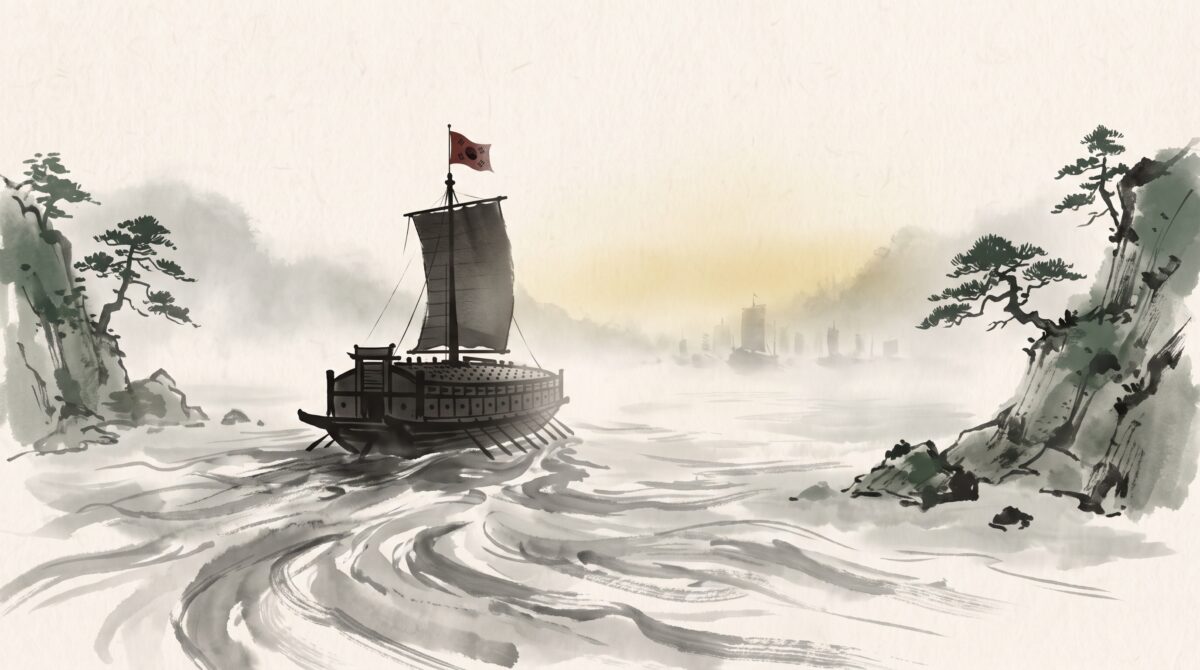
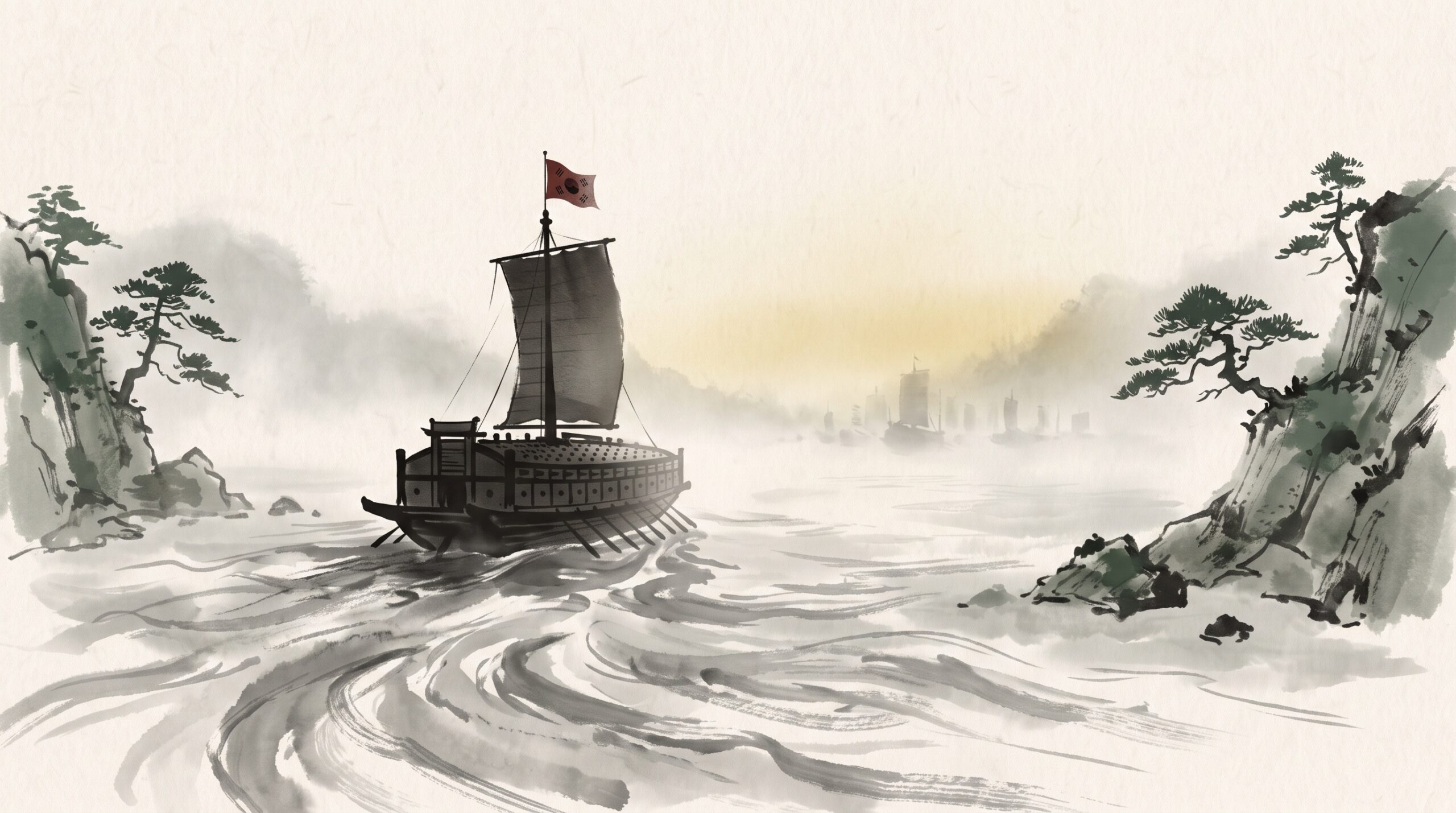
On an autumn morning in 1597, a Korean admiral looked out over the Myeongnyang Strait and counted his fleet. Thirteen ships. Behind them, the survivors of a broken navy. Ahead, somewhere in the sea haze beyond the narrows, an armada of well over a hundred Japanese warships was gathering to finish what the invasion had begun. By every measure of arithmetic, the day was already lost. Yet Admiral Yi Sun-sin had not spent his life obeying arithmetic. He had spent it studying the tides.
The Commander Who Read the Sea
Five years earlier, Toyotomi Hideyoshi had hurled the armies of a newly unified Japan across the sea against Joseon Korea, opening the long agony known as the Imjin War. On land the invaders advanced with terrible speed. At sea, they met Yi Sun-sin. Methodical, incorruptible, and relentless in his preparation, he won engagement after engagement, savaging Japanese supply convoys and choking the invasion’s lifeline.
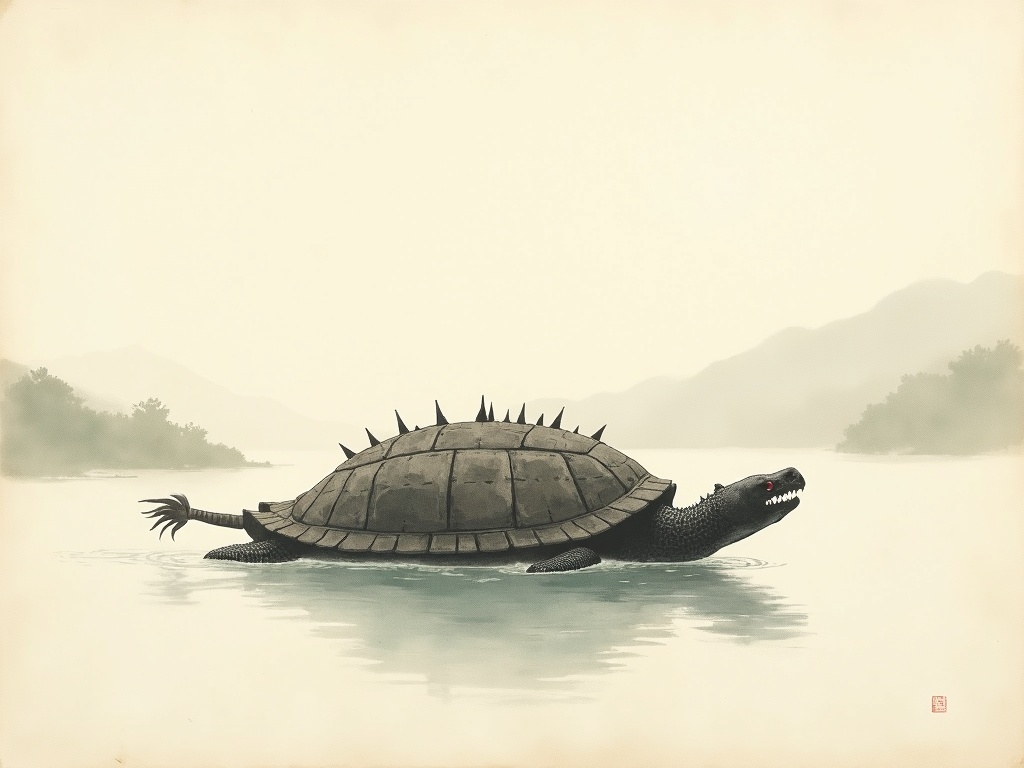
He is forever tied to the geobukseon, the armored turtle ship he championed and refined, its spiked roof and dragon-headed prow bristling with cannon. But the turtle ships were only the sharpest tool. Yi’s true weapon was knowledge, an almost obsessive command of Korea’s coastlines, its reefs, its winds, and above all its tides. Where others saw open water, he saw a battlefield he had already mapped in his mind.
Betrayed by His Own Court
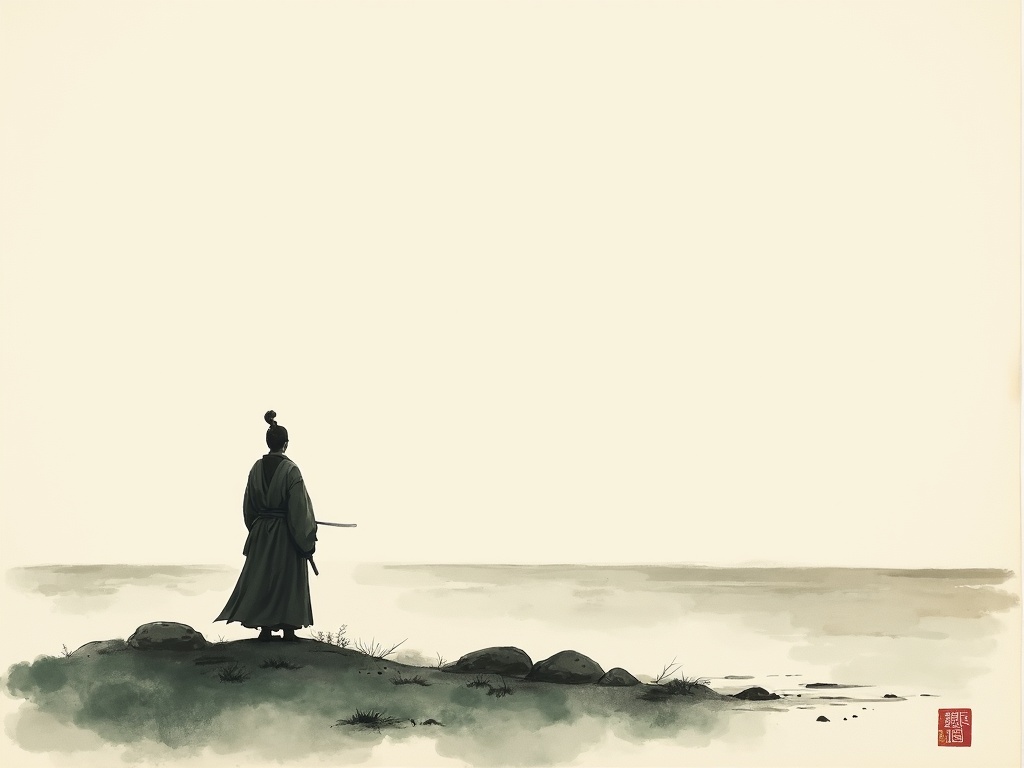
A man that competent makes enemies, and Yi’s were at court, not at sea. Rivals whispered, slander accumulated, and factional intrigue did what the Japanese navy never could. When Yi refused to obey an order he judged to be a trap laid for his fleet, his enemies had the pretext they needed. He was stripped of command, arrested, and tortured. The admiral who had held the southern sea was reduced to the rank of common soldier and sent to serve in the ranks he had once commanded.
His replacement, Won Gyun, took the Joseon navy out to meet the enemy and led it to ruin. At the Battle of Chilcheollyang in 1597, the fleet Yi had spent years building was smashed almost to nothing. Ships burned and sank; commanders died; the disciplined force that had guarded Korea’s coast simply ceased to exist. From a proud navy, roughly a dozen vessels limped away.
“I Still Have Twelve Ships”
With the sea suddenly wide open to invasion, a desperate court remembered the man it had disgraced. Yi Sun-sin was reinstated as naval commander, handed the wreckage of the force he had once led, and told to hold the line.
The court, seeing how little remained, suggested he abandon the navy altogether and fight on land. His reply became legend. He still had twelve ships, he answered, and as long as he lived the enemy would not find the western sea unguarded. It was not bravado. It was a calculation, made by a man who knew exactly what a narrow strait and a turning tide could do to an overconfident fleet.
The Trap at Uldolmok
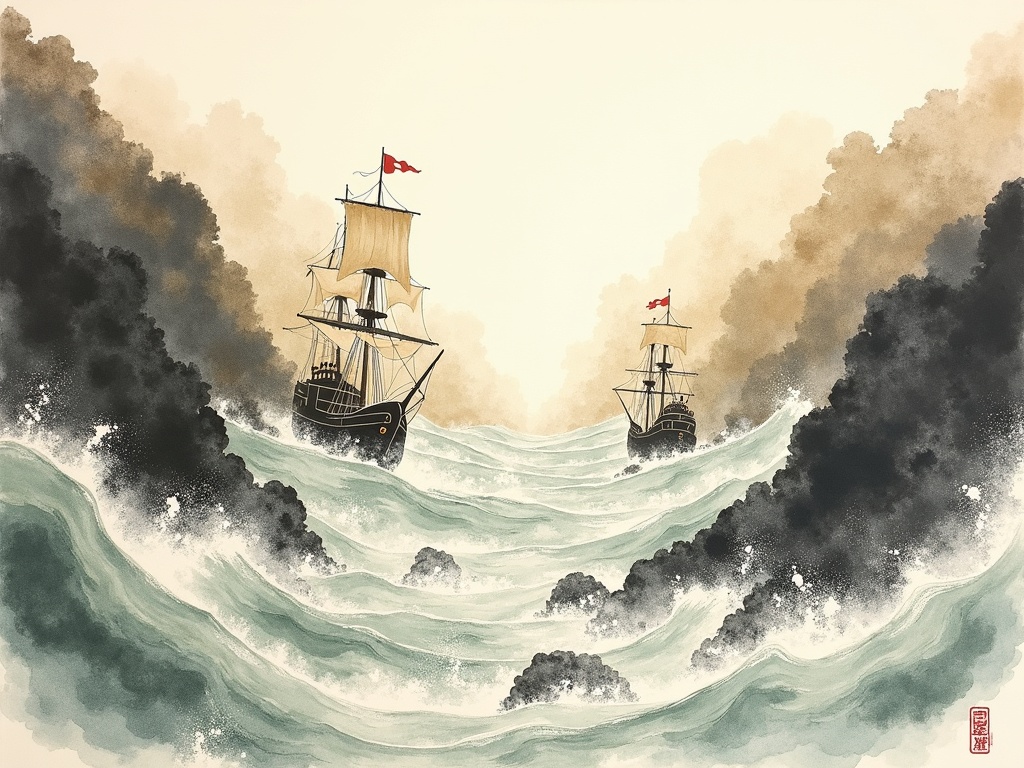
He chose his ground at the Myeongnyang Strait, a slender channel the Koreans called Uldolmok, the “roaring current.” The name was earned. Here the tide surged through the narrows at ferocious speed and, at intervals, reversed direction entirely, a churning, treacherous river of seawater squeezed between the shores. A vast fleet could not spread out here. It could only pour through the gap a few ships at a time, its numbers rendered meaningless by the geography.
When the Japanese armada came, its scores of warships crowding into the channel, Yi met the vanguard with his flagship out front, holding position while his outnumbered captains hesitated at the sheer size of the enemy. He steadied them by refusing to break, a single ship absorbing the assault, buying time. And then the sea itself changed sides.
When the Tide Turned
The current reversed. The powerful tide that had carried the Japanese in now drove against them, jamming their crowded ships together in the churning water, robbing them of steering and momentum. The killing ground snapped shut. Korean cannon fire tore into the tangled mass of hulls, and vessel after enemy vessel was wrecked, rammed, or swept into the chaos of its own fleet.
By the time the Japanese broke off and fled, they had lost roughly thirty warships and any hope of forcing the strait. Yi Sun-sin had lost essentially none. Thirteen ships had shattered an armada many times their number, and the assault that was meant to unravel Korea’s defenses had been undone in a single tide. It remains one of the most lopsided victories in the history of naval warfare.
The Last Battle
Myeongnyang did more than win a day. It halted the Japanese naval advance, preserved the sea lanes and supply lines Korea depended on, and shifted the war’s momentum back toward the defenders. The invasion would grind on, but the door Yi had slammed shut at Uldolmok never fully reopened.
The war ended for Yi at Noryang in 1598. In the last great battle against a retreating enemy, at the very moment of victory, he was struck down by a bullet. The account passed down through the centuries has him giving one final order as he died: do not announce his death, so that the fighting spirit of his men would not fail in the hour they needed it most. The battle was won. His fleet did not falter.
Why the Story Endures
Yi Sun-sin is remembered today as one of the greatest naval commanders who ever lived and as a national hero of Korea, and the reverence is not only for the ships he sank. It is for the shape of the whole story. Here was a man punished for his integrity, tortured by the very state he defended, and then asked to save it anyway, with almost nothing left to fight with.
He did not answer betrayal with bitterness or excuses. He answered it with thirteen ships, a narrow strait, and an unbreakable refusal to leave his post. That is why the story still matters. It is a lesson about standing firm when you have been abandoned, about doing the difficult right thing when the easy wrong thing is being ordered from above, and about the strange, stubborn power of one prepared mind that refuses to accept that the numbers have already decided the outcome. The tide, Yi understood, always turns. The question is whether you are still there, holding the line, when it does.
Sources & further reading:
Related Reading
- 133 Days at Sea: The Sailor Who Refused to Die on a Wooden Raft
- Ching Shih: The Pirate Queen Who Commanded a Fleet No Empire Could Beat