Khutulun: The Mongol Princess No Man Could Beat in Wrestling

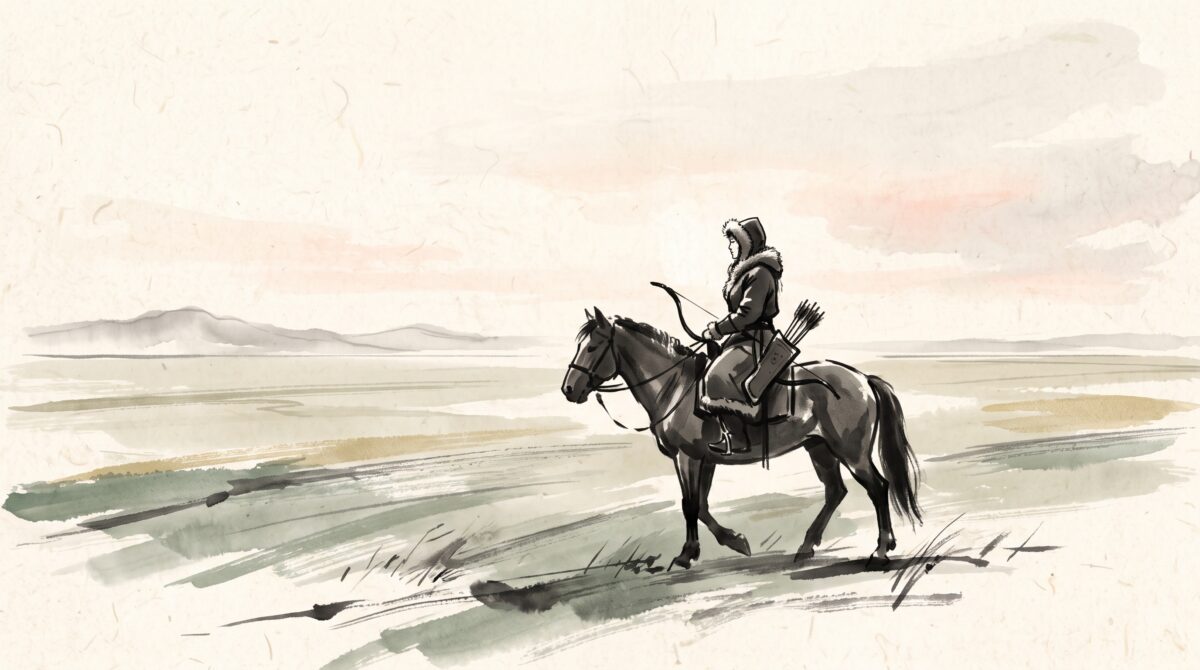
On the grasslands of Central Asia, seven and a half centuries ago, a line of men formed up to lose. They were suitors — princes, warriors, the sons of chieftains — and each had come to win the hand of a Mongol noblewoman. The terms were simple and strange: beat her in a wrestling match and she was yours; fail, and you forfeited a hundred horses on the spot. One after another they stepped onto the open ground, locked arms with her, and one after another they were driven down into the dust. By the time the challengers ran dry, she is said to have owned ten thousand horses and no husband at all. Her name was Khutulun, and the blood of Genghis Khan ran in her.
A Daughter of the Great Khan’s Line
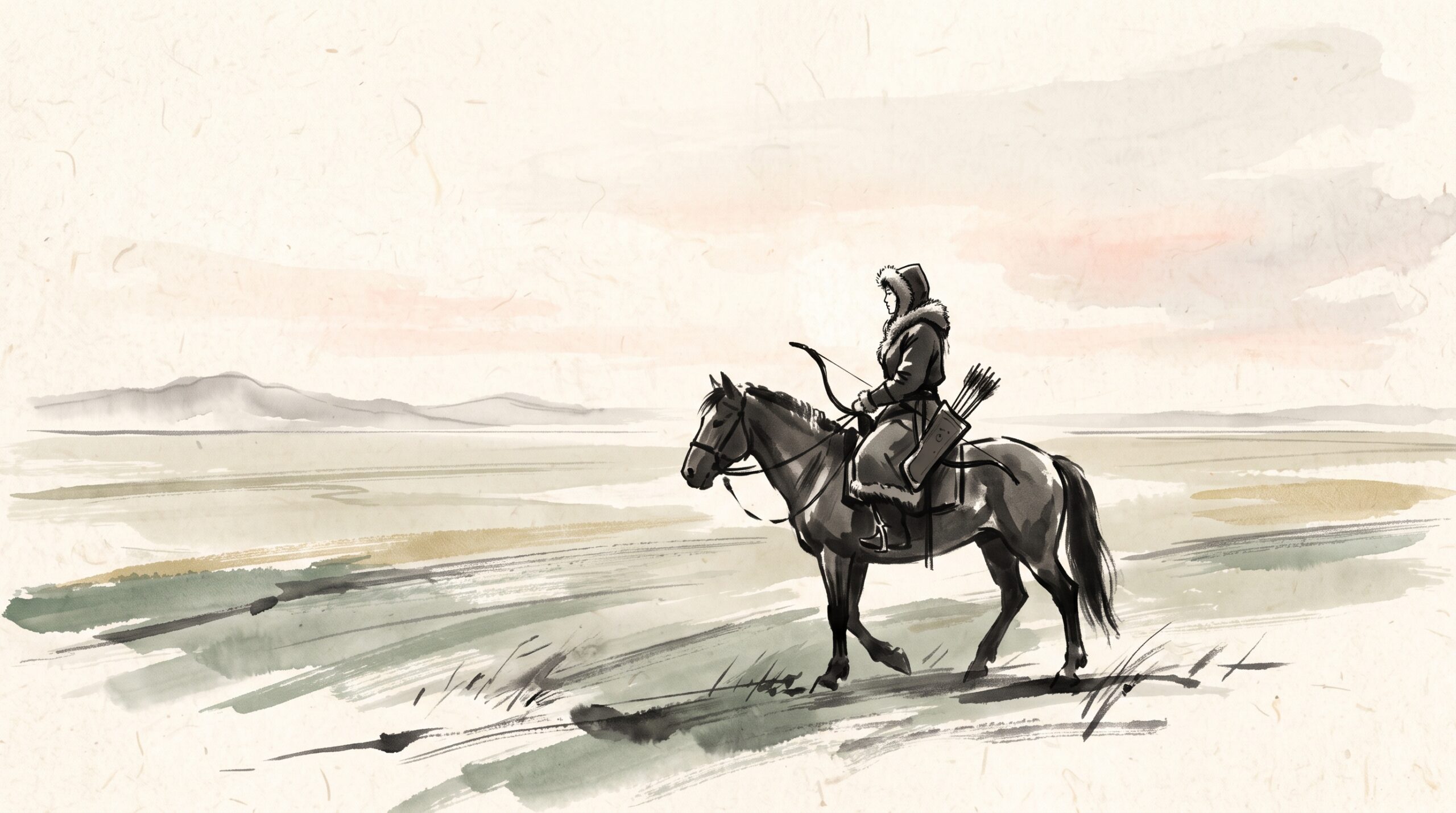
Khutulun was born around 1260, into a world her ancestors had conquered and then quarrelled over. The vast empire Genghis Khan had stitched together had, within two generations, split into rival realms whose rulers eyed one another with suspicion. Her father was Kaidu, lord of a sprawling domain across Central Asia and a great-grandson of Genghis himself. That made Khutulun the great-great-granddaughter of the most feared conqueror in history — and it placed her squarely inside a long, grinding war, for Kaidu spent decades resisting the authority of Kublai Khan, the emperor ruling from distant China.
Kaidu had some fourteen sons. He also had Khutulun, and it was Khutulun he trusted most. Chroniclers of the age record that he valued her counsel above that of her brothers, kept her at his side through his campaigns, and leaned on her in matters both military and political. In a culture where steppe women already rode, shot, and managed the moving cities of the camp, she was something rarer still: a daughter her father treated, openly, as his most capable heir.
The Hawk on Horseback
She was no ornament to the court. The Venetian traveller Marco Polo, who carried her story back to Europe and called her Aigiaruc — “Bright Moon” — described a fighter of startling physical power. In battle, he wrote, she would spur her horse straight into the enemy ranks, seize a man out of the press, and carry him back to her own side as effortlessly as a hawk snatches up a bird. It was not the kind of thing said of a princess kept for alliances.
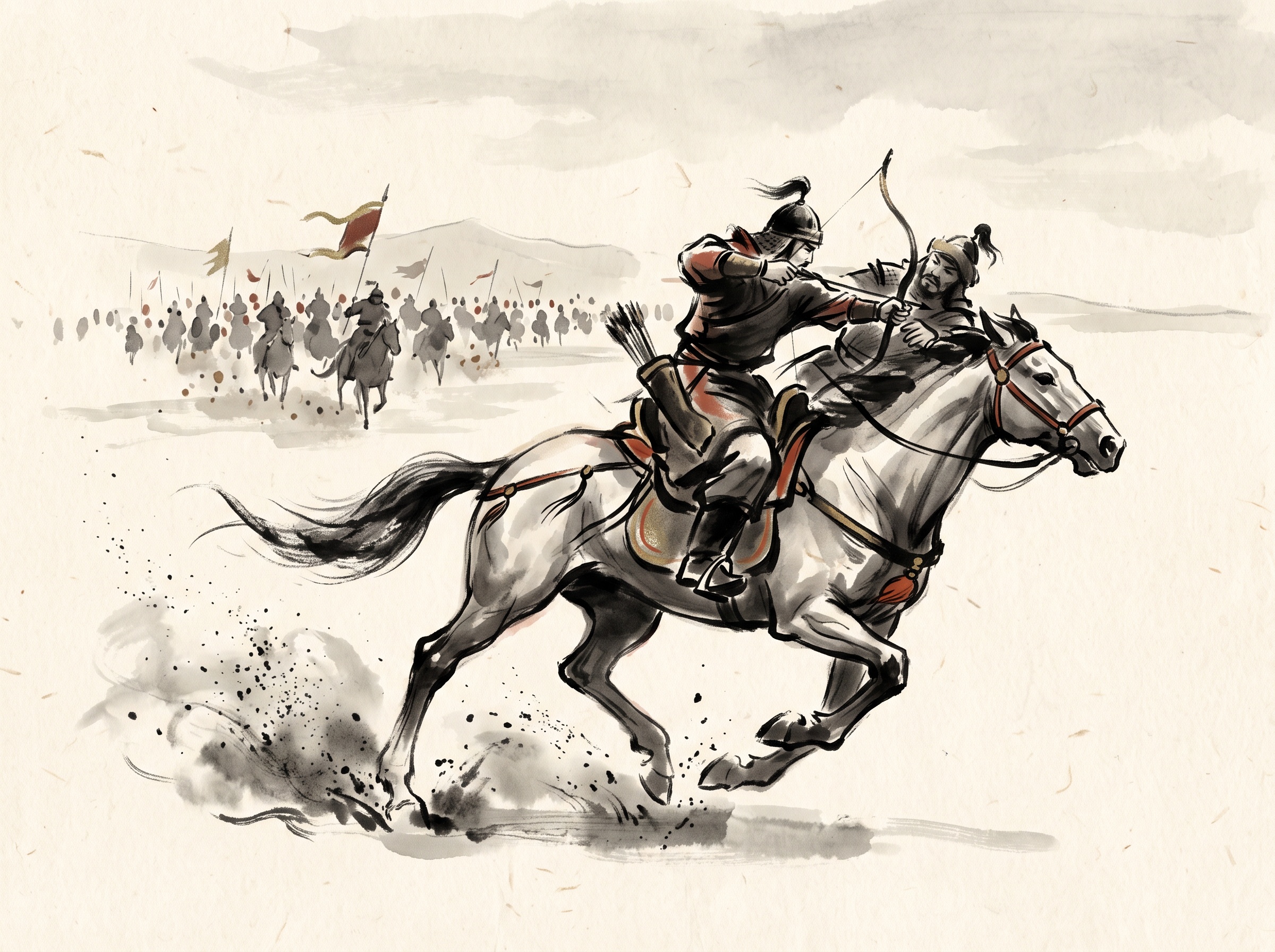
Mongol power rested on the saddle and the bow, and prowess there commanded respect regardless of who showed it. Khutulun earned hers the same way her warrior kin did — in the field, in front of men who had no reason to flatter her. Her father’s confidence was not sentiment but assessment.
The Wager of a Hundred Horses
As the daughter of a khan, Khutulun was a prize in the marriage market, and offers came steadily. She answered them all with a single, unbending condition: she would marry no man who could not first defeat her in wrestling. Any suitor who accepted the challenge and lost would pay a forfeit in horses — a hundred head for a failed match, in the usual telling.
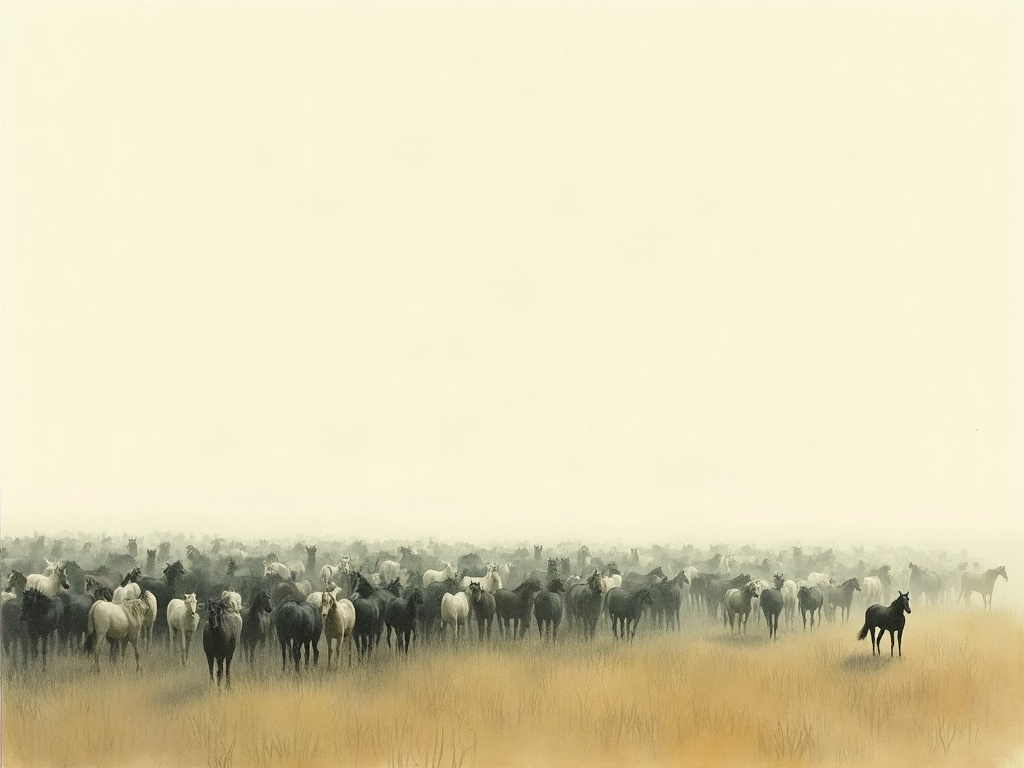
Mongol wrestling was no gentle sport. It was a grappling contest in which the aim was to drive your opponent to the ground, a test of raw strength, balance, and nerve that warriors trained for all their lives. Suitor after suitor took the bet, confident that a woman could not possibly throw them in front of a watching crowd. Suitor after suitor walked home lighter by a hundred horses. The forfeits piled up season after season until, by legend, Khutulun’s herd had swelled to ten thousand animals — a fortune on the steppe, every head of it won by refusing to lose.
The Prince Who Bet a Thousand
The most famous challenger was a young nobleman of real standing — handsome, powerful, and so sure of himself that he scorned the usual stake. He wagered a thousand horses on a single match. This was exactly the kind of match Khutulun’s parents had been waiting for: a marriage that would bind their house to a worthy ally. Quietly, they are said to have begged their daughter to throw the bout and let the prince win.
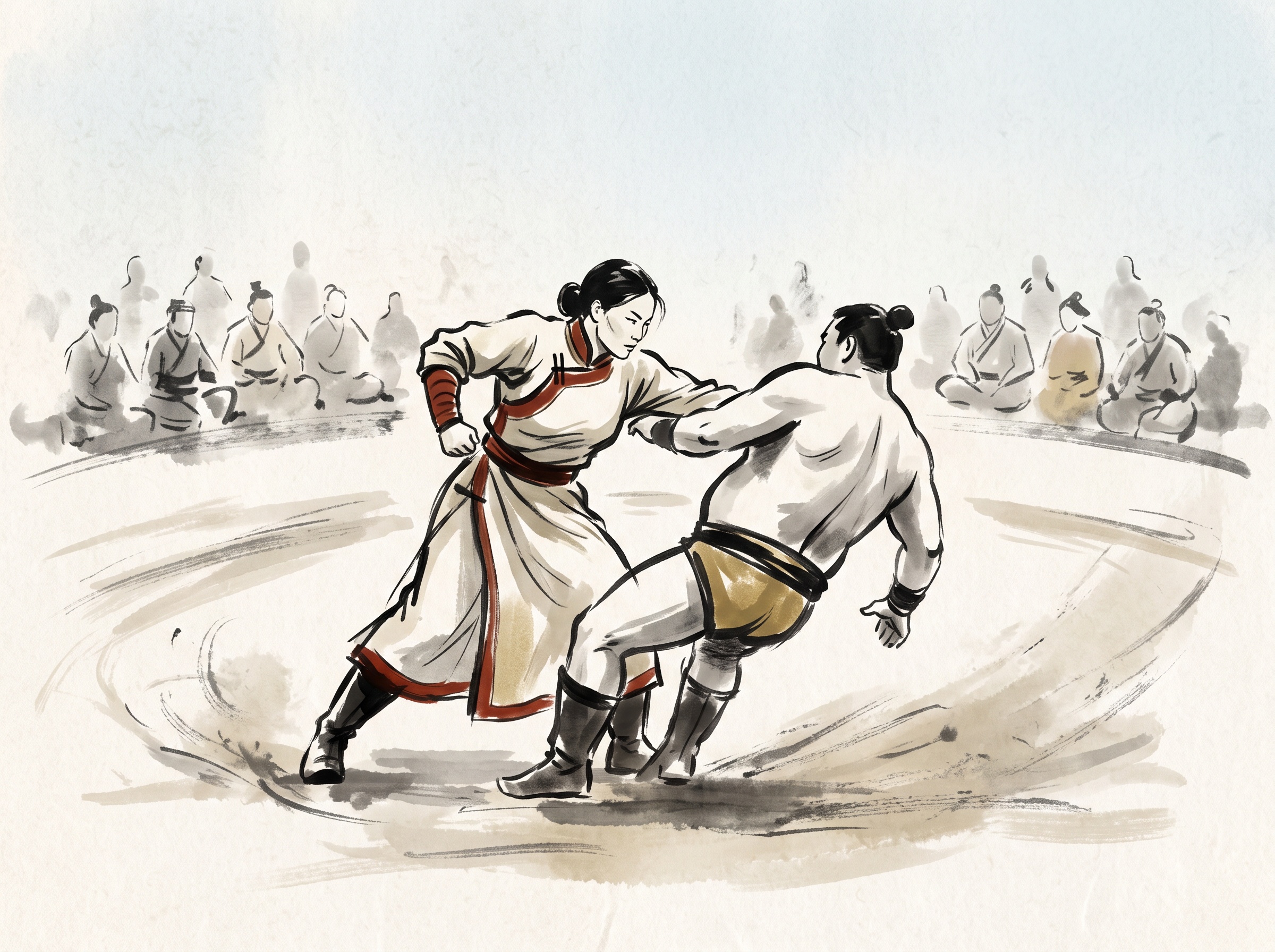
Khutulun refused. The two of them gripped and strained before the assembled crowd, and for a long moment neither gave ground. Then she found her opening, broke his balance, and sent him down into the dust in front of everyone who had come to watch him triumph. The thousand horses were hers. The prince left without a bride, and the story of the woman who could not be beaten travelled further than ever.
The Marriage She Chose for Herself
Khutulun did, in the end, marry — but on no one’s terms except her own. No wrestling match decided it. By some accounts she simply selected a husband herself, choosing a man she favoured rather than one presented to her. Other versions suggest the match was partly meant to silence ugly gossip that had grown up around a woman so close to her father and so uninterested in the suitors paraded before her. Whatever the reason, the undefeated princess ended her long challenge not in defeat but in a decision, which was perhaps the whole point all along.
The Shining Moon’s Fall
When Kaidu died around 1301, worn down at last by his endless war, he is said to have wanted Khutulun to succeed him over his sons. She declined the throne itself and instead backed one of her brothers, but the realm her father had held together by force now began to come apart. His sons and rival princes turned on one another, and the kind of chaos that so often follows a strongman’s death swallowed the inheritance — a reminder that empires frequently do more damage to themselves than any outside enemy ever manages, as in the night an army destroyed itself at Karansebes. Khutulun was given charge of guarding her father’s tomb and treasury, a mark of the trust that outlived him. She did not long survive the unravelling. She died around 1306, in her forties, amid the feuding — the circumstances, like much of her life, uncertain in the records.
The Princess Who Became an Opera
Here is the strange afterlife of Khutulun. The flesh-and-blood warrior was half forgotten, but the shape of her story refused to die. Marco Polo had carried a version of it west, and centuries later a French scholar named François Pétis de la Croix reworked the tale of a proud princess who set her suitors a deadly test. From his retelling it passed to the Italian playwright Carlo Gozzi, and from Gozzi, at last, to Giacomo Puccini — whose opera Turandot, with its icy princess challenging her suitors on pain of death, still fills opera houses today. The riddles on stage are an invention, but the seed was a real Mongol woman who really did refuse to be handed to a man she had not first measured herself against.
It is tempting to file Khutulun alongside other women the records nearly erased — figures like the pirate queen Ching Shih, who commanded a fleet no empire could beat — women whose power was real but whose stories survived mostly as legend, embroidered, doubted, or turned into entertainment. Perhaps that is why Khutulun still matters. In an age that treated noble daughters as instruments of alliance, she insisted on being the one who decided, and she backed the insistence with her own two hands on the open grass. The empire never knew quite what to do with a woman it could not defeat. Eight hundred years later, neither, quite, do we — and so we keep telling her story, even when we remember it as an opera instead of a life.
Sources & further reading:
More from the archive
- Thirteen Ships Against an Empire: Admiral Yi and the Miracle at Myeongnyang
- The Good Maharaja Who Saved Hundreds of Polish Orphans
- The Day Napoleon Was Defeated by Rabbits: The Most Humiliating Military Retreat in History