The Candy Bomber: The Pilot Who Dropped Chocolate on a City the World Was Trying to Starve

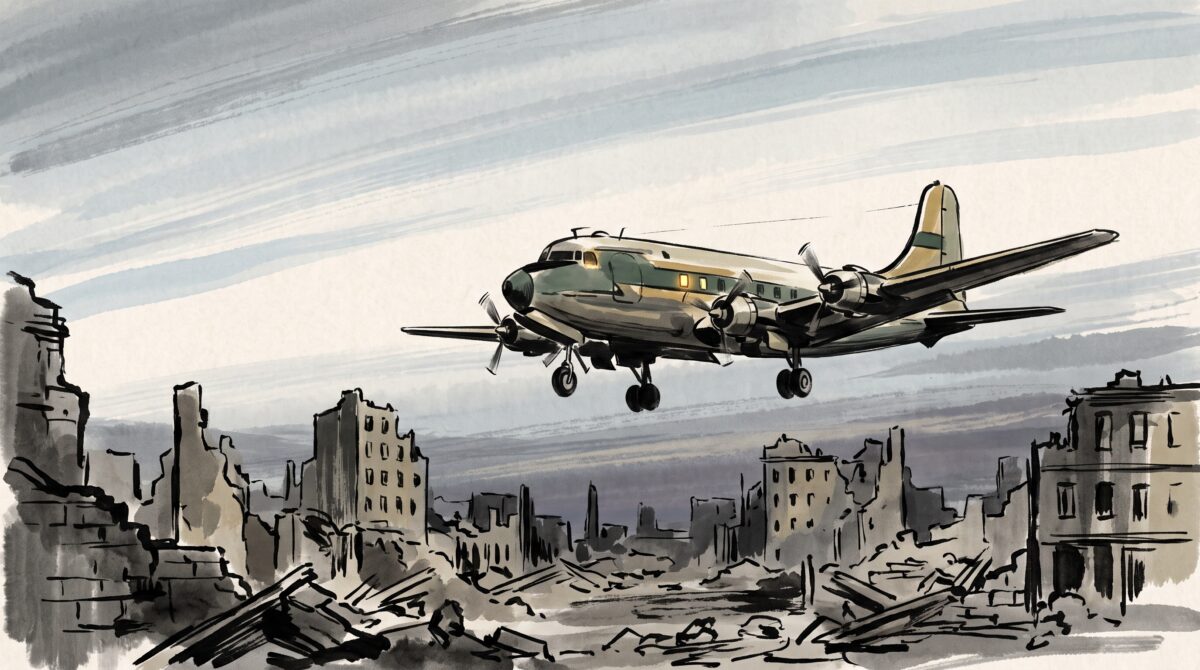
In the summer of 1948, the surest way to kill two million people was to do nothing at all. The Soviet Union had thrown a ring around West Berlin, cutting every road, rail line, and canal that fed the city. No food. No coal. No medicine. The plan was patient and bloodless: wait, and let a divided, war-wrecked population grow hungry enough that the Western allies would simply hand the city over. Berlin had perhaps a month of supplies. Then it would starve in the dark.
What the planners did not count on was an airplane appearing over the rooftops every ninety seconds — and a young pilot who decided, almost by accident, that the children of his enemies deserved a piece of chocolate.
A City Sealed Off From the Ground
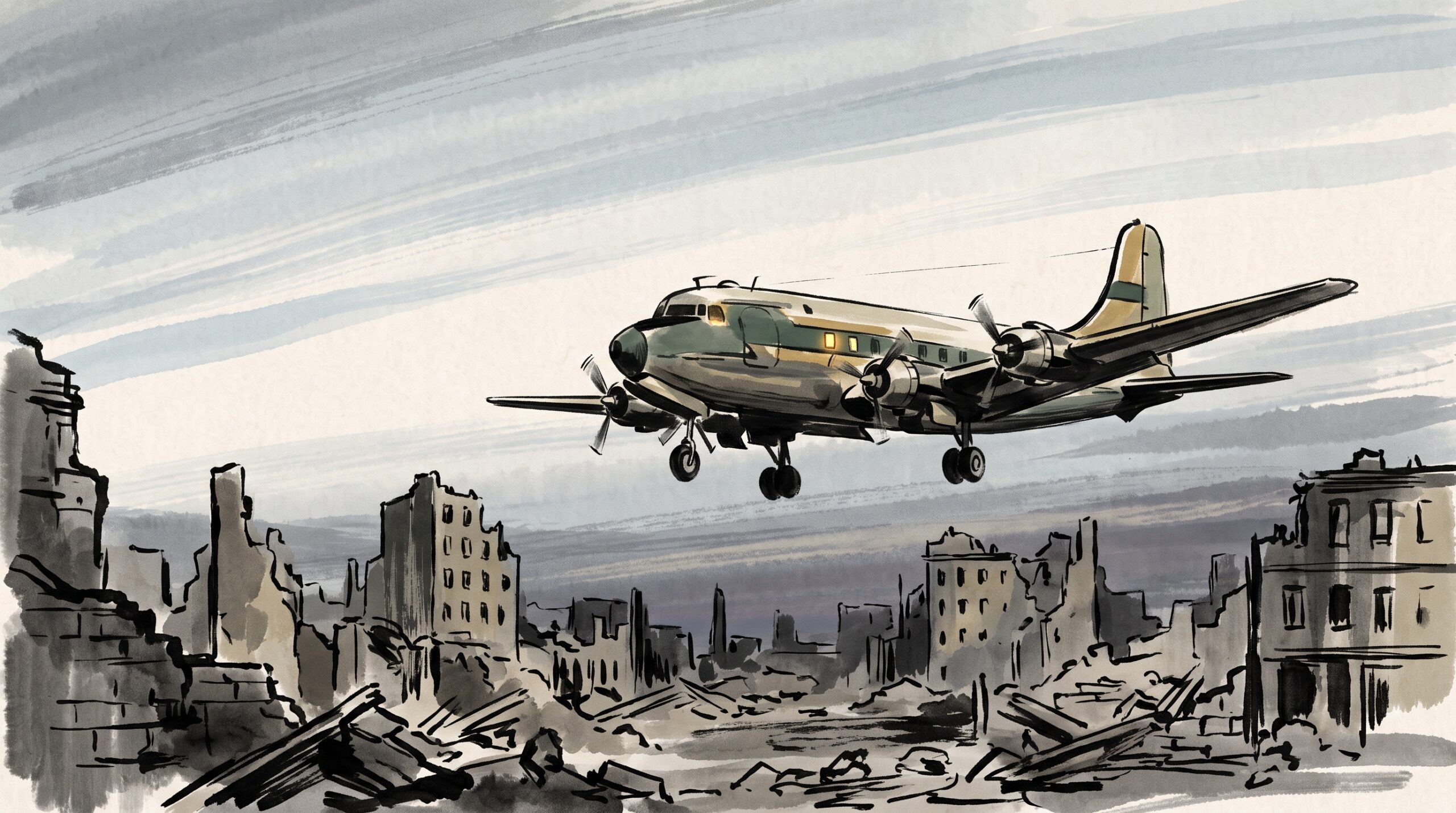
Three years after the fall of Nazi Germany, Berlin lay in ruins a hundred miles inside the Soviet occupation zone. The city itself was split between the Americans, British, French, and Soviets, an uneasy island of competing flags surrounded by Red Army territory. When the Western powers moved to rebuild the German economy with a new currency, the Soviets answered by slamming the gates. On June 24, 1948, the blockade began.
Surrendering Berlin would mean abandoning its people to Soviet control and signaling that the West could be pushed out of Europe one city at a time. Fighting their way through with tanks risked a third world war before the second had been cleaned up. So the allies chose the one corridor left open — the air — and attempted something no one believed could work: supplying an entire modern city of more than two million souls entirely by cargo plane, indefinitely.
They called it Operation Vittles. Day and night, in fog and ice, lumbering four-engine C-54 Skymasters queued up in the sky and poured into Berlin’s airfields in a conveyor belt of flour, coal, powdered milk, and medicine. At its peak a plane landed every minute or so. It was the largest humanitarian air operation in history, and one of the men flying it was a twenty-seven-year-old Utah farm boy named Gail Halvorsen.
Thirty Children at the Fence
Halvorsen flew his runs into Tempelhof, the great airport pressed up against the heart of the city. One July day, with a few hours off, he wandered over to a barbed-wire fence at the end of the runway to film the planes with a hand-cranked movie camera. On the other side of the wire stood about thirty children.
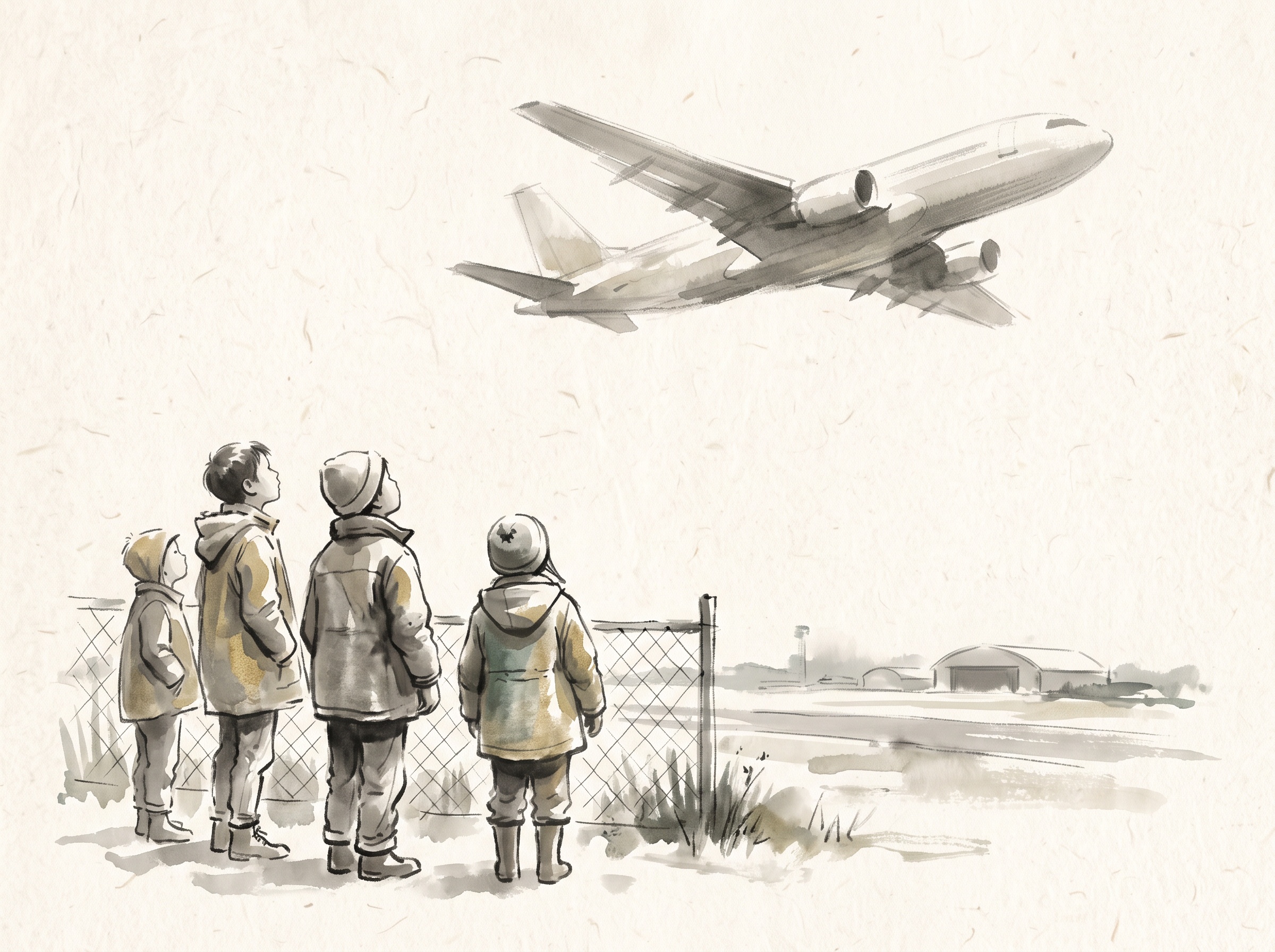
They were thin and ragged, children who had grown up amid rubble and ration cards and the memory of air raids. They peppered him with questions in broken English about the planes and about America. And then Halvorsen noticed something that would stay with him for the rest of his life: not one of them asked him for anything. These were kids who had every reason to beg — and instead they told him, with a dignity that embarrassed him, that they could get by on little food, but that if freedom left Berlin, they would never get it back.
Moved, he reached into his pocket. All he had was two sticks of gum. He broke them in half and passed the pieces through the wire, bracing for a scramble. Instead the children carefully divided the four half-sticks among thirty of them, and those who got none leaned in just to smell the wrappers and tore the paper into strips to share the scent. Standing there watching them pass around the fragrance of chewing gum, Halvorsen made a promise he had no authority to keep. The next time he flew over, he said, he would drop them candy from the plane.
How, the children asked, would they know which plane was his among the hundreds? He thought for a moment. He would wiggle the wings, he told them — rock the big aircraft back and forth as he came in. From then on they watched the sky for the plane that waggled, and they gave him a name: Onkel Wackelflügel — Uncle Wiggly Wings.
Handkerchiefs Full of Chocolate
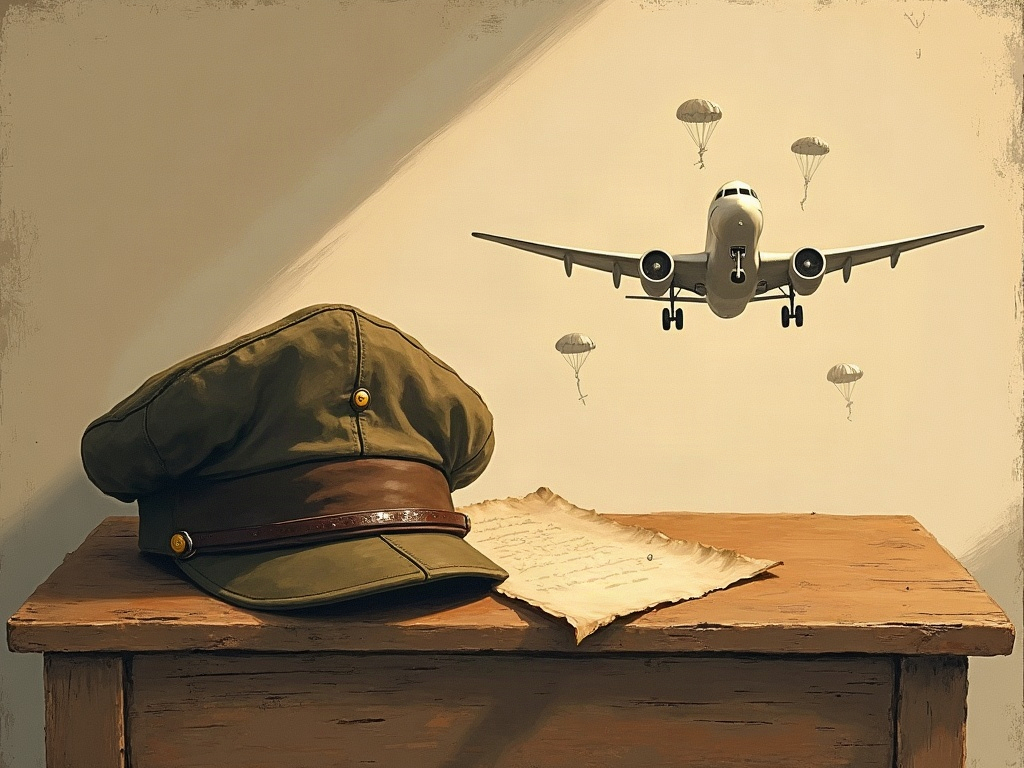
Back at base in Frankfurt, Halvorsen and two crewmates faced a practical problem: a candy bar dropped from a plane at landing speed is a small bomb. So they tied the sweets into tiny parachutes made from handkerchiefs, so the gifts would float down gently. They pooled their own weekly candy and gum rations, folded them into the little chutes, and the next day, as Halvorsen’s Skymaster rocked its wings over Tempelhof, three parachutes tumbled from the flare chute toward the children waiting below.

He did it again the next week, and the next. The crowd at the fence grew. Letters began arriving at the airfield addressed to “Uncle Wiggly Wings” and “the Chocolate Flier,” some with hand-drawn maps of where to aim. Halvorsen was, strictly speaking, breaking the rules, dropping unauthorized objects from a military aircraft over a foreign city, and for a while he kept it quiet. But there is no keeping quiet a sky that rains chocolate.
When the Sky Rained Chocolate
A news photographer caught the falling parachutes, and the story leapt from Berlin to the front pages of American newspapers. Halvorsen was certain he was headed for a court-martial. Instead, the commander of the airlift, General William Tunner, recognized a gift beyond measure: in the middle of a grim Cold War standoff, here was a story that made the whole free world smile. Rather than stop it, he made it official.
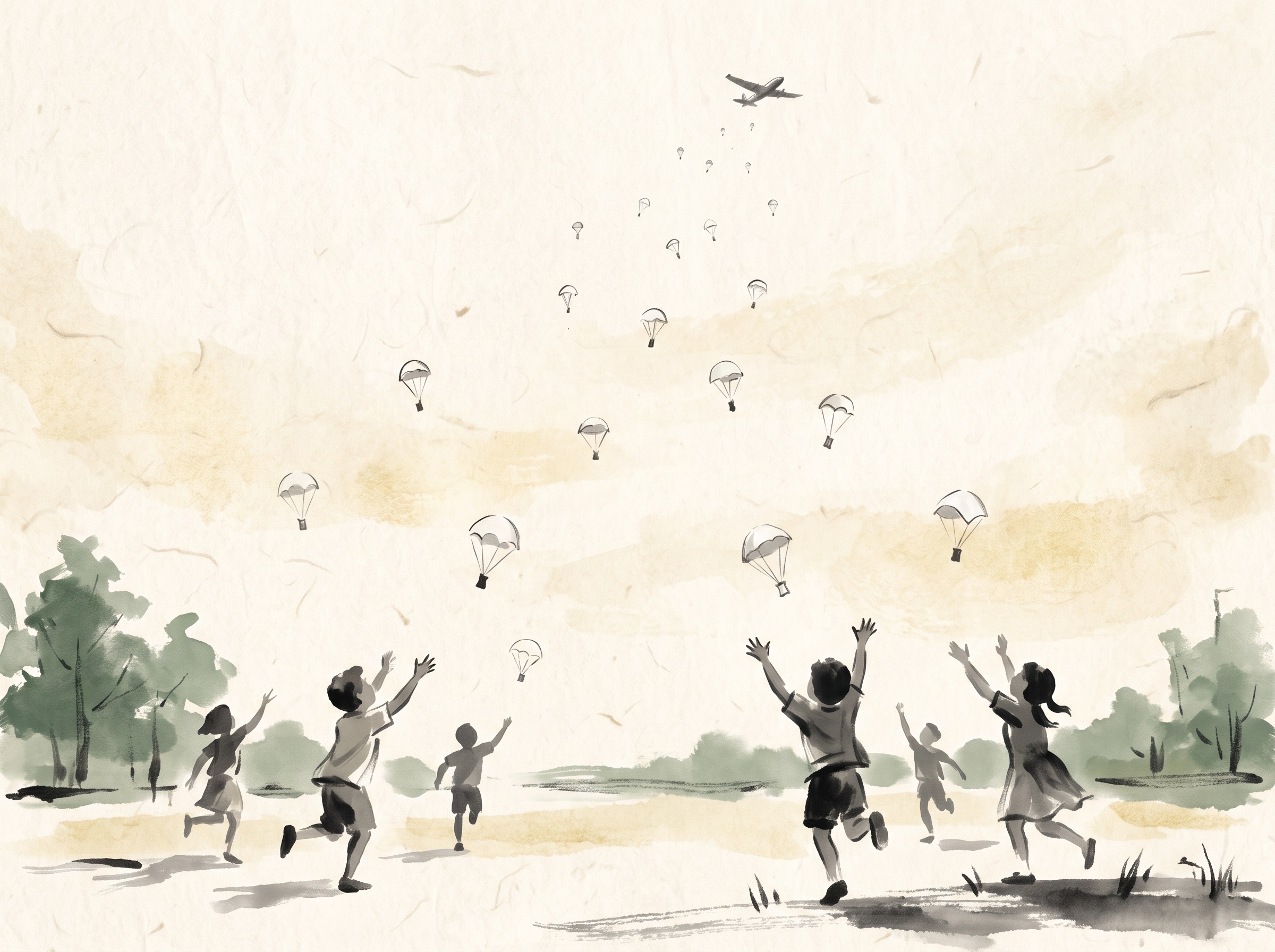
What had begun with three handkerchiefs became Operation Little Vittles. American candy manufacturers donated tons of sweets. Schoolchildren across the United States spent their evenings tying parachutes and packing boxes; one Massachusetts town turned it into a civic project, and the Confectioners Association shipped candy by the ton. Other pilots joined in, wiggling their wings over schoolyards and squares across the city. Before the blockade ended, airlift crews had dropped some twenty-three tons of candy on more than a quarter of a million tiny parachutes over Berlin.
The Blockade That Backfired
The Soviets had gambled that the West could not feed a city from the air. They were wrong. Through one of the worst winters on record, the planes kept coming — at the end, nearly reaching the pace of the whole city’s old ground deliveries. In all, the airlift carried more than two million tons of supplies into Berlin. On May 12, 1949, after eleven months, Moscow conceded and lifted the blockade. The gates opened. Not a shell had been fired.
In trying to break Berlin’s will, the blockade had done the opposite. It welded the Western allies together, it turned a defeated and distrusted Germany into a partner almost overnight, and it handed the Soviet Union a propaganda defeat it could never undo. And somewhere in that enormous strategic reversal was a very small thing: the memory, in tens of thousands of German children, of the day the Americans — so recently the enemy dropping bombs — dropped chocolate instead.
The Pilot Who Kept Coming Back
Gail Halvorsen never let go of Berlin, and Berlin never let go of him. He returned again and again across the decades, dropped candy for new generations of children at ceremonies and air shows, and answered letters from the grown men and women who had once scanned the sky for his wiggling wings. The thin kids at the fence became doctors and teachers and grandparents, and many of them wrote to tell him that the parachutes had meant far more than sugar — they had meant that someone, somewhere, had not forgotten them. He flew his last candy drop as an old man and died in 2022 at the age of 101, still called, with great affection, the Berlin Candy Bomber.
The story endures because it answers a question most of history leaves hanging: in the middle of great cold machinery — blockades, currencies, occupation zones, the opening moves of a decades-long standoff — does one person’s small kindness actually matter? Halvorsen’s two sticks of gum insist that it does. A single pilot, acting on nothing more than the feeling that hungry children should have something sweet, helped change the way a wounded nation saw its former enemy. Sometimes the thing that outlasts the empires and the airlifts and the headlines is simply the memory of a handkerchief drifting down out of a hard grey sky, and a promise, improbably, kept.
Sources & further reading:
More from the archive
- The Village That Lost Its Children: The Freckleton Air Disaster of 1944
- The Collar Bomb Heist: The Pizza Deliveryman With a Bomb Locked to His Neck
- The Cleveland Balloonfest of 1986: How 1.5 Million Balloons Turned Into a Disaster