The Wreck of the Whaleship Essex: The Real Disaster That Inspired Moby-Dick

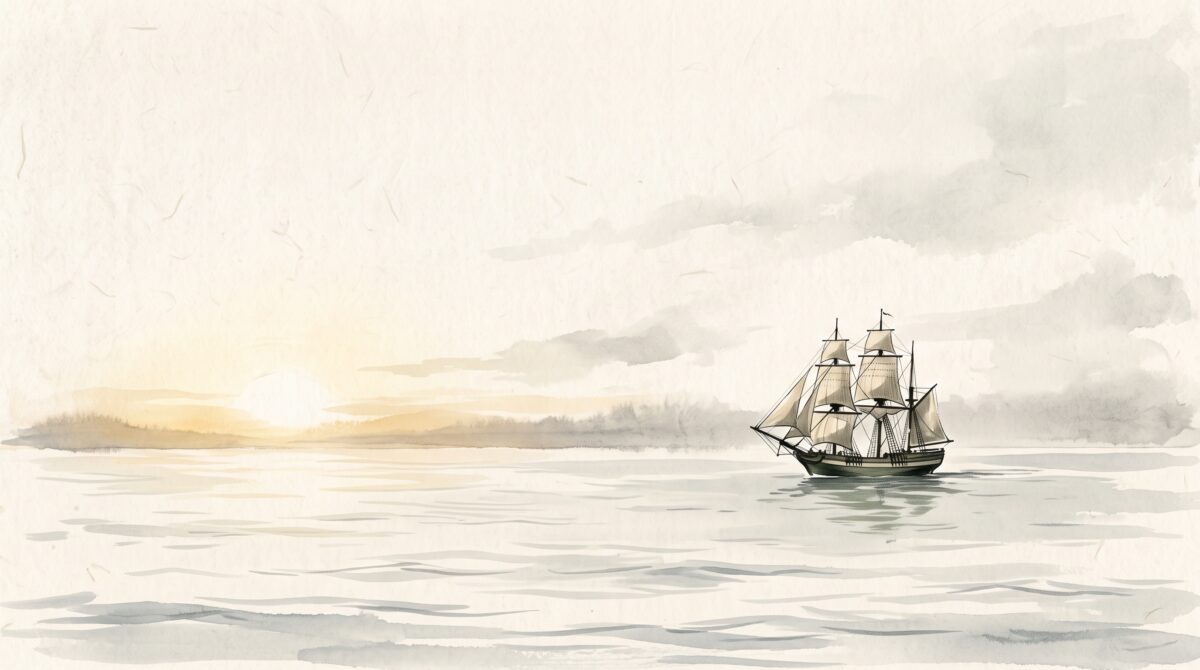
In the autumn of 1820, in a stretch of the South Pacific so remote that months could pass without the sight of another sail, a sperm whale roughly the length of the ship that hunted it turned in the water, fixed on the Nantucket whaleship Essex, and charged. It struck the bow once, swam off, turned, and struck again harder. Within minutes the Essex was filling and going down, and twenty men were left clinging to three small open boats in the middle of the largest ocean on earth.
What happened to them over the next three months is one of the most harrowing survival stories ever recorded — and it would reach far beyond the men who lived it. A battered account of the disaster, written by the ship’s first mate, eventually found its way into the hands of a young sailor named Herman Melville, and gave the world the ending of Moby-Dick. This is the true story behind the white whale.
The Whalemen of Nantucket
In 1819 the little island of Nantucket, off the coast of Massachusetts, was the capital of a global industry. Its fleet chased sperm whales to the far ends of the earth for the clean, bright oil in their heads — the oil that lit the lamps of America and Europe before petroleum. A whaling voyage could last two or three years, and the men who signed on expected hardship, boredom, and danger as a matter of course. The Essex, a sturdy if aging vessel of about 240 tons, set out in August 1819 under Captain George Pollard Jr., with Owen Chase as first mate and, among the crew of twenty-one, a teenage cabin boy named Thomas Nickerson who would one day write down what he saw.
By the autumn of 1820 the Essex had rounded Cape Horn and pushed far out into the Pacific, following the whales ever westward into waters where the charts simply gave out. They were, by then, about as far from any help as human beings could be.
The Whale That Fought Back
On the morning of 20 November 1820, the lookout sighted spouts and the whaleboats were lowered to give chase. Then the men still aboard the Essex noticed something no whaleman had words for: an enormous bull sperm whale, perhaps eighty-five feet long, lying quietly off the bow. As they watched, it began to move. It swam straight at the ship and rammed the hull with a blow that knocked men off their feet and stove in timbers.
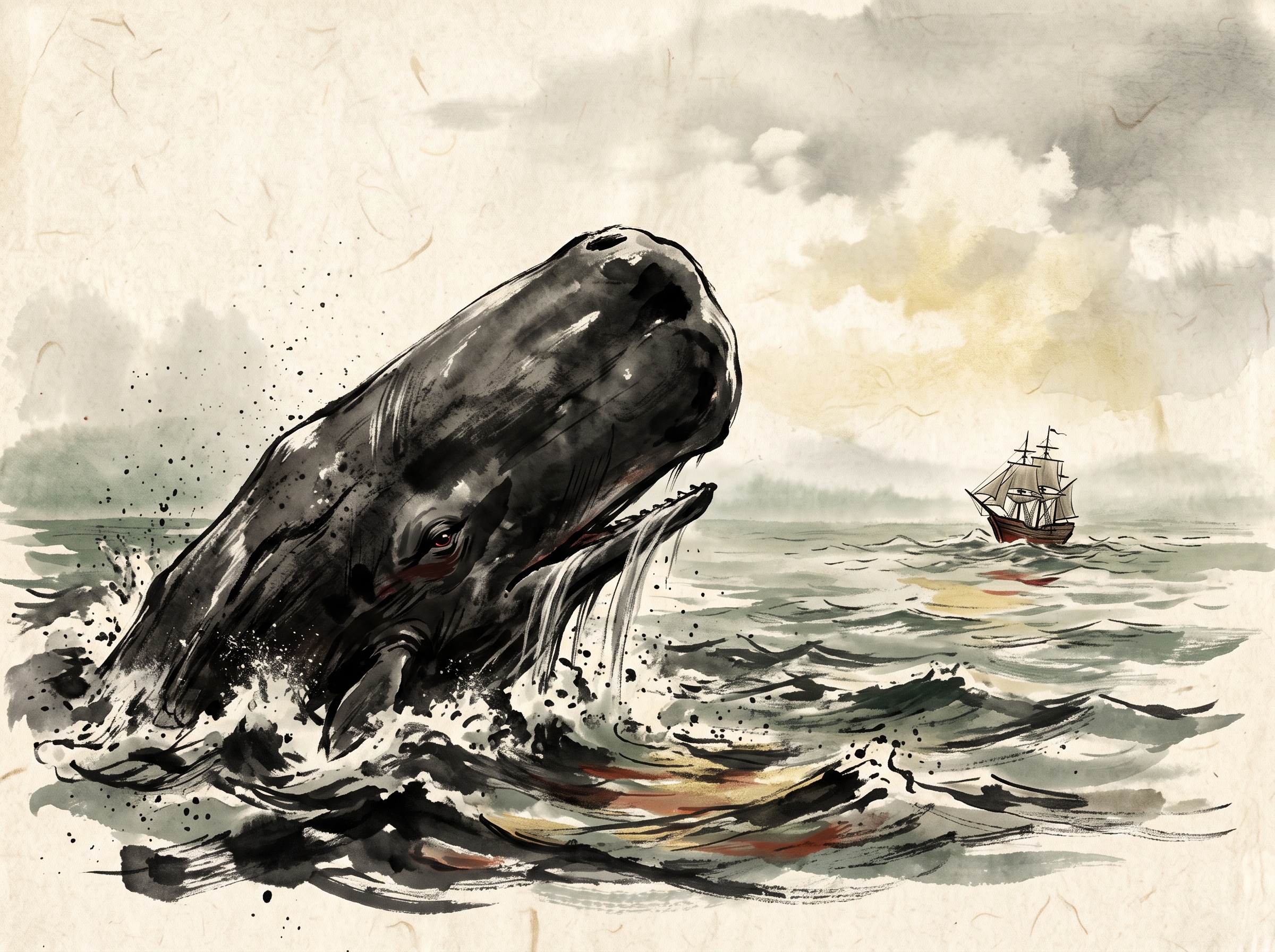
That alone was almost unheard of. What came next was beyond belief. The whale surfaced a short distance off, seemed to gather itself, and came again — faster this time, driving its massive blunt head into the bow a second time with such force that it crushed the planking inward. Owen Chase, who survived to describe it, was convinced the animal had attacked with deliberate, furious intent, as if avenging the harpoons of its kind. The Essex began to settle at once. The men had time only to cut loose the boats and salvage what navigation instruments, hardtack and fresh water they could grab before their ship rolled onto its side and died beneath them.
Three Boats and a Fatal Choice
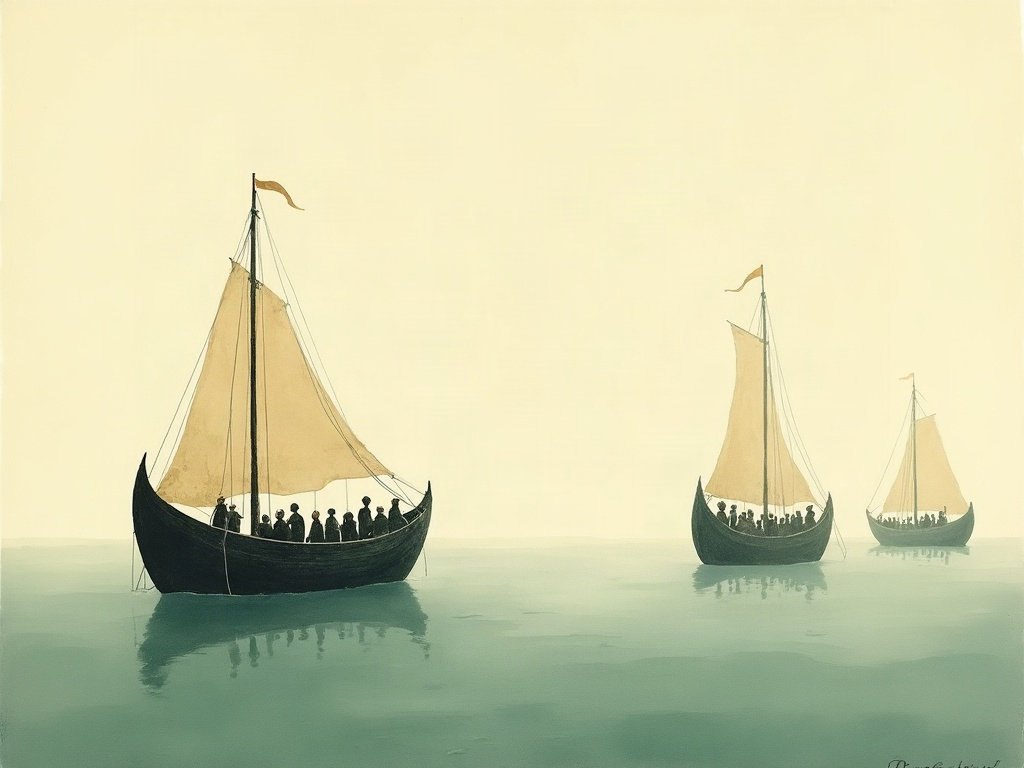
Twenty men now crowded into three fragile whaleboats, each meant for the quick dash of a hunt, not an ocean crossing. The nearest land was the Marquesas and the Society Islands, perhaps a couple of weeks’ sail downwind to the west. But Pollard and his officers had heard dark rumors that those islands were home to cannibals, and the fear decided them. Rather than run before the wind to the closest shore, they chose to beat thousands of miles east and south toward the distant coast of South America — a far longer, far crueler passage against the prevailing winds and currents.
It is one of history’s bitter ironies. In fleeing the imagined cannibals of the islands, the men of the Essex sailed directly into a fate that would force cannibalism upon them. They did reach one speck of land along the way — tiny, uninhabited Henderson Island — but it offered only a few days of birds, eggs and brackish water before it was stripped bare. Three of the men chose to take their chances and stay there rather than return to the boats. The other seventeen sailed on into the emptiness.
The Unspeakable Choice
What followed was a slow descent into horror. The rations gave out. The men baked under the sun by day and shivered by night, drinking seawater and their own urine, their bodies wasting to skeletons. One by one they began to die. At first the survivors buried their dead at sea. Then, with no food left and no land in sight, they faced the decision that would haunt the handful who lived: they kept the bodies, and they ate them.
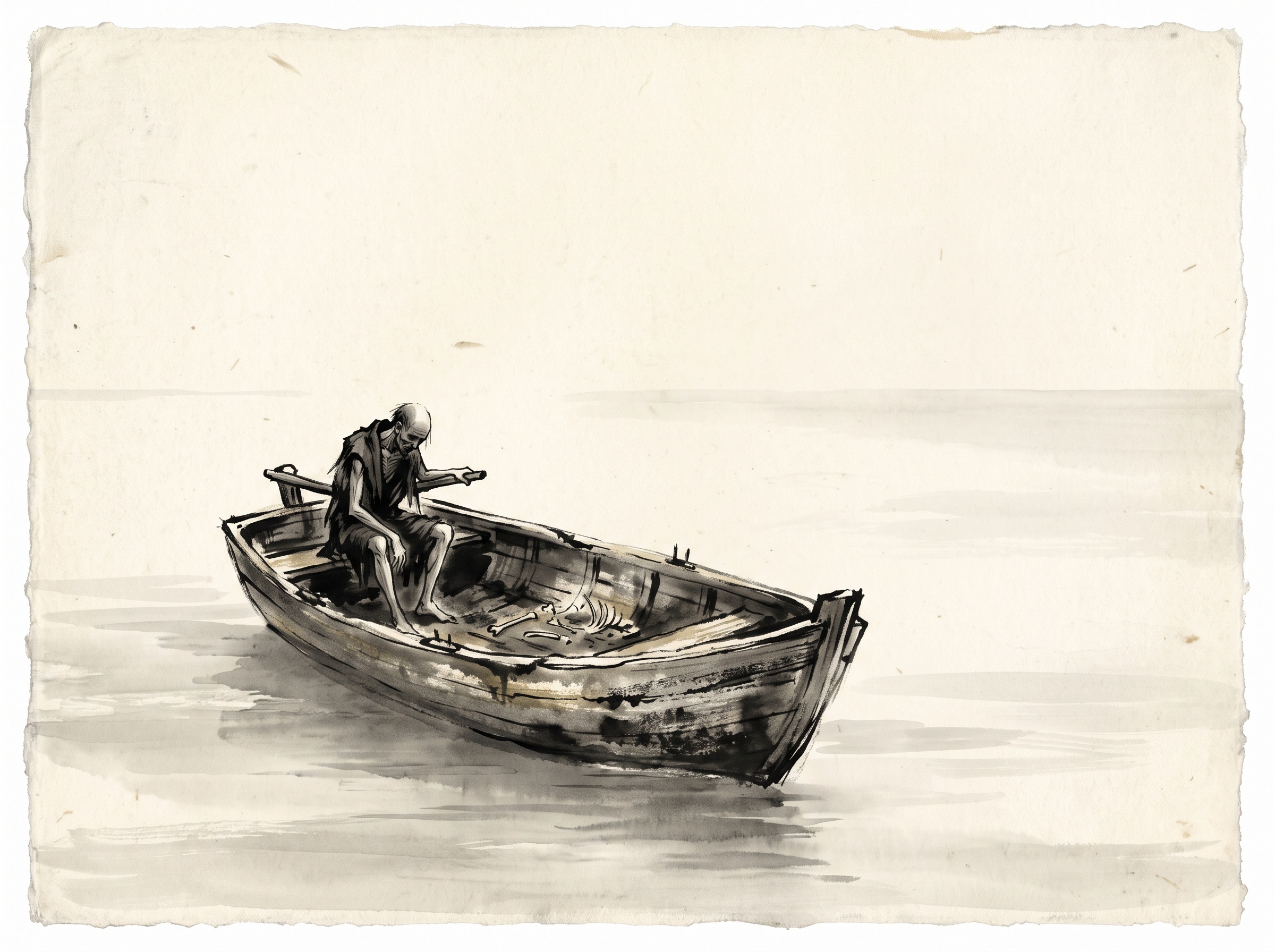
When even that grim resource ran out and no one had died recently enough to sustain the rest, the men in Pollard’s boat did the last terrible thing. They drew lots to decide who would be sacrificed so the others might live. The lot fell to a young man named Owen Coffin — Captain Pollard’s own first cousin, a boy he had promised to watch over. Pollard reportedly offered to take the boy’s place; Coffin refused, lay down, and was shot by another crewman. It was a weight Pollard carried, silent, for the rest of his life. Survival at sea has again and again pushed human beings to the very edge of what they can endure, from a sailor who clung to a raft for over a hundred days in the longest solo ordeal ever recorded to the thousands lost in forgotten calamities like the deadliest peacetime shipwreck in history — but few stories lay the cost so bare.
Rescue and the Long Silence
In February 1821, more than ninety days after the whale struck, the ordeal finally broke. The British brig Indian came upon Owen Chase’s boat; days later the Nantucket whaler Dauphin found Pollard’s boat off the coast of Chile. The rescuers described men so reduced they were barely recognizable as human, clutching the bones of their shipmates and unwilling to let them go. The three men left on Henderson Island were later taken off alive. Of the twenty who had abandoned the Essex, eight came home.
Nantucket, a town built on the sea’s dangers, received them with a kind of silence. These things happened; the custom of the sea was grimly understood; and life went on. Owen Chase went back to whaling and rose to command his own ships. George Pollard, astonishingly, was given another vessel — the Two Brothers — only to wreck that one too on a reef within two years, after which no owner would trust him with a ship again. He lived out his days as a night watchman on Nantucket, and on the anniversary of the sinking he was said to shut himself away and fast in memory of the men he had lost.
The White Whale
The story might have faded into local legend but for a slim book. In 1821 Owen Chase published his Narrative of the Most Extraordinary and Distressing Shipwreck of the Whale-Ship Essex, a plain and devastating account of what had happened. Decades later a restless young merchant sailor read it at sea, was seized by the image of a whale that fought back, and could not let it go. His name was Herman Melville. In 1851 he published Moby-Dick — and while the novel’s doomed Pequod and its monomaniac Captain Ahab were his own invention, the climax, in which a great white whale deliberately rams and sinks the ship, came straight from the fate of the Essex.
What lingers about the Essex is how completely it overturned the order of things. These were professional hunters, masters of their trade, and the hunted turned and destroyed them. Then the men who survived the whale were destroyed in a slower way by the choices the sea forced upon them. The ocean took the Essex in minutes and spent three months taking the rest, and the handful who came home carried the memory like a stone for the rest of their lives. We remember the white whale as fiction. The men who actually met it, and what it cost them to live, were painfully real.
Sources & further reading:
Related Reading
More from the archive
- The Ship That the World Forgot: The MV Doña Paz and the Deadliest Peacetime Shipwreck in History
- The Somerton Man: The Body on the Beach, the Code No One Could Crack, and the 70-Year Hunt for a Name