The Law of the Tongue: The Killer Whales of Eden Who Hunted Alongside Humans for Generations

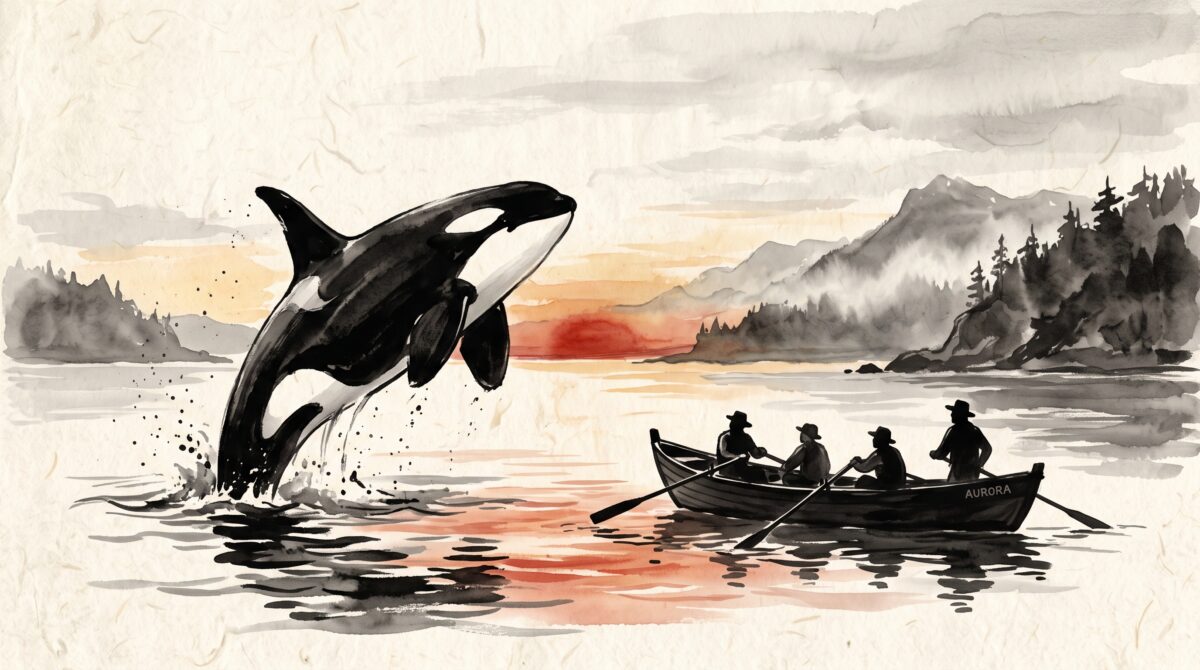
On a grey morning in September 1930, the body of a killer whale drifted onto the shore of Twofold Bay, on the far south coast of New South Wales. Word travelled fast through the little whaling town of Eden, and men who had spent their whole lives at sea came down to the water and wept openly. They were not mourning an animal they had hunted. They were mourning a colleague. His name was Old Tom, and for as long as anyone could remember, he and his pod had been business partners with the people of Eden.
It sounds like a tall tale invented to sell postcards. It is not. The cooperation between the killer whales of Twofold Bay and the human whalers who worked there is one of the best-documented, most extraordinary hunting partnerships between people and wild predators in recorded history – watched, photographed, and sworn to by generations of hard-headed men who had no reason to lie.
A bay with a strange arrangement
Twofold Bay is a deep, sheltered inlet where the great southern migration routes of baleen whales pass close to shore. Through the 1800s it became a shore-based whaling station, worked most famously by the Davidson family across three generations. Shore whaling was brutal, dangerous work: spot a whale, launch open wooden rowing boats, chase it down, and try to harpoon a creature many times the size of your vessel before it dragged you under or smashed you to splinters.
The men of Eden had an advantage no other whalers on earth possessed. A resident pod of killer whales – orcas – had learned that when the humans killed a large baleen whale, there was a meal in it for them too. Over the decades, that opportunism hardened into something that looked unmistakably like teamwork.
The signal from the sea
It began with an alarm. When the killer whales located a humpback or a southern right whale moving through the bay, several of them would race to the whaling station and announce it. They did this by ‘flop-tailing’ – rearing up and slapping their great tail flukes flat against the water, over and over, throwing up fans of spray that could be seen and heard from the shore.
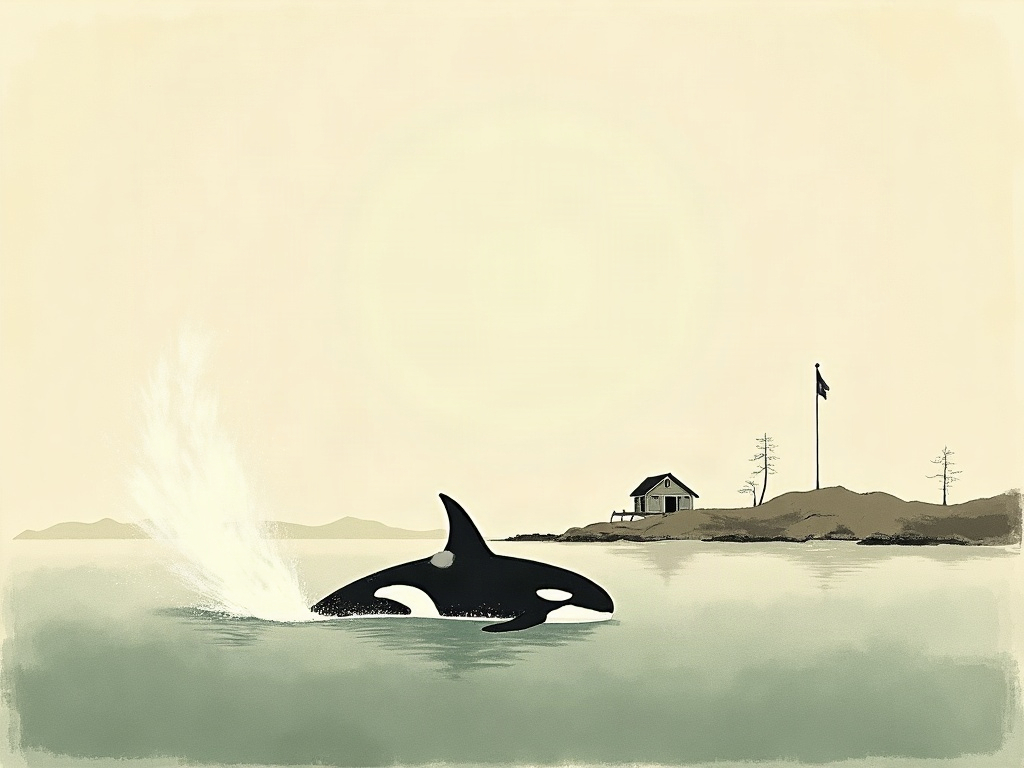
To the Davidsons, the meaning was as clear as a church bell. The orcas had found prey. The men would tumble out of bed, run to the boats, and follow the killer whales out to the hunt. The whales were, in effect, ringing the dinner bell for both species at once.
Herders, drivers, and one who held the rope
What the orcas did next is what turns the story from curious into astonishing. The pod would surround the target whale and work as a team to herd it, cutting off its escape to open sea and driving it deeper into the bay toward the oncoming boats. Some would leap onto the whale’s blowhole to stop it breathing and tire it; others slid beneath it to keep it from sounding to the depths. They exhausted the prey and delivered it, more or less gift-wrapped, to the humans with the harpoons.
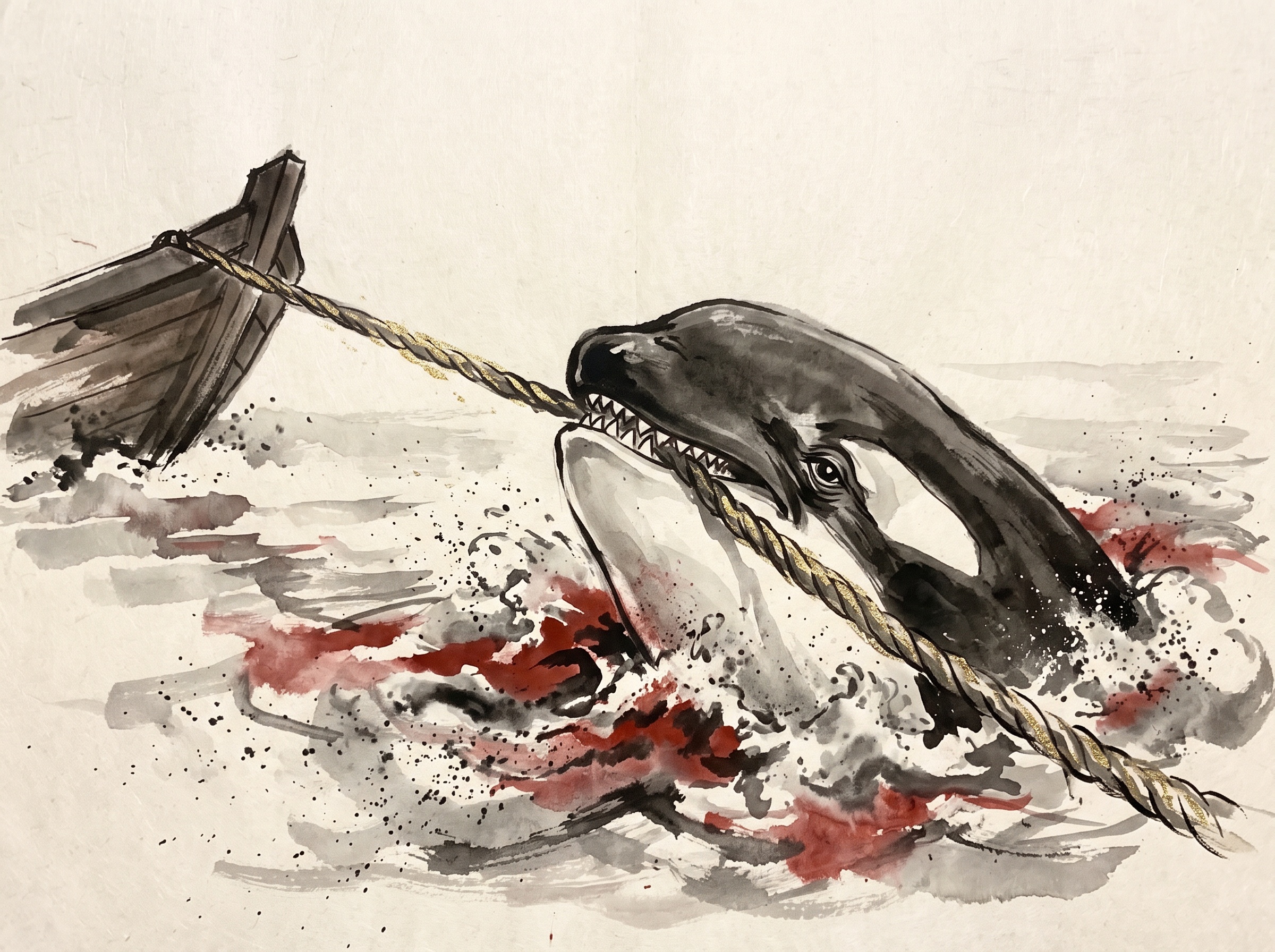
Old Tom took the most famous role of all. Again and again, witnesses described him seizing the harpoon rope in his teeth once a whale was struck, and pulling alongside the boat – either helping to hold the wounded whale or towing the men toward it. He did this so often, over so many years, that the rope wore deep grooves into his teeth. Those grooves are still visible today, and they are the closest thing we have to a signed contract.
The Law of the Tongue
Every partnership needs terms, and this one had them. When the baleen whale was finally killed, the whalers did not immediately haul the enormous carcass ashore. Instead they anchored it and left it in the water overnight. The killer whales moved in and ate the parts they prized most – chiefly the lips and the huge, soft tongue – before losing interest in the rest.
Only afterward did the humans recover the carcass for its valuable blubber and baleen. This unwritten agreement, honoured for decades, became known as the Law of the Tongue. The orcas got the delicacies they wanted; the whalers got the commercially valuable body, made easier to catch in the first place by the whales’ help. Break the arrangement – haul the whale away too soon – and, by more than one account, the killer whales would simply stop helping until trust was restored.
An older bond beneath the story
The Davidsons did not invent this relationship. They inherited it. Long before European whalers arrived, the Yuin and Thaua Aboriginal people of the region had a profound spiritual connection to the killer whales, whom they knew as beowa. In their understanding, the orcas were not mere animals but kin – the reincarnated spirits of ancestors, protectors who watched over their people and drove fish and prey toward them.
Thaua men were among the most skilled crew in the Eden whaleboats, and it is now widely accepted that the cross-species cooperation the Europeans marvelled at was rooted in a far older Indigenous relationship with these whales – a relationship of family, not just of business. Recent research and the testimony of Thaua descendants have brought that deeper history back into the light, reframing Old Tom not as a European curiosity but as the latest chapter in a bond thousands of years old.
The end of a partnership
Nothing so strange and delicate could last forever. The great baleen whale populations were being decimated by industrial whaling far out at sea, and the numbers passing Eden thinned. The old orcas of the pod died off one by one. There are darker accounts too – a story of a whaler who, in a moment of greed or panic, harpooned one of the killer whales, and of trust that never fully recovered afterward.
By the time Old Tom’s worn-toothed body washed ashore in 1930, he was the last of his pod still working the bay, and the partnership died with him. The people of Eden recovered his skeleton and built a museum around it. The Eden Killer Whale Museum still stands today, and Old Tom’s bones – grooved teeth and all – remain its heart.
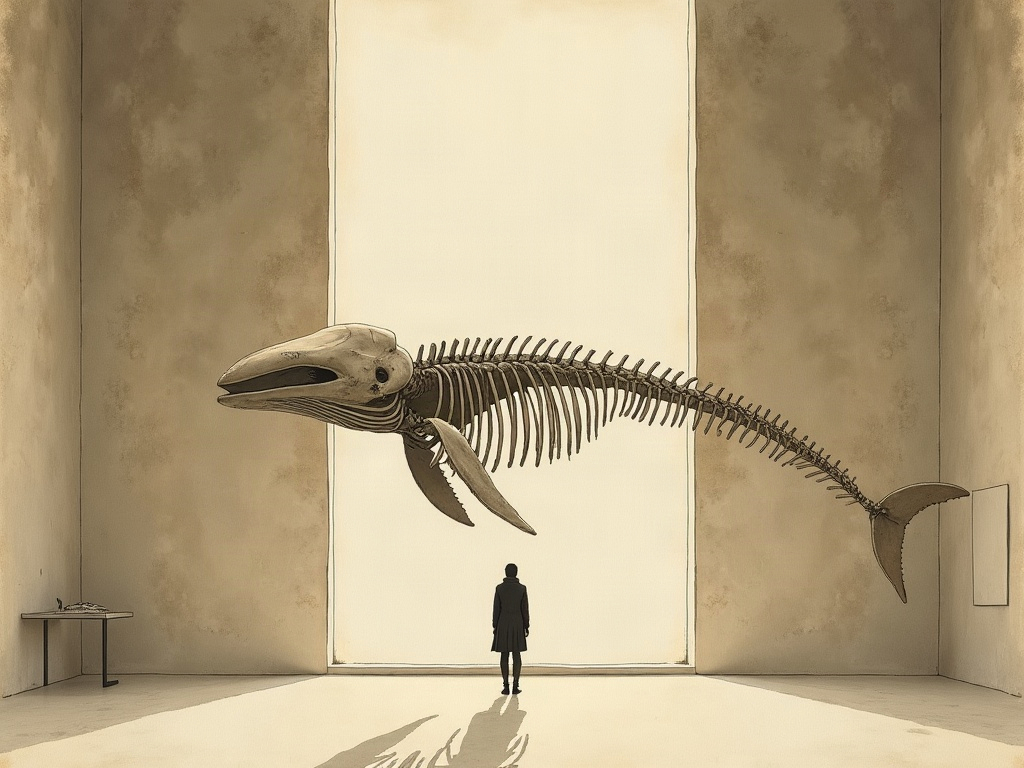
We live in an age that assumes the line between humans and wild predators is fixed and absolute: they are out there, we are in here, and the two do not mix. For nearly a hundred years, in one quiet bay at the bottom of the world, that line dissolved. Two species that had every reason to fear one another learned instead to read each other’s signals, honour a shared agreement, and hunt as one. When Old Tom died, hardened whalers grieved him like a friend – because, in the only way that ever mattered, he had been one.
Sources & further reading:
More from the archive
- From Speared Warriors to Vampire-Proofed Corpses: History’s Most Bizarre Burial Rituals
- Shanawdithit: The Last of the Beothuk
- The Somerton Man: The Body on the Beach, the Code No One Could Crack, and the 70-Year Hunt for a Name