The Human Lightning Rod: Roy Sullivan and the Seven Strikes He Somehow Survived

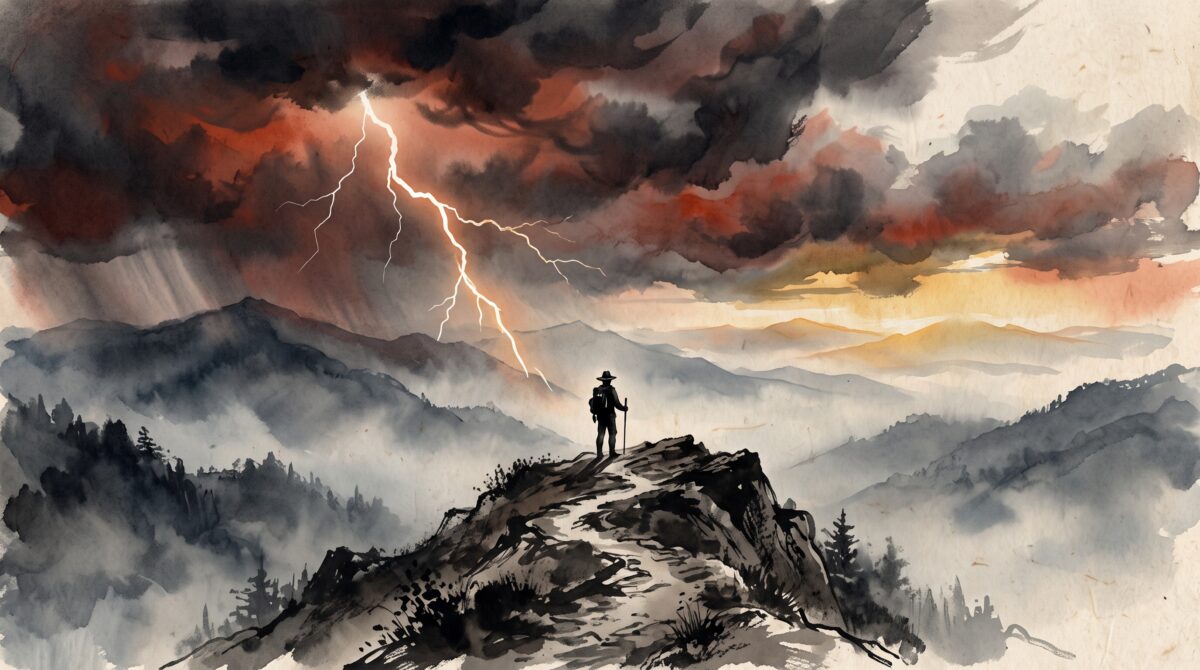
The odds are the first thing that stop you. In any given year, an American’s chance of being struck by lightning sits somewhere around one in a million. Over a whole lifetime the risk creeps up to roughly one in fifteen thousand – still so remote that most people never give it a second thought. Now try to imagine the arithmetic of being struck seven separate times, and surviving all seven. The number is so small it stops meaning anything. And yet one man lived it: a soft-spoken park ranger from the Blue Ridge Mountains of Virginia named Roy Cleveland Sullivan.
They called him the Human Lightning Rod. He hated the name. He also could not escape it, because for thirty-five years the sky returned to him again and again, as if it had unfinished business.
A man who worked where the storms lived
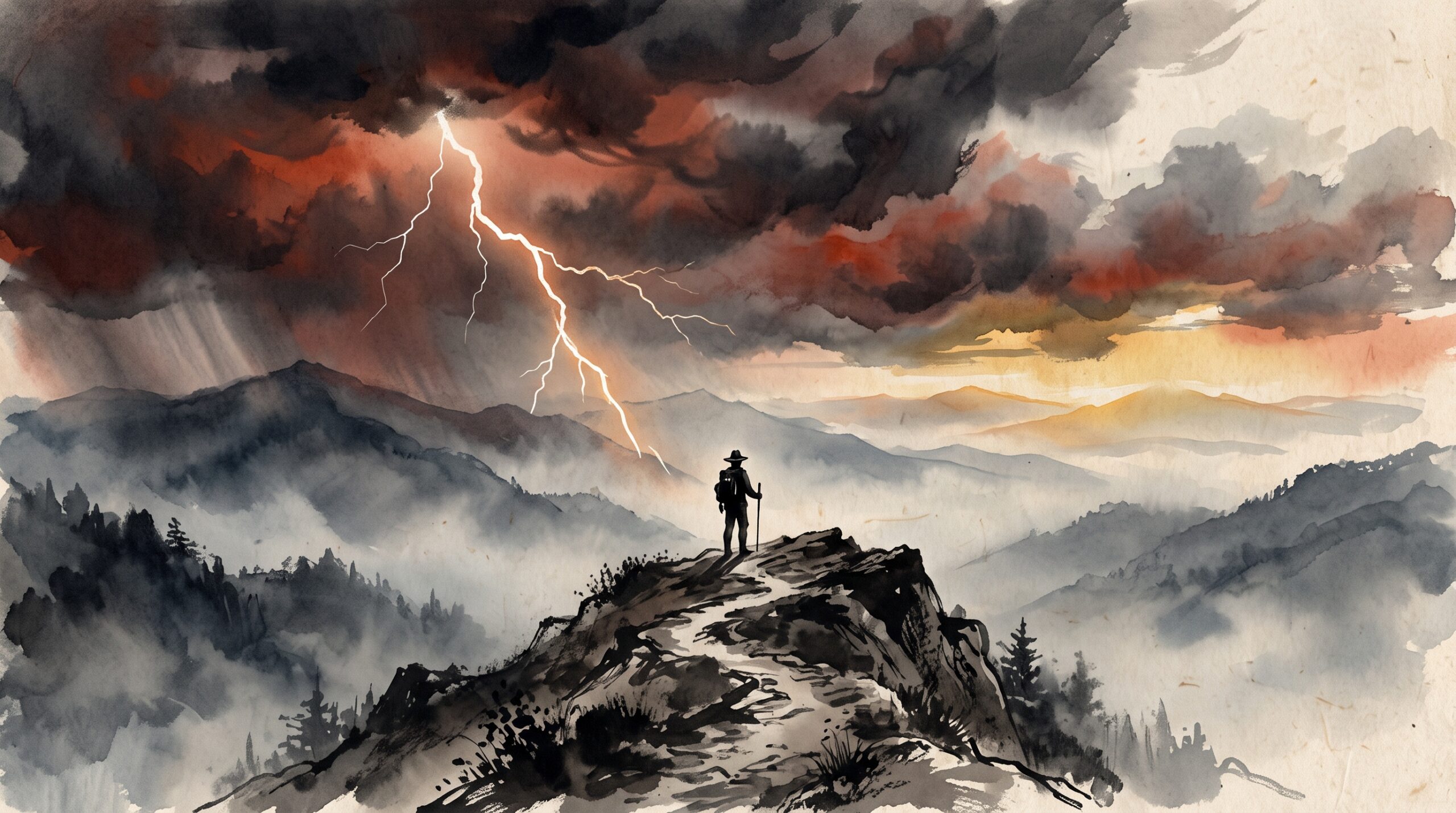
Roy Sullivan was born in 1912 and spent his career as a ranger in Shenandoah National Park, patrolling a long spine of forested ridgeline where the Appalachian weather turns fast and violent. Mountaintops are exactly where lightning wants to go – the tallest thing for miles, jutting up into the charged base of a thunderstorm. A ranger whose job kept him on those ridges in all weather was, statistically, already living closer to the danger than almost anyone. But what happened to Sullivan went so far beyond bad luck that it curdled into something that felt personal.
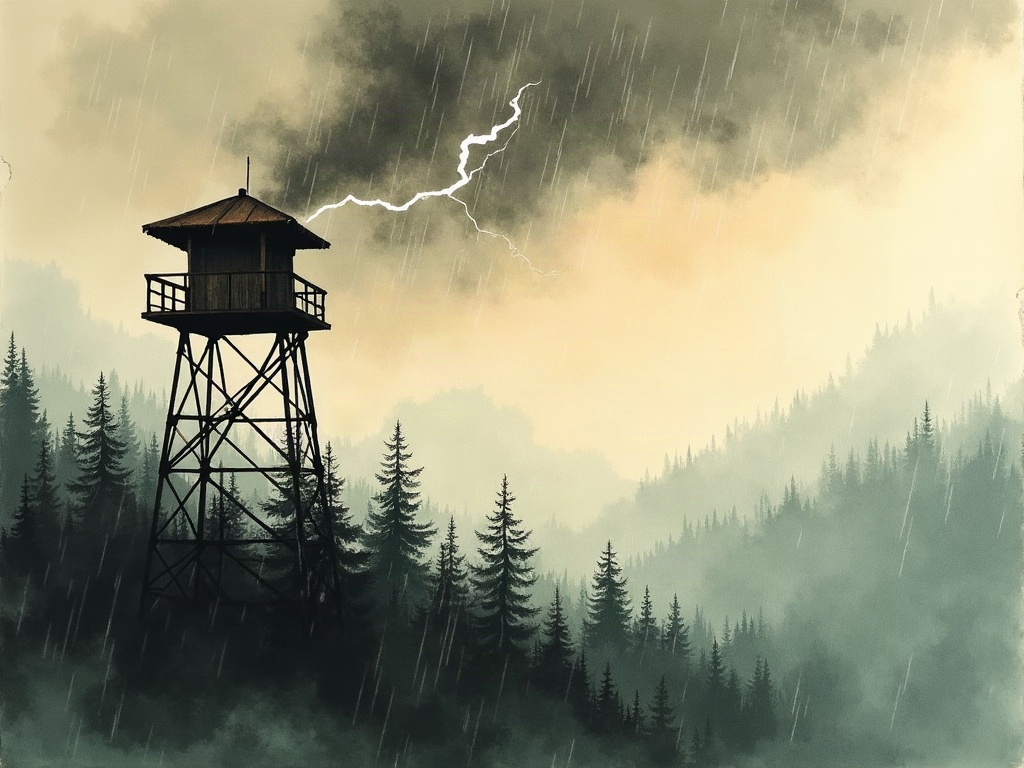
The first strike came in 1942, in a brand-new fire-lookout tower that had, as luck would have it, no lightning rod fitted yet. A storm closed in and lightning hit the tower again and again, driving Sullivan out into the open. It caught him as he fled, tearing a strip down his right leg, knocking a nail-shaped hole through his shoe, and burning his toe. He survived, shaken. He assumed, reasonably enough, that he had used up a lifetime’s share of terrible fortune in a single afternoon.
The strikes that would not stop
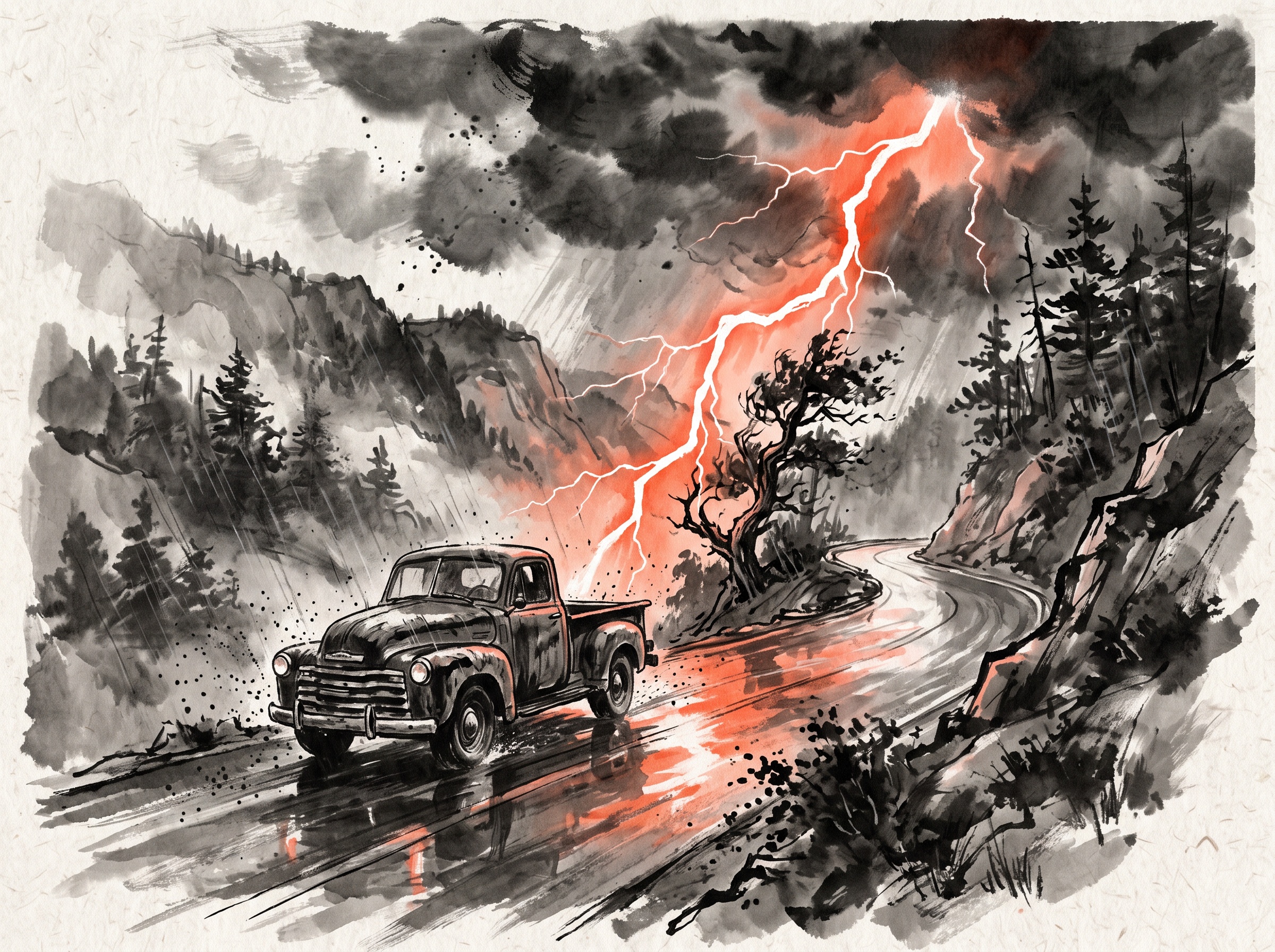
He had not. In July 1969 – twenty-seven years later – lightning found him a second time, and it found him driving. A bolt came down through the roadside trees along a mountain road, struck his truck, and knocked him senseless. It burned off his eyebrows, seared his eyelashes, singed his hair, and left the truck rolling driverless until it stopped near a cliff edge.
The following year, 1970, it happened in his own front yard. A bolt hit a nearby power transformer and jumped to his shoulder, searing it. In the spring of 1972 he was inside a ranger station when lightning struck once more and set his hair on fire; he beat out the flames with his jacket and, from then on, took to carrying a can of water with him wherever he went. It was after this fourth strike that a quiet dread settled over him. He began to believe that some force was hunting him personally. Worse, other people began to believe it too, and to step away from him when clouds gathered – afraid that standing near Roy Sullivan was a good way to get killed.
The strikes kept coming with an almost mocking regularity. On 7 August 1973, out on patrol, he watched a low cloud that seemed to follow his truck; he drove clear of it, stepped out, and was struck anyway, his hair set ablaze again and a shoe blown off his foot. In June 1976 lightning caught him a sixth time, injuring his ankle and, once more, setting his hair alight. His endurance had become a grim running joke that no one, least of all Sullivan, found funny.
The seventh strike, and the bear
The seventh and final strike came on 25 June 1977, and it arrived with a detail so absurd it sounds invented. Sullivan was fishing in a mountain pool when lightning hit him on the head, burned down his chest and stomach, and – true to form – set his hair on fire yet again. Dazed and burned, he then had to fend off a bear that lumbered up to steal the trout from his line. By his own account it was far from the first bear he had beaten back with a stick over the years. To be struck by lightning and then wrestle a bear in the same afternoon is the kind of day that would break most people. Sullivan simply drove himself for treatment, as he had learned to do six times before.
The physical toll was real but, incredibly, never fatal. Burns, singed hair, a ruined shoe, a damaged ankle, a lifetime of small scars. Guinness World Records eventually recognised him as the person who had survived more lightning strikes than anyone in recorded history – a distinction that put two of his scorched ranger hats on museum display and turned him into a curiosity. The recognition never sat easily with him. Fame built on being repeatedly electrocuted is a lonely kind of fame.
What lightning does to a life
It is tempting to file Roy Sullivan under “amazing survivor” and leave it there, alongside other people who walked away from the statistically impossible. He belongs in that company – the same strange fraternity as Tsutomu Yamaguchi, the man who survived both atomic bombs, or the medical marvels whose bodies endured what should have ended them, like Phineas Gage and the iron rod that passed through his skull. But survival is not the same as escape. Sullivan lived, but he did not live untouched.
The deeper damage was social and psychological. As word of the strikes spread, people grew wary of him. Friends made excuses when storms threatened. He noticed the flinch, the half-step back, the sense of being treated as a walking hazard. A man whose whole working life had been spent in the open, among mountains he loved, found the sky itself had become an enemy and other people a little afraid of his company. There is a particular loneliness in being marked out as extraordinary for something you never chose and cannot stop.
The end the lightning never delivered
Roy Sullivan died on 28 September 1983, at the age of seventy-one. The lightning did not kill him. He died of a self-inflicted gunshot wound, reportedly heartbroken over a woman. The man the sky had tried and failed to claim seven times was, in the end, undone by the oldest and most human wound of all.
That ending reframes the whole story. It is easy to marvel at the record and forget the person carrying it – the same trap we fall into with anyone whose life is defined by a single relentless circumstance, like Paul Alexander and the seventy years he spent inside an iron lung. The headline is the strikes; the story is the man underneath them, quietly enduring something no one else on earth had to.

We like our tales of survival to end in triumph – the odds beaten, the hero vindicated. Roy Sullivan’s does not, quite, and that is why it stays with you. The universe threw its rarest violence at one ordinary ranger seven times, and seven times he stood back up. What finally proved too much was not the lightning at all. It is a reminder, uncomfortable and true, that the storms we survive are rarely the ones that decide us – and that the strongest people alive are still carrying weather no one else can see.
Sources & further reading:
Related Reading
More from the archive
- The Ohio Penitentiary Fire of 1930: 322 Men Who Burned Behind Locked Doors
- The Town That Burned in an Hour: The Peshtigo Fire, America’s Deadliest Wildfire, Erased by the Great Chicago Fire