The Carrington Event: When the Most Powerful Solar Storm in History Brought the World to Its Knees

On September 1, 1859, amateur astronomer Richard Carrington witnessed something extraordinary while observing sunspots from his private observatory near London. A brilliant white light erupted from the sun’s surface—the first recorded observation of what we now call a solar flare. Little did Carrington know that this seemingly distant celestial event would soon unleash chaos across the globe.

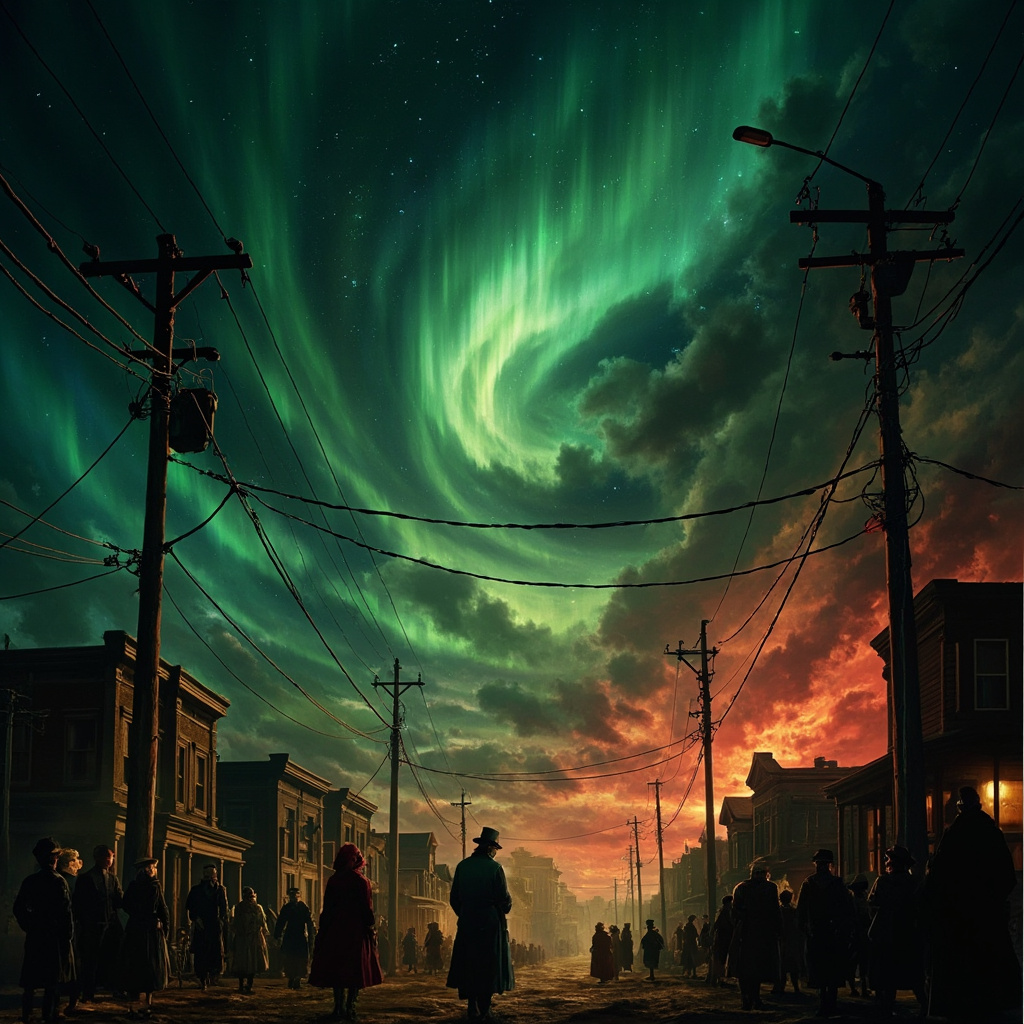
What followed was the most powerful geomagnetic storm in recorded history: the Carrington Event. This solar superstorm would shut down the world’s telegraph systems, set fire to telegraph poles, and create auroras so bright that people could read newspapers by their light as far south as the Caribbean.

The Carrington Event — context image

The Amateur Astronomer Who Witnessed History

Richard Carrington observing the solar flare through his telescope

Richard Carrington was a 33-year-old brewery owner with a passion for astronomy. From his private observatory in Redhill, Surrey, he meticulously tracked sunspots—dark patches on the sun’s surface that were still poorly understood in the Victorian era. On that fateful morning, as Carrington projected the sun’s image onto a screen to safely observe it, he witnessed something unprecedented.

“Two patches of intensely bright and white light broke out,” Carrington later wrote to the Royal Astronomical Society. The flare lasted only about five minutes, but Carrington intuited that this solar explosion might be connected to the strange atmospheric phenomena that would soon follow.

His suspicion proved correct. What Carrington had observed was a massive coronal mass ejection—an enormous burst of solar wind and magnetic fields released from the sun’s corona. This cloud of charged particles was racing toward Earth at speeds exceeding one million miles per hour.

When Technology Met Its Match

Eighteen hours later, the solar storm struck Earth with unprecedented fury. The planet’s magnetosphere—our natural shield against space weather—was overwhelmed. The consequences were immediate and dramatic.

Telegraph office during the Carrington Event solar storm

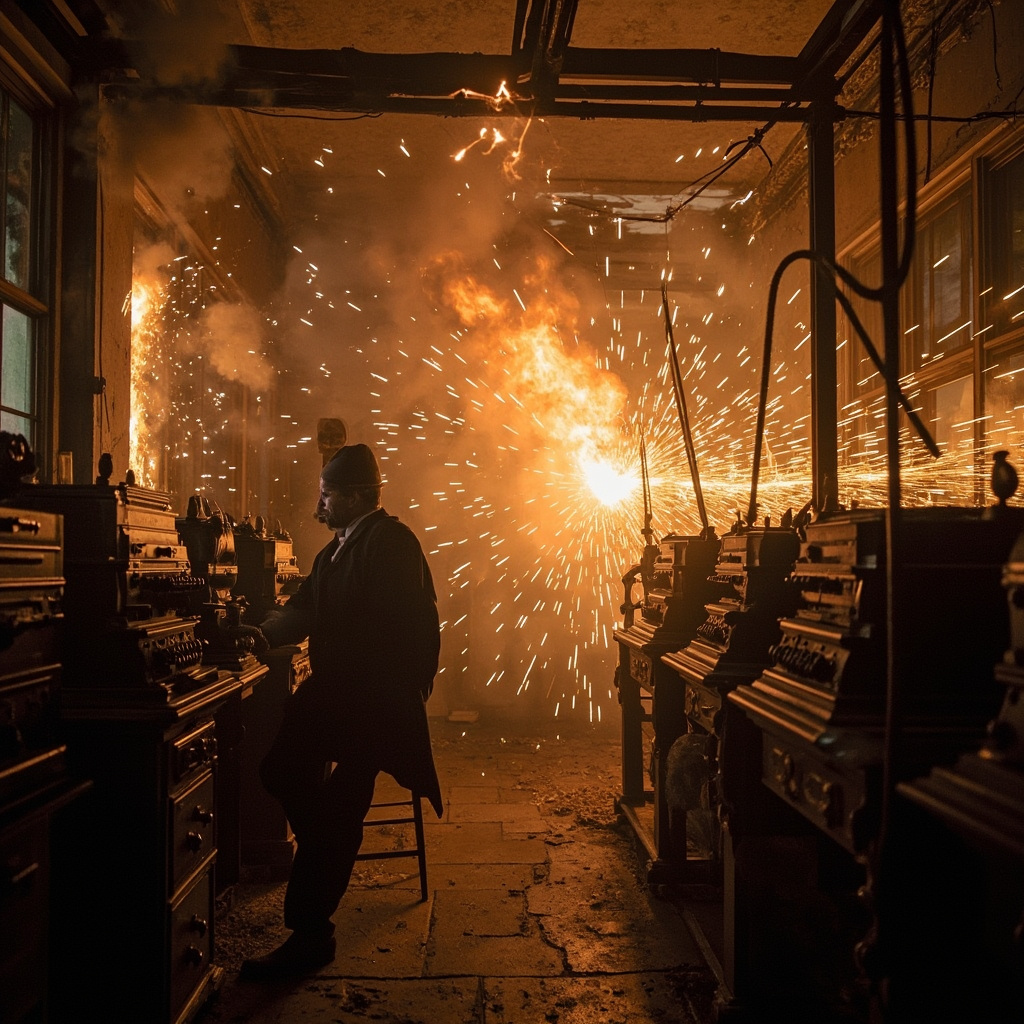
Telegraph systems across North America and Europe went haywire. In Boston, telegraph operators received electric shocks so severe they were thrown from their chairs. Telegraph lines caught fire, and some telegraph poles burst into flames from the induced electrical currents. In many cities, telegraph paper ignited, creating small fires in telegraph offices.

But perhaps most remarkably, some telegraph operators discovered they could continue sending messages even after disconnecting their power sources. The solar storm itself was providing enough electrical current to power the telegraph lines. Operators in Boston successfully sent messages to Portland, Maine, for two hours using only the electricity induced by the geomagnetic storm.

The Night the Sky Burned

The most spectacular consequence of the Carrington Event was the display of aurora borealis—the northern lights—visible far from their usual Arctic home. Witnesses reported auroras as far south as the Caribbean, Hawaii, and southern Italy. In the Rocky Mountains, miners woke up thinking it was dawn because the aurora was so bright.

The colors were extraordinary. Accounts describe not just the typical green aurora, but brilliant reds, yellows, and whites that painted the entire sky. One witness in Boston wrote that “the whole sky appeared as a sheet of red light.” In New York, people gathered on rooftops to watch the celestial light show, and many could read newspapers by the aurora’s glow.

Some people were terrified, believing the end times had arrived. Churches filled with congregants convinced they were witnessing signs of the apocalypse. Others were simply amazed by the beauty of nature’s most spectacular light show.

The Science Behind the Chaos

The Carrington Event was the perfect storm of solar activity. The sun was near the peak of its 11-year solar cycle, making it particularly active. The solar flare Carrington observed was what scientists now classify as an X-class flare—the most powerful category. But it was the accompanying coronal mass ejection that caused the real damage.

When this cloud of charged particles reached Earth, it compressed our planet’s magnetic field and induced powerful electrical currents in conductive materials—including the primitive telegraph networks of the 1850s. The storm’s intensity measured between -850 and -900 nanoteslas on modern scales, making it roughly twice as powerful as the strongest geomagnetic storm in modern memory.

A Glimpse of Vulnerability

The Carrington Event offers a sobering glimpse into our technological vulnerability. In 1859, the most advanced technology was the telegraph system, and even that was overwhelmed. Today, a similar solar storm would likely cause catastrophic damage to our electronic infrastructure.

Satellites would fail, GPS systems would go offline, and power grids across the globe could collapse. The economic damage from a Carrington-level event today is estimated at over $2 trillion worldwide. Communication systems, banking networks, and internet infrastructure could be crippled for months.

Scientists estimate that solar superstorms like the Carrington Event occur roughly every 150-500 years. The last comparable event was in 1859, making another major solar storm increasingly likely in the coming decades.

Carrington’s Legacy

Richard Carrington’s careful observations during that September morning established the first scientific link between solar activity and geomagnetic storms on Earth. His meticulous records provided crucial data for understanding space weather—a field of study that didn’t even have a name in 1859.

The Carrington Event stands as both a testament to the awesome power of our sun and a warning about the fragility of our technological civilization. As we become increasingly dependent on electronic systems, understanding and preparing for space weather has never been more critical.

Today, space weather monitoring systems keep constant watch on the sun, providing early warning of dangerous solar storms. But even with our modern understanding and technology, a repeat of the Carrington Event would test the limits of our preparedness.

The next time you see the aurora dancing across the night sky, remember Richard Carrington and that extraordinary September day when the sun reminded humanity just how connected we are to the cosmos—and how vulnerable our technology can be to the awesome forces of nature.

Related Reading

More from the archive

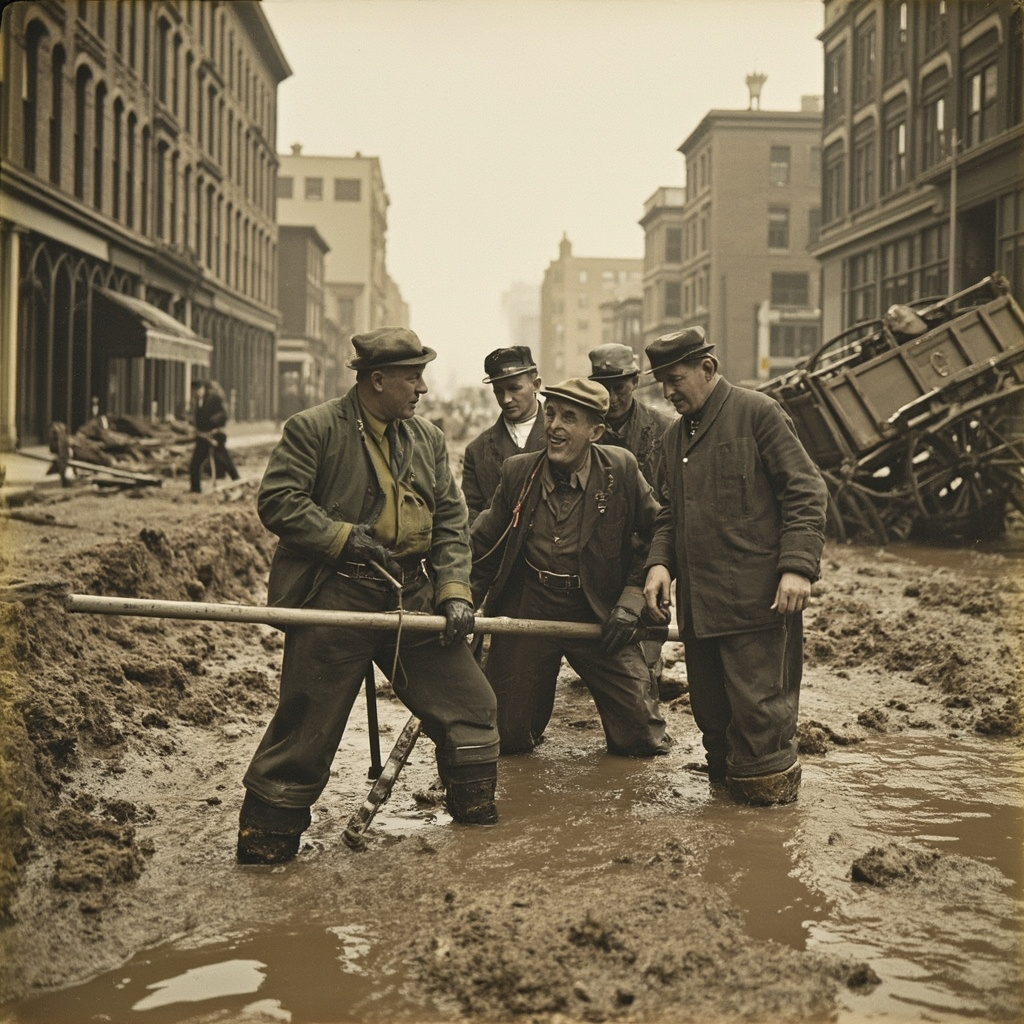
The Great Boston Molasses Flood: When 2.5 Million Gallons of Sticky Death Drowned a City

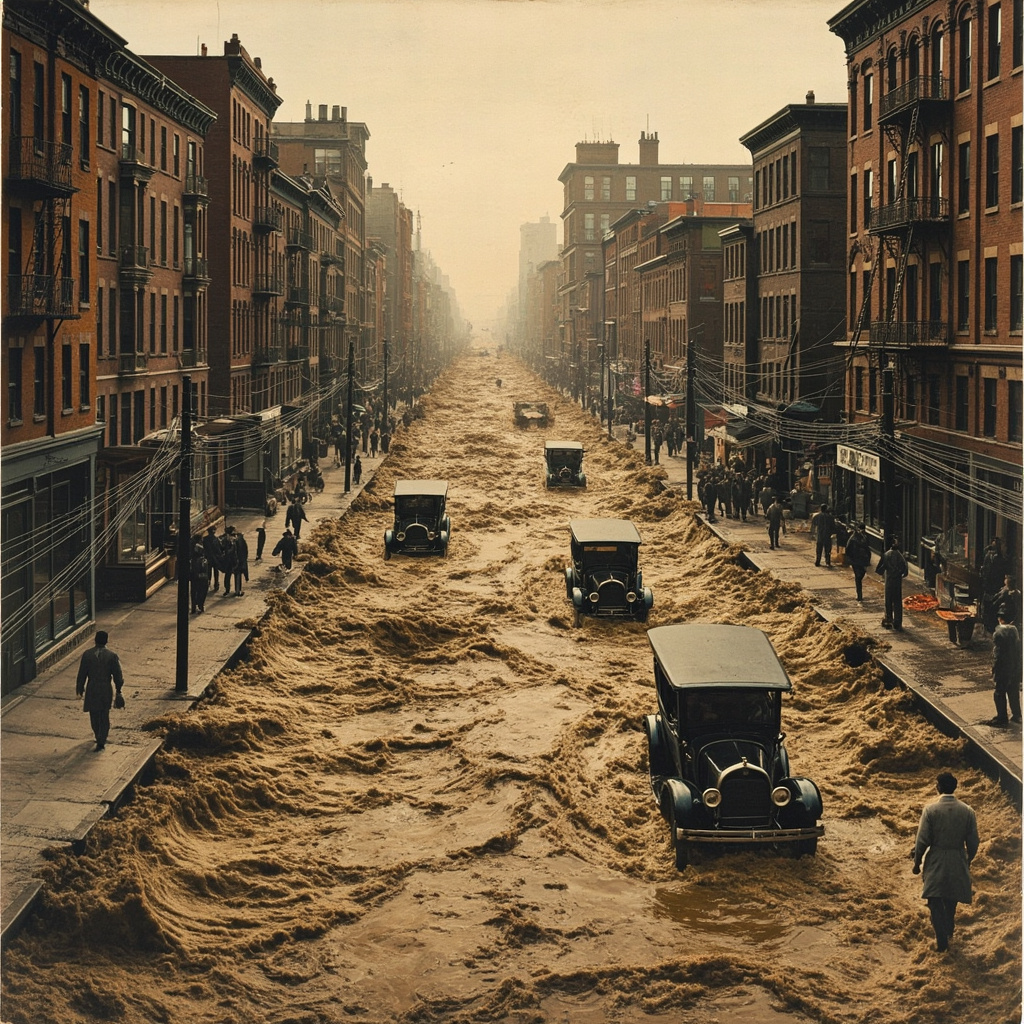
On January 15, 1919, at approximately 12:30 PM, Boston witnessed one of the most bizarre disasters in American history. A massive wave of molasses, standing 15 to 40 feet high and stretching 160 feet wide, raced through the North End at 35 miles per hour, killing 21 people and injuring 150 others. This was not the stuff of nightmares—it was the Great Boston Molasses Flood, a real catastrophe that would forever change how industrial safety was regulated.

The Doomed Tank That Started It All

The massive molasses storage tank before the disaster

The Great Boston Molasses Flood — context image

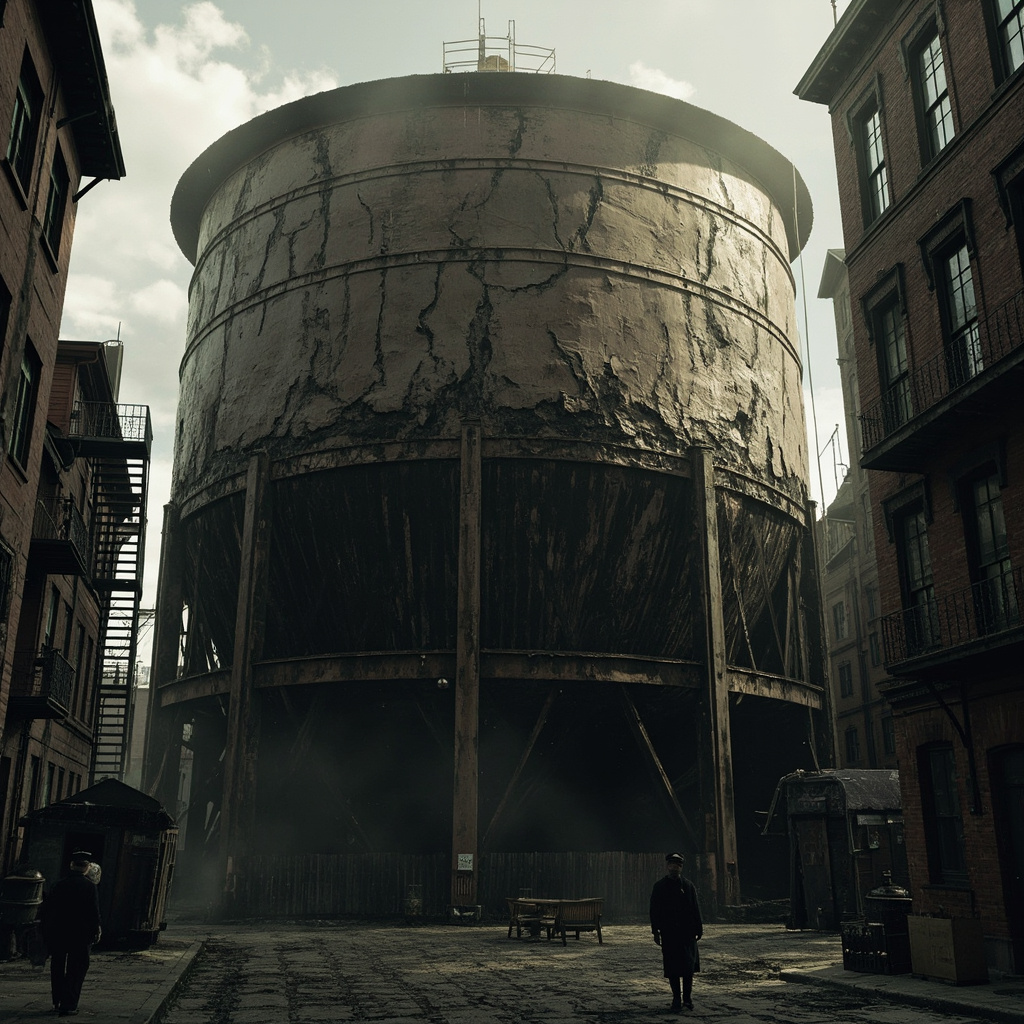
The disaster began with a storage tank that was a catastrophe waiting to happen. Built in 1915 by the United States Industrial Alcohol Company (USIA), this steel behemoth measured 50 feet tall and 90 feet in diameter—large enough to hold 2.3 million gallons of molasses. The tank was constructed hastily to meet wartime demand for industrial alcohol, which was extracted from molasses and used in munitions production.

From the beginning, the tank showed alarming signs of structural weakness. Local residents reported that it leaked constantly, leaving the surrounding area sticky with molasses residue. Children in the neighborhood would collect the leaking molasses on sticks, turning the dangerous situation into a sweet treat. The tank also made disturbing groaning and rumbling sounds, which workers dismissed as normal settling.

A Perfect Storm of Negligence

The tank’s construction was rushed and cheaply executed. The steel walls were dangerously thin—only half an inch thick in some places, when engineering standards called for much thicker walls to contain the enormous pressure of 2.5 million gallons of liquid. The rivets were poorly installed, and no proper load testing was ever conducted.

Arthur Jell, the USIA manager overseeing the tank, had no engineering background whatsoever. When concerned neighbors complained about the leaks and strange noises, Jell’s solution was to paint the tank brown to camouflage the molasses stains. No structural reinforcements were ever made.

Making matters worse, a fresh shipment of molasses had arrived just days before the disaster, filling the tank to near capacity. The molasses had been heated to help it flow, creating additional pressure against the already weakened walls.

The Day Everything Went Wrong

January 15, 1919, was unusually warm for a Boston winter, with temperatures reaching 43°F after days of bitter cold. This temperature fluctuation likely caused the molasses to expand, creating even more pressure against the tank walls. At exactly 12:30 PM, during the lunch hour when the streets were crowded with workers and pedestrians, the inevitable happened.

Witnesses described hearing a low rumble followed by a tremendous roar, like a freight train or machine gun fire. The tank’s rivets began popping like bullets, sending metal fragments flying through the air. Then, with a catastrophic failure, the entire tank burst open, releasing its contents in a devastating flood of “sweet, sticky death.”

The Wave of Destruction

Rescue efforts in the aftermath of the molasses flood

The molasses didn’t flow gently—it struck with the force of a tsunami. The initial wave was estimated to be 25 to 40 feet high, carrying enough force to demolish buildings, lift freight cars off their tracks, and snap steel support girders. The sticky brown mass moved faster than most people could run, trapping victims in its path.

The flood destroyed everything in its path. Entire buildings were lifted from their foundations and carried away. A firehouse was demolished, trapping firefighters inside. Elevated railway pillars were knocked down, and dozens of horses were killed. The molasses flowed outward in all directions, covering an area of several city blocks before finally coming to rest.

The Human Toll

The casualty list was heartbreaking. Among the 21 dead were longshoremen who had been working at the docks, children playing in the streets, and residents who simply happened to be in the wrong place at the wrong time. About half of the victims literally drowned in the molasses—the thick, sticky substance made it impossible for them to swim or even move effectively.

One of the most tragic victims was 10-year-old Antonio di Stasio, who was walking home from school when the wave struck. He was found days later, having suffocated in the molasses. Another victim, George Layhe, a postal worker, was crushed when the flood demolished the building where he was working.

The Cleanup Nightmare

The cleanup took weeks and proved almost as challenging as the disaster itself. Molasses had coated everything—buildings, streets, people, and even Boston Harbor, where it had flowed and turned the water brown for months afterward. The substance hardened in the January cold, making removal extremely difficult.

Cleanup crews tried everything: they used hot water, sand, and even saltwater from the harbor to dissolve and scrub away the molasses. The smell lingered for months, and residents claimed they could still detect the sweet scent on hot summer days for decades afterward.

Legal Aftermath and Industrial Reform

The disaster led to one of the longest and most complex legal cases in Massachusetts history. More than 100 lawsuits were filed against USIA, with victims and their families seeking millions in damages. The legal proceedings lasted six years and included testimony from nearly 1,500 witnesses.

The company initially tried to blame the disaster on anarchists, claiming that a bomb had destroyed the tank. This theory was quickly debunked by investigators who found clear evidence of structural failure. Ultimately, USIA was found liable and ordered to pay $628,000 in damages—equivalent to over $9 million today.

More importantly, the disaster led to significant changes in building codes and engineering standards. Massachusetts became one of the first states to require that all construction plans be reviewed and approved by licensed engineers and architects. The concept of professional oversight in industrial construction became standard practice across the United States.

Legacy of the Sweet Disaster

Today, a small plaque in Boston’s North End marks the approximate location of the disaster. The area has been transformed into Puopolo Park, where families now play where once molasses flowed. Local legend claims that on hot summer days, you can still smell molasses in the area—though city officials attribute this to the chocolate and candy factories that operated in the neighborhood for decades afterward.

The Great Boston Molasses Flood remains a powerful reminder of the importance of industrial safety and proper engineering oversight. It stands as proof that even the most unlikely disasters can occur when corner-cutting and negligence replace proper safety protocols. In an era when massive industrial accidents seemed almost commonplace, the molasses flood showed that no substance—no matter how seemingly harmless—could be underestimated when stored in massive quantities.

The disaster also holds the distinction of being perhaps the only flood in history where the victims couldn’t swim to safety, forever earning its place as one of the strangest and most tragic industrial accidents in American history.

Related Reading

More from the archive

The London Beer Flood of 1814: When a Tsunami of Porter Killed Eight People

On the afternoon of October 17, 1814, one of history’s most bizarre industrial disasters struck London when a massive brewery tank burst, unleashing a deadly tsunami of beer through the streets. The London Beer Flood would claim eight lives and leave a trail of destruction that seemed almost too strange to believe.

The Horse Shoe Brewery

At the corner of Great Russell Street and Tottenham Court Road stood the Horse Shoe Brewery, owned by Meux and Company. In 1810, the brewery had installed a massive wooden fermentation tank that towered 22 feet high and held the equivalent of over 3,500 barrels of brown porter ale—a beer not unlike modern stout. The enormous vat was held together by massive iron rings, containing approximately 388,000 gallons of fermenting beer.

The London Beer Flood of 1814 — context image

The Horse Shoe Brewery in 1814

The sheer size of these fermentation vessels was a marvel of industrial brewing technology. The wooden staves were under enormous pressure from the fermenting liquid within, making the iron binding rings absolutely critical to the structure’s integrity.

The Catastrophic Failure

On that fateful Monday afternoon, one of the massive iron rings around the tank suddenly snapped. For about an hour, brewery workers noticed the problem but underestimated the danger. Then, without warning, the entire tank ruptured with explosive force.

The hot, fermenting ale burst forth like a tidal wave, hitting the back wall of the brewery with such violence that it collapsed entirely. The force of the escaping beer was so tremendous that it blasted open several other large vats, adding their contents to the growing flood. In total, more than 320,000 gallons of beer poured into the surrounding streets.

Death in St. Giles

The beer tsunami struck the St. Giles Rookery, a densely populated slum filled with cheap housing, tenements, and London’s poorest residents. The neighborhood was home to destitute families, prostitutes, criminals, and others living on society’s margins.

Aftermath of the London Beer Flood

The 15-foot-high wave of beer and debris crashed through George Street and New Street within minutes. The force inundated the basements of two houses, causing them to collapse entirely. In one house, Mary Banfield and her daughter Hannah were taking afternoon tea when the flood struck—both were killed instantly.

In the basement of another house, tragedy struck during an Irish wake. Four mourners had gathered to pay respects to a two-year-old boy who had died the previous day. All four were killed when the beer flood destroyed their shelter. The wave also demolished a wall of the Tavistock Arms pub, trapping teenage barmaid Eleanor Cooper in the rubble.

The Grisly Aftermath

Eight people died in the disaster, but the story doesn’t end with the immediate casualties. The sudden availability of “free” beer led hundreds of people to rush into the streets with buckets, pots, and any containers they could find to collect the alcohol. Some simply drank directly from the beer-soaked streets.

Reports later emerged of a ninth victim who died several days after the flood from alcohol poisoning, having consumed too much of the free beer. The macabre scenes continued when some families displayed the corpses of victims for money, creating ghoulish exhibitions. In one house, the weight of visitors coming to view the bodies caused the floor to collapse, plunging everyone waist-deep into the beer-flooded cellar below.

Legal and Financial Consequences

The brewery faced massive costs from the disaster—approximately £23,000 (roughly £1.25 million in today’s money). However, when the case went to court, the disaster was ruled to be an “Act of God,” leaving no one legally responsible for the deaths and destruction.

Remarkably, the brewery was able to reclaim the excise duty they had paid on the beer, which saved them from bankruptcy. They also received £7,250 (about £400,000 today) as compensation for the lost beer barrels.

Lasting Impact

The stench of beer lingered in the St. Giles area for months after the flood. More importantly, the disaster led to significant changes in brewery safety practices. Wooden fermentation casks began to be phased out in favor of lined concrete vats, which were much safer and less prone to catastrophic failure.

The Horse Shoe Brewery itself was eventually demolished in 1922. Today, the Dominion Theatre sits partly on the site where one of history’s strangest disasters unfolded—a reminder that even the most ordinary substances can become deadly under the right circumstances.

The London Beer Flood stands as one of the most unusual industrial disasters in history, a perfect storm of poor engineering, unfortunate timing, and tragic circumstances that created a day when London literally drowned in beer.

Related Reading

The Tunguska Event: When a Mystery Explosion Flattened 830 Square Miles of Siberian Forest

On June 30, 1908, at precisely 7:15 AM local time, something extraordinary happened in one of the most remote corners of Siberia. A massive explosion occurred in the skies above the Tunguska River, flattening over 830 square miles of pristine forest and creating one of history’s most enduring mysteries.

The few Evenki reindeer herders who witnessed the event described seeing a brilliant fireball trailing smoke across the morning sky, followed by a flash brighter than the Sun itself. The thunderous roar that followed was heard hundreds of miles away, and those closest to the blast reported being knocked unconscious and thrown through the air by the shockwave.

The Tunguska Event — context image

The Devastating Power of the Unknown

What makes the Tunguska Event so remarkable isn’t just its scale, but the complete absence of a crater. The explosion, estimated to have occurred about 6 miles above the Earth’s surface, released energy equivalent to 1,000 times the atomic bomb dropped on Hiroshima. Yet when scientists finally reached the site decades later, they found no meteorite fragments, no crater—just an apocalyptic scene of destruction.

Scientists examining the flattened Tunguska forest

Seismic instruments across Russia detected tremors from the blast, and the atmospheric disturbance was so significant that it was recorded by monitoring stations as far away as England. In the immediate area, an estimated 80 million trees were knocked down in a distinctive radial pattern extending outward from the blast’s epicenter.

The Long Wait for Science

Perhaps most frustrating for modern researchers is that no scientific expedition reached the Tunguska site for nearly two decades. The remote location, World War I, the Russian Revolution, and subsequent civil war all conspired to delay investigation of what may have been the most significant cosmic impact event in recorded history.

When Soviet geologist Leonid Kulik finally reached the site in 1927—19 years after the event—he was astounded by what he found. Despite nearly two decades having passed, the devastation remained clearly visible. Trees near the epicenter stood like ghostly sentinels, stripped of bark and branches but somehow still upright, while millions of other trees lay flattened in all directions.

A Pattern Written in Destruction

Later aerial surveys revealed the true scope of the destruction: a butterfly-shaped pattern of devastation that told the story of the explosion’s path through the atmosphere. The pattern showed that the object had approached from the southeast at an angle of approximately 30 degrees before exploding above the forest.

Diagram showing the butterfly-shaped destruction pattern of the Tunguska Event

Modern scientists believe the Tunguska Event was caused by an asteroid roughly 130 feet in diameter that completely disintegrated in Earth’s atmosphere before reaching the ground. This explains the absence of a crater and meteorite fragments—the object essentially vaporized, releasing all its energy as an airburst explosion.

The Lucky Coincidence

In a stroke of cosmic fortune, the Tunguska explosion occurred over one of the most sparsely populated regions on Earth. Had the same asteroid arrived just four hours and 47 minutes later, Earth’s rotation would have positioned St. Petersburg, then the capital of Imperial Russia, directly in the blast’s path. Instead of flattening empty forest, the explosion would have obliterated a city of 1.7 million people.

Legacy of the Siberian Mystery

The Tunguska Event fundamentally changed how scientists think about cosmic threats to Earth. It demonstrated that even relatively small asteroids could cause catastrophic regional damage and highlighted the importance of monitoring near-Earth objects. Today, NASA’s Planetary Defense Coordination Office and missions like DART (Double Asteroid Redirection Test) trace their origins back to lessons learned from that morning in Siberia over a century ago.

While the mystery of Tunguska has largely been solved through decades of scientific investigation, it remains a powerful reminder of our planet’s vulnerability to cosmic impacts. The flattened forest has long since regrown, but the story of that June morning continues to fascinate researchers and the public alike—a testament to one of nature’s most spectacular and fortunate near-misses in recorded history.

Related Reading

More from the archive

The Erfurt Latrine Disaster: When 60 Nobles Met Their End in Medieval Germany’s Most Bizarre Tragedy

In the annals of history, few disasters are as simultaneously tragic and absurd as the Erfurt Latrine Disaster of 1184. What should have been a routine royal assembly in medieval Germany instead became one of the most unusual mass casualties in European history, when approximately sixty nobles plummeted to their deaths through a collapsing floor—directly into a latrine cesspit below.

Medieval royal assembly at Erfurt

The Erfurt Latrine Disaster — context image

The Fatal Assembly

On July 26, 1184, King Henry VI of Germany convened a Hoftag (court day) in the German city of Erfurt, located in what was then part of the Holy Roman Empire. The assembly was held within the Petersberg citadel, a fortified complex that served as both a religious center and administrative hub. Noble lords, church officials, and prominent citizens gathered to discuss matters of state and regional governance.

The meeting took place in a grand hall on the second floor of the building. As was typical for medieval architecture, the structure featured wooden floors supported by timber beams. Directly below this assembly hall lay the building’s latrine facilities—essentially a large cesspit used for waste disposal.

The Catastrophic Collapse

As the assembly proceeded, the combined weight of dozens of nobles, their retinues, and furnishings proved too much for the aging wooden floor. Without warning, the entire structure gave way, sending the gathered dignitaries crashing through the floor and plummeting into the sewage pit below.

Contemporary chronicles describe the scene as horrific. Those who survived the initial fall found themselves trapped in a deep cesspit filled with human waste, struggling to stay afloat in the putrid conditions. The lucky few who managed to avoid the collapse or climb out faced the grim task of attempting rescues in the most unsanitary circumstances imaginable.

Aftermath of the latrine disaster

The Royal Exception

Remarkably, King Henry VI himself survived the disaster. Historical accounts suggest he was positioned in a part of the hall that remained structurally sound, possibly near a stone wall or on a section supported by stronger beams. This stroke of fortune likely changed the course of European history, as Henry would later become Holy Roman Emperor and play a crucial role in the politics of his era.

Medieval Sanitation and Architecture

The Erfurt disaster highlights the precarious nature of medieval urban planning and sanitation systems. In the 12th century, waste disposal was a constant challenge in growing cities. Buildings often featured communal latrines positioned over pits, streams, or even moats. The proximity of these facilities to living and meeting spaces, while practical for daily use, created obvious structural and health hazards.

Wooden construction, while common and cost-effective, was particularly vulnerable to rot, insect damage, and structural failure over time. The combination of heavy loads, poor ventilation, and the corrosive effects of waste gases likely weakened the floor supports at Erfurt over many years before the final collapse.

Historical Impact and Legacy

Beyond its immediate tragedy, the Erfurt Latrine Disaster had significant political ramifications. The deaths of so many local nobles created a power vacuum in the region, leading to succession disputes and political instability. King Henry VI had to navigate these challenges while consolidating his authority in the affected territories.

The event also became a cautionary tale about medieval construction practices and urban planning. While building codes as we know them didn’t exist, the disaster likely influenced subsequent architectural decisions in German cities, leading to more careful consideration of structural load-bearing capacity and waste management systems.

A Lesson in Historical Perspective

The Erfurt Latrine Disaster serves as a stark reminder that history is full of unexpected turns that can seem almost comical from our modern perspective, yet were undeniably tragic for those involved. It illustrates how technological limitations, combined with practical necessities, could create dangerous situations that seem obvious in hindsight but were simply part of daily medieval life.

This bizarre chapter in German history demonstrates that even the most mundane aspects of daily life—in this case, waste disposal—could become the stage for significant historical events. The sixty nobles who perished in that Erfurt cesspit became unwitting participants in one of history’s most unusual disasters, a reminder that fate can strike in the most unexpected and undignified ways.

Today, the site of the Petersberg citadel still stands in Erfurt, though the specific building where the disaster occurred no longer exists. The event remains a fascinating footnote in medieval German history—a tale that perfectly encapsulates the unpredictable, often absurd nature of human experience throughout the ages.

Related Reading

The Year Without Summer: When Snow Fell in July and Changed History Forever

Imagine stepping outside for a summer picnic in July 1816, only to be greeted by falling snow and temperatures so cold that crops froze in the fields. This wasn’t science fiction—it was reality for millions of people across the Northern Hemisphere during what became known as the “Year Without a Summer.”

The bizarre weather phenomenon that turned 1816 into a climatic nightmare wasn’t caused by any earthly event Americans could see or understand. The culprit lay halfway around the world: a massive volcanic eruption in Indonesia that had occurred the previous year, with effects so far-reaching that they fundamentally changed global weather patterns for an entire year.

The Monster Eruption Nobody Saw Coming

On April 10, 1815, Mount Tambora in Indonesia erupted with the force of approximately 80,000 Hiroshima bombs. The explosion was so violent that it could be heard 1,200 miles away, and the ash column reached an estimated height of 28 miles into the atmosphere—well into the stratosphere.

The eruption killed approximately 71,000 people directly, but that was only the beginning. The real devastation came from what scientists now call “volcanic winter”—a global climate anomaly caused by massive amounts of volcanic ash and sulfur dioxide blocking sunlight across the planet.

Mount Tambora ejected an estimated 38 cubic miles of material into the atmosphere. To put this in perspective, that’s enough debris to bury the entire state of Rhode Island under 10 feet of volcanic material. The sulfur dioxide formed sulfuric acid aerosols in the stratosphere, creating a persistent haze that reflected sunlight away from Earth.

Mount Tambora volcanic eruption 1815 with massive ash cloud reaching the stratosphere

America’s Impossible Summer

The effects reached North America in spectacular and terrifying fashion during the summer of 1816. Across New England and Eastern Canada, temperatures plummeted to levels that seemed impossible for the season.

In Massachusetts, snow fell in June—not a light dusting, but actual accumulating snow in mid-summer. Connecticut experienced killing frosts throughout June and July. Vermont recorded snowfall every month of the year, with some areas receiving over six inches of snow in June.

The temperature swings were dramatic and unpredictable. Philadelphia recorded a high of only 46°F (8°C) on July 4th—Independence Day—when temperatures should have been in the 80s. New York City experienced frost in August, devastating crops across the region.

Snow falling in July 1816 America with confused people in summer clothes

The Global Catastrophe

While Americans struggled with their impossible summer, the rest of the world faced equally bizarre conditions. In Europe, the situation was even more dire:

  • Switzerland experienced such severe crop failures that people resorted to eating sawdust bread
  • Ireland faced famine that contributed to a typhus epidemic, killing over 100,000 people
  • Germany recorded average temperatures 3-5°F below normal throughout the growing season
  • India suffered unusual monsoon patterns that disrupted rice harvests

China experienced unusually cold weather and crop failures. Even as far south as Virginia, there were reports of ice forming on ponds in August—an occurrence so unusual that local newspapers treated it as a supernatural event.

The Human Cost

The agricultural devastation was staggering. New England farmers lost entire crop seasons, with corn harvests failing completely in much of Vermont and New Hampshire. The price of oats skyrocketed as horse feed became scarce, forcing many families to abandon their farms.

This agricultural crisis triggered one of the largest westward migrations in early American history. Thousands of New England families, facing starvation and financial ruin, packed up and headed for the Ohio Valley and other western territories where the climate effects were less severe.

19th century American farmers examining frost-damaged crops during the agricultural disaster

The migration was so massive that Vermont’s population actually declined between 1810 and 1820—the only decade in the state’s history to show negative growth. Many of these climate refugees helped settle Indiana, Illinois, and Ohio, fundamentally changing the demographic patterns of American expansion.

Scientific Discovery Born from Disaster

The 1816 climate disaster inadvertently advanced scientific understanding. This was the first time scientists began to seriously consider the connection between volcanic eruptions and global climate patterns.

The event also spurred agricultural innovation. Farmers began experimenting with different crops and growing techniques to protect against future climate anomalies. The crisis led to improved seed varieties and better food preservation methods.

Cultural Impact and Legacy

The “Year Without a Summer” left an indelible mark on culture and literature. Mary Shelley was vacationing in Switzerland during the gloomy summer of 1816 when the persistent bad weather kept her indoors. To pass time, she and her companions told ghost stories—leading to her creation of “Frankenstein,” one of the world’s first science fiction novels.

Lord Byron, also present in Switzerland that summer, wrote his famously dark poem “Darkness,” directly inspired by the unnatural gloom and cold. The opening lines capture the eeriness of that summer: “I had a dream, which was not all a dream. The bright sun was extinguish’d…”

American folk songs and poetry from the period reflect the confusion and fear people felt about the impossible weather. Farmers didn’t understand why their crops were failing, and many interpreted the strange weather as a sign of divine displeasure or approaching apocalypse.

The Connection Nobody Could See

The tragic irony of 1816 is that no one in America or Europe initially connected their suffering to a volcanic eruption on the other side of the world. Communication was so slow that detailed news of the Tambora eruption didn’t reach the Western world until months after it occurred.

Even when the connection was eventually made, the mechanism wasn’t understood. The concept of global atmospheric circulation and volcanic winter effects wouldn’t be scientifically established until the 20th century. To most people living through 1816, their impossible summer remained an inexplicable natural disaster.

Modern Parallels

The 1816 climate crisis offers sobering lessons for our modern world. It demonstrates how quickly global climate can change and how interconnected our planet’s systems really are. A single volcanic event in Indonesia affected weather patterns, agriculture, and human migration across the entire Northern Hemisphere.

Climate scientists today study the 1816 event as a natural analog for potential geoengineering solutions to global warming—specifically, the idea of injecting reflective particles into the stratosphere to cool the planet. The Tambora eruption essentially created a natural version of this process, providing valuable data about the effects and risks.

The Year Without a Summer remains one of history’s most dramatic examples of how natural disasters can reshape entire societies, trigger mass migrations, and fundamentally alter the course of human civilization—all from a single volcanic explosion on the other side of the world.

More from the archive