The Centralia Mine Fire: The Town That Has Been Burning Underground Since 1962

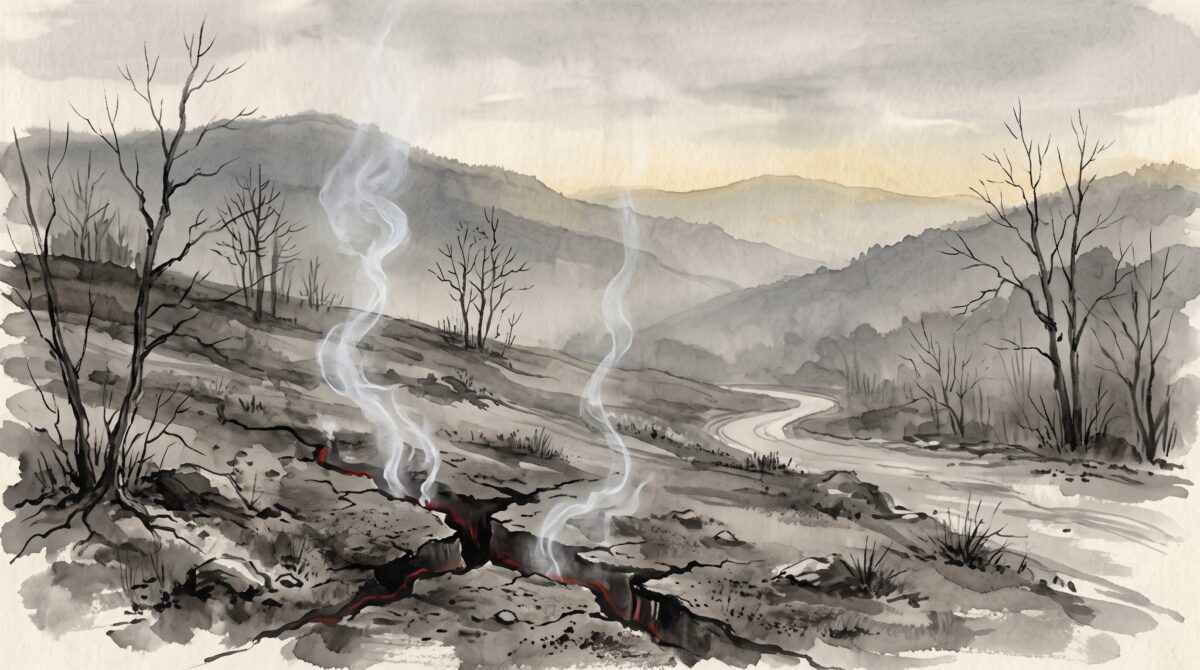
Most fires end. They exhaust their fuel, or the rain comes, or the firefighters win, and afterward there is ash and grief and the slow work of rebuilding. But imagine a fire that simply refuses to die — one that has been burning, unseen, beneath the streets of an American town since before the first Beatles record, and that may go on burning long after everyone alive today is gone. That fire is real. It is in Centralia, Pennsylvania, and it has quietly consumed an entire town from below.
A Town Built on Coal
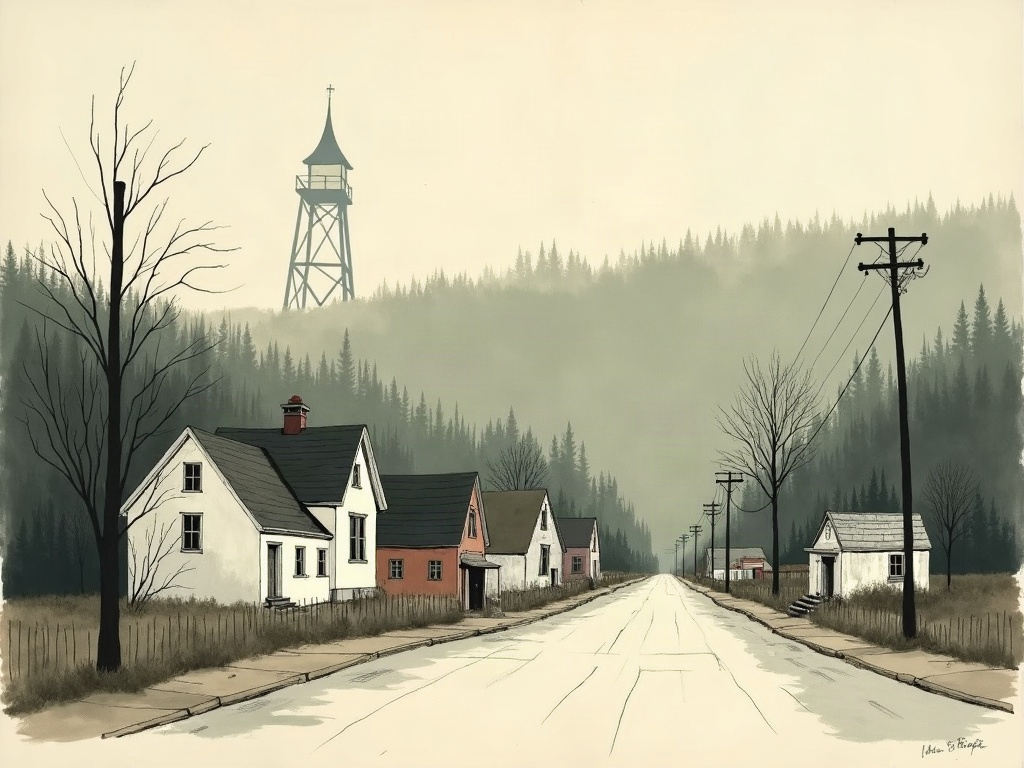
Centralia sat in the anthracite coal country of eastern Pennsylvania, a modest borough in Columbia County that owed its whole existence to the hard, clean-burning coal in the hills around it. By the mid-20th century it was home to well over a thousand people — a place of row houses, churches, a handful of bars, and families whose fathers and grandfathers had gone down into the mines. Beneath the town itself ran a honeycomb of tunnels and worked-out chambers, the abandoned bones of more than a century of mining. Nobody thought much about them. They were simply the empty space under the world, the price of a town that lived on coal.
That hidden labyrinth would turn out to be the town’s undoing. A network of connected tunnels packed with exposed coal is, in effect, a fuel supply of almost unimaginable size — and all it needed was a way in.
The Spark, May 1962
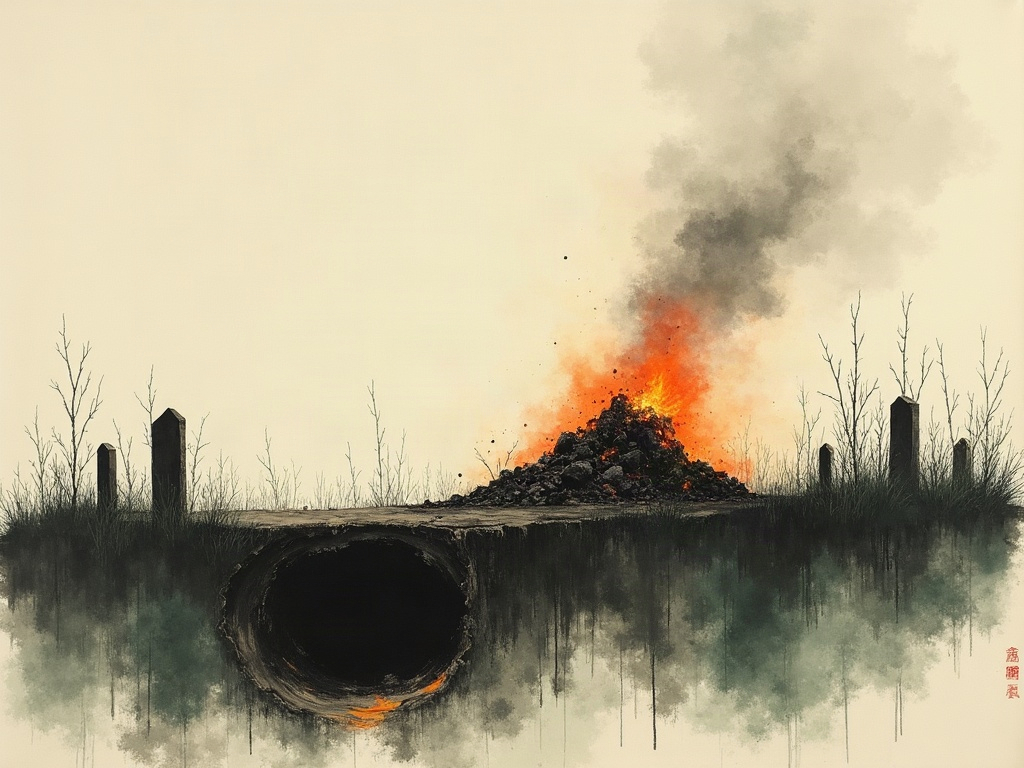
The most widely accepted account places the beginning in late May 1962, at the town’s landfill — an old strip-mine pit on the edge of the borough, near the Odd Fellows Cemetery. As they had done before, workers set the accumulated trash alight to burn it down before Memorial Day. This time, the story goes, the flames reached an unsealed opening to the coal seam beneath the pit, and the fire slipped underground into the anthracite itself.
Other theories have circulated over the years, but the essential fact is not in dispute: a fire found its way into the coal, and once there, it could not be coaxed back out. It began to creep through the old mine workings, following the seams, feeding on a fuel that stretched for miles in every direction. What looked at first like a nuisance to be dug out and doused was, in truth, the ignition of something closer to a geological event.
The Fire That Would Not Be Beaten
The people of Centralia and the state of Pennsylvania did try to stop it. Over the following years there were attempts to excavate the burning material, to drill boreholes and flush the fire with water and fly ash, to cut trenches deep enough to cut off its advance. Each effort ran into the same wall: the fire was simply too vast, too deep, and moving through too complex a maze of tunnels to corner. Every plan that might have worked carried a price tag so enormous that it was repeatedly judged cheaper to let the fire burn than to fight it.
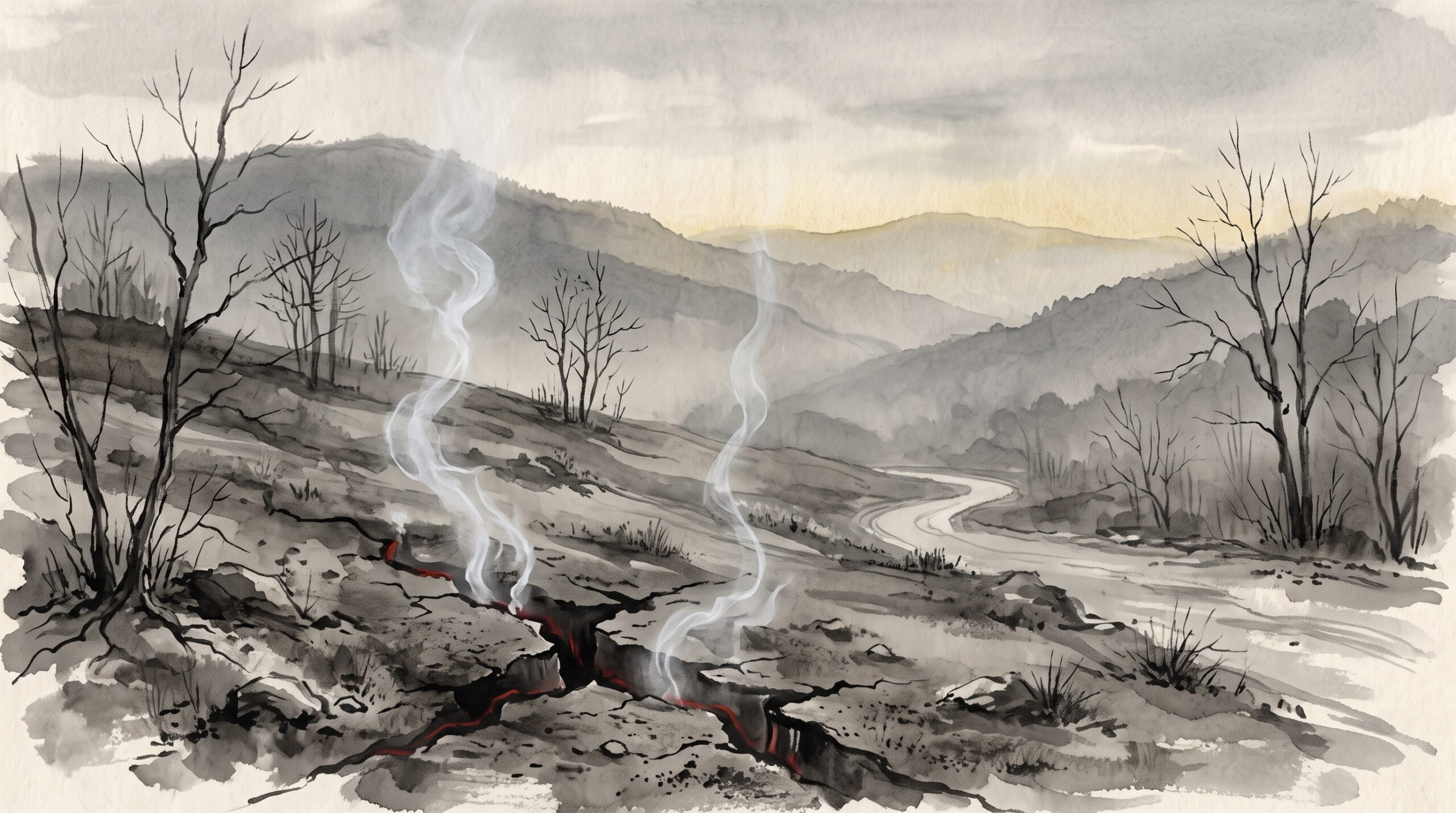
And so the town settled into an eerie coexistence with the thing beneath it. The ground grew warm. Snow melted in patches over the seams. Steam and smoke rose from cracks in gardens and along the roads. Much like the invisible geological menace that welled up out of the earth in the Lake Nyos disaster that suffocated an entire valley, the danger at Centralia was largely unseen — a threat you could smell and feel long before you could point to it.
The Day the Ground Opened
For years the fire was an abstraction, an inconvenience more than an emergency. That changed on a Valentine’s Day in 1981, when a twelve-year-old boy named Todd Domboski was crossing his grandmother’s backyard and the earth simply gave way beneath him. He dropped into a sinkhole that had opened without warning, a shaft that plunged deep into the ground and filled with hot, toxic gases. He clung to a tree root, screaming, as the hole tried to swallow him; his older cousin hauled him out. Had he fallen just a little farther, the carbon monoxide alone would likely have killed him.
That near-death of one child did what years of smoking gardens had not. It made the danger undeniable. Suddenly the invisible fire had a face, and the question was no longer whether Centralia had a problem but whether Centralia could survive at all.
The Slow Death of a Town
In 1983, Congress appropriated tens of millions of dollars — around $42 million — for the voluntary relocation of Centralia’s residents. Most took the offer. One by one the families left, the houses were bought out and demolished, and the population that had numbered over a thousand dwindled to a few hundred, then a few dozen. In 1992 the Commonwealth of Pennsylvania invoked eminent domain, condemning the remaining buildings and declaring the town, in effect, uninhabitable. In 2002 the U.S. Postal Service delivered a final indignity by revoking Centralia’s ZIP code. On paper, the town was being erased.
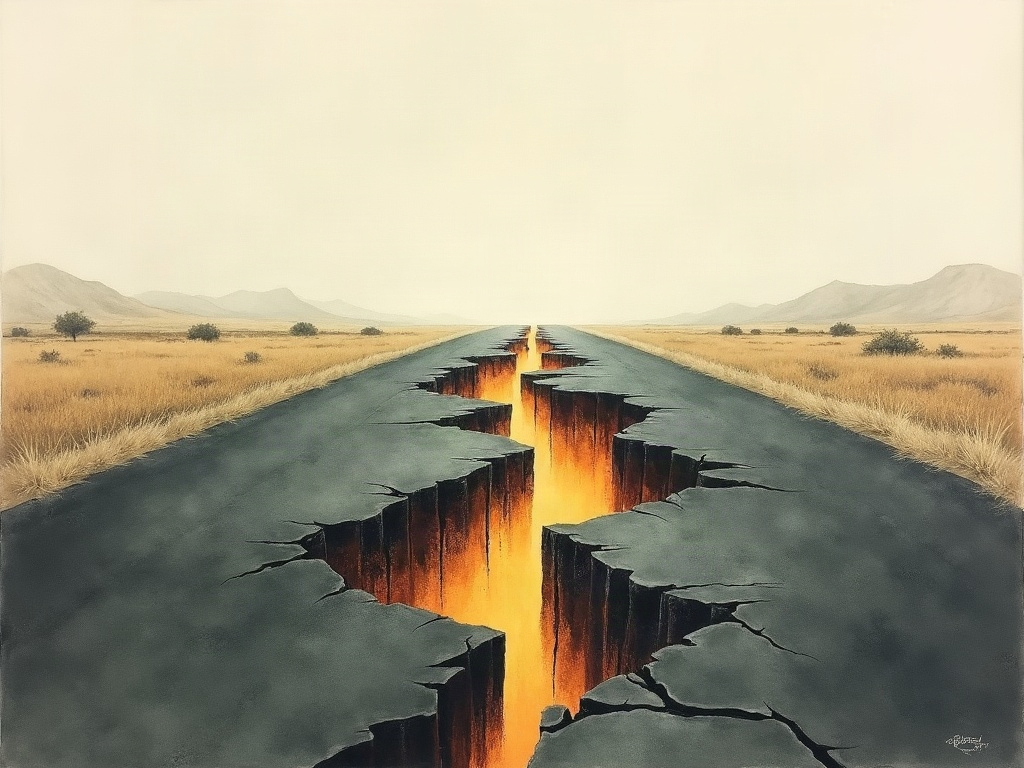
A stubborn handful of residents refused to go, fighting for years to stay in the homes they had always known; a small number eventually won the right to live out their lives there. But the town around them kept vanishing. Streets that once held rows of houses became grids of empty lots swallowed by grass and saplings, the pavement cracking as the earth breathed heat beneath it. Centralia was becoming something rare and unsettling: a modern American ghost town, unmade not by economics or war but by a fire no one could reach. In its slow abandonment it joined the strange company of vanished places like the densely packed labyrinth of Kowloon Walled City, a whole community that was there one decade and gone the next.
A Fire With No End in Sight
The most staggering part of the Centralia story is its future tense. Geologists estimate that the fire, fed by the sheer volume of anthracite still in the ground, could continue burning for as long as 250 years. There is, in other words, no ending to this disaster — only its indefinite continuation, long past the lifespan of anyone who will ever read about it. The town became a magnet for the curious, drawn to the smoking ground and, for a time, to a graffiti-covered stretch of buckled, abandoned highway that the heat had wrecked. Its uncanny atmosphere has seeped into popular culture as a byword for a place poisoned from within.
There is something almost mythic in it — a cautionary tale of a small, everyday act that grew into an unstoppable force, not unlike the well-meaning decision that unleashed the runaway kudzu vine across the American South. In both, a routine choice slipped its leash and could never be taken back.
What lingers about Centralia is not spectacle but silence. There was no single terrible night, no death toll to recite, no monument to a moment of catastrophe. Instead there was a town that simply lost, slowly, to something patient and deep and beyond its power to stop — and a reminder that the ground we build our lives upon is not always as solid, or as safe, as it seems. Somewhere beneath the quiet grass of Centralia, the fire is still burning. It will outlast us all.
Sources & further reading:
Related Reading
More from the archive
- The Ohio Penitentiary Fire of 1930: 322 Men Who Burned Behind Locked Doors
- The Iroquois Theatre Fire: How an "Absolutely Fireproof" Theatre Killed 600 in Fifteen Minutes