Lost in the Taiga: The Family That Vanished Into Siberia for 40 Years and Never Knew World War II Happened

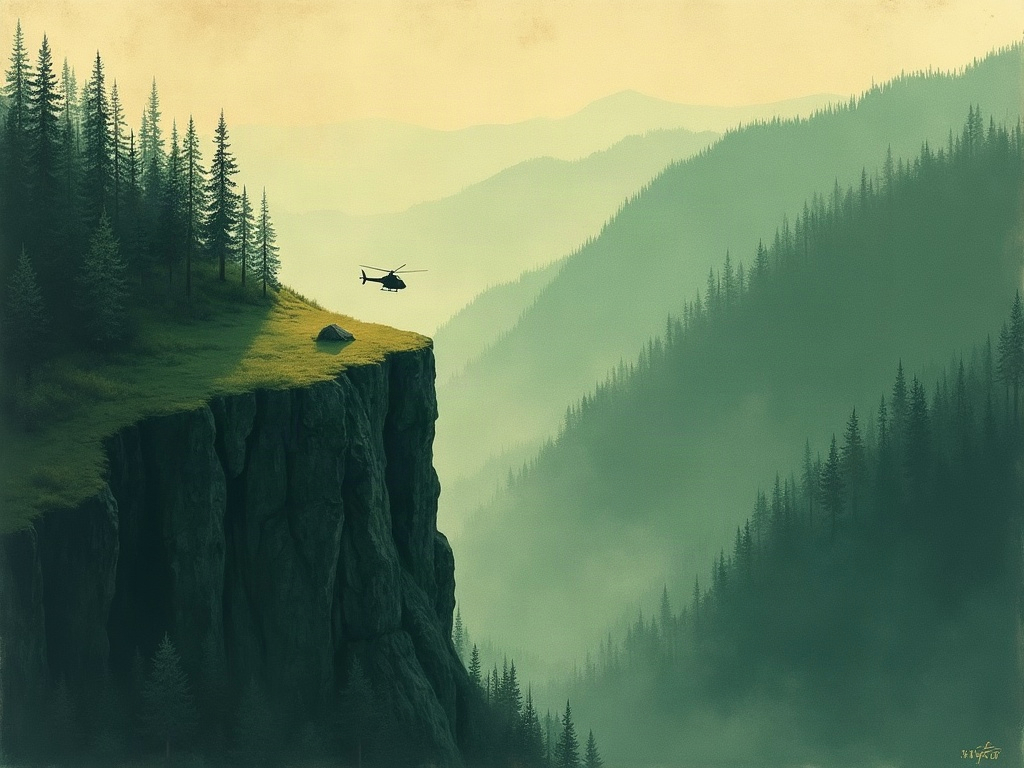
In the summer of 1978, a helicopter carrying a team of Soviet geologists banked low over one of the most remote corners of the Siberian taiga — a sea of pine and birch stretching unbroken toward Mongolia, more than a hundred miles from the nearest village. The pilot was hunting for a safe place to set down survey crews. Instead, on a mountainside some 6,000 feet up, he saw something that made no sense at all: long, dark furrows cut into the slope. A garden. A human garden, where by every record no human had any business being.
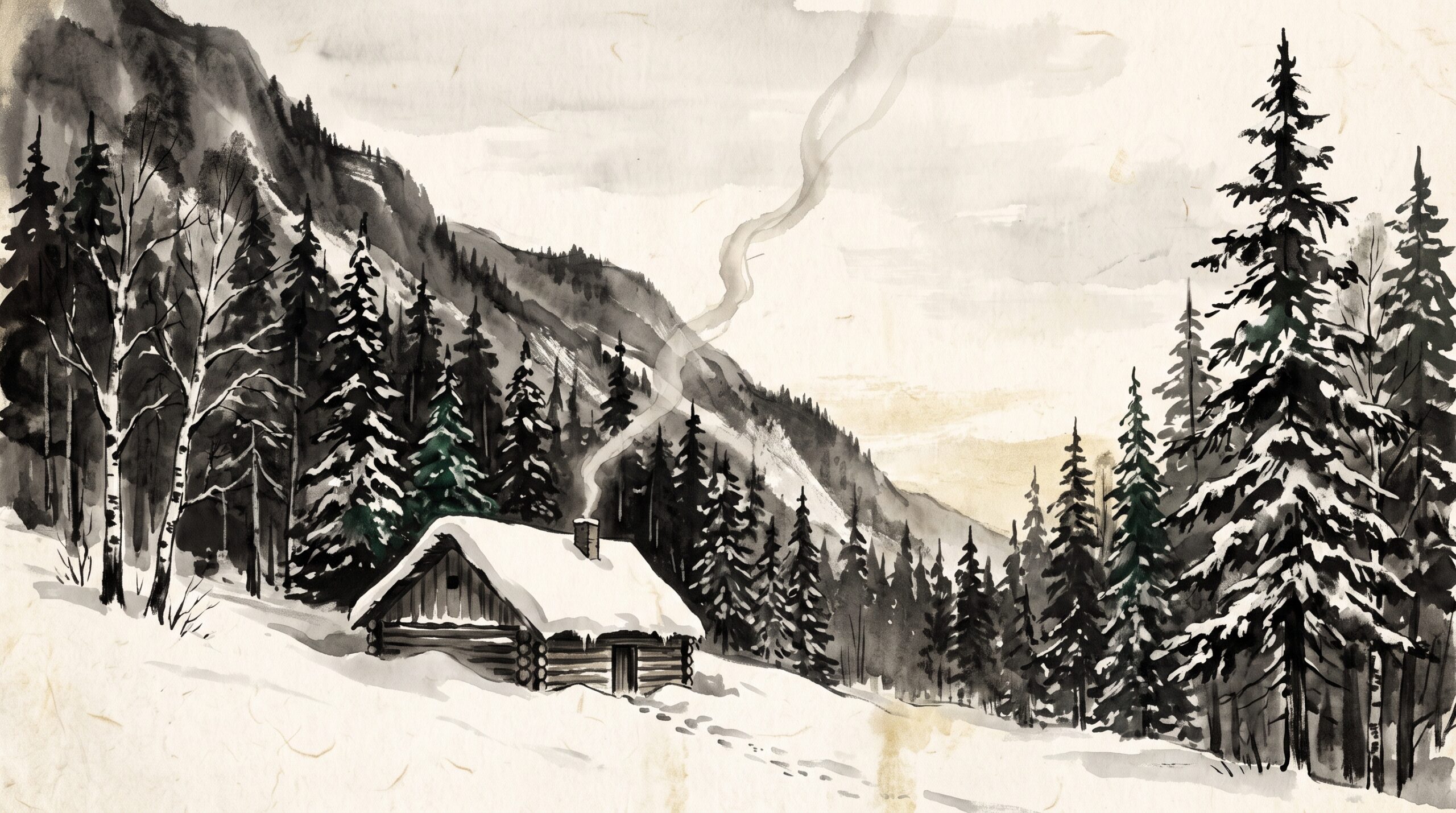
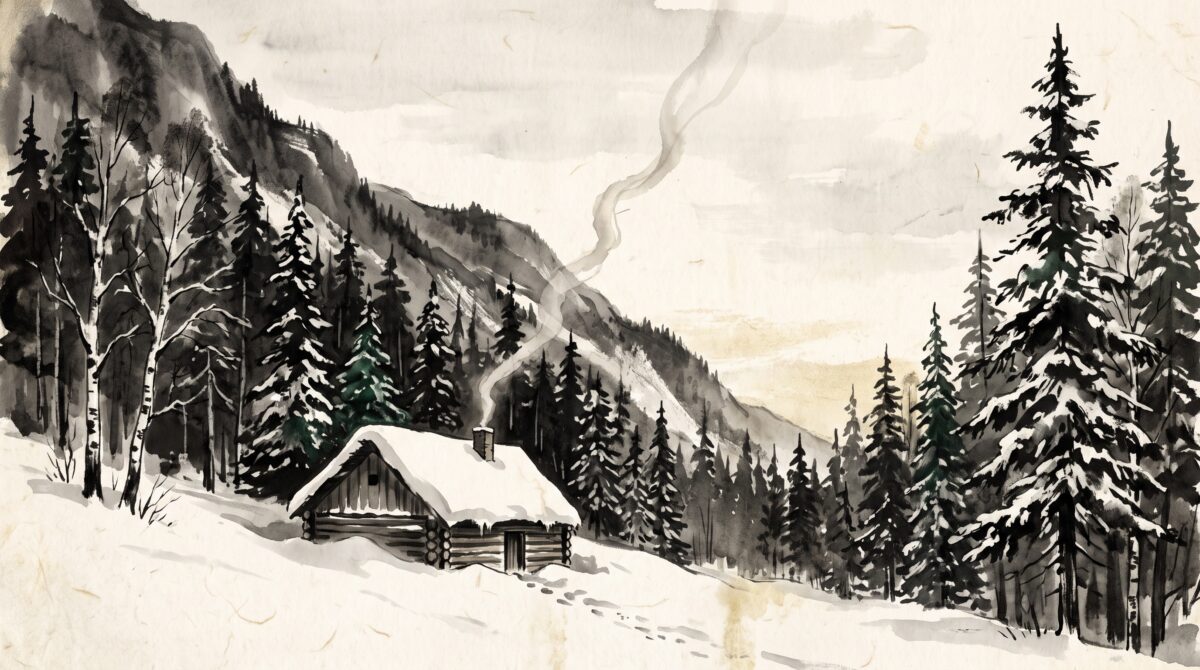
They circled again to be sure. Rows of potatoes. A crude hut of weathered logs, blackened by decades of woodsmoke, blending almost perfectly into the trees. The geologists knew the maps of this region intimately, and the maps said no one lived here. Yet someone, clearly, did. What they had stumbled onto was not a lost tribe or a hermit’s shack, but a family — and a secret that had held for more than forty years.
The Faith That Sent Them Running
To understand why anyone would choose such a place, you have to go back three centuries. The Lykovs were Old Believers, members of a Russian Orthodox sect that had split from the official church in the 1650s over reforms as small and as enormous as how many fingers to use when crossing oneself. For their refusal to bend, Old Believers had been hunted, burned, and driven to the empire’s frozen edges for generations. Persecution was woven into their bones.
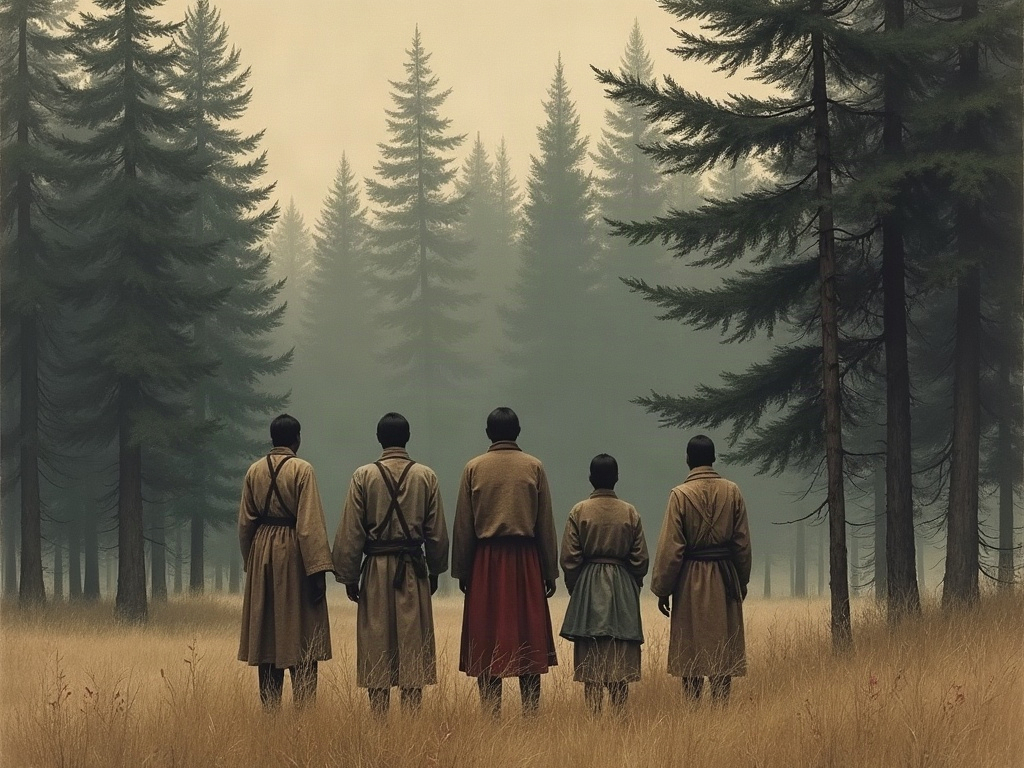
When the Bolsheviks came to power, the pressure only sharpened. Karp Lykov, a lean, iron-willed patriarch, watched the new atheist state close in on families like his. Then, in 1936, a Communist patrol appeared at the edge of his village and shot his brother dead before his eyes. That was the end of Karp’s tolerance for the world. He gathered his wife, Akulina, their small son Savin, and their infant daughter Natalia, packed what seeds and tools they could carry, and walked into the forest. He did not stop walking until the world was gone.
A World Shrunk to a Clearing
Deeper and deeper they went, until they settled in the Abakan River basin, tucked into the Sayan Mountains, roughly 150 miles from the nearest trace of civilization. There they built their hut and began the brutal arithmetic of survival. Two more children — Dmitry and, later, Agafia — were born in that wilderness and would grow up having never once seen a human face outside their own family.
Their existence was a slow war against starvation. They subsisted on potatoes, hemp seed, and rye, ground on a hollowed log, supplemented by whatever the forest surrendered. Salt they had none, and Karp would later call its absence “true torture.” When their few iron tools finally wore out, they made do with birch bark, wooden spindles, and clothing patched and re-patched from hemp they grew and wove themselves. Shoes were bark in summer and nothing much better in winter. They kept the Old Believer calendar, the old prayers, a hand-copied chronicle of their faith — and, remarkably, a running count of the days that never drifted far from correct.
The Year the Sky Rained Metal
What they did not keep was any knowledge of the outside world. When the geologists finally coaxed conversation out of them, the depth of that isolation came into focus. The family had no idea the Second World War had ever happened. They had never heard of the men who had died by the tens of millions while they hoed their mountain garden.
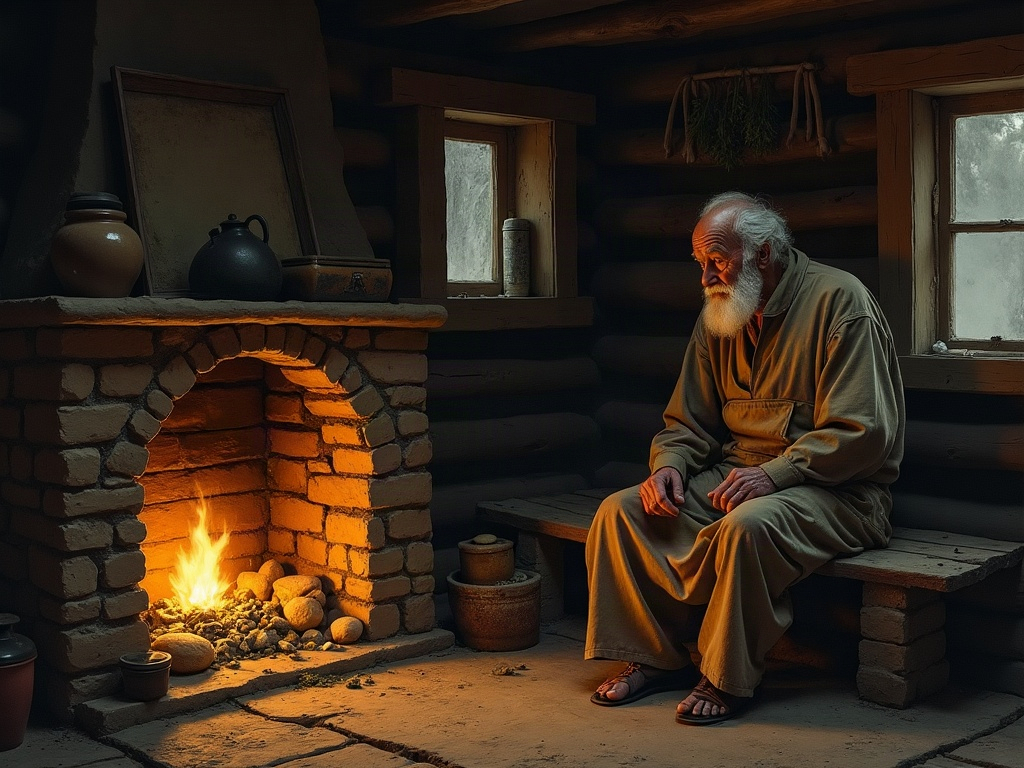
They had, however, noticed the sky changing. Karp and the children spoke of strange new stars that crossed the heavens in straight, steady lines — satellites, the visitors realized, launched into an orbit the family could not begin to imagine. “People have thought something up and are sending out fires that are very like stars,” Karp mused, trying to fit the impossible into a world he understood. The space age had passed silently overhead, watched by a family who thought the Tsar might still be on his throne.
The Cost of Being Found
The geologists returned again and again, drawn by the sheer human wonder of the place, bringing gifts the Lykovs mostly refused on religious grounds — though Karp’s youngest, Agafia, was quietly fascinated by cellophane, which she pronounced “glass, but it crumples.” A journalist named Vasily Peskov befriended them and would later tell their story to a stunned nation in a book called Lost in the Taiga.
But contact carried a terrible price. Akulina had already died back in 1961, having starved herself in a famine year so her children could eat. Then, within a short and devastating span in the autumn of 1981 — only three years after their discovery — three of the four Lykov children died. Dmitry succumbed to pneumonia; Savin and Natalia to kidney failure. Some believed the illnesses were the price of contact with a modern world their bodies had no defenses against, though the truth is harder to pin down. Whatever the cause, the family that had survived four decades of isolation began to come apart within a few years of being found.
The One Who Stayed
Karp Lykov, stubborn to the last, refused every offer to leave the mountain where he had buried a wife and three children. He died in his sleep in 1988, and his surviving daughter buried him on the slopes with the help of the geologists who had become, in the end, something like family.
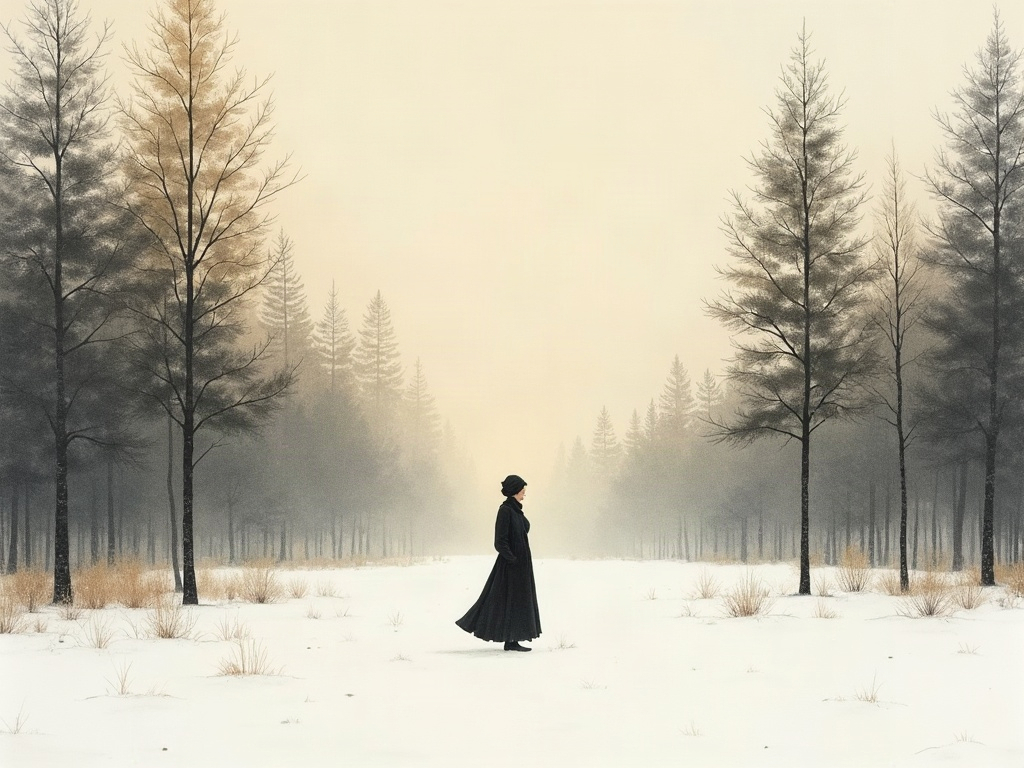
That daughter, Agafia — born in the wilderness, who had never known any life but this — made a choice that astonished everyone. Offered a place among relatives in a distant village, offered the comforts of the twentieth century, she said no. She stayed. Decades later she remains there still, tending the same slopes, keeping the same faith, an old woman alone in a silence most of us could not endure for a week.
It is tempting to read the Lykovs’ story as a tragedy, and in its ending it surely is. But there is something else in it too — a stubborn testament to what a family will endure for a belief, and to how completely a person can step outside history and still, somehow, keep living. For forty years the world roared on without them: wars, revolutions, rockets, empires risen and fallen. And through all of it, on a nameless Siberian mountain, a fire burned in a hut, a garden was tended, and prayers went up in a language of the 1650s — proof that the world is always larger, and stranger, and lonelier than the maps will ever admit.
Sources & further reading:
- For 40 Years, This Russian Family Was Cut Off From All Human Contact, Unaware of World War II — Smithsonian Magazine
- Lost in the Taiga (Taёжный тупик) — Vasily Peskov
Related Reading
More from the archive
- The Flannan Isles Mystery: The Night Three Lighthouse Keepers Vanished
- The Dyatlov Pass Incident: Nine Hikers Who Fled a Frozen Mountain Into the Dark