He could eat a meal meant for fifteen men and still be starving. He swallowed stones, live animals, and army documents for money. Two centuries later, the case of Tarrare, the French soldier with a bottomless hunger, has never truly been explained.
It arrived as a fragrant Japanese ornamental, was hailed as a miracle that would heal the eroded South, and was planted by the millions with government money. Then kudzu became the vine that ate the South — except the truth about what it really swallowed is stranger than the legend.
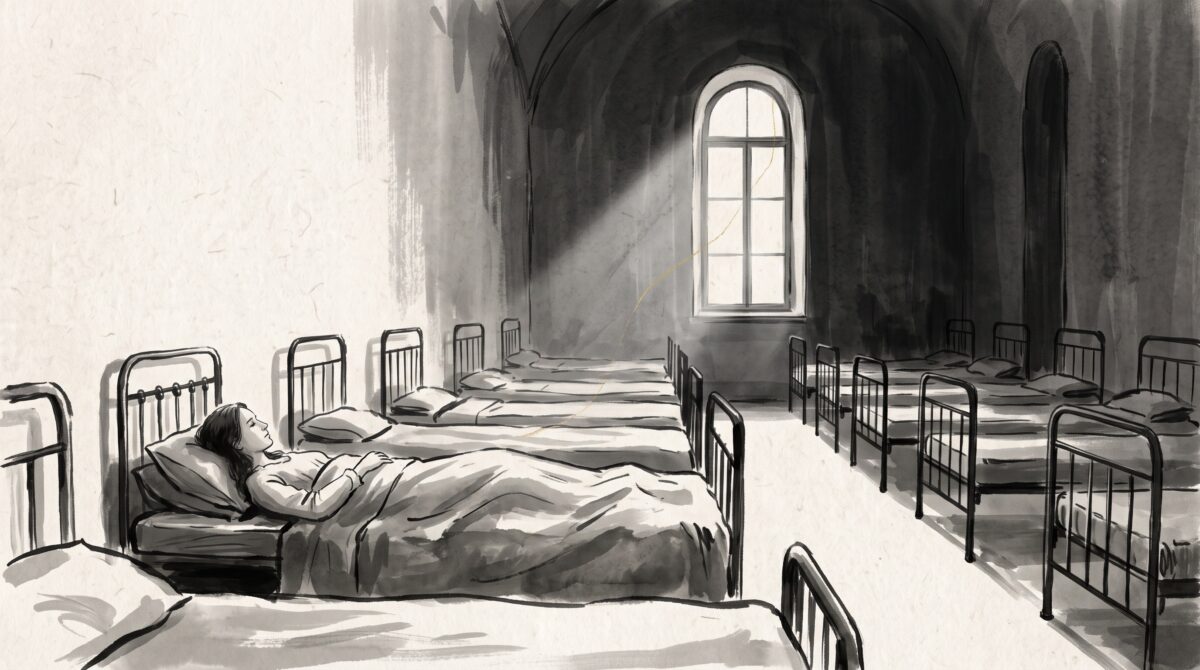
At six years old, polio left Paul Alexander paralysed and sealed inside a steel cylinder that breathed for him. He stayed there for more than seventy years — and in that time earned a law degree, argued cases in court, and wrote a book, one letter at a time, with a stick in his mouth.
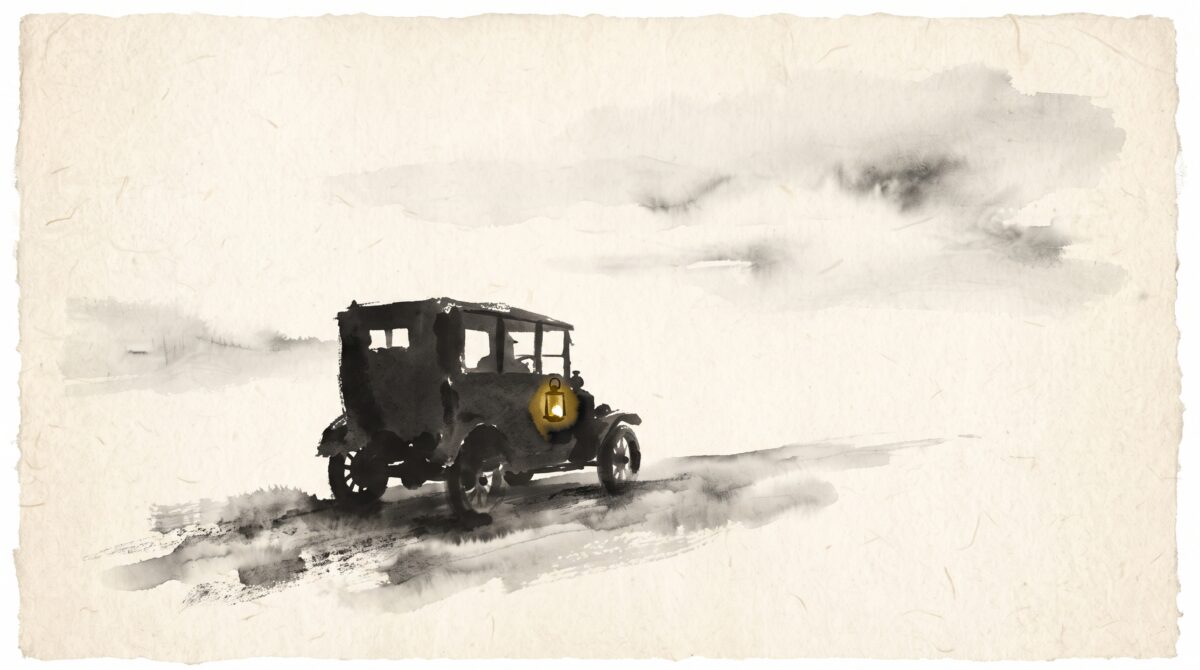
When the First World War broke out, the world’s most famous scientist did not retreat to her laboratory. Marie Curie taught herself to drive, built a fleet of X-ray trucks, and took them to the front — where they helped image more than a million wounded men.
In the 1840s, mothers in a Vienna maternity ward begged to give birth in the street rather than be admitted to the clinic run by doctors. A young Hungarian physician, Ignaz Semmelweis, found out why – a discovery so simple and so unwelcome that it cost him his career, his sanity, and finally his life.
Long before it was a profession with clinics and degrees, physiotherapy was a fencing master’s idea in Stockholm and, a century later, an army of women rebuilding broken soldiers by hand. This is how healing through movement became a science.
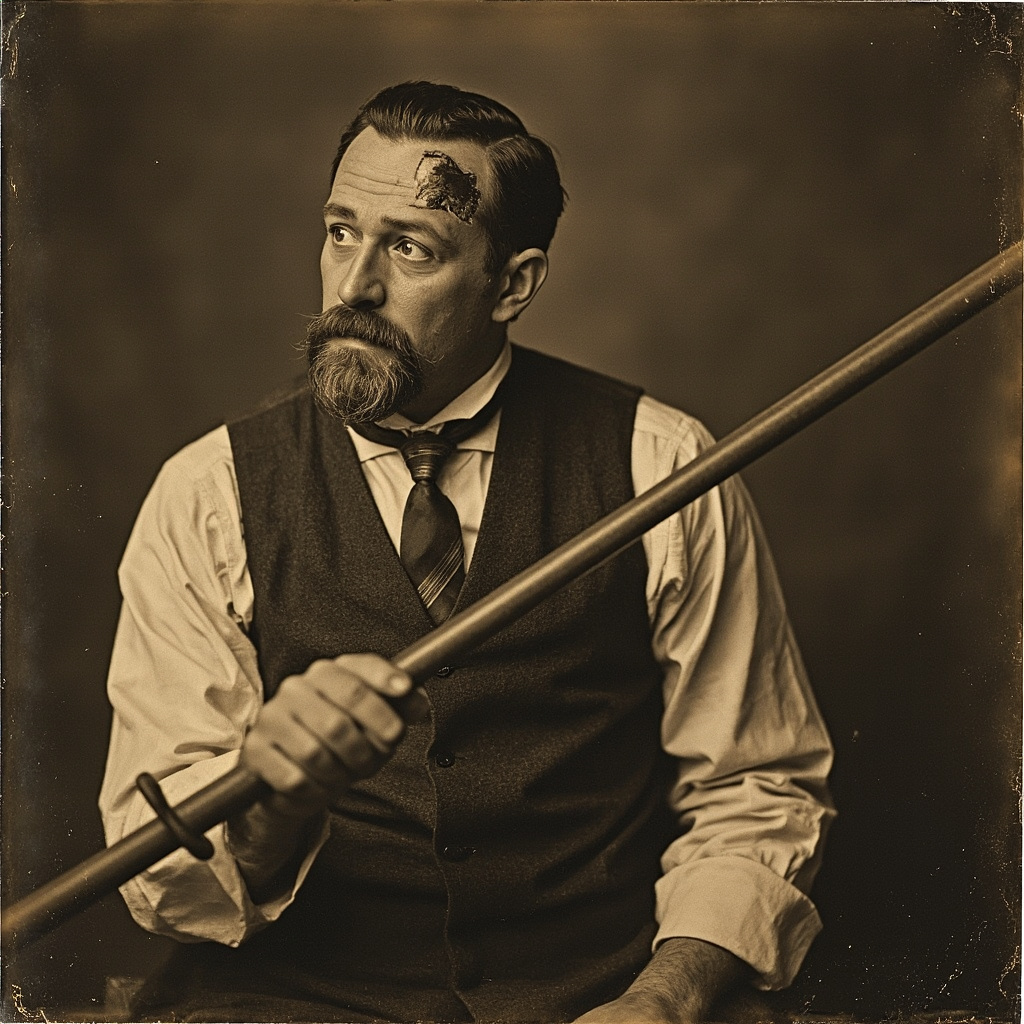
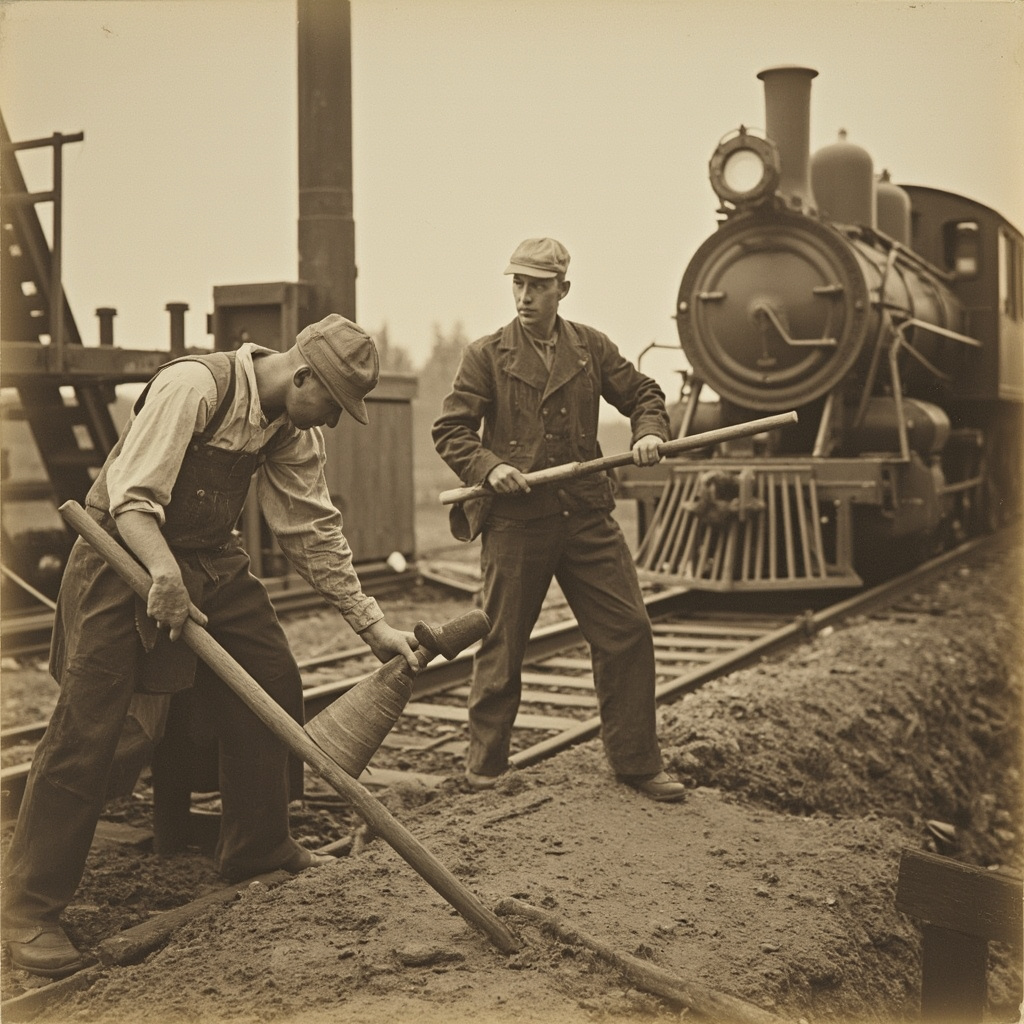
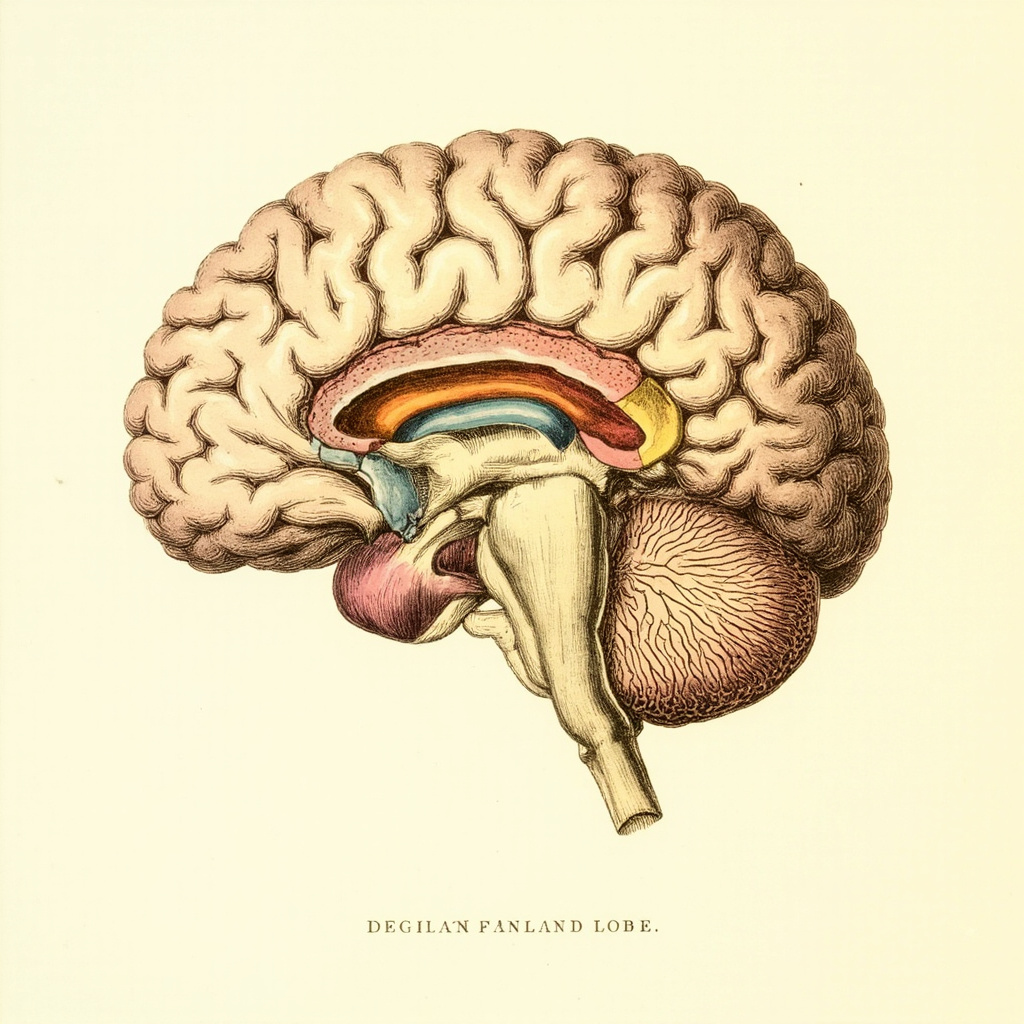
On September 13, 1848, in the quiet town of Cavendish, Vermont, a horrific accident would forever change our understanding of the human brain. Phineas Gage, a 25-year-old railroad foreman, was using a tamping iron to pack explosive powder into a hole when the powder detonated prematurely. The result was almost impossible to believe.
The tamping iron—43 inches long, 1.25 inches in diameter, and weighing over 13 pounds—shot skyward like a missile, penetrated Gage’s left cheek, ripped through his brain, and exited through the top of his skull. Remarkably, Gage didn’t even lose consciousness and remained lucid enough to tell the first doctor on the scene: “Here is business enough for you.”
The Dangerous World of Railroad Construction
In 1848, America was in the midst of a railroad building boom. Construction crews worked with dangerous materials and primitive safety measures that would be unthinkable today. Workers like Gage used tamping irons—long metal rods—to pack explosive black powder into holes drilled in rock. The process was inherently risky, requiring precise timing and careful handling of volatile materials.
Gage was considered one of the most capable and efficient foremen on the Rutland and Burlington Railroad. His supervisor described him as “the most efficient and capable foreman in their employ.” This makes what happened next even more remarkable—if such an experienced professional could suffer such an accident, it highlighted just how dangerous railroad construction truly was.
The Accident That Changed Everything
The accident occurred when Gage was distracted for just a moment. As he was tamping powder into a hole, the iron rod created a spark that ignited the explosive before sand could be added to buffer the blast. The force launched the tamping iron through his skull with devastating precision.
Witnesses couldn’t believe Gage was still alive, let alone conscious and speaking. The rod had destroyed much of his left frontal lobe, but somehow missed major blood vessels and other critical structures. Dr. John Martyn Harlow, the local physician who treated Gage, initially thought his patient couldn’t possibly survive such an injury.
The Personality That Vanished
While Gage’s physical recovery was remarkable, the changes to his personality were even more extraordinary. Before the accident, he had been described as well-balanced, energetic, and a “great favorite” with his men. But the damage to his frontal lobe transformed him completely.
Dr. Harlow observed that Gage was “no longer Gage.” The formerly reliable and socially appropriate man became impulsive, irreverent, and unable to follow through on plans. He couldn’t hold down steady employment and wandered from job to job, sometimes working in circuses where his injury made him a curiosity.
Birth of Modern Neuroscience
Gage’s case became the first documented evidence that specific regions of the brain control personality and behavior. This was revolutionary thinking in the 1850s, when many scientists still believed the brain functioned as a single, undifferentiated organ.
The case provided crucial early evidence for what we now call localization of brain function—the idea that different parts of the brain have specialized roles. Gage’s frontal lobe damage specifically affected what neuroscientists now recognize as executive functions: planning, decision-making, impulse control, and social behavior.
The Mystery of Recovery
Perhaps even more fascinating than the initial injury was Gage’s gradual recovery over the following years. While early accounts emphasized his dramatic personality changes, later evidence suggests he regained much of his social functioning. He eventually found steady work as a stagecoach driver in Chile, a job requiring considerable skill and responsibility.
This recovery challenged simple ideas about brain damage being permanent and opened up early discussions about neuroplasticity—the brain’s ability to reorganize and adapt after injury.
Legacy in Modern Medicine
Phineas Gage’s case continues to influence neuroscience and medicine today. His skull and the tamping iron that pierced it are preserved at Harvard Medical School, where they remain important teaching tools. Modern brain imaging techniques have allowed scientists to create detailed reconstructions of exactly which areas of his brain were damaged.
The case laid groundwork for understanding traumatic brain injury, the development of modern neurosurgery, and our current knowledge of how the frontal lobes control personality and behavior. Every time a neurosurgeon operates on the brain or a psychiatrist treats personality disorders, they’re building on insights that began with a railroad accident in rural Vermont.
The Human Story
Behind the scientific significance was a real person whose life was forever altered by a split-second accident. Gage lived for 12 years after his injury, dying in 1860 from seizures likely related to his brain damage. His case reminds us that behind every medical milestone is a human being who endured something extraordinary.
The story of Phineas Gage proves that sometimes the most important scientific discoveries come from the most unexpected places. A construction accident in a small Vermont town opened a window into the human brain that science is still looking through today.
In 1962, something extraordinary and bizarre happened in the newly independent nation of Tanganyika (now Tanzania). What began as innocent giggles between three schoolgirls in a remote mission school would spiral into one of history’s most unusual epidemics—an outbreak of uncontrollable laughter that affected over 1,000 people across 18 months.
This wasn’t just any ordinary case of classroom humor getting out of hand. The Tanganyika Laughter Epidemic, as it came to be known, forced 14 schools to close and baffled medical experts who struggled to understand how laughter could spread like a contagious disease.
The Outbreak Begins
On January 30, 1962, at a mission-run boarding school for girls in the village of Kashasha, near Lake Victoria, three students began laughing during their lessons. What started as typical teenage giggling quickly transformed into something far more serious.
The laughter was not the joyful kind one might expect. Students reported they could not control themselves—they would laugh continuously for hours, sometimes days, accompanied by crying, fainting, and respiratory problems. The affected girls were unable to concentrate on their studies, despite desperate attempts by teachers to restore order.
Within weeks, 95 of the school’s 159 pupils, aged 12-18, were affected. The symptoms lasted anywhere from a few hours to 16 days, with an average duration of about seven days. Remarkably, none of the teaching staff were affected, leading to speculation about the psychological nature of the outbreak.
The Epidemic Spreads
As the situation at Kashasha became impossible to manage, school officials made the difficult decision to close the institution on March 18, 1962, after 48 days of chaos. But closing the school didn’t contain the epidemic—it actually helped it spread.
When the affected students returned to their home villages, they brought the mysterious condition with them. The outbreak spread to Nshamba in the Muleba District, about 55 miles west of Bukoba, where several of the Kashasha girls lived. In April and May 1962, 217 mostly young villagers experienced laughing attacks over 34 days.
The epidemic continued to leap from community to community. In June, the Ramashenye girls’ middle school was hit, affecting 48 students. Additional schools and villages, including Kanyangereka, also reported cases. The Kashasha school itself attempted to reopen on May 21, only to see 57 more pupils affected in a second wave of the outbreak.
The Scale of the Crisis
By the time the epidemic finally burned itself out 18 months later, the numbers were staggering:
14 schools were forced to close
Over 1,000 people were affected
All cases occurred within a 100-mile radius of Bukoba
The vast majority of victims were young people, particularly girls
Understanding the Phenomenon
Medical investigators quickly ruled out infectious diseases, poisoning, or other physical causes. Instead, they classified the outbreak as a case of mass psychogenic illness (MPI), also known as mass hysteria—a psychological phenomenon where physical symptoms spread through a group without an underlying medical cause. Historians and psychologists often set such outbreaks alongside other episodes of mass suggestion — from medieval dancing manias to the day tens of thousands reported seeing the sun dance over Fátima.
Several factors made the population particularly vulnerable to such an outbreak:
Social and Cultural Stress
Tanganyika had just gained independence in 1961, creating significant social upheaval. Students reported feeling increased pressure from teachers and parents who now had higher expectations in the newly independent nation. The transition from colonial rule to self-governance created uncertainty and anxiety throughout society.
Adolescent Psychology
The fact that most victims were teenage girls was not coincidental. Adolescents are particularly susceptible to mass psychogenic illness due to their developmental stage, need for peer acceptance, and limited coping mechanisms for stress. The strict, authoritarian environment of mission schools may have intensified these pressures.
Cultural Factors
Linguist Christian F. Hempelmann noted that mass psychogenic illness typically affects people with limited power or voice in their society. For young women in 1960s East Africa, attending strict missionary schools during a time of rapid social change, the unconscious expression of stress through physical symptoms may have been one of the few available outlets.
The Science Behind the Spread
Modern understanding of mass psychogenic illness helps explain how the laughter epidemic could spread so effectively. The condition typically spreads through:
Social bonds: Stronger relationships increase susceptibility
Shared stressors: Common sources of anxiety or pressure
Suggestion: Expectation that symptoms will occur
The boarding school environment, with its close living quarters and intense social bonds, created perfect conditions for this type of psychological contagion.
Historical Context and Similar Cases
The Tanganyika Laughter Epidemic was not unique in history. Similar outbreaks of mass psychogenic illness have occurred throughout human history, often during times of social stress or change. Other notable cases include:
The Dancing Plague of 1518 in Strasbourg
The Salem Witch Trials of 1692-1693
Various fainting epidemics in schools and factories
Modern cases of mass psychogenic illness in schools worldwide
What made the Tanganyika case unique was its scale, duration, and the specific symptom of uncontrollable laughter.
Legacy and Lessons
The Tanganyika Laughter Epidemic offers valuable insights into the power of psychological suggestion and the importance of understanding social and cultural factors in mysterious health outbreaks. It demonstrates how real physical symptoms can arise from psychological causes, and how quickly such conditions can spread in close-knit communities.
The case is still studied today by psychologists, sociologists, and medical professionals as a prime example of mass psychogenic illness. It serves as a reminder that in times of social upheaval and stress, communities can be particularly vulnerable to collective psychological phenomena.
Perhaps most importantly, it shows us that laughter—usually a sign of joy and human connection—can sometimes be a symptom of deeper social and psychological distress. The girls of Kashasha were not laughing because they were happy; they were laughing because they had no other way to express the overwhelming pressures of their rapidly changing world.
In the 1920s, hundreds of young women painted clock faces with radium paint, told it was perfectly safe. They were instructed to lick their paintbrushes to create fine points—consuming deadly radium with every stroke. These women, known as the Radium Girls, would eventually take on powerful corporations in a legal battle that transformed workers’ rights in America forever.
Their story is one of corporate cover-ups, scientific denial, and ordinary women who refused to die quietly. The Radium Girls didn’t just fight for their own lives—they fought for the safety of all American workers.
The Glow of Progress
Radium was discovered by Marie and Pierre Curie in 1898, and by the 1920s, it had captured the public imagination. This “miracle element” glowed in the dark and was marketed as a cure-all, added to everything from toothpaste to chocolate. Wealthy socialites paid premium prices for radium-infused cosmetics, believing it would give them a healthy, youthful glow.
The radium industry boomed during World War I when the military needed glow-in-the-dark watches and instrument panels. The largest employer of dial painters was the United States Radium Corporation in Orange, New Jersey, followed by the Radium Dial Company in Ottawa, Illinois.
The job was considered desirable—clean work in a bright factory, paying well above minimum wage. Young women, many just teenagers, were thrilled to land these positions. They called themselves “ghost girls” because their hair, clothes, and skin would glow green in the dark after work.
The Deadly Routine
Every day, hundreds of dial painters would arrive at the factory and take their places at long tables. Each woman received:
A small dish of radium paint mixed with adhesive and water A fine camel-hair brush for precision painting Detailed watch faces or instrument panels to paint A quota of about 250 dials per day
The technique was called “lip-pointing”—workers were instructed to shape their paintbrushes to fine points using their lips and tongues. Supervisors demonstrated the technique and assured workers it was completely harmless. “It’s no worse than eating salt,” they were told.
What the women didn’t know was that their supervisors and the company scientists handling radium wore protective equipment and never touched the material directly. The dial painters, however, were consuming radium all day long through lip-pointing.
The First Signs of Trouble
By 1922, dentists in Orange, New Jersey began noticing an unusual pattern among young women. Patients who worked at the radium factory were coming in with severe dental problems:
Teeth falling out spontaneously Jawbones that wouldn’t heal after extractions Mysterious jaw fractures Persistent, unexplained anemia
Dr. Theodore Blum, a local dentist, was the first to make the connection. He called the condition “radium jaw” and published his findings in 1924. The U.S. Radium Corporation immediately challenged his research, claiming their own studies showed radium was completely safe.
Meanwhile, young women continued to get sick. Grace Fryer, who had worked at the factory from 1917 to 1920, began experiencing severe tooth loss and jaw pain. Her case would become the centerpiece of the legal battle to come.
Corporate Cover-Up and Denial
When confronted with evidence of illness among their workers, U.S. Radium Corporation launched a systematic campaign of denial and misdirection:
Fake Medical Studies: The company hired doctors to examine sick workers and publicly declare them healthy. These “independent” physicians were secretly on the company payroll.
Alternative Diagnoses: When women became ill, company doctors blamed everything from syphilis to poor hygiene to “hysteria.” They suggested the women were malingering or seeking attention.
Intimidation Tactics: Workers who complained were fired. Families of deceased workers were told their daughters died from “natural causes” unrelated to radium exposure.
Scientific Manipulation: The company suppressed internal research showing radium’s dangers while publicly promoting studies claiming it was beneficial to health.
The Legal Battle Begins
In 1925, Grace Fryer decided to sue U.S. Radium Corporation for damages. She faced immediate obstacles:
No lawyer would take her case initially—the radium companies were too powerful and wealthy The statute of limitations appeared to have expired Medical experts were reluctant to testify against the radium industry Public opinion favored the “miracle” radium over unknown factory girls
After two years of searching, Fryer found attorney Raymond Berry, who agreed to represent her and four other women: Edna Hussman, Katherine Schaub, Quinta McDonald, and Albina Larice. The press dubbed them “The Five”—the first Radium Girls to challenge corporate America in court.
Scientific Evidence Mounts
Dr. Harrison Martland, a physician and researcher, conducted independent studies of radium workers and made crucial discoveries:
Radium accumulates in bones and continues emitting radiation for years The “lip-pointing” technique delivered concentrated doses directly to the mouth and throat Radiation damage affects the entire body, not just the mouth and jaw There is no safe level of radium consumption
Martland’s research provided the scientific foundation needed to prove the companies’ liability. However, U.S. Radium Corporation fought back with their own “experts” who claimed radium was beneficial and that the women’s illnesses were unrelated to their work.
The Ottawa, Illinois Connection
While the New Jersey case proceeded slowly through the courts, another tragedy was unfolding in Ottawa, Illinois. The Radium Dial Company employed hundreds more dial painters using the same deadly techniques.
Catherine Wolfe Donohue, a former dial painter, organized fellow workers to demand answers about their illnesses. The Ottawa women faced the same corporate denial and legal obstacles as their New Jersey counterparts.
The Illinois women had one advantage: they could learn from the New Jersey legal strategy. They also faced one major disadvantage: many were sicker and dying faster, as the Ottawa plant had used even higher concentrations of radium.
David vs. Goliath in Court
The legal proceedings revealed the shocking extent of corporate callousness:
Internal Memos: Company documents showed executives knew about radium dangers as early as 1922 but chose to suppress the information to protect profits.
Double Standards: While telling workers radium was safe, the company provided protective equipment for its executives and scientists.
Victim Blaming: Defense attorneys argued the women were promiscuous and their illnesses were due to venereal disease, not radium exposure.
Stalling Tactics: The company used every legal maneuver to delay proceedings, hoping the women would die before winning their case.
The Turning Point
Public opinion began shifting in 1928 when newspapers started reporting the full story. The image of young women literally glowing as they walked home from work, only to die horrible deaths from radiation poisoning, captured public sympathy.
Key moments that changed the narrative:
Grace Fryer’s Testimony: Too weak to raise her right hand to take the oath, Fryer’s frail appearance in court generated widespread sympathy and press coverage.
Expert Medical Testimony: Dr. Martland’s scientific evidence was overwhelming and undeniable, even under aggressive cross-examination.
Company Hypocrisy Exposed: Revelations about protective equipment for executives while workers were told radium was safe sparked public outrage.
Victory and Legacy
In June 1928, the New Jersey Radium Girls reached a settlement with U.S. Radium Corporation:
$10,000 lump sum for each woman (approximately $150,000 today) $600 annual pension for life Full medical expenses covered Company admission that radium caused their illnesses
The Illinois women won their case in 1938, though many had died by then. Catherine Wolfe Donohue, the lead plaintiff, died just months after the victory.
Transforming Workers’ Rights
The Radium Girls’ legal victories established crucial precedents:
Right to Sue: Workers gained the legal right to sue employers for damages from occupational diseases.
Employer Responsibility: Companies became legally responsible for providing safe working conditions and informing workers of known hazards.
Statute of Limitations Reform: The “discovery rule” was established—the statute of limitations begins when the worker discovers their illness, not when exposure occurred.
Industrial Safety Standards: Federal oversight of workplace safety was strengthened, leading eventually to OSHA creation in 1970.
Scientific and Medical Advances
The Radium Girls’ cases contributed significantly to medical and scientific understanding:
Radiation Safety: Comprehensive safety protocols were developed for handling radioactive materials.
Occupational Medicine: The field of occupational health emerged, studying how workplace exposures affect human health.
Cancer Research: Long-term studies of radium workers provided crucial data about radiation-induced cancer.
Bone Metabolism: Research on radium poisoning advanced understanding of how bones absorb and process minerals.
The Human Cost
The exact number of radium poisoning victims remains unknown, but researchers estimate:
4,000+ dial painters worked at various facilities nationwide Hundreds died from radium-related illnesses Many more suffered chronic health problems Some families experienced multiple generations of health issues
The women who survived long enough to see justice were permanently disabled. Grace Fryer lived until 1969 but suffered constant pain and required multiple surgeries. Most of “The Five” died in their 40s or 50s from radiation-related cancers.
Modern Recognition and Remembrance
Today, the Radium Girls are remembered as pioneers in workers’ rights and corporate accountability:
Historical Markers: Monuments in New Jersey and Illinois commemorate their struggle.
Academic Study: Their case is taught in law schools, medical schools, and public health programs worldwide.
Popular Culture: Books, documentaries, and even a Broadway musical have told their story to new generations.
Legal Precedent: Their cases continue to influence workplace safety litigation and corporate responsibility law.
Lessons for Today
The Radium Girls’ story remains relevant in our modern economy:
Corporate Accountability: Their battle established that companies cannot hide behind “trade secrets” when worker health is at stake.
Scientific Integrity: The importance of independent research and the dangers of industry-funded studies that prioritize profit over safety.
Worker Empowerment: The power of workers organizing to demand safe working conditions and holding employers accountable.
Regulatory Oversight: The need for strong government oversight of workplace safety and environmental health.
The Radium Girls didn’t choose to be heroes—they simply refused to accept that their lives were expendable for corporate profits. Their courage in fighting powerful companies while battling life-threatening illnesses transformed American workplace safety and established rights that protect workers to this day.
Their legacy reminds us that progress often comes at great personal cost, and that ordinary people can achieve extraordinary change when they refuse to remain silent in the face of injustice.
In the summer of 1858, London — the capital of the most powerful empire on Earth, the richest city in the world, the beating heart of the Industrial Revolution — was brought to its knees by a smell. Not a plague, not an invasion, not a financial crisis. A smell. And that smell would ultimately save millions of lives.
The Great Stink of 1858 is the story of how the river Thames became so catastrophically polluted with human sewage that Parliament itself was forced to flee its chambers, and how the resulting crisis finally compelled the British government to build one of the greatest engineering achievements of the 19th century: Joseph Bazalgette’s London sewer system.
A River of Filth
To understand the Great Stink, you need to understand what London had done to its river. By the mid-19th century, London’s population had exploded. In 1800, roughly one million people lived in the city. By 1850, that number had swollen to nearly 2.5 million. And every single one of them produced sewage.
For centuries, Londoners had relied on cesspits — underground chambers beneath homes and businesses that collected human waste. “Night soil men” would periodically empty these cesspits and cart the contents away to be used as fertilizer. The system was unpleasant but functional — as long as the population remained manageable.
Then came the flush toilet. The widespread adoption of water closets in the early 19th century was considered a triumph of modern hygiene. But it created an unforeseen catastrophe. Flush toilets used enormous quantities of water, which rapidly overwhelmed the old cesspits, causing them to overflow into street drains and ditches. These drains were never designed to handle sewage — they were meant for rainwater — and they all emptied into the same place: the River Thames.
By the 1850s, the Thames had become an open sewer. Raw, untreated human waste from millions of people poured directly into the river. The same river, it should be noted, from which many Londoners drew their drinking water.
Cholera and the Wrong Theory
The consequences were devastating. Cholera — a waterborne disease caused by bacteria in contaminated water — swept through London in terrifying epidemics in 1832, 1849, and 1854. Tens of thousands died. But the medical establishment of the time didn’t understand how cholera spread. The prevailing theory was miasma — the belief that diseases were caused by “bad air” arising from rotting organic matter. If it smelled bad, it could make you sick. The stench of the Thames, under this theory, was literally poisonous.
A brilliant physician named John Snow had demonstrated during the 1854 Broad Street outbreak that cholera was spread through contaminated water, not bad air. He famously traced cases to a single water pump and had its handle removed, stopping the outbreak. But Snow’s waterborne theory was largely rejected by the medical establishment. The miasma theory held firm.
Ironically, it was the wrong theory that would ultimately produce the right solution.
The Summer of 1858
The summer of 1858 was unusually hot. Week after week of blazing sunshine baked the Thames and its banks of accumulated sewage. The heat accelerated decomposition. The smell — already bad in normal years — became apocalyptic.
Contemporary accounts describe the stench as physically unbearable. It wasn’t merely unpleasant; it was a wall of foulness that made people retch, faint, and flee. The smell penetrated buildings, permeated clothing, and hung over the city like a toxic fog.
And nowhere was the smell worse than at the Houses of Parliament, which sat directly on the banks of the Thames. Members of Parliament attempted to continue their work with curtains soaked in chloride of lime hung over the windows. They tried every deodorizing agent available. Nothing worked. Committee rooms on the river side of the building were abandoned entirely. There was serious discussion of relocating Parliament to Oxford or St. Albans.
The Times thundered: “What a pity it is that the thermometer fell ten degrees yesterday. Parliament was all but compelled to legislate upon the great London nuisance by the force of sheer stench.”
Benjamin Disraeli, then Chancellor of the Exchequer, was seen fleeing a Commons committee room with a sheaf of papers in one hand and a handkerchief clutched to his nose with the other. The Great Stink had achieved what decades of cholera deaths, public health campaigns, and engineering proposals had failed to do: it had made the problem personal for the people in power.
Bazalgette’s Vision
Joseph Bazalgette was the Chief Engineer of the Metropolitan Board of Works, and he had been waiting for this moment. For years, he had championed an ambitious plan to solve London’s sewage crisis: a vast network of intercepting sewers that would catch the waste before it reached the Thames and carry it miles downstream to treatment works east of the city.
Previous proposals had been debated, revised, rejected, and shelved for years — victims of political infighting, cost concerns, and bureaucratic inertia. The Great Stink swept all of that away. Parliament passed the enabling legislation in just eighteen days — an almost unprecedented speed for Victorian government. Bazalgette was given his funding and told to get to work.
What he built was extraordinary. Over the next six years, Bazalgette oversaw the construction of 83 miles of brick-lined intercepting sewers, fed by 1,100 miles of street sewers. The system used gravity to channel sewage from across London into massive trunk sewers that ran parallel to the Thames, carrying waste eastward to pumping stations at Crossness and Abbey Mills, where it was lifted into holding reservoirs and released into the river on the outgoing tide, far downstream from the city.
The engineering was brilliant, but Bazalgette’s true genius was in his foresight. When calculating the diameter of the main sewers, he estimated the maximum capacity London would ever need — then doubled it. “We’re only going to do this once,” he reportedly said, “and there’s always the unforeseen.” That decision to overengineer the system is the reason Bazalgette’s sewers still form the backbone of London’s sewage infrastructure today, more than 160 years later.
The Result
The impact was transformative. Cholera, which had killed tens of thousands in London across multiple epidemics, essentially vanished from the city after the sewer system was completed. The Thames, while still far from pristine, was no longer an open cesspool. Life expectancy in London increased dramatically. The system became a model for cities around the world.
Bazalgette also used the construction project to reshape London’s riverfront. The massive trunk sewers running along the Thames were enclosed within new embankments — the Victoria Embankment, the Albert Embankment, and the Chelsea Embankment — which reclaimed land from the river, created new roads, and housed an underground railway line. These embankments remain some of London’s most recognizable landmarks.
The Lesson
The Great Stink is a story about the perverse mechanics of political will. London’s sewage crisis had been killing people for decades. John Snow had identified the mechanism. Engineers had proposed solutions. The evidence was overwhelming. But nothing happened — until the smell reached Parliament.
It took the personal discomfort of the ruling class to produce action that the deaths of thousands of ordinary Londoners could not. The cholera victims were mostly poor. The smell was democratic. And so, in one of history’s great ironies, a city was saved not by science or compassion, but by the simple, unavoidable reality that sewage stinks — and that even the most powerful men in the British Empire couldn’t legislate with a hand over their nose.