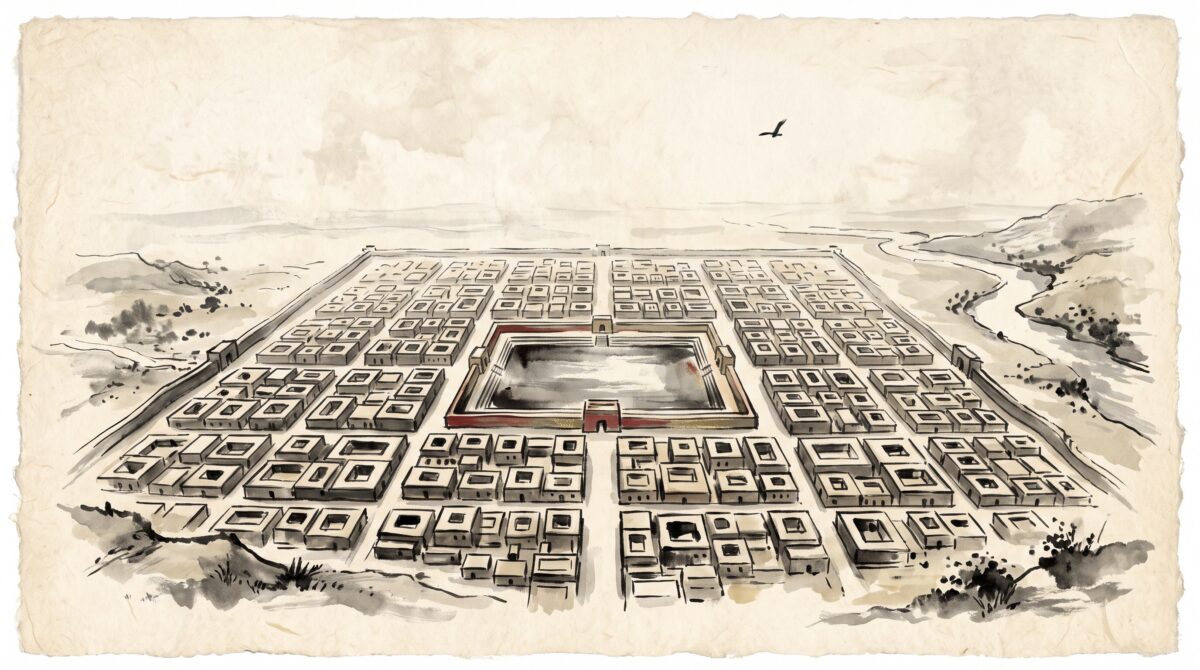
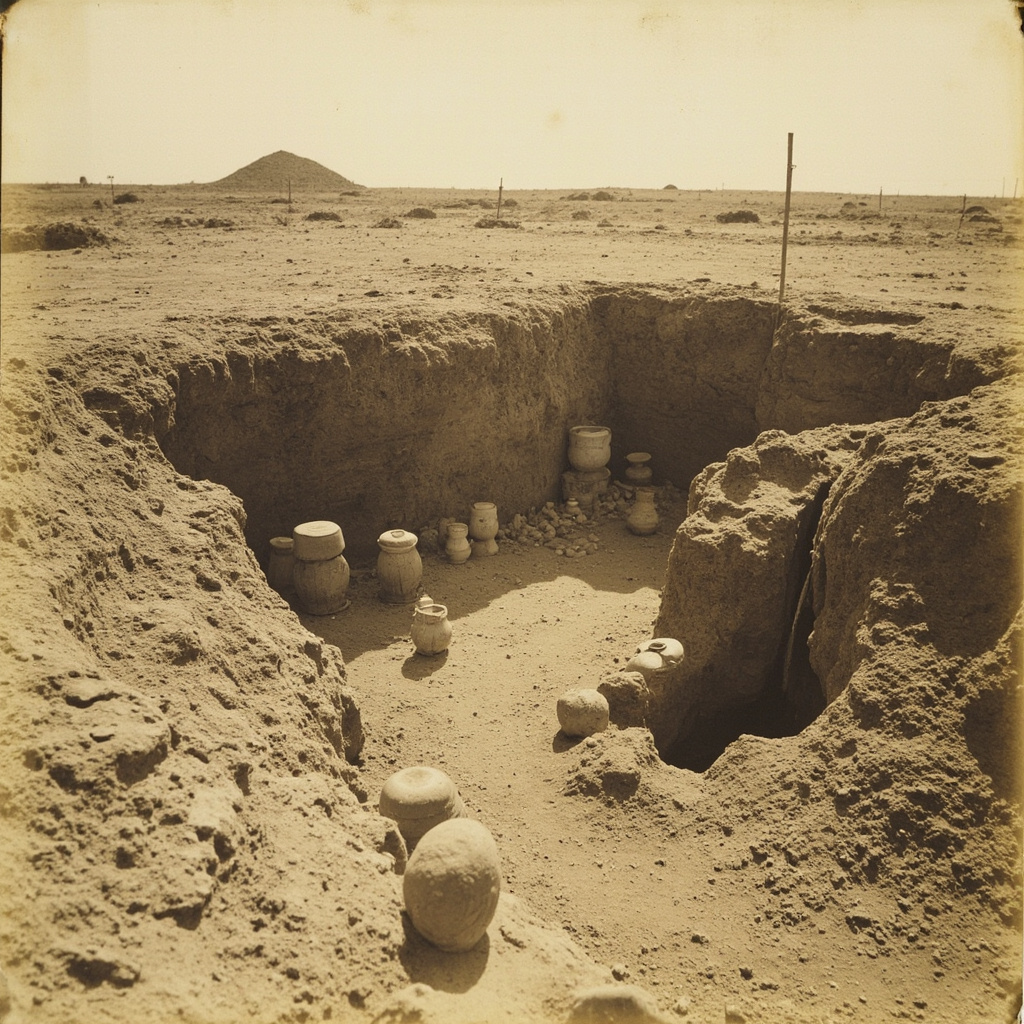
It was larger than Egypt and Mesopotamia combined, built cities with covered sewers 4,500 years ago, left no kings and no war — and then quietly disappeared so completely that the world forgot it had ever existed.
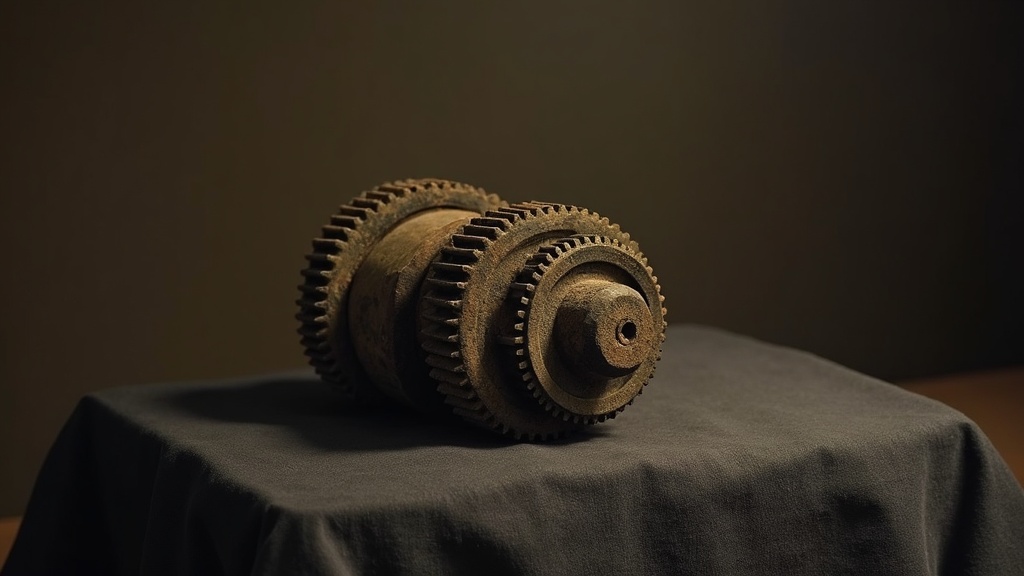
In 1901, sponge divers hauled a corroded lump of bronze from a Roman shipwreck. It would take a century to realize they had found a computer built before the birth of Christ.
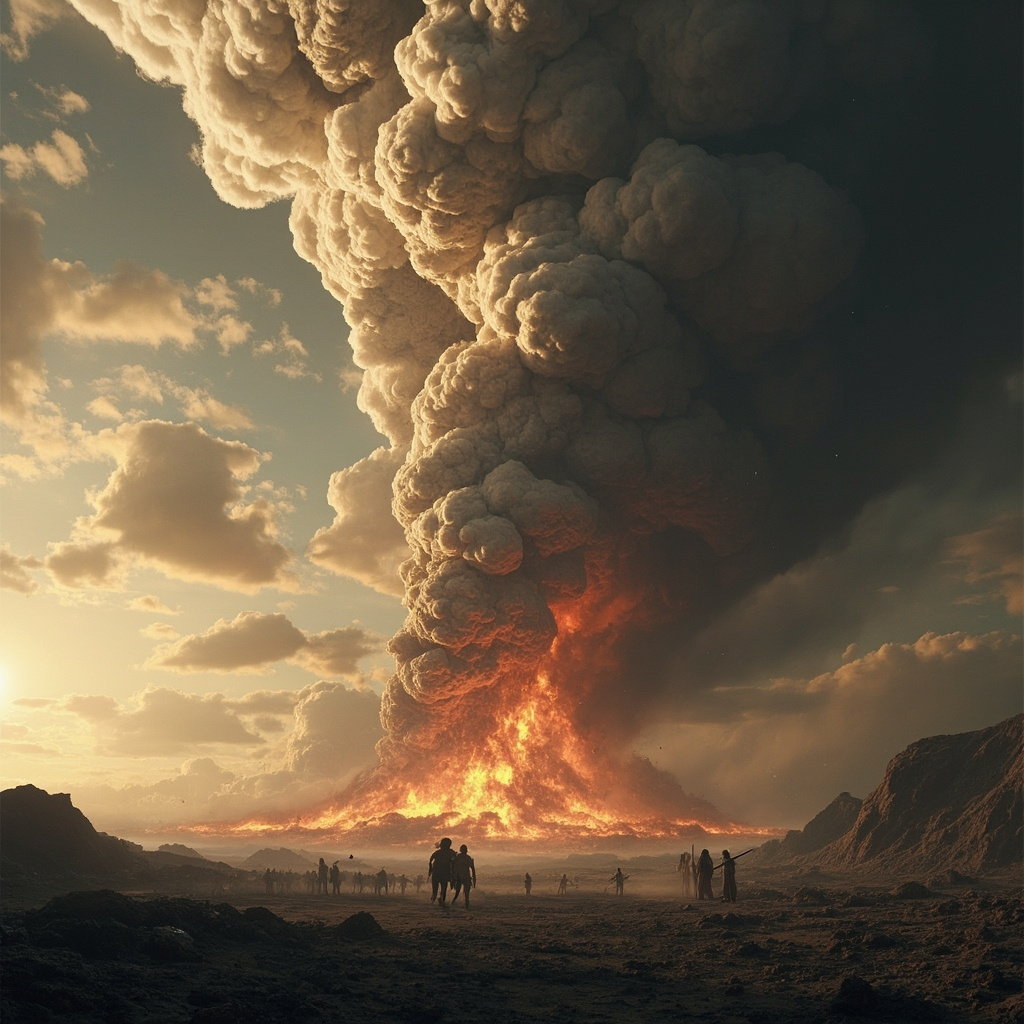
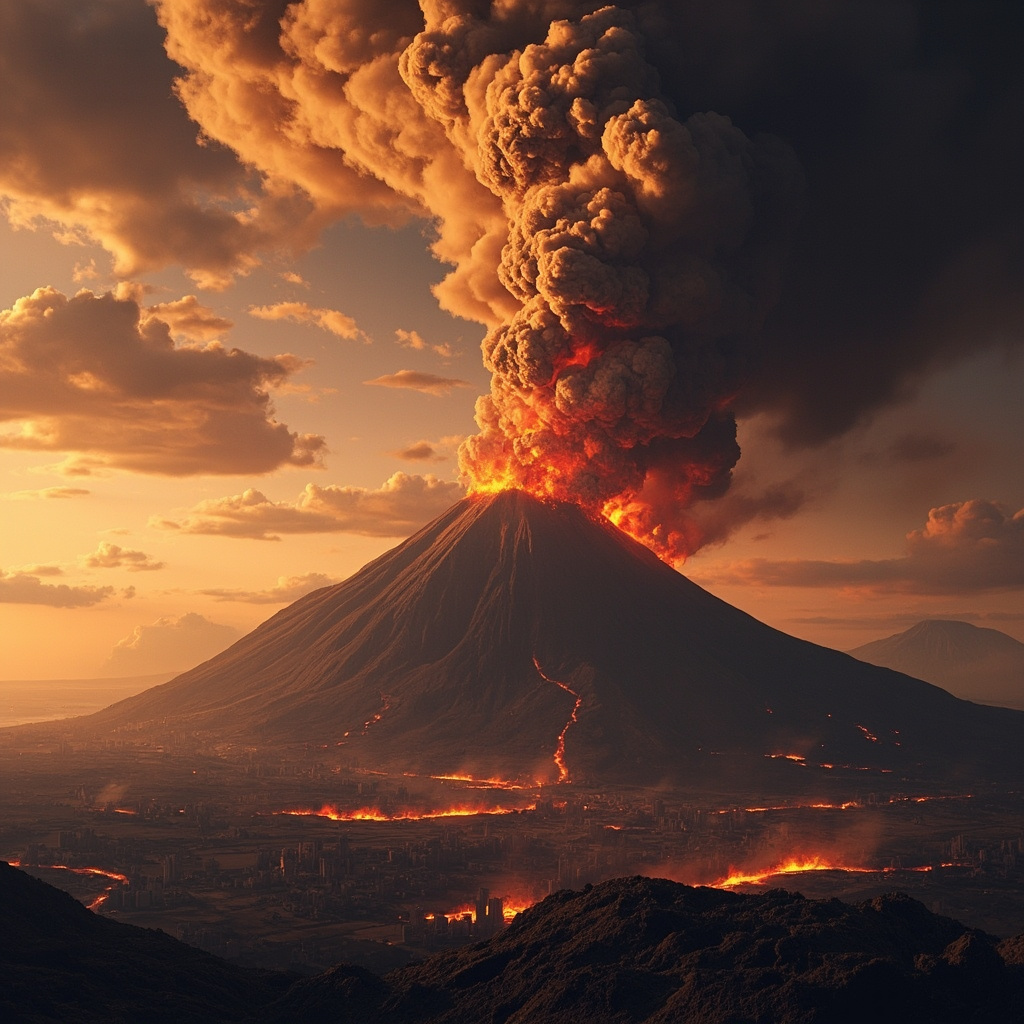
Imagine if you could travel back 74,000 years and witness the most catastrophic event in human history. You’d see the Toba supervolcano in what’s now Indonesia unleash a force so devastating that it nearly wiped our entire species from the face of the Earth. This wasn’t just any volcanic eruption—it was a “mega-colossal” event that ejected 672 cubic miles of volcanic material into the atmosphere, making Mount St. Helens look like a firecracker by comparison.
The Eruption That Changed Everything
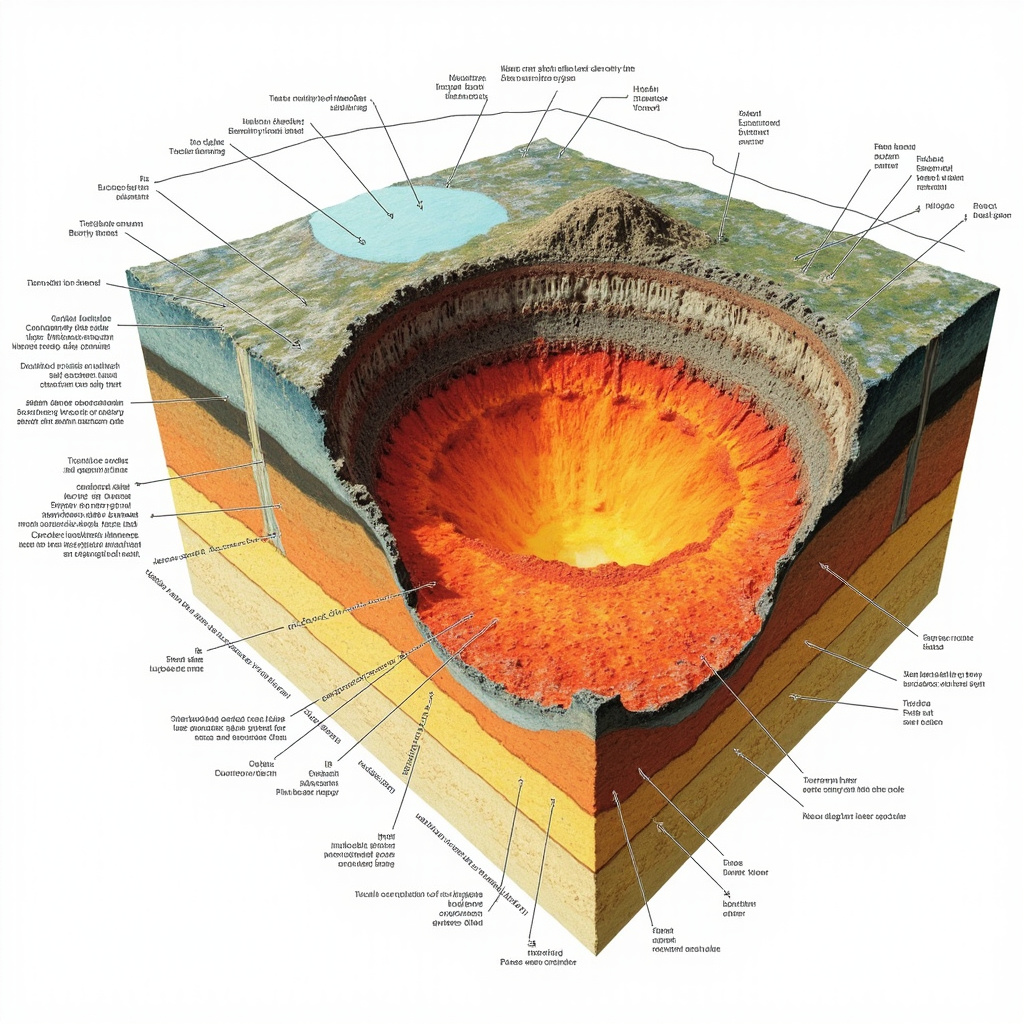
The Toba supereruption was over 10,000 times larger than the 1980 Mount St. Helens eruption. When it exploded, it created a massive crater roughly 1,000 football fields in length—that’s 62 by 18 miles of sheer destruction. The volcanic material didn’t just affect the local area; it spread across the entire globe, with microscopic volcanic glass called cryptotephra traveling thousands of miles.
The eruption produced black skies that blocked most of the sunlight for years, causing what scientists call a “volcanic winter.” Global temperatures plummeted by 3 to 3.5 degrees Celsius. Close to the volcano, acid rain contaminated water supplies, and thick layers of ash buried everything in sight. For early humans trying to survive, it was like living through an apocalypse.
The Great Population Bottleneck
According to the Toba catastrophe hypothesis, this eruption caused human population sizes to plummet to fewer than 10,000 individuals living on Earth. To put that in perspective, today there are more people in a single city block than existed in the entire world after Toba. Scientists can see evidence of this population bottleneck in our DNA—the genetic diversity of all modern humans suggests we went through a severe reduction in numbers around this time.
But here’s where the story gets truly remarkable: we survived. Despite facing what should have been an extinction-level event, early humans didn’t just endure—they adapted and thrived.
How Archaeologists Piece Together the Puzzle
Studying a 74,000-year-old disaster requires detective work on an epic scale. Archaeologists like those who contributed to recent research have to sift through dirt with microscopic precision, looking for tiny volcanic glass shards that are invisible to the naked eye. Using specialized tools called micromanipulators, they pick out individual grains of cryptotephra—a process that can take months for a single site.
Each volcanic eruption has a unique chemical fingerprint, allowing scientists to trace Toba’s tephra across continents. When they find these volcanic deposits at archaeological sites, they can examine what happened to human populations before, during, and after the eruption.
Survival Against All Odds
The archaeological evidence tells a story that’s both surprising and inspiring. At Pinnacle Point 5-6 in South Africa, researchers found cryptotephra from Toba in layers that also contain evidence of continuous human occupation. Not only did people survive the eruption, but they actually increased their activity and developed new technologies shortly afterward.
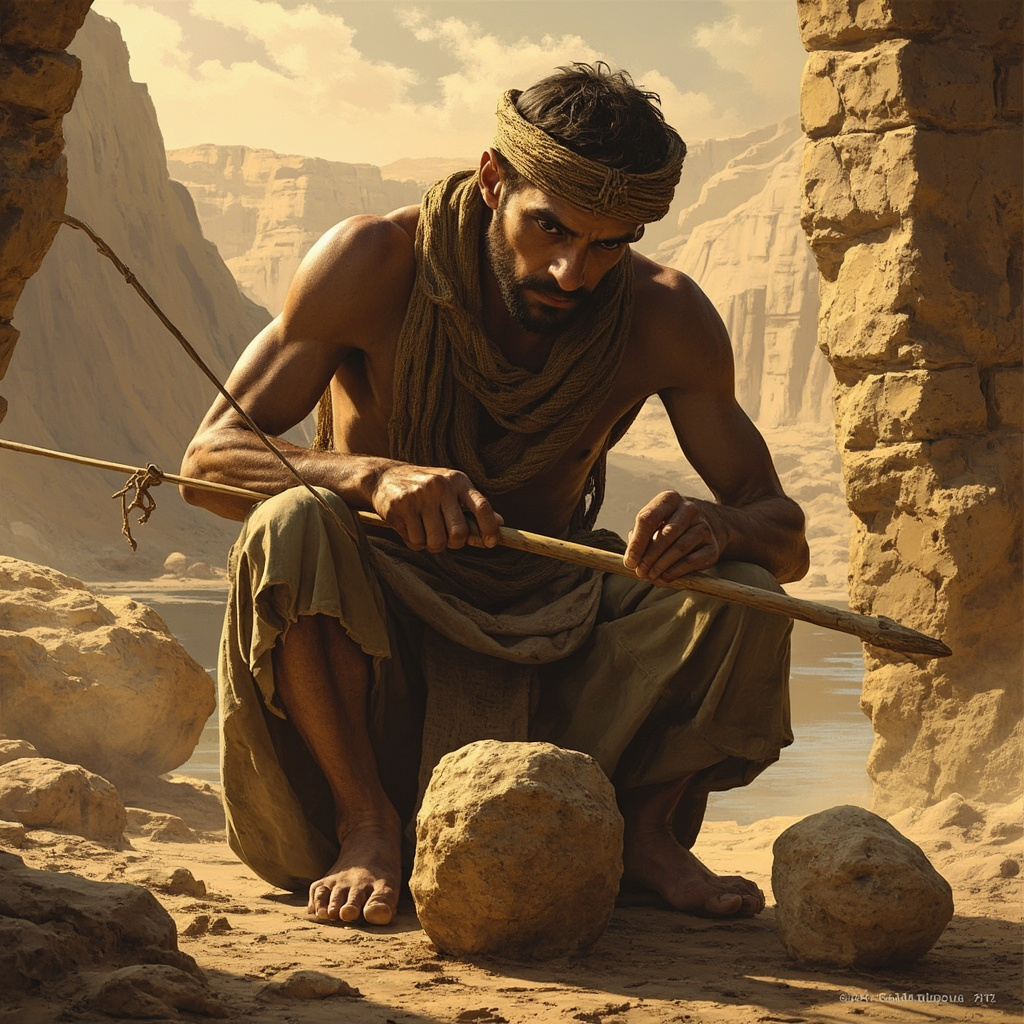
Similar evidence comes from Shinfa-Metema 1 in Ethiopia, where humans adapted to the changing environment by following seasonal rivers and fishing in shallow waterholes during long dry seasons. Around the time of Toba, they even adopted bow-and-arrow technology—a crucial innovation that helped them hunt more efficiently in the harsh post-eruption world.
The Secret to Human Survival
What made the difference? Behavioral flexibility. While other species might have been locked into specific survival strategies, early humans proved remarkably adaptable. They changed their tool-making techniques, adjusted their diets, and modified their living patterns to cope with the new reality.
Humans living close to Toba were probably completely wiped out, but populations in Africa, parts of Asia, and other distant regions found ways to weather the volcanic winter. They used their intelligence, creativity, and social cooperation to overcome seemingly impossible odds.
Lessons for Today
While the Toba catastrophe hypothesis remains debated among scientists—some argue that other factors contributed to the population bottleneck—the eruption still offers crucial insights for our modern world. Today, organizations like the USGS Volcanic Hazards Program monitor active volcanoes around the globe, and we have far better preparation and technology than our ancestors did.
But the real lesson from Toba isn’t about volcanic monitoring—it’s about human adaptability. Our species survived because we could change, innovate, and work together when faced with existential threats. In a world facing climate change, pandemics, and other global challenges, that same flexibility and resilience remain our greatest assets.
The next time you see news about a volcanic eruption or natural disaster, remember Toba. Remember that 74,000 years ago, our ancestors faced something far worse than anything we encounter today—and they didn’t just survive. They laid the foundation for everything that followed, including the civilization we’ve built today.
Sometimes the most important history is written not by what happens to us, but by how we respond when everything seems lost.
When the Roman Empire fell in 476 AD, it left behind a legacy that continues to confound modern engineers: concrete structures that have stood for over two millennia while our contemporary buildings crumble after decades. The secret? Romans accidentally created self-healing concrete that repairs its own cracks—a technology we only rediscovered in 2023.
The Pompeii Discovery That Changed Everything
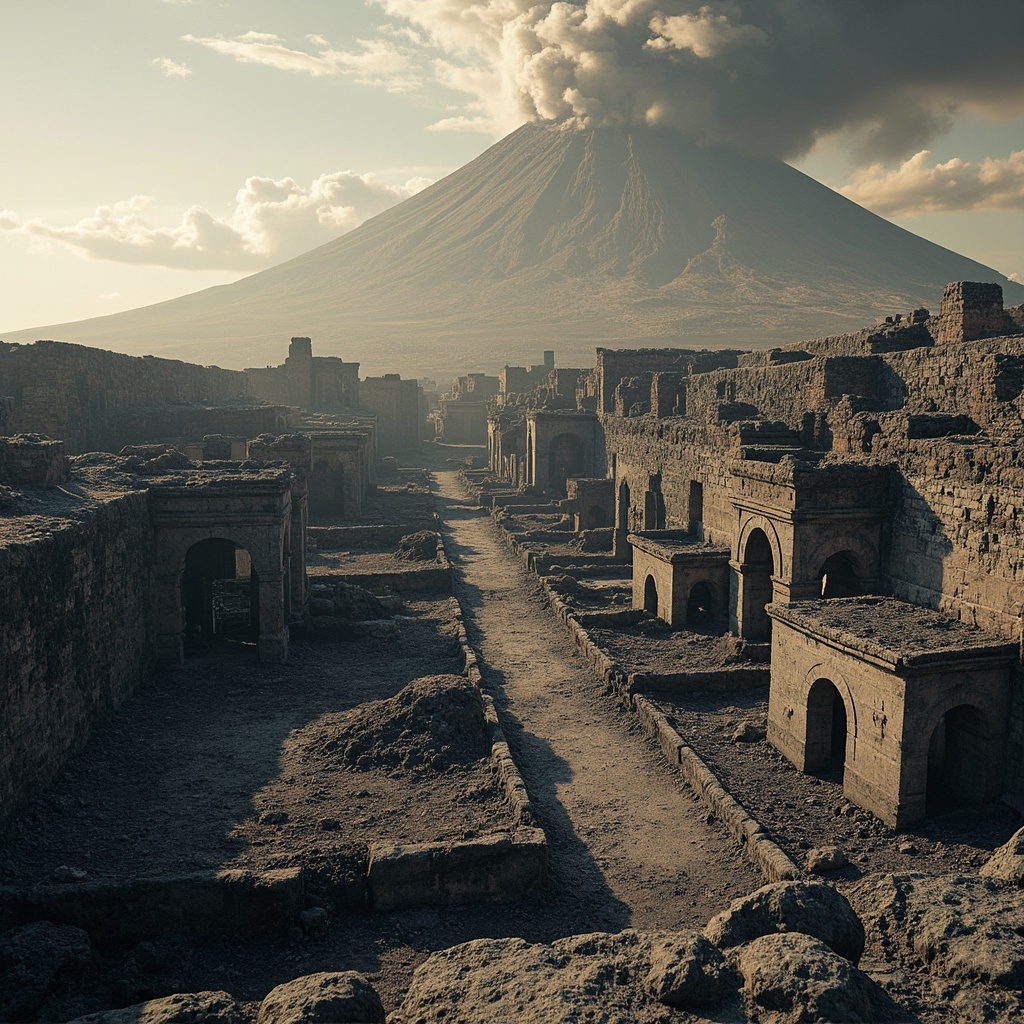
In 2025, archaeologists working at Pompeii made a remarkable discovery that would revolutionize our understanding of ancient Roman engineering. In a room frozen in time by Vesuvius’ eruption in 79 AD, they found untouched piles of quicklime and volcanic ash—the raw ingredients of Roman concrete still sitting exactly as construction workers had left them 2,000 years ago.
“I walked into an excavation in Pompeii a year-and-a-half ago and it was like travelling back in time to a construction site in the Roman empire,” says Admir Masic, the MIT chemist who led the groundbreaking research. “There were untouched piles of construction material vividly preserved.”
The Secret of Hot Mixing
For centuries, historians believed Romans followed the writings of Vitruvius, the 1st century BC architect who described mixing slaked lime with volcanic ash. But the Pompeii evidence revealed something far more sophisticated: Romans were actually using “hot mixing”—combining dry quicklime and volcanic ash first, then adding water to trigger an explosive chemical reaction reaching temperatures over 200°C.
This process created something remarkable: lime clasts—small white chunks scattered throughout the concrete that act like built-in repair kits. When cracks form and water seeps in, these lime clasts dissolve and recrystallize, automatically healing the damage.
Engineering That Surpasses Modern Technology
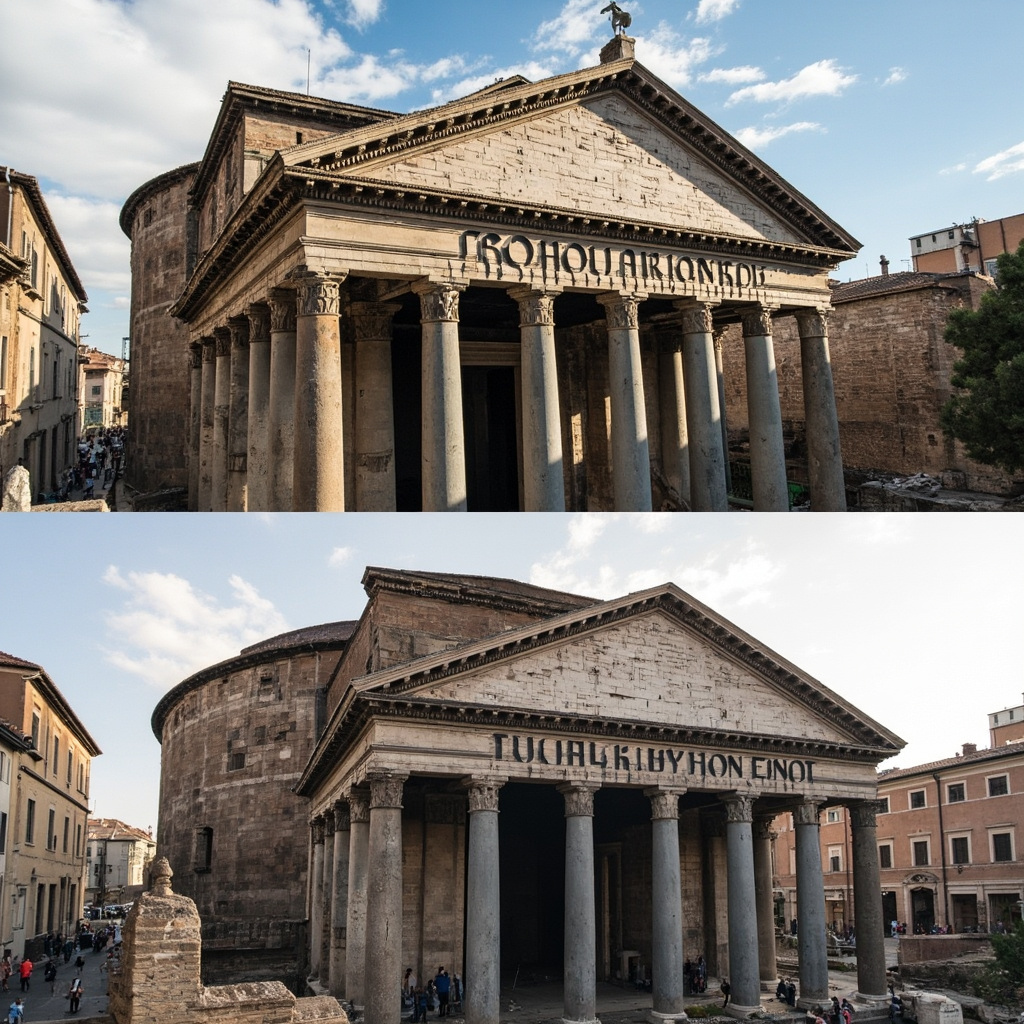
The implications are staggering. Roman concrete doesn’t just last—it actually grows stronger over time. While modern Portland cement structures deteriorate within 50-100 years, Roman buildings like the Pantheon (built in 126 AD) remain structurally sound after nearly 1,900 years.
Even more impressive: Roman concrete could set underwater, enabling harbor construction that modern engineers struggle to replicate. The material continues to strengthen through reactions with seawater, while contemporary concrete dissolves.
The Chemistry of Immortal Buildings
Modern chemical analysis reveals the genius of Roman engineering. The lime clasts create reservoirs of calcium that can dissolve and reform various calcium carbonates, or react with volcanic ash to create new aluminosilicates. This essentially restarts the cement-making process, filling fissures and healing defects automatically.
“This is not an archaeology paper. It’s a badass chemistry paper,” Masic emphasized, noting that isotope analysis confirmed the dry pre-mixed material was indeed quicklime—proving the hot mixing technique.
Why We Lost This Knowledge
The fall of Rome didn’t just end an empire—it severed technological knowledge that took 1,500 years to rediscover. Medieval builders lacked the organizational capacity and technical expertise to maintain Roman concrete production. By the Renaissance, architects had forgotten the original techniques entirely.
Modern Portland cement, developed in the 1800s, prioritizes quick setting and standardized production over longevity. We traded durability for convenience, creating buildings designed to be replaced rather than repaired.
Implications for the Future
As climate change demands sustainable construction that lasts centuries rather than decades, Roman concrete offers a roadmap. Researchers are now working to recreate these ancient formulations using modern volcanic ash sources, potentially revolutionizing how we build.
The Romans didn’t just build an empire—they built it to last forever. Their concrete continues healing itself today, a 2,000-year testament to engineering excellence that makes our “advanced” technology look primitive by comparison.
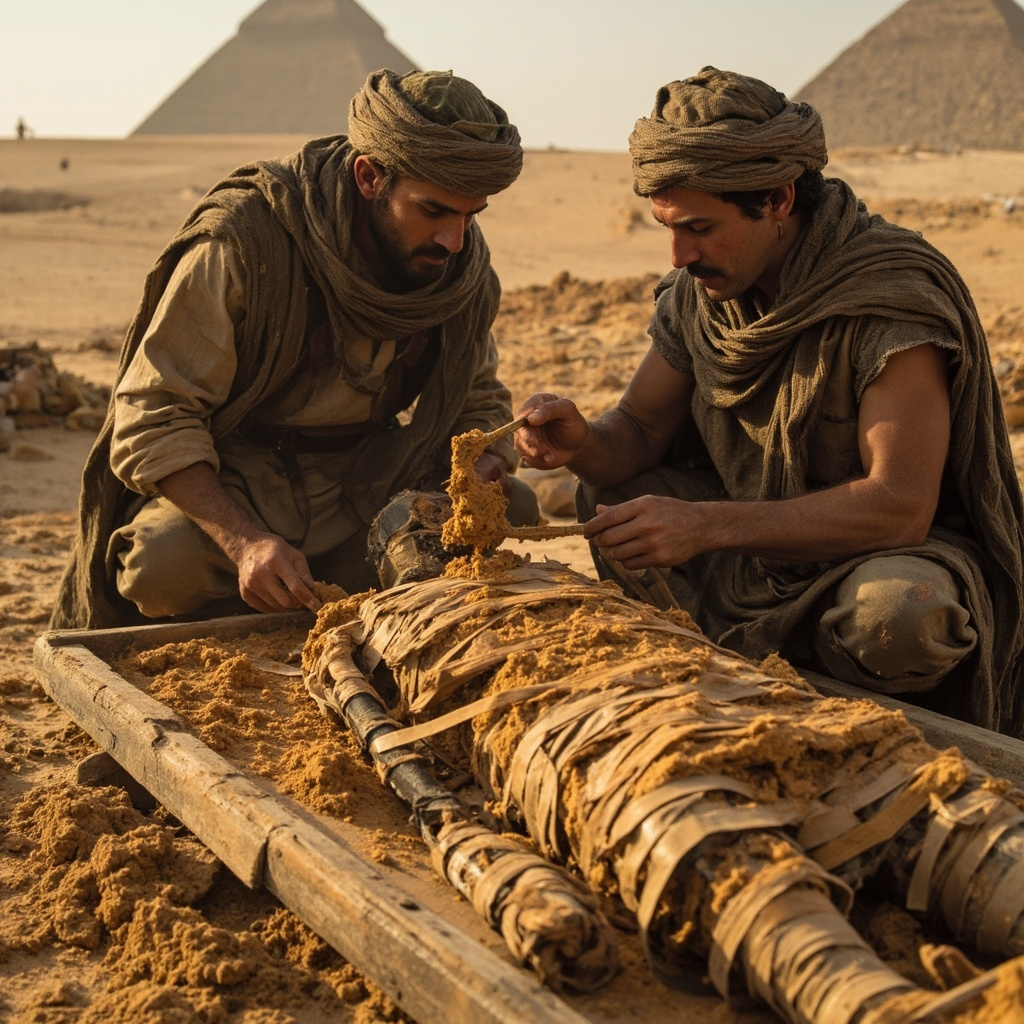
For nearly seven centuries, Europeans engaged in one of history’s most macabre medical practices: consuming powdered Egyptian mummies as medicine. This wasn’t some underground cult activity—it was mainstream healthcare endorsed by physicians, sold in apothecaries, and consumed by royalty and commoners alike.
The Origin of Mummia
The practice began with a linguistic misunderstanding that would cost thousands of ancient lives. Medieval physicians had read about mumiya—a black, tar-like substance from Persia used medicinally. However, when Arabic texts were translated into Latin, scholars confused this bituminous material with the dark resin used in Egyptian mummification.
By the 12th century, European merchants were raiding Egyptian tombs to harvest mummy remains for the lucrative medical trade. What started as a translation error became a booming industry that would persist until the 18th century.
A Prescription for the Dead
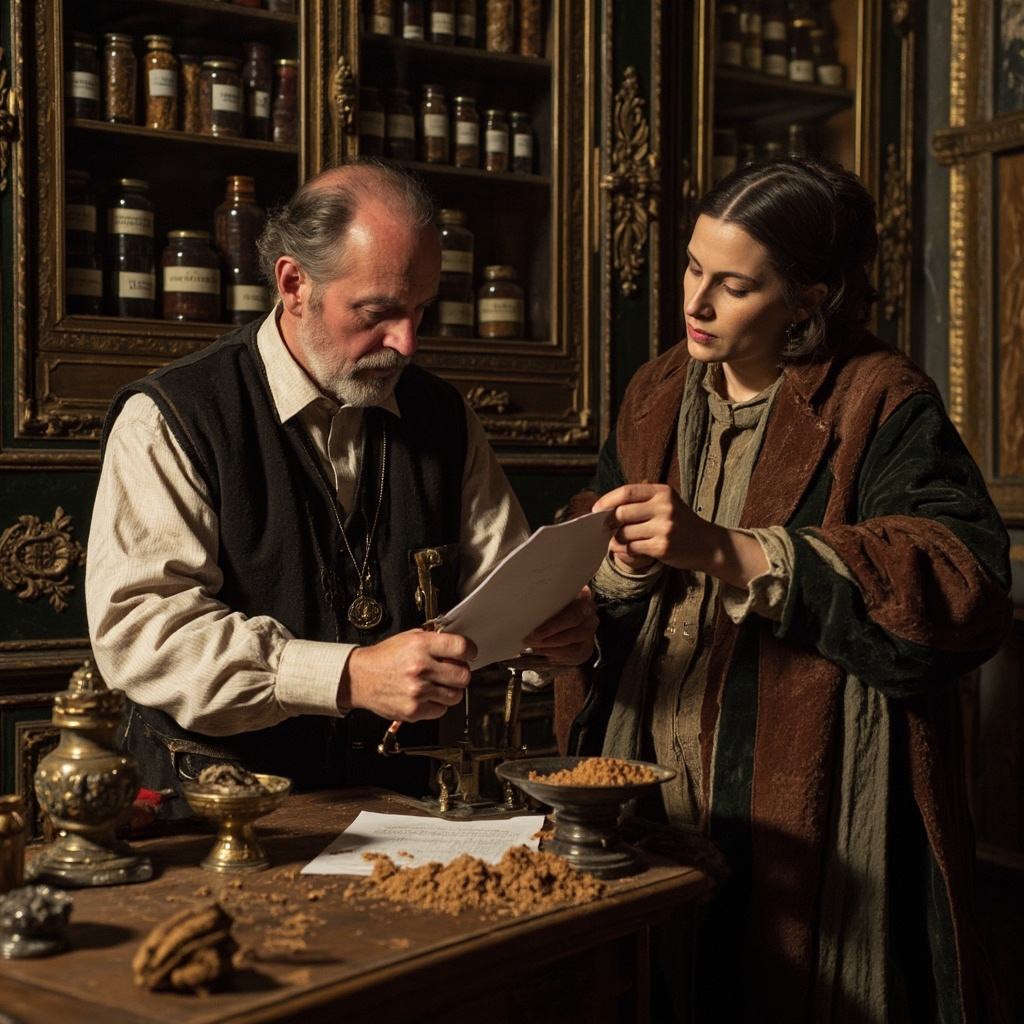
Medieval and Renaissance physicians prescribed powdered mummy for nearly every ailment imaginable. According to medical texts of the era, mummia could cure:
Internal bleeding and wounds
Epilepsy and convulsions
Headaches and migraines
Stomach ailments
Broken bones
Poisoning
The logic, such as it was, followed medieval medical theory that ancient corpses preserved with natron and resins retained some life force that could heal the living. Some physicians believed that bodies that had survived thousands of years must possess extraordinary preservative powers.
The Gruesome Supply Chain
As demand for mummy powder exploded across Europe, Egyptian tomb robbers couldn’t keep pace with orders from European apothecaries. Enterprising merchants developed horrific alternatives.
French apothecaries began creating “artificial mummies” by stealing fresh corpses from gallows, coating them with bitumen, and aging them in ovens. These counterfeit remedies were then ground up and sold as authentic Egyptian mummy powder.
Even King Charles II of England reportedly consumed “The King’s Drops”—a tincture made from powdered human skull. The wealthy could afford genuine Egyptian mummies, while the poor made do with locally sourced human remains.
The Medical Establishment’s Embrace
This wasn’t fringe medicine—it was endorsed by the medical establishment. Renowned physicians like Paracelsus championed mummy consumption, while medical schools taught its supposed benefits. European pharmacopeias—official medical handbooks—listed detailed recipes for preparing human flesh medicines.
The practice was so normalized that physicians debated not whether to use human remains, but which body parts were most effective. Some preferred skull powder for head ailments, while others insisted ground heart was superior for cardiac conditions.
The Irony of Cannibalism Accusations
While Europeans spent centuries consuming Egyptian corpses, they simultaneously used accusations of cannibalism as justification for colonizing and “civilizing” indigenous peoples in the Americas, Africa, and Australasia. The hypocrisy was staggering—Europeans condemned tribal peoples as savage cannibals while literally grinding up human remains in their own pharmacies.
The End of Corpse Medicine
By the Renaissance, some scholars began questioning the practice. When physicians realized they had misunderstood the original Arabic texts, the medical justification for mummy consumption crumbled.
French surgeon Ambroise Paré was among the first medical professionals to condemn the practice, writing scathingly about apothecaries who “in the absence of superior mummy, were sometimes moved to steal by night the bodies of such as were hanged.”
The practice gradually declined through the 17th and 18th centuries as medical understanding improved. However, some European pharmacies continued selling human skull powder and other corpse medicines well into the 1800s.
A Legacy of Destruction
The European appetite for mummy medicine devastated Egypt’s archaeological heritage. Countless ancient tombs were ransacked, and priceless mummies—including potentially unknown pharaohs and nobles—were reduced to powder for European stomachs.
This medical cannibalism represents one of history’s most sustained acts of cultural vandalism, justified by pseudoscience and motivated by profit. For 700 years, Europeans literally consumed Egypt’s ancestors while condemning other cultures as barbaric.
The next time someone mentions the “civilizing” influence of European colonialism, remember that European medicine cabinets were once stocked with ground-up human corpses—and that this was considered perfectly normal for seven centuries.
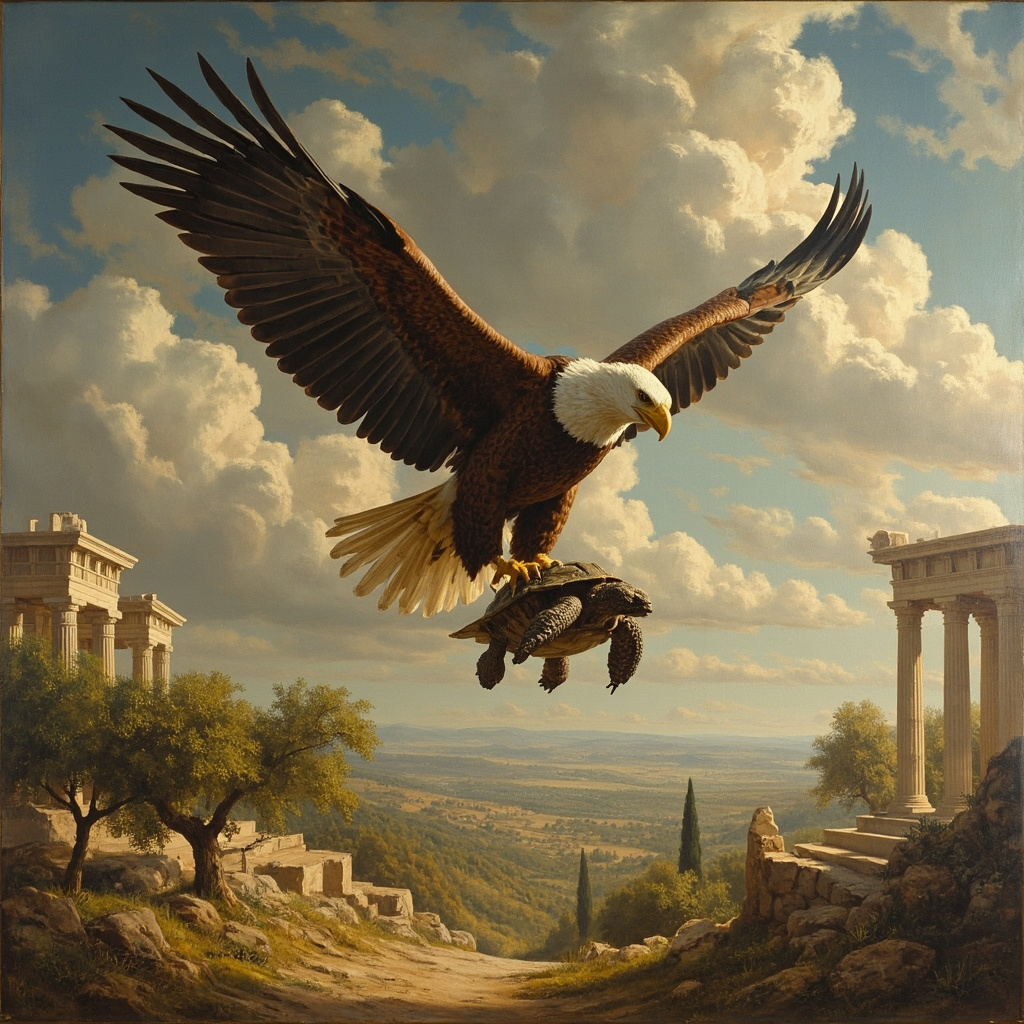
In the annals of history’s most bizarre deaths, few stories rival that of Aeschylus, the father of Greek tragedy, who met his end in 456 BC when an eagle dropped a tortoise on his bald head. The great playwright, credited with transforming theater into high art, died in the most ironically dramatic fashion possible.
The Father of Tragedy
Aeschylus (525-456 BC) was no ordinary playwright. Born into the golden age of Athens, he revolutionized theater by introducing a second actor, allowing for true dialogue and conflict on stage. His works, including the legendary Oresteia trilogy and Prometheus Bound, established the foundations of tragic drama that would influence Western literature for millennia.
Known as “the father of tragedy,” Aeschylus was the first dramatist to present plays as trilogies, creating complex narratives that unfolded across multiple performances. His Oresteia remains the only complete ancient trilogy to survive to modern times, a testament to his enduring genius.
A Prophecy Fulfilled
According to ancient sources, including the historian Valerius Maximus, Aeschylus had received a prophecy that he would die when something fell from the sky. Naturally cautious, the playwright began avoiding buildings and spending more time outdoors, believing this would protect him from falling objects like roof tiles or masonry.
The irony was exquisite. In trying to avoid his fate, Aeschylus positioned himself perfectly for it. During his final visit to Gela in Sicily, the 67-year-old playwright was walking in an open area when a lammergeier (bearded vulture) soared overhead, clutching a large tortoise in its talons.
The Fatal Mistake
These magnificent birds of prey have a unique hunting technique: they drop tortoises and other hard-shelled creatures onto rocks to crack them open and access the meat inside. The eagle, spotting Aeschylus’s gleaming bald pate from above, mistook it for a perfect rock surface.
The tortoise struck the playwright’s head with fatal force, killing him instantly. The man who had created some of literature’s most dramatic and tragic deaths had become the victim of perhaps the most absurdly dramatic death in recorded history.
Legacy of a Literary Giant
Aeschylus left behind a body of work that fundamentally shaped Western drama. He wrote an estimated 70 to 90 plays, though only seven complete works survive today. His innovations included the introduction of elaborate costumes, painted scenery, and choreographed dance sequences that elevated theater from simple storytelling to sophisticated art form.
His plays dealt with weighty themes of justice, divine retribution, and human suffering—themes that took on a darkly humorous dimension given his own bizarre demise. The Oresteia, his masterpiece about the curse of the House of Atreus, explores how violence begets violence in an endless cycle—a concept that gains extra poignancy when considering that Aeschylus himself became victim to nature’s own violent caprice.
Historical Accuracy and Modern Skepticism
Modern historians debate whether the tortoise story represents literal truth or symbolic narrative. Some scholars suggest the tale may be allegorical, representing the random nature of death that can strike even the most celebrated individuals. Others point out that lammergeiers do indeed practice this hunting technique in Mediterranean regions, making the account plausible.
Regardless of its literal truth, the story has endured for over two millennia precisely because it captures something profound about the human condition. The greatest tragedian of the ancient world, a man who understood better than anyone how fate could strike without warning, became the protagonist of his own tragic tale.
Today, Aeschylus is remembered not just for his revolutionary contributions to theater, but for embodying the very principles of Greek tragedy in his death: the powerful brought low, fate fulfilled despite attempts at avoidance, and the cosmic irony that governs human existence. In death, as in life, Aeschylus proved that truth can indeed be stranger than fiction.
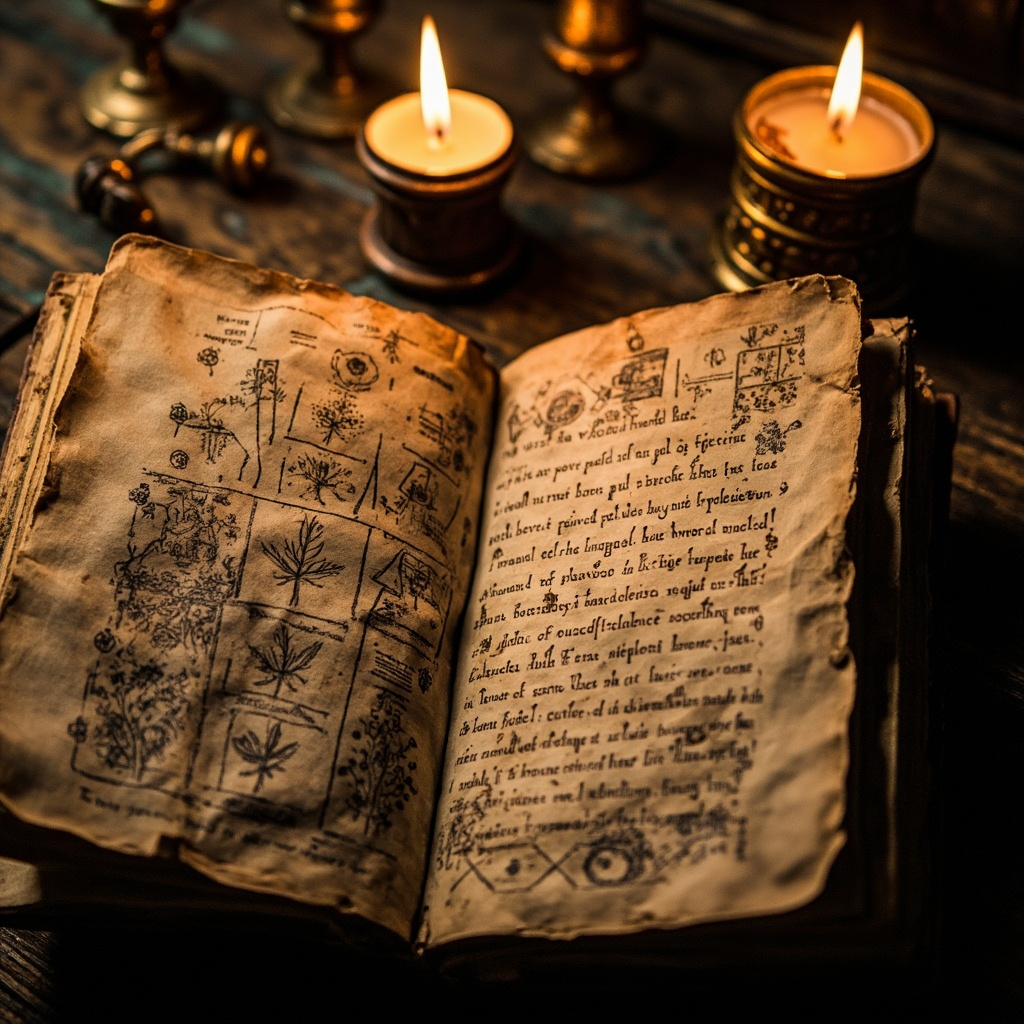
Hidden in the depths of Yale University’s Beinecke Rare Book Library sits what may be the world’s most enigmatic tome—a 15th-century manuscript that has confounded scholars, cryptographers, and linguists for over a century. The Voynich Manuscript, as it came to be known, contains 240 pages of indecipherable text accompanied by bizarre illustrations of unknown plants, astronomical diagrams, and naked figures in strange baths. Despite countless attempts by some of history’s brightest minds, including World War II codebreakers, the manuscript’s secrets remain locked away.
The Discovery That Started a Century-Long Mystery
In 1912, Polish book dealer Wilfrid Voynich made what he believed would be the discovery of a lifetime. While examining manuscripts at Villa Mondragone near Rome, he came across a peculiar volume that would consume the rest of his life and challenge generations of scholars to come. The manuscript was written in an unknown script using an unidentified language, filled with illustrations that seemed to depict plants and astronomical phenomena that existed nowhere else on Earth.
Voynich immediately recognized the manuscript’s potential importance and spent years attempting to decode its mysteries. The book appeared to be divided into several sections: botanical illustrations showing plants that don’t match any known species, astronomical charts with unfamiliar constellations, and what appeared to be pharmaceutical or alchemical recipes accompanied by drawings of naked women in green liquid baths.
A Language Like No Other
What makes the Voynich Manuscript particularly baffling is its unique script. The text flows from left to right and consists of about 25 different characters, some resembling Latin letters while others appear completely alien. Statistical analysis reveals that the text exhibits properties typical of natural languages—it has a consistent vocabulary, repetitive patterns, and even what appear to be punctuation marks.
Yet no linguist has been able to identify the language or decode the meaning. Some letters appear frequently while others are rare, following patterns similar to European languages. However, the words themselves follow no known linguistic structure, leading some experts to suspect it might be an elaborate cipher or even an entirely constructed language.
Centuries of Failed Attempts
The manuscript has attracted attention from some of history’s most brilliant minds. During World War II, American and British cryptographers—the same experts who were successfully breaking enemy codes—turned their attention to the Voynich Manuscript during their spare time. Despite their expertise in cracking the most sophisticated military ciphers of the era, the manuscript defeated their every attempt.
In 1947, Professor William F. Friedman, who had helped break the Purple cipher used by Japan, assembled a group of cryptographers specifically to tackle the manuscript. After decades of analysis, even Friedman admitted defeat, though he maintained until his death that the manuscript contained a genuine message rather than meaningless gibberish.
Modern Science Meets Medieval Mystery
Today, the manuscript resides at Yale University’s Beinecke Library, where researchers continue to study it using cutting-edge technology. Carbon dating has confirmed its 15th-century origins, while microscopic analysis of the ink and parchment has revealed fascinating details about its creation. The manuscript was written with iron gall ink using quill pens, and the parchment is made from calfskin—all typical of medieval European manuscripts.
Recent computer analysis has revealed intriguing patterns in the text that suggest it might indeed be a sophisticated cipher. In 2026, a peer-reviewed study published in Cryptologia demonstrated that the manuscript could plausibly have been created using encryption methods that were within medieval technological capabilities, reigniting hope that the mystery might eventually be solved.
Theories and Speculation
Over the decades, theories about the manuscript’s origin and purpose have ranged from the plausible to the fantastical. Some scholars believe it’s the work of Roger Bacon, the 13th-century philosopher and scientist, while others suggest it might be an elaborate hoax designed to fool a wealthy collector. More exotic theories propose it contains ancient knowledge about unknown botanical species, serves as a guide to alchemical practices, or even represents an alien language.
One of the more intriguing recent theories suggests the manuscript might be written in a constructed language similar to those created by medieval mystics and scholars. This would explain why the text exhibits linguistic properties while remaining indecipherable—it follows consistent rules that exist nowhere else in human language.
The Mystery Endures
Despite more than a century of intense study involving linguists, historians, computer scientists, and amateur enthusiasts, the Voynich Manuscript continues to guard its secrets. Each generation of scholars brings new tools and techniques to bear on the problem, from early 20th-century linguistic analysis to modern artificial intelligence and machine learning algorithms.
The manuscript remains one of history’s most enduring puzzles, a testament to the fact that even in our age of advanced technology and sophisticated analysis, some mysteries from the past continue to elude our understanding. Whether it contains revolutionary medieval knowledge, represents an elaborate historical hoax, or preserves a language lost to time, the Voynich Manuscript stands as a humbling reminder that there are still secrets waiting to be unlocked in the pages of history.
Until someone finally cracks its code, the manuscript will continue to challenge our assumptions about medieval knowledge, linguistic possibilities, and the very nature of human communication itself.
In 1704, London society was captivated by an extraordinary visitor from the exotic island of Formosa (modern-day Taiwan). George Psalmanazar, a blonde-haired, blue-eyed young man, regaled fashionable drawing rooms with tales of his homeland’s bizarre customs: aristocrats who breakfasted on viper’s blood, students who practiced ritual infant sacrifice, and elaborate religious ceremonies involving human hearts.
There was just one problem: George Psalmanazar was completely fabricating everything. He was actually a Frenchman who had never set foot in Asia, and his “memoir” would become one of history’s most audacious and successful literary hoaxes.
The Birth of a Fake Native
The man we know as George Psalmanazar was born around 1679, likely in southern France. His real name remains unknown to this day. As a young man, he wandered across Europe as a beggar and petty criminal, inventing increasingly elaborate backstories to survive.
His stroke of genius came when he decided to pose as a pagan from the mysterious island of Formosa. In the early 18th century, Taiwan was largely unknown to Europeans, making it the perfect canvas for his imagination. He created an entire language, complete with its own alphabet, and memorized an intricate mythology about Formosan culture.
Conquering London Society
When Psalmanazar arrived in London in 1703, he was an immediate sensation. His pale European features should have given him away, but he cleverly explained this by claiming that upper-class Formosans lived underground to avoid the sun. He supported himself by teaching his invented “Formosan” language and was even invited to lecture at Oxford University.
The Anglican Church embraced him enthusiastically, seeing him as proof of successful missionary work. Psalmanazar claimed to have been converted from paganism by a Scottish military chaplain, and his exotic background made him a perfect poster child for Christian evangelism.
The Fantastic World of Fake Formosa
In 1704, Psalmanazar published “An Historical and Geographical Description of Formosa,” which became an immediate bestseller. The book detailed a civilization that was simultaneously sophisticated and barbaric, exactly what European readers expected from a distant Asian culture.
According to Psalmanazar’s vivid imagination:
Formosan nobles consumed the blood of snakes for breakfast as a delicacy
The island practiced annual human sacrifice, with 18,000 young boys’ hearts offered to gods
Formosan architecture featured underground cities with elaborate ventilation systems
The culture had a complex calendar system and unique religious practices
Women wore distinctive clothing that covered their entire bodies except their faces
Psalmanazar even created a complete “Formosan” alphabet and language, producing translations of prayers and religious texts. His linguistic invention was so convincing that scholars studied it seriously.
Questions Begin to Mount
Despite his initial success, cracks began to appear in Psalmanazar’s elaborate fiction. Jesuits who had actually visited Asia questioned his descriptions. His inability to provide consistent details about climate and geography raised suspicions. Most damaging was his claim that Formosa was a Japanese colony—real travelers knew it was controlled by China.
When confronted with these inconsistencies, Psalmanazar proved remarkably creative at explaining them away. He claimed that real travelers had only visited coastal areas, while he knew the “true” interior culture. He suggested that Jesuit accounts were deliberately falsified to make their missionary work seem more difficult than it actually was.
The Confession and Redemption
By 1706, the questions had become too persistent to ignore. Gradually, Psalmanazar withdrew from public attention. He never made a full public confession, but around 1728, he privately admitted the hoax to friends and began a new life as a serious theological writer.
Remarkably, instead of becoming a pariah, Psalmanazar earned respect for his scholarship and repentance. He became friends with literary luminaries including Dr. Samuel Johnson, who considered him one of the most remarkable men he had ever met. Johnson praised Psalmanazar’s learning and integrity, apparently never holding the elaborate deception against him.
Legacy of the Great Pretender
George Psalmanazar died in 1763, taking his real identity to the grave. Even in his posthumously published memoirs, he refused to reveal his true name or origins, maintaining one last mystery about his remarkable life.
His hoax succeeded for several reasons that tell us much about 18th-century European attitudes:
Complete ignorance about East Asian cultures made verification impossible
European fascination with “exotic” peoples created a ready audience
Religious motivations made church authorities eager believers
The era’s scholarly methods lacked rigorous fact-checking standards
Modern scholars recognize Psalmanazar as a master manipulator who understood exactly what his audience wanted to hear. His fake Formosa reflected European prejudices and fantasies about Asian cultures more than any real place.
The George Psalmanazar affair remains one of history’s most successful confidence tricks—a reminder that even educated people can be remarkably gullible when confronted with an elaborate lie that confirms their existing beliefs.
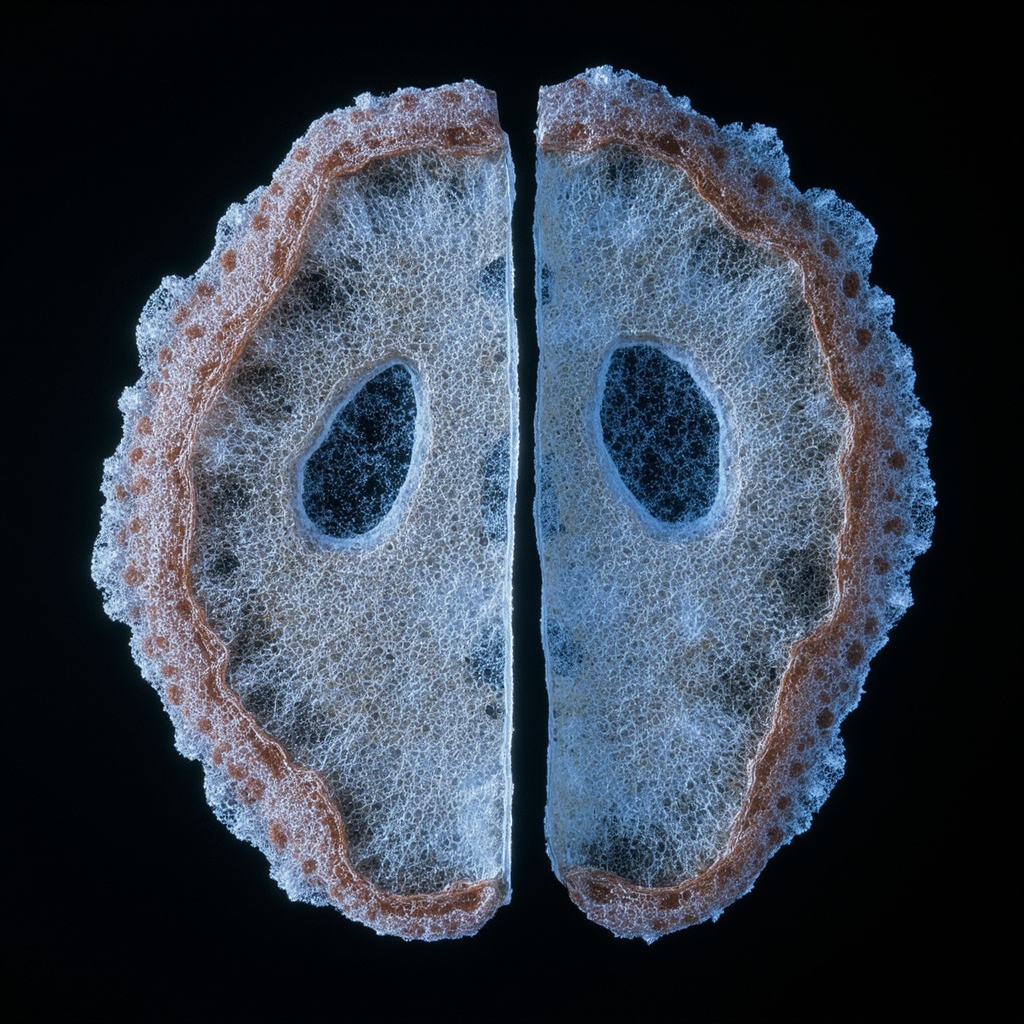
In a discovery that sounds like something from a science fiction novel, researchers have finally solved a 2000-year-old mystery that has baffled scientists since 2020: how did a young man’s brain literally turn to glass during the eruption of Mount Vesuvius?
The volcanic catastrophe that buried Herculaneum and Pompeii in 79 AD preserved countless artifacts and human remains under layers of ash. But among all the extraordinary finds, one stood out as particularly bizarre – the vitrified brain tissue of a young man found lying in his bed, his neural matter transformed into a glass-like substance.
The Mystery That Stumped Scientists
When archaeologists first discovered this phenomenon in 2020, they were completely baffled. Human tissue simply doesn’t turn to glass under normal circumstances. The transformation requires specific conditions of extreme heat followed by rapid cooling – a process called vitrification.
For glass to form from organic tissue, the brain would need to be heated so rapidly that it liquefied, then cooled fast enough to prevent crystals from forming as it solidified. This seemed impossible given what scientists knew about volcanic eruptions.
Solving the Glass Brain Puzzle
A team of researchers published their groundbreaking explanation in 2025, revealing the precise sequence of events that created this unique preservation. Their analysis showed that the young man’s brain tissue was heated to an astounding 510°C (950°F) before undergoing rapid cooling.
The key insight was understanding the different phases of the Vesuvian eruption:
The Initial Ash Cloud: A superheated blast of volcanic material that reached temperatures far exceeding normal pyroclastic flows
Rapid Cooling: The ash cloud cleared quickly, allowing immediate temperature drop
Tissue Explosion: The intense heat caused water in the brain to evaporate instantly, causing the tissue to fragment into tiny pieces
Vitrification: These fragments cooled so rapidly they formed glass rather than crystals
A Unique Window Into Ancient Catastrophe
This discovery provides unprecedented insight into the exact conditions experienced by Herculaneum’s residents during their final moments. Unlike the slower-moving pyroclastic flows that followed, the initial ash cloud was a blast of superheated gas and particles moving at incredible speeds.
The young man likely died instantly from the extreme heat, never knowing that his remains would become one of archaeology’s most puzzling discoveries nearly 2000 years later. His vitrified brain tissue represents the first and only known example of natural human tissue vitrification from a volcanic eruption.
Scientific Significance
Beyond its shock value, this discovery has important implications for understanding:
Volcanic Processes: How different phases of eruptions create varying preservation conditions
Archaeological Preservation: New possibilities for what organic materials might survive under extreme conditions
Ancient Life: Direct evidence of the temperatures and forces experienced during historical catastrophes
The research team’s work demonstrates how modern scientific techniques can unlock secrets hidden for millennia. By analyzing the molecular structure of the vitrified tissue, they were able to reconstruct the precise sequence of thermal events that occurred in seconds during that terrible day in 79 AD.
This remarkable find reminds us that history often preserves its most extraordinary secrets in the most unexpected ways – sometimes literally turning human experience into glass that can be studied across the centuries.
Long before the first pharaohs ruled Egypt, ancient craftsmen were using sophisticated rotary drills that would have impressed any modern workshop. A recent archaeological discovery has revealed that Egyptians were using advanced drilling technology as early as 4000 BC—2,000 years earlier than previously thought.
The Tiny Tool That Rewrote History
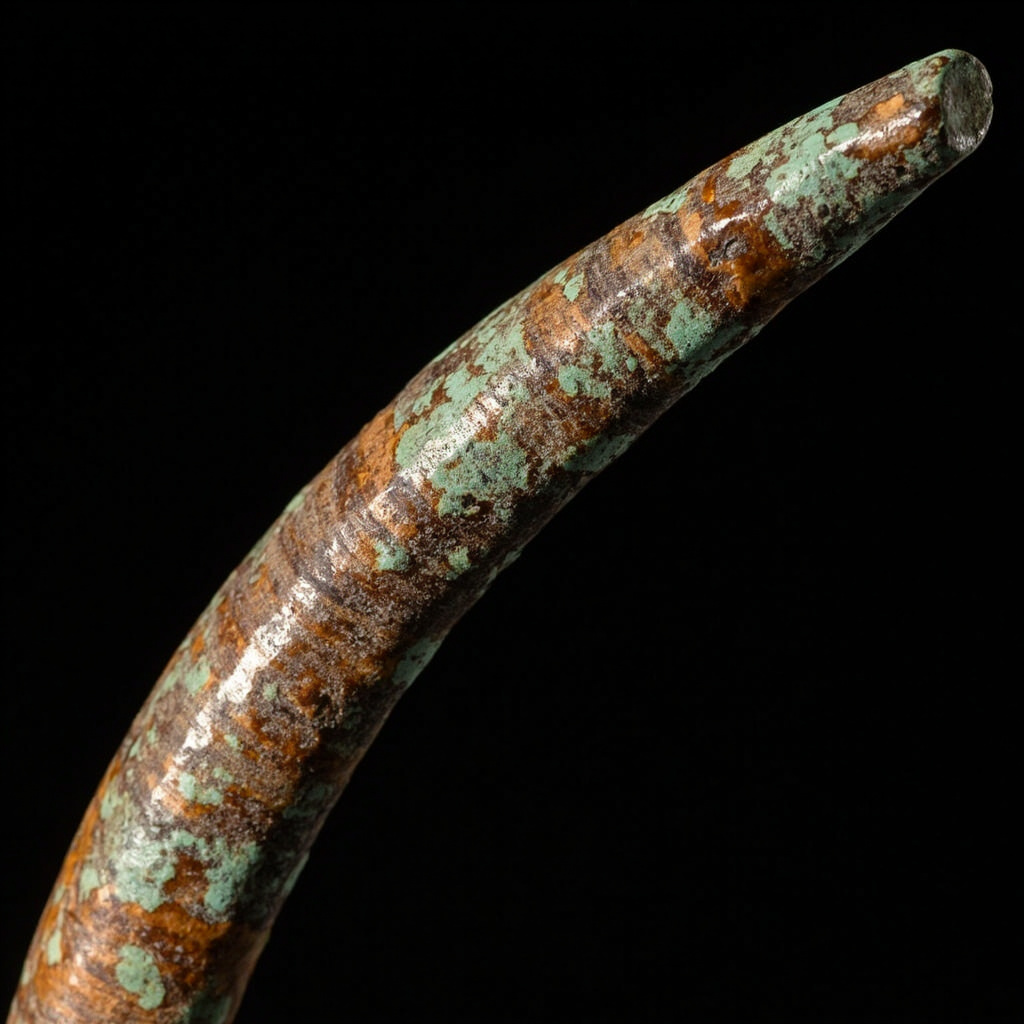
In 1924, archaeologists discovered what appeared to be a simple copper awl in a man’s burial at Badari Cemetery in Upper Egypt. For nearly a century, this tiny 63-millimeter tool weighing just 1.5 grams sat in Cambridge’s Museum of Archaeology and Anthropology, mistakenly catalogued as a basic pointed instrument with leather wrapped around it.
But a new study by researchers from Newcastle University and the Academy of Fine Arts in Vienna has revealed the truth: this was actually a sophisticated bow drill component showing clear evidence of rotary motion. The telltale signs were there all along—fine scratches, rounded edges, and a curved tip created by spinning motion.
Revolutionary Technology Hidden in Plain Sight
The leather pieces attached to the artifact weren’t just wrapping—they were part of a bow drill system. The bow moves back and forth, causing the shaft to spin rapidly, creating a drilling action that’s both faster and more precise than hand-twisting. Think of it as the ancient equivalent of a power drill.
“Egyptian magnificent art concealed ordinary technology such as this, which was essential to their crafts,” notes lead author Dr. Martin Odler. While bow drills appear in later tomb art from around 1500 BC, this discovery pushes the technology back more than 2,000 years.
More Than Just Copper
Chemical analysis revealed that this wasn’t ordinary copper. The drill was made from a sophisticated alloy containing copper with arsenic, nickel, lead, and silver. This unusual combination made the tool harder and shinier than pure copper, while also hinting at extensive trade networks across the Eastern Mediterranean.
The presence of these exotic metals suggests that even 6,000 years ago, Egypt was connected to far-flung trading partners who supplied specialized materials for advanced manufacturing.
The Pre-Pharaonic Innovation Boom
This discovery adds to a growing body of evidence that pre-dynastic Egypt (before 3100 BC) was far more technologically sophisticated than previously imagined. These early Egyptians were innovating with:
Precision drilling techniques for jewelry and furniture
Advanced metallurgy and alloy creation
Long-distance trade networks
Specialized craft production
The drill would have been used for creating holes in wood, stone, and other materials—essential for furniture making, jewelry production, and architectural projects. Its small size suggests it was designed for delicate, precision work rather than heavy construction.
Technology That Shaped Civilization
While Egyptian tomb art often focused on grand scenes of pharaohs and gods, it was innovations like the rotary drill that truly built Egyptian civilization. These “ordinary” technologies enabled the precise craftsmanship that would later produce the wonders of the pyramids and the intricate artifacts we associate with ancient Egypt.
The next time you use a power drill, remember: you’re using technology that ancient Egyptians pioneered 6,000 years ago, long before the first pyramid rose from the desert sands. Sometimes the most revolutionary discoveries come in the smallest packages.