The Batavia: Shipwreck, Mutiny, and the Bloodiest Massacre on Australia’s Shore


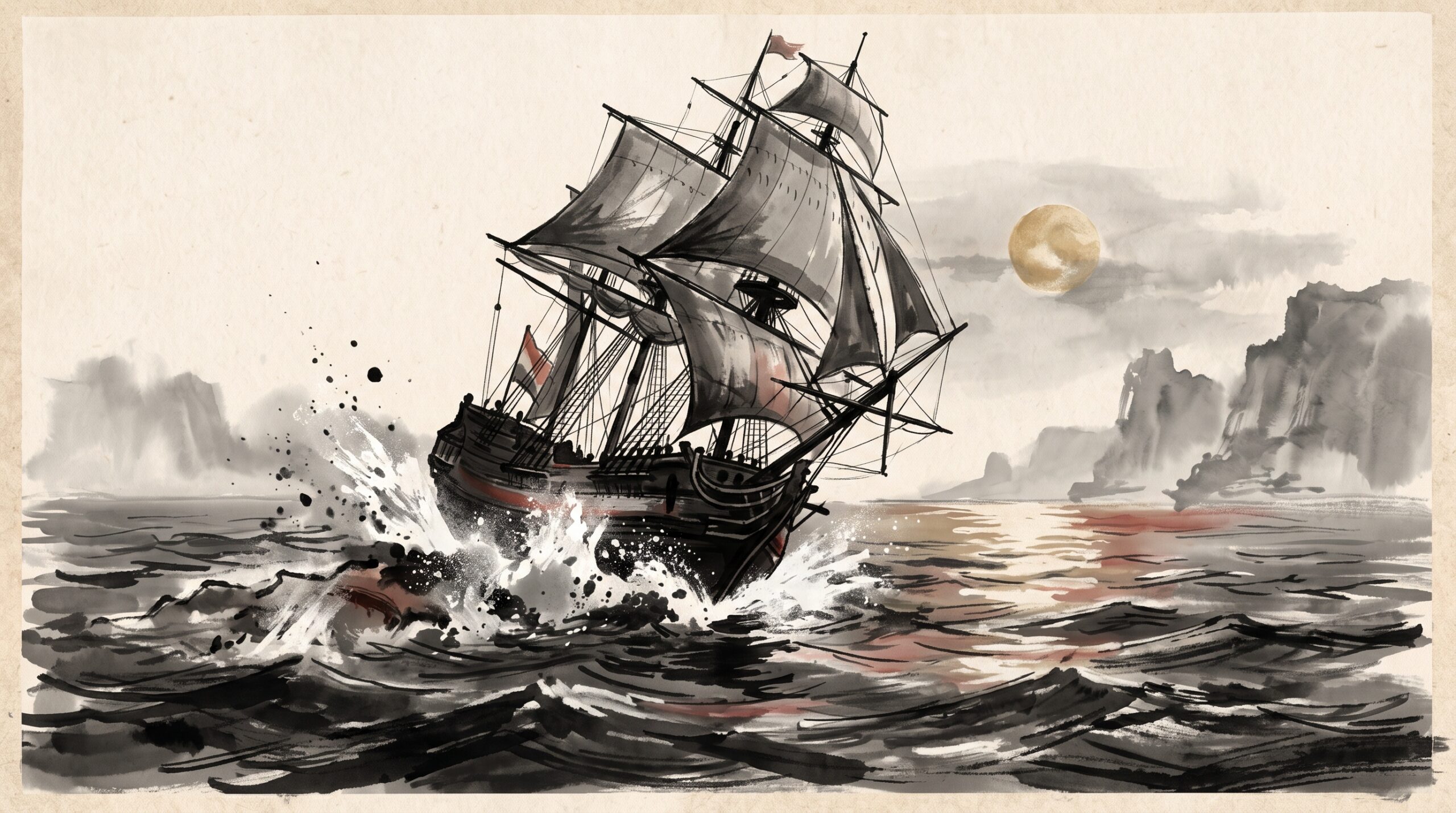
On the moonlit night of 4 June 1629, the finest ship the Dutch East India Company had ever launched was running fast under full sail across a calm sea, her lookout mistaking the pale gleam of breaking water ahead for nothing more than moonlight on the waves. Then the hull of the Batavia ground onto a coral reef off the coast of Western Australia, and more than three hundred people aboard – merchants, soldiers, sailors, women and children – woke to the sound of their new world tearing itself apart. What followed on the waterless little islands nearby was not, in the end, a story about the cruelty of the sea. It was a story about the cruelty of men, and it remains one of the darkest chapters ever written on Australian soil.
The pride of the Company
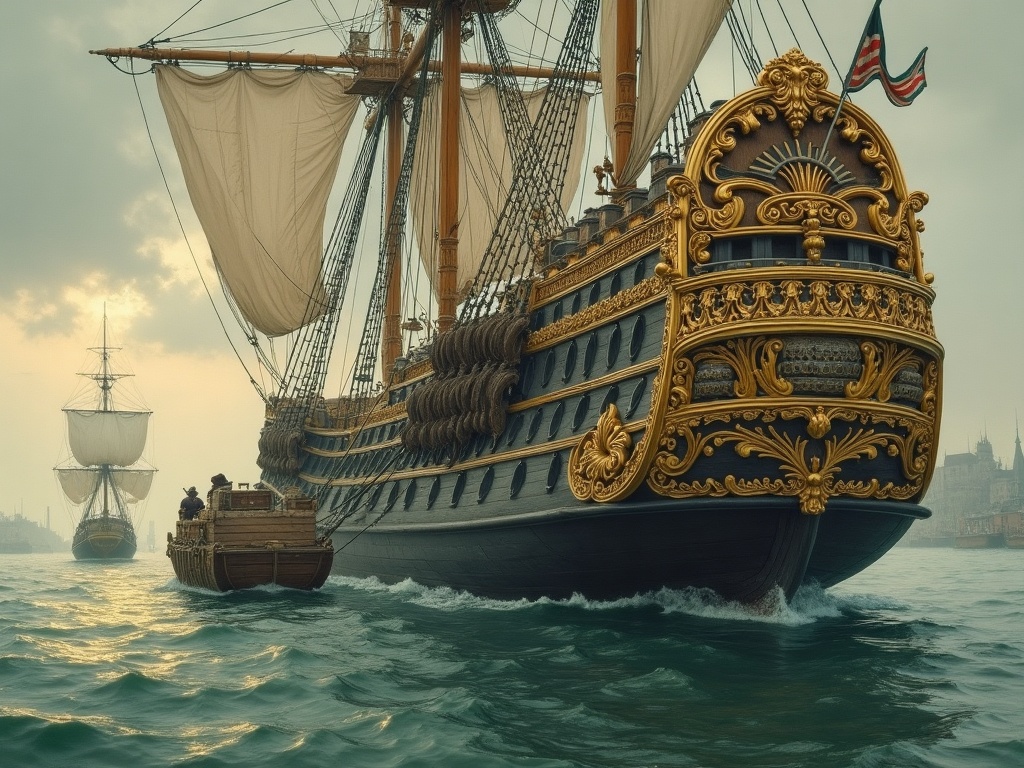
The Batavia was brand new, the flagship of the Dutch East India Company – the VOC, the mightiest trading corporation the world had yet seen. In October 1628 she had sailed from the Netherlands on her maiden voyage, bound for the port of Batavia, modern-day Jakarta, carrying a fortune in silver coin and jewels to buy the spices of the Indies. Some 340 souls were crowded aboard.
In command was Francisco Pelsaert, a senior merchant of the Company, often too ill to leave his cabin. Under him sailed a resentful, hard-drinking skipper named Ariaen Jacobsz, and a smooth, persuasive junior merchant called Jeronimus Cornelisz – a bankrupt apothecary from Haarlem fleeing debts and dangerous heretical company back home. Long before they reached Australia, these two had begun to whisper. Their plan was mutiny: to seize the ship, murder those who resisted, take the treasure, and vanish into a life of piracy. The reef beneath the moonlight undid that plan and replaced it with something far worse.
The reef in the dark
The Houtman Abrolhos is a scatter of low coral islands and lethal reefs some fifty miles off the Western Australian coast, so flat and treacherous that they are more a trap than a landfall. When the Batavia struck, she stuck fast and began to break up in the swell. Perhaps forty people drowned in the first chaos. The rest were ferried to two barren specks of coral – one of which would earn the name Batavia’s Graveyard – with almost no fresh water and dwindling scraps of food, under a sky that offered no rain and a sea that offered no mercy.
The longboat and the impossible voyage
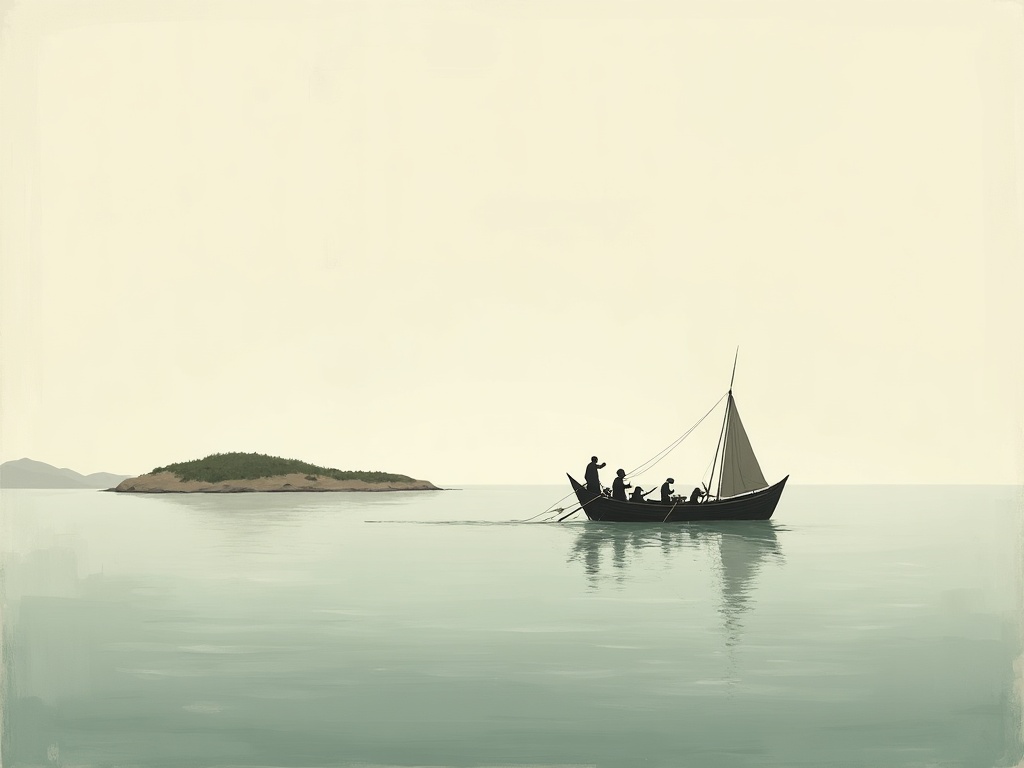
Pelsaert, the skipper Jacobsz, and a group of senior officers took the ship’s longboat to search the nearby islands for water. They found little, and then made a fateful decision: rather than return to a slow death, they would sail the open boat all the way to Batavia to fetch a rescue ship. It was an extraordinary feat of seamanship and endurance – roughly nineteen hundred miles across open ocean in a crowded, undecked boat, taking about a month. That they survived at all belongs beside history’s greatest tales of small-boat survival, from the castaways of the age of sail to the lone sailor who endured 133 days on a raft in the century that followed. But leaving meant handing the stranded survivors to the mercy of the one man left in charge of them. That man was Jeronimus Cornelisz.
The kingdom of blood
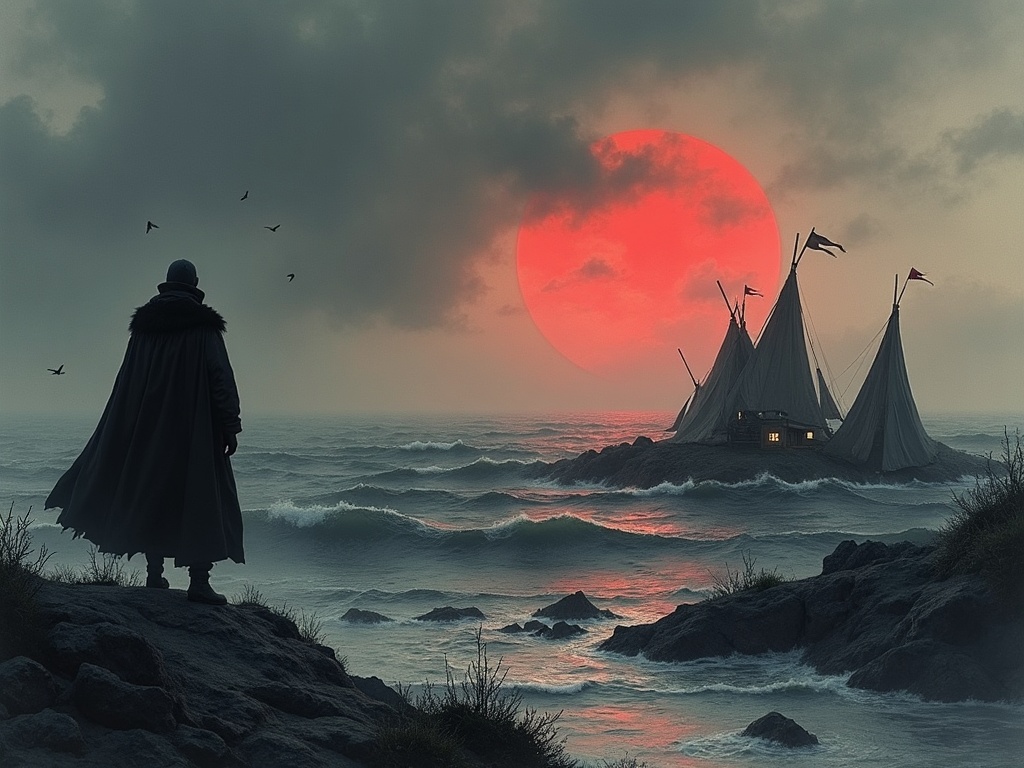
Cornelisz was now the most senior Company official on the islands, and into that authority he poured the mutiny he had never managed to stage. His reasoning was coldly practical and utterly monstrous. He expected a rescue ship to come; he intended to seize it and turn pirate. To do that he needed the survivors reduced to a small, loyal band who would not resist – and he needed the food and water to stretch. So he and a gang of followers, armed while others were disarmed, began to murder the people around them.
Over the following weeks they killed with a bureaucratic, escalating callousness – drowning, stabbing, and clubbing men, women, and children, sometimes on invented pretexts, increasingly for no reason at all beyond the momentum of killing. Somewhere between 100 and 125 people were murdered. It was not the frenzy of a mob but the deliberate, organised work of a self-appointed tyrant, and it turned a survivors’ camp into something close to a death cult. History has recorded massacres born of hatred or war, from frontier killings that a nation chose to forget onward – but few so intimate, so calculated, and so far from any authority that might have stopped it.
The soldiers on the far island
Early on, Cornelisz had made what he thought was a tidy arrangement. He sent a party of around twenty soldiers, led by a common soldier named Wiebbe Hayes, to a larger island to search for water – fully expecting them to find none and quietly die. Instead, Hayes and his men found wells and wallabies to hunt. They found something to live for, and then they found out what was happening on the other islands, as terrified survivors swam and rafted across to them with the news.
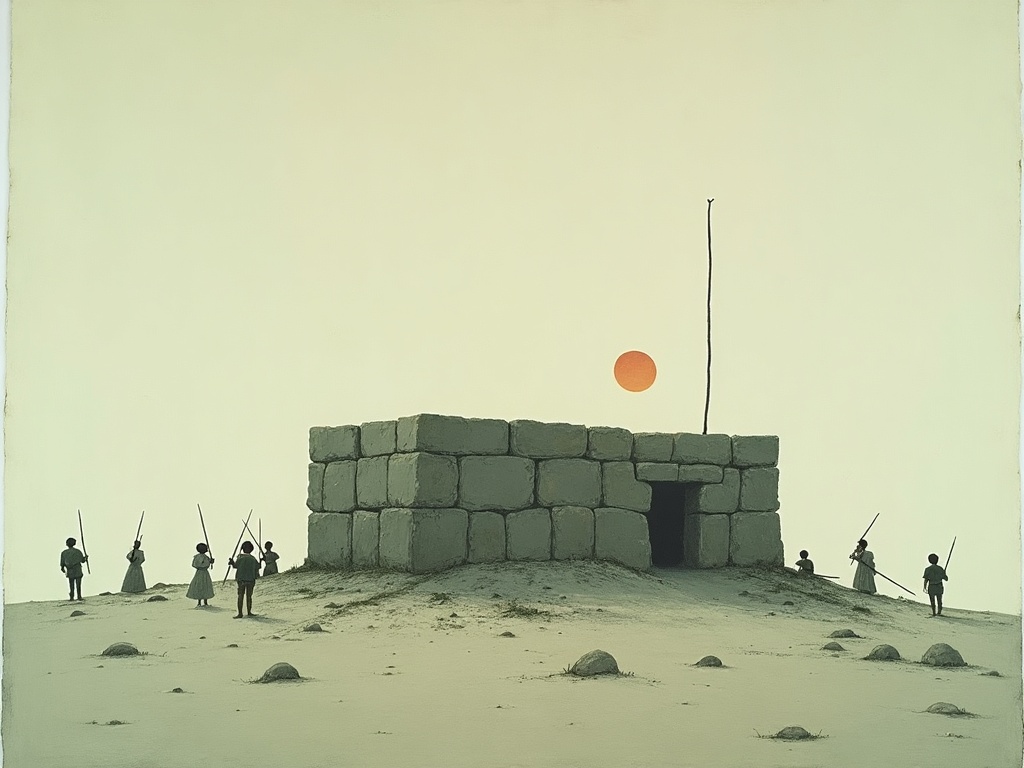
Hayes and his soldiers did what soldiers do. On West Wallabi Island they piled up flat slabs of limestone into a rough little fort – by most reckonings the oldest surviving European-built structure on the Australian continent – and they armed themselves with pikes fashioned from barrel staves, nails, and salvaged iron. When Cornelisz’s mutineers came to finish them, this ragged garrison fought them off, again and again. At last they captured Cornelisz himself. A band of ordinary men, marooned and outnumbered, had become the only law left in that sea.
Justice on the islands
In September 1629, Pelsaert returned aboard the rescue ship Sardam, sailing into a war zone. There was a final desperate clash for the survivors before the mutineers were subdued. Then, on those same islands, Pelsaert held trials. Cornelisz and several of his chief lieutenants had their hands struck off and were hanged from a hastily built gallows. Two of the lesser guilty – a soldier named Wouter Loos and a cabin boy, Jan Pelgrom de Bye – were spared the rope and instead marooned on the Australian mainland, perhaps the first Europeans left to live on the continent. They were never seen again, and what became of them is one of history’s small, unanswerable mysteries. Of the roughly 340 who had set out, only about 120 lived to see the port of Batavia.
Why the story still matters
It would be easy to remember the Batavia as a shipwreck, and to let it settle quietly beside the great maritime disasters and their improbable survivors. But the reef only killed forty people. Men killed the rest. That is the part that lingers – that when authority sailed over the horizon and the ordinary rules of the world fell away, one persuasive, clever man could talk and terrorise others into slaughter, and it took nothing grander than a handful of soldiers with homemade spears and a stone wall to stop him.
The Batavia is a story about how thin the crust of civilisation really is, and about who we become when it cracks. Jeronimus Cornelisz answered that question one way, on a scatter of coral in a strange southern sea. Wiebbe Hayes and his soldiers answered it the other. Nearly four centuries later, the wreck’s recovered timbers and a reassembled stone gateway stand in a museum in Fremantle – not far from where it all happened – as a reminder that the darkest thing the Batavia ever carried was not her treasure, but some of the people sailing with it.
Sources & further reading:
Related Reading
More from the archive
- The Ship That the World Forgot: The MV Doña Paz and the Deadliest Peacetime Shipwreck in History
- Ching Shih: The Pirate Queen Who Commanded a Fleet No Empire Could Beat