The Eastland Disaster: The Ship That Capsized at the Dock and Drowned 844 in the Chicago River

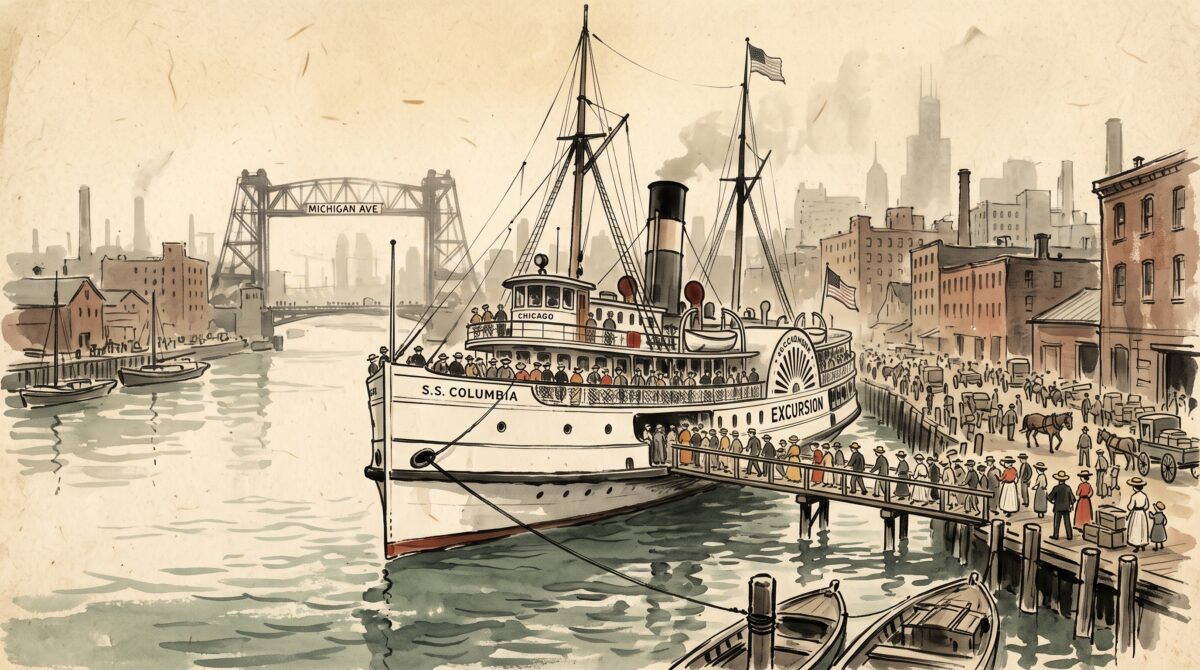
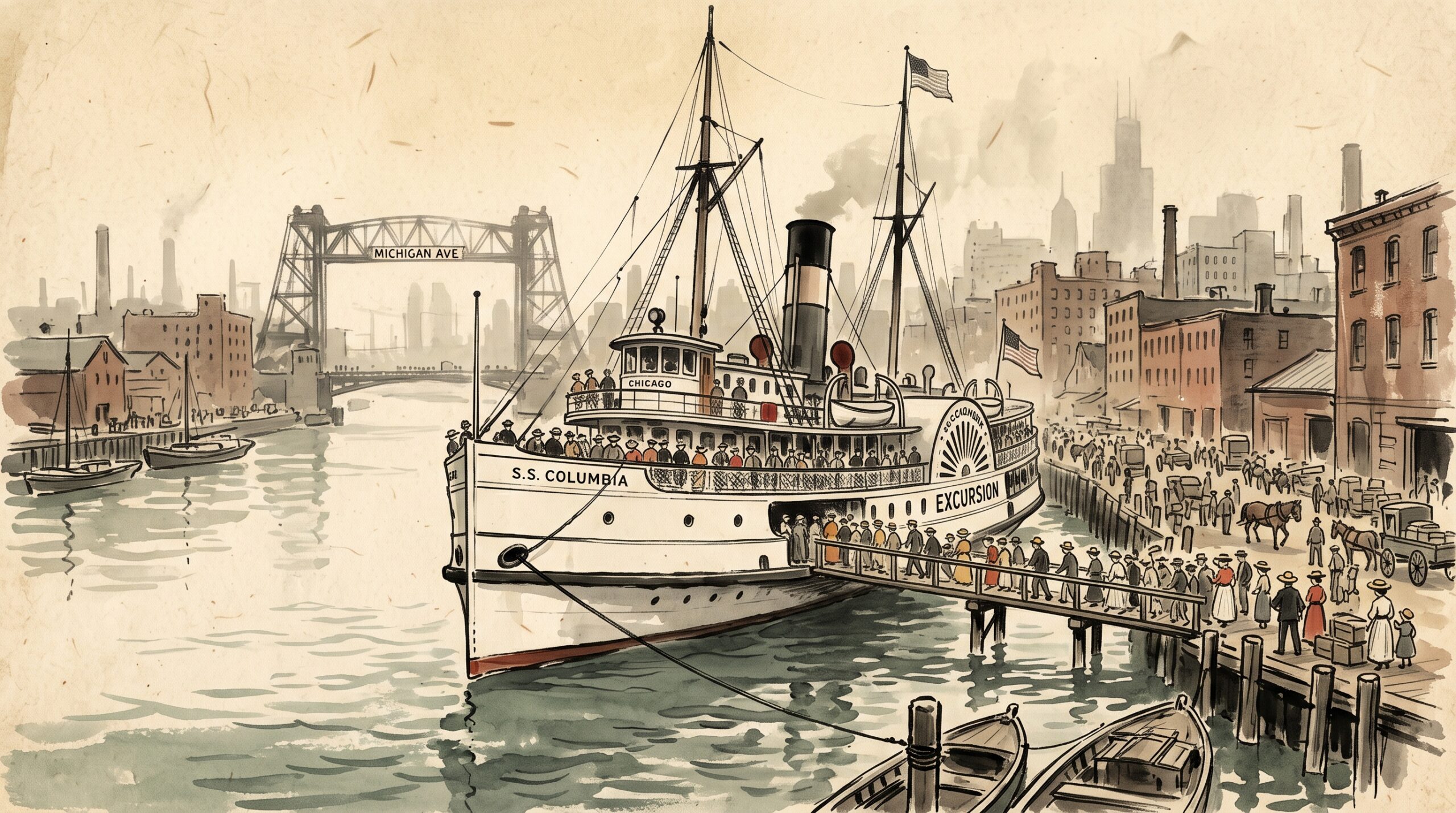
It was supposed to be the happiest day of the summer. On the morning of Saturday, July 24, 1915, thousands of workers from the Western Electric plant in Cicero, Illinois, put on their best clothes and streamed down to the Chicago River for the company picnic — a lake cruise to Michigan City, Indiana, with bands, dancing, and a day away from the factory floor. Entire families came, mothers in white summer dresses, children clutching their parents’ hands, young men in straw boater hats. By 7:00 a.m. they were crowding up the gangway of the excursion steamer Eastland, moored on the south bank of the river between the Clark and LaSalle Street bridges.
The ship never left the dock. Within half an hour, more than eight hundred of those picnic-goers would be dead — not out on the open lake, not in a storm, but in twenty feet of muddy river water, a single long stride from the wharf. The Eastland Disaster remains the deadliest single shipwreck in the history of the Great Lakes, and one of the worst losses of life in Chicago’s history. And yet it is a catastrophe that the country, somehow, almost entirely forgot.
A Picnic That Never Left the Dock
The Western Electric Hawthorne Works was a small city unto itself, tens of thousands of employees assembling telephones and switchboards. Its annual picnic was a point of pride, and the 1915 outing was the largest yet. Five steamers had been chartered to ferry the crowd across Lake Michigan, and the Eastland — fast, white, and advertised as the ‘Speed Queen of the Great Lakes’ — was first in line. Tickets had been handed out by the thousand. By about 7:10 that morning, the ship had reached its full licensed load of 2,500 passengers, and the gangplank was finally pulled in.
The passengers did what excited crowds do: they moved around. Many drifted to the port side, the side facing out toward the open river, to watch the water and wave at the other boats. The band played ragtime. Below the holiday noise, though, something was quietly, catastrophically wrong with the ship beneath their feet.
The Ship They Called the Speed Queen
The Eastland was fast, but she had always been cranky. Built in 1903, she was long and narrow and sat high in the water, and she had a well-documented history of listing — leaning alarmingly to one side — when passengers gathered along a rail. On more than one earlier voyage her crew had scrambled to shift ballast or move people to keep her upright. She was, in the language of naval architects, top-heavy and tender: a vessel whose balance was always precarious, held in check only by careful management of the water in her ballast tanks.
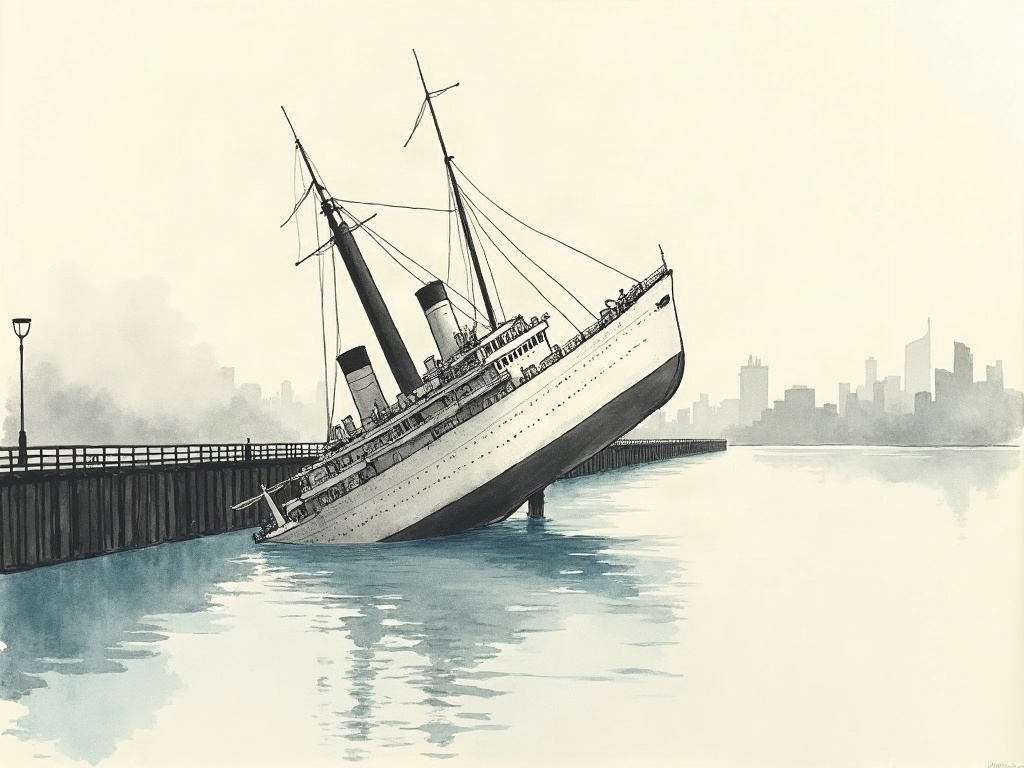
That morning, the crew struggled to keep her level as the crowd poured aboard. They opened and closed ballast tanks, trying to counter each new lean. But the river was dead calm and the ship was packed to capacity with people free to wander, and the margin for error had shrunk to almost nothing. The Eastland began to lean toward the dock, then corrected, then began a slow, sickening roll the other way — out toward the river.
The Lifeboats That Helped Sink Her
There is a bitter irony buried in the Eastland Disaster, and it reaches back to another ship. Three years earlier, the Titanic had gone down for want of enough lifeboats, and the world had recoiled in horror at the thought of passengers left with nowhere to go. In response, the United States passed the 1915 Seamen’s Act, which — among many reforms — required passenger vessels to carry far more lifeboats and rafts than before.
It was a humane law written in the memory of the people who survived the Titanic in too few boats. But on an already top-heavy ship like the Eastland, the cure was dangerous. The newly added lifeboats and heavy rafts were mounted high on the upper decks, piling tons of extra weight exactly where a tender ship could least afford it — above the waterline, raising her center of gravity and making her even more prone to roll. Safety equipment meant to save lives had quietly made the vessel more likely to capsize. It is one of history’s cruelest lessons in unintended consequences.
Twenty Feet of Water
At about 7:28 a.m., the slow roll became unstoppable. The Eastland leaned past the point of no return and settled gently, almost without violence, onto her port side in the river — still tied to the wharf, her starboard flank rising into the morning air like the back of a surfacing whale.

What happened in those seconds was horror of the most intimate kind. Passengers on the open decks were flung into the river, where the water was churning with hundreds of people weighed down by heavy wool suits and long summer dresses that filled and dragged them under. Worse by far were those trapped inside. Hundreds had gone below to the enclosed decks and cabins; when the ship rolled, the floor became a wall and the water rushed in, and they were pinned in the dark against furniture, pianos, and each other. There was no storm, no fire, no distance to the shore — the disaster unfolded in the heart of a great city, in sight of thousands, and still the people inside could not get out.
The Rescue and the Rows of the Dead
Rescue began almost instantly, because the catastrophe happened in full public view. Workers on the dock and crews from nearby boats threw lines, planks, crates — anything that would float. Men scrambled onto the exposed steel hull and, with torches and tools, cut holes through the plating to pull survivors out of the flooded interior. Some were saved that way. For most of those trapped below, there was simply no time.

When the final count was made, 844 people had died, including 22 entire families wiped out together. The great majority were young Western Electric workers and their children; the grief fell heaviest on a few immigrant neighborhoods on Chicago’s West Side, where in some blocks nearly every household lost someone. The Second Regiment Armory was turned into a vast temporary morgue, its floor laid out in long rows for families to walk, searching for faces they knew. The scale of the sorrow was hard to take in — a loss of life, in a single morning, that rivals the city’s deadliest fires. It belongs in the grim company of the Iroquois Theatre fire that killed six hundred Chicagoans in fifteen minutes, another disaster in which a supposedly safe place became a trap.
No One to Blame
In the years that followed, the Eastland Disaster produced lawsuits, inquiries, and finger-pointing, but almost no accountability. Engineers argued over ballast and stability; the ship’s officers and owners were investigated and, in the end, none were found criminally responsible. The courts eventually fixed on narrow technical questions of who had managed the ballast tanks, and the families of the dead received little. In its death toll the Eastland stands with the worst American water disasters — alongside the Sultana, whose boilers exploded and killed more than it, yet which the nation barely paused to mourn — and like the Sultana, it slipped strangely fast out of public memory.
The ship herself did not sink. She was pumped out and raised from the river within weeks, sold to the U.S. Navy, rebuilt, and renamed the USS Wilmette. For three decades she served quietly as a naval training vessel on the Great Lakes — the same hull that had drowned 844 people now carrying sailors to drill — until she was finally scrapped in 1947. A young man named George Halas, who would go on to found the Chicago Bears, was said to have been meant to sail that morning and arrived too late to board. For every such lucky miss, there were dozens who stepped aboard on time.
What the River Kept

Why has the Eastland Disaster faded so completely, when a shipwreck of this size should be seared into national memory? Part of the answer is timing: the summer of 1915 was consumed by the war in Europe and the furor over the recent sinking of the Lusitania, and a picnic boat capsizing in a river could not compete. Part of it is the sheer domestic smallness of the scene — no iceberg, no open sea, no grand liner, just an excursion steamer and a calm river and ordinary factory families who never got their day off.
But that smallness is exactly why it is worth remembering. The Eastland is a reminder that catastrophe does not always arrive from the wild and the distant; sometimes it is built into something ordinary and overlooked — a known flaw, a crowd in the wrong place, a safety law applied without thought to its cost. Eight hundred and forty-four people died within a few feet of solid ground, on the happiest morning of their year, because a ship everyone trusted could not hold itself upright in still water. The river gave the city back its ‘Speed Queen,’ pumped out and sailing again. It kept, for a long time, the memory of what she had done.
Sources & further reading:
Related Reading
- The General Slocum: The Picnic Boat Fire That Erased a New York Neighborhood
- The Sultana: America’s Worst Maritime Disaster, and the Nation That Barely Noticed
- The Town That Burned in an Hour: The Peshtigo Fire, America’s Deadliest Wildfire, Erased by the Great Chicago Fire