Miss Unsinkable: The Stewardess Who Walked Away From the Titanic, the Britannic, and the Sea Itself

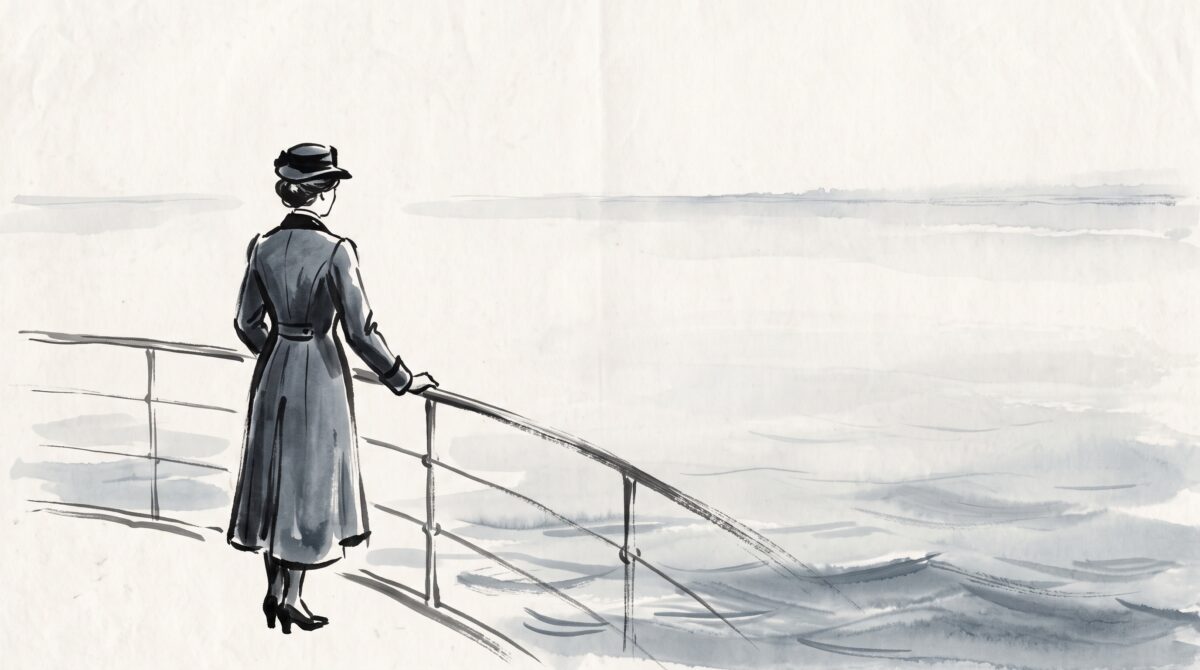
The sea makes its bargains quietly. On a cold April night in 1912, a young stewardess stood on the sloping deck of the most famous ship in the world and was told to get into a lifeboat as an example to the frightened women who would not go. Someone pressed a stranger’s baby into her arms. As the boat dropped toward the black water, she looked up at the great lit hull of the Titanic and could not quite believe it was dying. She had already survived one collision at sea. She did not yet know that in four years she would be swimming for her life again, beneath the propellers of an even larger ship. Her name was Violet Jessop, and the ocean would try three times to keep her — and fail every time.
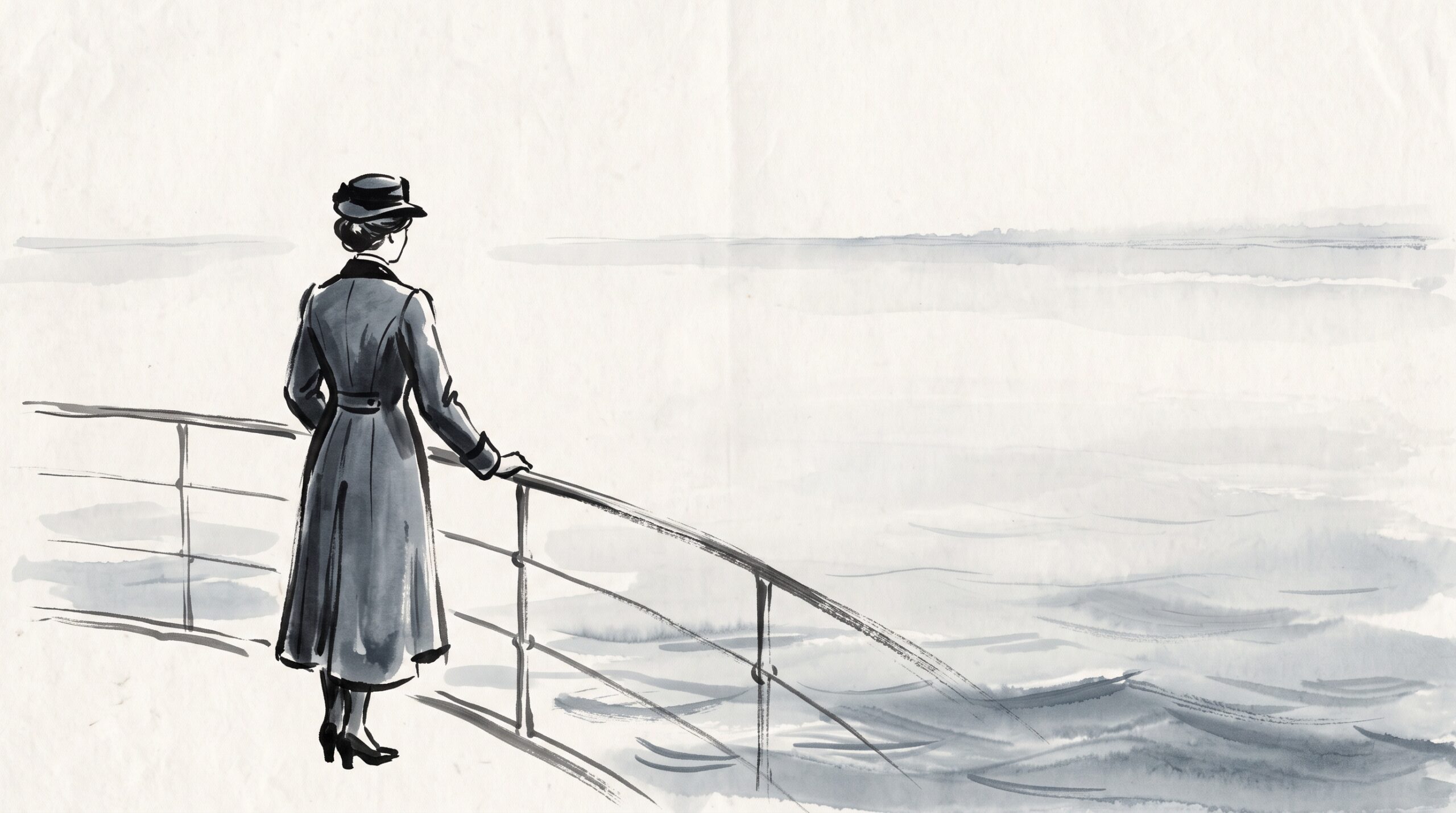
A Child Who Refused to Die
Violet Constance Jessop was born on October 2, 1887, on the windswept pampas of Argentina, the eldest of a large family of Irish immigrants. Her father raised sheep; her childhood was hard and remote. As a girl she contracted tuberculosis, and doctors told her family she had only a few months to live. She did not die. She recovered against every expectation — the first time, but not the last, that Violet Jessop would outlast a verdict of doom.
When her father died, the family moved to England, and when her mother fell ill, Violet gave up her schooling to keep the household afloat. She followed her mother’s old trade and went to sea as a ship’s stewardess, first with the Royal Mail Line and then with the grandest company on the ocean, the White Star Line. She was young, pretty, and reportedly so worried that her looks might invite trouble from passengers or officers that she dressed plainly and wore no ring. What she wanted was steady wages and a quiet life. What she got was a front-row seat to three of the most famous maritime disasters of the century.
The Three Sisters
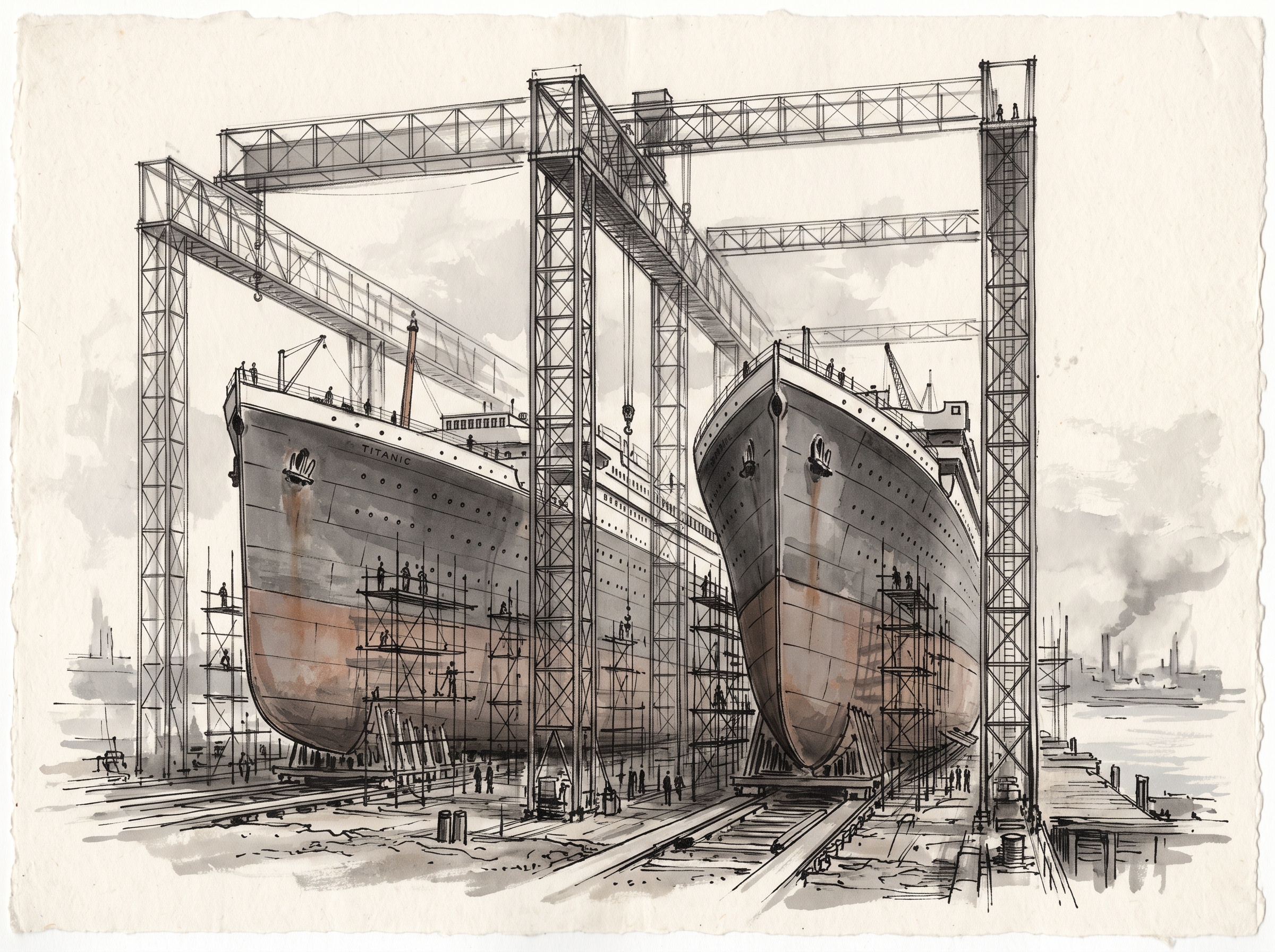
White Star had staked its fortune on three colossal sister ships built to dominate the Atlantic crossing: the Olympic, the Titanic, and the Britannic. They were the largest moving objects human beings had ever made, floating cities of oak paneling, grand staircases, and gilded dining rooms. To work aboard them was to serve at the summit of the age of ocean travel. Violet Jessop would serve on all three. And all three would try to kill her.
The first warning came in 1911. Violet was working aboard the brand-new RMS Olympic, the eldest of the sisters, when it collided with a British warship, HMS Hawke, off the Isle of Wight. The Hawke’s ram-shaped bow tore a great gash in the liner’s side. Remarkably, no one died, and the Olympic limped back to port — but the accident should have been an omen. The ship that was supposed to be too big to fail had been holed on a calm day in home waters. Violet, unshaken, stayed at sea.
The Night the Unsinkable Sank
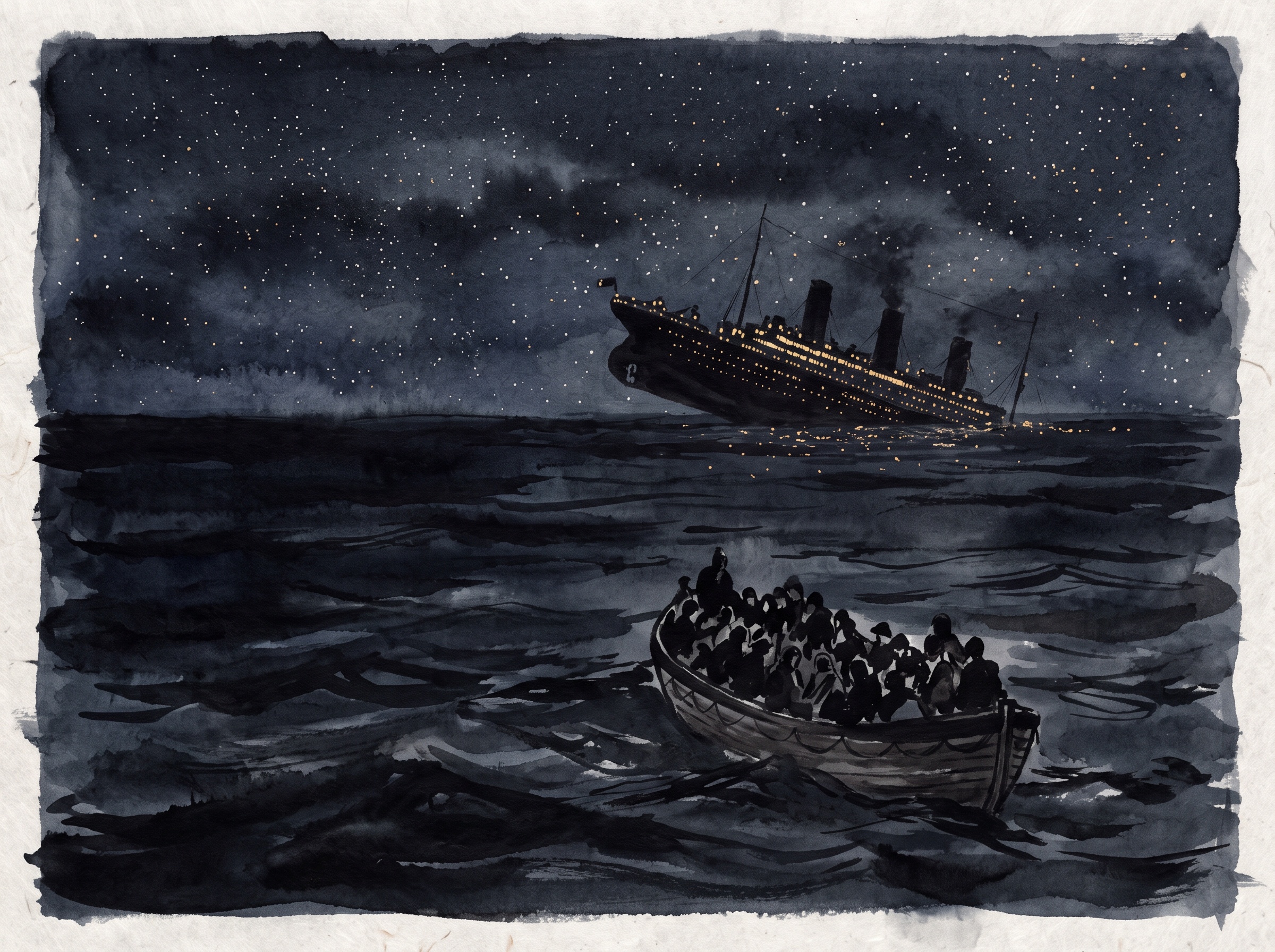
On April 10, 1912, she signed aboard the newest and most celebrated ship afloat, the RMS Titanic, as a first-class stewardess. Four days later, near midnight on April 14, the Titanic struck an iceberg in the North Atlantic. Violet later remembered the strange, sickening quiet of it — not a crash so much as a shudder, and then the engines falling still. Ordered up on deck, she stood in the biting cold as the crew loaded the lifeboats. There were not enough for everyone, and many women refused to leave their husbands.
An officer told Violet to climb into lifeboat 16, partly to reassure the local women who would not board that it was safe. As the boat was being lowered, someone thrust a baby into her arms. She held the child through the freezing night while the Titanic’s lights slid beneath the sea and more than 1,500 people vanished into the dark. At dawn the rescue ship Carpathia found them. According to Violet’s account, a woman — the baby’s mother — snatched the infant back without a word and disappeared into the crowd. Violet had survived the deadliest peacetime sinking in history, but the ocean was not finished with her.
War and the Britannic
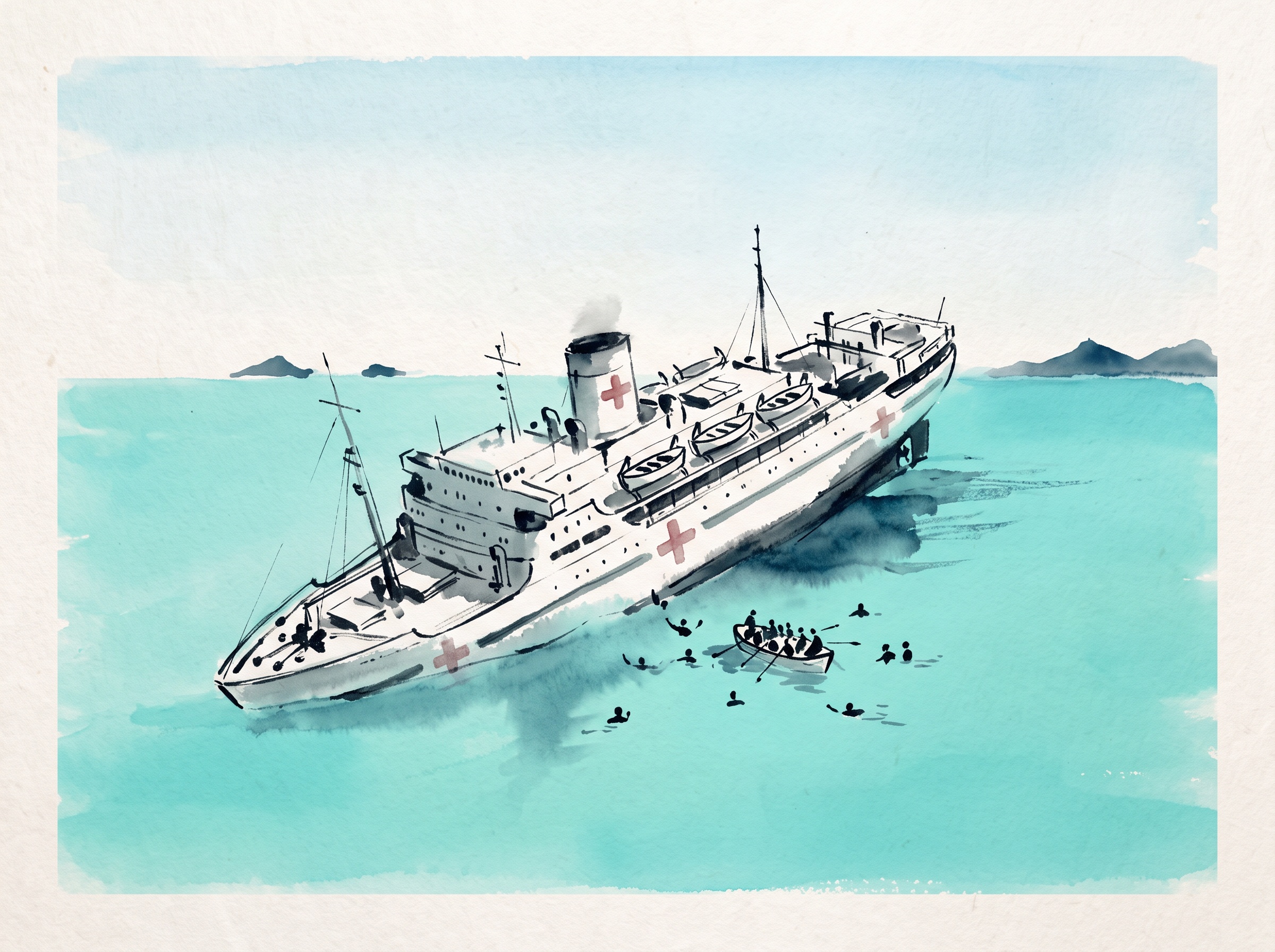
When the First World War came, the third sister, the Britannic — larger than the Titanic and built with grim new safety lessons in mind — never carried a single fare-paying passenger. She was requisitioned as a hospital ship, painted white with enormous red crosses, and sent to ferry wounded soldiers from the Mediterranean front. Violet Jessop went with her, no longer a stewardess now but a nurse with the Voluntary Aid Detachment, tending men broken by the trenches.
On the morning of November 21, 1916, in the Kea Channel of the Aegean Sea, an explosion ripped through the Britannic’s hull. Whether she had struck a German mine or been hit by a torpedo, the great ship began to founder with terrifying speed — she would go down in under an hour, faster than the Titanic. This time it was daylight, and this time Violet knew exactly what a sinking ship meant.
Under the Propellers
The Britannic’s lifeboats were launched into chaos. In the panic, two boats were lowered directly into the water near the stern while the ship was still moving forward — and were dragged toward the giant bronze propellers, which had risen partly out of the sea and were still turning. The boats and the people in them were pulled into the churning blades. Violet was in the water. Seeing the propellers ahead, she did the only thing she could: she dove down, deep beneath the surface, trying to swim under the killing arc.
She did not fully escape. Her head struck the ship’s keel as she passed beneath it, a blow hard enough that she believed she owed her life to her thick coil of auburn hair, which cushioned the impact. She surfaced dazed and bleeding but alive, and was hauled into a lifeboat. Thirty people died in the Britannic disaster, many of them in those two shattered boats. Violet Jessop was not among them. Only years later, she wrote, did a doctor examining her discover that she had fractured her skull that morning and simply carried on.
The Woman the Sea Could Not Keep
Most people, having survived one shipwreck, would never again board a vessel. Violet Jessop went back to sea. In 1920 she signed on once more with the restored Olympic, the sister that had started it all, and kept working the great liners for another three decades. She sailed on through the golden twilight of the ocean liner, crossing the Atlantic hundreds of times without incident, a small woman with an extraordinary secret folded quietly into her uniform. Fellow crew and passengers who learned her history gave her the name that stuck: Miss Unsinkable.
She retired at last in 1950, at sixty-three, and bought a small cottage in the English countryside in Suffolk, keeping chickens and tending a garden as far from the roll of the deck as she could get. She had never married for long and had no children of her own. In her final years she set down her memories in a manuscript that would only be published decades after her death. Violet Jessop died in 1971 of heart failure, eighty-three years old — the frail Argentine child who had been given months to live outliving nearly everyone who had ever pitied her.

It would be easy to file Violet Jessop away as a curiosity, a woman with impossibly bad luck who happened to keep escaping it. But there is something steadier in her story than luck. Three times she stood on a doomed ship and did not lose her head; three times she did what had to be done — held a baby, dove beneath the propellers, climbed into the boat — and then, calmly, went back to work. She never sought fame and rarely spoke of what she had seen. Perhaps that is the truest measure of her. The great ships were meant to be the immortal ones, the unsinkable marvels of the modern age, and one by one the sea took them. What endured instead was the quiet courage of an ordinary woman in a plain dark coat, who kept surfacing, and kept going, long after the legends had gone down.
Sources & further reading:
- Violet Jessop (Wikipedia)
- Violet Constance Jessop: Titanic Stewardess (Survivor) (Encyclopedia Titanica)
- Unsinkable Violet Jessop: Survivor of the Titanic and two other ship disasters (Sky HISTORY)
- She survived the Titanic — but it wasn’t the only time she faced death at sea (National Geographic)
- Violet Jessop: Survivor of the Olympic, the Titanic, and the Britannic (All That’s Interesting)
Related Reading
- The Mary Celeste: The Ship Found Sailing Itself With No One Aboard
- 133 Days at Sea: The Sailor Who Refused to Die on a Wooden Raft
- "We Are Holding Our Own": The Last Voyage of the Edmund Fitzgerald