Why Almost Every Canadian Airport Code Starts With Y: The Telegraph Mystery Behind YYZ


Pull a boarding pass out of your pocket for almost any flight within Canada and you will notice something strange once you start looking. Toronto is YYZ. Vancouver is YVR. Ottawa is YOW, Montreal is YUL, Calgary YYC, Edmonton YEG, Halifax YHZ. From the Pacific to the Atlantic, from the great international hubs down to gravel strips in the far North, the same lonely letter keeps turning up in first position. Canada, almost alone among nations, files its airports under Y.
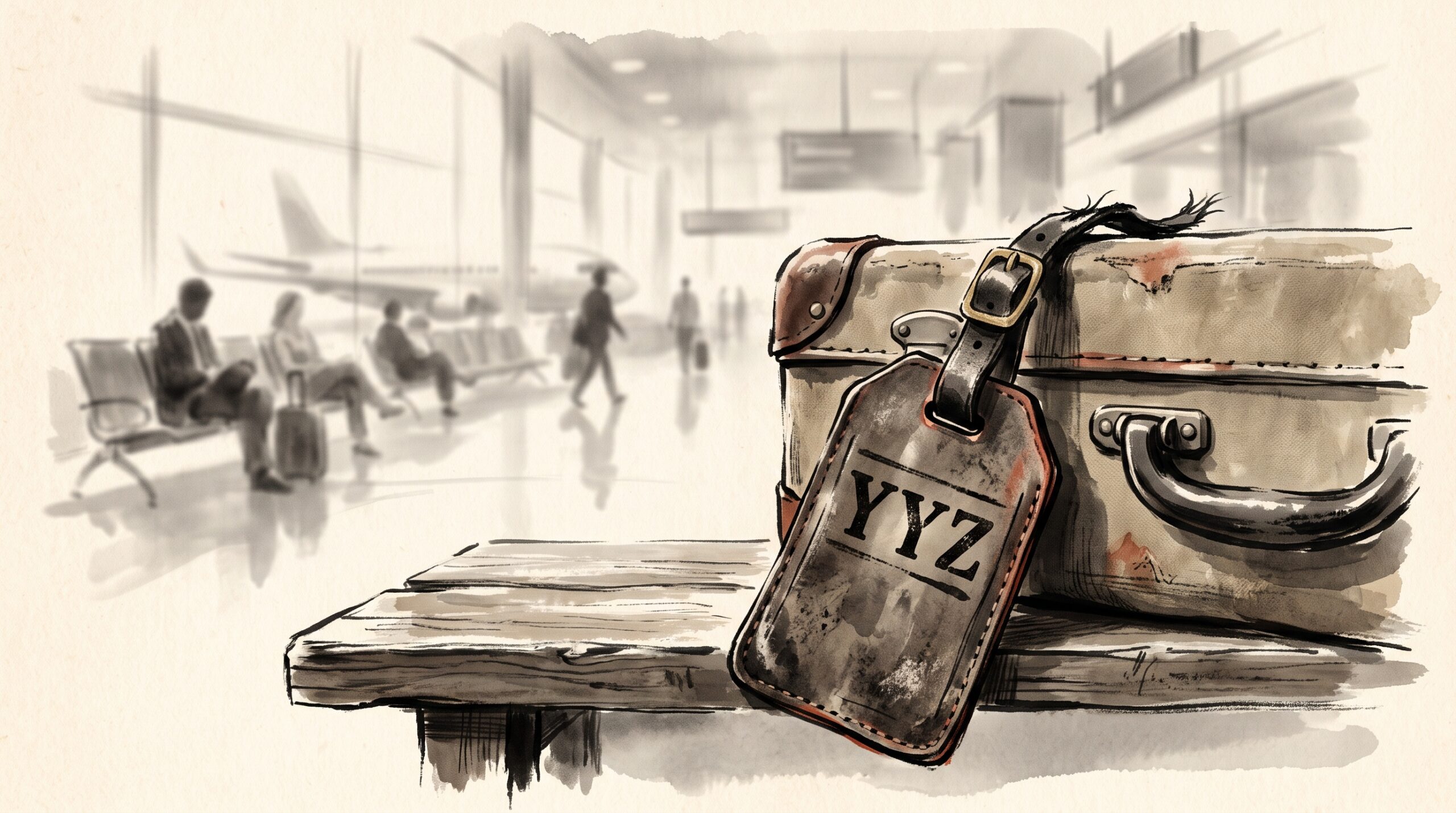
It looks like a bureaucratic accident, or somebody’s private joke. It is neither. The Y is a fossil – a small linguistic bone left behind by a technology that had vanished before most of these airports were even paved. To understand why a traveller in 2026 checks a bag tagged YYZ, you have to go back past the jet age, past the propeller age, to the clatter of a telegraph key in a wooden railway station on a winter night.
The alphabet soup that only Canada speaks
Every commercial airport in the world carries a three-letter IATA code, the tag the airlines print on your luggage and your ticket. Most of them are pleasantly obvious: LAX for Los Angeles, MAD for Madrid, SYD for Sydney. You can often read the city right out of the letters. Then you land in Canada, where the codes seem to have been dealt from a different deck entirely. YYZ tells you nothing about Toronto. YUL says nothing about Montreal. The city is hiding, if it is there at all, in the second and third letters – and even then it is often in disguise.
The reason the whole country marches under one banner is that Canada did not invent its airport codes for airplanes. It inherited them from an older network that already blanketed the land with names.
Before the airplane, there was the telegraph
In the early decades of the twentieth century, the nervous system of Canada was not the highway or the airway but the railway – and running alongside every rail line was a telegraph wire. Each station, town, and junction on that vast web was assigned a short two-letter identifier so that operators could route weather reports, train orders, and messages quickly in Morse code. It was the same instinct that had once wired the world together and, on rare and terrifying occasions, seen it come apart, as when a great solar storm set telegraph lines sparking in the 1850s. Two letters was enough to name a place on the wire.

When aviation arrived, the young airfields and their radio operators simply borrowed the code of the nearest existing station. Why invent a new label for Malton, the town outside Toronto where the airport grew, when the telegraph already called that district by a two-letter code ending in Zise? Vancouver’s radio identifier carried VR; Montreal’s carried UL; Ottawa’s carried OW. These were not chosen to be memorable. They were chosen to be short, and they were already there.
How two letters quietly became three
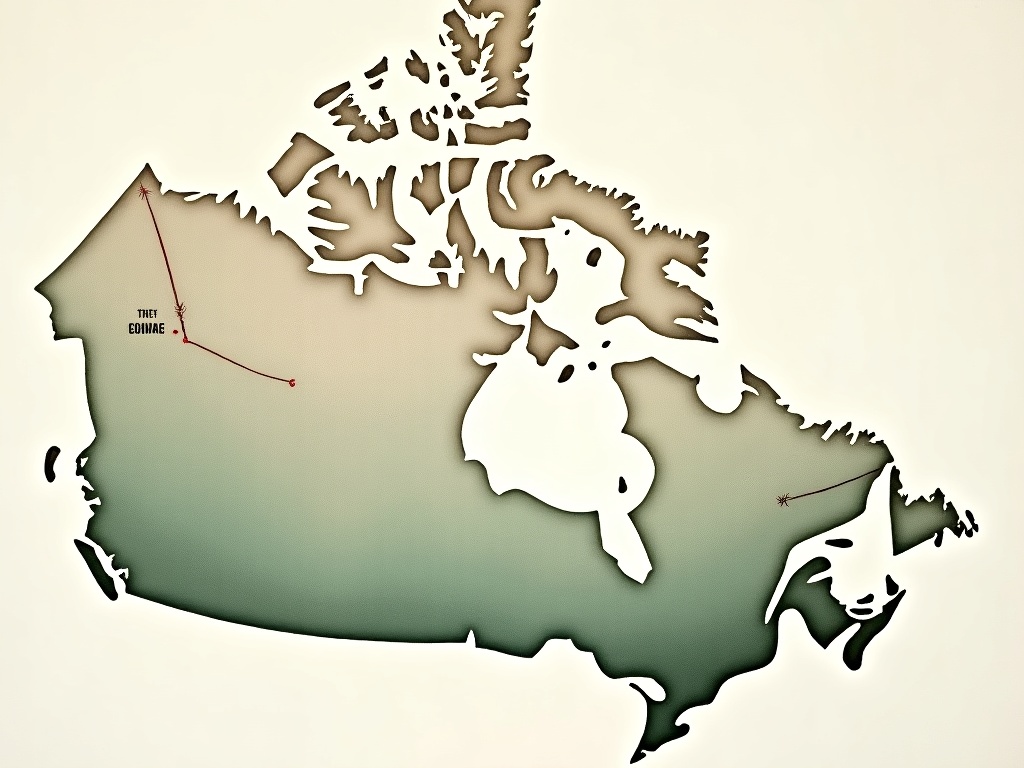
The trouble came when the world’s airlines standardised on three-letter codes. Suddenly every two-letter Canadian identifier needed a third character bolted on to fit the new format. Rather than reshuffle a system that thousands of operators already knew by heart, Canada took the tidy way out: it kept the familiar two letters and prepended a single letter to the front.
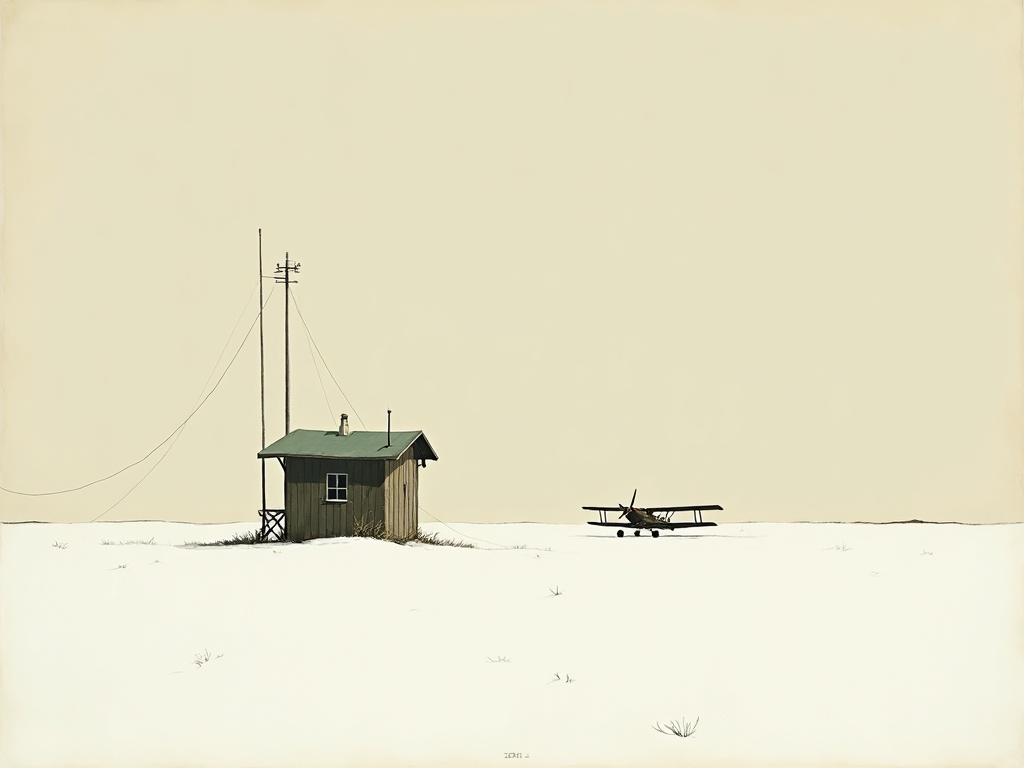
And the letter it reached for, overwhelmingly, was Y. Attach a Y to VR and you get YVR. Attach it to OW and you get YOW. Attach it to the Toronto-area code and you get the famously opaque YYZ – which is why the letters mean nothing as a word: the Y is a prefix, and the real name was always the ZZ-ish pair behind it. The pattern rolled out across the country until Y became, in effect, Canada’s national area code in the sky.
Y for “yes” – the story everyone tells
So why Y? Here is where the honest historian has to slow down, because this is the part of the tale that has hardened into legend. The popular and much-repeated explanation is delightfully simple: a leading Y meant “yes” – yes, this station has a co-located weather and radio reporting facility – while a leading W meant “without” such a station. In that telling, the Y is a tiny badge of completeness, a signal that a pilot could get an actual weather briefing on the ground.
It is a lovely story, and it is broadly consistent with how the codes were used. But it should be told with a raised eyebrow. The “Y for yes, W for without” account is the leading theory, not settled fact, and code historians have long argued that the truth was messier – that the prefixes were applied unevenly, that other letters (U, X, Z) crept in for their own reasons, and that no single clean rule was ever enforced from coast to coast. The confident version you hear at dinner parties is part history and part folk etymology. What is not in doubt is the older, sturdier fact beneath it: the two-letter cores came straight from the railway telegraph, and a prefix was added to make them three. The exact logic of why Y won the top job is the part that has gone a little soft with the retelling.
The exceptions that break the rule
If the Y rule were absolute it would be tidy, and history is rarely tidy. Not every Canadian code begins with Y – a scattering of airfields open with Z, W, or other letters, survivors of those alternative prefixes. Nor does a leading Y guarantee you are in Canada; a handful of airports elsewhere in the world happen to start with the letter for reasons entirely their own. And the second and third letters, those inherited telegraph pairs, can be maddeningly disconnected from the modern city, precisely because they were named for a railway stop or a radio hut rather than the metropolis that later sprawled around them.
The most famous of all these codes has even escaped into music. Toronto’s YYZ is rendered in Morse code as the drum-and-guitar intro to a Rush song of the same name – three letters of telegraph tapped out by a rock band, a small perfect loop closing on the very technology that created the code in the first place.
Why the story still matters
There is a particular pleasure in discovering that something you have looked at a thousand times has a hidden age to it. A boarding pass feels like the most disposable object imaginable – a slip of thermal paper you crumple at the gate. Yet stamped into its three little letters is a line of descent running back through the jet age and the biplane age to a telegraph operator hunched over a brass key, tapping out the weather in a language the airlines still speak without knowing it.
History does not only live in battlefields and palaces. It hides in luggage tags and area codes and the odd shape of an ordinary word, patiently waiting for someone to ask why. The next time you fly out of YYZ or YVR – or read the tail of an old aviation disaster like the tragic loss of BOAC Flight 911, or trace the aftermath of a catastrophe such as the Halifax explosion of 1917 – remember that the codes on the page are not gibberish. They are a message from a Canada wired together by rail and Morse, still ticking away in the corner of your ticket, more than a century after the wires went quiet.
Sources & further reading: