The Lady Be Good: The Ghost Bomber Found in the Sahara Sixteen Years After It Vanished

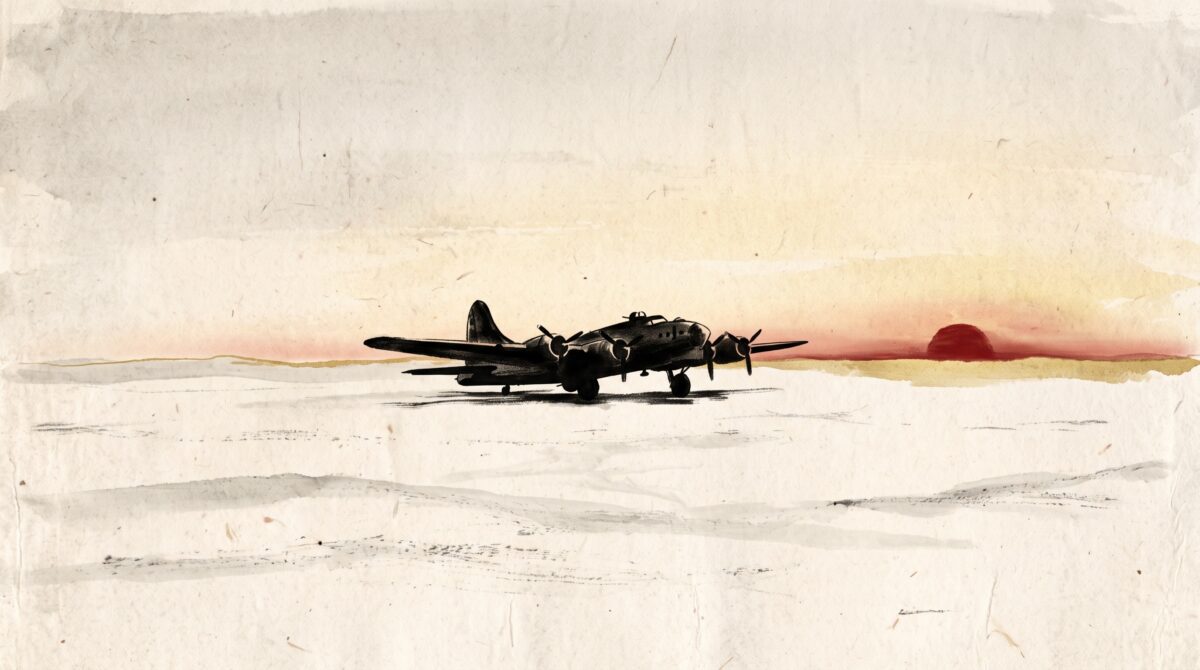
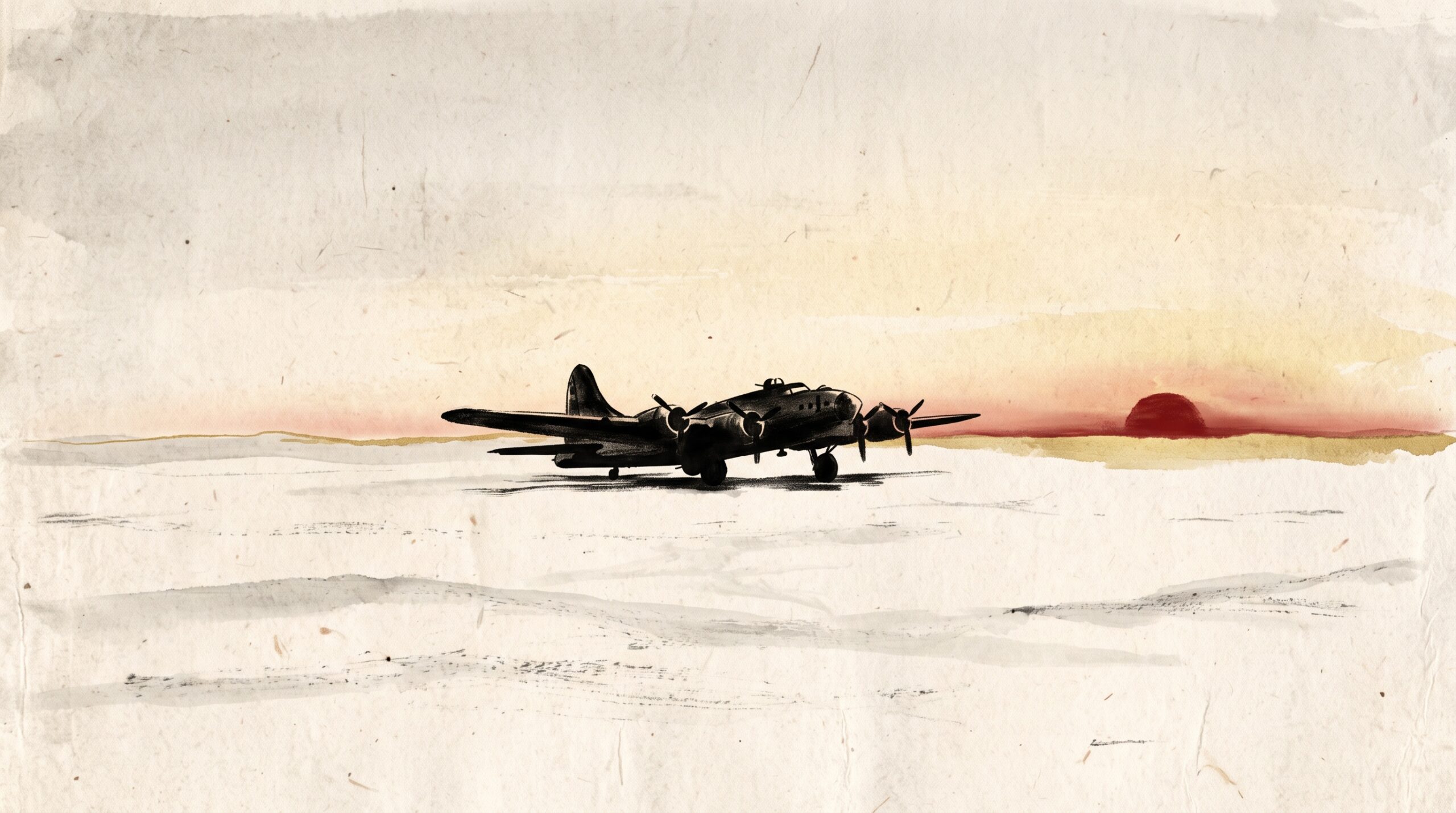
In November 1958, a team of oil surveyors working deep in the Libyan desert — hundreds of miles south of the Mediterranean coast, in a waste of sand where almost nothing lives — spotted something impossible from the air. A large aircraft lay on the open desert floor, broken into two main pieces but otherwise strangely whole. When men finally reached it on the ground the following year, they found a four-engined American bomber of a kind that had not flown in combat for fifteen years. Painted on its nose was a name: Lady Be Good. Inside were working machine guns, a radio that still functioned, a thermos of tea, and supplies of food and water. Everything was there. Everything except the nine men who had flown her.
A first mission that went wrong in the dark
The Lady Be Good was a B-24D Liberator of the U.S. Army Air Forces’ 376th Bombardment Group. On 4 April 1943 she lifted off from Soluch airfield, near Benghazi, as part of a raid on the harbor at Naples. For her nine-man crew, led by pilot First Lieutenant William J. Hatton, it was their first combat mission. The flight was troubled from the start — a sandstorm on takeoff, aircraft turning back, the formation scattering — and by the time the Lady approached the target late in the day, she was flying largely alone.
Whether she ever reached Naples is unclear. What is certain is that she turned for home in darkness, and that somewhere over the Mediterranean the crew’s navigation failed them. A radio direction-finding bearing, taken as they approached what they thought was the African coast, told them they had not yet arrived. In fact they had already crossed the coast and were flying inland. Trusting the instrument, they kept going — straight over their own blacked-out airfield and on into the Sahara.
Flying on into nothing
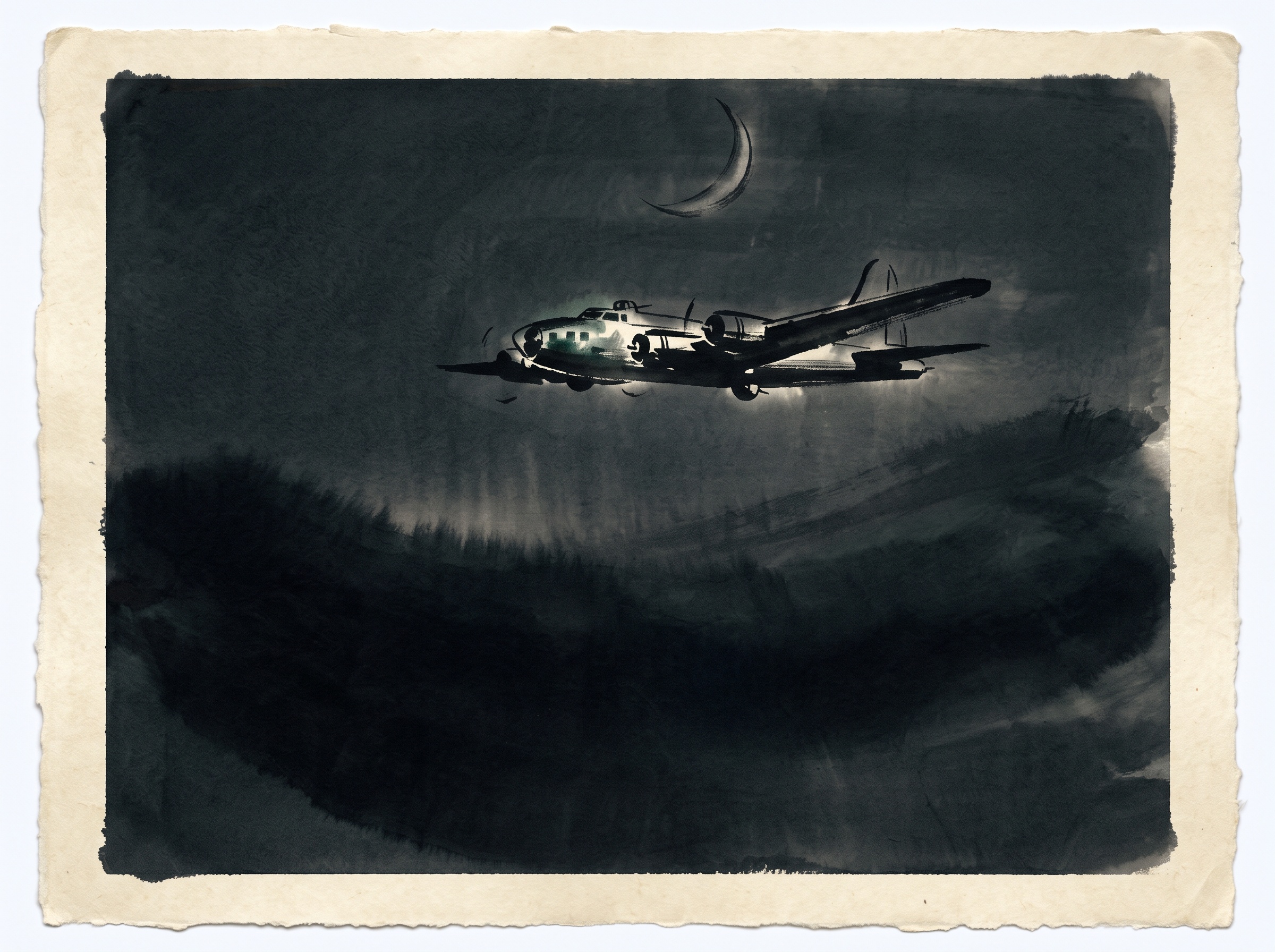
For hour after hour the Lady droned south over a desert the crew could not see and did not believe was beneath them. They were, by every indication, convinced they were still over open water, still searching for the shore. By the time the fuel gauges forced the truth on them, they were more than 400 miles beyond the base, in one of the emptiest places on earth. Hatton gave the order to bail out. One by one, eight men went out into the night air and parachuted down onto the sand. The ninth was never accounted for with the others.
The abandoned bomber flew on without them. Lightened and trimmed, she glided down and bellied onto the flat desert so gently that she broke into only two pieces and otherwise survived nearly intact — the ghost ship that would wait sixteen years to be found. Like the hydrogen bomb that was lost off the Georgia coast that same year of 1958 and has never been recovered, she simply slipped out of the world’s accounting and stayed there.
Eight men and one canteen
On the ground in the dark, the survivors found one another by firing flares and calling out. Eight of the nine gathered. They had almost nothing: a handful of parachutes, a few scraps, and roughly a single canteen of water shared among them. And they made the decision that would kill them — an entirely reasonable decision, based on everything they wrongly believed. Certain they had come down close to the coast, they set out to walk north.

They were not close to the coast. They were deep in the Calanshio Sand Sea, and the nearest help was far beyond what men on foot, in April heat, with a mouthful of water each, could ever reach. Still they walked. They left arrows of stacked debris and bits of clothing to mark their route, discipline holding even as their bodies gave out. After roughly 80 miles, five of the men could go no further and stopped, while three stronger ones pushed on to look for help that did not exist. Both groups were, by then, already beyond saving.
The diary in the sand

We know all of this because one of the men wrote it down. The co-pilot, Second Lieutenant Robert Toner, kept a small pocket diary, and in terse daily entries he recorded the slow unmaking of the crew: the cold nights, the blistering days, the prayers, the growing certainty that no one was coming. The entries thin and falter as the men do. The last is dated 12 April 1943 — eight days after takeoff. It is almost unbearable to read precisely because it is so restrained: men dying of thirst, still noting the facts.
When search parties followed the trail of markers in 1960, they found the remains of most of the crew strung out across the desert, some astonishingly far from where they had started, a testament to how hard they had tried. Toner’s diary came home with them and turned a mystery into a record. One man, Staff Sergeant Vernon Moore, was never found at all; the desert kept him.
The cruelest detail
What makes the Lady Be Good haunt everyone who hears of it is not the navigation error or even the long walk. It is the aircraft itself. When investigators examined the wreck, they found it was still, in effect, a functioning machine. The radio could transmit. There was water aboard, and food, and shade. Had the crew stayed with the plane instead of trusting their belief that the coast was near, they would have had a far better chance — a visible target for searchers, supplies to wait on, shelter from the sun. The men walked away from their own best hope because they could not know where they were. Survival often turns on exactly that kind of knowledge, as it did for the teenager who survived a plane crash and walked out of the Amazon by following water downstream — the right instinct in the right place. In the Sahara, the instinct to move was the wrong one.
Why it still holds us
The Second World War produced countless stories of airmen and the strange fortunes of flight — some redemptive, like the pilot who dropped chocolate on a starving Berlin, and some that end in the sky with no good reason at all. The Lady Be Good belongs to the second kind. Nine young men, on their very first mission, were undone not by the enemy but by a single bad bearing in the dark, and by the smallest and most human of errors: trusting what they believed over what was true. The empty, intact bomber that outlived them all became a kind of monument to it — proof that the line between coming home and vanishing can be as thin as a few degrees on a compass, and that the desert is patient enough to wait sixteen years to tell you so.
Related Reading
- Lady Death: Lyudmila Pavlichenko and the 309 Shots That Shamed a Room Full of Men
- The Mary Celeste: The Ship Found Sailing Itself With No One Aboard
- The Nuclear Bomb Still Missing Off Georgia Coast Since 1958