Juliane Koepcke: The Girl Who Fell From the Sky and Walked Out of the Amazon

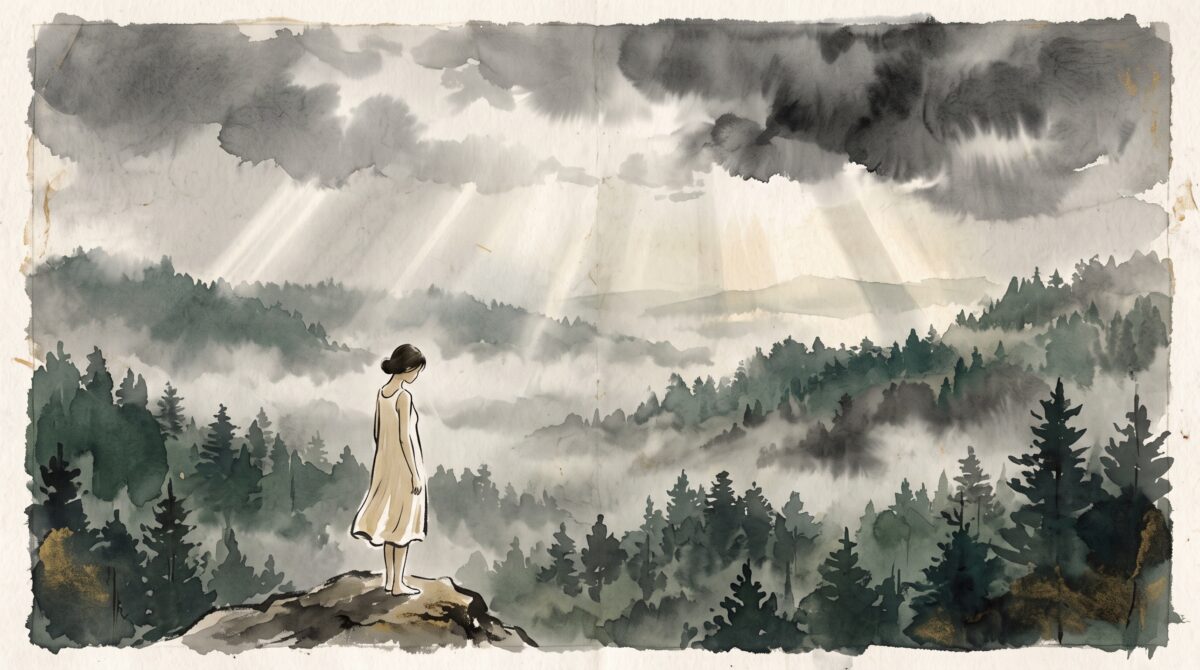
On the afternoon of December 24, 1971, a Peruvian airliner climbed out of Lima and turned toward the Amazon, carrying ninety-two people home for Christmas. Somewhere over the rainforest it flew into a wall of black cloud, and a bolt of lightning found the fuel tank in its right wing. The aircraft came apart in the air, nearly two miles above the trees. Of everyone aboard, one person reached the ground alive: a seventeen-year-old girl named Juliane Koepcke, still strapped into her row of seats, spinning down through the storm.
What happened next — eleven days alone in one of the most unforgiving places on earth — is one of the most extraordinary survival stories of the twentieth century. And the reason she lived had everything to do with how she had grown up.
A Childhood in the Rainforest
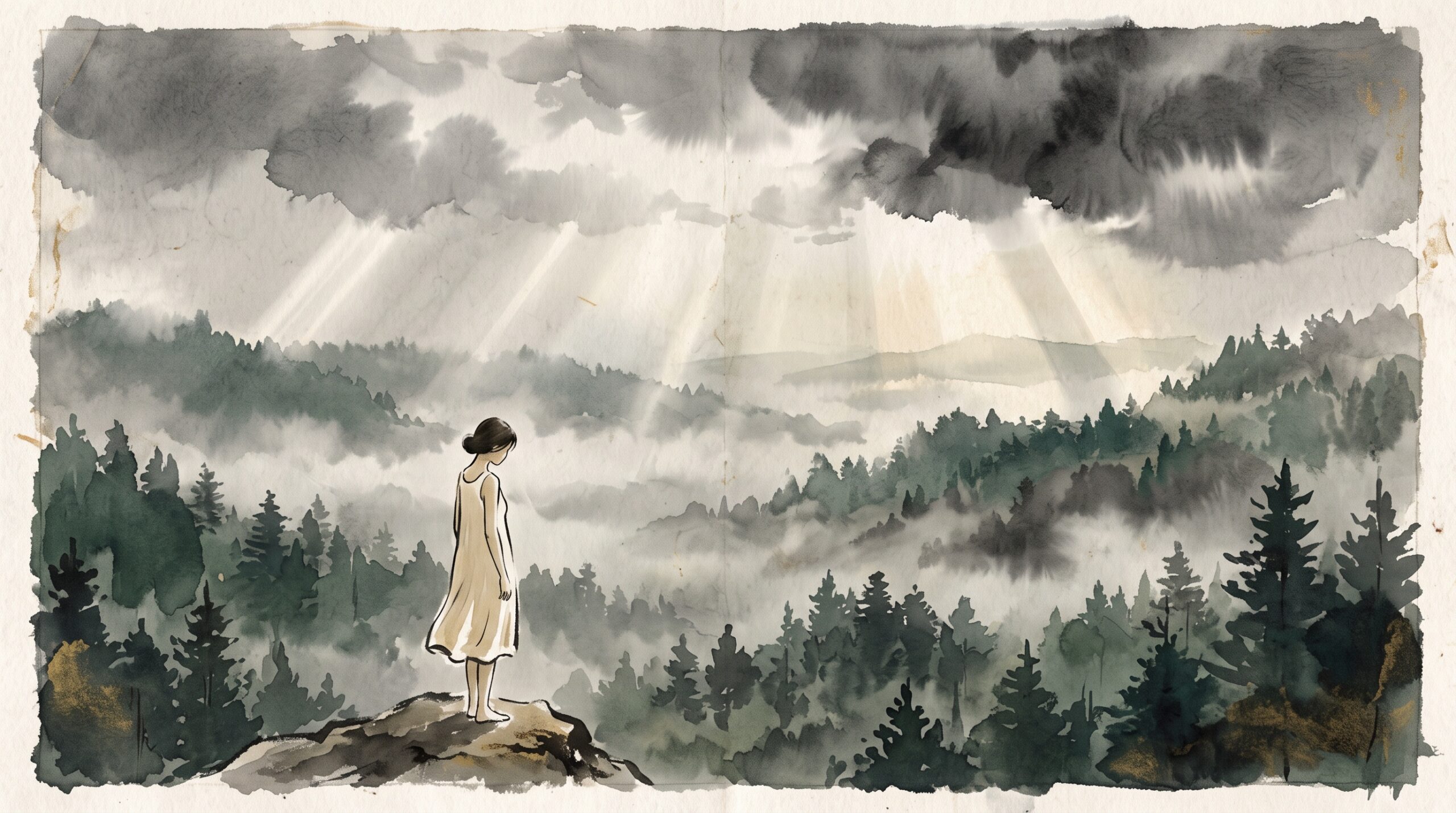
Juliane was the daughter of two German zoologists, Hans-Wilhelm and Maria Koepcke, who had come to Peru to study its wildlife. When she was fourteen, the family left Lima and founded a small research station called Panguana, a cluster of huts on stilts deep in the Amazon basin. There Juliane spent her days among biologists who treated the jungle not as a green wall of menace but as a place with rules you could learn.
Her parents taught her those rules without ceremony. How to read running water. How to tell which creatures were a real threat and which only looked like one. Above all, one piece of advice that would later save her life: if you are ever lost in the forest and you find flowing water, follow it downstream. Small creeks join larger streams, larger streams become rivers, and rivers, sooner or later, lead to people.
By seventeen she had finished secondary school in Lima. She graduated on December 22, 1971. Two days later, eager to spend Christmas with her father at Panguana, she and her mother bought seats on the only flight still available — on LANSA, a Peruvian airline with a troubled safety record.
Flight 508 and the Storm
The aircraft was a Lockheed L-188 Electra, already an aging design. The flight from Lima to Pucallpa should have taken under an hour. For the first stretch it was ordinary. Then the sky ahead darkened into a towering mass of thunderheads, and the Electra, instead of turning back, pushed into it.
The cabin bucked violently. Luggage and wrapped Christmas gifts tumbled from the overhead racks. Juliane remembered her mother, an experienced traveller who loved the outdoors, saying quietly, “Now it’s all over.” Moments later a blinding white light burst over the right wing. Lightning had struck a fuel tank. The plane lurched into a dive, the roar of the engines gave way to a strange, rushing silence, and the fuselage tore open.
Juliane’s last clear memory of the plane was of the seat beside her emptying and the world turning upside down. She was still buckled into a three-seat row when it fell away from the wreck, and she dropped through the storm toward the canopy below.
Two Miles Down, and Still Alive
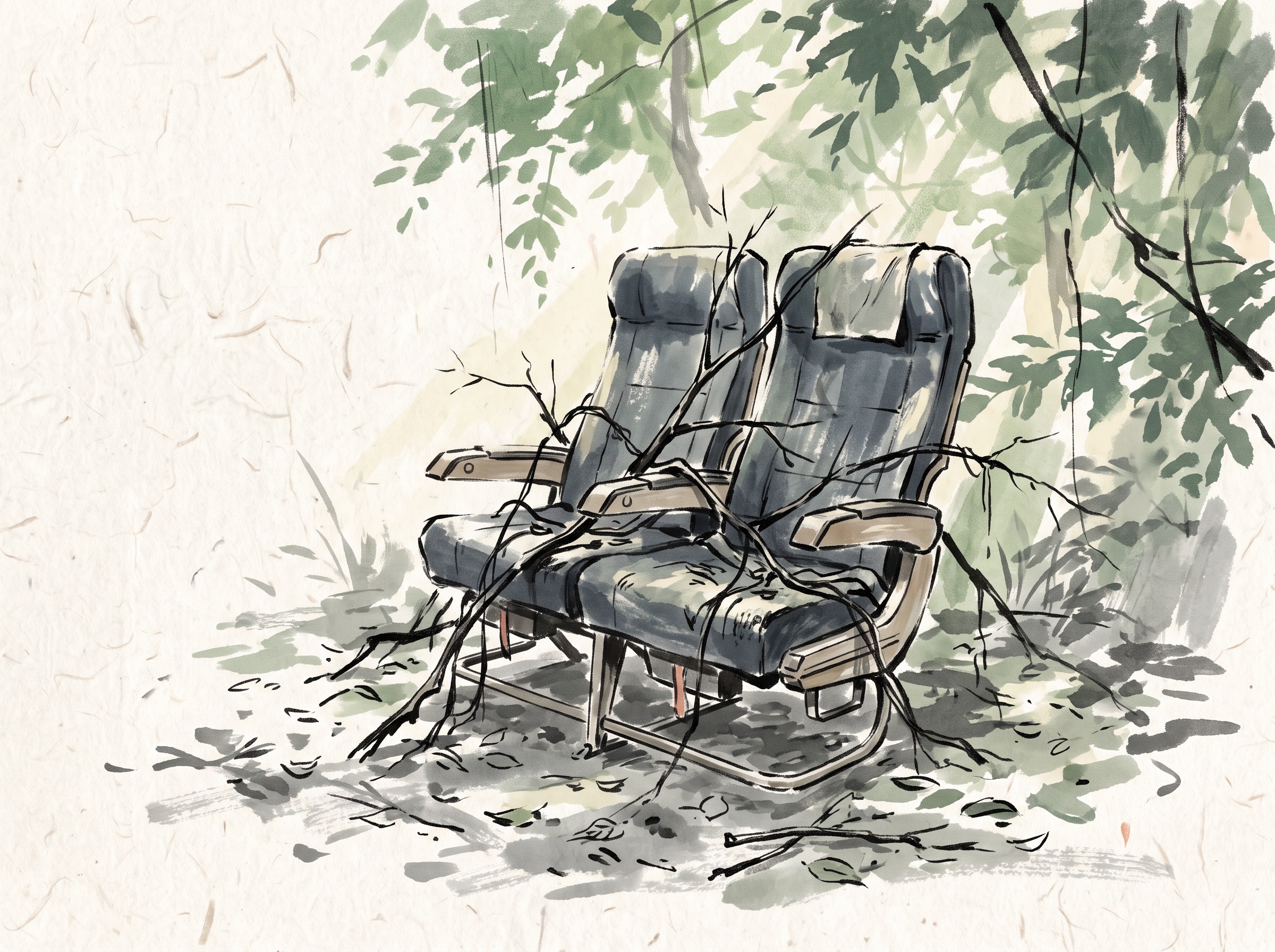
No one is entirely sure why she survived the fall. The row of seats may have spun like a helicopter’s blades and slowed her descent; the dense, springy canopy and thick undergrowth may have broken what remained of her speed. Whatever the reason, she lost consciousness in the sky and woke the next morning on the forest floor, still half-strapped to her seat, alone.
Her injuries, for such a fall, were almost unbelievably light: a broken collarbone, a deep gash on one calf, a badly swollen eye, a concussion, and a torn ligament in one knee. She had lost her glasses — she was severely short-sighted — and one of her sandals. She was wearing a thin sleeveless dress. And she was somewhere in the vast, trackless Amazon, with no idea how far she was from anyone.
She called out for her mother. No one answered. In the days that followed she would find grim evidence that a few others had survived the initial fall, only to die before help could reach them — a fate that would haunt her for the rest of her life, and that puts her beside the handful of people, like the lone prisoner who walked out of the ruins of Mount Pelée, who lived through a catastrophe that killed everyone around them.
Follow the Water
Dazed, concussed, and barely able to see, Juliane did the one thing her father had drilled into her. She listened for running water, and when she found a trickling creek she began to follow it. It was slow, miserable progress. The banks were choked with vegetation and crawling with biting insects, so she waded down the middle of the streams instead, even knowing that caimans and stingrays lived in them. She reasoned, correctly, that the animals in the open water were less of a danger than the tangle on the banks.
She had almost nothing to eat. A bag of sweets she found in the wreckage lasted a few days; after that there was nothing. The wound on her arm filled with maggots. The sun she rarely saw through the canopy, and at night she huddled where she could. Day after day she walked and waded, following the growing stream as it joined larger ones, trusting a rule more than her own failing senses.
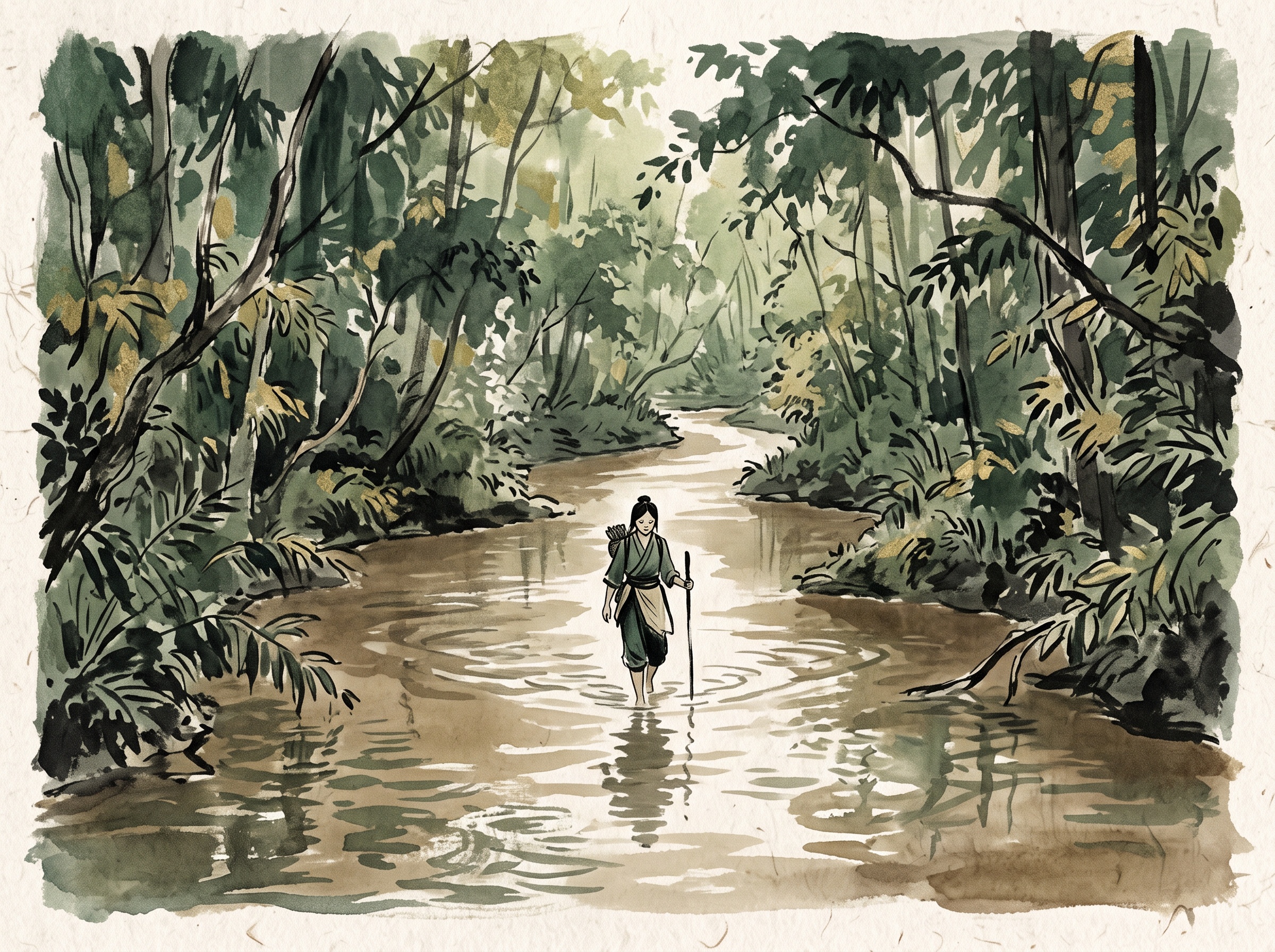
It was the discipline of someone raised to respect the wilderness rather than fear it — the same hard-won calm that let the recluse family who vanished into the Siberian taiga for forty years stay alive where most would have perished, and that kept the sailor who endured 133 days alone on a raft at sea from giving up. Knowledge, not luck, was keeping her moving.
The Hut, the Gasoline, and the Rescue
On the tenth day, weak and feverish, she rounded a bend and saw something that did not belong to the forest: a small boat tied up at the bank, and a path leading to a rough shelter. There was no one there. Inside she found a canister of gasoline — and she remembered watching her father treat the family dog’s infected wounds. She poured the fuel onto her maggot-ridden arm and, gritting her teeth, pulled out around thirty of them. Then she lay down in the hut and waited, too exhausted to go on.
The next day the owners of the boat returned — a group of local lumber workers. They found a gaunt, insect-bitten girl who spoke to them in Spanish and told them, impossibly, that she had been on the plane everyone had been searching for. They tended her wounds, fed her, and took her by canoe on a seven-hour journey downriver to a logging station, from where she was finally flown back to civilization and to her grieving father.
She had survived a fall that should have been unsurvivable, and then an eleven-day walk out of the jungle that most trained adults would not have managed. The aviation disaster itself was no fluke of the weather alone; like the tourists aboard the sightseeing flight that broke apart over Mount Fuji, the passengers of Flight 508 had been let down by decisions made before they ever left the ground.
What She Did With the Rest of Her Life
Juliane Koepcke did not let the jungle become the thing that defined her. She recovered, returned to Germany, and became a biologist like her parents — specializing, fittingly, in the bats of the very rainforests that had nearly killed her. For years she helped run Panguana, the research station where she had learned the lessons that saved her, turning it into a protected reserve.
Her story reached a wider world through an unlikely connection. The filmmaker Werner Herzog had been scouting locations in Peru for his film Aguirre, the Wrath of God and had tried to book a seat on that exact LANSA flight, only to be bumped at the last moment. Decades later he sought Juliane out, and together they returned to the crash site for his documentary Wings of Hope. She also wrote a memoir, When I Fell From the Sky, telling the story in her own measured, unsentimental voice.
Why the Story Still Matters
It is tempting to file Juliane Koepcke under miracles — the girl who fell two miles and lived. But she always resisted that word. What carried her out of the Amazon was not magic. It was a childhood spent paying attention: knowing that water runs downhill to people, that the open stream is safer than the crowded bank, that a wound can be cleaned with what is at hand. Her parents had given her, without either of them realizing it, exactly the knowledge she would need on the worst day of her life.
That is the quiet lesson underneath the astonishing one. Courage matters, and luck plays its part. But in the end she walked out of the jungle because someone had taught her how the world works, and because, concussed and half-blind and utterly alone, she trusted what she had learned. More than fifty years later, that is still worth remembering.
Sources & further reading:
Related Reading
More from the archive
- Miss Unsinkable: The Stewardess Who Walked Away From the Titanic, the Britannic, and the Sea Itself
- The Village That Lost Its Children: The Freckleton Air Disaster of 1944