The Teutoburg Forest: The Ambush That Stopped the Roman Empire

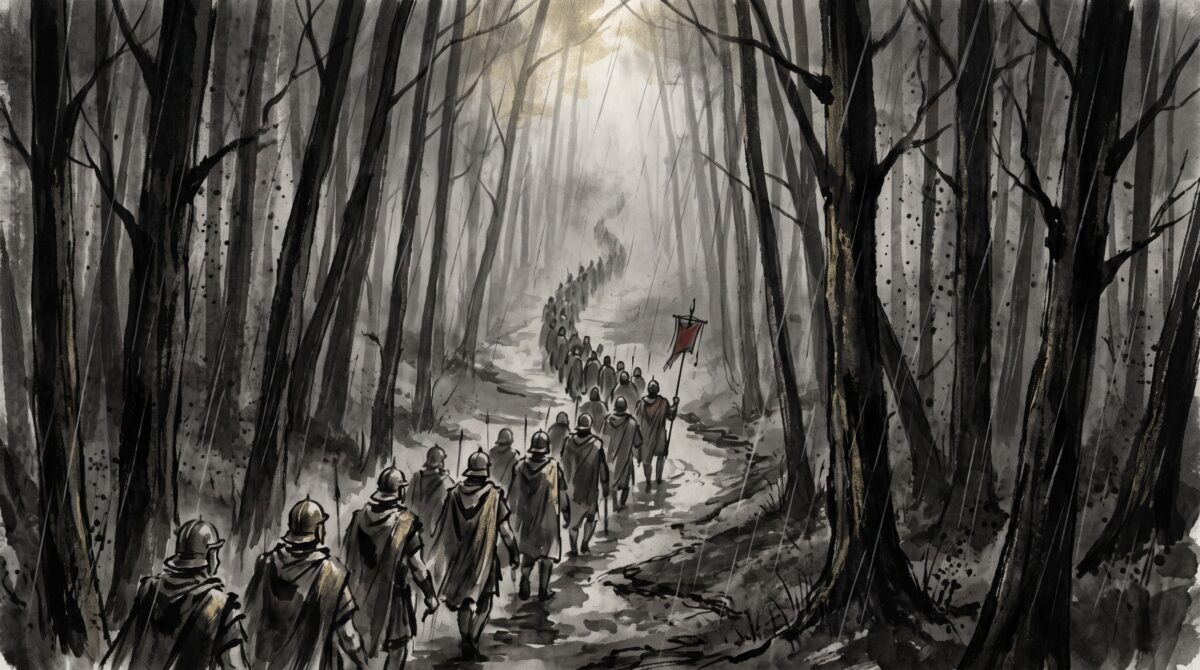
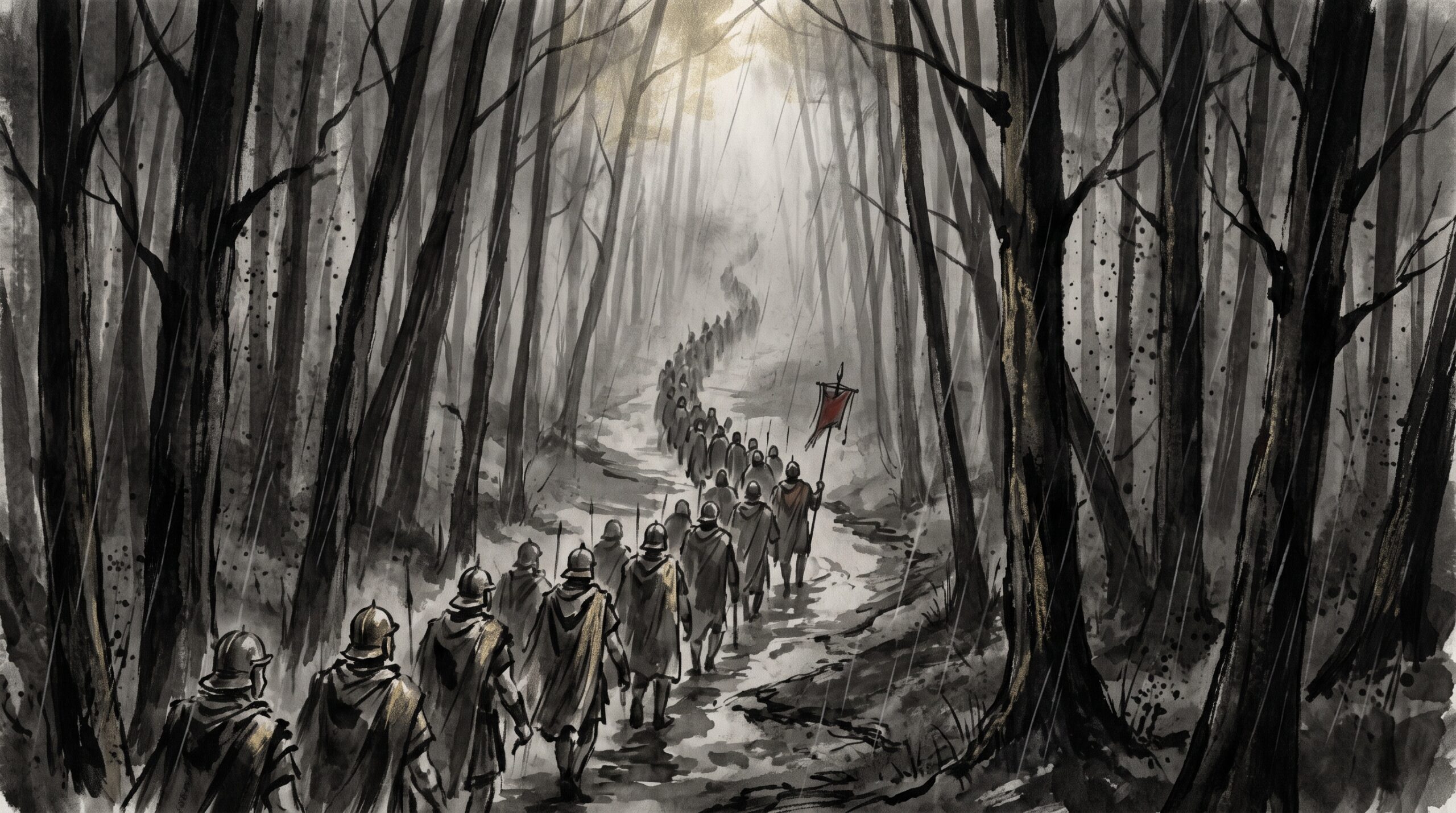
In the autumn of AD 9, at the very peak of its power, the Roman Empire marched three of its legions into a forest in northern Germany and lost them all. Not scattered, not beaten and reformed — destroyed, root and branch, so completely that the numbers of those three legions, the Seventeenth, Eighteenth and Nineteenth, were never issued to another unit again. The man who led them in was a trusted Roman governor. The man who led them to their deaths was his friend. And the border those bodies drew through the cold German woods would still, two thousand years later, mark one of the great dividing lines of Europe.
Rome at the top of the world
Under the emperor Augustus, Rome had never been stronger or more confident. Its legions had pushed the frontier to the Rhine and were steadily absorbing the tribal lands of Germania beyond it. The task of turning that raw territory into a tax-paying Roman province fell to Publius Quinctilius Varus, a well-connected administrator married into the imperial family. Varus was a capable governor of settled provinces, but Germania was not settled. He arrived expecting to impose Roman law, Roman taxes and Roman courts on people who had agreed to none of it, and he behaved as though the conquest were already finished.
At his side was a man he trusted completely: Arminius, a young nobleman of the Cherusci tribe. Arminius was everything a Roman could want in a local ally. He had been raised partly in Rome, held Roman citizenship and even equestrian rank, and commanded Germanic auxiliary troops in Roman service. He knew the legions from the inside — their drill, their marching order, their strengths and, crucially, their weaknesses. What Varus did not know was that Arminius had quietly built an alliance among the fractious German tribes, and that he intended to use everything Rome had taught him against it.
The lie that set the trap
As the campaigning season of AD 9 wound down and Varus prepared to move his legions to their winter quarters, Arminius brought him word of a small rebellion flaring up in a region a little off the main route. It was exactly the kind of minor policing problem a confident governor would deal with on the way home. Varus believed him, and turned his army off the known roads and into unfamiliar country — long files of soldiers, baggage carts, servants, and the families that followed the legions, all threading into terrain that Arminius had chosen with care.
Then Arminius and his auxiliaries slipped away, ostensibly to raise local support. They rode instead to the waiting tribes. Behind them the Roman column pushed on into narrowing ground between forest and bog, strung out over miles, soaked by relentless rain that turned the track to mud and the men’s shields and bowstrings sodden and heavy.
Four days in the dark
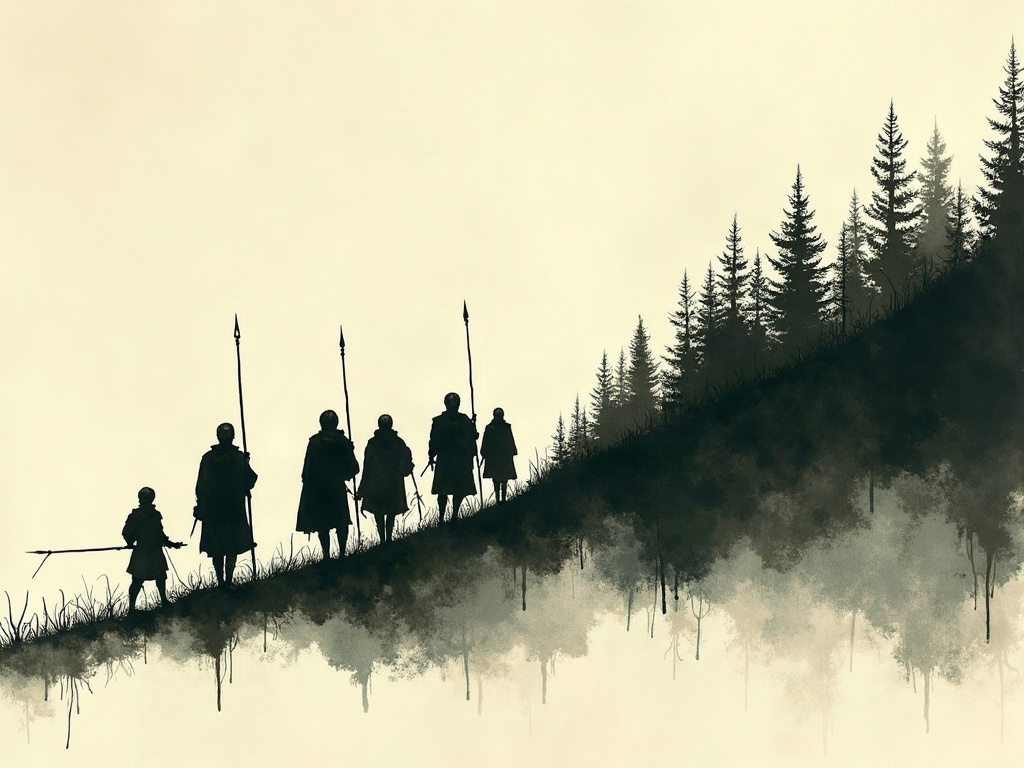
The attack, when it came, did not come as a battle. It came as days of ambush. The Germans had prepared the ground, raising concealed walls of earth and turf along the route, and from these they hurled spears and javelins into the helpless column before vanishing back into the trees. The legions were trained to win by forming solid lines and fighting in disciplined ranks — and the forest gave them no room to form anything. Every time they tried to deploy, the enemy was already gone; every time they marched on, the killing began again. The rain fouled their equipment and the mud swallowed their carts.
It is a particular kind of military nightmare: a great army, superbly equipped, undone not in a stand-up fight but by terrain, weather and an enemy who refuses to be where the blows land. It was the opposite of the discipline that, centuries later, would let Admiral Yi hold off an entire fleet with thirteen ships by choosing exactly the right place to fight. Here the place had been chosen for the Romans, by the man they trusted. Over roughly four days the column was bled to pieces, its command breaking down, its men dying in their thousands in a wood they could not see the end of.
On the final day, with annihilation certain and capture unthinkable, Varus did what a defeated Roman commander was expected to do: he fell on his own sword. Many of his officers followed him. Perhaps fifteen to twenty thousand men were killed or taken; the captives faced sacrifice and slavery. And the eagles — the sacred standards that were the legions, whose loss was the deepest shame a Roman army could suffer — were carried off into the German dark.
“Varus, give me back my legions”
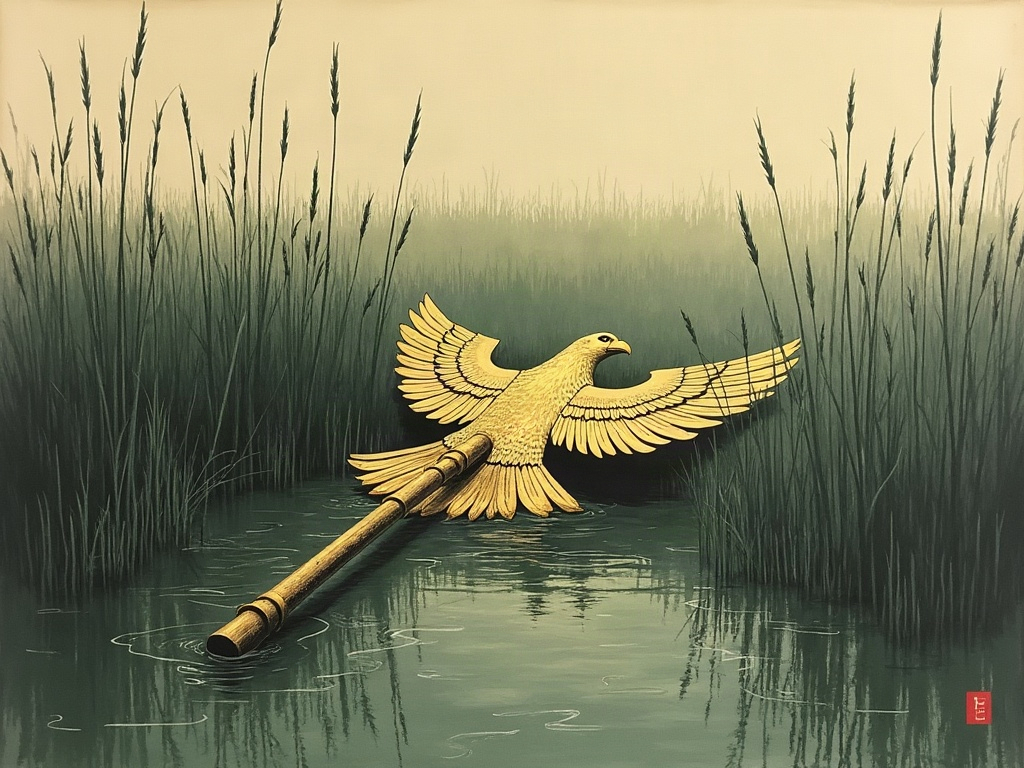
When the news reached Rome, it struck the capital like a physical blow. The historian Suetonius records that the aging Augustus was so shattered that he let his hair and beard grow for months and would beat his head against a door, crying out, “Quinctili Vare, legiones redde!” — “Quinctilius Varus, give me back my legions!” He had the anniversary marked as a day of mourning for the rest of his life. An empire that had grown accustomed to swallowing nations whole had, in a single week, had three of its legions erased, and its master could not stop saying the dead man’s name.
The practical consequences were just as stark. Rome’s long, confident push to turn Germania into a province simply stopped. There were later punitive expeditions — the general Germanicus marched back into those woods a few years on, found the whitened bones of Varus’s men still lying unburied among the ruined earthworks, built a mound over them, and recovered two of the three lost eagles. But the dream of a Roman frontier on the Elbe was quietly abandoned. The Rhine became the permanent edge of the empire, and it largely stayed there.
The betrayal that outlived everyone
There is a bitter symmetry to what followed. Arminius, the man who had broken Rome’s army, could not hold together the alliance that did it. The German tribes were never a single people, and the unity he had forged for one devastating purpose dissolved once the common enemy withdrew. Within a decade or so he was dead — killed not by Romans but by members of his own kin, who feared he was reaching for too much power. Like the palace intrigues that nearly destroyed Constantinople in the Nika Riots, the danger in the end came from within.
And then the whole episode slipped out of the world’s grasp. The exact site of the disaster was argued over by scholars for centuries, until in 1987 a British amateur archaeologist named Tony Clunn, sweeping a field near Kalkriese in Lower Saxony with a metal detector, began turning up Roman coins — and then lead sling-bullets, scraps of military equipment, and eventually the silvered face-mask of a Roman cavalry helmet lying in the earth.
The pattern of finds matched not a settlement or a camp but a running fight along a narrow defile beside an ancient turf wall. After almost two thousand years, the forest had finally given up where Varus’s legions fell.
Why it still matters
Battles that annihilate an army are rare; battles that redraw a continent are rarer still. Because Rome never pushed its frontier east of the Rhine, the lands beyond it developed outside Latin rule — a cultural and linguistic fault line between a Romanized, Romance-speaking world and a Germanic one that can still be traced on a map of Europe today. Centuries later, a newly unified Germany would seize on Arminius, rechristen him “Hermann,” and raise an enormous statue to him as a father of the nation; he became a myth long after he had been a man. Armies have destroyed themselves through confusion and bad ground before, as a panicked Habsburg force famously did at the Battle of Karansebes. But Teutoburg was something colder and more deliberate: a disaster engineered by a single trusted insider who understood his enemy perfectly. The strongest empire on earth was undone not by a stronger one, but by a friend who knew exactly where it was weak — and by a commander so sure of his own power that he never thought to ask where the road was really leading.
Related Reading
- The 1561 Nuremberg Sky Battle: When Hundreds of Flying Objects Waged War Above Medieval Germany
- The Unnerving Discovery at Roman Fort Magna That Changed History