The St Scholastica Day Riot: How a Jug of Wine Started a Three-Day Massacre at Oxford

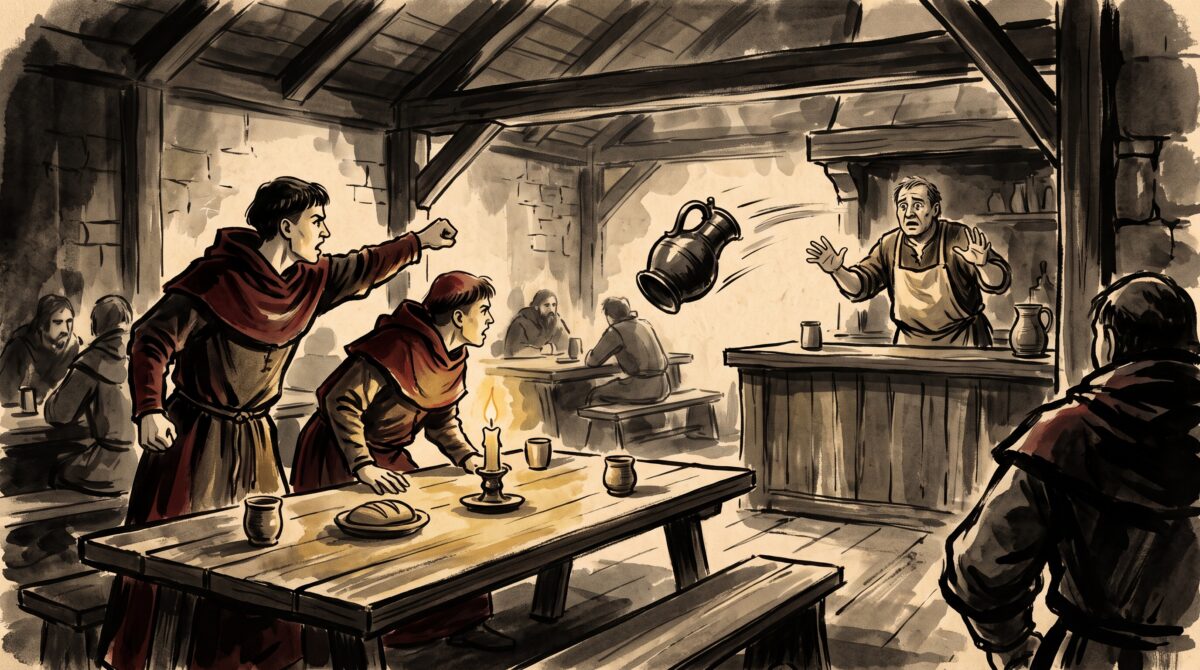
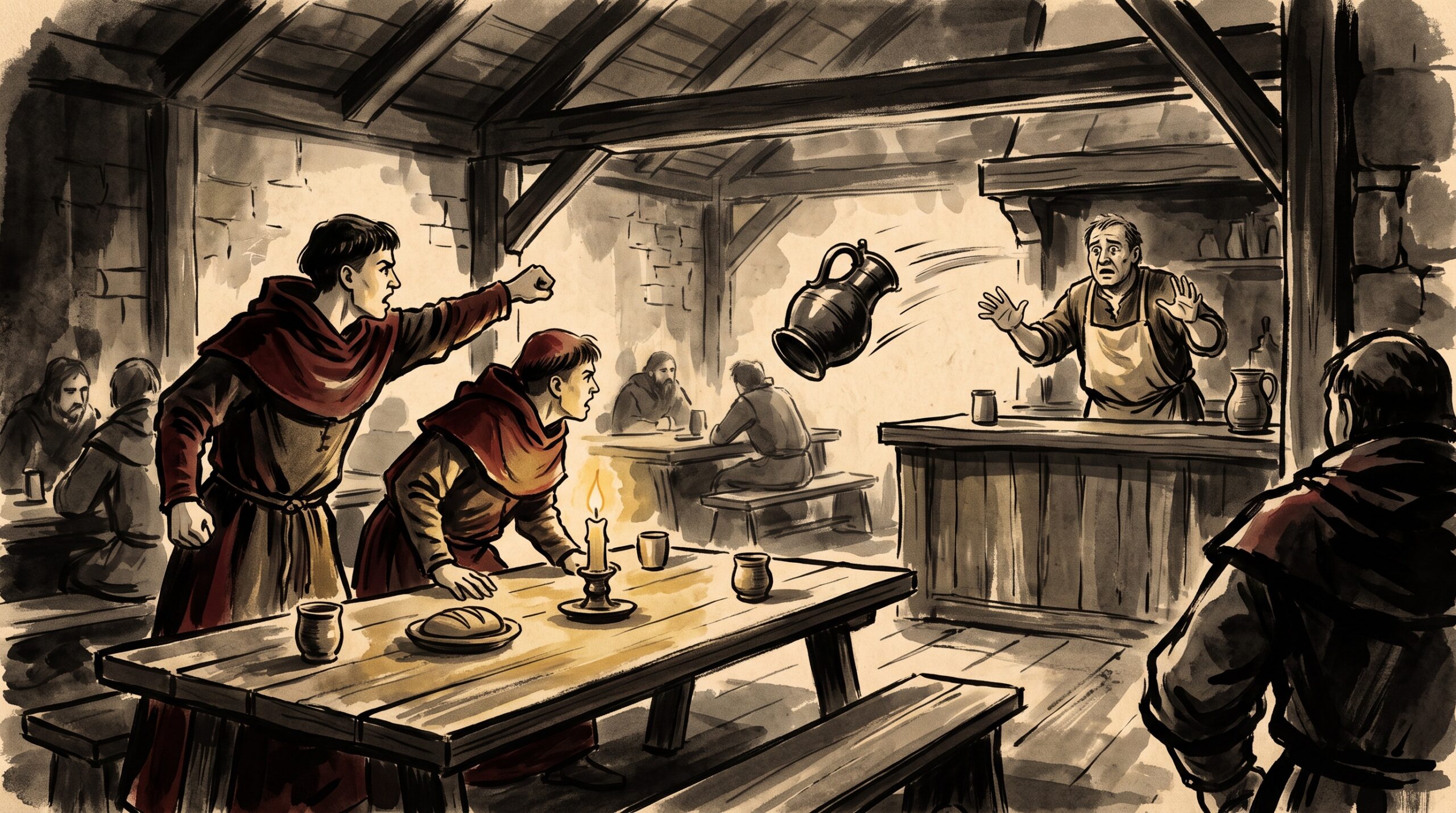
On the morning of 10 February 1355 — the feast day of Saint Scholastica — two students walked into a tavern in the middle of Oxford and ordered wine. They did not like what they were served. They said so, loudly, to the man who ran the place. Words were exchanged, tempers rose, and one of them threw the jug at the taverner’s head. By the time the dust settled three days later, roughly sixty scholars lay dead, the university’s lodgings had been ransacked, armed countrymen had poured into the city to join the killing, and the King of England was about to hand the town a punishment it would still be paying off nearly five hundred years later. It is one of history’s starkest lessons in how fast an ordinary quarrel can curdle into a massacre.
A quarrel over a jug of wine
The tavern was the Swindlestock, which stood at Carfax, the busy crossroads at the very heart of Oxford. The two scholars were named in the records as Walter Spryngeheuse and Roger de Chesterfield. Their complaint was simple enough — the wine was bad, or not worth the price — and the taverner, one John de Croydon, gave them “stubborn and saucy language” in return. In another town, on another day, it might have ended with a thrown drink and a few bruised egos. But Oxford in the fourteenth century was not an ordinary town. It was two towns wedged uneasily into one set of walls.
On one side were the “gown”: thousands of students and masters, many of them young, male, far from home, armed as a matter of course, and shielded from the town’s ordinary courts by the university’s special privileges. On the other side were the “town”: the citizens, traders and tavern-keepers who resented being lorded over, undercut and brawled with by a floating population of clever, cocky outsiders who seemed to answer to no one. The friction between town and gown had been building for generations. The thrown jug was simply the spark that found the powder.
The two bells
What turned a tavern brawl into a war was the ringing of bells. The townsmen, furious, ran to the church of St Martin at Carfax and rang its bell to summon the citizens of Oxford to arms. In answer, the university’s chancellor had the bell of the great University Church of St Mary the Virgin rung to call out the scholars. Each side now had a signal, a rallying point and a sense of righteous grievance — and both poured into the streets.
There is a grim pattern to these things. A sporting argument among rival fans spiralled into the Nika Riots that nearly burned Constantinople to the ground; a single tax collector’s visit lit the fuse of England’s Peasants’ Revolt. Oxford in February 1355 followed the same logic. Once the bells rang, the matter was no longer about wine. It was about which half of the city would back down — and neither would.
Three days in the streets
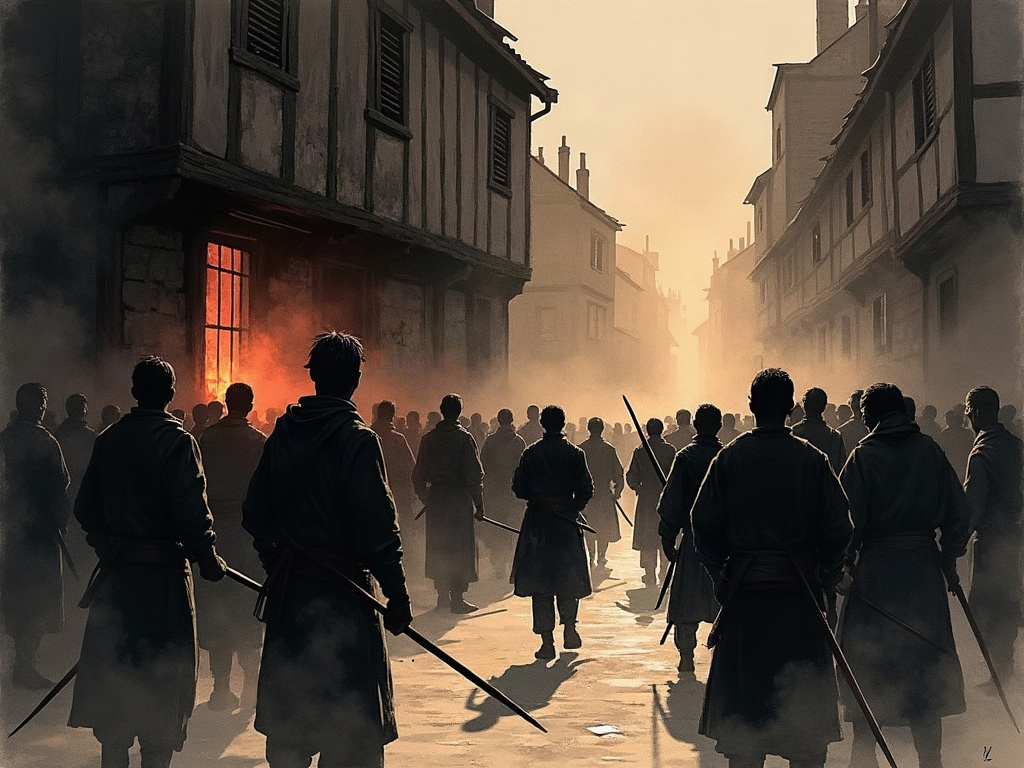
The first day’s fighting was fierce but roughly even, scholars and townsmen trading blows and arrows up and down the lanes around Carfax. It was the second day that tipped the scales into slaughter. Word went out into the countryside around Oxford, and hundreds of rural men — some accounts put the number near two thousand — marched into the city carrying a black banner, reportedly shouting “Slay, slay” and “Havoc, havoc” as they came. They were not there to break up a fight. They were there to settle scores with the university once and for all.
The scholars, badly outnumbered, were driven back. Student halls and lodgings were broken open and plundered, their contents dragged into the street. Chroniclers sympathetic to the university describe horrors: scholars dragged from hiding and killed, the wounded finished off, and at least a handful of churchmen among the students scalped — the crown of the head sliced away in mockery of the tonsure that marked them as clergy. The exact toll will never be known, but the figure that comes down through the records is around sixty scholars dead, with townsmen killed as well. For three days the university that ruled Oxford was simply overrun by the town it ruled.
The king takes a side
When the fighting finally burned out, the question was not really who had started it — everyone knew it was two students and a jug of wine — but who held the power to decide what came next. And here the town’s victory in the streets became its ruin. The university appealed over the heads of the local authorities directly to the Crown, and King Edward III came down firmly, almost crushingly, on the side of the gown.
The town’s existing liberties were suspended. A new royal charter handed the university sweeping authority over the very citizens who had just beaten it in the streets — control over the assize of bread and ale, over weights and measures, over the policing of the market, over much of the civic life of Oxford itself. The men who had rung St Martin’s bell found that winning the riot had cost them their town’s independence. It is a bitter echo of how often, in history, the side that triumphs in the moment loses everything that matters afterward — the German tribes who annihilated three Roman legions could not hold the peace that followed, and an entire panicked army once destroyed itself in the dark without an enemy in sight. Oxford’s townsmen had won the battle and lost the city.
Four hundred and seventy years of penance
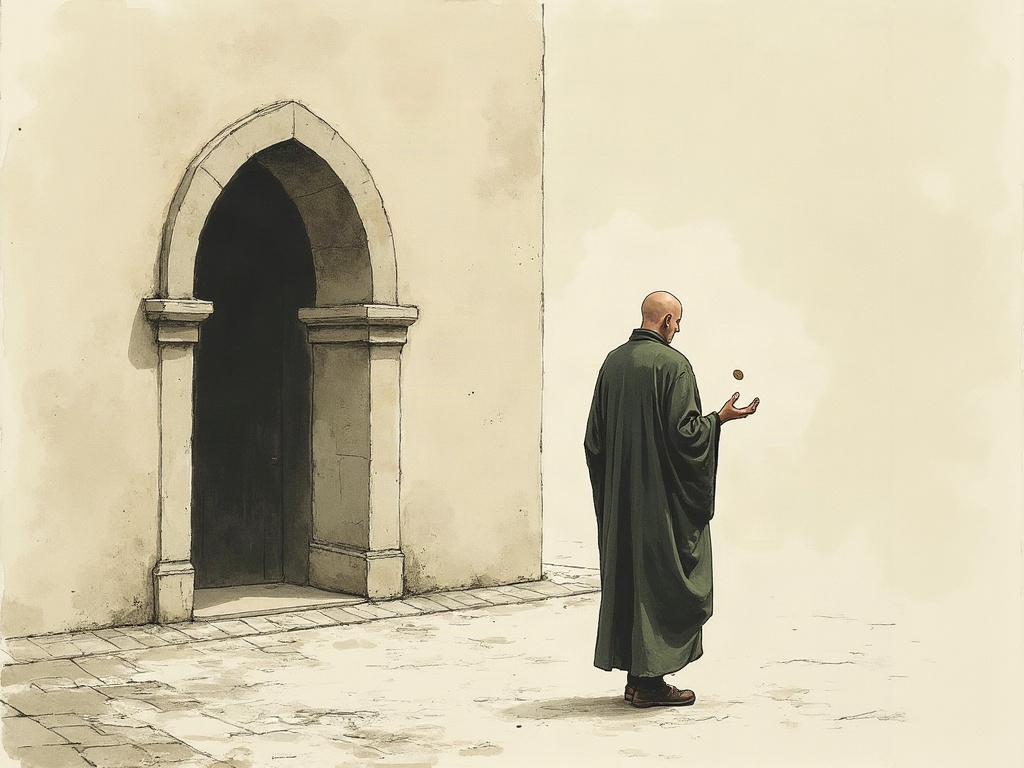
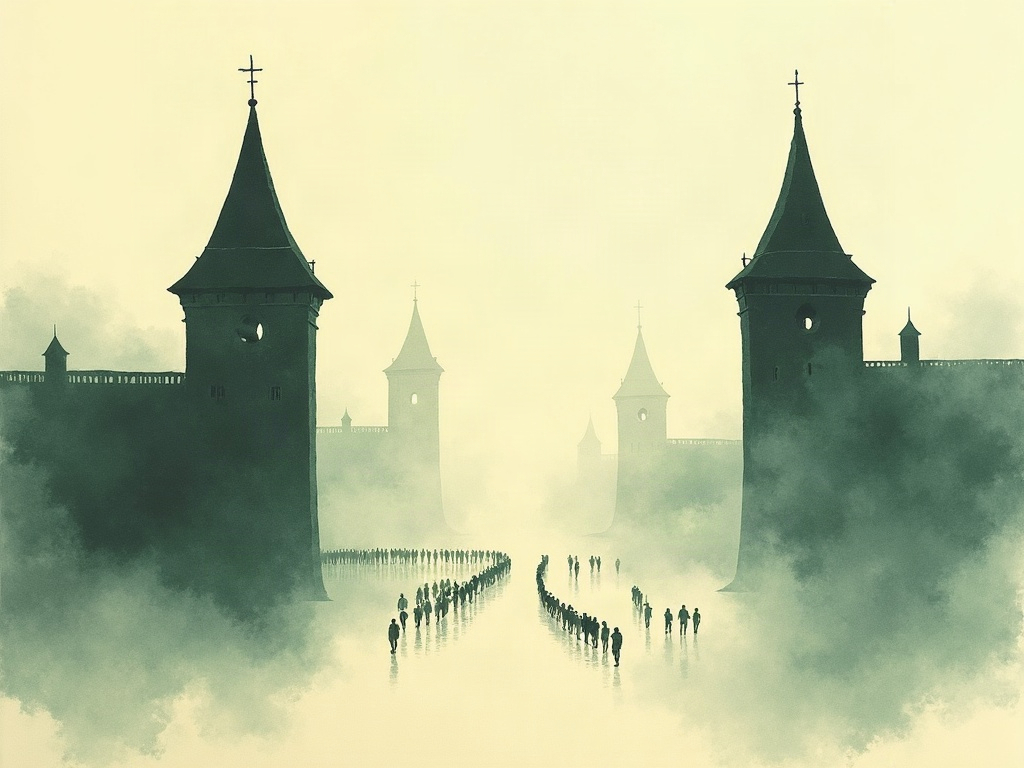
The strangest part of the story is how long it refused to end. As part of the settlement, the town was made to perform an annual act of penance. Every year on 10 February — St Scholastica’s Day — the mayor, the bailiffs and a party of leading citizens of Oxford were required to walk bareheaded to the University Church of St Mary the Virgin, attend a mass for the souls of the slain scholars, and pay a fine of one penny for each scholar killed in the riot: sixty-three pennies in all. There they had to swear, year after year, to respect the privileges of the university.
This was not a punishment that lasted a generation. It lasted centuries. Mayors who had not been born for hundreds of years after the riot still trooped to St Mary’s each February to atone for a tavern argument none of them had witnessed, in a ritual that long outlived any living memory of why. The medieval world had a deep appetite for solemn, theatrical justice stretched out across time — the same instinct that could put a long-dead pope on trial in the macabre Cadaver Synod. Oxford’s penny-penance finally sputtered out only in 1825, when a mayor simply declined to take part, and the whole humiliating rite was quietly abolished. It had run for roughly 470 years.
Why it still matters
It would be easy to file the St Scholastica Day Riot under historical curiosities — the funny story about Oxford and the thrown wine. But it is really a story about the thinness of the membrane between order and bloodshed. A great institution and a proud town had spent generations stacking up resentments, privileges and grievances until the whole arrangement was one insult away from catastrophe. All it took to collapse was two young men who did not like their drink. The sixty dead were not killed by the bad wine; they were killed by everything that had been allowed to build up behind it. And the four and a half centuries of bareheaded mayors that followed are a reminder that societies, like people, can carry a grudge far longer than anyone who remembers what it was for — long after the tavern is gone, the jug is forgotten, and the only thing left is the walking, every February, to pay the penny.
Related Reading
- The Straw Hat Riot of 1922: When Fashion Rules Sparked Eight Days of Street Violence in New York
- The March on London: How the Rebels Seized the Capital in June 1381
- The Aftermath: Richard II’s Broken Promises and the Bloody Reprisals