Julie d’Aubigny: The Sword-Fighting Opera Star Who Burned Down a Convent for Love

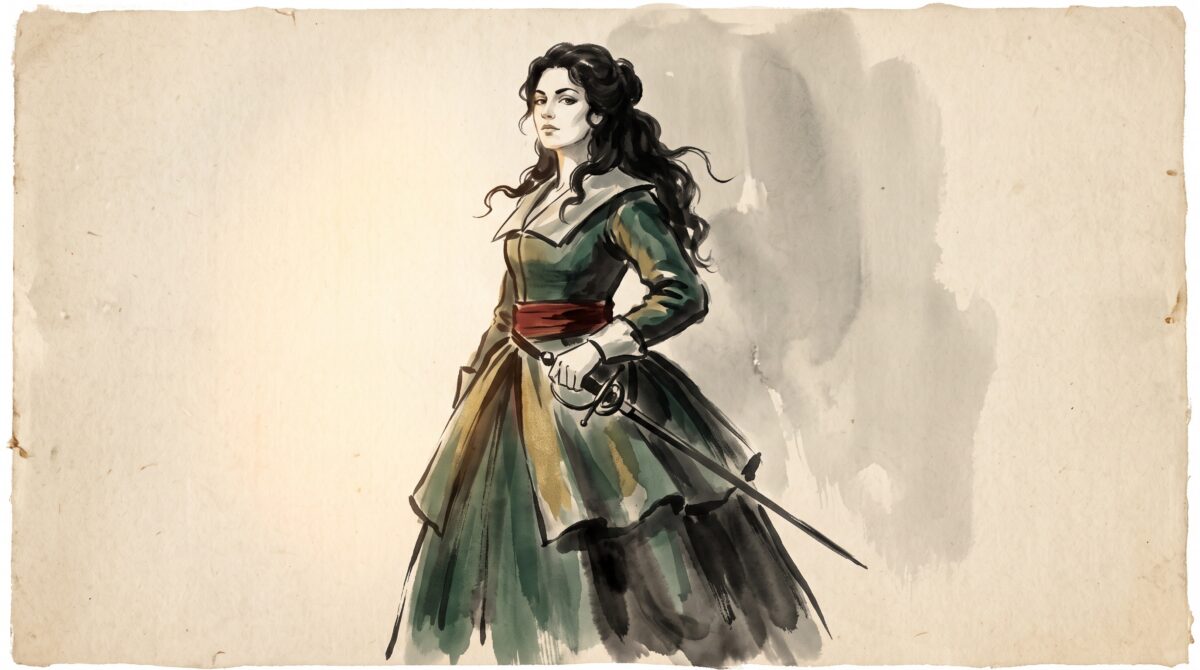
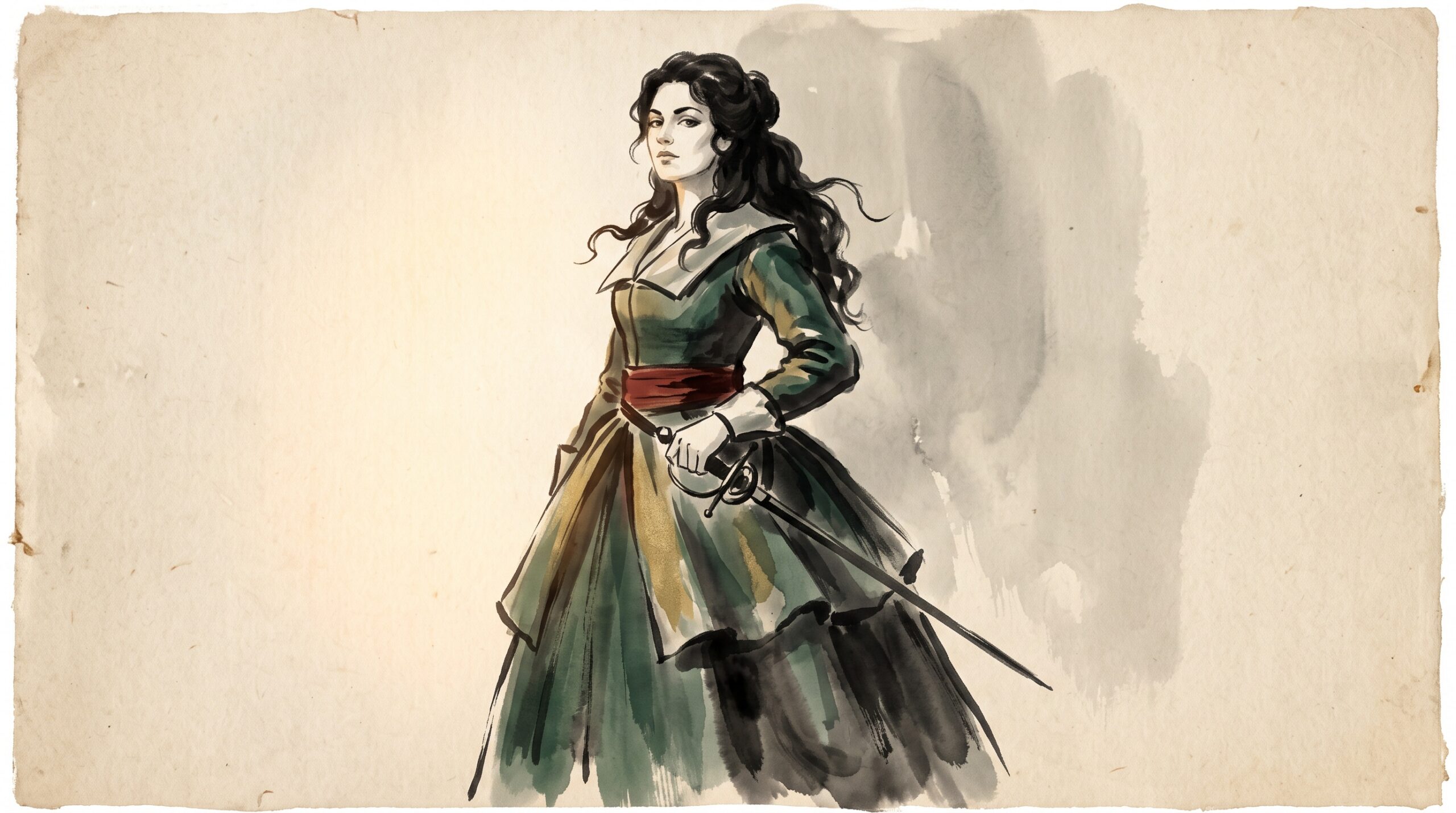
In the France of Louis XIV, a woman was supposed to be one thing at a time: a wife, a mistress, a nun, a performer. Julie d’Aubigny refused to choose. Over a life that lasted barely more than thirty years she was a swordswoman good enough to beat trained men in earnest, a contralto adored at the Paris Opera, the lover of both men and women at a time when either could ruin you, a convicted arsonist sentenced to burn, and — somehow — a pardoned favorite of the royal court. Novelists have borrowed her for centuries, and every time they have had to tone her down to make her believable. The documented truth is wilder than the fiction.
A girl raised on the blade
She was born around 1673, the daughter of a man who served the Count d’Armagnac, Master of the Horse to the king. His job was to train the court’s pages — and he raised his daughter alongside them. While other girls of her station were taught needlework and deportment, Julie learned to read, to ride, and above all to fence, drilling with the same swords and the same rigor as the boys destined for the king’s service. By her teens she could hold her own against men with a blade. It was an education that would have been remarkable for a nobleman’s son; for a girl, it was almost unheard of, and it set the pattern for everything that followed. She would spend her life treating the rules meant to contain women as if they simply did not apply to her.
Scandal, song, and a sword for hire
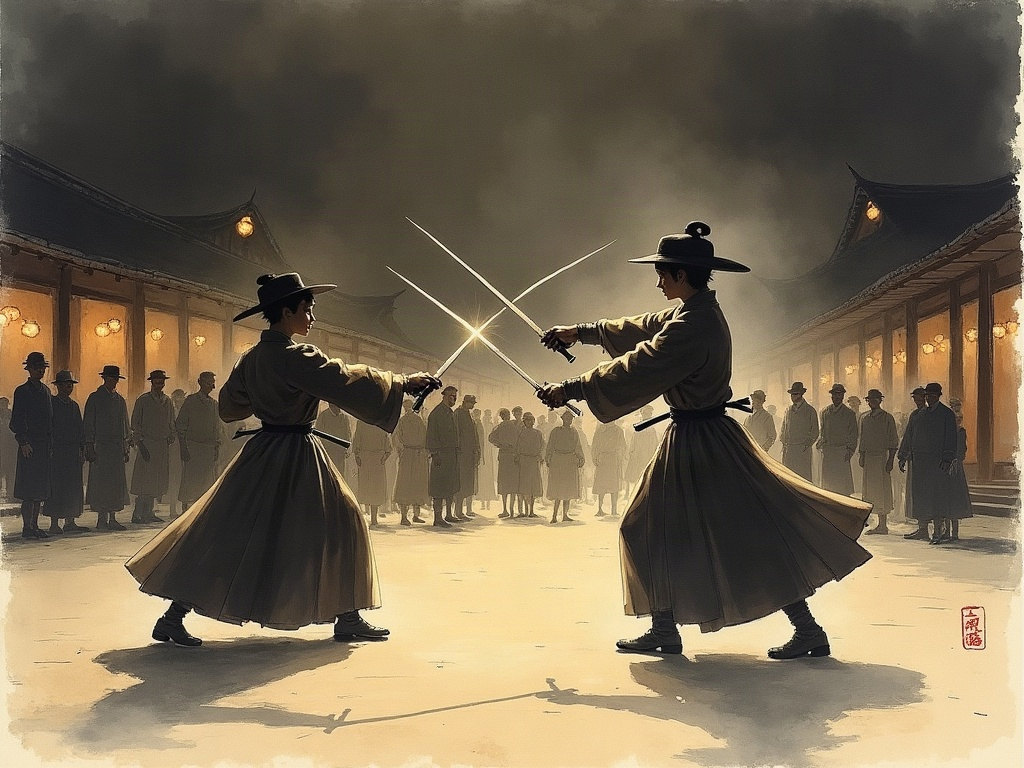
Still in her teens, she became the mistress of d’Armagnac himself, then ran off with a fencing master named Sérannes who was wanted by the authorities. The two supported themselves on the road the only way they could — by giving public exhibitions. She would appear in men’s clothes, cross swords in a dazzling display, and then open her mouth and sing, and the combination of a beautiful voice and visible danger drew crowds in town after town. When a skeptic in one audience refused to believe the slim figure fencing before him was a woman, the story goes that she tore open her shirt to settle the argument on the spot. She was building, exhibition by exhibition, a reputation as someone it was unwise to doubt and impossible to ignore.
The convent on fire
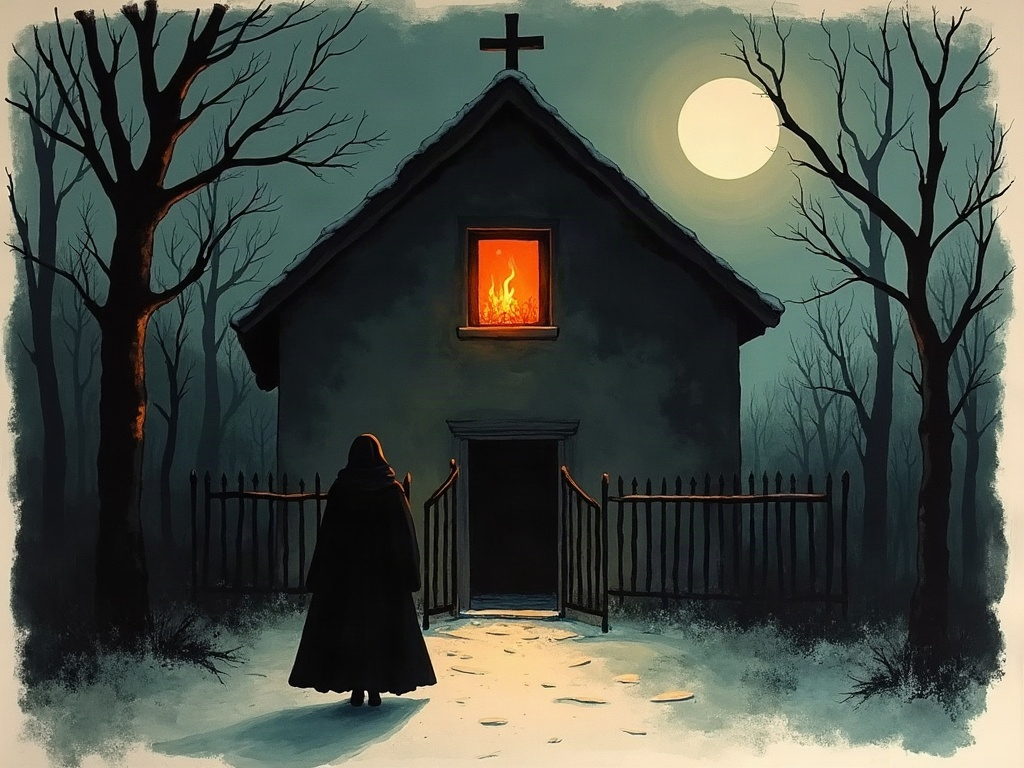
The episode that sealed her legend began, like an opera, with a forbidden love. In the south of France she fell for a young woman whose horrified family hid their daughter away in a convent in Avignon. Julie’s response was not to write letters or to mourn. She took vows and entered the convent herself to be near her. Then, when a nun died, she is said to have carried the body into her lover’s room, laid it in the bed, and set the room ablaze to fake the young woman’s death — and in the confusion the two of them simply walked out and away.
The affair burned out within months, but the law did not forget. Charged under a man’s name with body-snatching, kidnapping, and arson, she was tried in her absence and sentenced to death by fire. It is one of history’s more astonishing sentences: a death penalty handed to a woman the court could not catch, for a crime committed to free a lover. She had, quite literally, played with fire and won.
Three duels at a royal ball
Back in Paris, her talent for trouble found its most famous stage at a grand ball thrown by the king’s own brother. There, in front of the cream of French society, Julie kissed a young woman on the dance floor. Three noblemen took offense and challenged her. According to the accounts, she met all three outside, one after another, and defeated every one of them with her sword before coolly returning to the party.
This should have finished her. Louis XIV had outlawed dueling on pain of death, and few things were taken more seriously at Versailles. Yet the king is said to have pardoned her — reportedly reasoning, with a shrug worthy of the story, that his edict against duelists spoke of men, and she was not one. It helped that she still had powerful friends at court from her d’Armagnac days. Where lesser offenders lost their heads, La Maupin talked, charmed, and fought her way to a royal pardon. History is full of women who forced hard men to take them seriously at swordpoint — the Mongol princess Khutulun, who no man could beat and who refused to marry any suitor she could throw, belongs to the same rare company.
The star of the Paris Opera
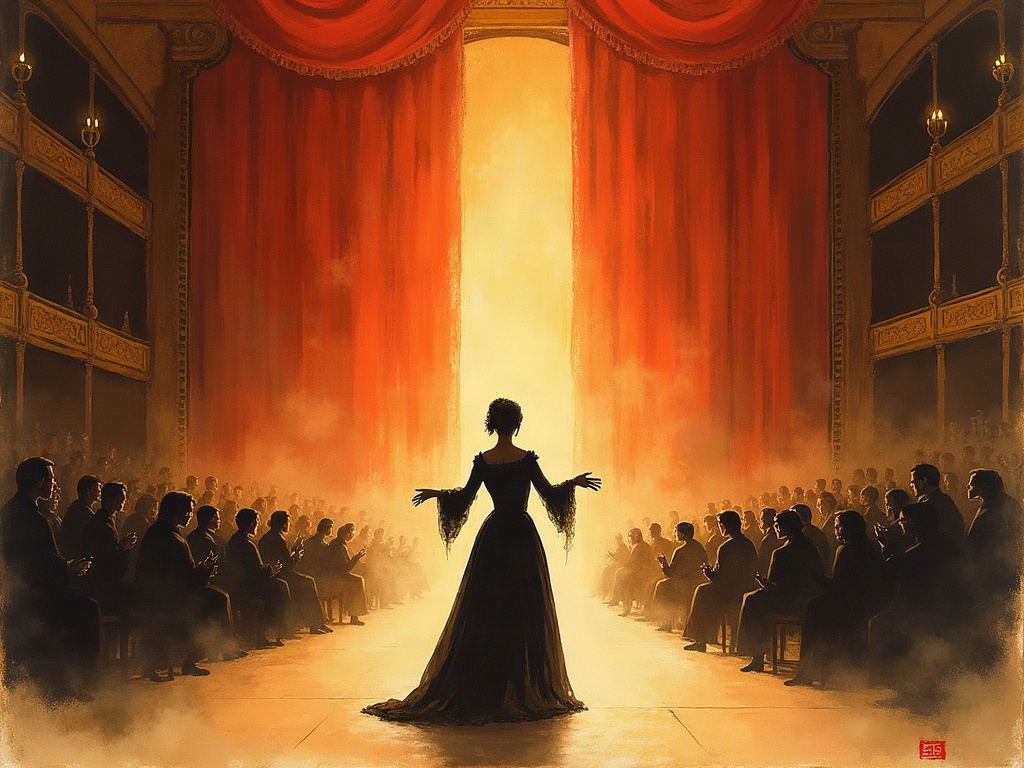
For all the brawling, her real gift was her voice. She joined the Paris Opera and became a genuine star, performing in the lavish tragedies of the age to real acclaim. The woman the gossip-sheets painted as a dangerous rogue was, on stage, a disciplined and admired professional whose rich lower register audiences came specifically to hear.
The two sides of her did not stay neatly separate. When a conceited fellow singer bullied the women of the company, she is said to have confronted him dressed as a man, beaten him in a duel, and taken his watch and snuffbox as trophies — then listened, amused, as he told everyone he had been jumped by a gang of thugs rather than admit a woman had thrashed him. It is the same weaponized disbelief that has shadowed capable women for centuries: the Soviet sniper Lyudmila Pavlichenko spent a US tour being asked about her uniform and makeup rather than her 309 confirmed kills. Men would rather invent a mob than concede the blade in front of them was held by a woman.
The quiet end of a loud life

What finally stopped her was not a sword or a sentence but grief. In her last years she loved the Marquise de Florensac, by many accounts the great attachment of her life. When the marquise died suddenly around 1705, the fire that had carried Julie through fencing halls, convents, ballrooms, and opera houses simply went out. She left the stage, withdrew into a convent — this time to stay — and died around 1707, somewhere near her mid-thirties. The woman who had faked a death with a convent fire met her real one in near-silence.
Why her story still matters
It is tempting to treat Julie d’Aubigny as pure spectacle, a swashbuckling anecdote generator. But the deeper reason she endures is that she lived, three centuries early, as if the boxes built for women were optional. She was permitted none of her freedoms by right; she took every one of them — the sword, the stage, the lovers, the refusal to be ashamed — and dared the world to stop her. The same era produced other women who bent their impossible circumstances to their will, like the gentle princess Noor Inayat Khan, who became one of Britain’s bravest secret agents. What makes La Maupin unforgettable is how little permission she waited for. She was sentenced to burn and died of a broken heart instead — and in between, for a few blazing decades, she was simply, unapologetically, entirely herself.
More from the archive
- The Erfurt Latrine Disaster: When 60 Nobles Met Their End in Medieval Germany’s Most Bizarre Tragedy
- Lady Death: Lyudmila Pavlichenko and the 309 Shots That Shamed a Room Full of Men