The Monk Who Lived on Top of a Pillar for 37 Years

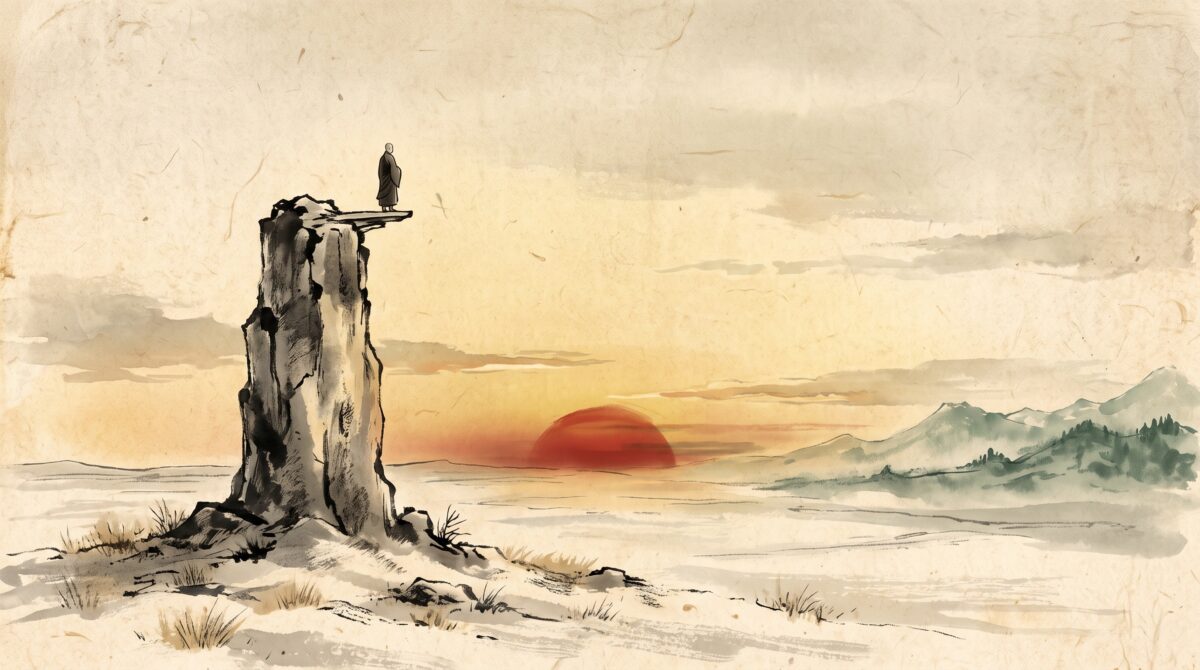
Imagine telling someone you are going to climb onto a stone column in the desert, stand on a platform barely wider than your shoulders, and stay there – through blistering summers, freezing nights, rain, and wind – not for a week, not for a season, but for the rest of your life. They would think you had lost your mind. In the 5th century, a man named Simeon did exactly that, and instead of being forgotten as a lunatic, he became one of the most famous human beings alive.
For thirty-seven years he lived on top of a pillar. And the stranger part of the story is not that he did it, but that the entire world came to watch.
A boy who wanted to disappear
Simeon was born around the year 390, the son of a shepherd in the borderlands between what is now Syria and Turkey. He grew up tending flocks, an ordinary start to an ordinary life. But something in him burned for extremity. As a young man he entered a monastery, and almost at once he alarmed the other monks – not by breaking the rules, but by punishing himself far beyond them.
The stories collected by those who knew him describe a man testing the absolute limits of endurance. He is said to have wound a rope of twisted palm fronds so tightly around his body that it cut into his flesh and had to be pulled free. He fasted through the forty days of Lent without food or water, something the monks believed no one could survive. His intensity was so disruptive that he was eventually asked to leave. Simeon was looking for something the communal life could not give him: to be left completely alone with God.
So he went into the wilderness. He shut himself in a hut, then chained himself to a rock, then climbed a small mountain. And still the people came.
The problem with being holy
This is the irony at the heart of Simeon’s life. The more he tried to withdraw from the world, the more the world pressed in on him. Word spread that a living holy man was performing feats of devotion in the hills, and crowds began to arrive – the sick hoping to be healed, the troubled seeking advice, the merely curious wanting to see. They pulled at his clothes. They begged for blessings. They would not leave him in peace.
Simeon’s solution was as radical as everything else he did. If he could not escape the crowds by going into the desert, he would escape them by going up. Around the year 423 he had a pillar built – at first only a few feet high – climbed to the small platform on top, and refused to come down.
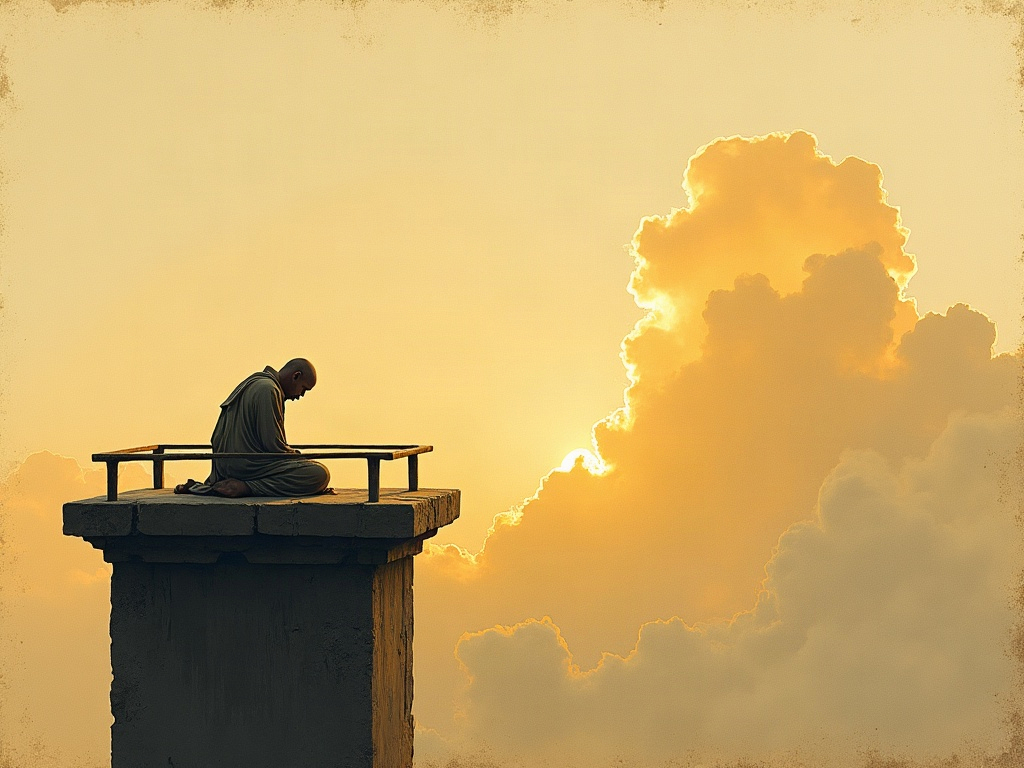
Over the years the pillar grew taller, rebuilt higher and higher until, by most accounts, it stood somewhere around fifteen meters – the height of a four- or five-story building. On its tiny summit, ringed by a railing, Simeon lived exposed to the open sky.
Life on a pillar
It is almost impossible to imagine the physical reality of it. He could not lie down properly. He slept, if at all, standing or leaning. He endured the full heat of the Syrian sun by day and the cold by night, with no shelter. A boy brought him a little food and water, hauled up by rope, and he ate almost nothing. Witnesses described him praying constantly, bending his body forward in bow after bow after bow – one observer tried to count the prostrations and gave up after more than a thousand in a single stretch.
He did not come down. Not when his body failed, not when ulcers formed on his legs, not in bad weather. For thirty-seven years, the top of that column was the entire surface of his world. Like the frontiersman Hugh Glass, who dragged his shattered body 200 miles across the wilderness, Simeon drove the human frame to a place most of us can barely imagine – except Glass was fighting to live, and Simeon simply chose it, and never stopped.
And yet he was not silent or idle up there. Twice a day he preached to the crowds gathered below. He settled disputes. He answered theological questions that reached him from across the empire. He is said to have written letters to emperors and to have been consulted by bishops. From fifteen meters in the air, a man who owned nothing and went nowhere had become a kind of oracle for the whole eastern Mediterranean.
The world comes to the pillar
What makes Simeon’s story genuinely astonishing is the scale of his fame. This was not a local curiosity. Pilgrims traveled from Gaul in the far west, from Persia in the east, from Arabia and Ethiopia and the imperial capital at Constantinople, specifically to stand at the foot of his column and look up. Emperors sought his opinion. The accounts say that when disputes divided the church, people waited to hear what the man on the pillar thought.
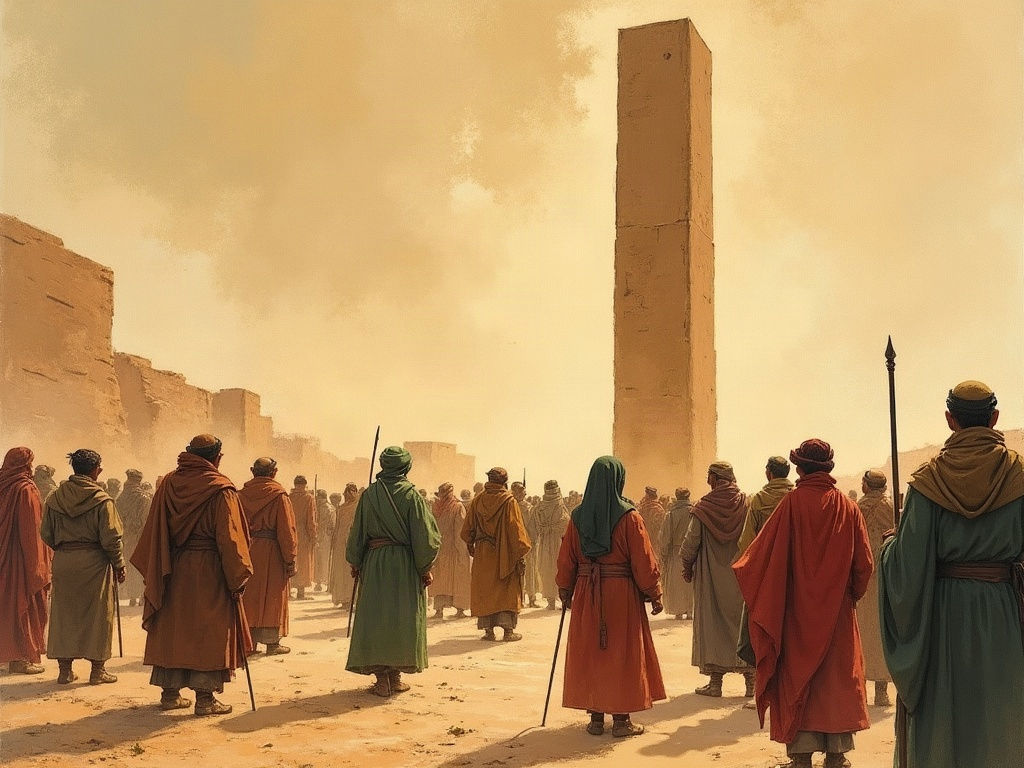
He inspired imitators. Other ascetics climbed their own pillars, and a whole movement of “stylites” – from the Greek word stylos, meaning pillar – spread across the region, men who chose to live out their devotion suspended between earth and heaven. None ever matched the fame of the original.
Why did it move people so deeply? Partly it was the sheer impossibility of it – a visible, undeniable feat of will that anyone could come and witness with their own eyes. But partly it was something harder to name. In an age of upheaval, war, and plague, here was a fixed point: a man who had given up everything the rest of them chased, who wanted nothing, who simply stayed. His was a solitude as absolute as that of Ada Blackjack, who endured two years utterly alone in the Arctic – except hers was forced on her by catastrophe, and Simeon’s was lifelong and self-chosen. He was a question posed in human form – what are you living for? – and the crowds could not look away.
The end, and what remained
Simeon died on his pillar around the year 459, still at his post after nearly four decades. The response was extraordinary. A military escort carried his body to Antioch amid enormous crowds, and he was mourned as one of the great figures of the age.
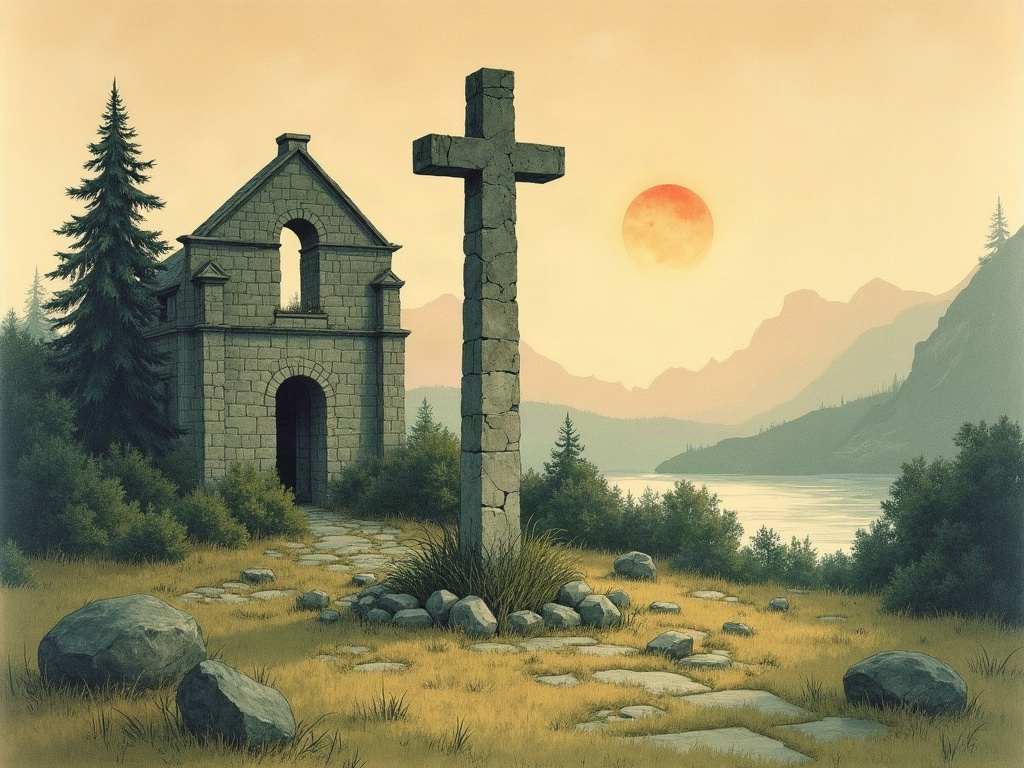
What happened next is its own kind of monument. On the site of his pillar, in the hills northwest of Aleppo, a vast church was built – one of the largest in the world at the time, four great halls arranged in a cross around the central column where Simeon had stood. For centuries pilgrims chipped away at the pillar itself for relics, until little was left but a worn stump. The church fell into ruin over the long centuries that followed, but its skeleton still stands today, a stone cathedral built to honor a man whose only building was a platform the size of a tabletop.
Why the story still holds us
It would be easy to file Simeon away as a curiosity – the eccentric who lived on a pole. But the reason people walked across continents to see him is the same reason the story still stops us fifteen centuries later. He pushed a single human choice to its absolute extreme and held it there for a lifetime, in full public view, asking nothing and explaining nothing. The same unbending devotion that drove the forty-seven ronin to wait years for a single act of loyalty drove Simeon upward – but his object was not vengeance or honor, only a God he could not see. Most of us spend our lives negotiating comfort and compromise. Simeon refused all of it, and in doing so became a mirror. People looked up at that small figure against the enormous sky and saw, reflected back, the uncomfortable question of how little a person actually needs – and how much of what we chase we could, if we truly wanted to, simply let go.
Sources & further reading:
More from the archive
- The Miracle of Fatima: When 70,000 People Witnessed the Sun Dancing in the Sky
- The Unnerving Discovery at Roman Fort Magna That Changed History
- The Romans Invented Self-Healing Concrete That Outlasted Our Modern Technology by 2,000 Years